In keeping with our Islands of Sweden theme, my brother and I left Stockholm for Gotland. It was a short bus ride to the ferry dock in Nynashamn, and just under three hours by ferry to Gotland. As with everywhere else, dogs were allowed on the ferry.
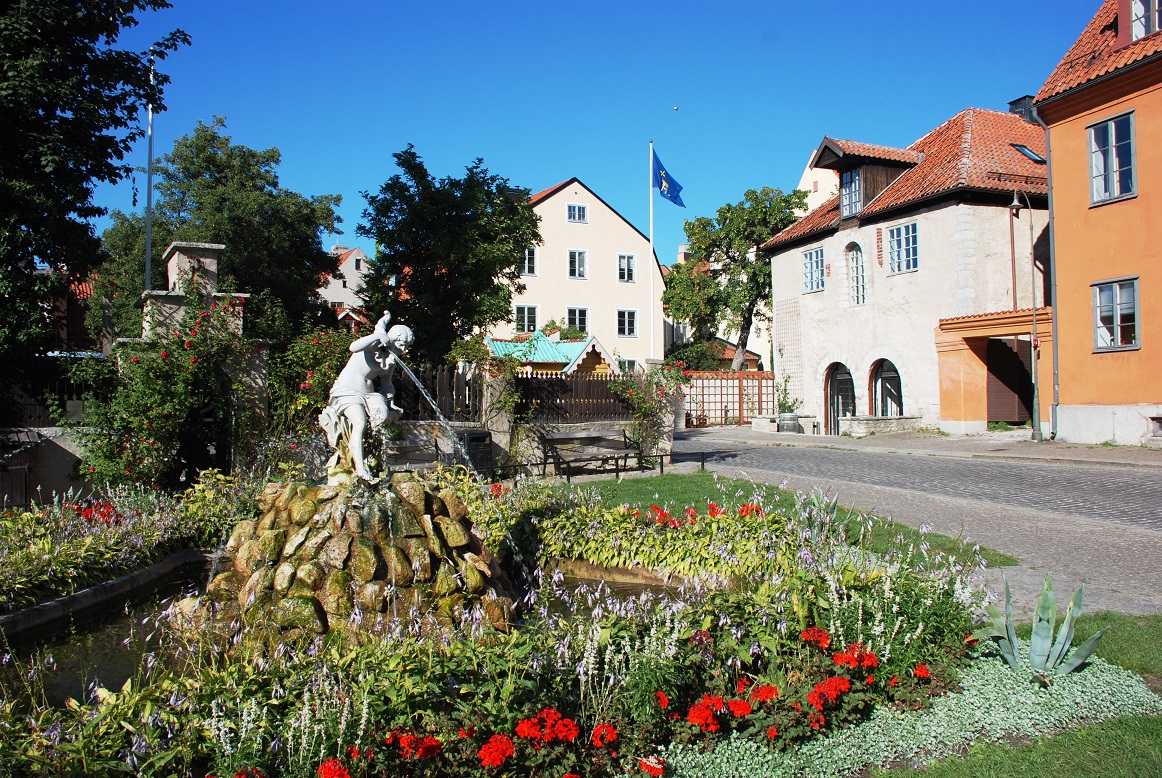
Fountain in the inner city of Visby
My first impression of Gotland was a lot like the rest of Sweden; clean and orderly. But the little town of Visby, the innerstad a World Heritage site, is one of the most picturesque towns I’ve visited. The houses along the tiny stone paved streets are all well kept and nicely painted, most with roses or holly hocks out front.

Front door to a home in Visby
Our room at the Hotell Gute was quite nice and in a very good location. We checked in, put our feet up for about an hour, then walked to the Gotland Museum, only a few blocks from the hotel. Visby is known for its ruins and roses, and we certainly saw that. For a small city, it has a wonderful botanical garden and a stellar museum. The Gotland Museum guide includes the following statement “Visby was added to the World Heritage list in 1995. It includes the intramural city with adjoining green open spaces.”

These stone sheep are at each entrance to the city and around the town
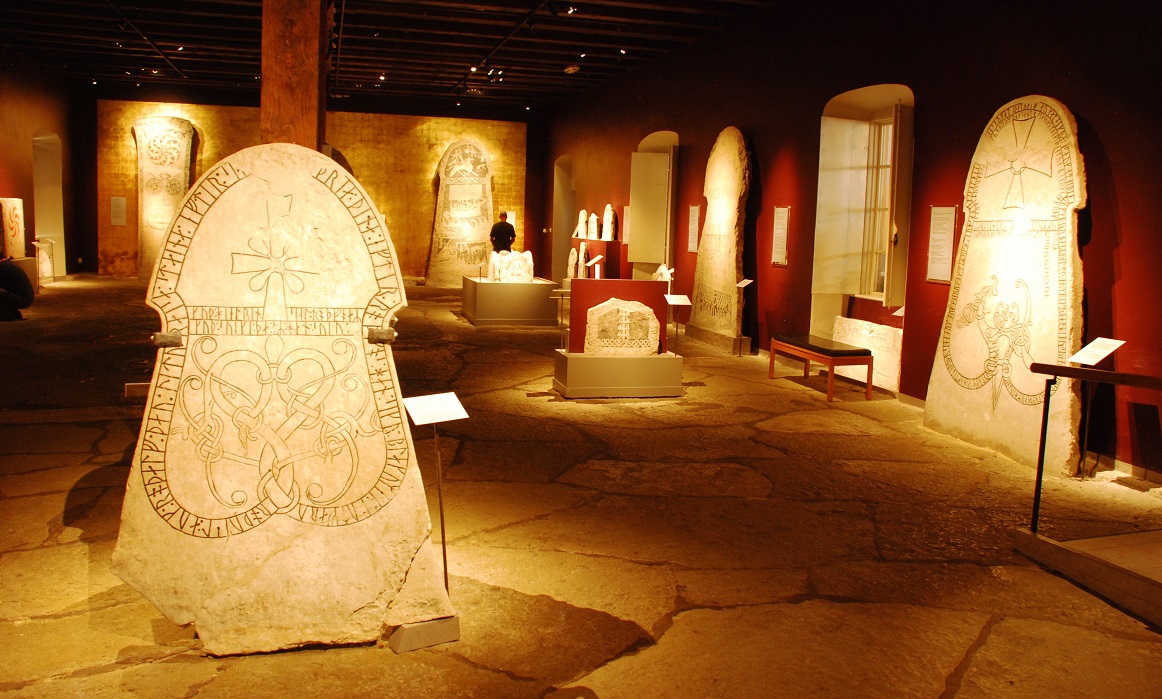
The ground floor of the Gotland Museum is filled with picture stones, all found on Gotland
With only two hours in the Gotland Museum, our first stop, we made the most of it. The three floors housed some fantastic picture stones, a history of Gotland including remains from the Battle of Gotland, Viking buried treasures, and a farmhouse interior from the 18th century, plus many other interesting exhibits.

On the stone above, the largest in the museum, you can clearly see the horse and rider in battle in the top most picture. This stone was accompanied by the following description:
This stone is a good example of the picture stones from the late Iron Age, the Viking Age, with its many images and different scenes. The picture stone might be a memorial to a man, who has died a hero’s death in battle on the battlefield. Borne by the ship of death, he is on his way to Valhalla, the dwelling of Odin the god. There, a woman welcomes him, handing him a horn of mead. Perhaps she is a Valkyrie, a female figure connected with Odin. The scene below the ship might be an illustration to one of the Icelandic sagas in which a man, Gunnar, is thrown into a snake pit and left to die.

A picture stone in the Gotland Museum


A skull from the battle of Gotland.
After the museum and before dinner, an evening stroll through the inner city revealed lovely homes and many friendly cats. The botanical garden is quite large for a small city, and beautiful.

One of the many cats we saw in Visby


The main square in the old town, Stora Torget, is next to the ruins of St. Katarina and ringed with restaurants. St. Catherine Church was a Franciscan monastery, founded in 1233. It was completed in 1250, and survived until the 16th century.

The interior of St. Catherine’s Church ruin in the main square in Visby.
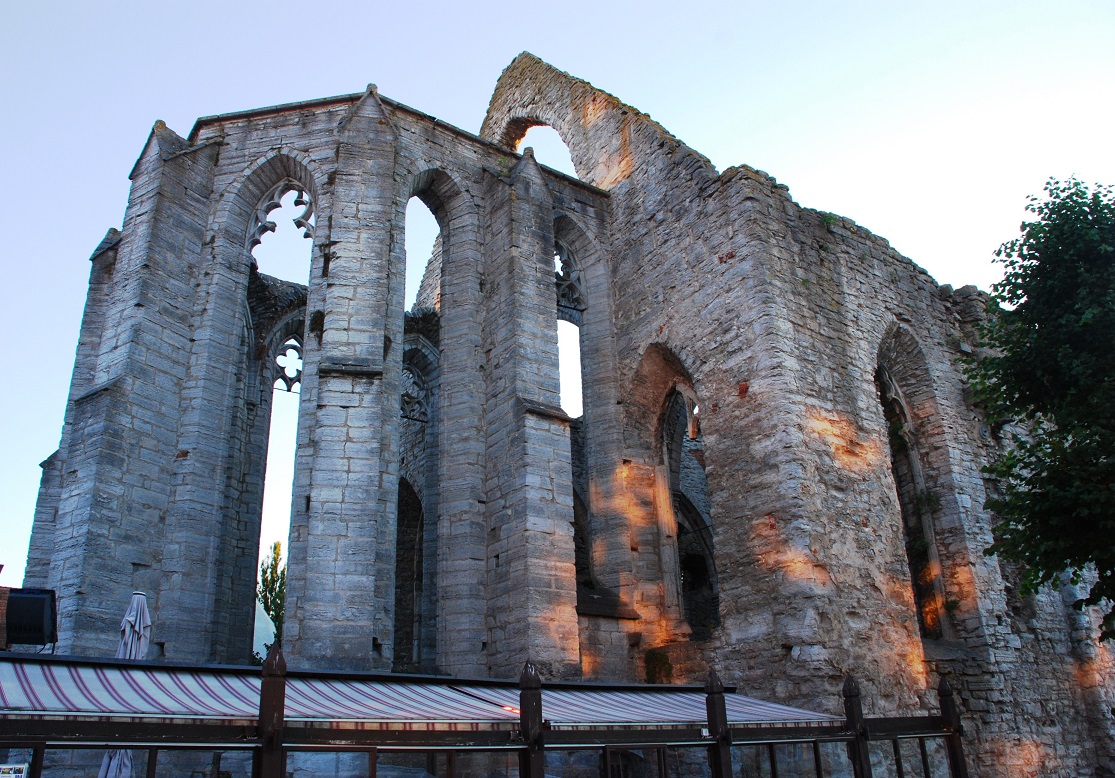
The ruins of St. Katarina, next to Stora Torget
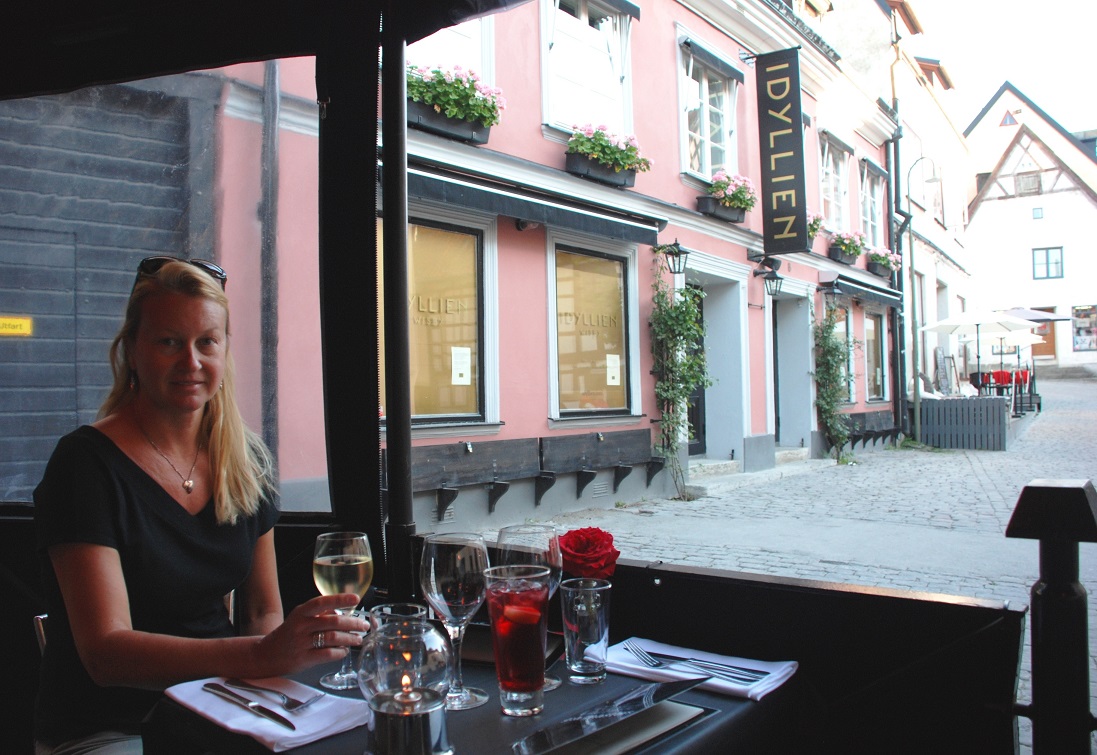
Dinner at G:a Masters in Visby
 A Traveler's Photo Journal
Great photos and descriptions of Gotland.