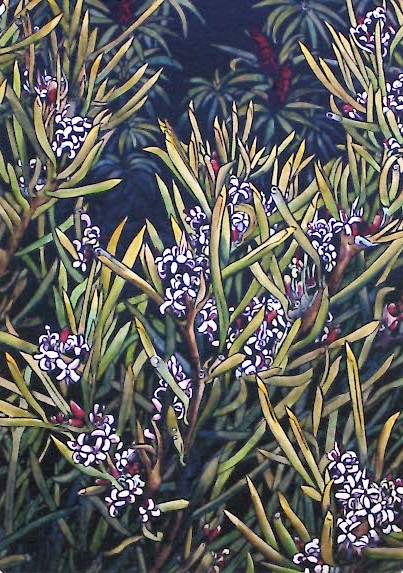
Star, or Seven Sisters Dreaming, by Justinna Napaljarri Sims
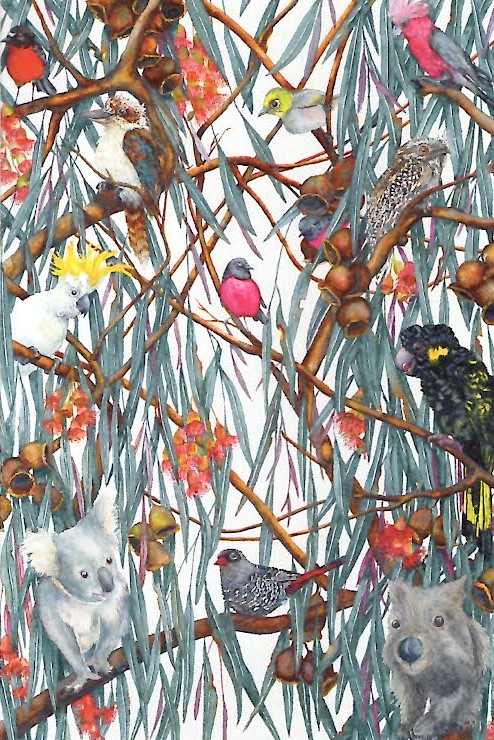
During my recent visit, I fell for several pieces of art. Unfortunately, the ones I liked were out of my price range. But I did buy cards in local art stores, an affordable alternative.
My favorite piece, Seven Sisters Dreaming (above) I found at an art store and gallery on the Hobart waterfront. The artist, Justinna Napaljarri Sims, resides in Yuendumu, 290 km north-west of Alice Springs.
My sister purchased this card in Australia and gave it to me for my birthday. It is ‘Little Penguins’ by Lisa Morgan. It was perfect and I love it. lamorgan31@gmail.com
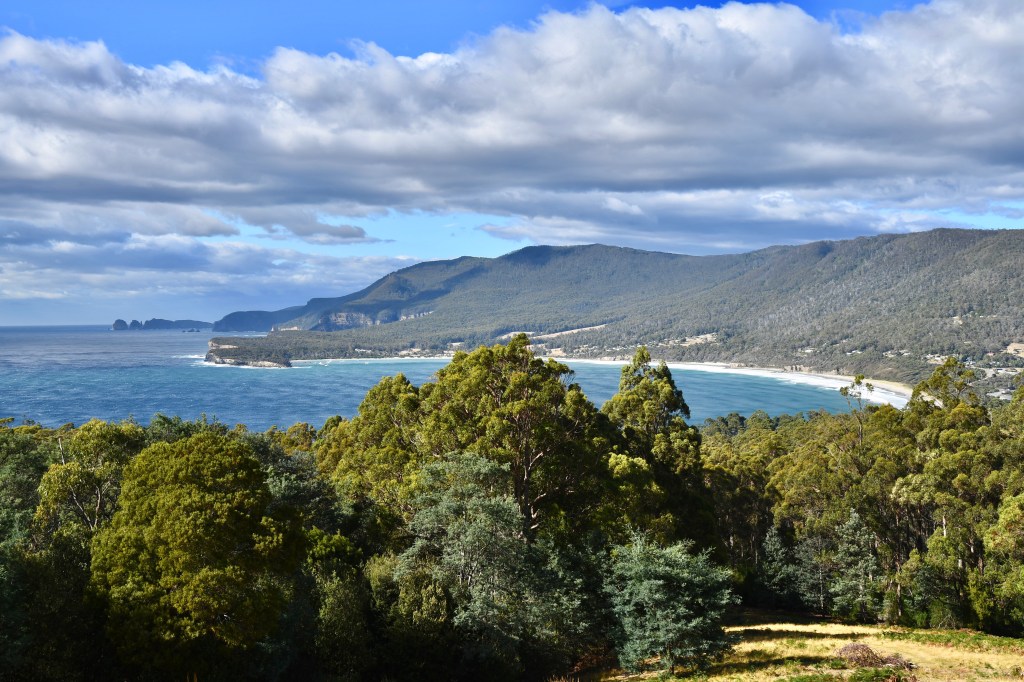
My sister and I both liked Tasmania. We liked that it is very rural, and found it even more easygoing and laid back than mainland Australia (the little island to the north according to one local Tasmanian).
We enjoyed driving the small roads and stopping in little towns. There seemed to be far fewer tourists here too, mostly older Australians and younger people looking for adventure and the great outdoors.
There are 19 national parks on Tasmania, with 40% of the island national parks, reserves and UNESCO World Heritage areas. With numerous hiking trails and campgrounds, there is almost no end to the possibilities.
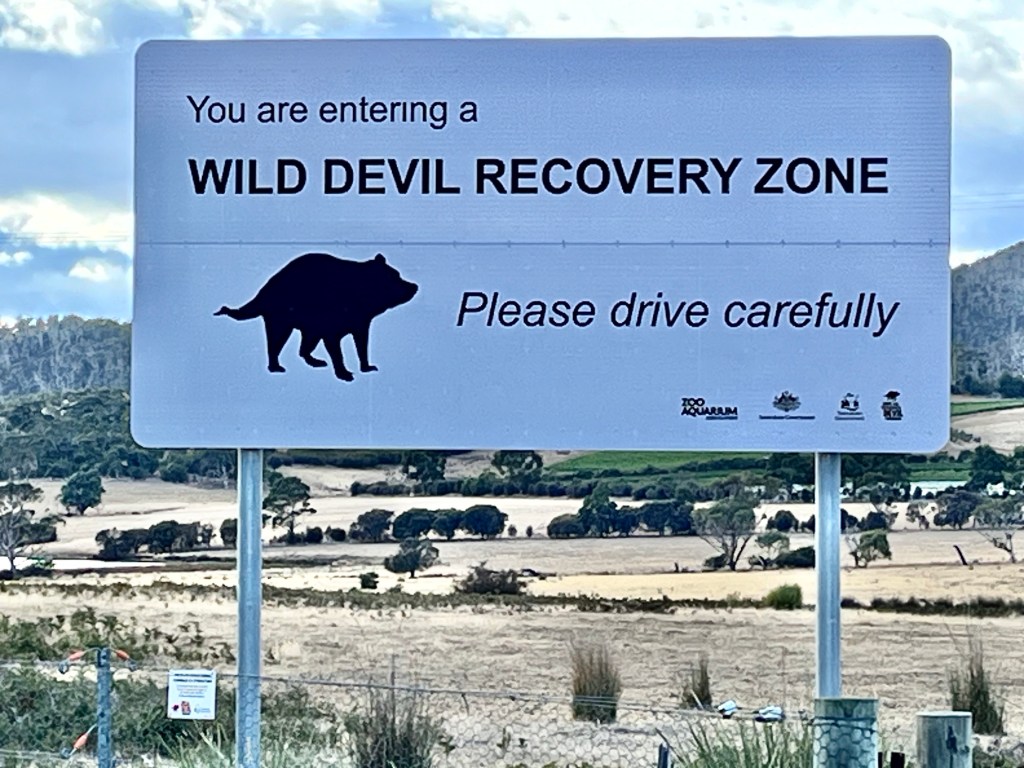
This sign got our hopes up for seeing a Tasmanian Devil, but we didn’t get so lucky. The island is still dealing with a facial tumor problem and working with scientists to find a vaccine to a deadly problem.
Before our Bay of Fires walk, we drove out to the Tasman Peninsula, and toured the historically important UNESCO World Heritage Site Port Arthur. It tells the story of the forced migration of convicts by the British Empire. You can walk all the grounds and ruins of the prison, take a boat ride around Mason Cove and Isle of the Dead, and view the instruments of punishment (cat o’ nine tails) and even try on the shackles, but the individual prisoner stories were the most interesting part of the exhibit for me.
Port Arthur.org.au
A sculpture of The Dog Line. Dogs were used to keep prisoners on Port Arthur, and discourage escapes.
From the plaque at the Dog Line sculpture.
The penitentiary building at Port Arthur, originally built as a flour mill in 1845, converted into a prison between 1854 and 1857.
The prisoners had it very rough, many held for minor offenses. The Commandant and soldiers and their families however, had a much better life. There were gardens and fountains on site.
Leaving Port Arthur, we cruised through the small town of Richmond. Just outside of town we found Pooley Wines.
A bridge in the small town of Richmond.
Some of the vines at Pooley.
Pooley Wines in Tasmania.
We found a Pinot that we liked.
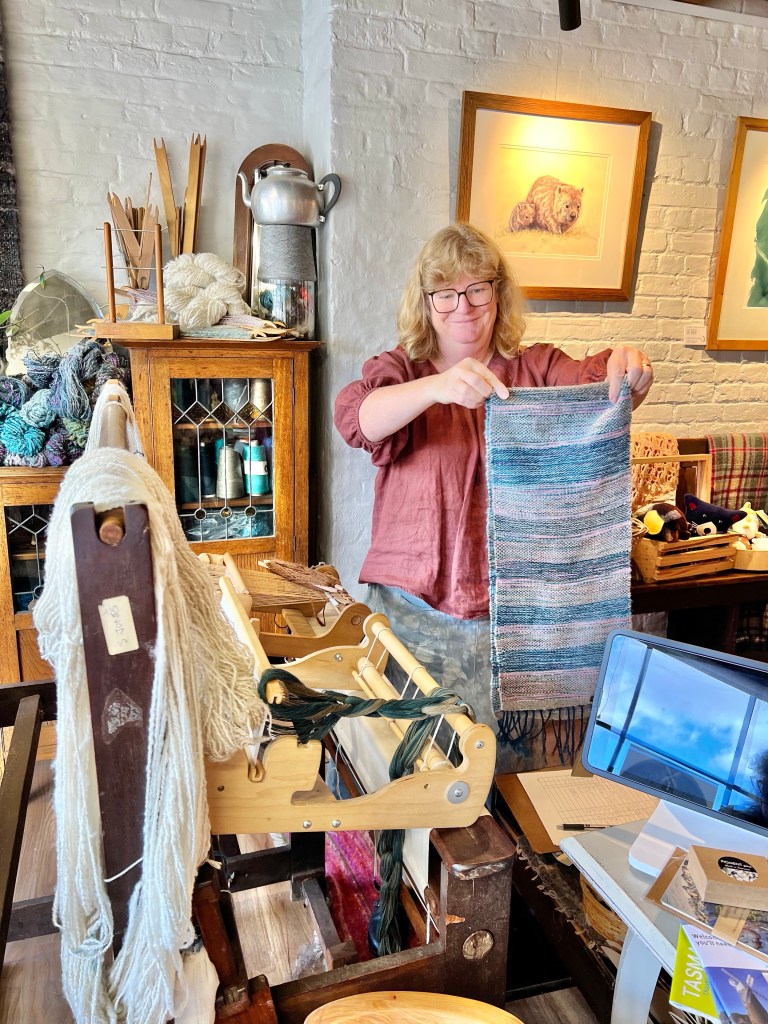
From Hobart we drove northbound on Highway 1 – the inland route – making its way through dry valleys and fields of sheep towards Launceston, passing through small towns, two of which are Oatlands and Ross. We stopped in Oatlands for coffee and walked up and down the one Main Street (no traffic lights). Stopping in at the Weaver’s Cottages Studio, we met Oscar, the owners adorable dog, and walked through the mill.
The weaver herself, at Weaver’s Cottage in Oatlands, Tasmania, holding a scarf she wove next to the loom she used to create it,
The Callington Mill, built in 1837, has been restored and is in full working order. hobartandbeyond.com.au
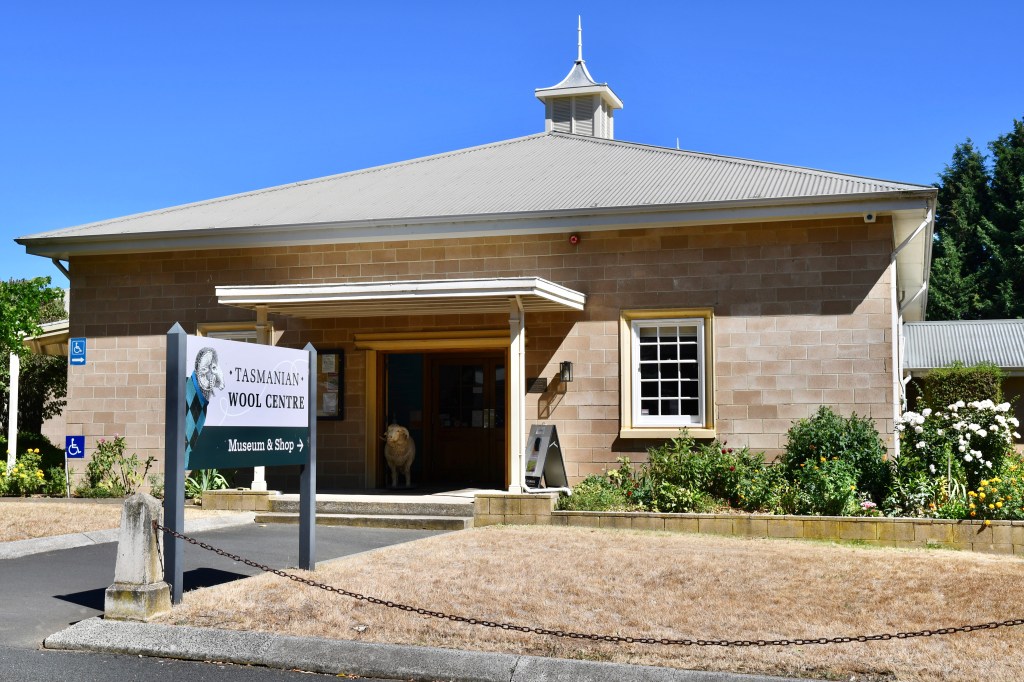
In Ross we stopped to take a look at the site of the women’s prison, and also found the Tasmanian Wool Centre.
Any question we ever had about the Tasmanian sheep/wool industry was answered at the Tasmanian Wool Centre in the small town of Ross. They were selling locally made products, including beautiful sweaters, dresses, and anything else you can imagine made from wool.
An exhibit of wool clothing at The Wool Centre.
There were piles of all the different types of wool which you could dig your hands in and really feel the difference in the wool. It was interesting.
Tasmanian sheep have won many ribbons and trophies.
We continued our drive northward and stayed the night at the Quamby Estate outside of Launceston and not far from Hadsby, where the Tasmanian Walking Co is based and we met to start the walk.
The Quamby Estate
After completing the Bay of Fires walk, we spent the following day checking out the area north of Launceston, known as the Tamar Valley.
Tamarvalley.com.au
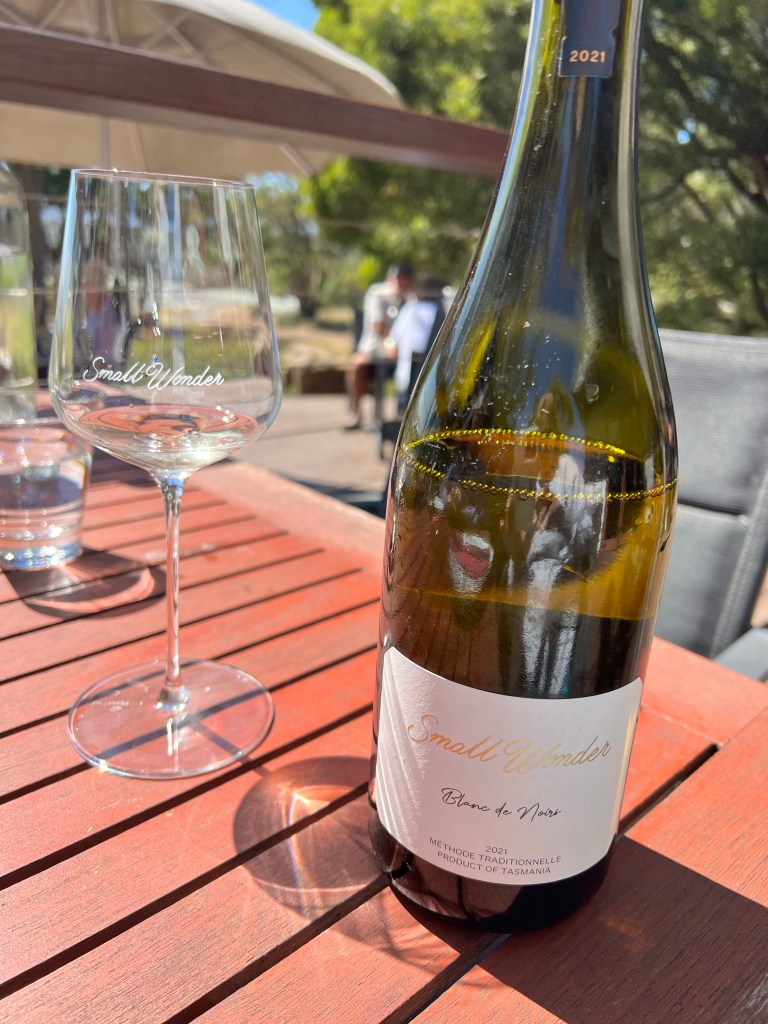
They have some lovely rural areas and small settlements. We stopped into Small Wonders Vineyard for a wine tasting and enjoyed the beautiful but very windy view. Most of the time here has been windy, with only a few early mornings with calm winds.
The entrance to Small Wonder Winery, smallwonderwines.com.au.
Lovely artsy labels on the wine at Small Wonder.
Just past George Town we walked around a historic lighthouse and passed a sign for Fairy Penguin tours. Here is another spot where you can go out at sunset and watch the smallest penguins in the world come into shore to visit their burrows. I think this would be a good spot as there would be far fewer people to deal with here than at Phillip Island where we saw them. It was great and we were happy we did it, but to see them here with a handful of people would be really nice.
The Low Head Lighthouse near George Town, Tasmania.
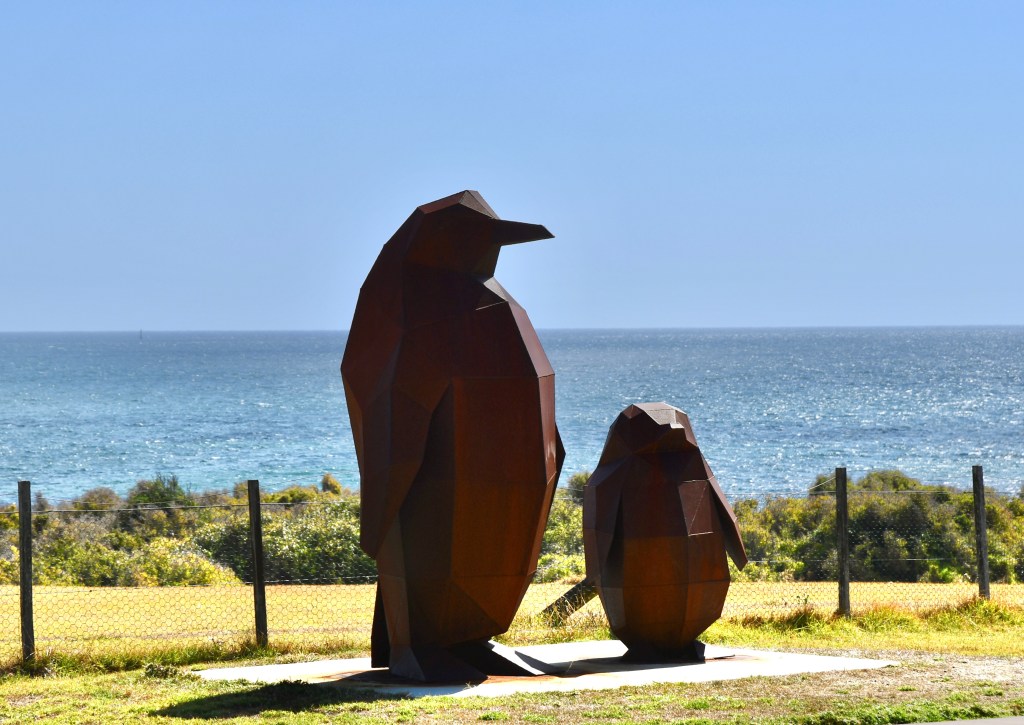
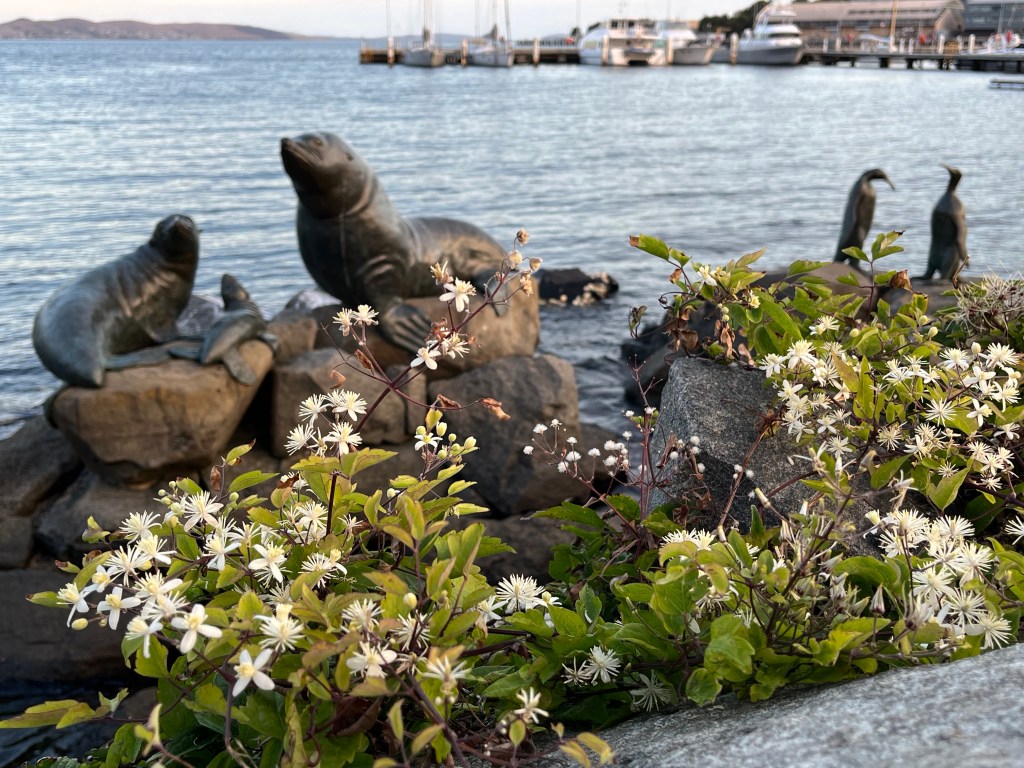
Penguin sculptures.
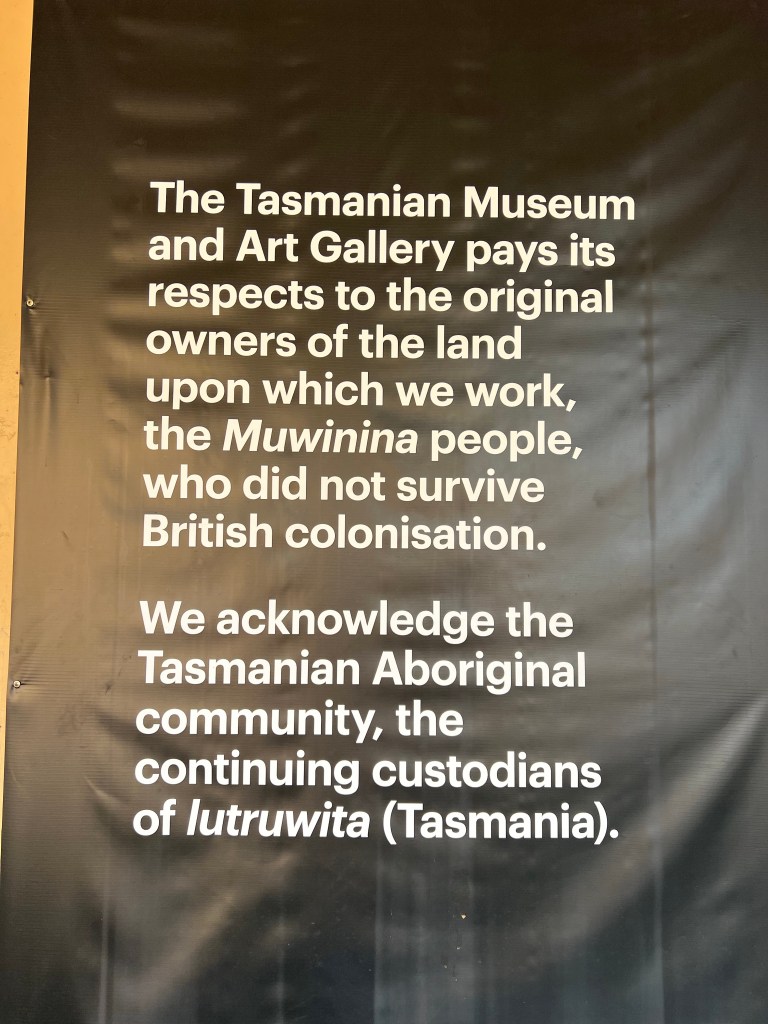
We found it refreshing that at nearly every opportunity, whether it be a corporation or government entity, whoever was making an announcement began with something such as “…we want to acknowledge the indigenous people who were stewards of this land for thousands of years and did not relinquish sovereignty.” This happened on tours, on signs at museums, and in the public address on Quantas Airlines.
At the Port Arthur UNESCO World Heritage Site:
The Port Arthur Historic Site Management Authority acknowledges and wishes to pay respect to the Tasmanian Aboriginal Community, in particular, the Pydarerme people of the Paredarerme language group, as the traditional, original and continuing custodians of the land on which the Port Arthur Historic Site stands today. Cultural sites representing many tens of thousands of years of occupation still remain in the area, though many were destroyed or pillaged as a result of British settlement of the region.
You may have seen a few previous stories and pictures I’ve posted of my birthday in fun and unusual locations; a tree top stand in Botswana with a herd of elephants, swimming with wild dolphins on the coast of Mozambique, and Le Jules Verne restaurant at the Eiffel Tower in Paris, are a few.
I spent this birthday at the Tasmanian Walking Co. Eco Lodge on the northeast coast of Tasmania. But you can’t book a room and drive to the lodge. You have to earn your stay by walking here.
Early morning at the Quamby Estate in
The Tasmanian Walking Co Signature Bay of Fires Walk started for us on Saturday morning March 2nd. We were picked up from the Quamby Estate where we spent the night, and driven to the meeting point at the Red Feather Inn. There we packed what we would need for the next four days into backpacks, each person carrying their own.
Our walking route.
Our walking group pre-walk photo. From left to right are guides Charlie and Emily, then myself, and guests Amber, Kristina, Rebecca, Suzette, Mark, Nick and Tanya.
After a briefing we climbed into a van and drove a few hours to our starting point of the walk, Stumpys Bay in the Mount William National Park (Bill’s Hill).
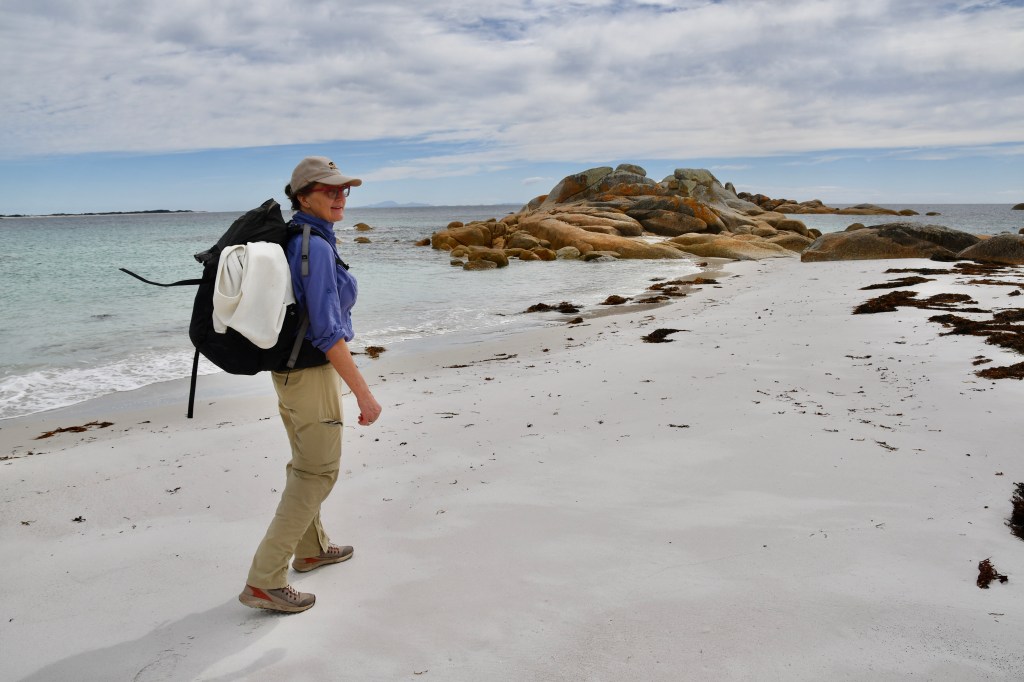
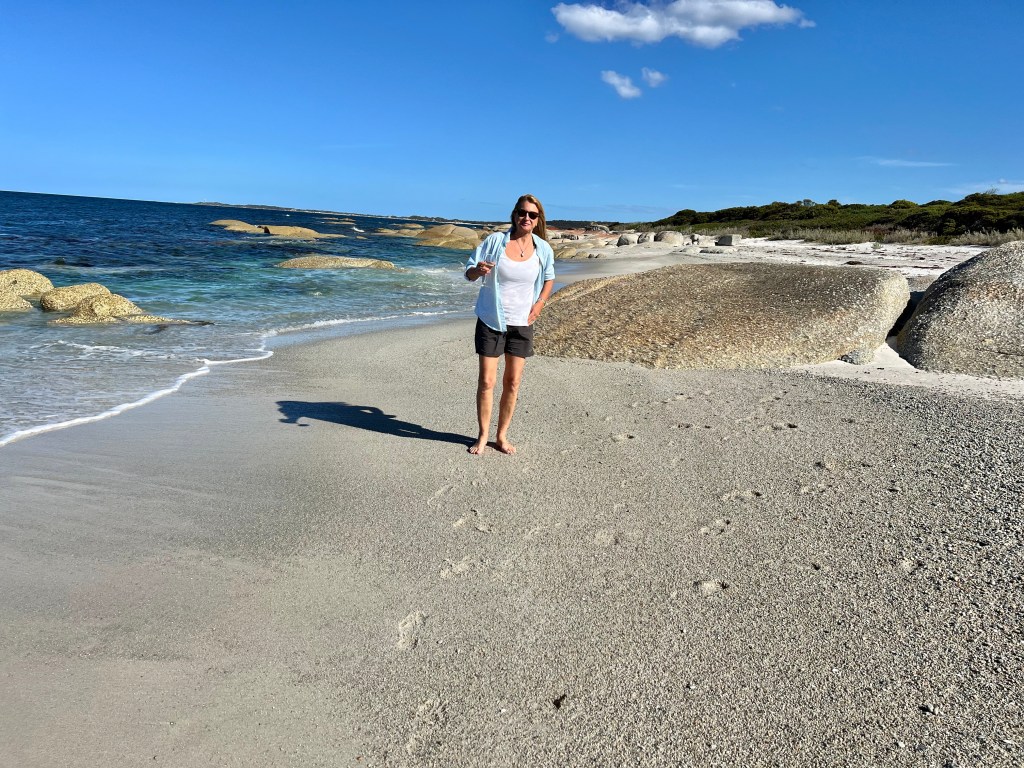
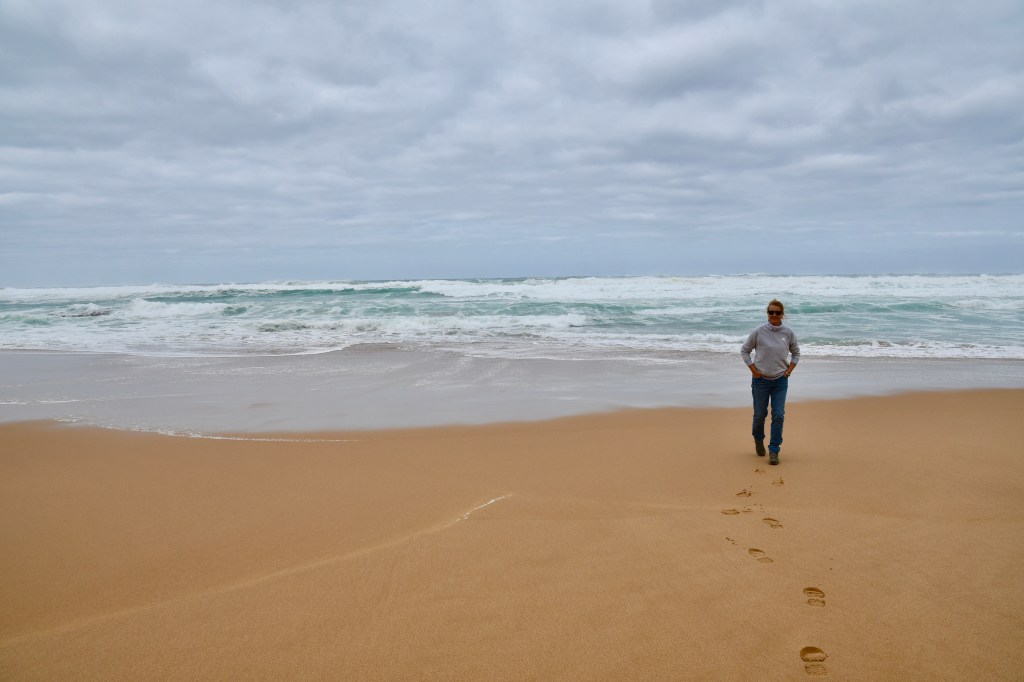
My sister beach walking.
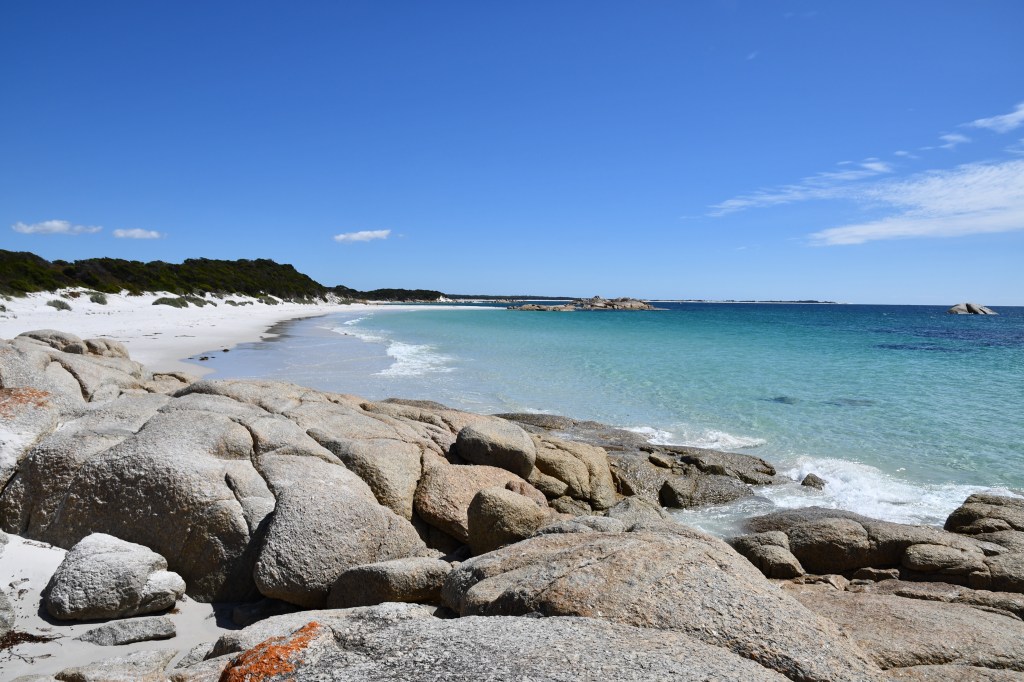
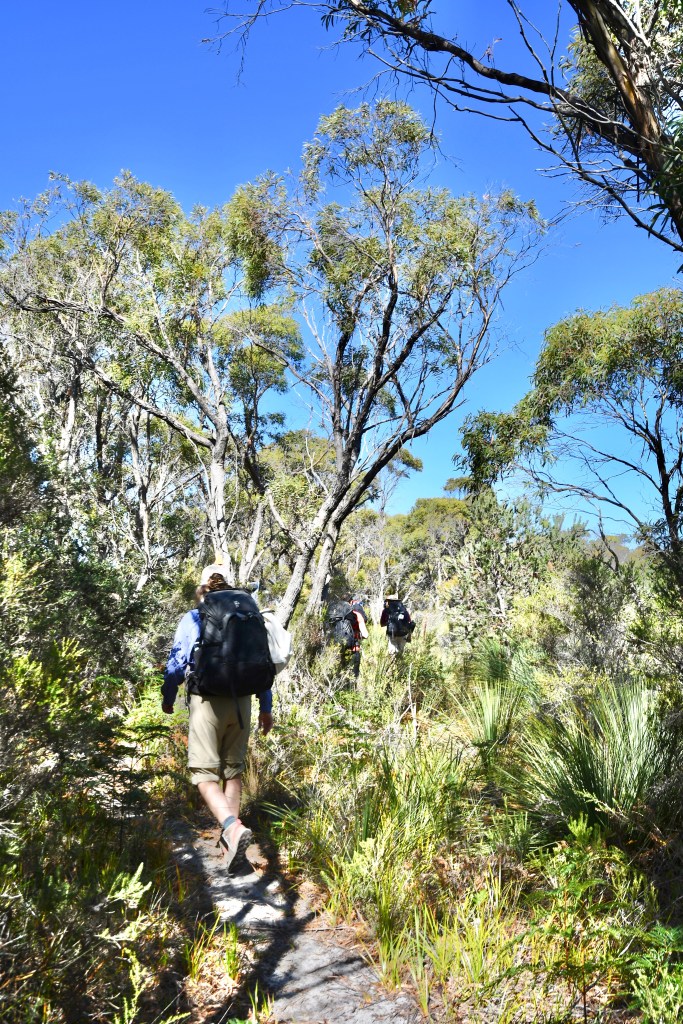
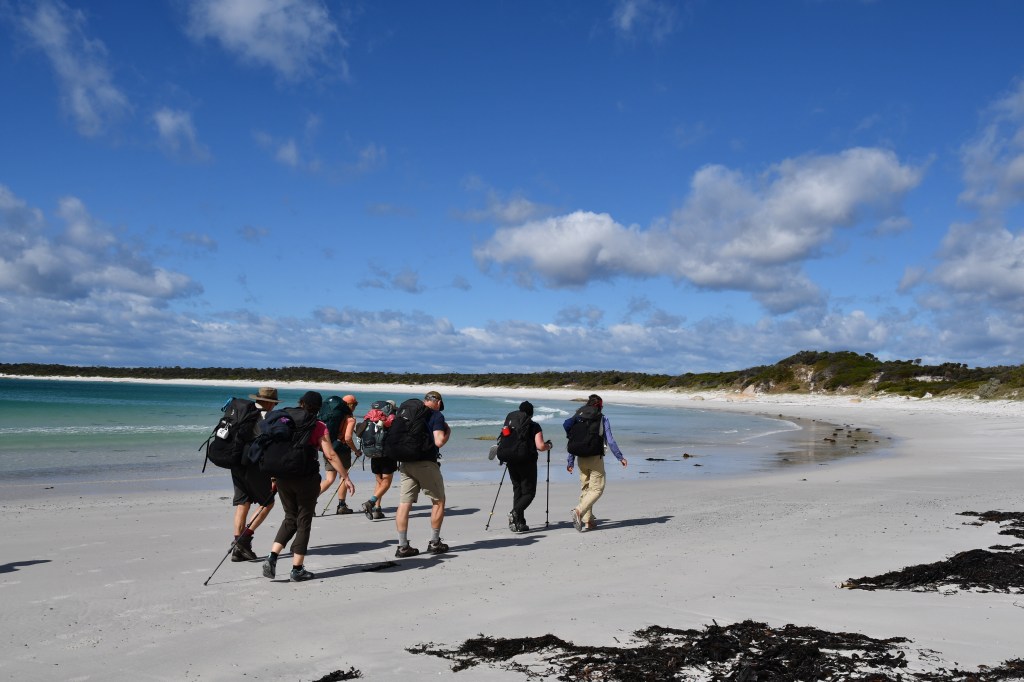
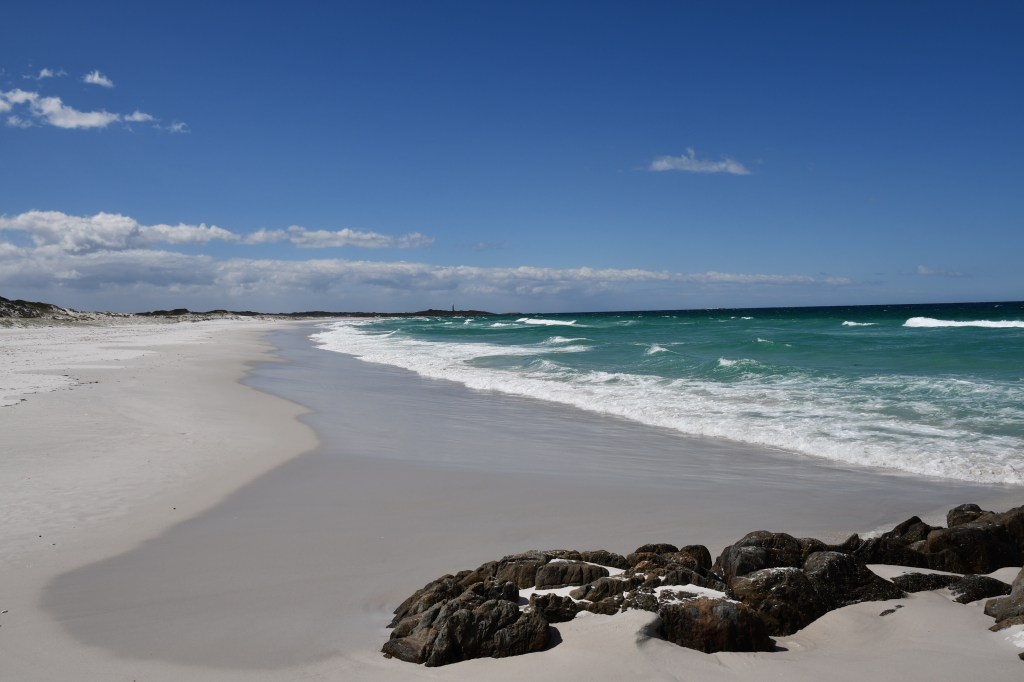
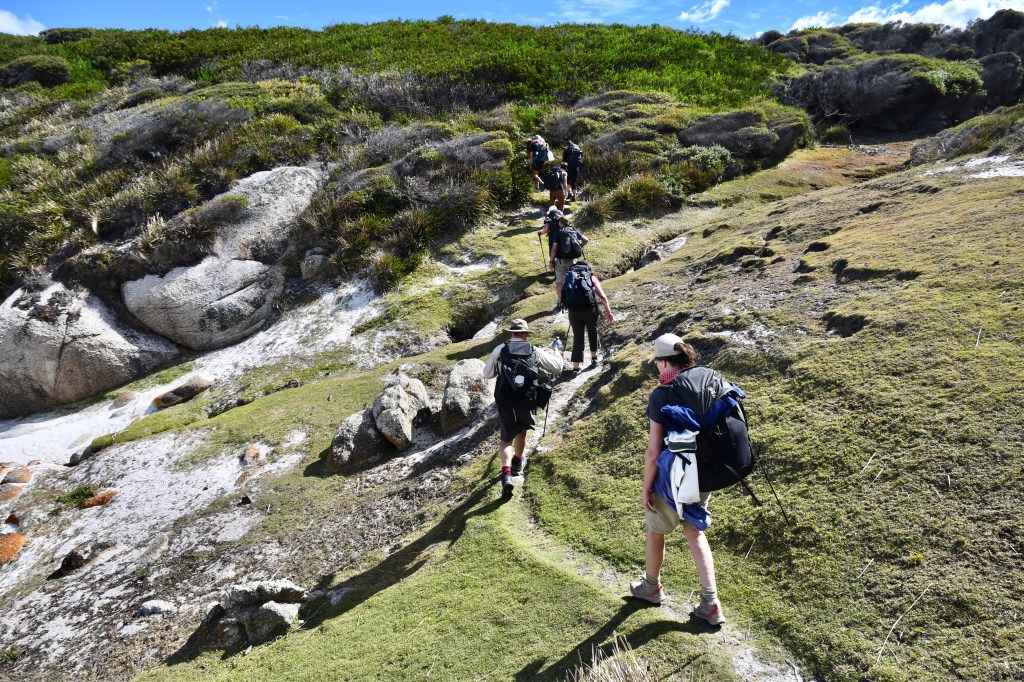
Day One of the walk was southbound along the coast. We walked along the beach, climbed boulders, strolled through marsupial lawns, and occasionally picked our way through scruby forest.
A found abalone shell.
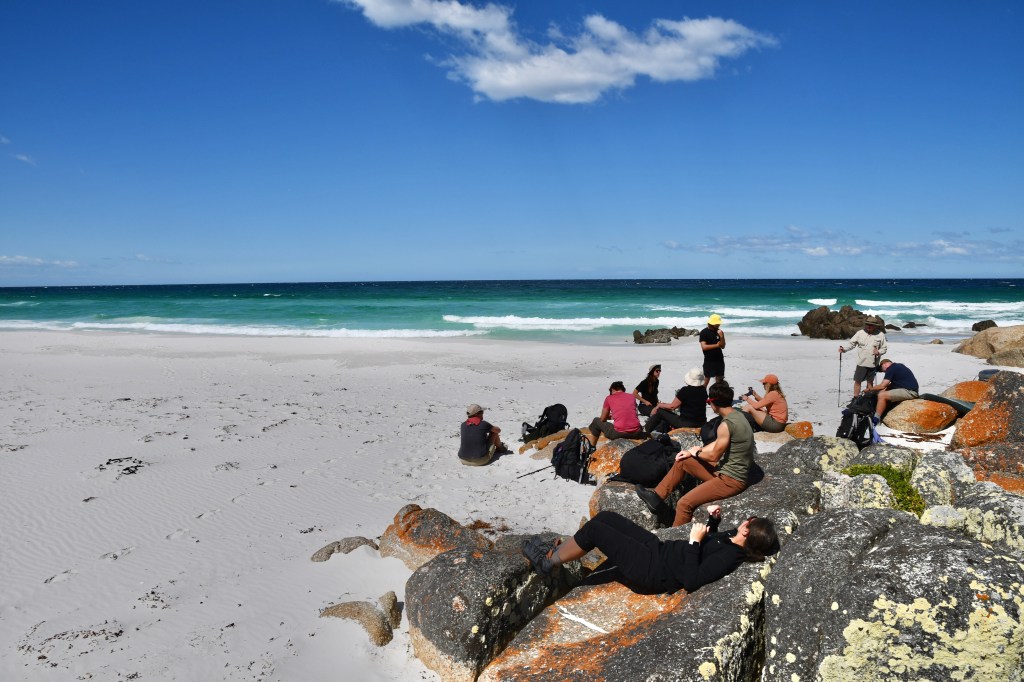
We stopped for lunch on some boulders.
Kristina and Amber at our lunch spot on the first day.
In total, we covered around 8 or 9 miles on our first day. We carried a pack lunch and water, and all our gear.
At the end of the day we spent the night in a semi permanent camp, named Forester Camp, just south of Cod Bay.
We carried sleeping bag liners and a pillow case with us, and used the bags and blankets provided. It was quite peaceful, with the sound of the waves. The guides did a wonderful job of making dinner. We even had cheese and crackers with wine, but no hot showers.
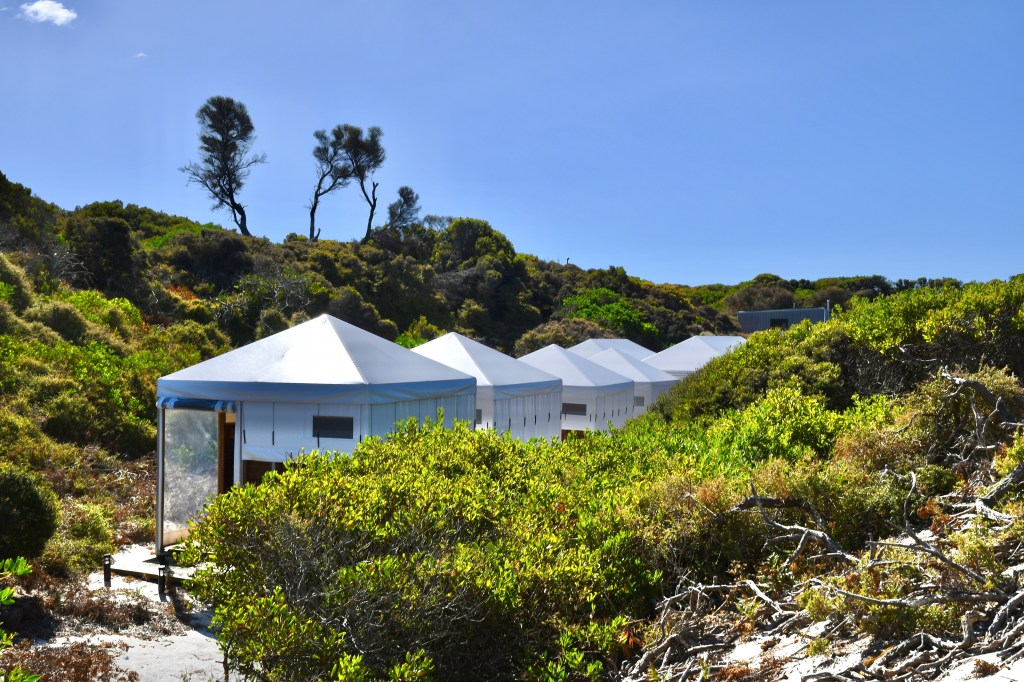
Forester Camp on the first night.
Inside the tent.
Enjoying a glass of Tasmanian wine at the end of the first days walk.
Heading out in the morning on our second day of the walk.
On Day Two we headed southbound out of camp along Purdon Bay.
A young wallaby watches us hike past.
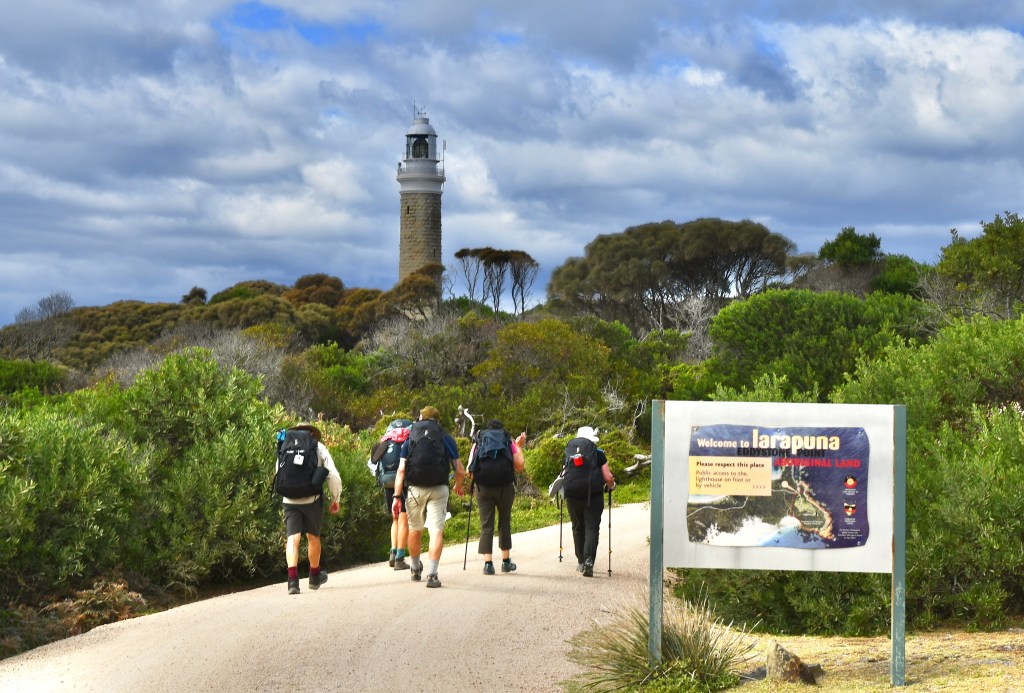
Eddystone Point lighthouse. Larapuna is the Palawa name for the point. The Palawa are the local indigenous people.
Taking a break.
The Bay of Fires, looking back towards the lighthouse.
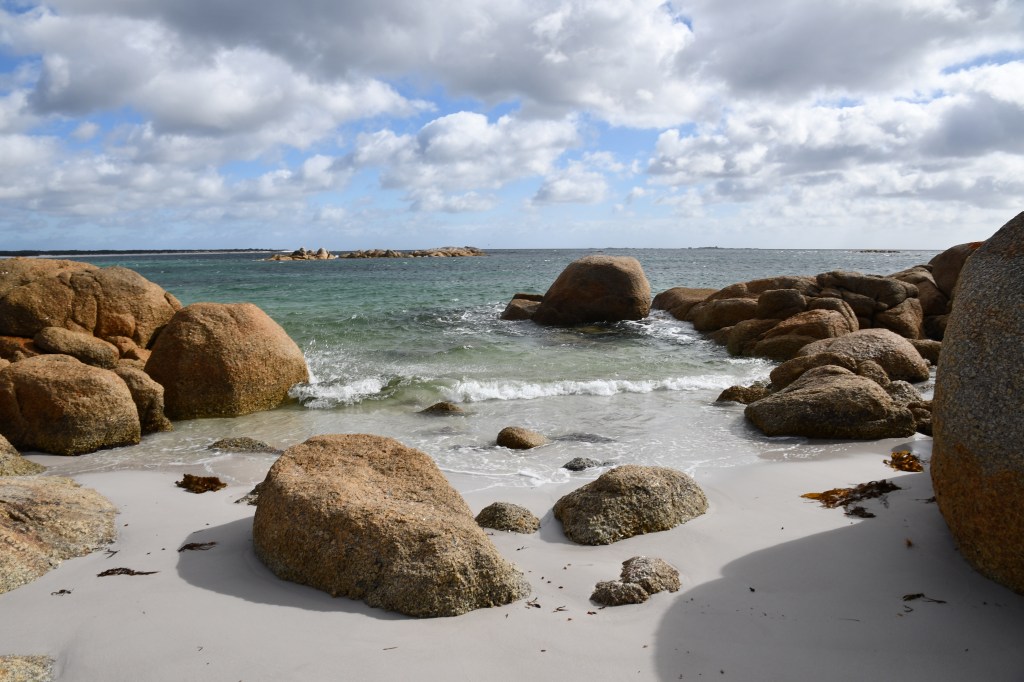
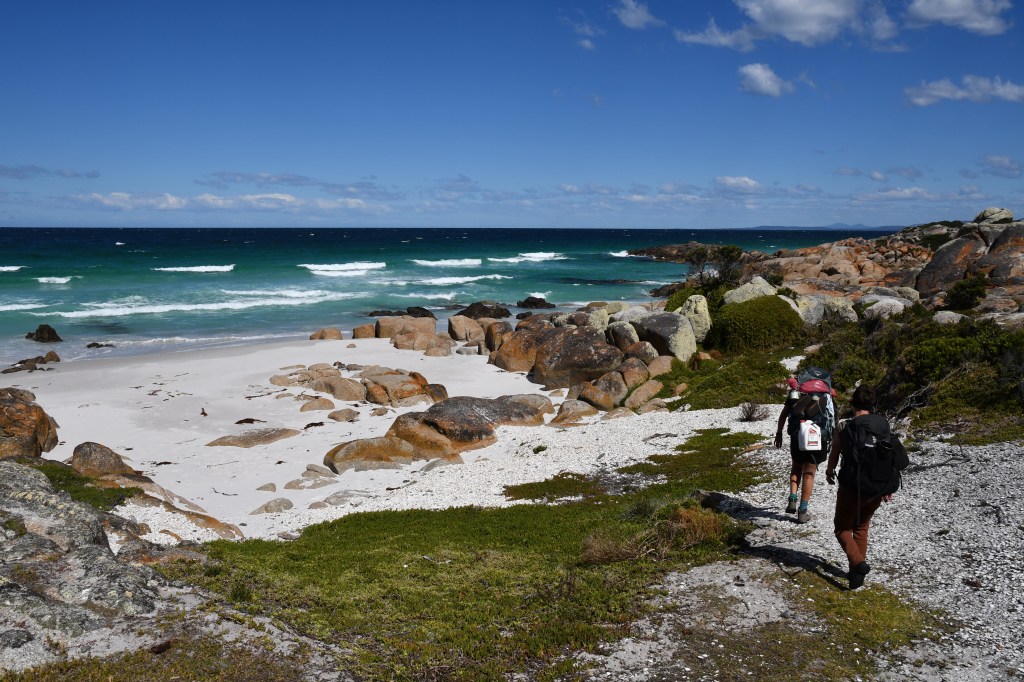
One of the beautiful beaches between boulders as we neared the lodge.
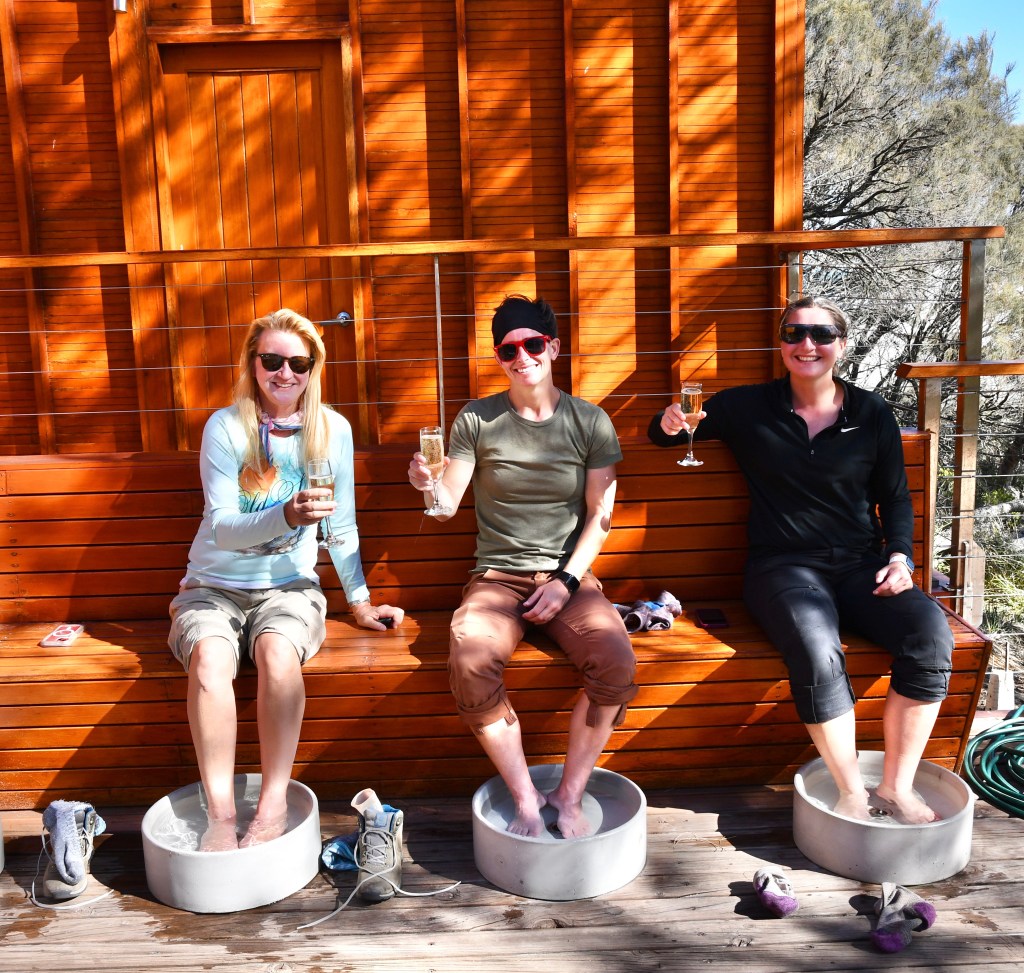
A peppermint foot soak and sparkling Tasmanian wine was our reward for reaching the lodge at the end of two days of walking.
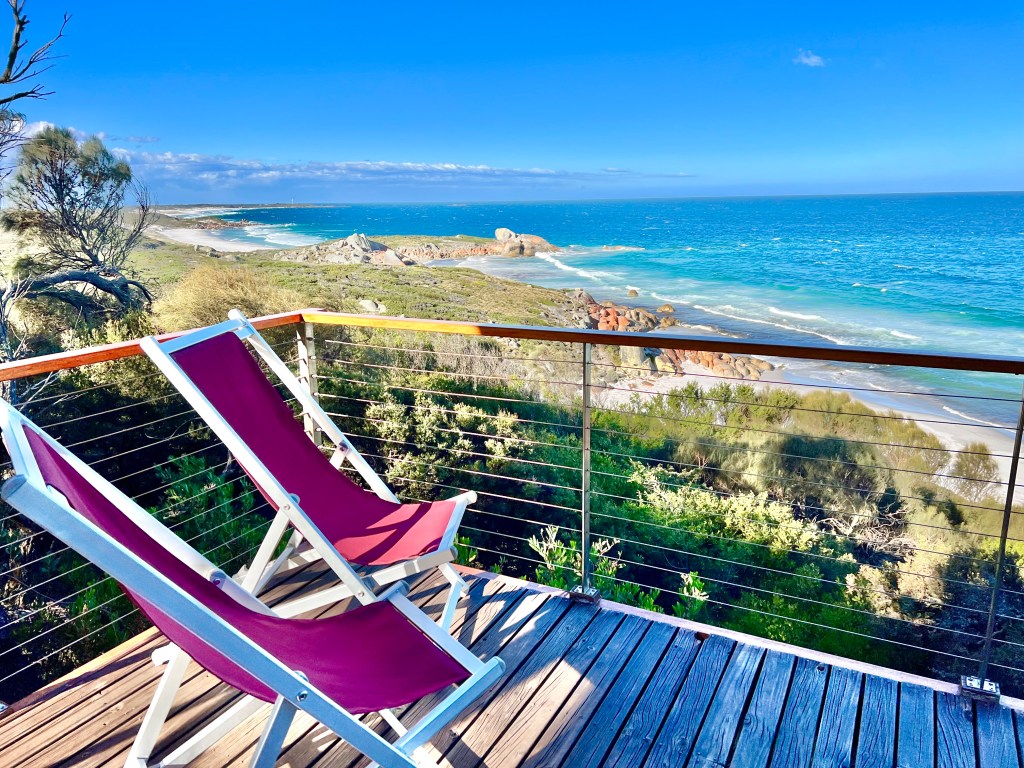
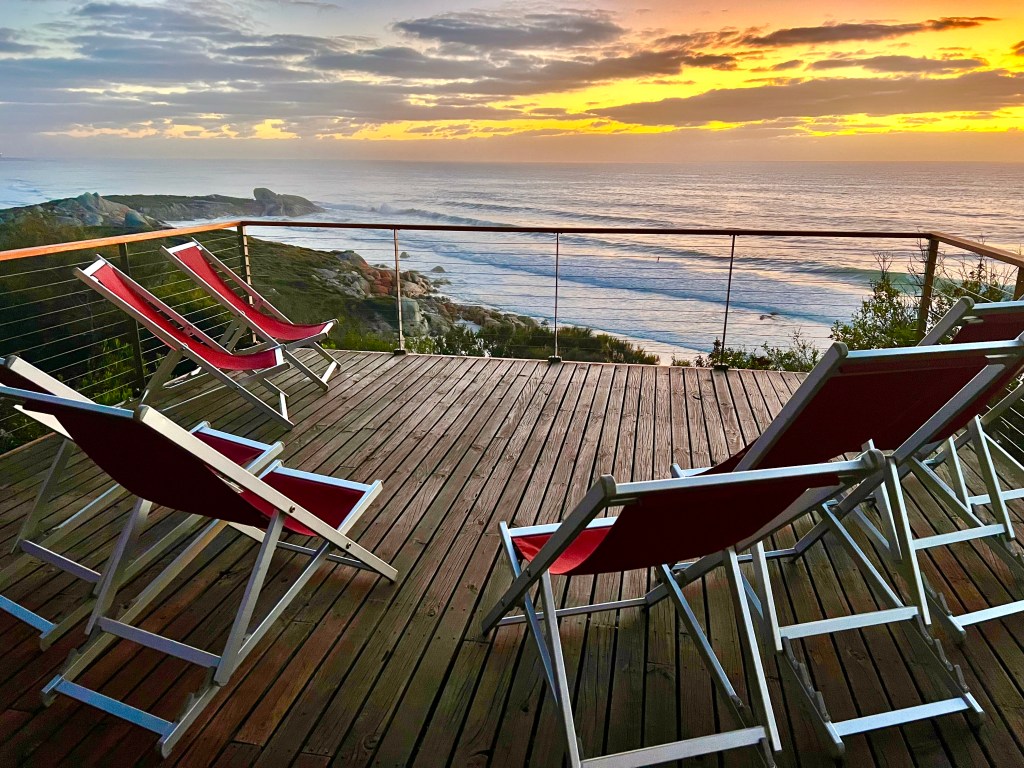
The view from the deck of the lodge.
Day Two iPhone steps total was around 27,000 steps, somewhere around 11 or 12 miles. The final hill climb to the lodge was the toughest part.
Our room at the lodge.
The lodge common area.
Sunrise from the deck.
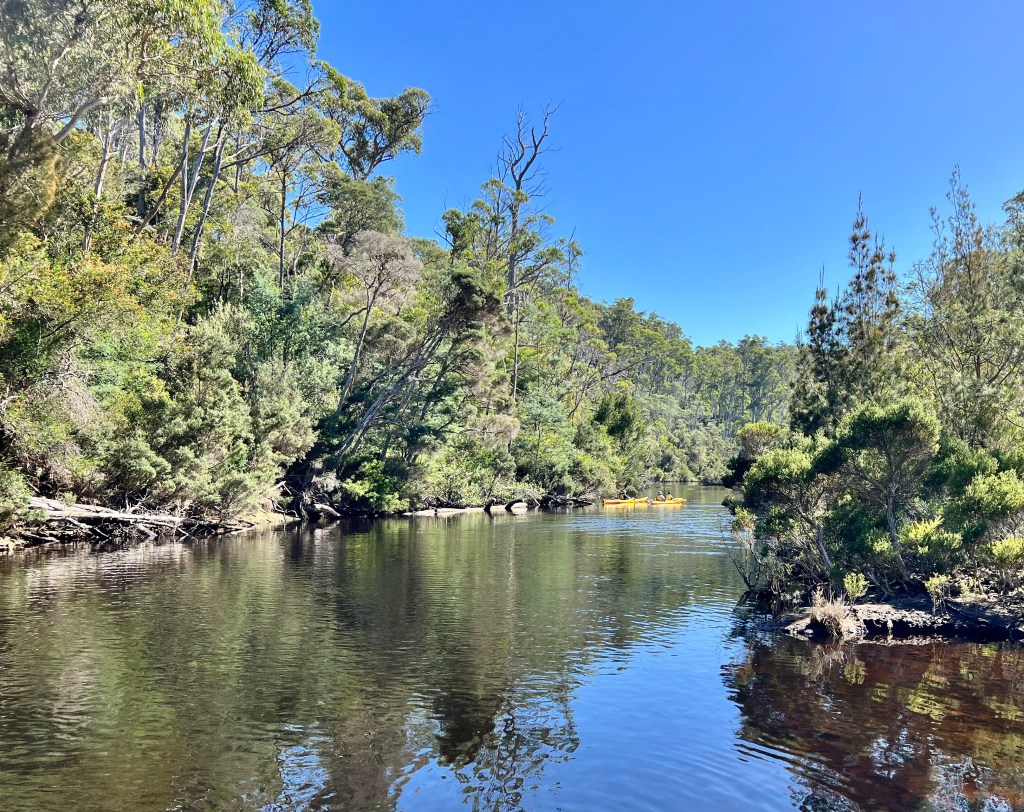
Day Three of the hike was a walk and ride to our kayak point on the Anson River, and kayaking out to Anson Bay. We saw two Tasmanian wedge tail eagles and five yellow tail black cockatoos. One of our Australian co-walkers told us that when you see a black cockatoo, each one you see means one day of rain. No word on when the rain is supposed to start, as we’ve had no rain since arriving in Australia.
After the paddle we walked back to the lodge through sand dunes, beach, and rocks. Today was especially nice because we didn’t have to carry our backpacks.
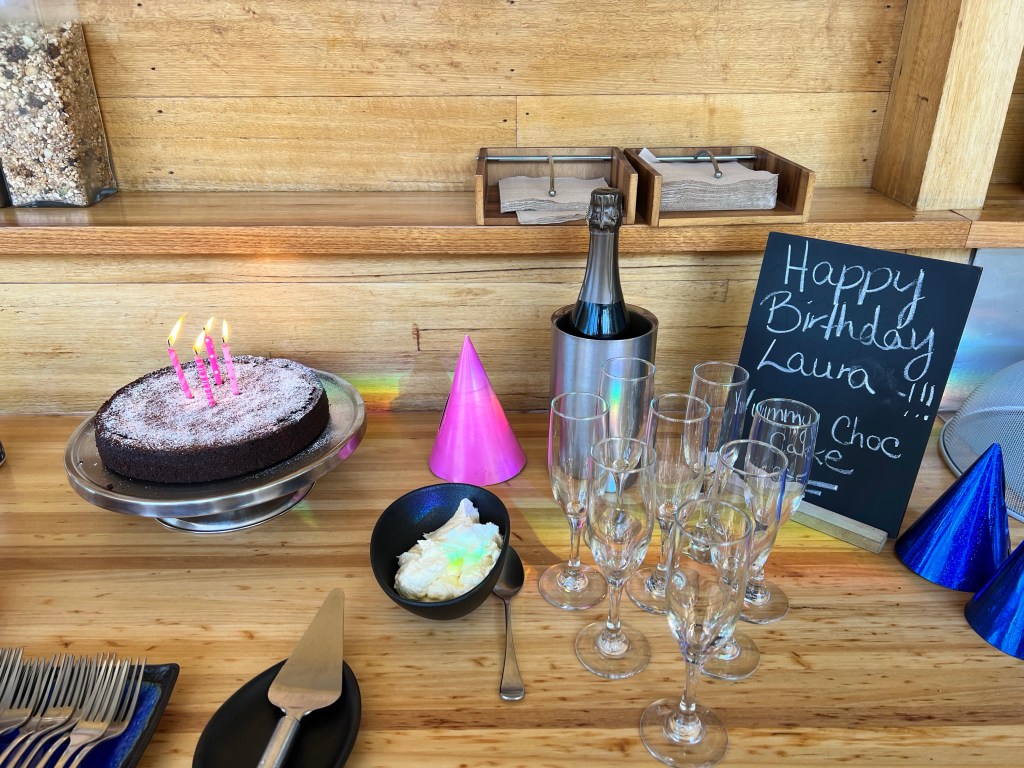
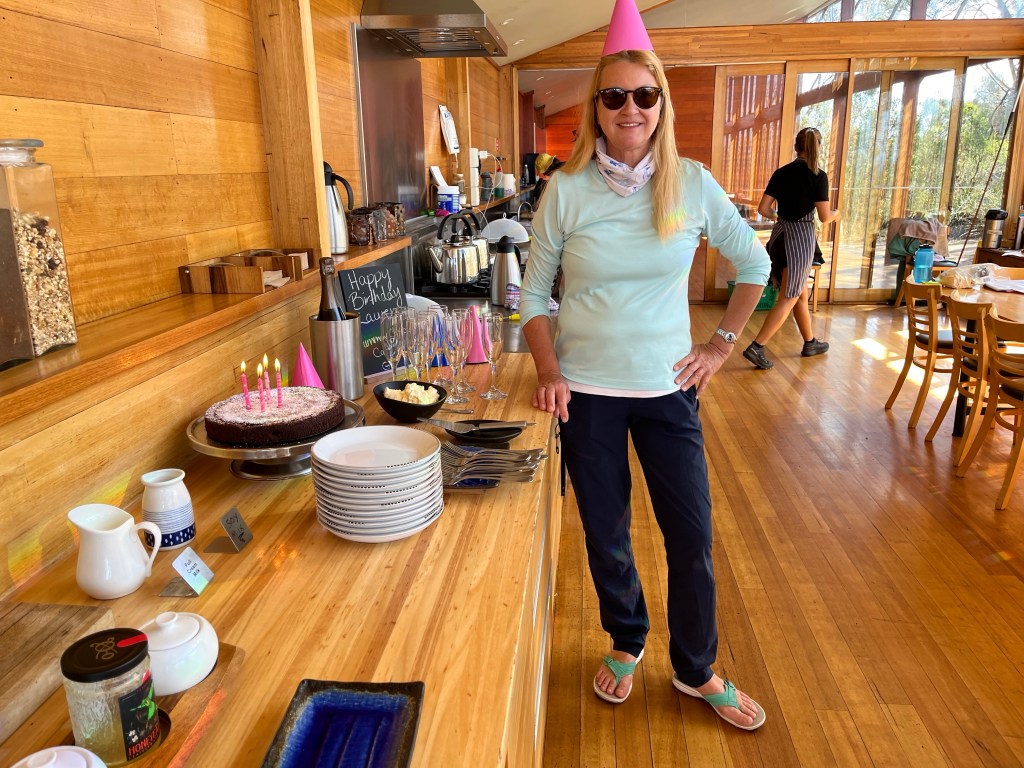
Day Three was my birthday and upon our return to the lodge, we had birthday cake. And I had the best tub soak and view I’ve ever had and a lovely massage at the lodge spa.
Soaking tub with a view.
Sparkling Tasmanian wine in a tub with a view. While I was out there I heard a kookaburra laugh.
Day Four was a leisurely morning. At noon we strapped on our packs one last time for a 1 1/2 hour walk out to the road for pick up. A few hours drive and we were back in Hadspen at the Red Feather Inn. Our wonderful and kind hearted guides Celeste and Charlie popped a few bottles of sparkling Tasmanian wine and we toasted four great days of hiking, scenery, food, and comradery.
A short one hour flight from Melbourne had us landing in Hobart, Tasmania. It’s a small airport. The kind we like. A bus ride into town and we were checking into our hotel by 6 PM.
We walked around the waterfront and had seafood chowder in the oldest continuously operating pub in Australia, the Hope & Anchor.
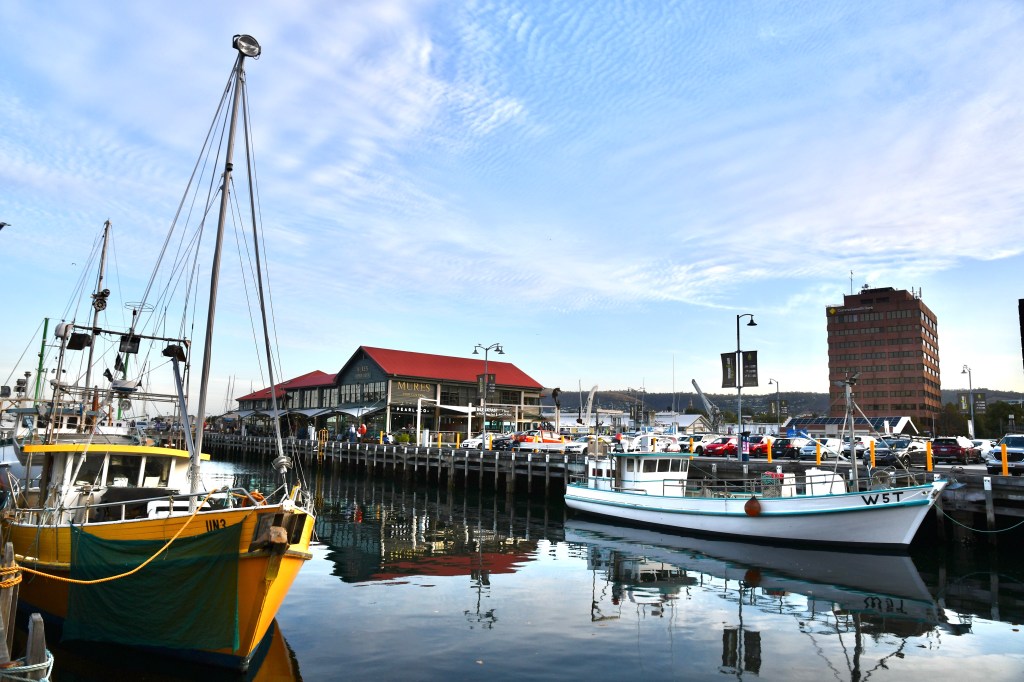
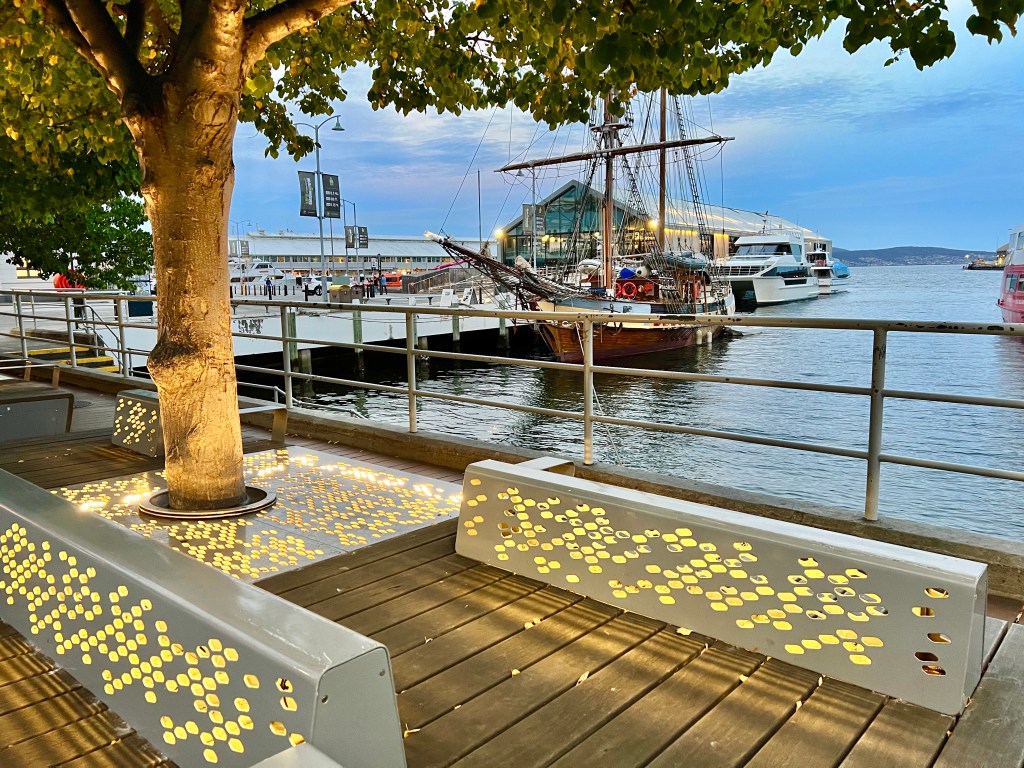
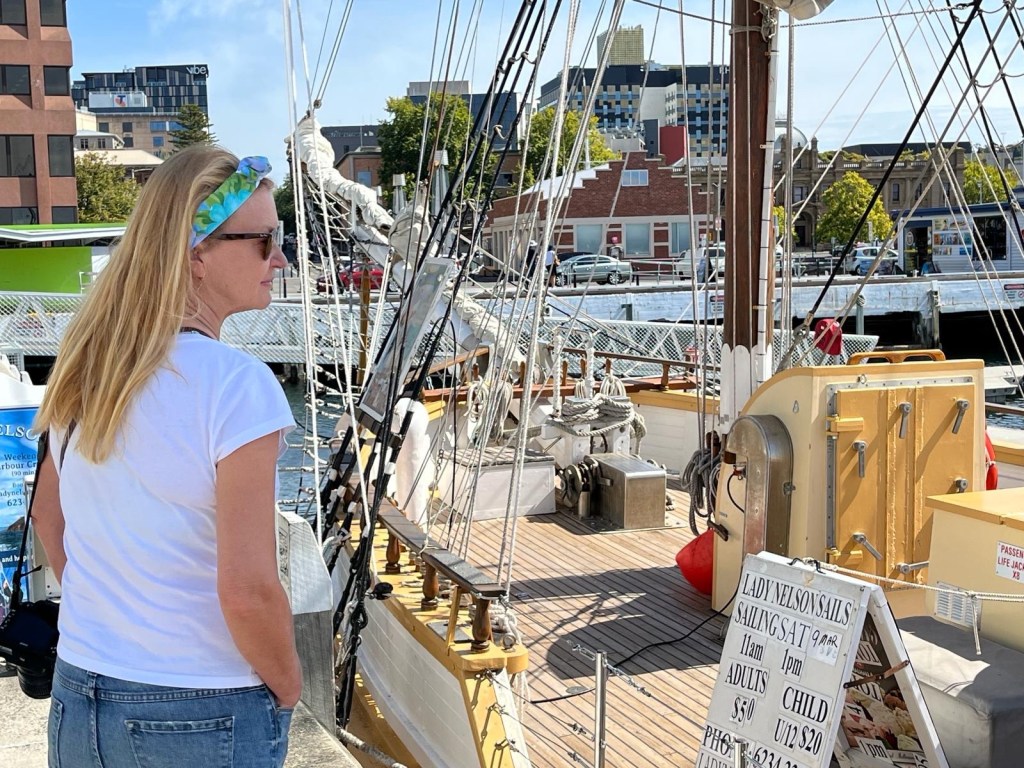
It’s a small but nice waterfront. Lots of restaurants. The cruise ships seem to be the smaller ones.
We spent one day visiting museums and shops on the waterfront.
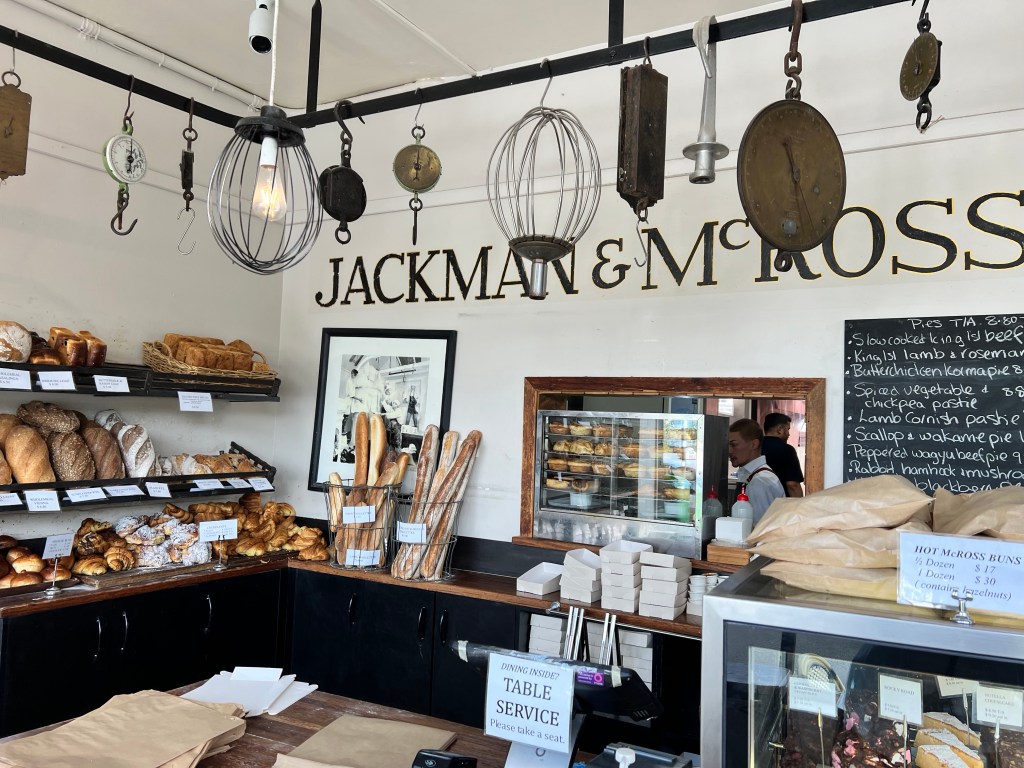
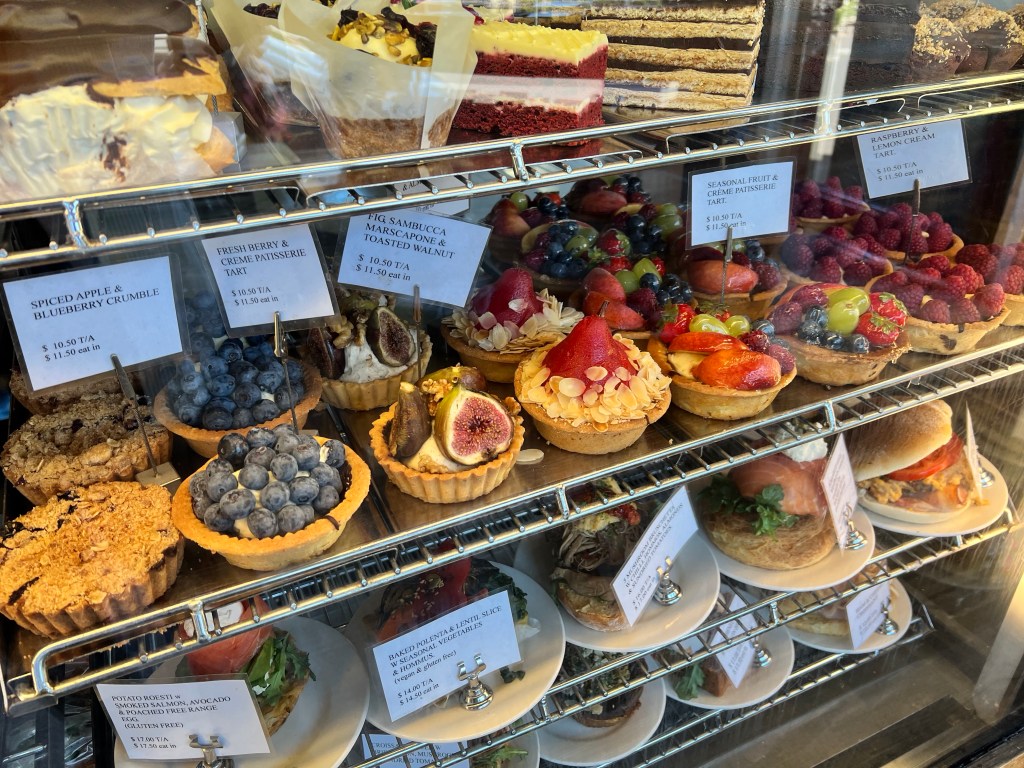
We had an amazing breakfast at Jackman & McRoss. It lasted us all day.
Poached eggs, spinach and carmelized onions on organic bread.
The Millinery in Salamanca Place sells beautiful hats.
We walked through the Mawson’s Huts Replica Museum. The Mawson expedition to Antarctica departed Hobart in 1911.
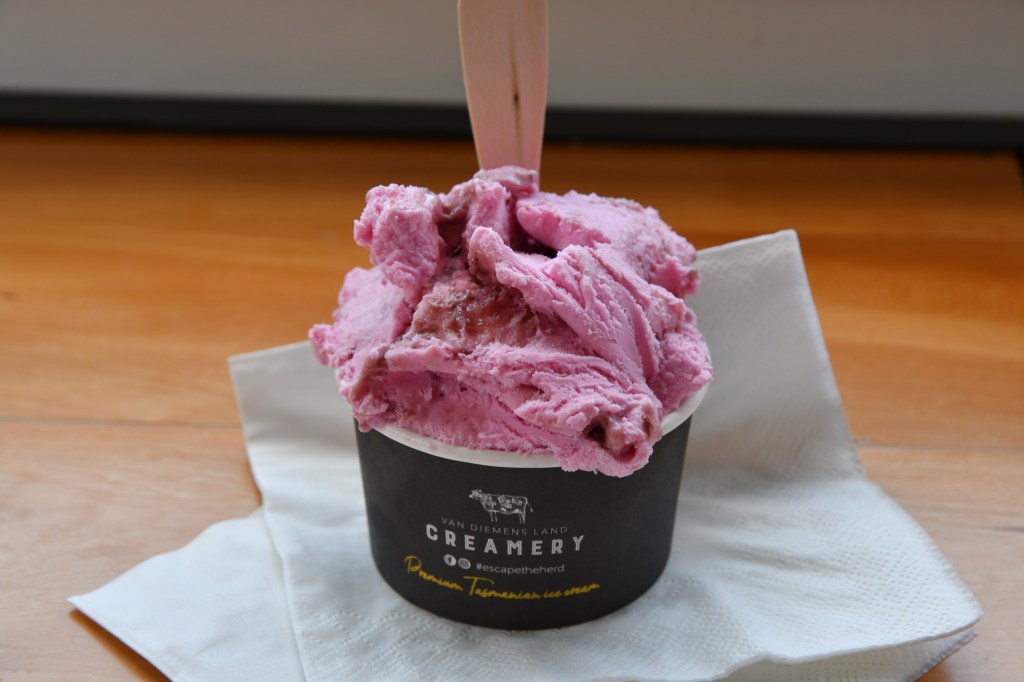
Tasmanian made ice cream.
Art shop on the waterfront.
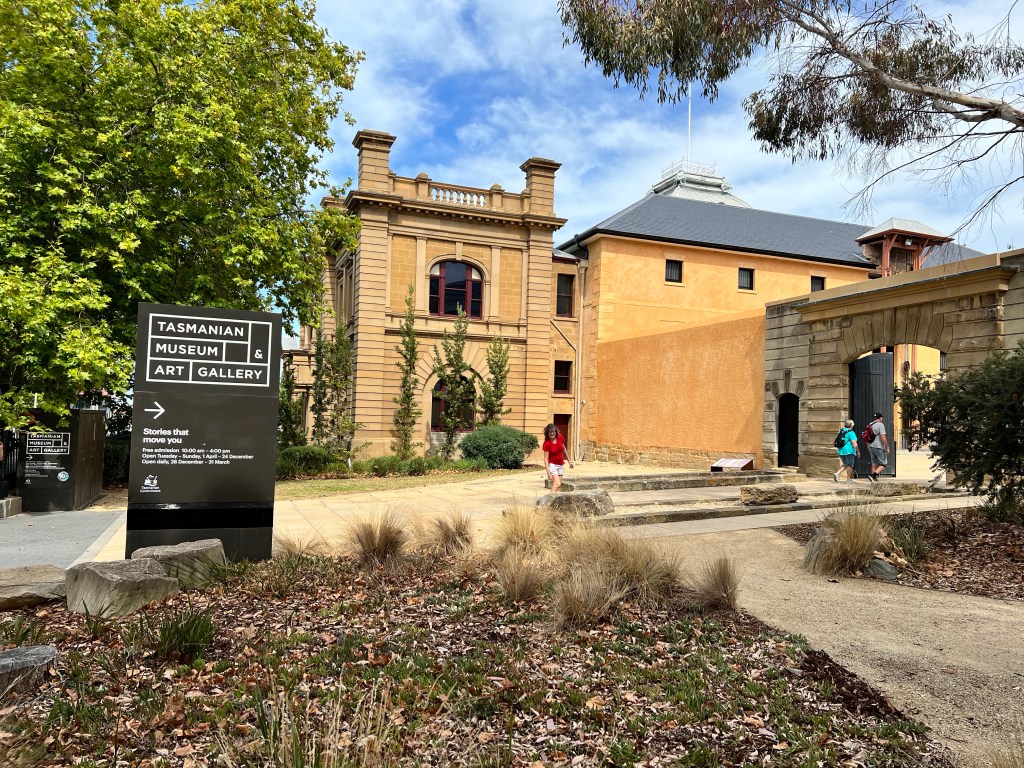
We visited the Tasmanian Museum & Art Gallery. It is shocking and disturbing what was inflicted upon the indigenous people by the English “colonizers”. The entire local population and culture were wiped out. The museum tells the stories and documents the atrocities.
Tasmanian Museum & Art Gallery
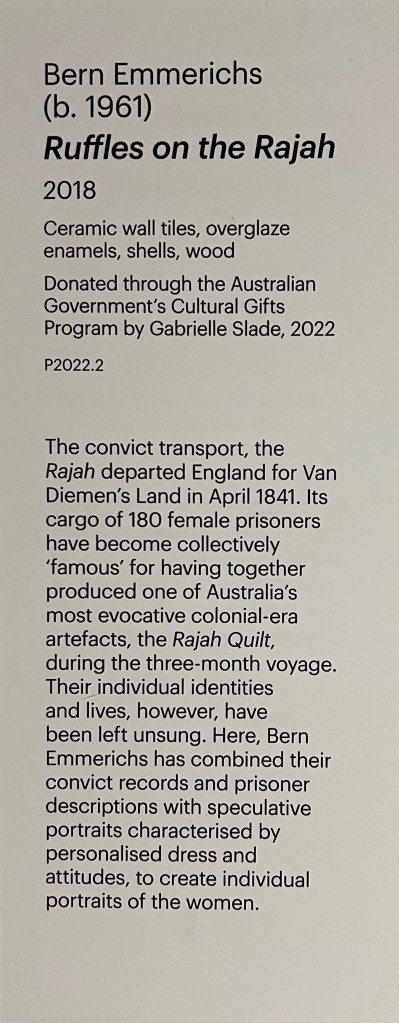
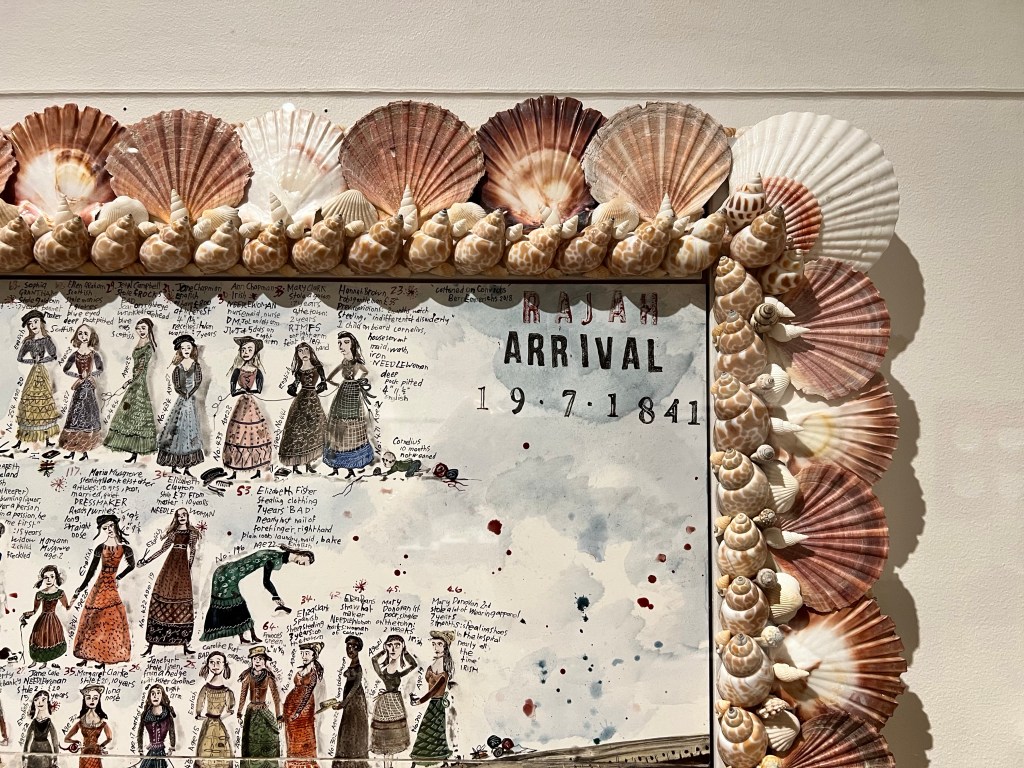
One particular piece of art I found fascinating. It details the lives of women arrested for the most minor offenses – stealing food, crimes of poverty, etc – then sent to Australia/Tasmania for years of hard labor or worse.
Ruffles on the Rajah. By Bern Emmerichs, 2018. Ceramic wall tiles, overglaze enamels, shells, wood.
The artist depicted the 180 female prisoners from convict record descriptions.
The Rajah set sail in April 1841.
The Rajah arrived in July 1841.
Australiangeographic.com.au
The National Gallery of Australia in Canberra has on display The Rajah quilt, created by the unidentified women of the HMS Rajah convict ship.
We started our morning with a walk on the Rye beach, just two blocks from the cottage. It’s a very dog friendly beach.
The signs for koalas were everywhere, but we only saw them the two times on the Great Ocean Road.
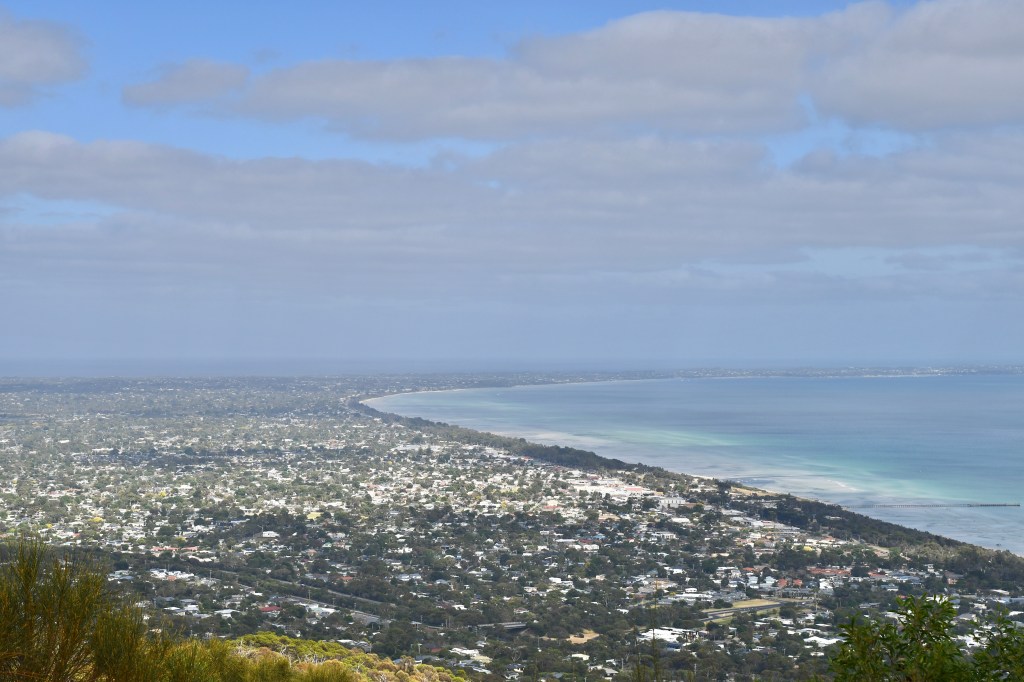
The first stop of the day was Arthur’s Seat, the highest point on the peninsula. We walked the gardens and the trails and enjoyed the view.
From Arthur’s Seat we drove to the Crittenden Winery. We tasted two whites, a rosé, and three reds. It surprised us that we liked the Pinot Gris and the rosé the best. The Pinot Noirs we’ve tasted so far have been quite different from the Oregon Pinots that we’re used to. The winemaker’s dog joined us.
Crittendenwines.com.au
After our Crittenden wine tasting we headed to Pt. Leo Estate, once the private estate of one of the richest Australians and now one of the best known vineyards in the area. They have several lunch options including a very high end “Laura Experience”, which we did not do. (My sister said she’d been having the Laura Experience for years and found them over-rated!) We had a wonderful lunch accompanied by a Pt. Leo Estate Pinot. The food was very good and this Pinot Noir was more to our liking.
Pt. Leo Estate
Cured ocean trout & Ko Wee Rup asparagus tart, chèvre, sauce Girondine, Yarra Valley trout roe
King crab caramelle pasta, smoked shiitake XO, fried school prawns
Grilled barramundi, romescada, Daniels’ Run black beans, fish dumpling
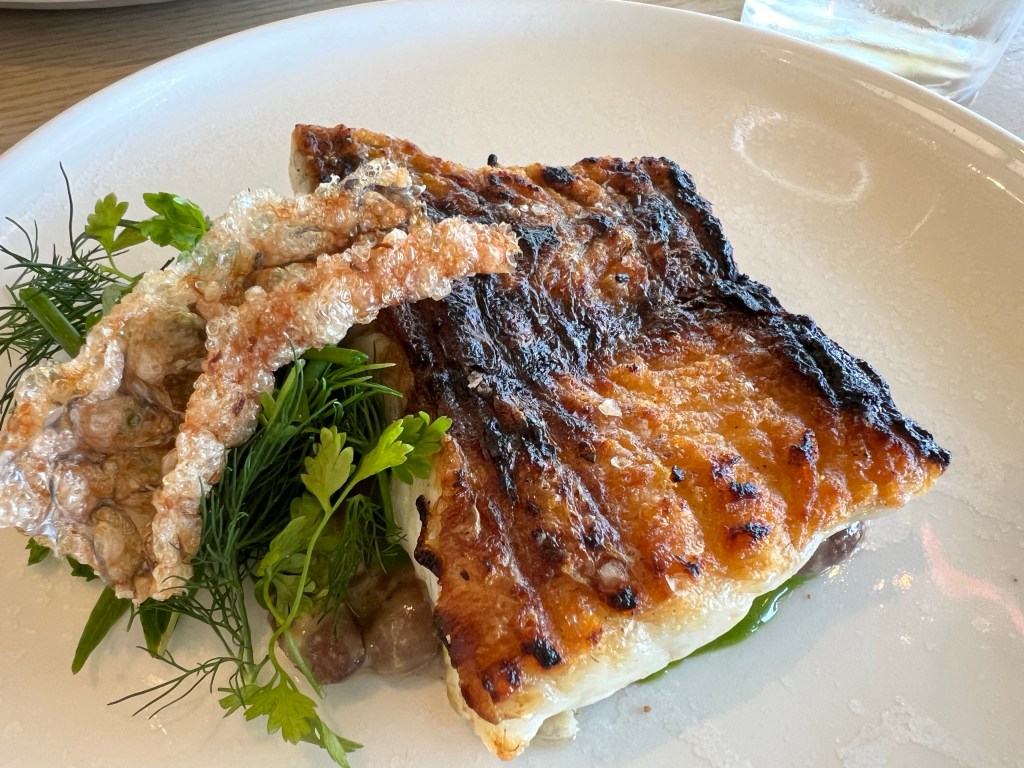
Wood-fired snapper, Estate sparkling bearer blanc, Five Tales Farm fioretto.
2019 Pt Leo Estate Pinot Noir
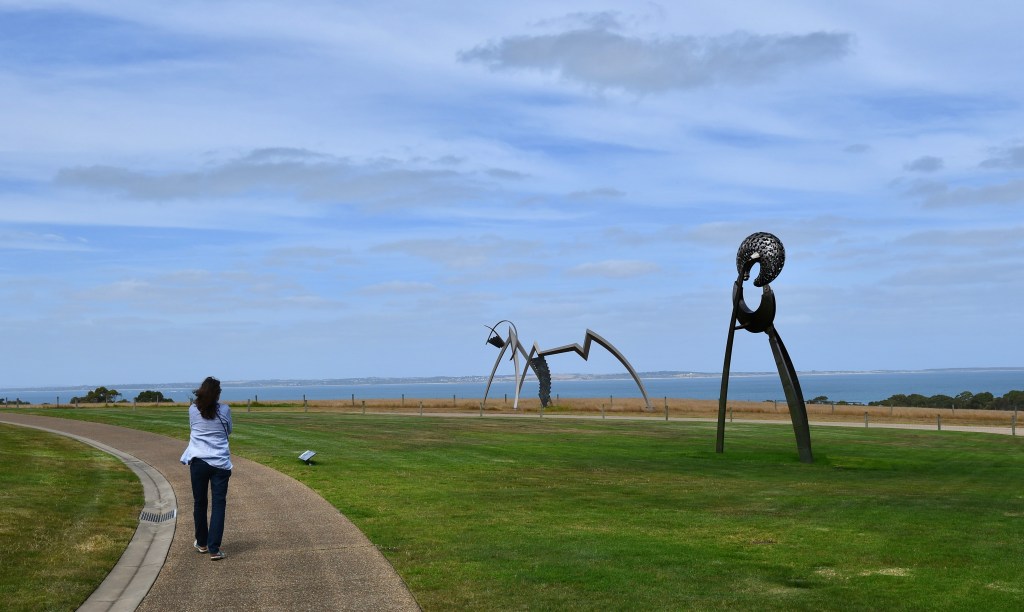
Pt. Leo Estate is also known for it’s sculpture garden. They charge a fee to stroll the grounds, but it was included with our lunch. Very little of the art suited my tastes. There were one or two we found ok.
After our wine tasting and lunch we had a short rest before our evening activity. My sister has for years heard of the Fairy Penguin Parade and requested we do this, especially since we’d missed them earlier. It was about a two hour drive.
The Penguin Parade is a natural occurrence every night. We saw penguin tracks in the sand at Twelve Apostles, but Phillip Island is home to a colony of over 40,000 penguins, the largest Little Penguin colony in the world. They were formerly called Fairy Penguins. The Phillip Island Nature Parks have a research and visitors center at the site.
Penguins.org.au
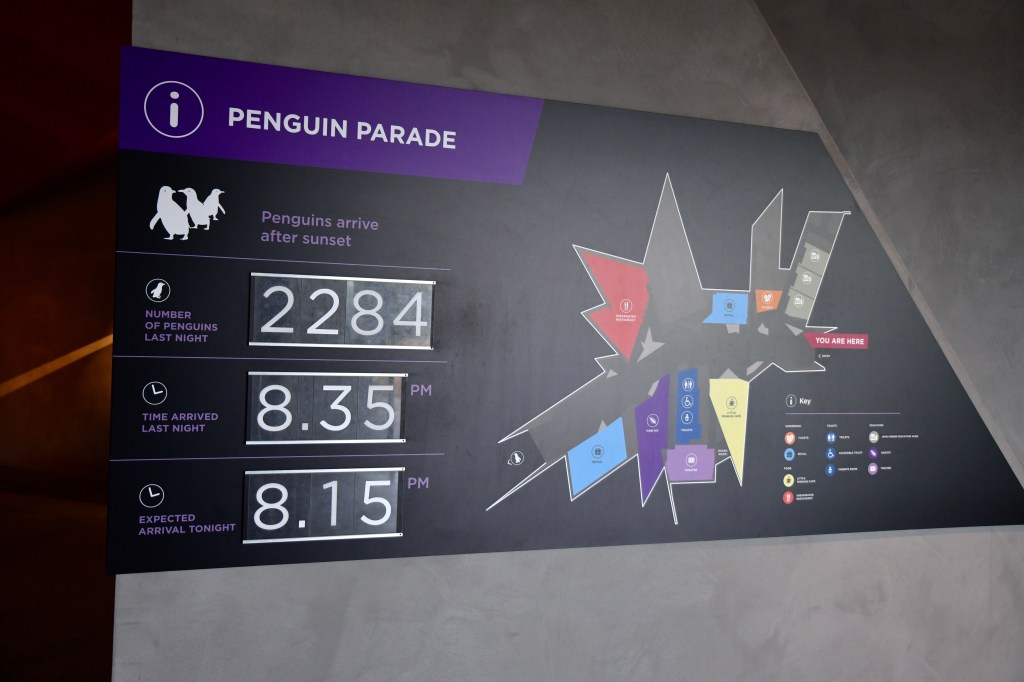
The visitors center has a sign stating the time of the first penguin arrival and the total number of penguins that came ashore the previous night.
The Penguin Parade tickets were for 8 PM. We arrived early and walked through their extensive visitors center and gift shops. We bought the Penguins Plus tickets which gave us a very close view. The previous night 2,284 penguins arrived, starting at 8:35 PM.
The boardwalk down to the viewing area on the beach.
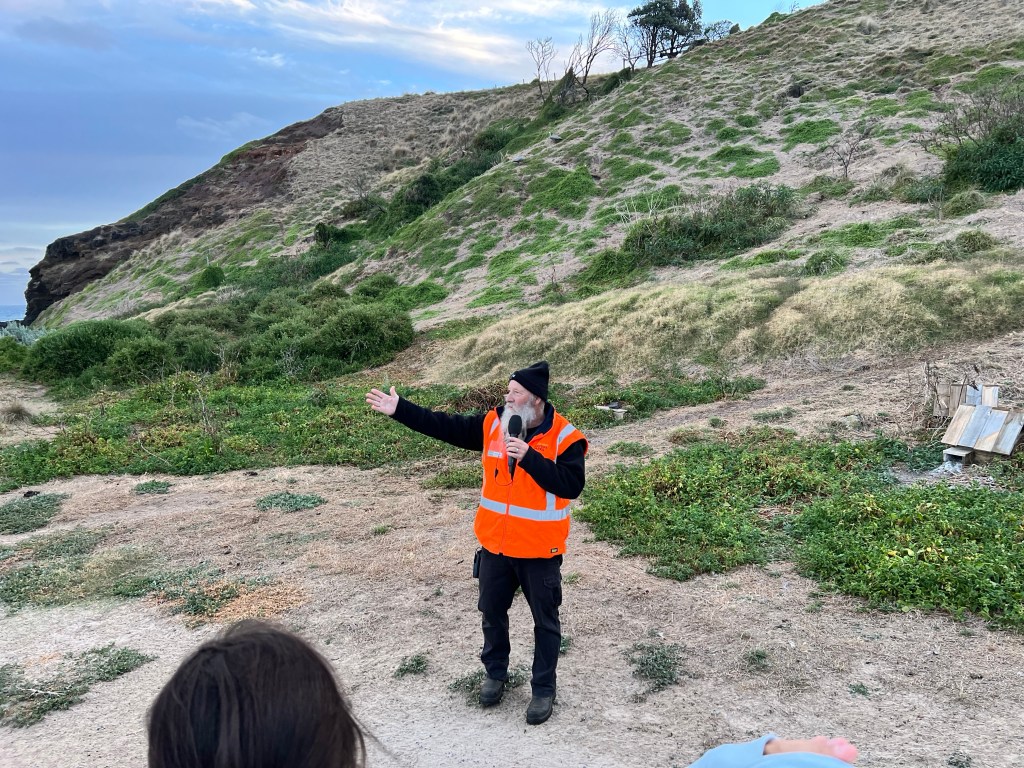
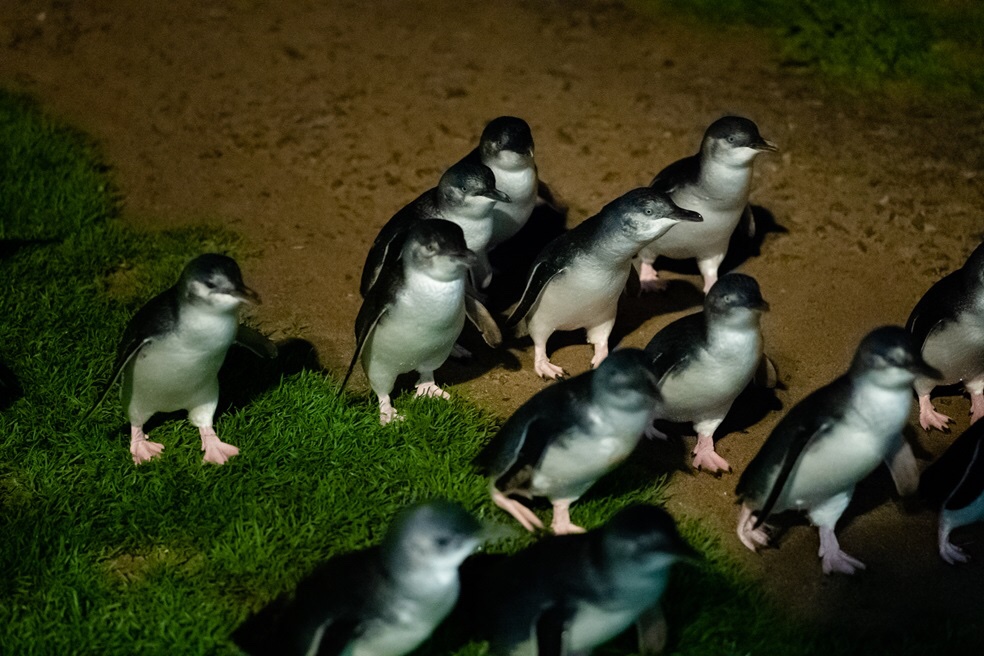
The park rangers gave a talk and advised of the strict no photography policy after sunset. The penguins come ashore in “rafts” (large groups) for safety, then walk up the beach to find their burrows. They are the smallest Penguin in the world, with blue feathers on top and white on the bottom.
The beach where the penguins come ashore.
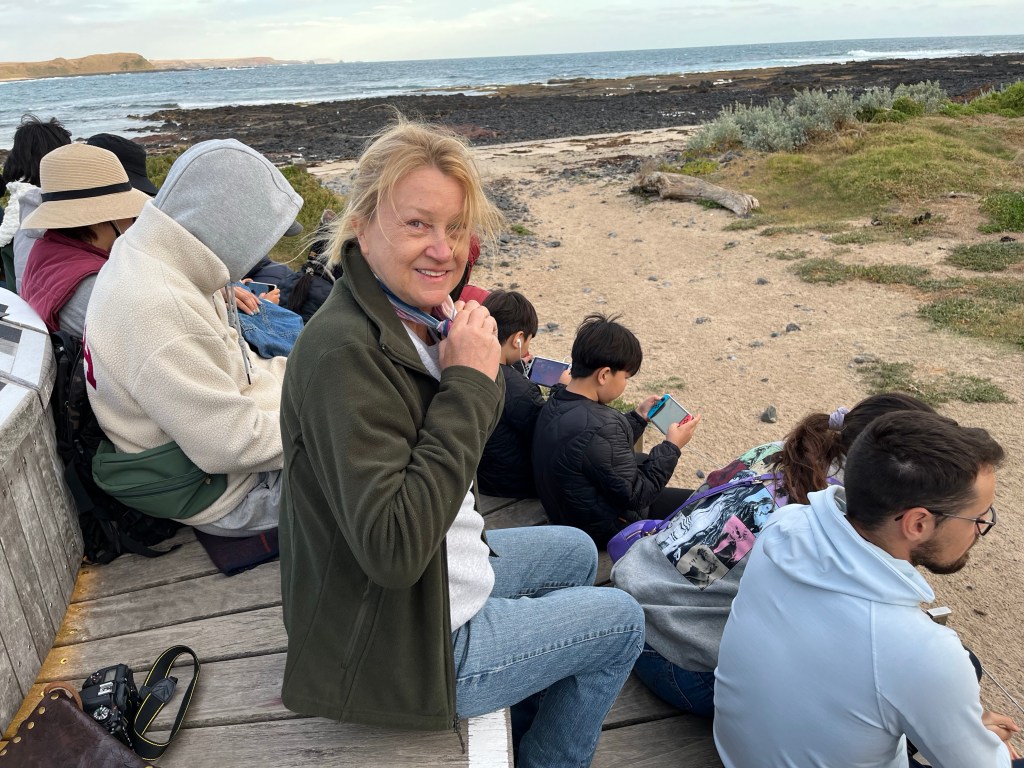
The seating for the Penguins Plus experience is on wooden decks. We arrived early and had great seats. The penguins walk past the wooden bleachers just a few feet away.
It is all outside, and even though it is the end of summer, it was breezy and cool. We dressed in our warmest clothes, including beanies.
The first penguin arrived just before sunset while photography was still allowed.
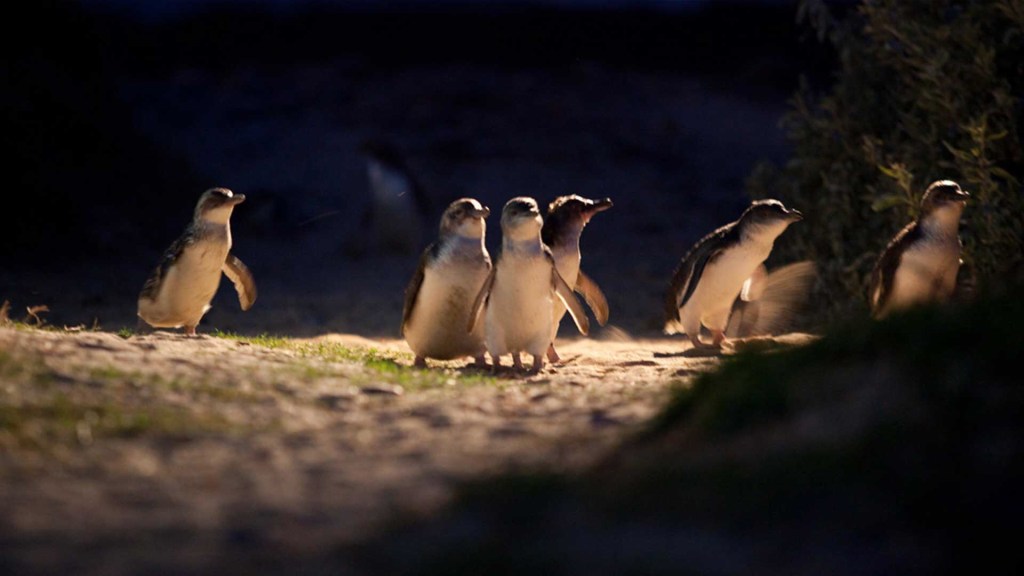
The park service provided photos. Photography was prohibited, as it would disturb the penguins.
The crowd was thrilled when the little penguins started arriving. Some had been out in the water a while and were so fat they could hardly walk up the beach. At first just few came in, and then hundreds crowded together and started the trek up the paths, right in front of the wooden bleachers. They were adorable. They are even smaller than you think they’ll be and are very cute as they make their way waddling up the sand and along the paths. They walk beside the boardwalk, and you can follow them. The special lights used to allow visitors to see them but not to disturb the penguins are turned off about 50 minutes after the first arrival. The drive, the cost, the cold and the crowds were all worth it.
The full moon setting from the porch of our cottage.
Before beginning our drive back along the Great Ocean Road, we watched the full moon set from our little cottage just outside of Port Campbell. We enjoyed our stay at Daysy Hill Country Cottages. It was the perfect location for our sightseeing and we loved how quiet and peaceful it was.
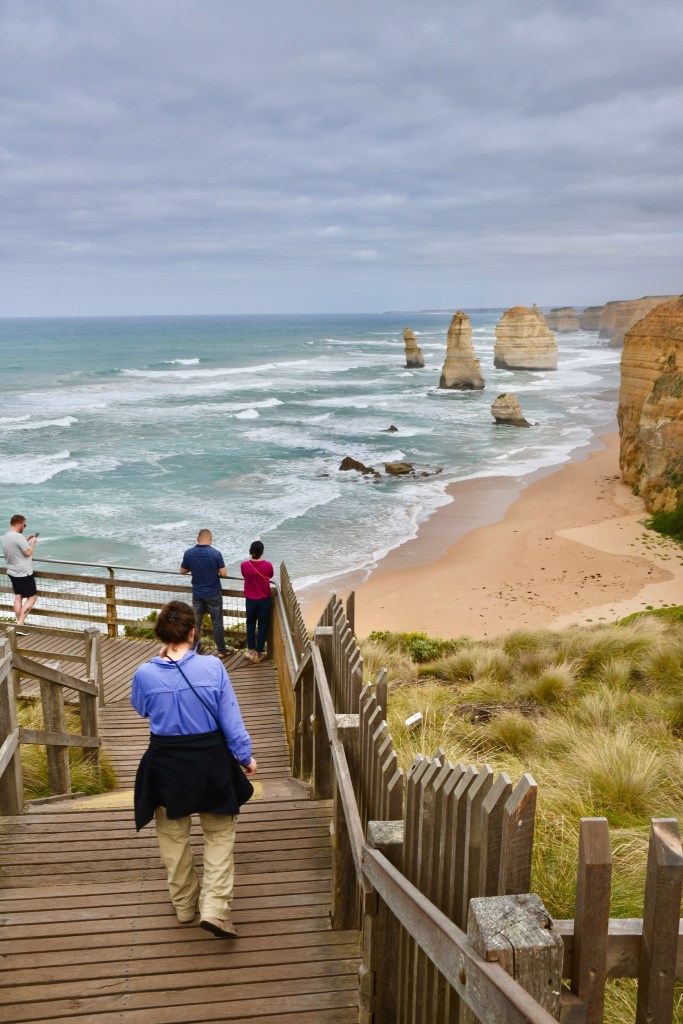
It was 8 am as we headed east and we took the opportunity for one last stop at the Twelve Apostles viewing site. Today we had clear skies and fewer people.
Our destination today was a rental cottage in Rye, a small town on the Mornington Peninsula. The plan was to once again drive the Great Ocean Road, and then take the ferry from Queenscliff to Sorrento, a short drive from Rye.
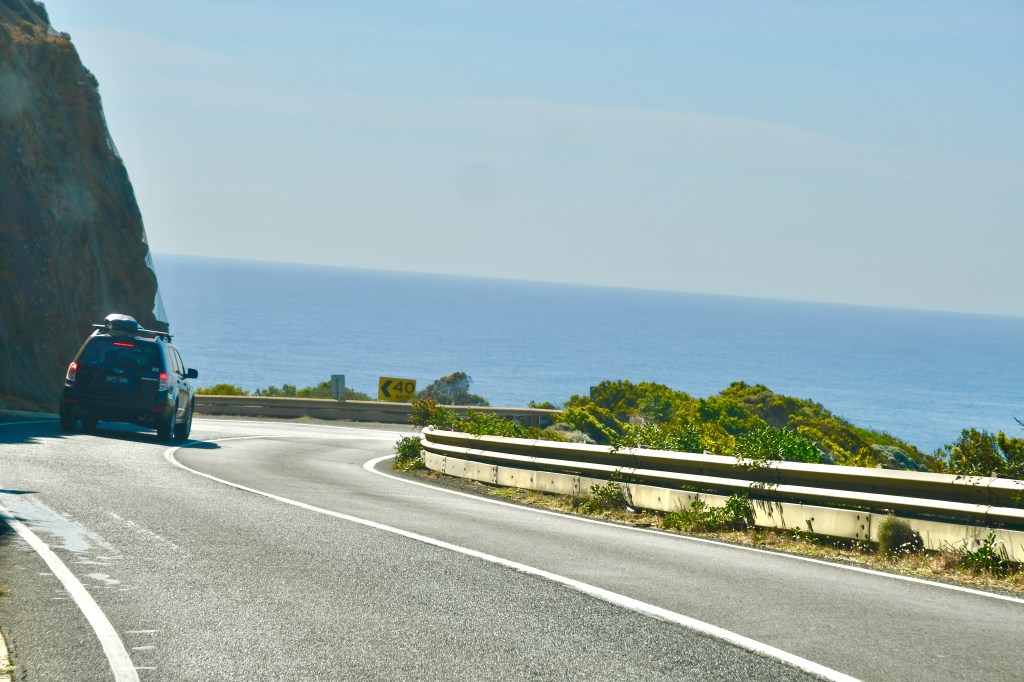
A portion of the Great Ocean Road between Princetown and Lavers Hill.
The lookout point at Castle Cove.
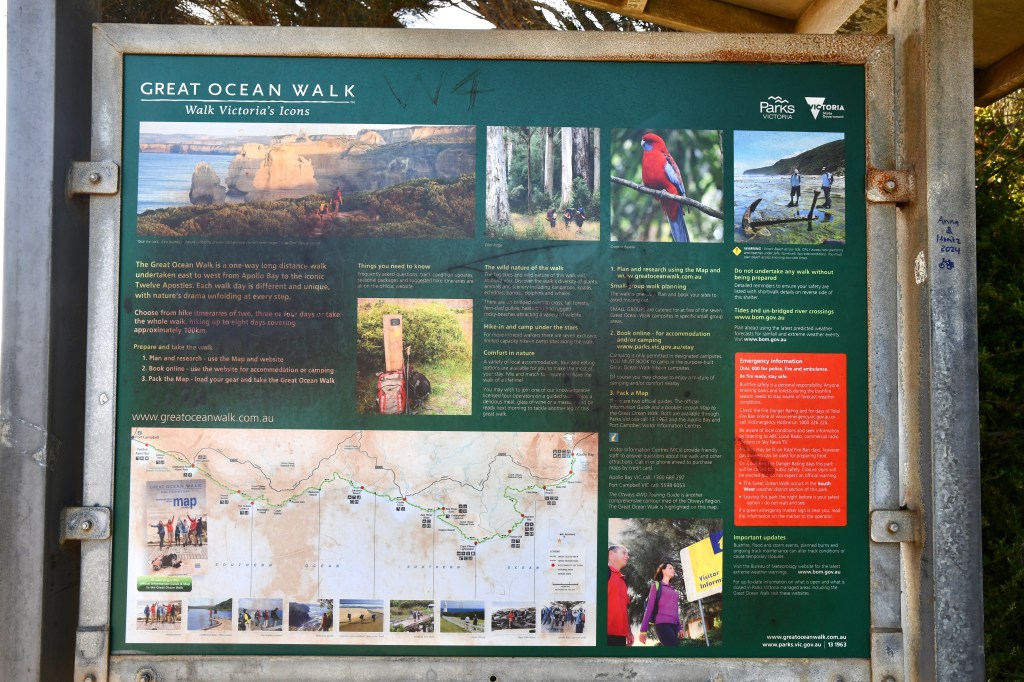
It’s a great road, fun to drive and scenic. We stopped at the lookout at Castle Cove. There we saw a marker for the Great Ocean Walk, a 100 km hike that follows the coastline from Apollo Bay to the Twelve Apostles.
We stopped in again at the Koala Cafe in Kennett River. There is a known colony of wild Koala bears here, but it isn’t an official preserve. You park in the cafe lot and walk up a gravel road and maybe see a Koala in the trees. This time we saw one, but there were two small tour buses stopped as well. So one small Koala had a hoard of about thirty people jostling for position at the base of the tree. I had flashbacks to when we saw one leopard surrounded by twenty safari jeeps in Botswana. It makes me feel sad, and I don’t like feeling like a gawker.
Inside the Koala Cafe.
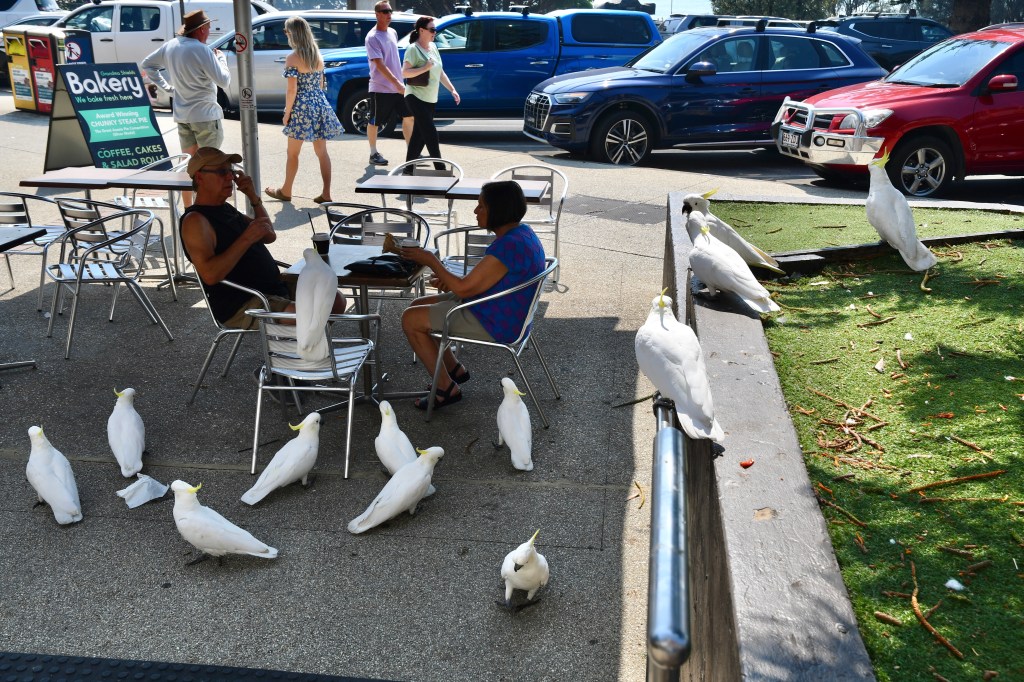
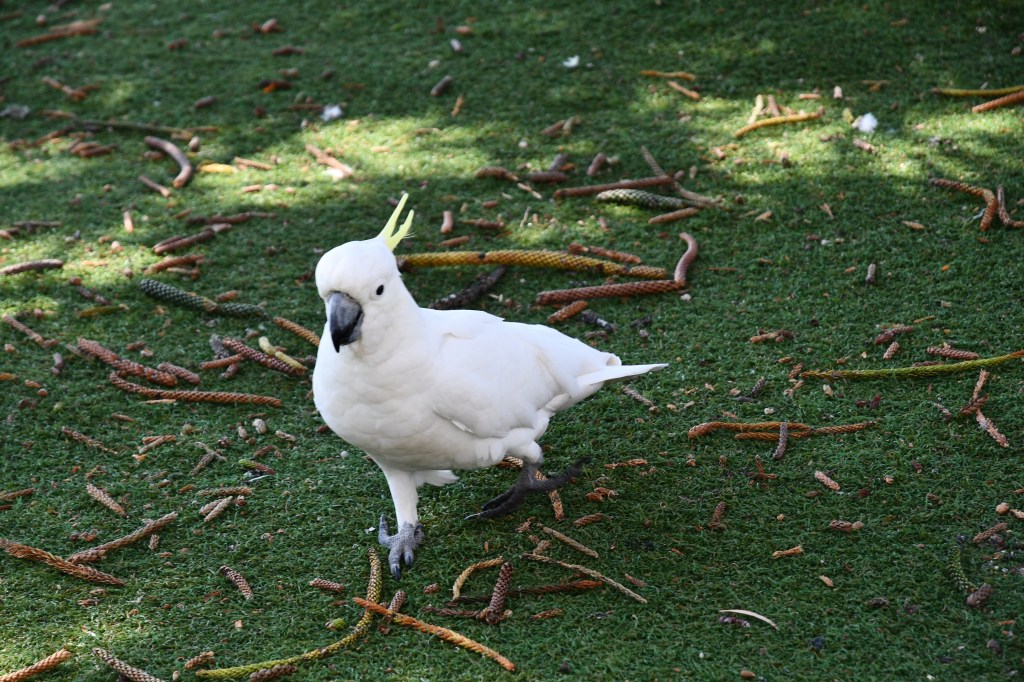
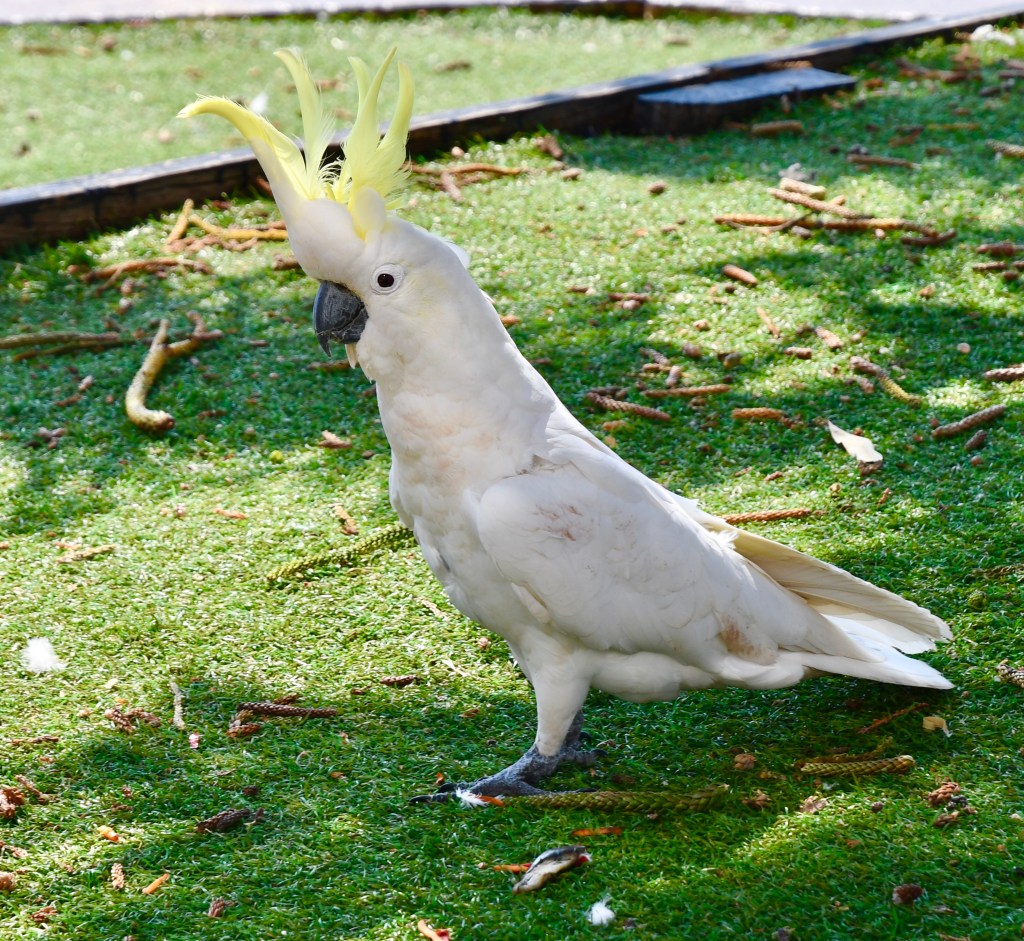
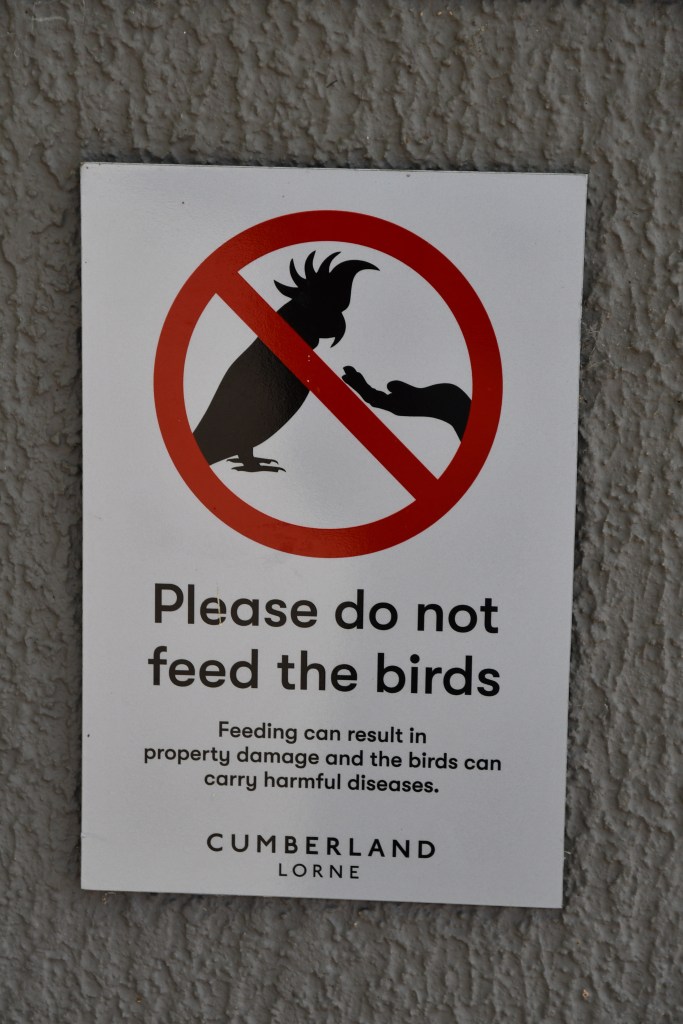
We continued our drive with a planned lunch stop in Lorne. After the quiet and peaceful countryside, Lorne felt crowded and busy. Cockatoos were as common as pigeons in NYC as they stole food from the lunch crowds. This kind of food is very bad for the birds. A woman in one of the shops told us that the birds lose their feathers and get sick when they eat food meant for humans.
We made it a quick lunch stop and continued up the road.
More of the Great Ocean Road.
It was Sunday and a warm sunny day, so we had to deal with more traffic, and saw many motorcyclists and bicyclists. We eventually left the Great Ocean Road and turned towards Queenscliff.
In Queenscliff we caught the 4 PM ferry to Sorrento, on the Mornington Peninsula. This area is best known for its beaches and vineyards, and is just an hour outside of Melbourne.
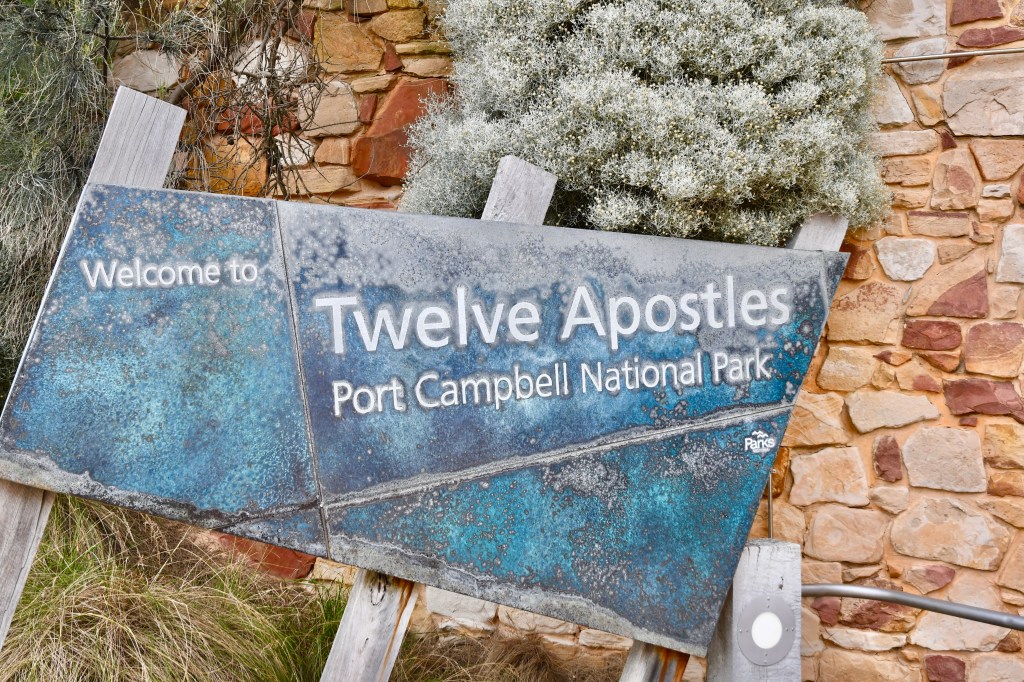
Saturday was our day to explore the Port Campbell National Park. The park includes the iconic 12 Apostles, as well as several other rock formations and beaches.
The 12 Apostles are stunning. The photographs do not do it justice. We were awed by the beauty and wildness of the area. The park has boardwalks and viewing platforms, but the area has been mostly kept pristine. There is only one beach you can access.
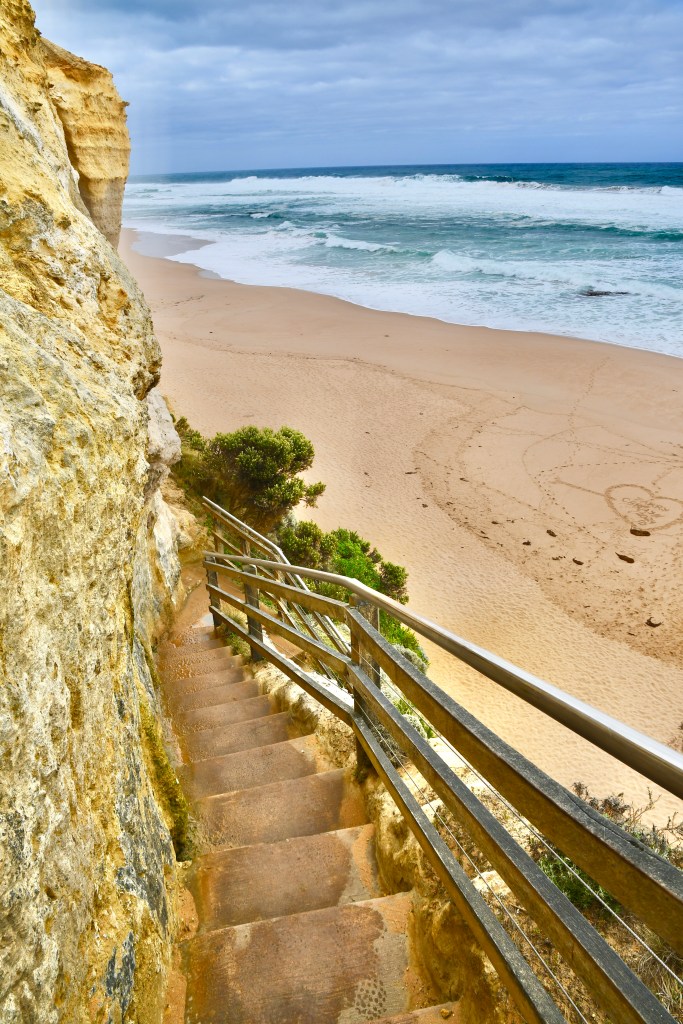
We started at the Twelve Apostles, which has a car park and visitor center. From the same car park we walked a trail to the Gibson Steps, the only access to the beach.
Gibson Steps.
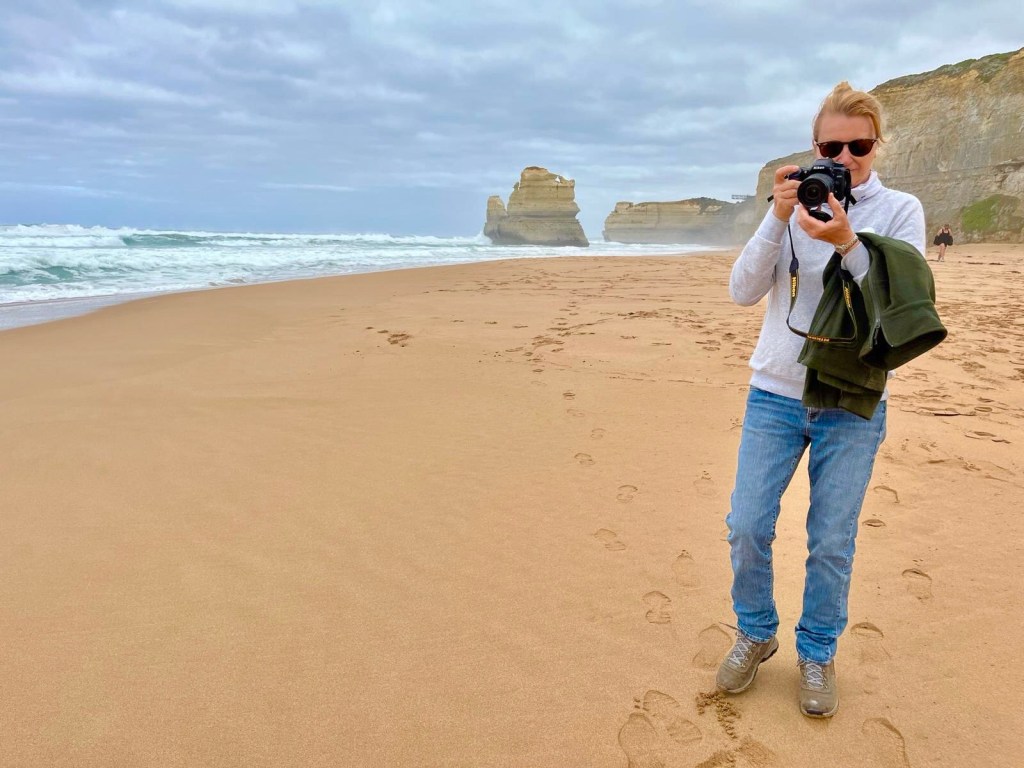
Me with my ever present Nikon.
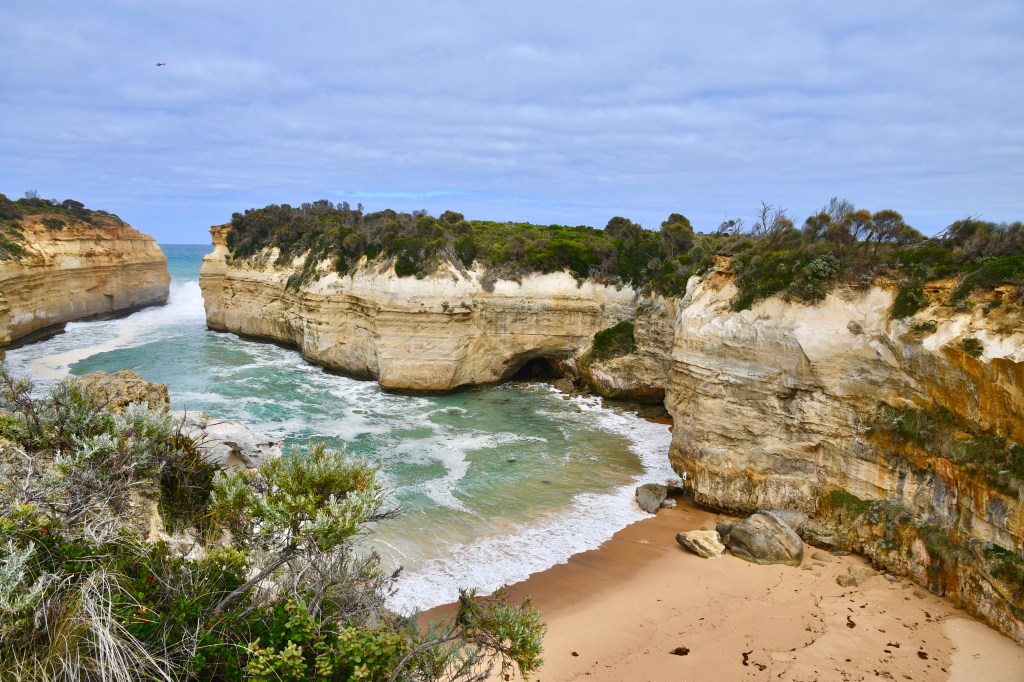
From the Gibson Steps we drove the Great Ocean Road to Loch Ard Gorge. This was the site of a shipwreck in 1878. There were only two survivors out of the 54 on board.
Loch Ard Gorge.
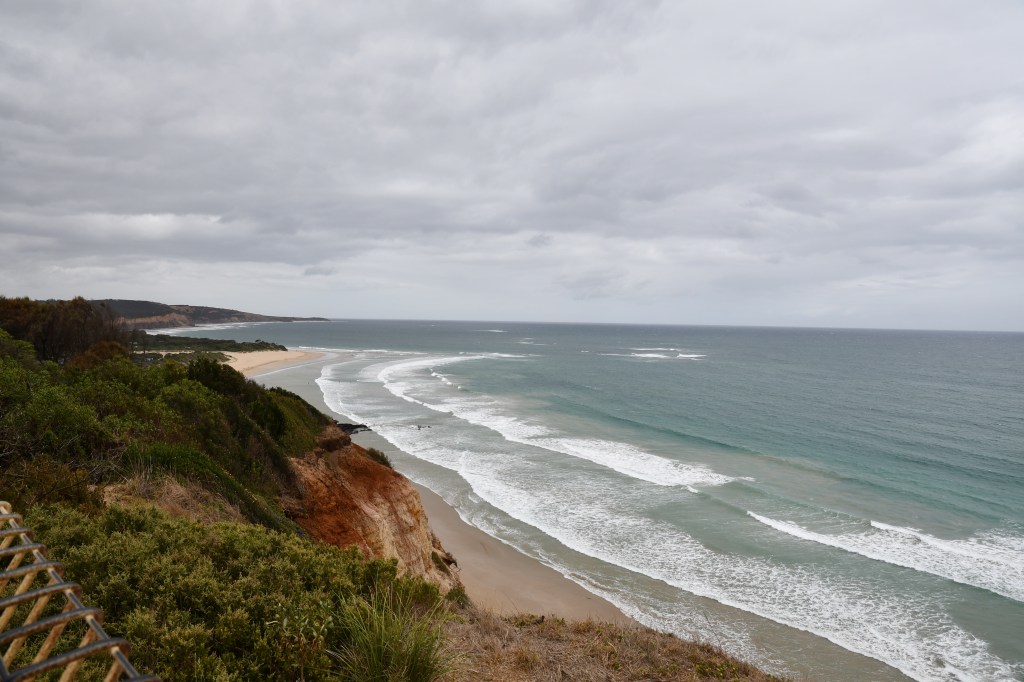
The entire coastline is made up of stunning landscapes.
The Razorback.
We thought we’d head inland from the coast for lunch. In our cabin there was a brochure for Keayang Maar Vineyard. It is located north of the small town of Timboon. The drive was on small country roads through tree lined alleys, dairy farms, and fields. It was very pleasant and mostly devoid of tourists. We did not see one motor coach or camper. Those are all on the Great Ocean Road.
A road near Timboon.
We tasted three reds and one white at Keayang Maar Vineyard while we chatted with the owner Bernice. It’s a family business on the land they previously had a dairy farm. It was a beautiful spot. We enjoyed the wine and the homemade pizza, and left with a bottle of Shiraz.
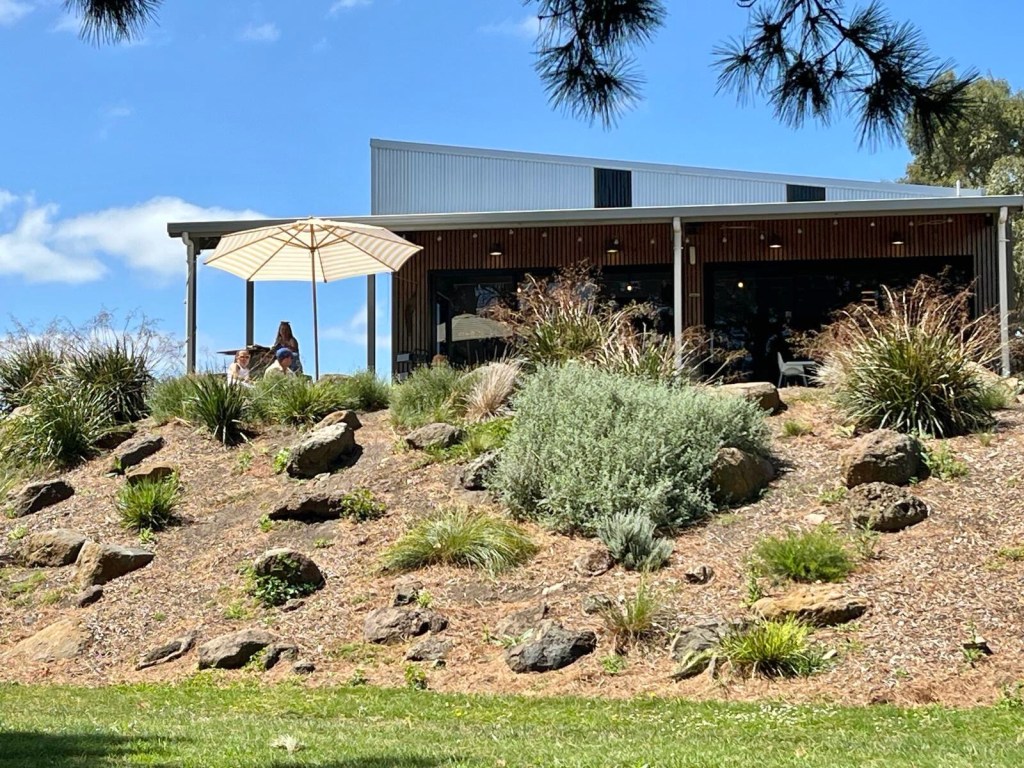
The tasting room at Keayang Maar Vineyards.
These vines were planted in 2008 as a hobby. The very time consuming hobby became Keayang Maar Vineyard.
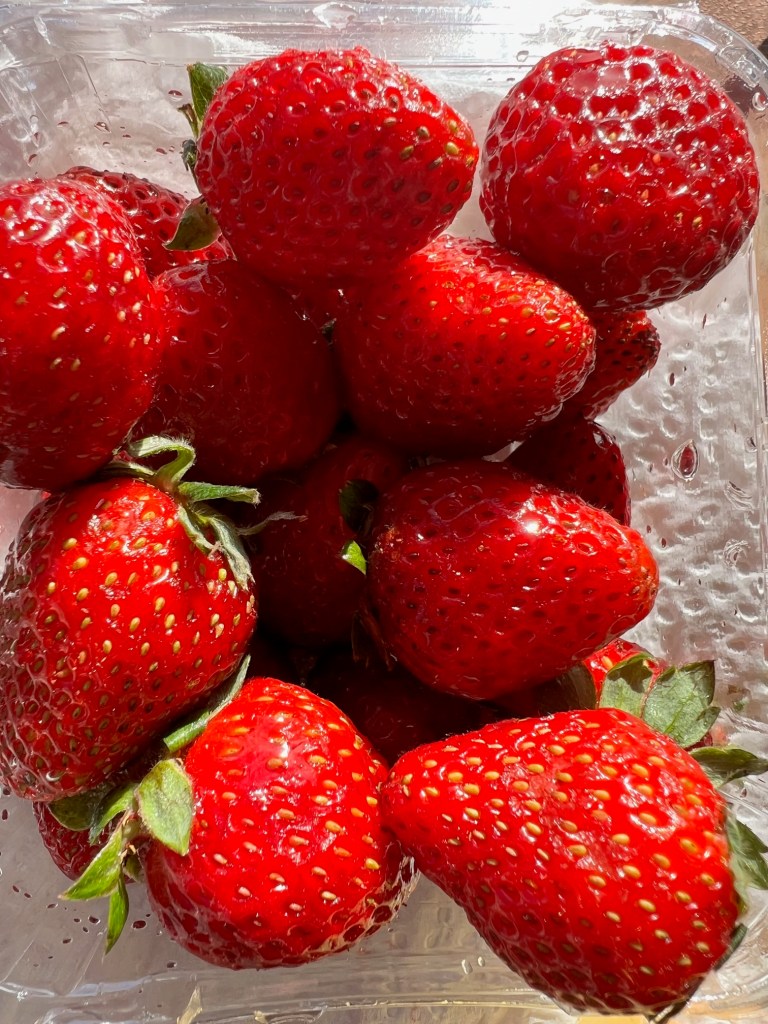
From the vineyard we drove back through Timboon and made two stops. The first was at Berry World to pick up a pint of fresh strawberries. The second stop was at Timboon Fine Ice Cream, for some of the best ice cream I’ve ever tasted. They were both well worth the stop.
The strawberries were delicious. They tasted just like Oregon hoods, small and sweet.
On the country road just before Schulz Organic Creamery & Cafe.
Driving through the fields of dairy farms we saw a sign for Schulz Organic Creamery & Cafe. We pulled in and purchased fresh cheese and pastries. All these stops are included in the 12 Apostles Food Artisans Trail. We ate and drank locally sourced and created food and wine all day.
We went down to the London Bridge platforms to watch the sunset and hopefully see fairy penguins returning to their burrows for the night. Two locals told us this was the place to see them. They come out of the water in a group and walk up the beach and into the burrows after sunset and before fully dark. Tonight was a full moon and we gave it a shot. Unfortunately we did not see the penguins. We watched the sunset and stayed a full 45 minutes past sunset, but no penguins.
Sunset at London Bridge in the Port Campbell National Park.
Before heading out of Melbourne we walked along the river, strolled through the Queen Victoria Gardens, and gazed in awe at the Shrine of Remembrance. The early morning dog walkers and joggers were out, as well as rowing teams in sculls on the river.
The Shrine of Remembrance is a memorial dedicated to the men and women of Victoria who served in WW I.
Shrine of Remembrance.
It is always a challenge to head out on the road in a right hand drive car after decades of driving from the left. It takes a bit of getting used to, and can be daunting pulling into heavy traffic for the first time. We survived the transition period using the mantra “keep left, keep left”, and departed Melbourne in the direction of Geelong, heading southwest along the coast.
Our goal for the day was to make it to Port Campbell and the cabin we had reserved for two nights near the Port Campbell National Park, best known for the Twelve Apostles limestone formations just offshore.
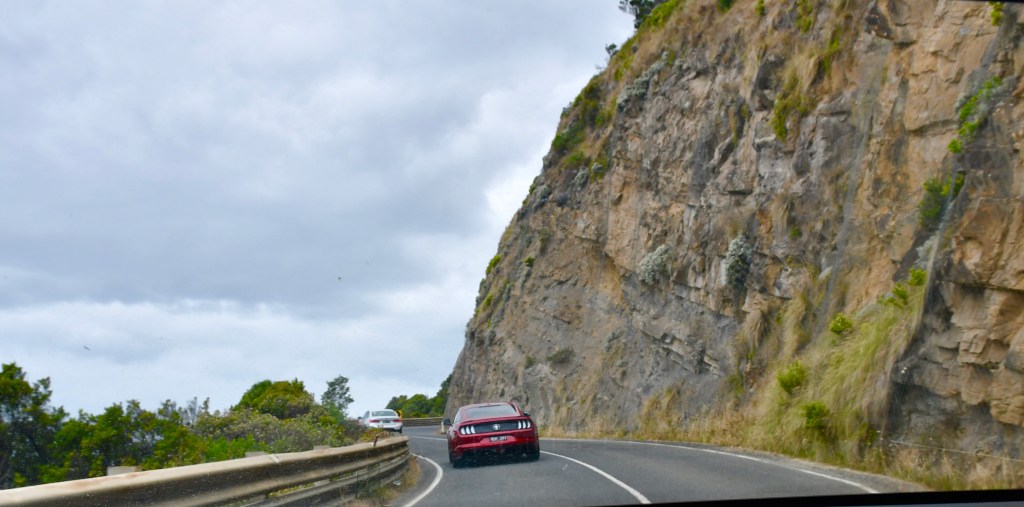
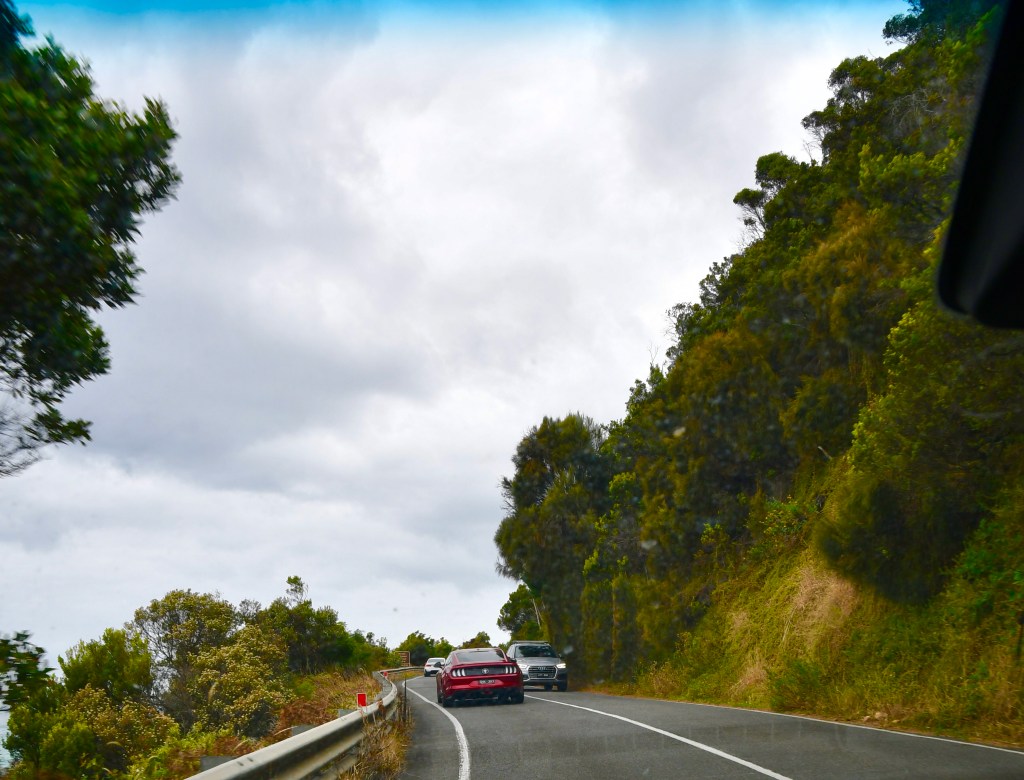
The Great Ocean Road officially begins in Torquay, just south of Geelong. It travels through a few small towns, along some very winding two lane coastal roads and through farmland and forest.
It is very scenic, and is a perfect motorcycle road.
The coastline along the Great Ocean Road.
The Split Point Lighthouse.
We stopped to stretch our legs at the Split Point Lighthouse. It was quite windy and rather cool compared to the previous day. They have some nice overlooks.
Lorne was probably the largest town along the road. The campgrounds were full and it had the feeling of a busy little seaside vacation spot.
The Great Coastal Road.
Continuing southbound along the twisting two lane road, we pulled into an easily missed wide spot where it was reported that wild koala bears could be seen. We were not disappointed. We saw two. It pays to read the travel guide books. There is no sign and we had only read about this wild koala area the day before.
In Apollo Bay we stopped for fresh off the boat seafood at the Fishermens’ Co-op and took the opportunity to pick up a few items at the IGA grocery.
Seafood platter for two at the Apollo Bay Fishermen’s Co-op.
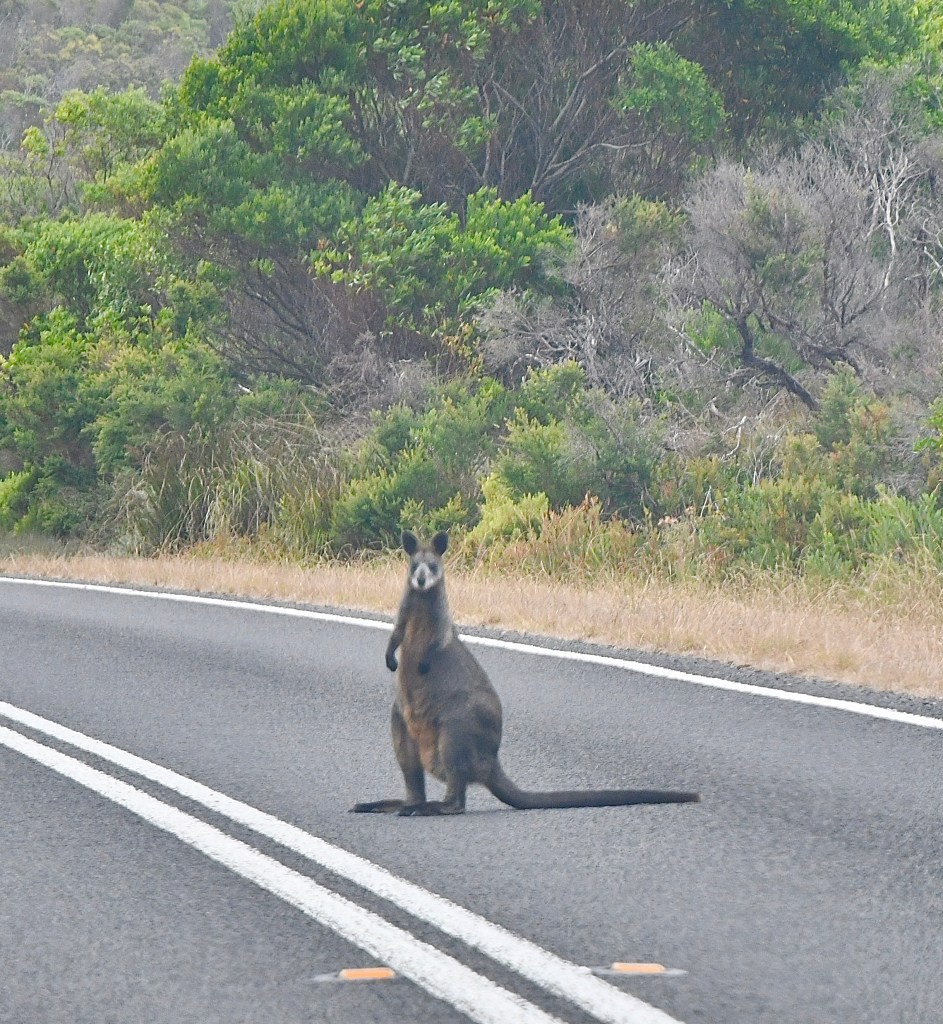
A kangaroo sits in the middle of the road.
We pulled into our cabin at 7 pm. It took us just under seven hours to travel from the Melbourne airport to Port Campbell along the Great Ocean Road. We stopped a few times for pictures, and twice for food.
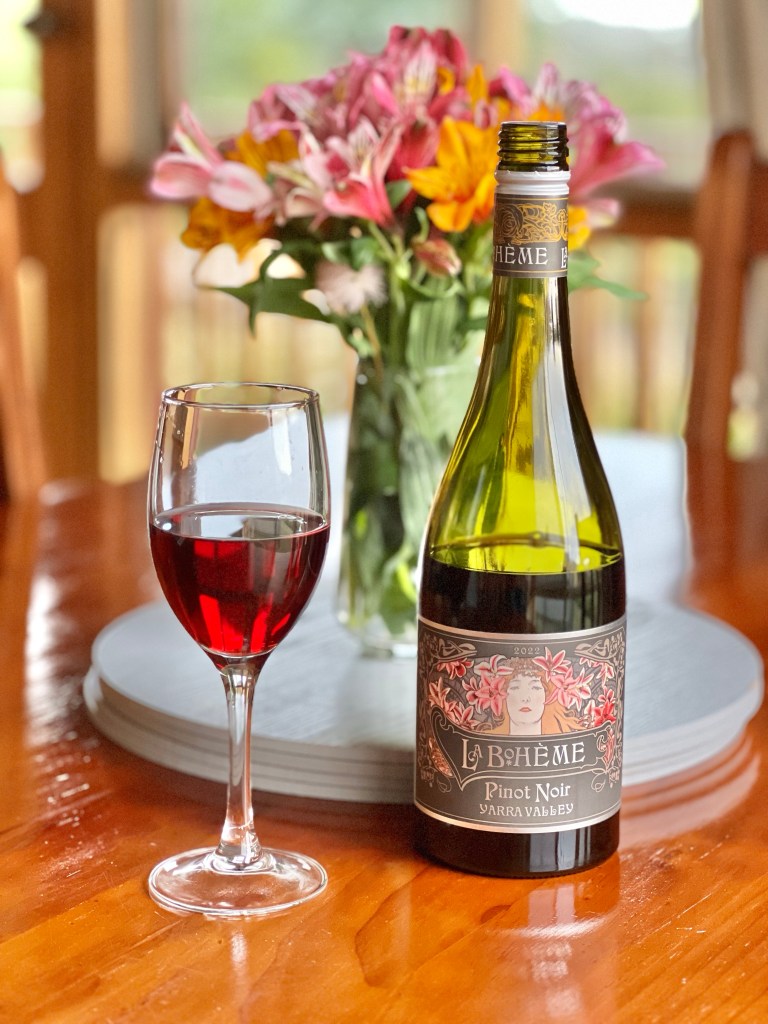
A local Pinot Noir from the Yarra Valley. Again, it was lighter than the heavier Pinots of the Willamette Valley, and we enjoyed it immensely.
Getting to Melbourne from the US is a long trek. From Florida it’s 5-6 hours to LAX, then 15 hours to Sydney followed by 1 more hour to Melbourne.
After this long haul travel odyssey, my sister and I walked the downtown area, trying to stay awake and acclimate to the new time zone.
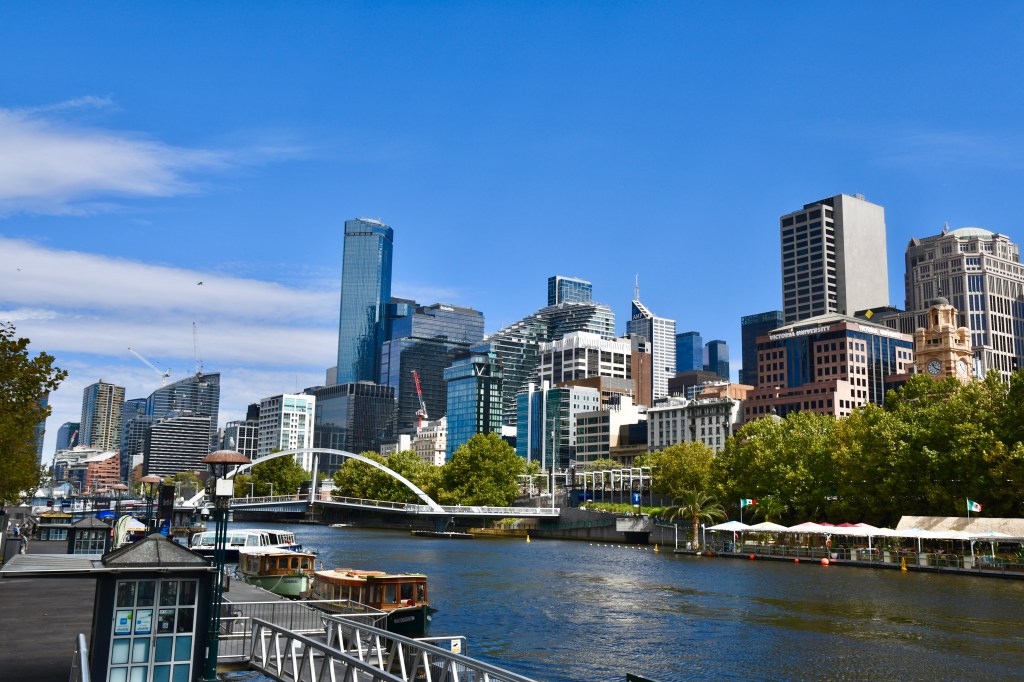
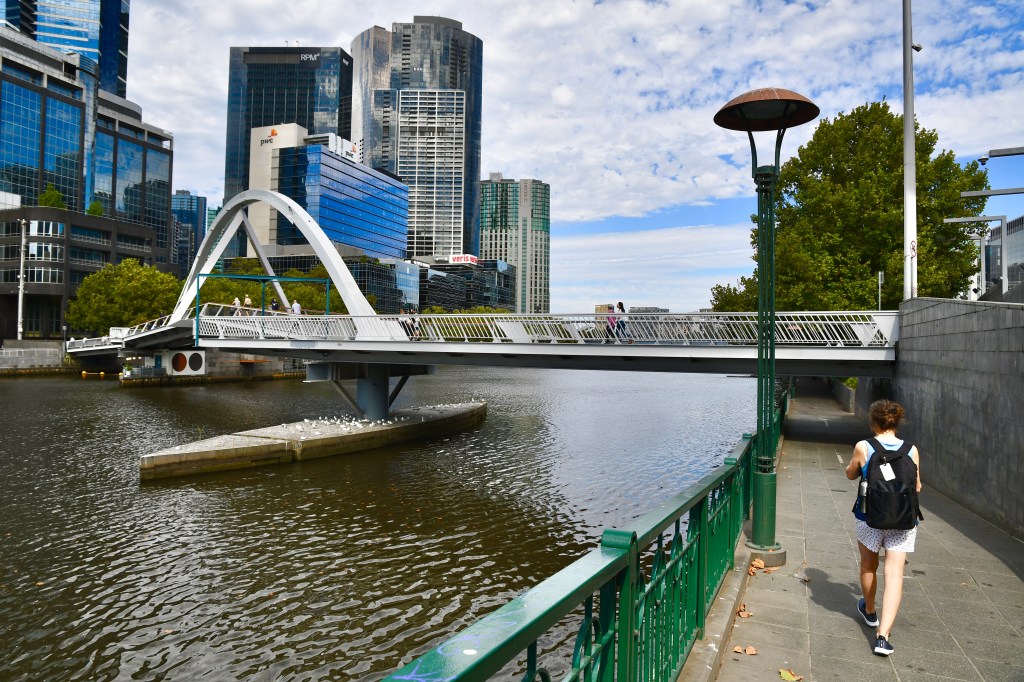
Our first impression is that Melbourne is very livable, with a lot of green spaces, trees, water, and a free tram service within the downtown city block area.
There are a lot of parks, trees, and green spaces in the city.
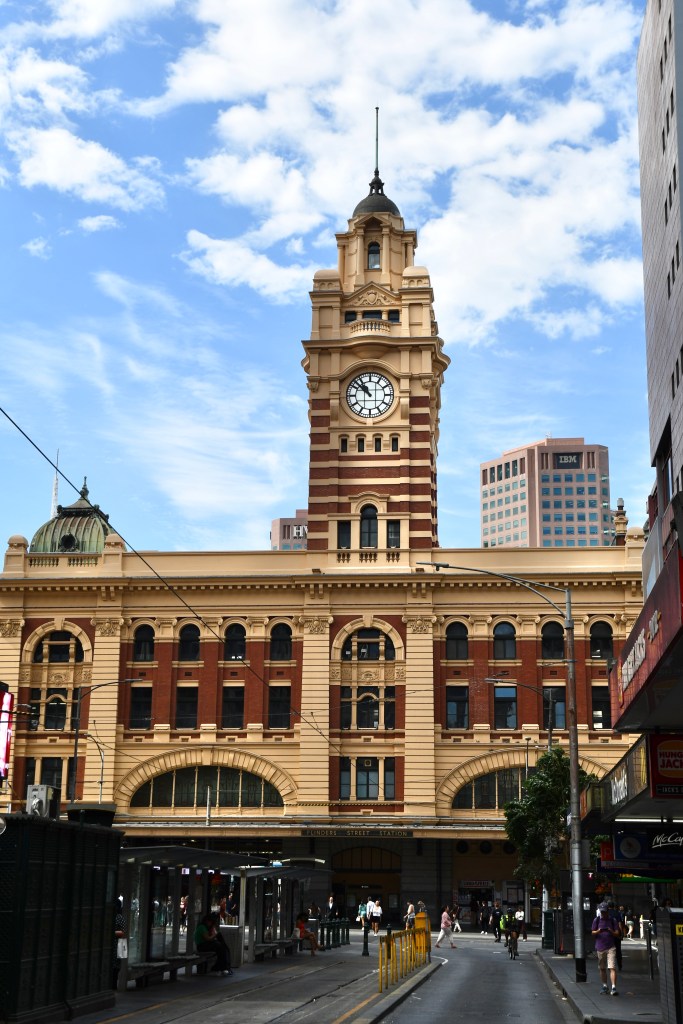
Flinders Street Station
There is a mix of architectural styles from Victorian, to Art Nouveau, to Art Deco and contemporary. The streets are pretty clean and there are a lot of food options.
Our first meal was at a place called Taxi Kitchen, recommended by Fodor’s. We were not disappointed.
Scallops at Taxi Kitchen
Swordfish skewers.
I had read somewhere that the best views of the city are from the ladies room on the 35th floor of the Sofitel. So we had a look. Not bad.
The ladies room on the 35th floor of the Sofitel.
Cooks Cottage in the Fitzroy Gardens, one of many parks in Melbourne.
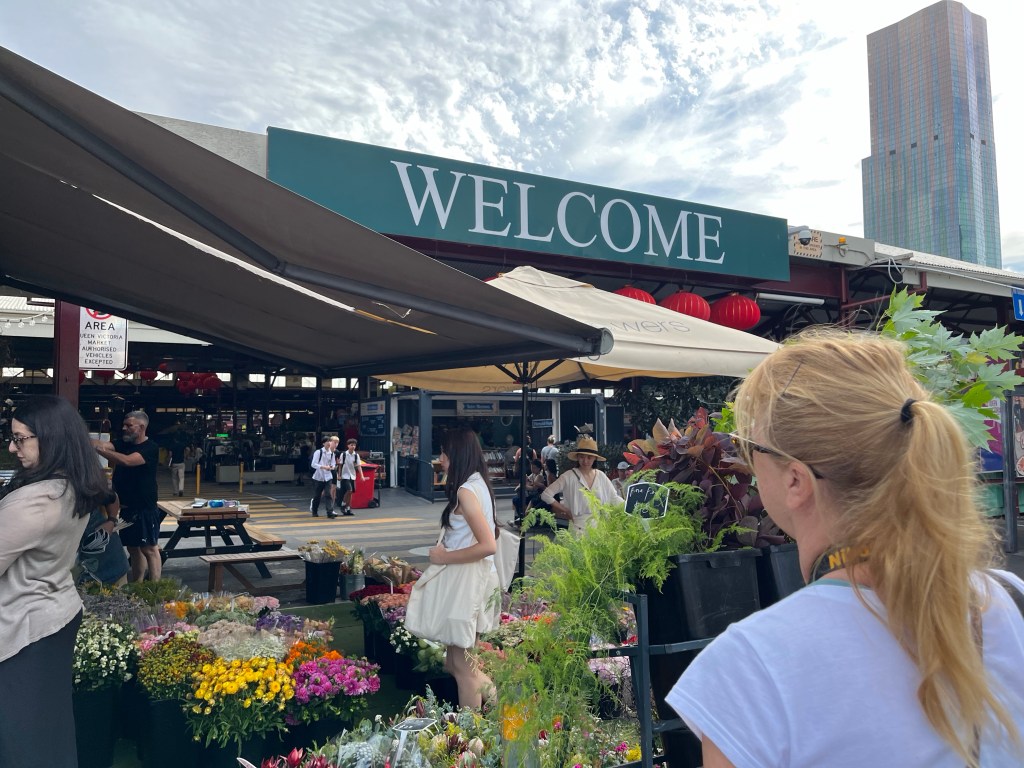
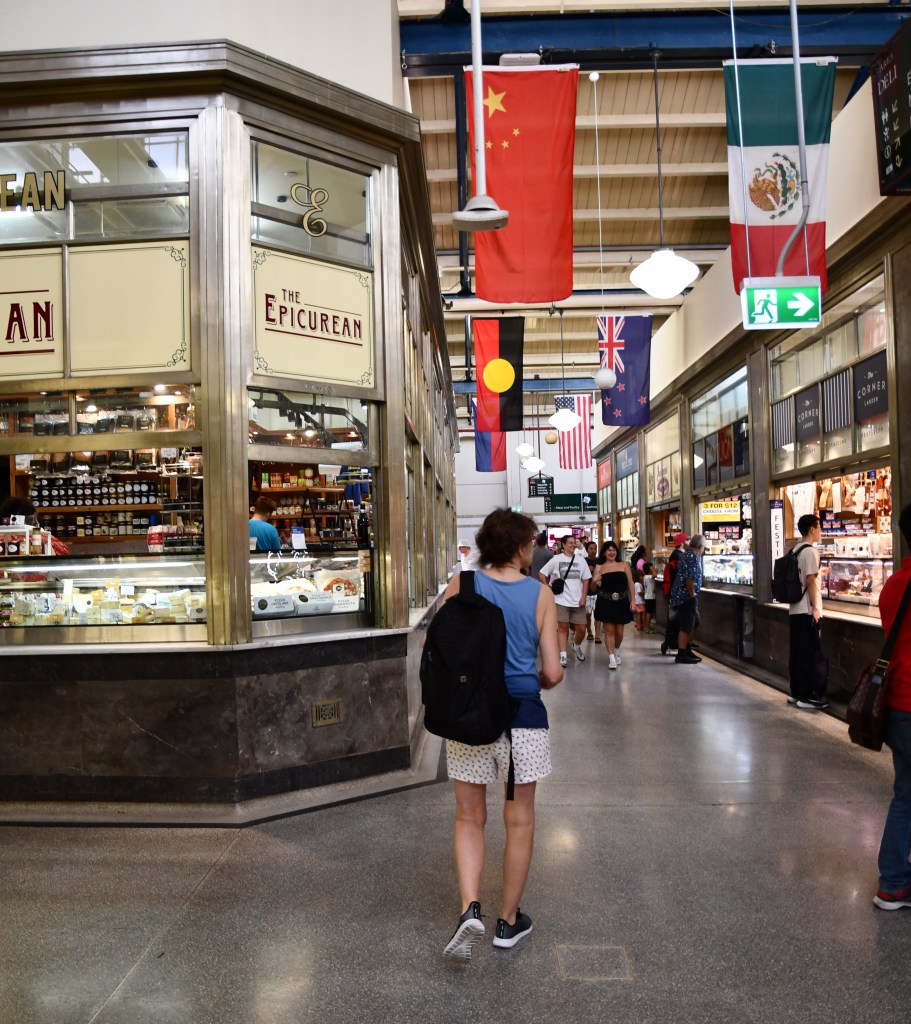
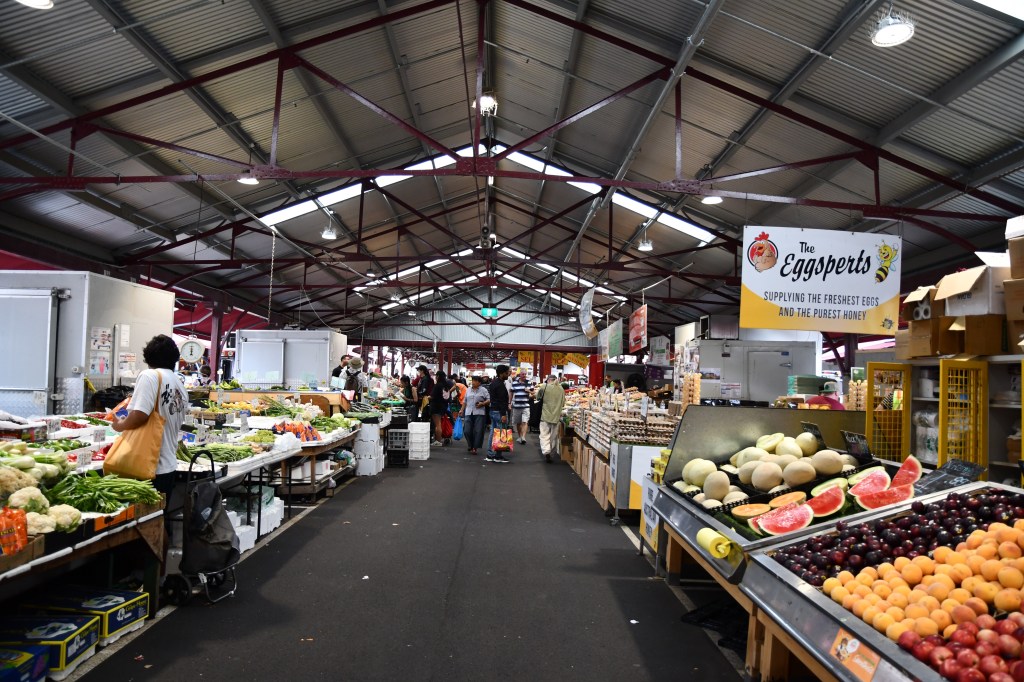
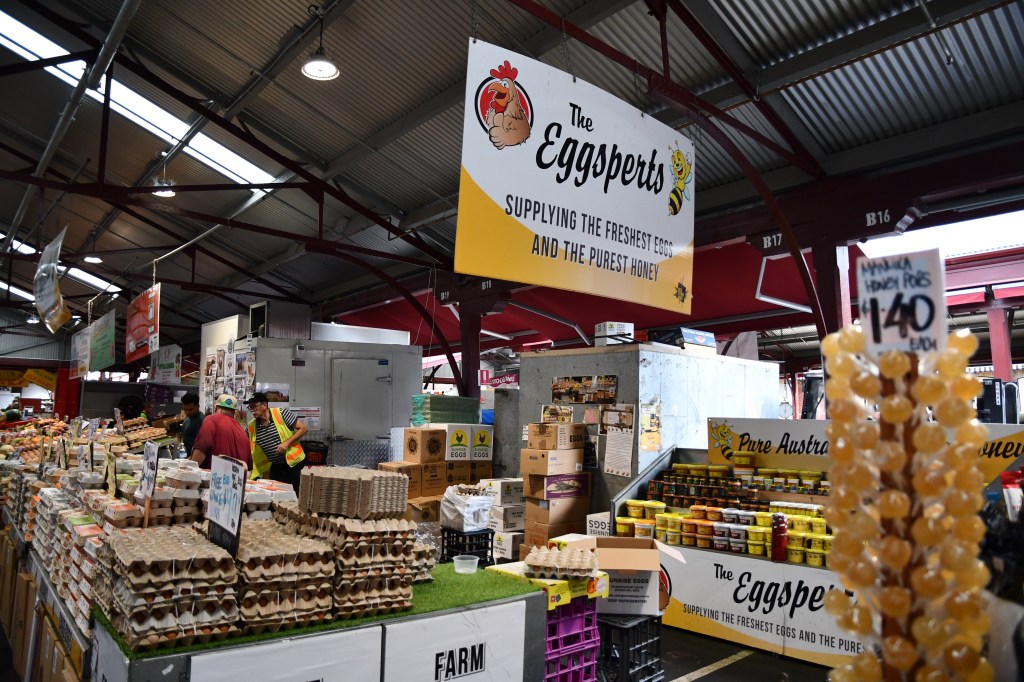
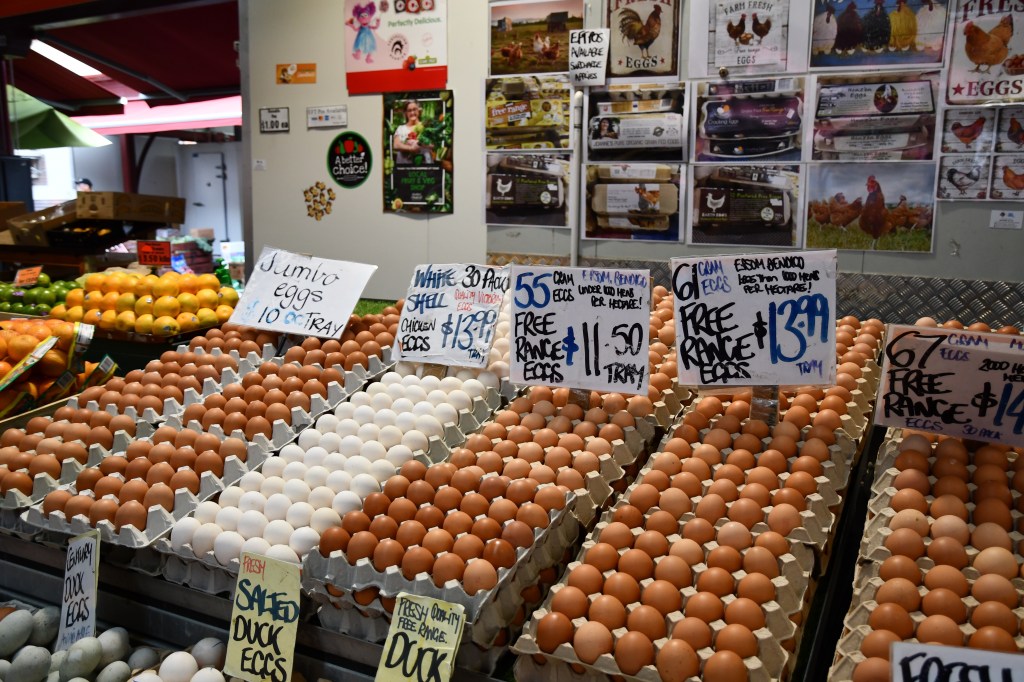
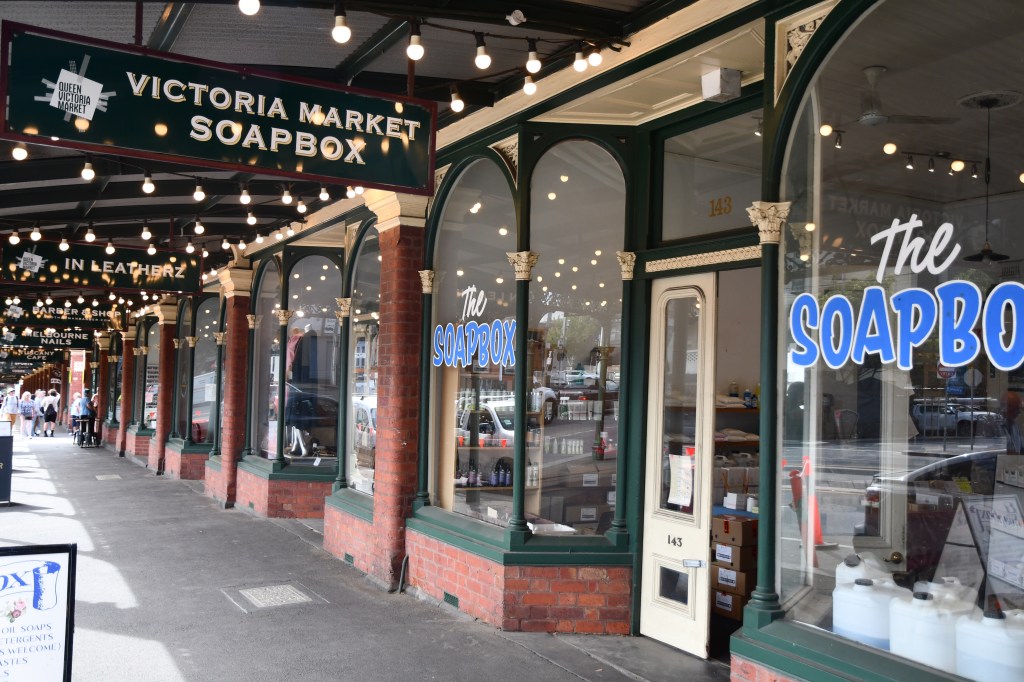
On the morning of our first day, we hopped the free tram and headed 7 stops up to the Queen Victoria Market. Partly open air, partly covered, it had seafood, meats, veggies, eggs, and clothing items. It reminded me of the markets in Barcelona and Helsinki.
We had lunch at Mabu Mabu, a restaurant in Federation Square serving indigenous food with a contemporary twist. It was very fresh and tasty.
Mabu Mabu and the Koorie Heritage Trust.
Charred papaya, bunya nuts, pineapple, curry leaf and blood lime.
Bam bam beans, lemon aspen, sunrise lime and damper dukkah.
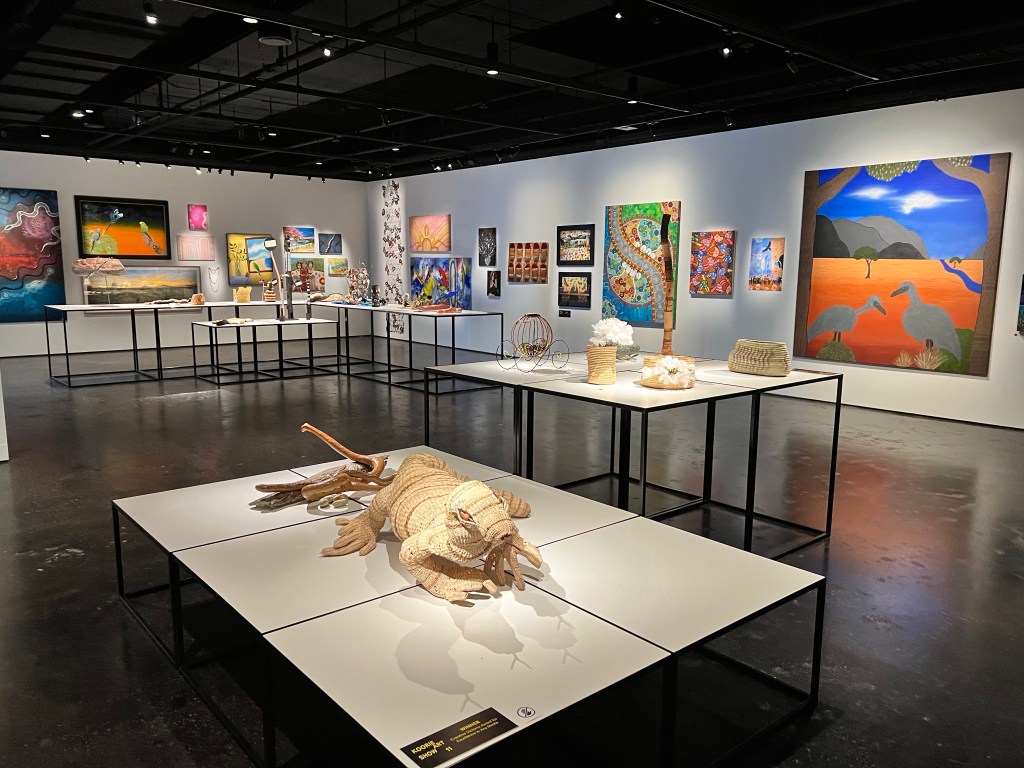
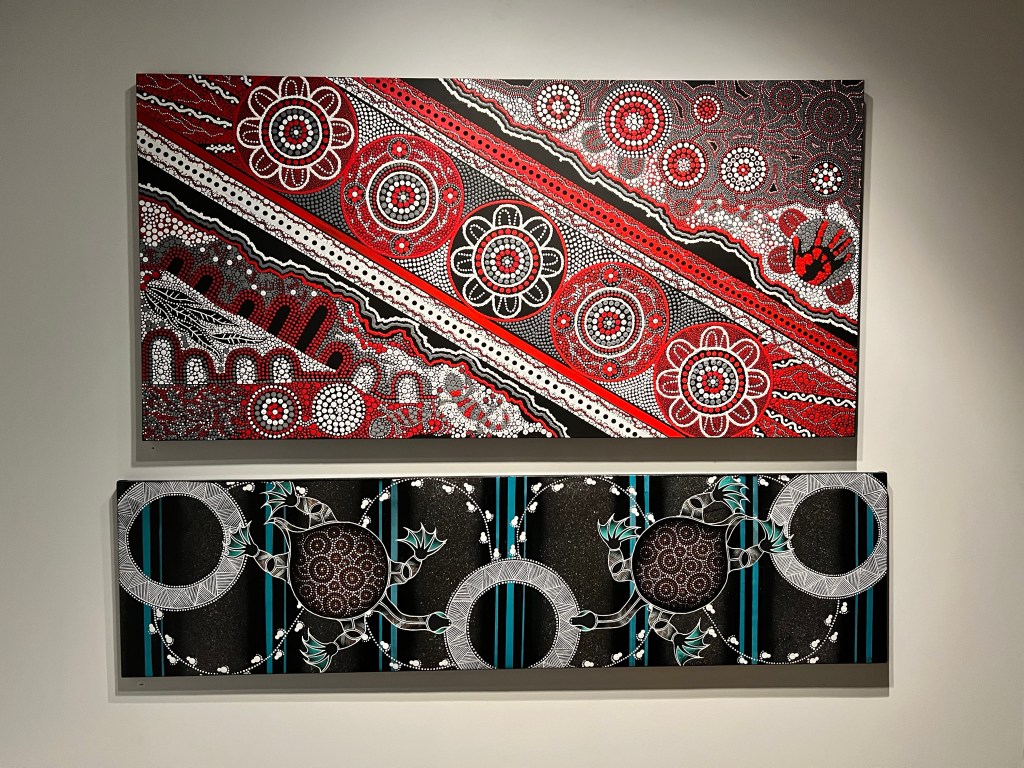
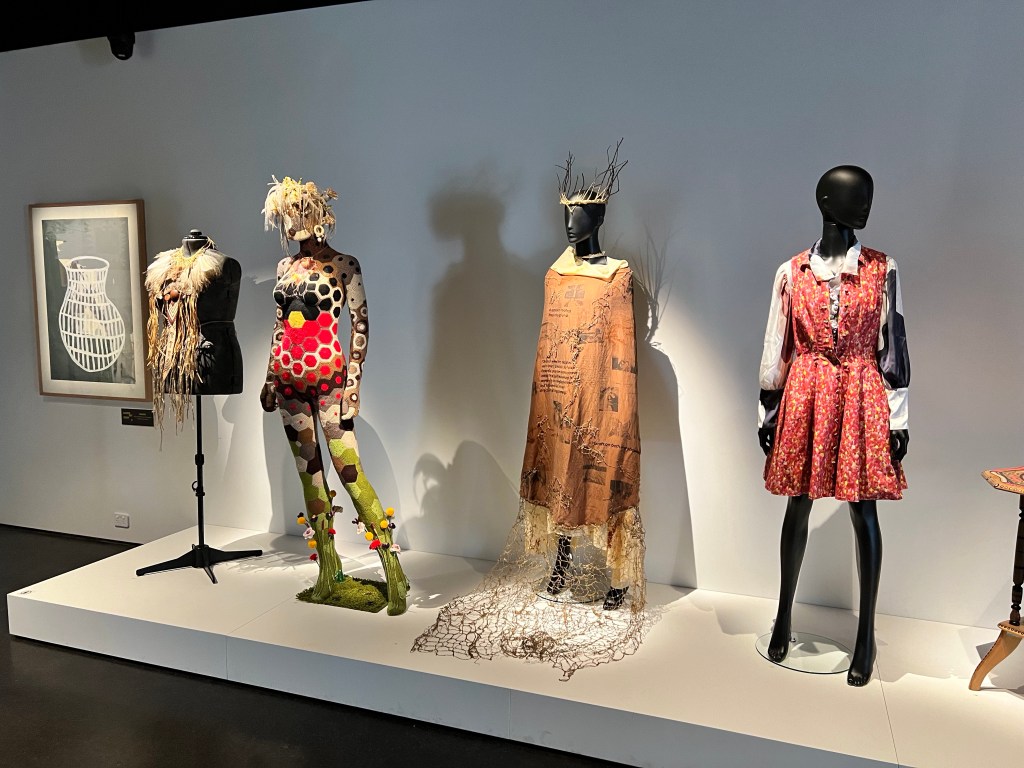
Right next door to Mabu Mabu we toured a Koorie art exhibit.
The best croissants in the city are reported to be at Lune, just one block from our hotel. The line was so long in the morning that we skipped it. In the afternoon the line was shorter, so we stopped in for coffee and a pastry. It was very good.
White coffee and a lemon curd pastry at Lune.
After a short rest in our room, we ventured out in the afternoon to the Fitzroy Gardens. The temperature today reached 36 c, (97 F) with high winds in the afternoon.
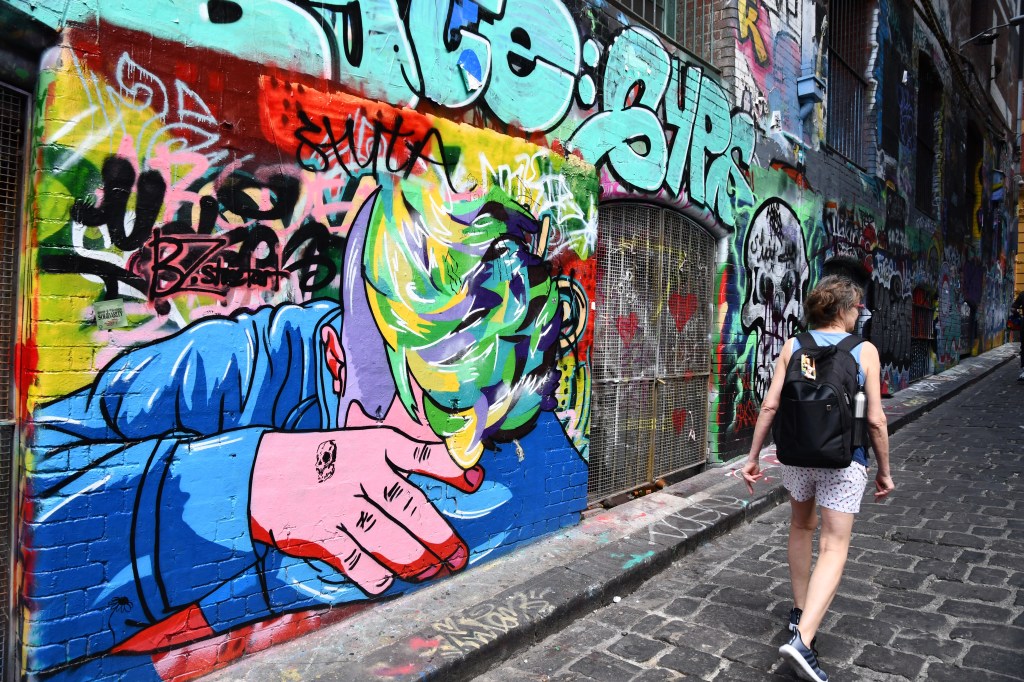
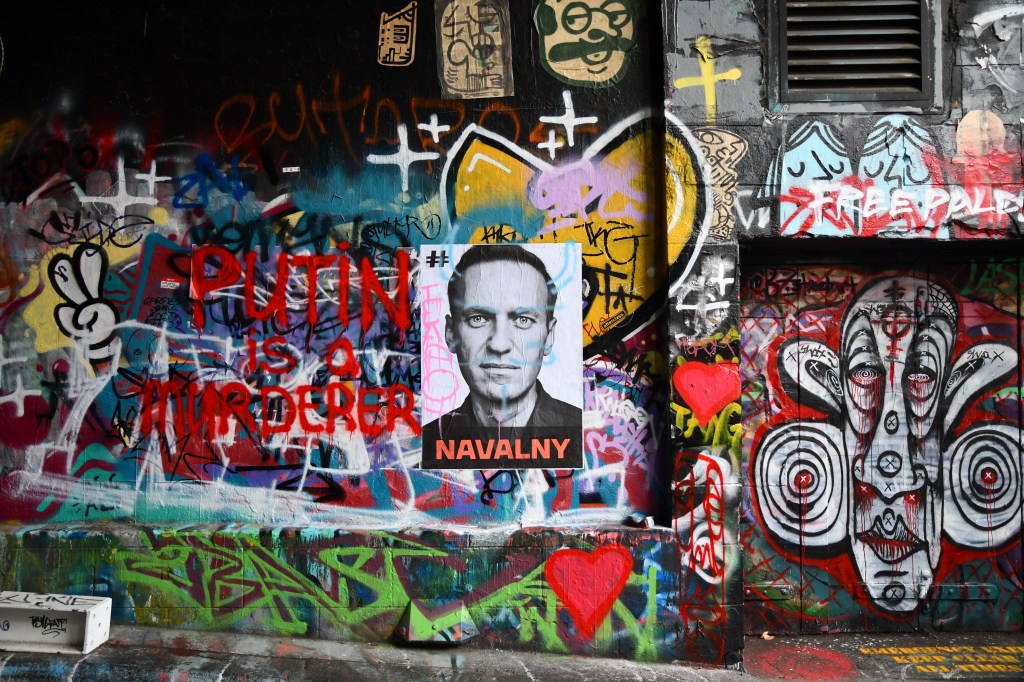
Walking towards the park, we passed a few lanes (also called lane ways – alleys) where we saw some street art. Some was good, some just looked like graffiti.
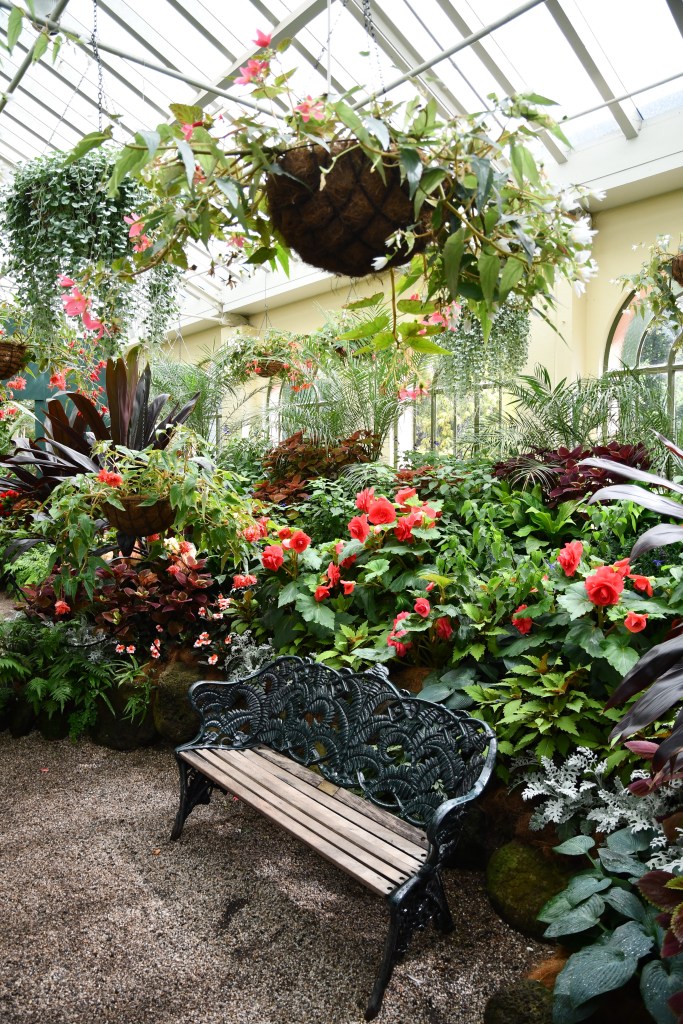
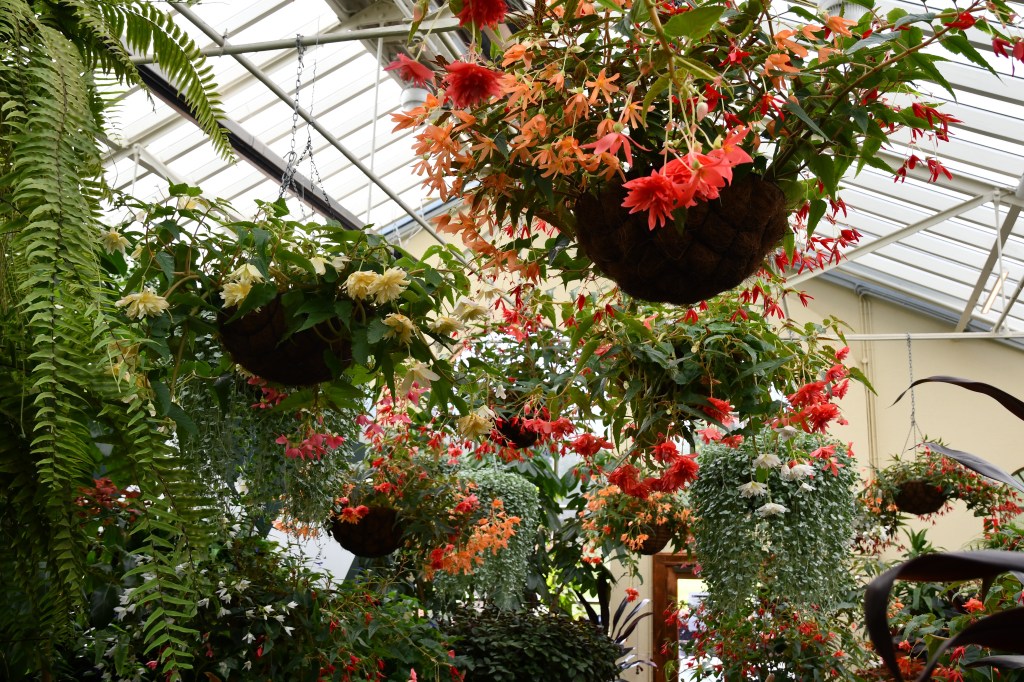
We walked through the park and toured the conservatory.
Inside the conservatory in the Fitzroy Gardens.
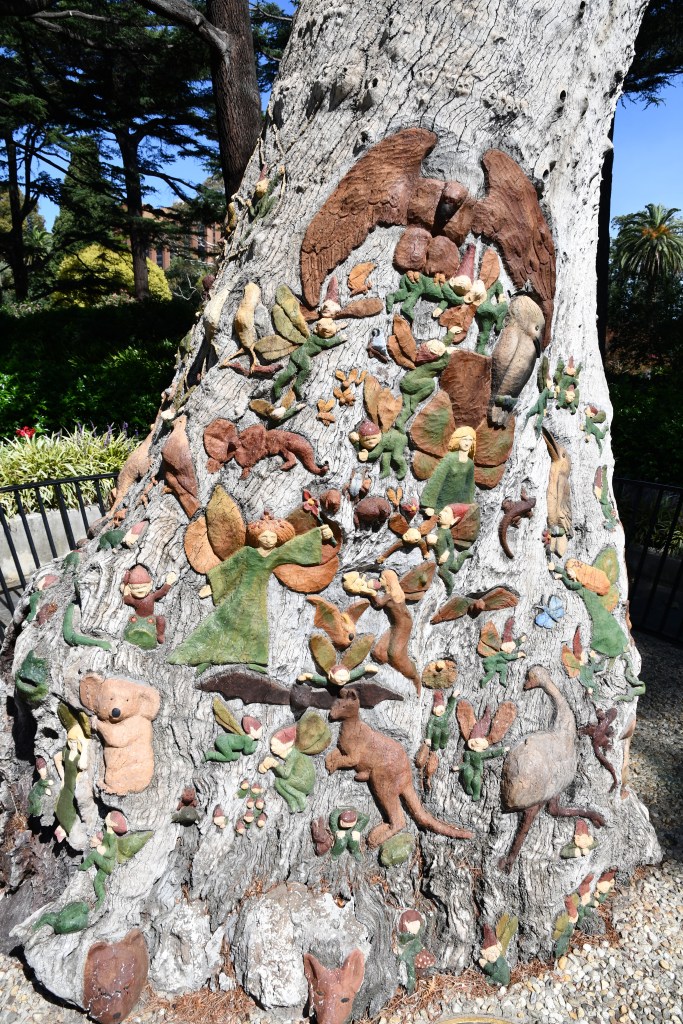
The fairy tree in the Fitzroy Gardens.
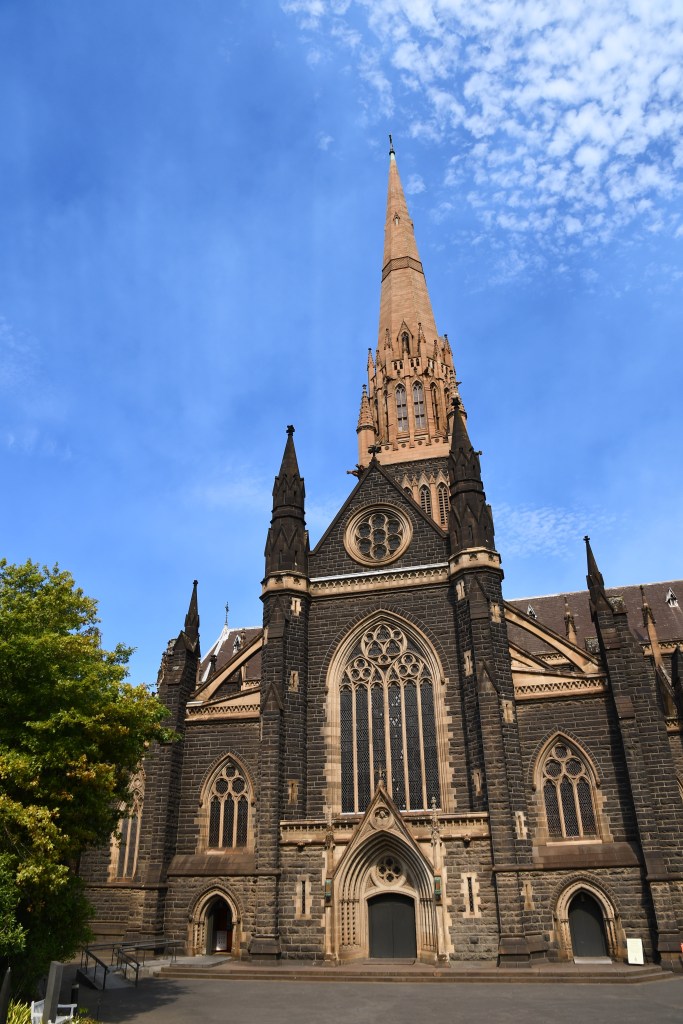
St. Patrick’s Cathedral sits on the NW corner of Fitzroy Gardens.
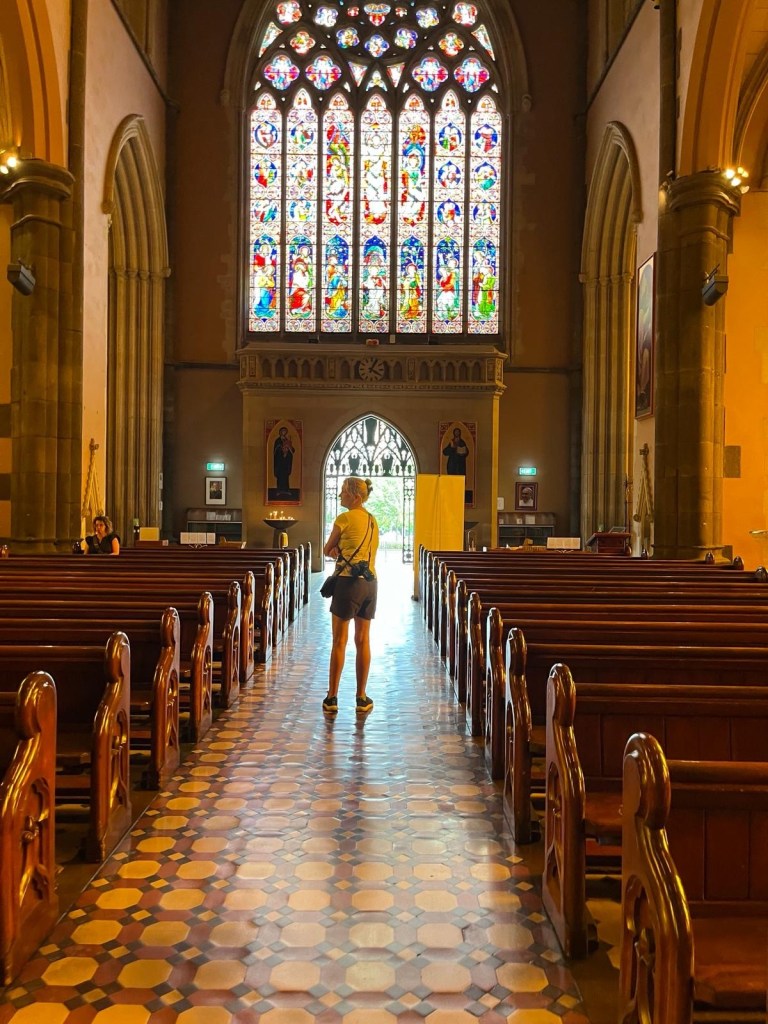
St. Patrick’s Cathedral in Melbourne.
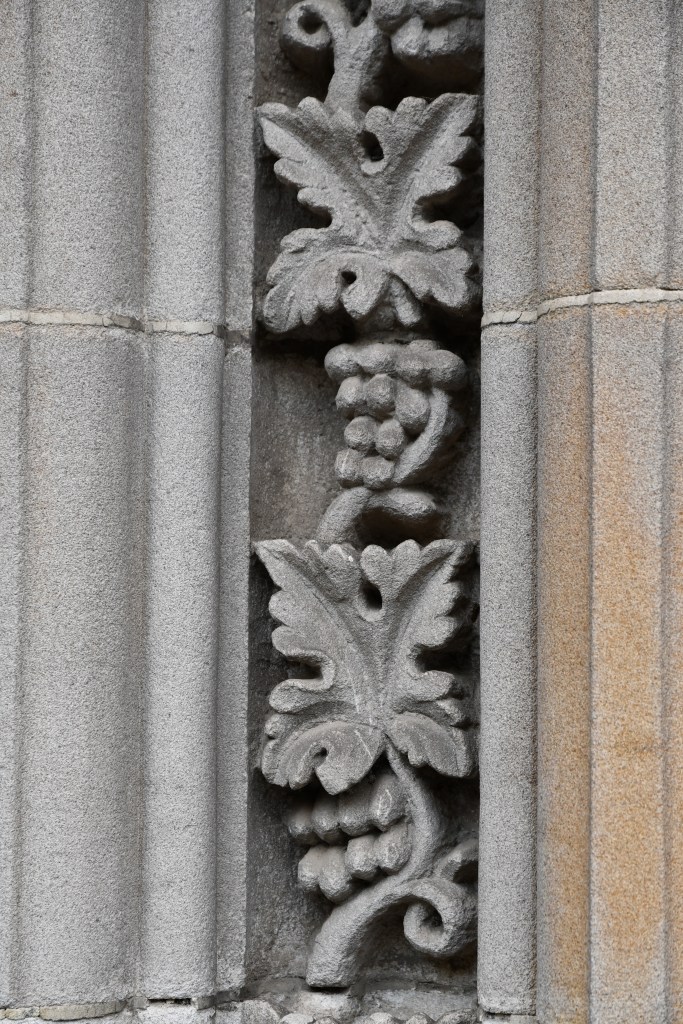
Detail of the exterior of St. Patrick’s Cathedral.
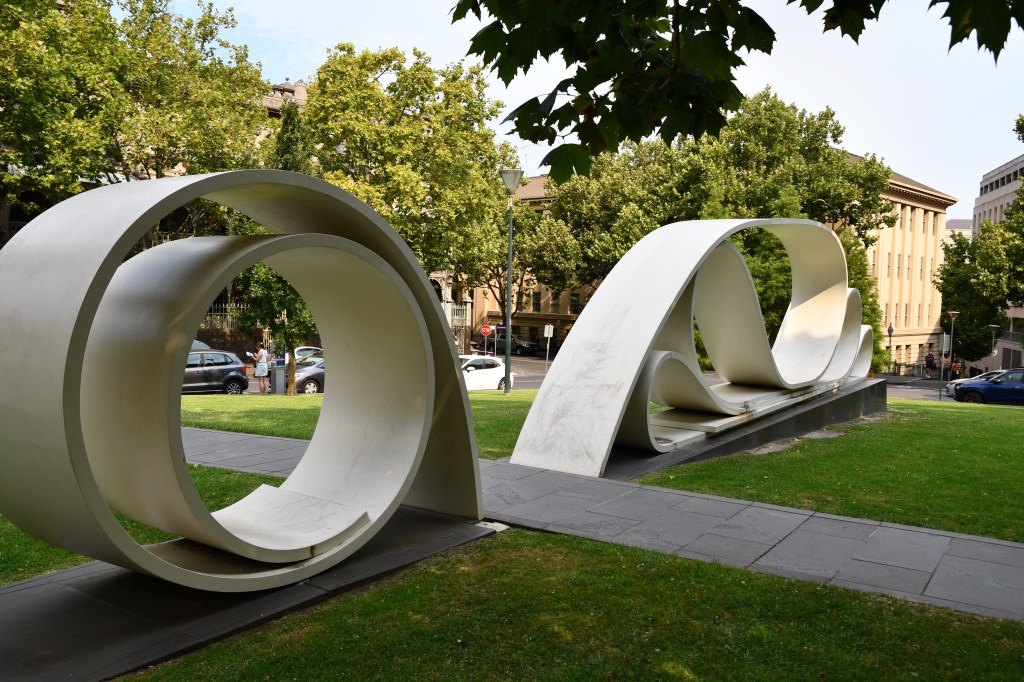
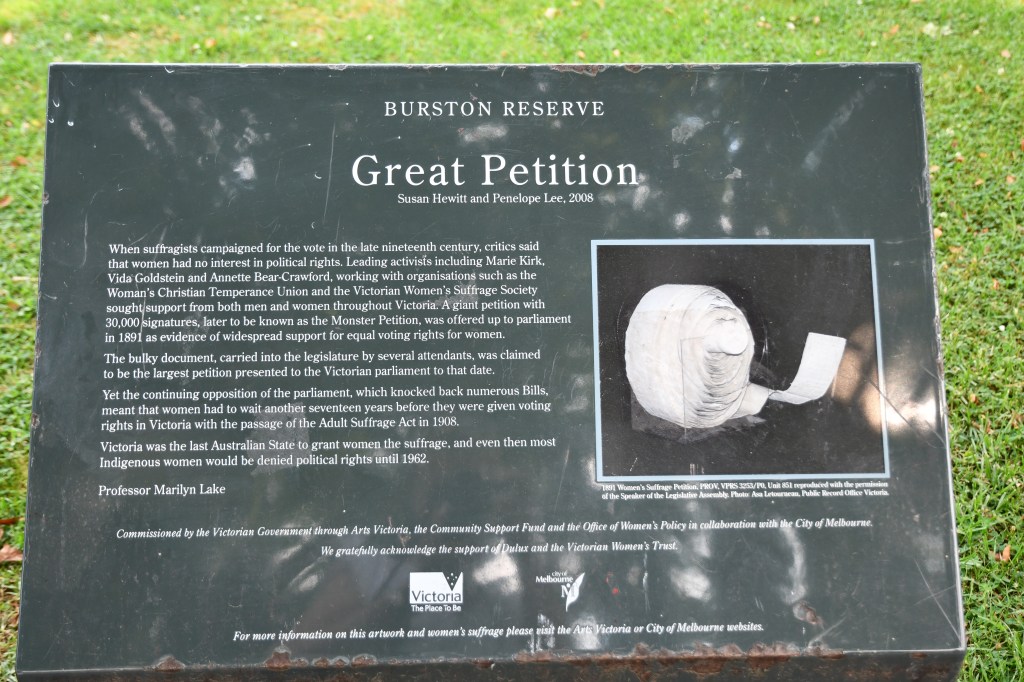
Sculpture of the Great Petition, celebrating the fight for equal voting rights for women.
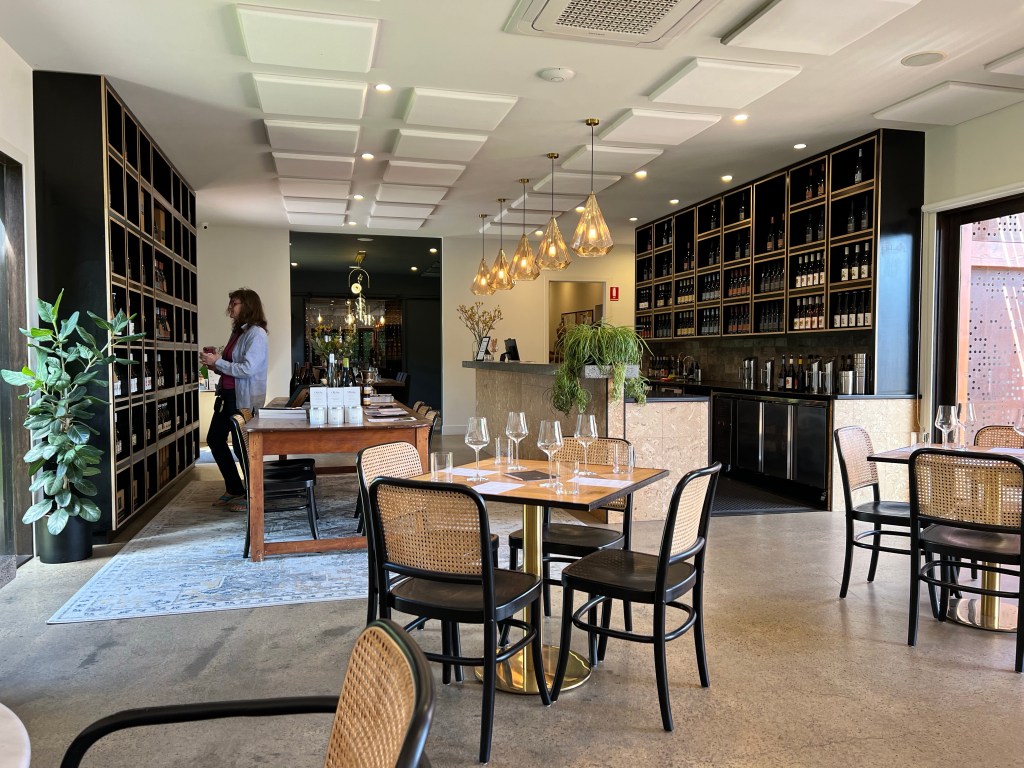
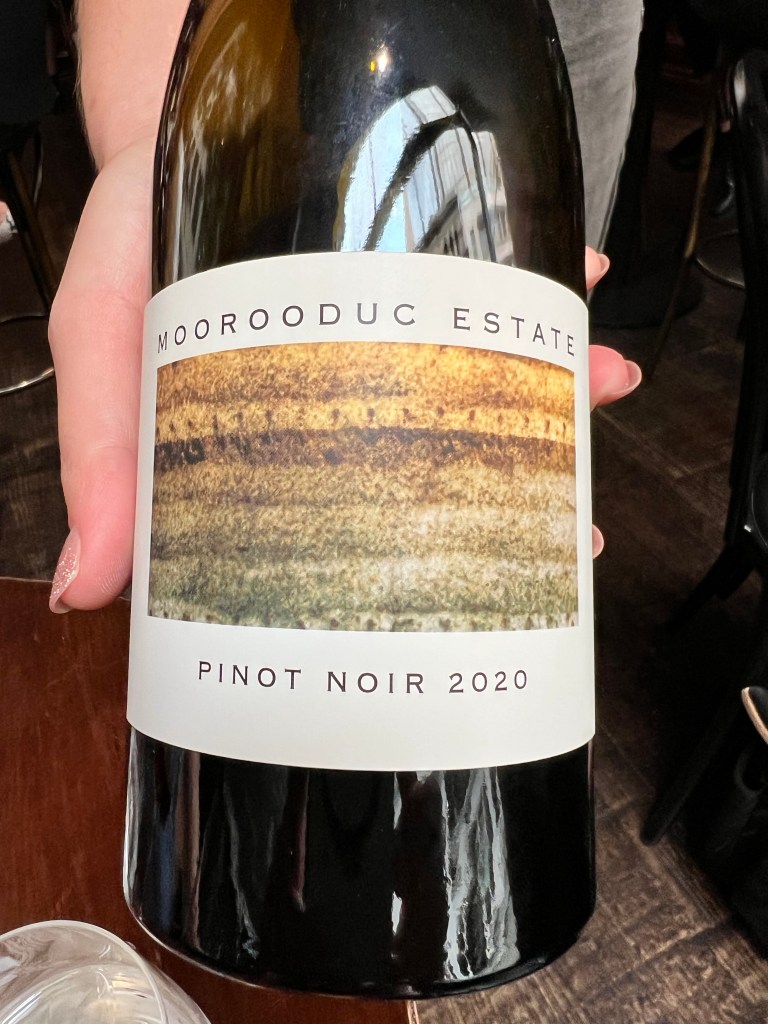
Walking back from the park to our hotel we passed Bijou, a bottle store & bar. A small place, we ducked in to try a local wine. We enjoyed a Pinot Noir from Moorooduc Estate in Moorooduc, Victoria. We were offered tastes of a few other local wines, but liked the Pinot Noir the best.
Moorooduc is just 30 miles from Melbourne on the Mornington peninsula. The Pinot we tasted was lighter than what I usually have from the Willamette Valley in Oregon, without the earthiness I usually like. It was good. We will be spending a few days in that a
In a recent post I said that I’d stayed at a beach resort that I didn’t care for. I searched my memory, and then photos, for what I thought were the best beaches and beach resorts where I had stayed. So here is a brief list of what I consider good beach resorts.
The Maldives
There are possibly hundreds of choices of resorts in The Maldives. I stayed at Angsana Velavaru (turtle island) in 2010. It had all the things I like, including seclusion, unspoiled views, clean water, good food, and lovely accommodations. My sister and I took a flight from London to the Male airport in the Maldives, Velana International Airport (about 10 to 11 hours). From there it is another 45 minute seaplane flight to the island. The snorkeling if the Maldives was the best snorkeling of my life.
Angsana.com
Angsana Velavaru, the MaldivesThe Maldives
Heron Island, Great Barrier Reef
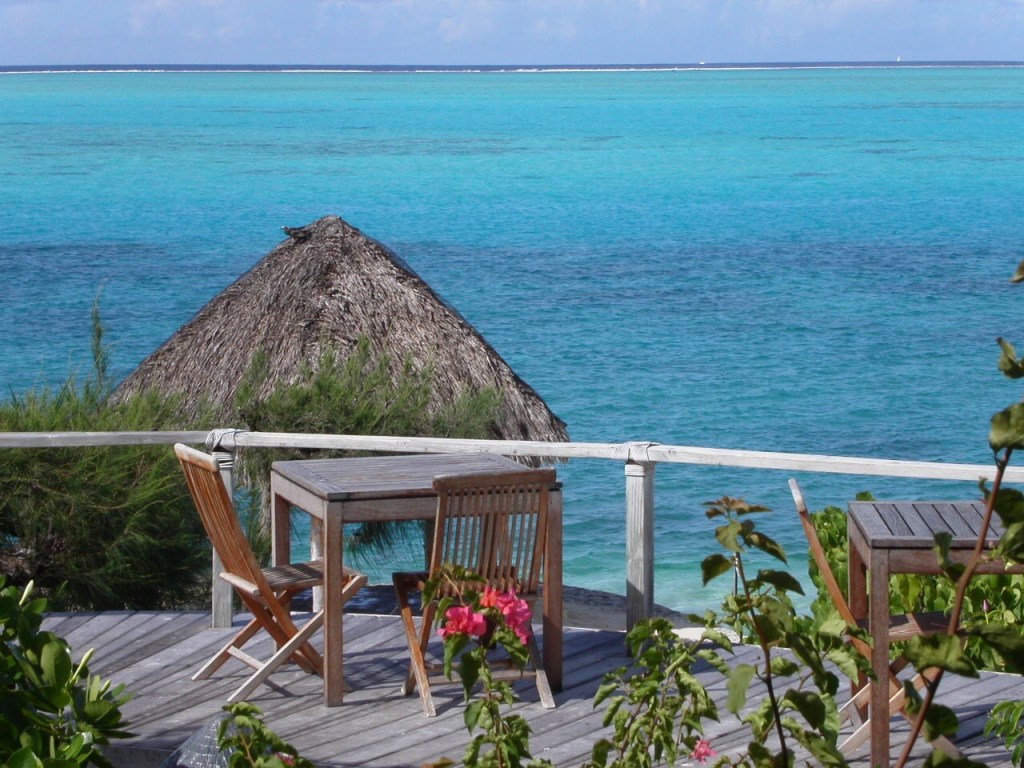
Heron Island, in the southern Great Barrier Reef, is 50 miles north-east of Gladstone, Queensland, Australia. We flew from San Francisco to Sydney, about 14 to 15 hours, and Sydney to Gladstone, another 3 hours. From Gladstone a two hour boat ride takes you out to Heron Island. You can walk around the entire island in about 30 minutes. The accommodations were basic, but the views were unspoiled, the snorkeling was good, and best of all, we witnessed sea turtle nests hatching daily. Twice we saw the large turtles either laying their eggs in the sand or retreating back to the sea after laying their eggs.
Heronisland.com
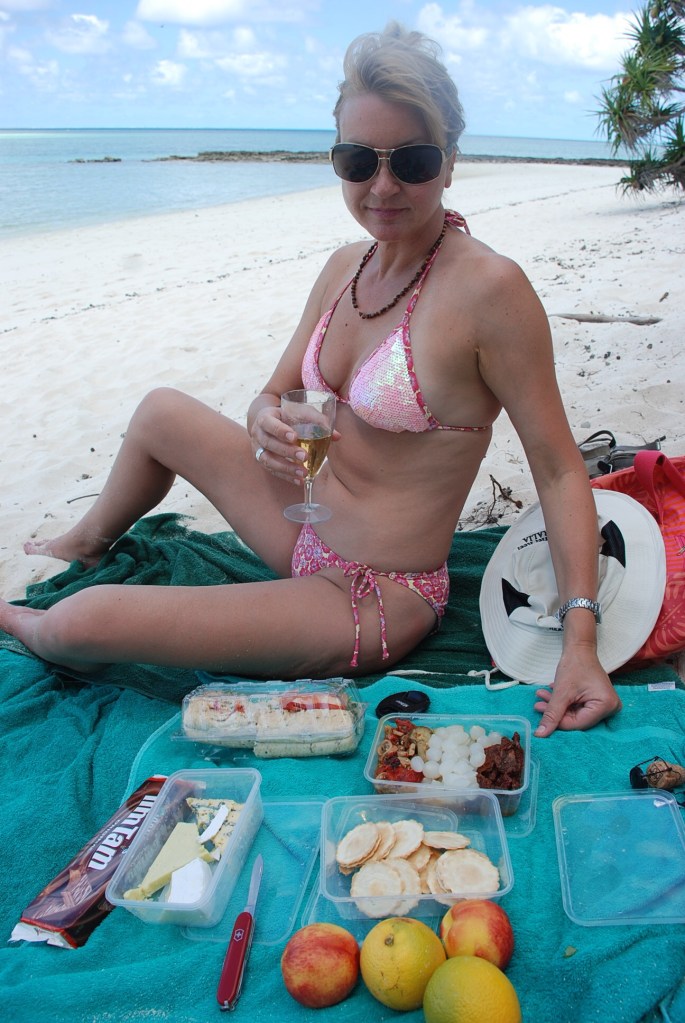
Heron Island, 2009.
Bora Bora, French Polynesia
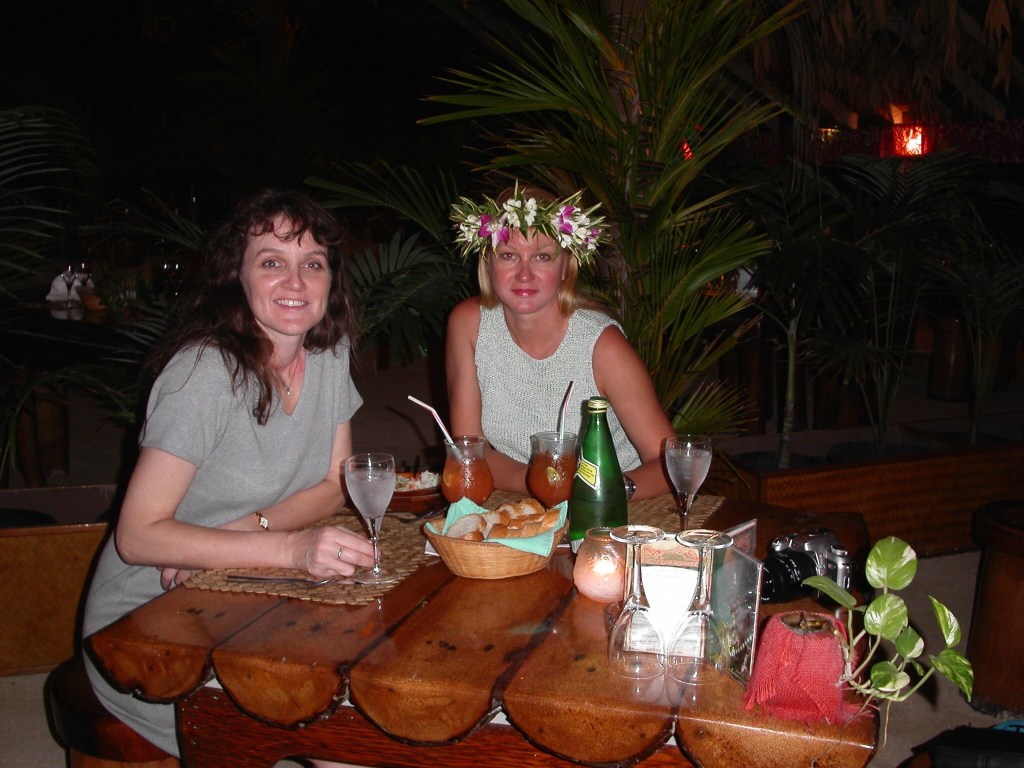
Bora Bora was a true paradise. Beautiful beaches, beautiful people, snorkeling and stellar accommodations. From San Francisco we flew Air Tahiti Nui to Papeete, about 9 hours. It’s just under one hour on a smaller plane to Bora Bora. The resorts send boats over to the dock to pick up their guests. We stayed at two different resorts, Le Meridien and Hotel Bora Bora. We loved it. We snorkeled with turtles and ate at Bloody Mary’s Bora Bora. Le Meridien is still in business. I am sad to say that the Hotel Bora Bora, opened in 1961 and our favorite place, closed in 2008 for renovations and has not reopened. My brother visited years after my sister and I stayed there, and reported to us that it was abandoned and empty when he walked through the area.
The beach at Hotel Bora BoraDinner at Bloody Mary’s Bora BoraBora Bora
Mozambique
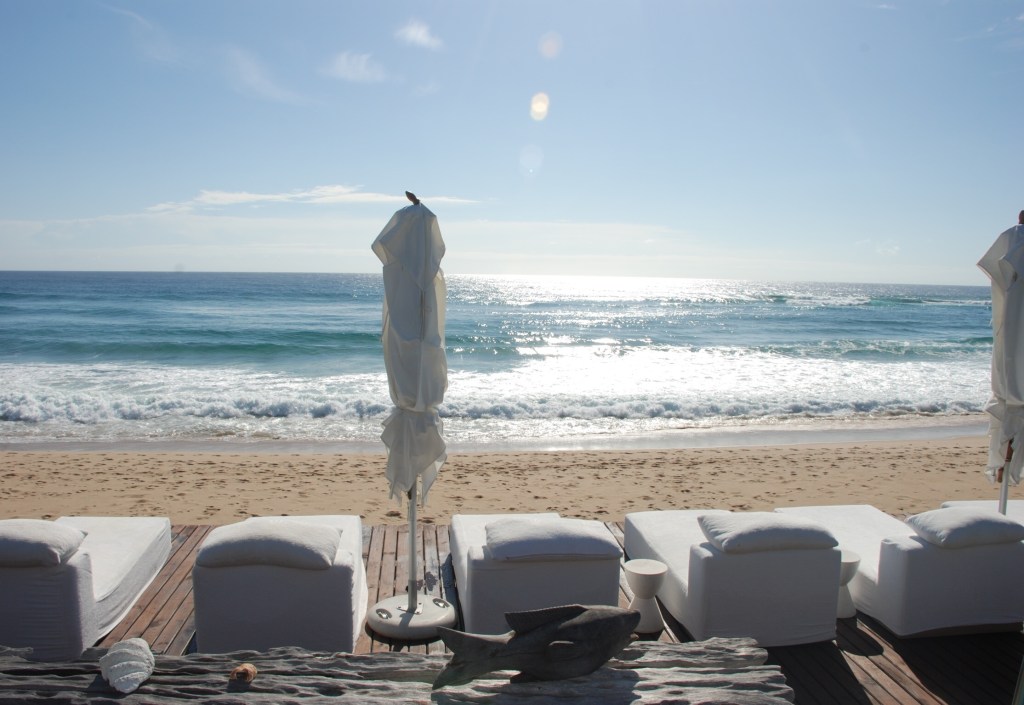
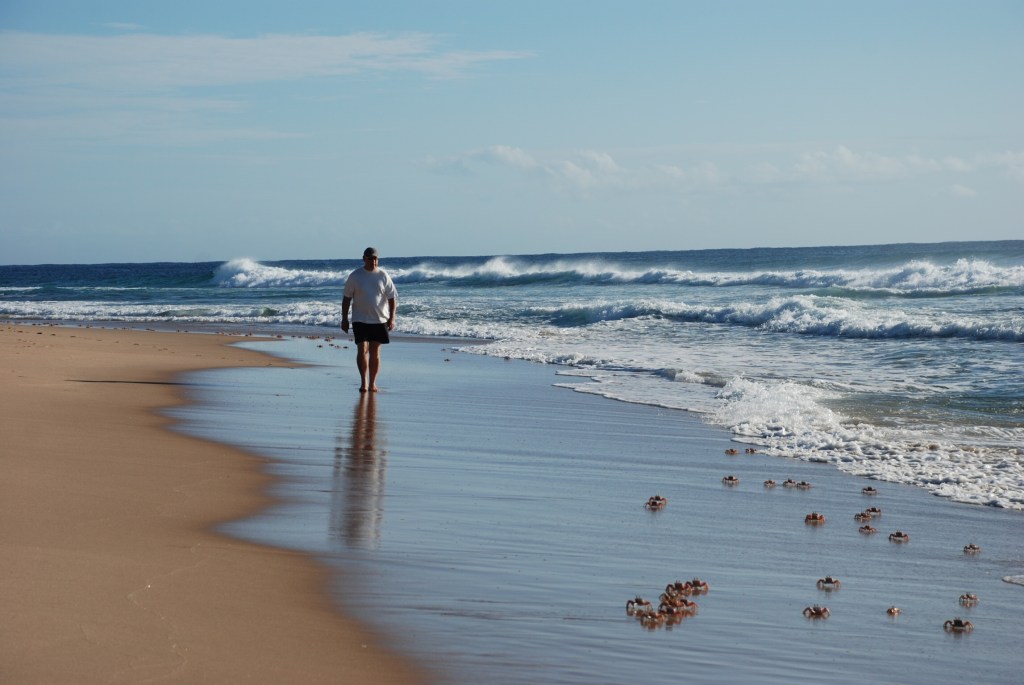
I celebrated my 50th birthday at a resort on the coast of Mozambique. We had already been to South Africa, and ended our safari trip with a beach stay. From South Africa we had a private car transfer to the capital of Mozambique on fairly good roads. The trek from the capital to the White Pearl Resort was on very rough roads for about three hours. It was difficult to get to, but the resort was worth it. The resort was on the beach, had beautiful views and good food. My dear friend Augie was surprised and delighted to find a baby grand piano, which he played to entertain all the guests. Mozambique is one of the few countries that allow swimming with wild dolphins, under strict regulation. We did this for my 50th birthday.
Mozambique Unobstructed views from the White Pearl Resort, Mozambique
Mnemba Island, Tanzania
In 2007, during my first trip to Africa, my sister and I spent three nights on Mnemba Island. It’s a private island off the tip of Zanzibar. I celebrated a birthday there. It is one of the most expensive and most exclusive places I have ever stayed. It was difficult to get to as well. From Stone Town, Zanzibar we drove to the northern tip of the island, where we were met by the resorts boat. I loved the open air huts and the hospitality was wonderful. They really knew how to celebrate a birthday. The snorkeling was memorable in that I was “inked” by a very small squid. You could easily walk around the island and we found very nice shells.
All these places were not easy to get to. I am aware of the environmental toll it takes to get to remote destinations. There is nothing eco-tourism about flying in a jet for 25 hours to get somewhere. More and more I believe tourism ruins the places we want to visit. Unless you travel by sailboat or foot or bicycle, you may have a huge carbon footprint. I have enjoyed my travel, but I’m feeling more and more concern (guilt) over the impact to the environment and the local people and wildlife.
We can try to minimize the damage we do during our travels. You can stay at accommodations that give back to the community, or volunteer with a conservation program, or donate to local causes.
Another small thing you can do is to use a sunscreen that does not harm the coral and sea life. I was just reading an article about this and went to my own bathroom cabinet and found sunscreens containing harmful chemicals. Oxybenzone, octocrylene, and homosalate, all on the harmful list, were in the products in my house. (I also have Neutrogena mineral sunscreen, which is ok). There are alternatives. The website haereticus-lab.org has a list of products that don’t contain harmful chemicals. From now on I will be using Badger, or Tropic, or Odacite. In Hawaii, SB2571 Hawaii Act 104, was implemented in 2021. It bans the sale of all sunscreen products containing oxybenzone and octinoxate.
Environmental Working Group, a nonprofit corporation, publishes an annual guide to sunscreen. Check it out.

























































































 A Traveler's Photo Journal