We ended our trip in the best of ways, with a fun final day messing around Murano and Venice with no solid plan. My only must see location was the Church of Santa Maria e San Donato. Because all three of us have already visited Venice and seen the major sites there, we headed over to Murano on a public water boat to see something new.
An old gate with a silhouette of a glass blower along the Fondamenta Daniele Manin.Murano’s canal along Fondamenta Dei Vetrai.
Our first stop was the Murano Glass Museum which walks you through the history of glass making. The displays cover over two thousand years of glass pieces. I learned a lot from the exhibits.
A jug made of blown crystal decorated with gold leaf and refunded enamels. Venice, beginning of XVI century.
Some of what we learned at the Murano Glass Museum:
The art of Venetian glass was a result of very close ties with the Middle East, with Syria in particular, whose sophisticated and elegant glass work was renowned in the Middle Ages. It was not until the middle of the fourteenth century that Venice became the unrivaled leader in the art of glass. A decisive factor in this turning point was the invention of clear glass by Angelo Barovier (1405-1460) from Murano.
There were many chandeliers.
C. 1900-1915. Fratelli Toso glass factory, one of the most esteemed Murano glass factories of the time. The Fratelli Toso glass factory began in 1854.
Crespo. Ermanno Toso, 1953.
After learning more about glass making than we could ever soak up in one museum visit, we walked the short distance to the Basilica. The narrow streets along the canal were refreshingly devoid of people.
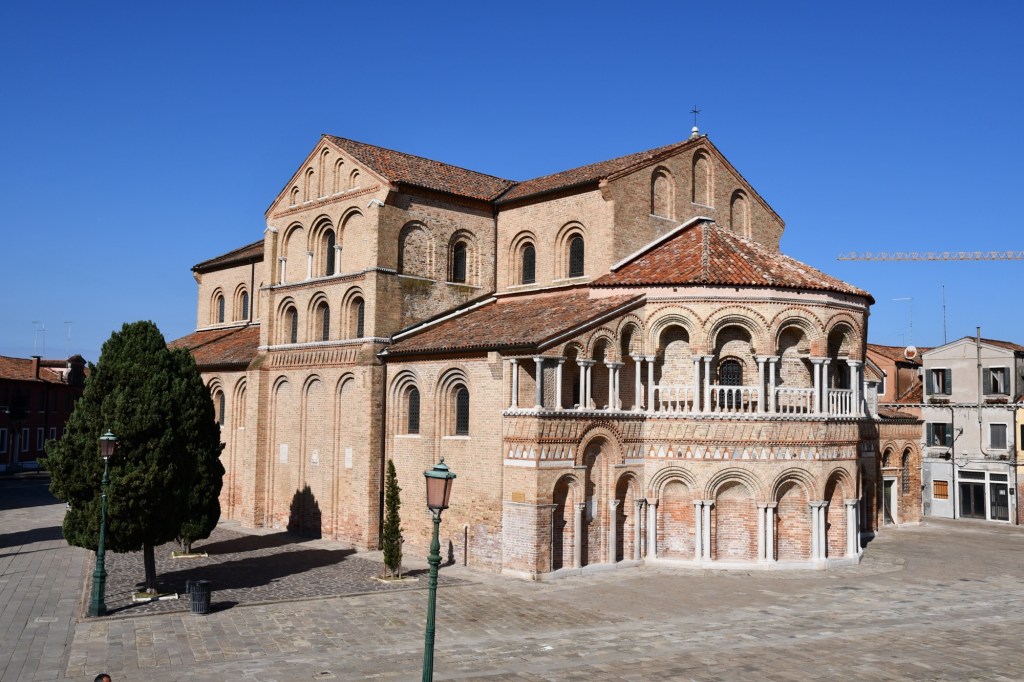
The Basilica dei Santi Maria e Donato.
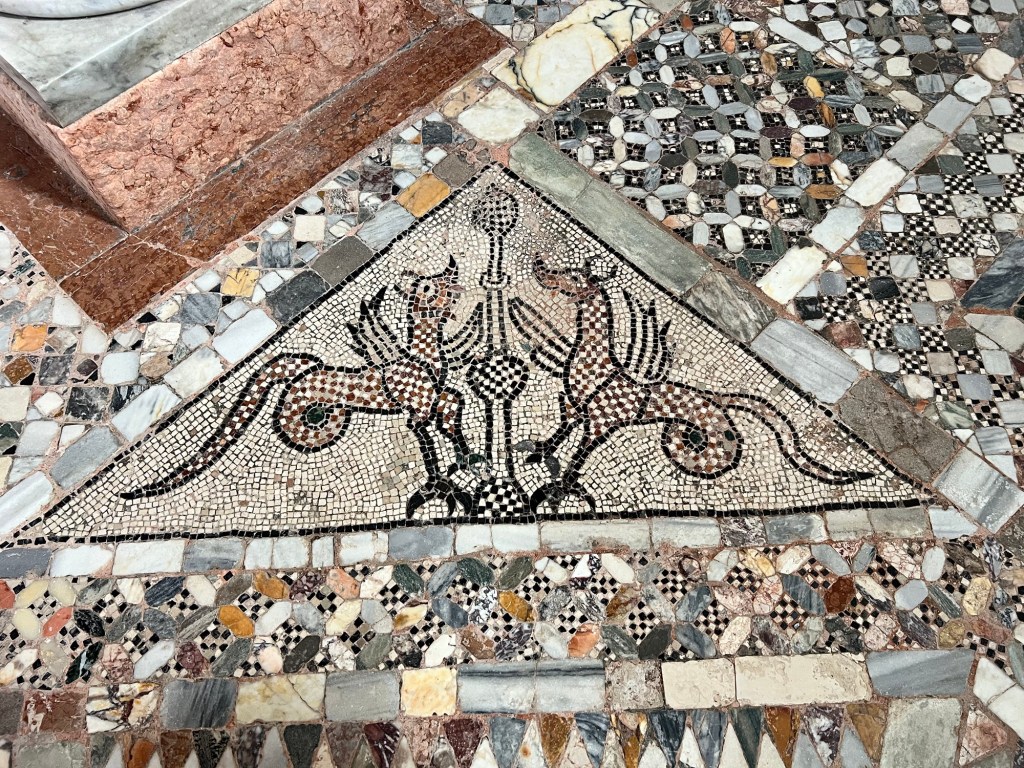
Basilica interior. The mosaic floor is inscribed with the date September 1141. It’s made of porphyry, serpentine, and other precious marbles and stones.
It was so amazing and beautiful it leaves you speechless, and all for 3.50 €!
The 12th century Byzantine mosaic pavement was the most beautiful floor I’ve ever seen, and worth the trip alone. The facing pairs of Griffins and Peacocks are symbols of immortality and sacredness.The Griffins.
The two-legged dragons represent vices, which the water of baptism washes away. Large bones behind the altar are said to be the bones of a dragon slain by Saint Donatus of Euroea.
Baptismal font, multicolored pieces of glass (Luciano Vistosi, Murano 1931-2010) on Roman marble from c. 200 AD.
I was a bit surprised by the colorful addition to the baptismal font. I had to go back and take a second look.
Eight circles containing eight six-petaled flowers, are associated with the transfiguration and the New Testament.
The lamb in the eagle’s talons represents the human soul, weak and troubled, being raised by the savior (the eagle here is a Christological symbol).
It’s staggering how much symbolism there is depicted here, as well as all the paintings and texts we’ve seen and read, and we’ve just scratched the surface. It is another deep dive into a rabbit hole to try to understand the meanings behind it. I could have spent half the day in the Basilica, but we continued our exploration, passing many shop windows with every type of glass for sale.
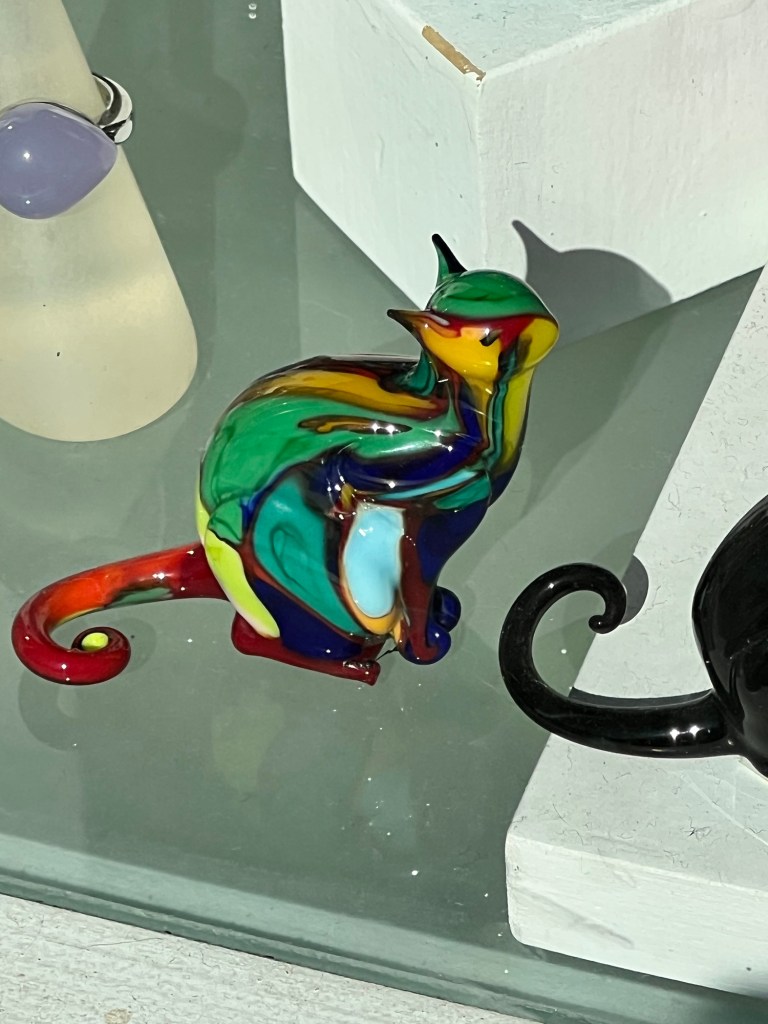
Lots of glass animals.
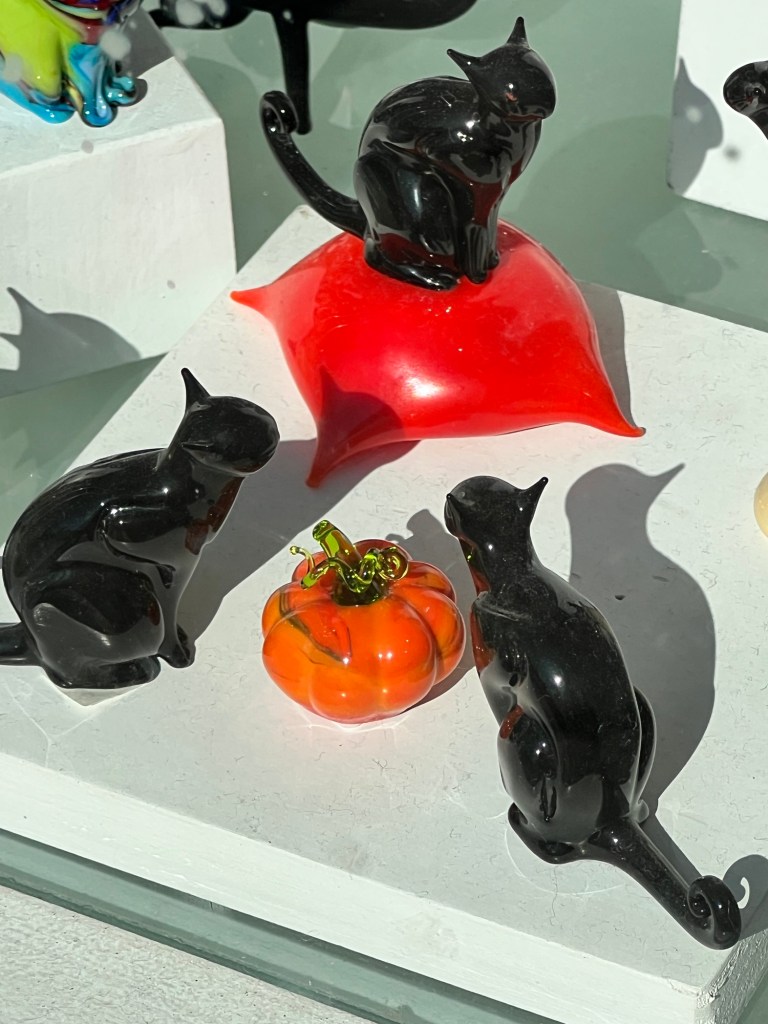
In a shop window.
Glass squid.
Many variations on glasses and goblets and perfume bottles.
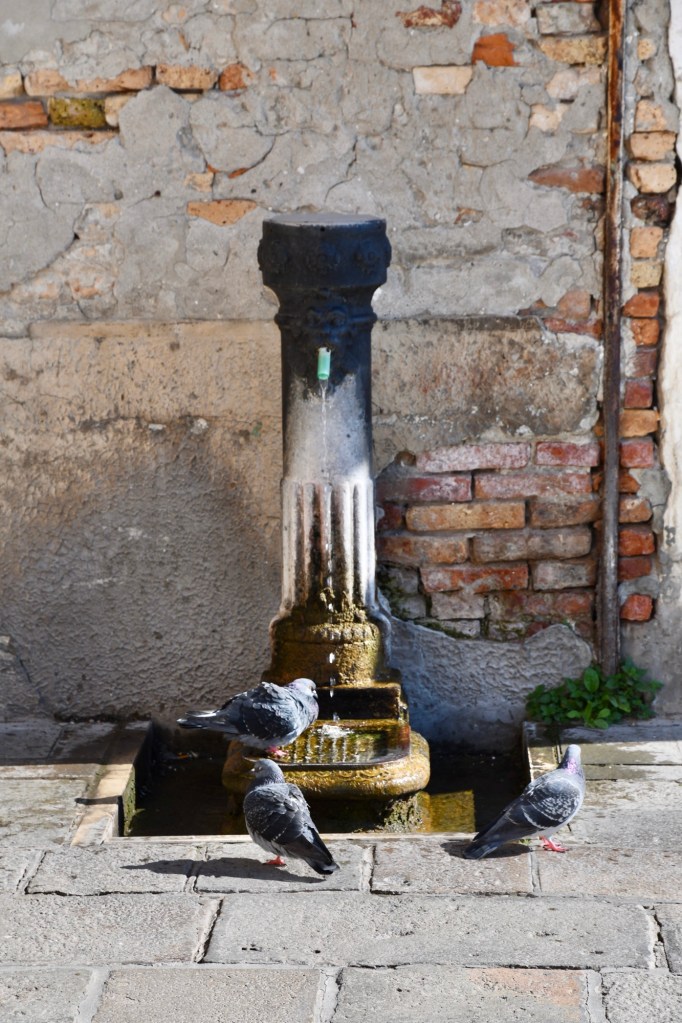
Pigeons drink from a public fountain along Riva Longa.
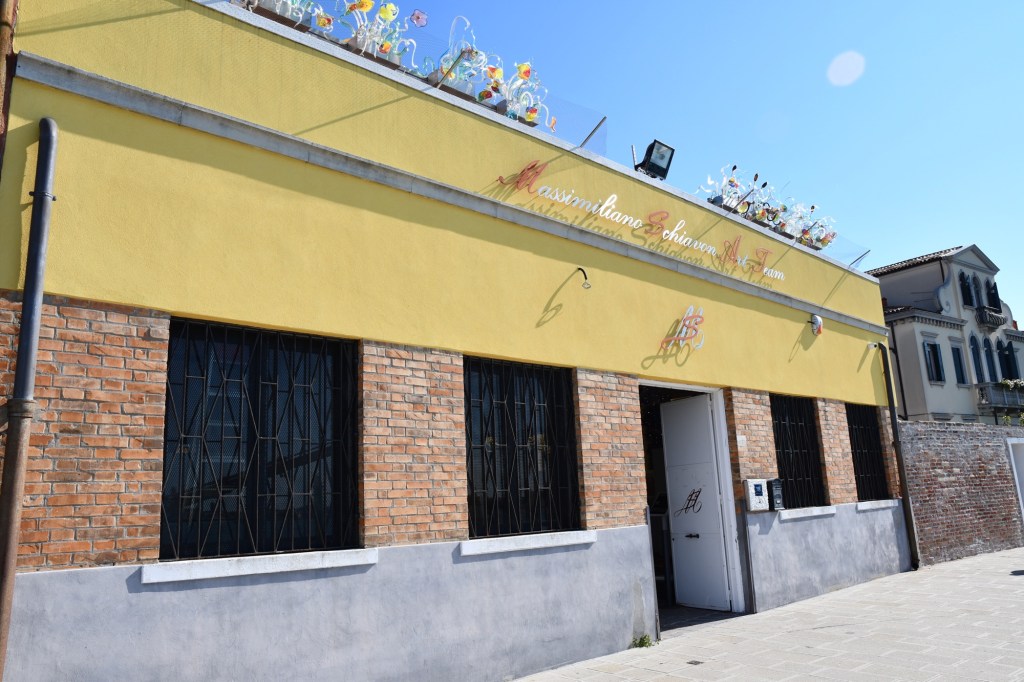
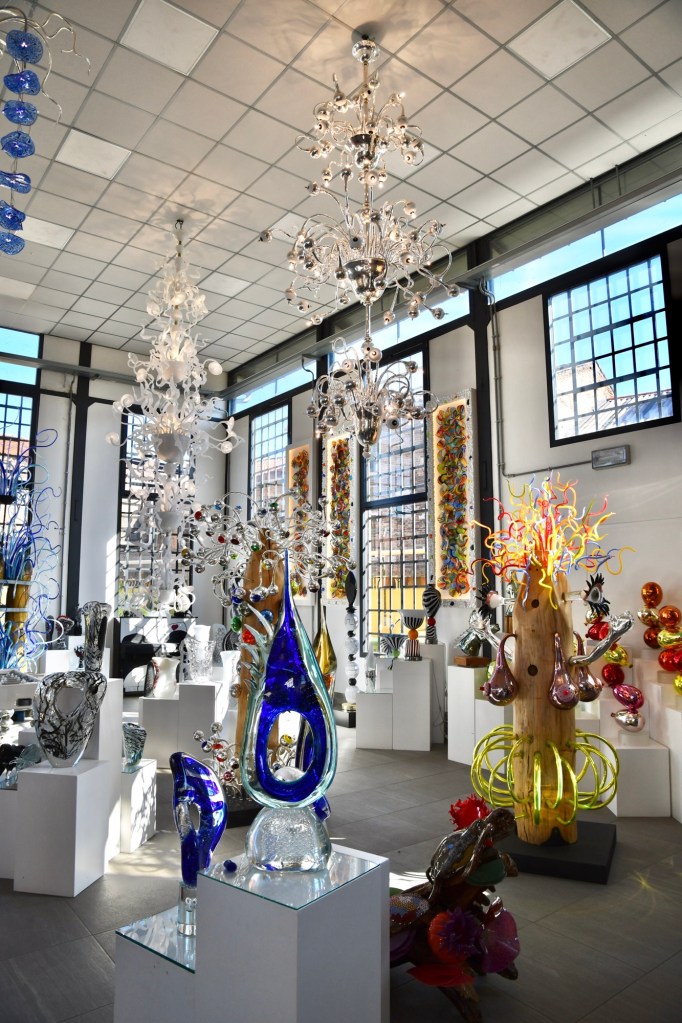
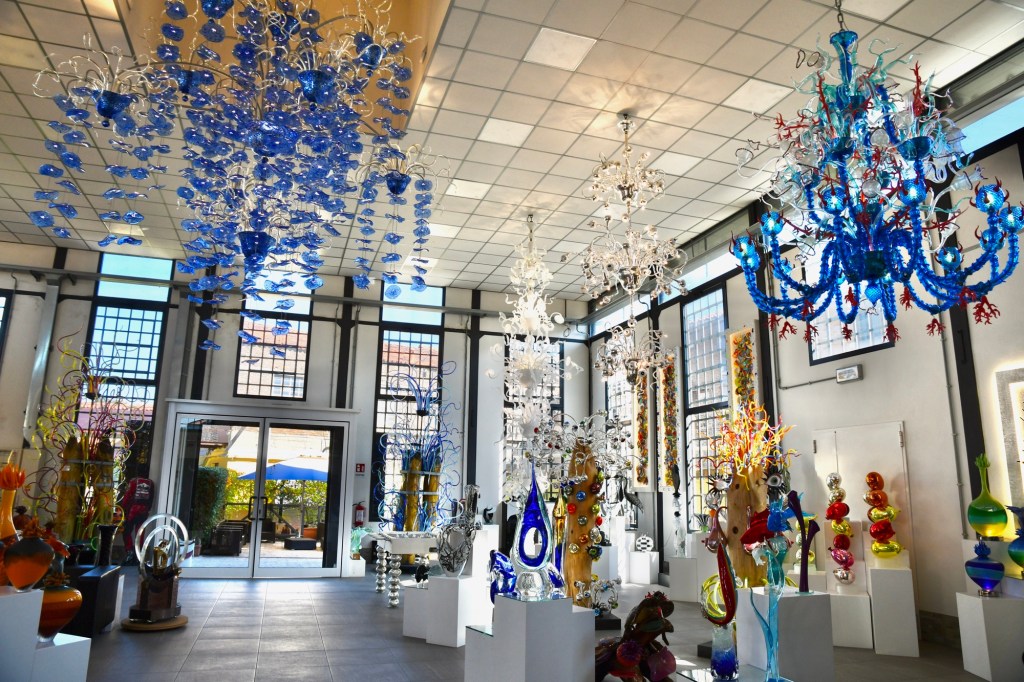
My travel companion Augie had been given the name of a glass factory that came highly recommended. We knew nothing about it. We showed up and were given a tour of the facility, it’s glass ovens, showrooms, the entire operation.
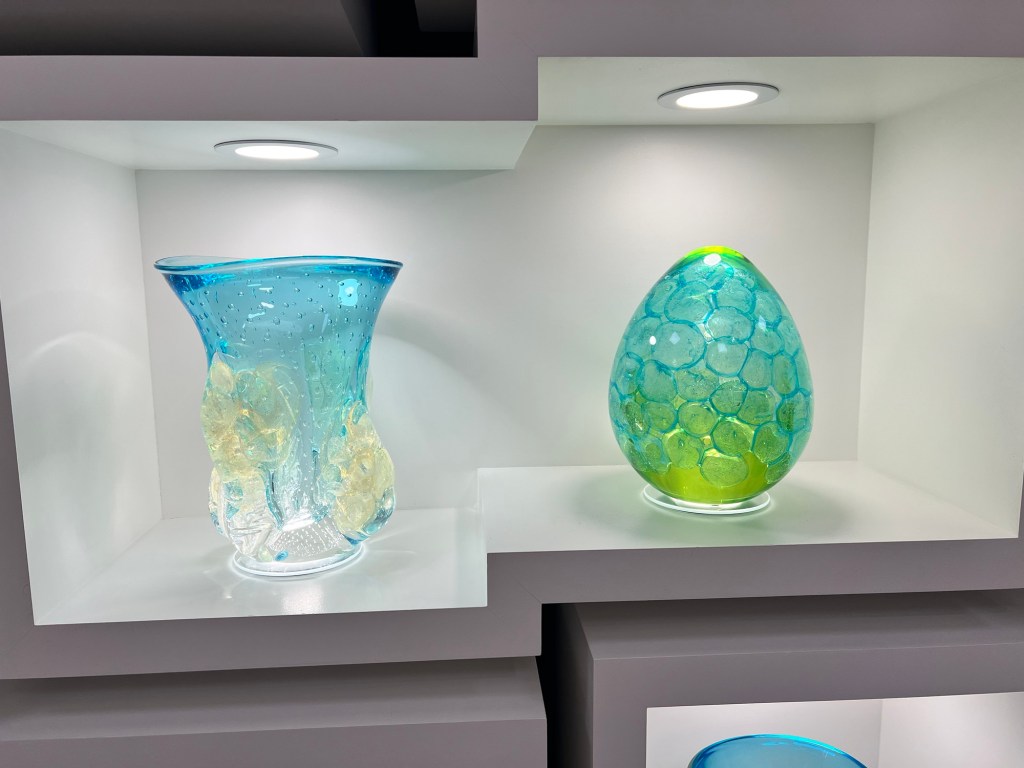
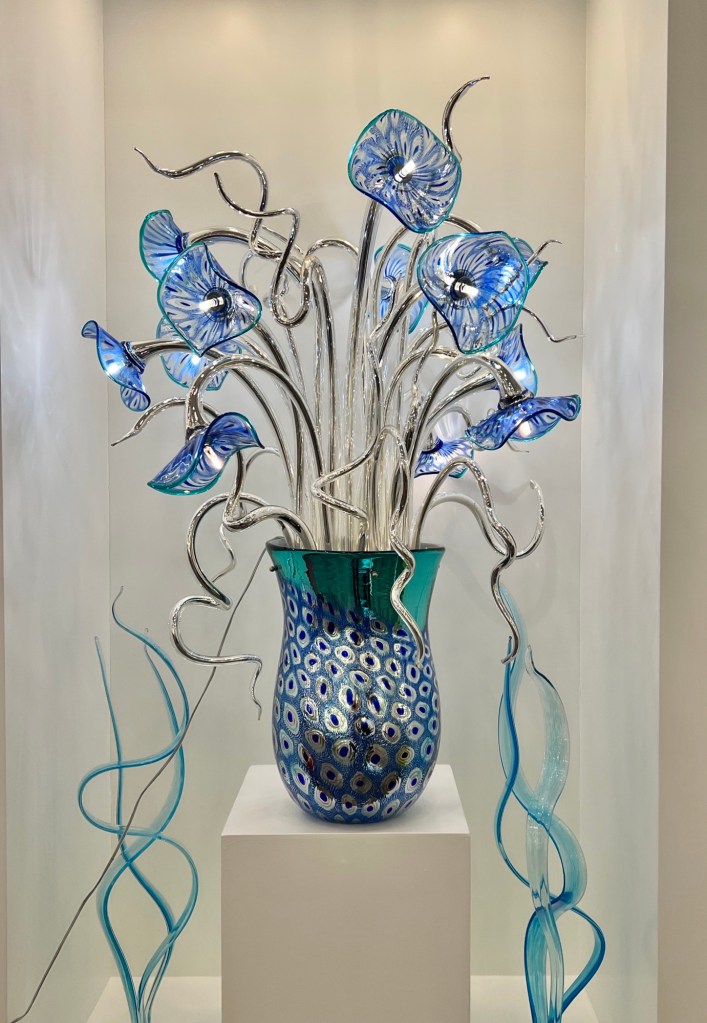
This unassuming exterior that houses the glass factory of Massimiliano Schiavon Art Team. Massimilianoschiavon.comOne of the galleries.A chandelier.A showroom.The work behind the beautiful glass creations.Part of the “pearl” collection.
We were told they create about 300 pieces per year.
The pitcher I purchased from the glass shop.
After our Murano adventures we hopped on the No. 7 ferry and enjoyed a sunny open air boat ride to St. Mark’s Square.
Teresa and Augie on the ferry between Murano and Venice.
Me and my friend Augie.
Approaching a ferry dock near St Marks Square.
As many times as I’ve seen The Bridge of Sighs, I can’t help but snap a picture when I see it. There really is something magical about Venice.
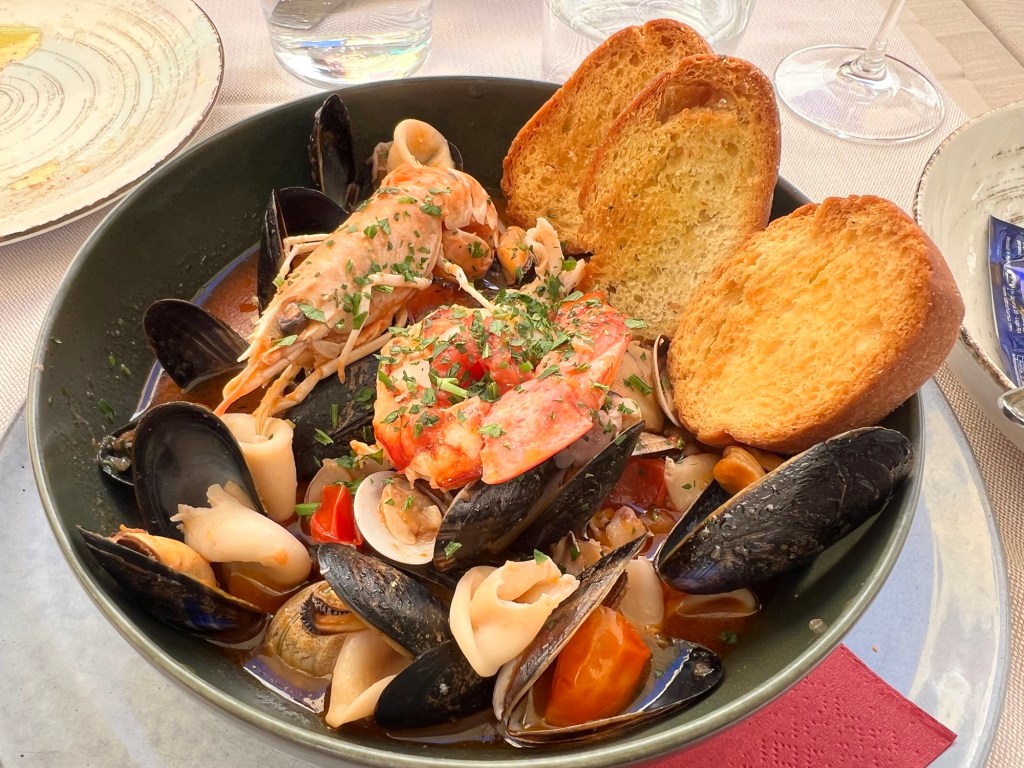
We enjoyed just walking around with no real idea where we were going. We chose the lunch spot at random, and it turned out to be perfect. They served only traditional Venetian food. It was delicious.
Zappa di Pesce at the Tavernetta San Mauricio, Calle Zaguri 2619, Venezia.
Crossing the Grand Canal on our way to the Piazzale Roma.
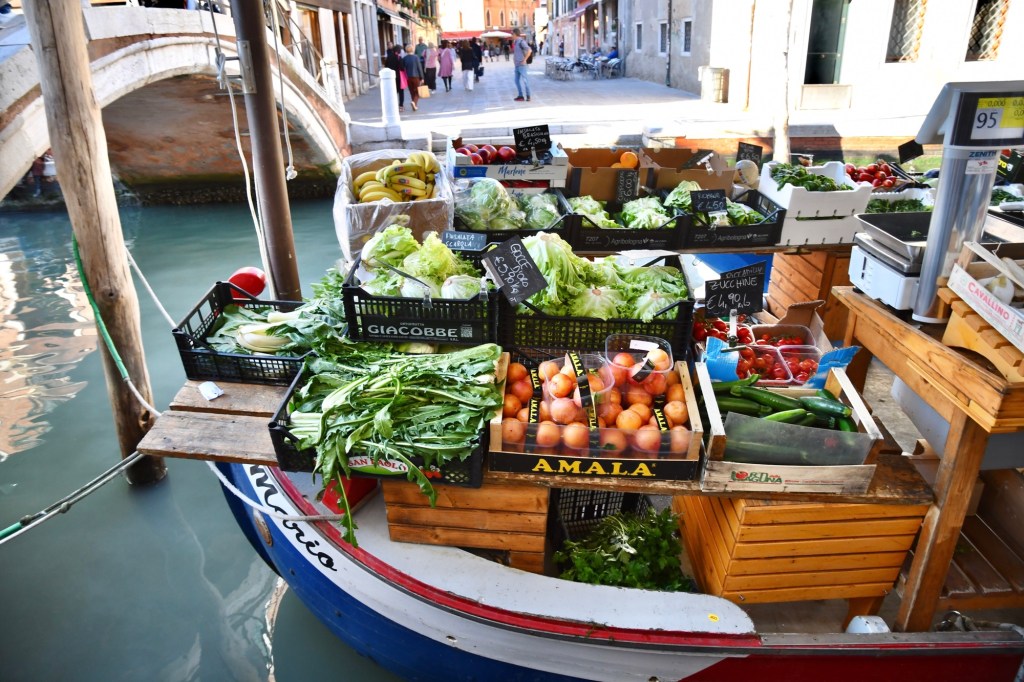
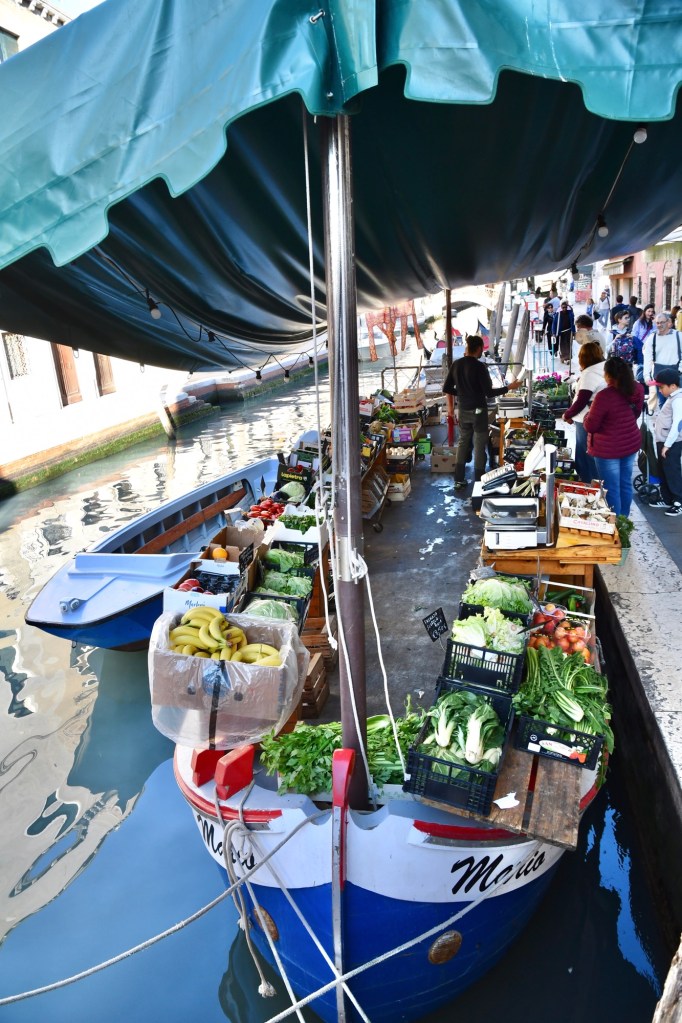
Venetian style farmers market.
We walked from St Mark’s Square to the Piazzale Roma, where we caught a bus to the airport, and walked to our hotel. Our step count today was 17,000 and we spent 28 € on public transportation between ferries and the bus.














 A Traveler's Photo Journal
Incredible beauty and history! Your head will be spinning for days! What a day! Well done!
Ah, one of my favorite places. Great glass tour.