Another Day in Amsterdam

The only flower market stall with fresh flowers in the month of February

The only flower market stall with fresh flowers in the month of February

With the departure of the “cold, bleak, biting weather” (thanks Charles), we headed out into sunny skies and crisp temperatures.  What a difference no rain and wind make, and how nice to have a little sunshine.  We walked all day and checked off most of what we had on our ‘to do’ list.

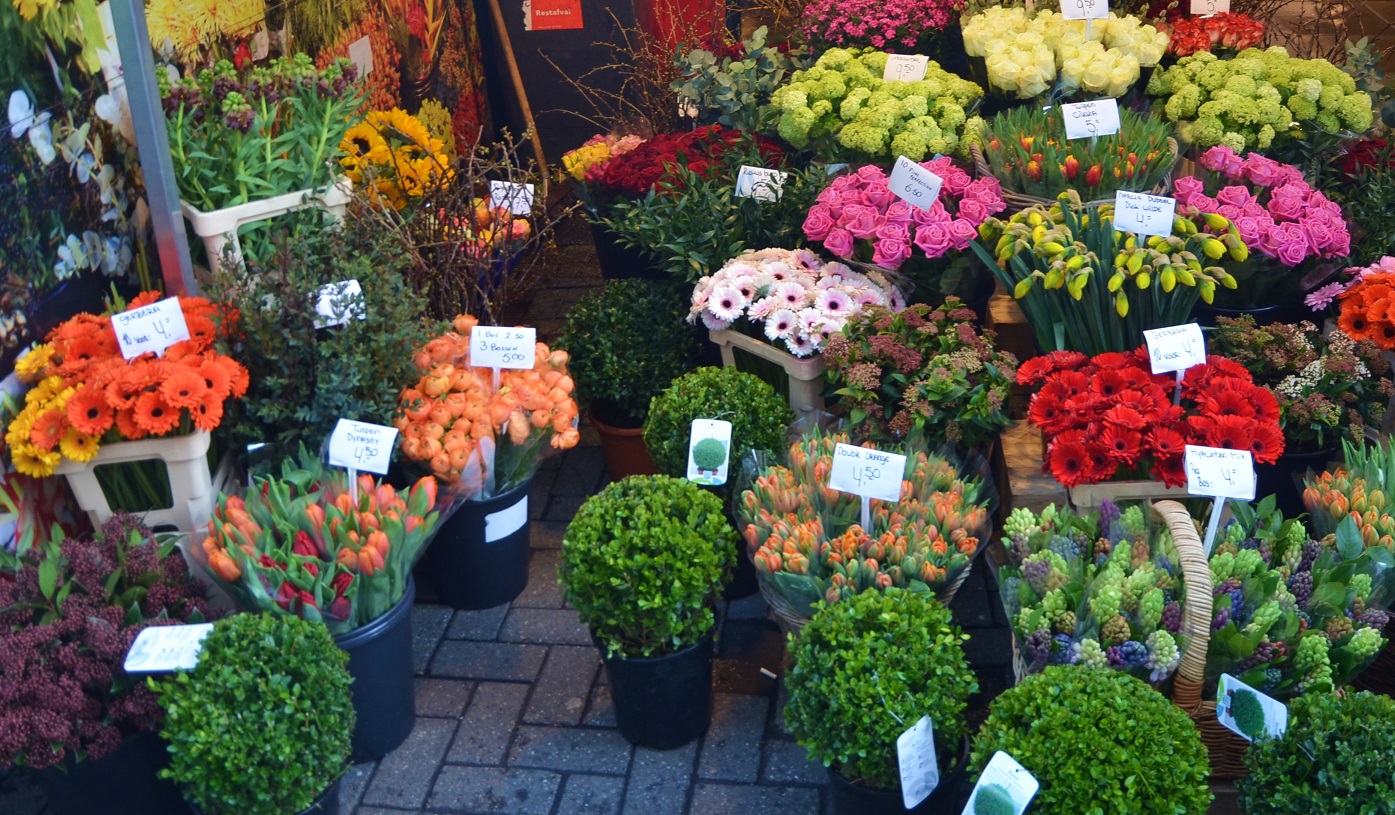
The floating flower market was pretty much a bust in this pre-growing season month.  The flower stalls had many bulbs for sale, but not the endless buckets of fresh flowers I was hoping for.
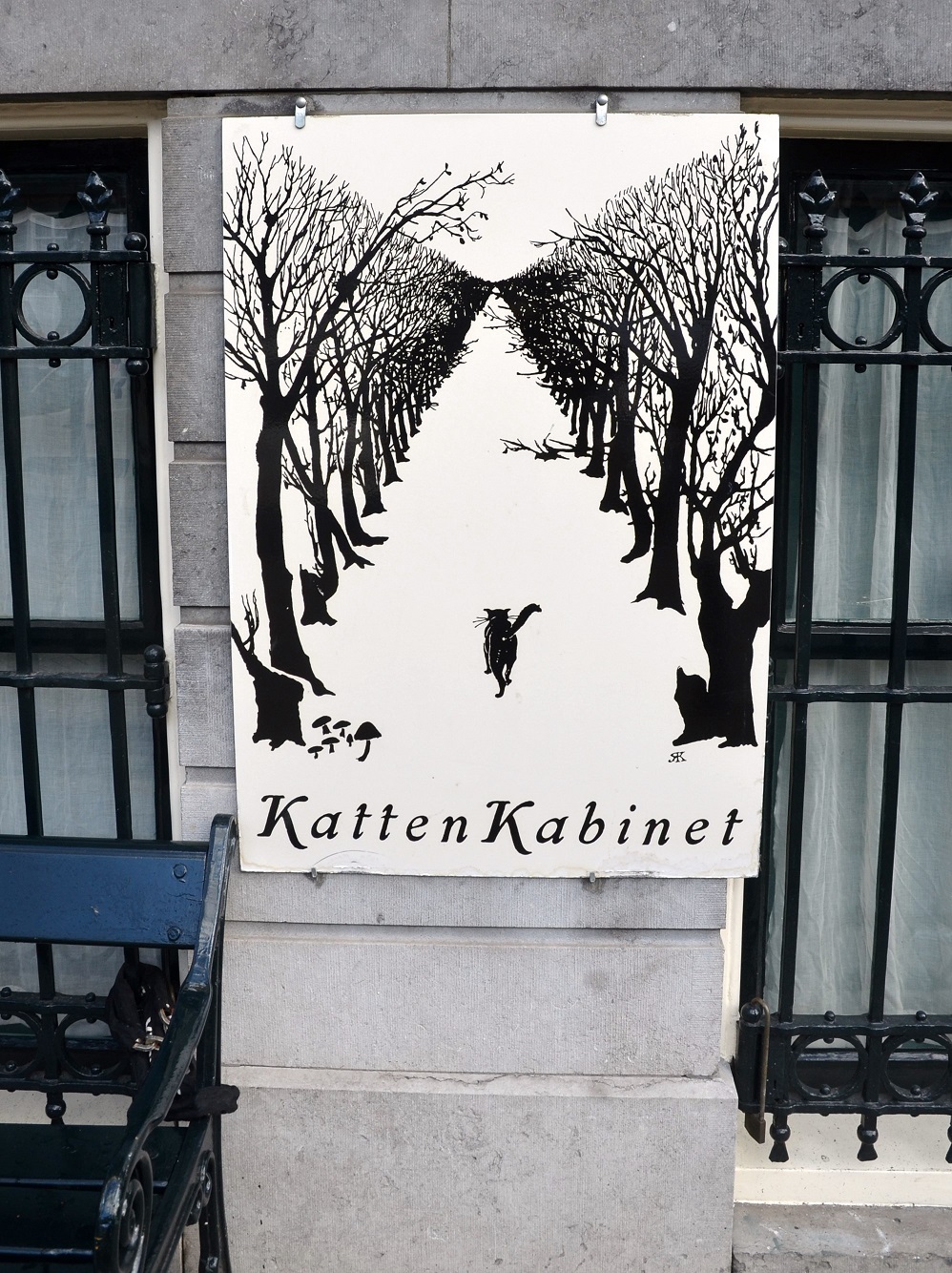
The Katten Kabinet

The Katten Kabinet

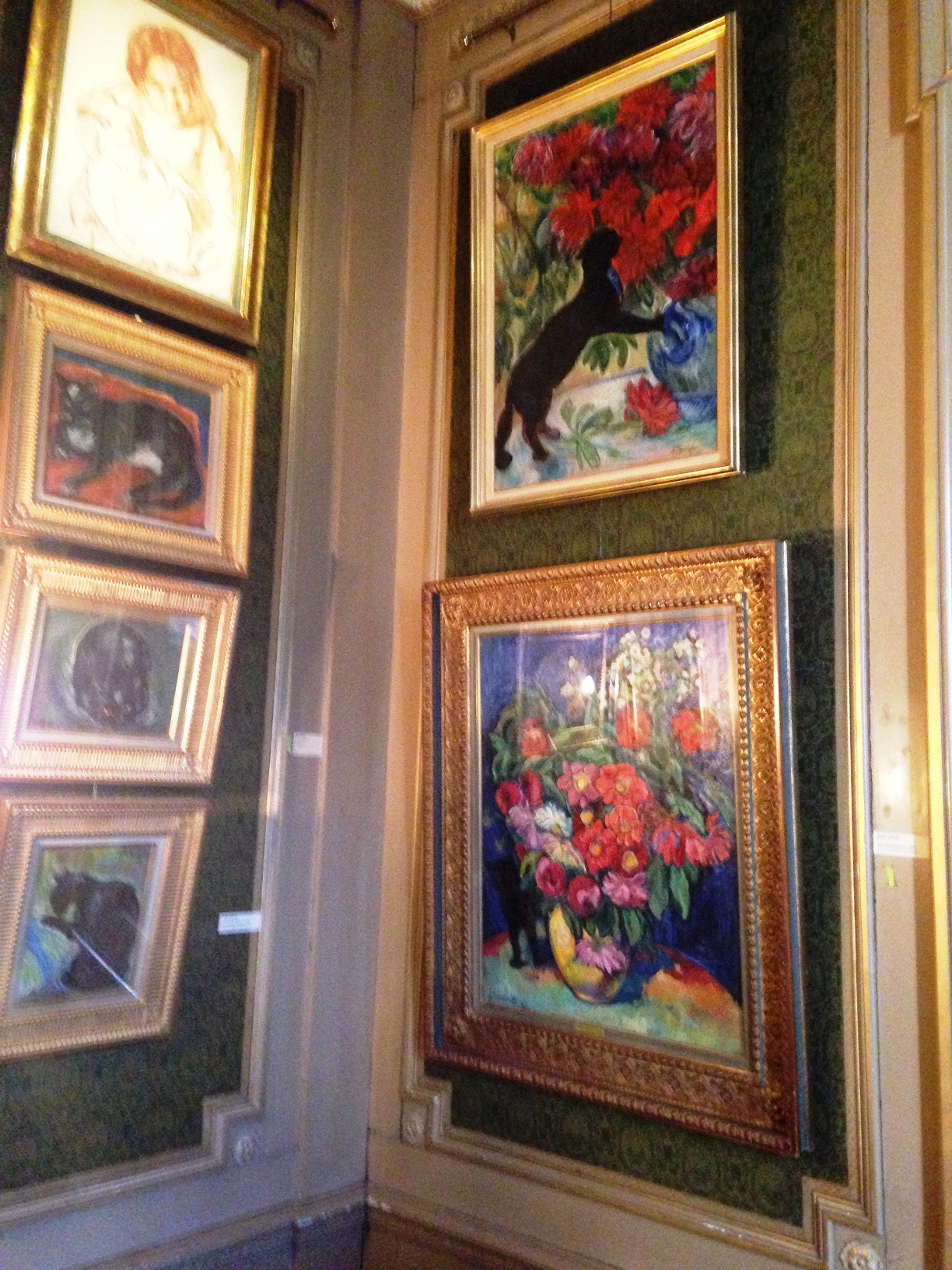
We visited the cat art museum called Katten Kabinet, and had the sweetest, most talkative little docent of any museum I’ve toured.  Her name was Shirley and she had a hair trigger purr.  She guided us through the rooms of cat art in a converted canal home;  two museums in one really, as we were able to see what one of the old houses looked like on the inside.

Shirley the kitten guided us through the Katten Kabinet
Shirley the kitten guided us through the Katten Kabinet

A corner in the cat art museum

A corner in the cat art museum

Theophile-Alexandre Steinlen.  Compagnie Francaise des Chocolates et des Thes.  1895
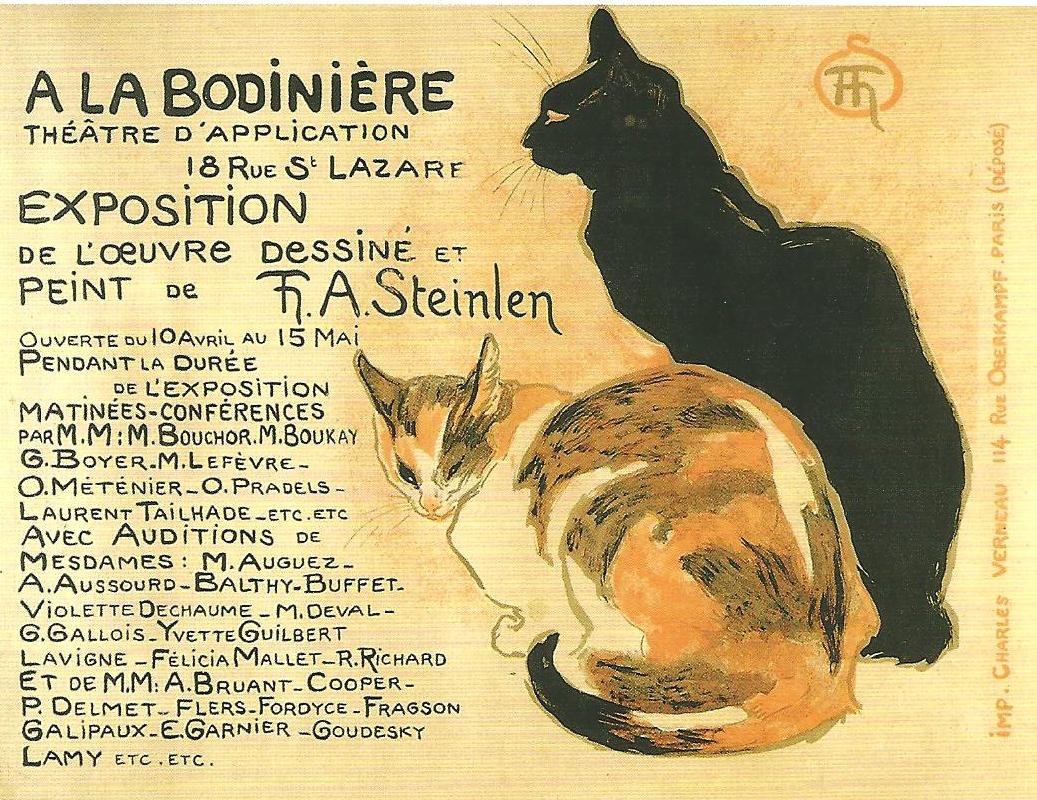
Theophile-Alexandre Steinlen. Compagnie Francaise des Chocolates et des Thes. 1895

Steinlen, A la Bodiniere.  1894

From the cat museum we walked along Vijaelgracht, then followed alongside Singelgracht until we reached the Rijksmuseum, newly renovated and quite popular.  However, I can usually only take one large museum per day, and my priority was the Van Gogh Museum, so on we walked, passing an ice skating rink, and then into line for the Van Gogh Museum.  The Van Gogh Museum was truly fabulous, and with as many people as we saw in the exhibit in this off season, it must be shoulder to shoulder in the tourist season.

Amsterdams Rijksmuseum

Amsterdams Rijksmuseum

The Van Gogh Museum is four floors of the world’s largest collection of his works, including 200 paintings.  You work your way chronologically through his life, starting on the ground floor.  It was quite informative, and we learned many details, including that without his brother’s wife, the world may never have known his art.  His nephew, Vincent Willem van Gogh inherited the art collection and carried on the legacy by creating the Vincent van Gogh Foundation.

I bought some postcards of a few of my favorites, and the museum masterpiece book.  Here are copies of the postcards, as best as I can post them without a scanner.

The Bedroom, Arles, October 1888
The Bedroom, Arles, October 1888

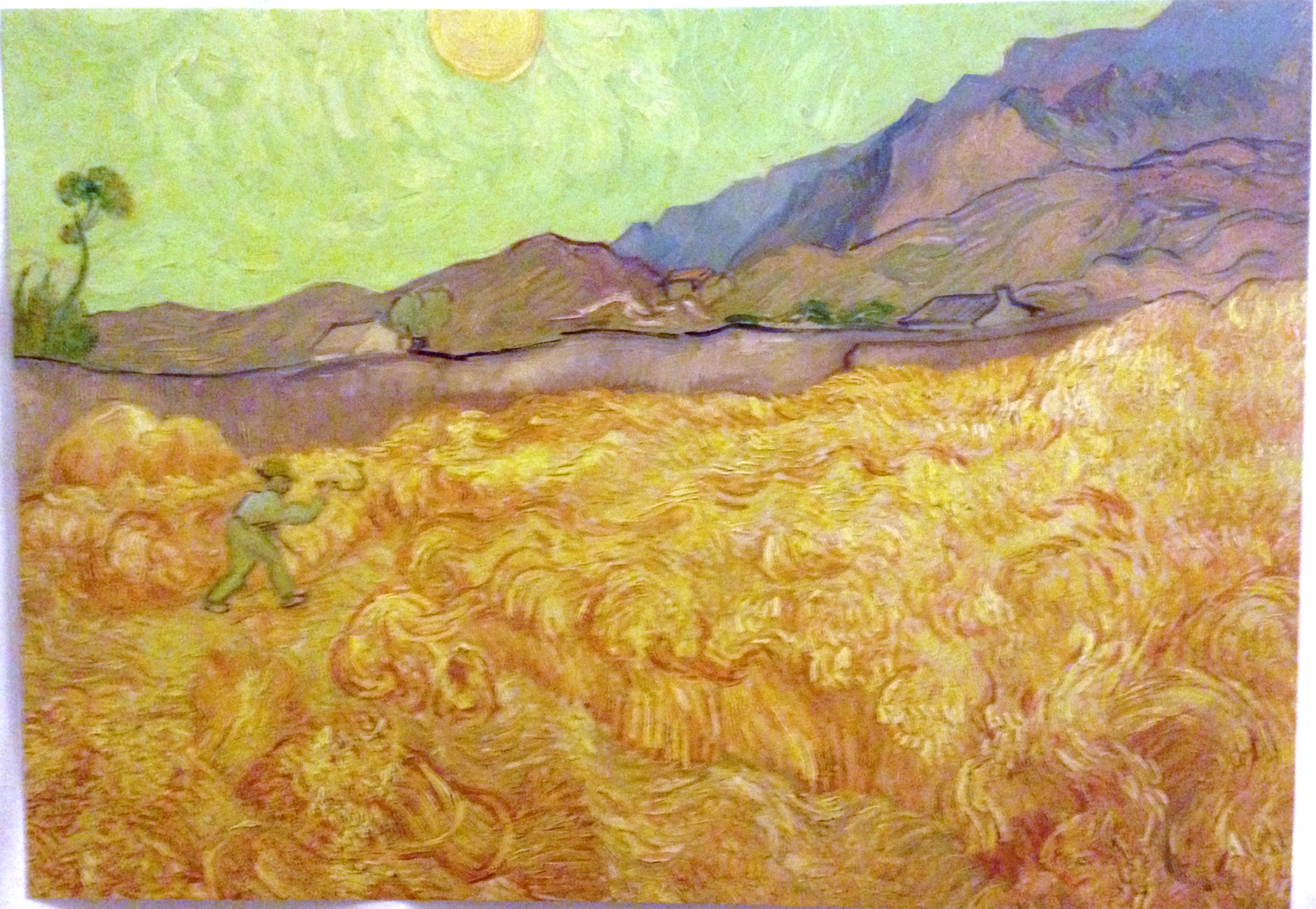
Wheatfield with a reaper, Saint-Remy, September 1889, the view from his room at the asylum

Wheatfield with a reaper, Saint-Remy, September 1889, the view from his room at the asylum

Van Gogh Almond blossom

Van Gogh’s Almond Blossom. Saint-Remy, February 1890. Painted as a gift for his newly born nephew


Irises, Saint-Remy, May 1890.  According to van Gogh the canvas needed a month to dry on account of its impasto (thickly applied paint).

Irises, Saint-Remy, May 1890. According to van Gogh the canvas needed a month to dry on account of its impasto (thickly applied paint).

Me in a pub next door to the Heineken Experience

Me in a pub next door to the Heineken Experience

A pub lunch, of course, followed the museum, and then to the Heineken Experience.  I’m not a beer drinker myself, but I did want to see the stables where the Shire horses that pull the beer wagon are housed.  Unfortunately, the stables were closed for repair.

DSC_8089

The Heineken Experience was interesting, included two free beers (admission was 18 euros), and seemed geared towards a younger audience.  I really did try the beer, taking a “manly swallow” and not a sip as advised, but I still have to count myself a non-beer drinker.

Inside the Heineken Experience

Inside the Heineken Experience

My sister sampling the "extra cold" Heineken

My sister sampling the “extra cold” Heineken

We boarded the complimentary Heineken boat and saved ourselves some walking, as it dropped us near the Opera House on the Amstel River, the only natural waterway in Amsterdam.  We still had quite a few blocks to walk back to our B&B, and as the sun started to lower in the west, the temperature started to drop under the clear sky.
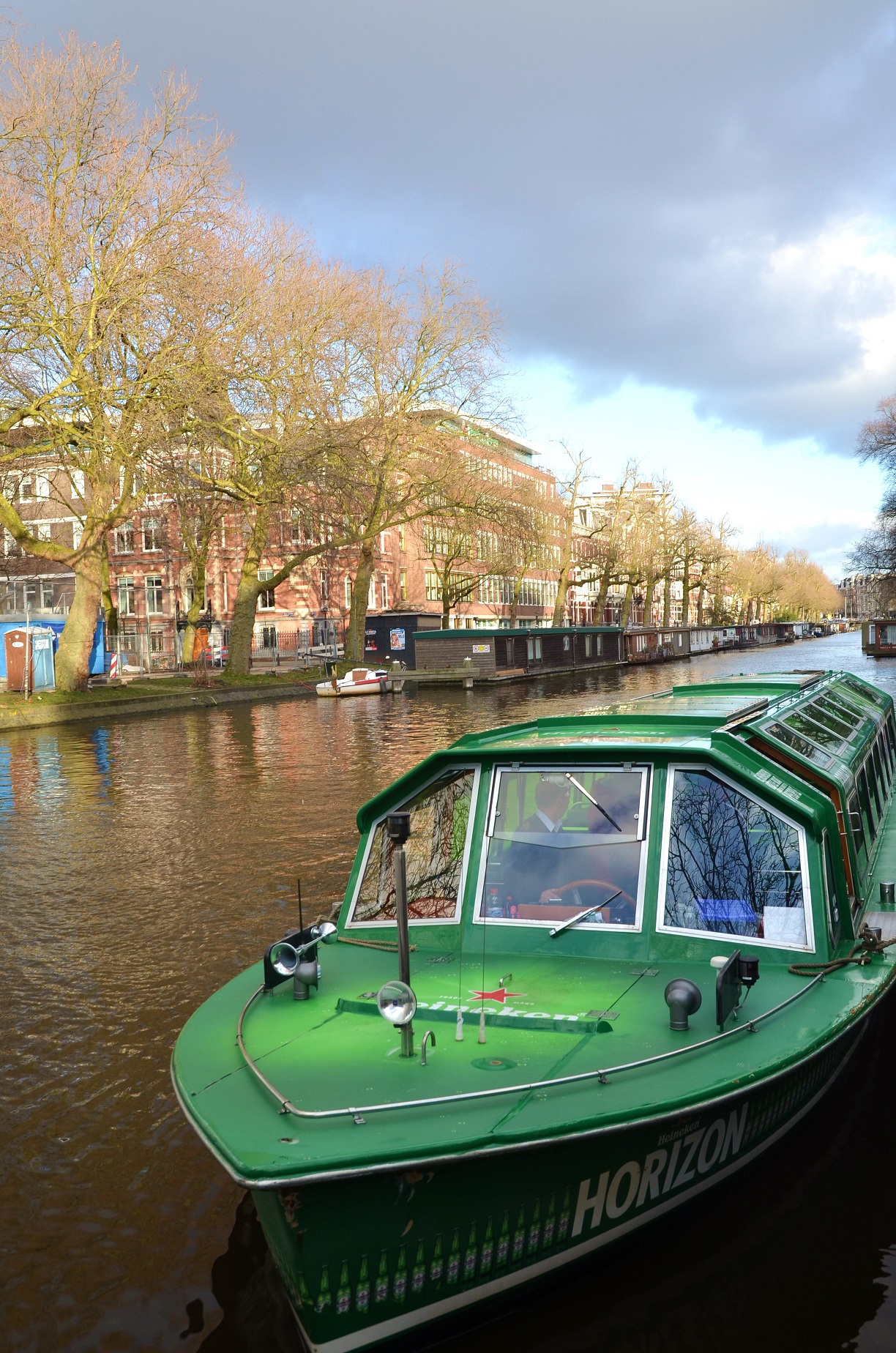
Heineken boat

Heineken boat

We walked along the river as the sun faded and light turned magical.
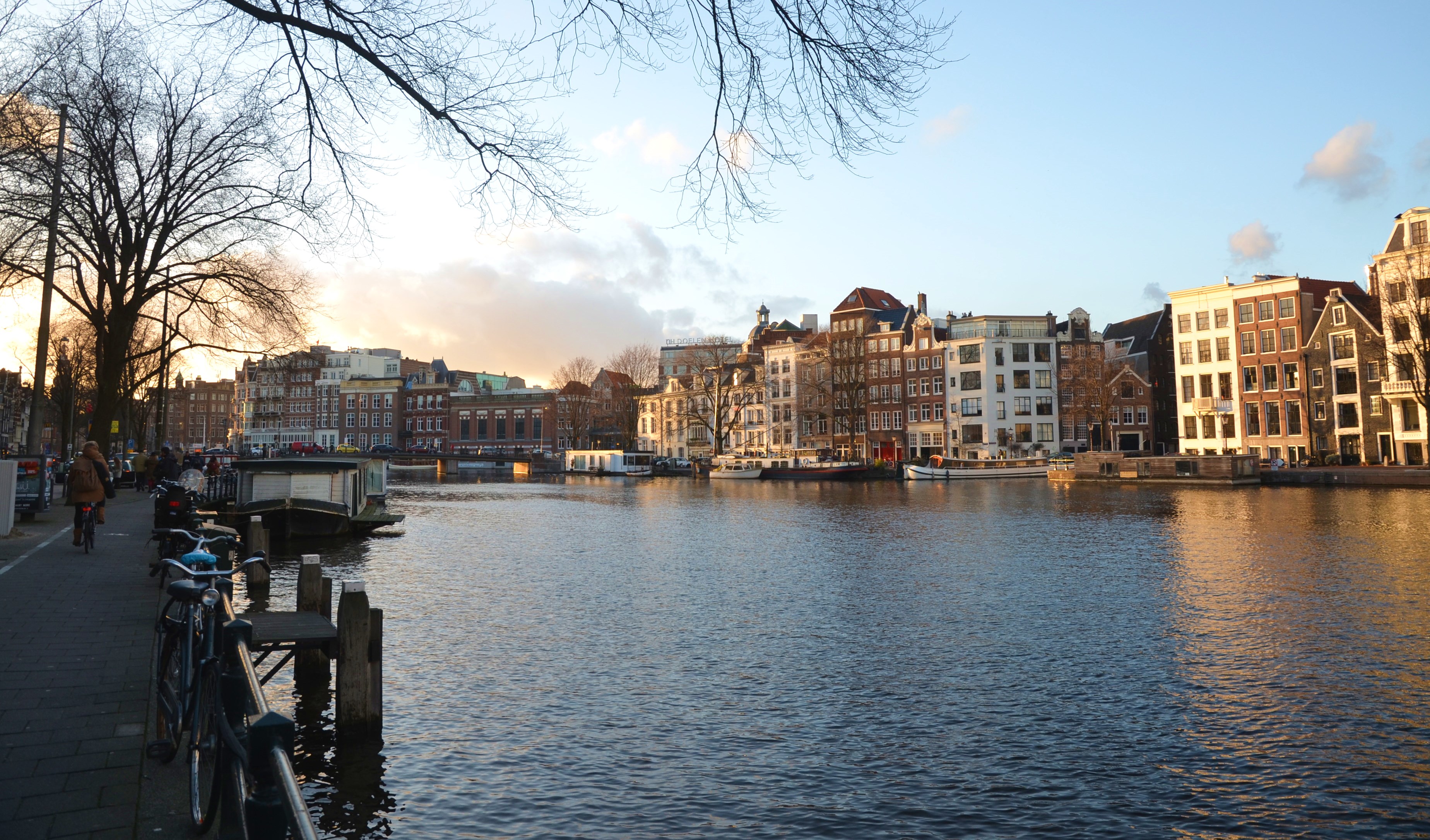
DSC_8124

A Van Gogh inspired caked in a bakery window

A Van Gogh inspired caked in a bakery window

Using the Nikon color sketch feature on one of the canal photos

Using the Nikon color sketch feature on one of the canal photos

After a very brief rest at the B&B, we headed out for dinner in our neighborhood, the Jordaan.  We know this is the off season, but for all our lunches and dinners, the restaurants have been packed and we can’t imagine what it would be like in the busy tourist season.

A canal just after sunset
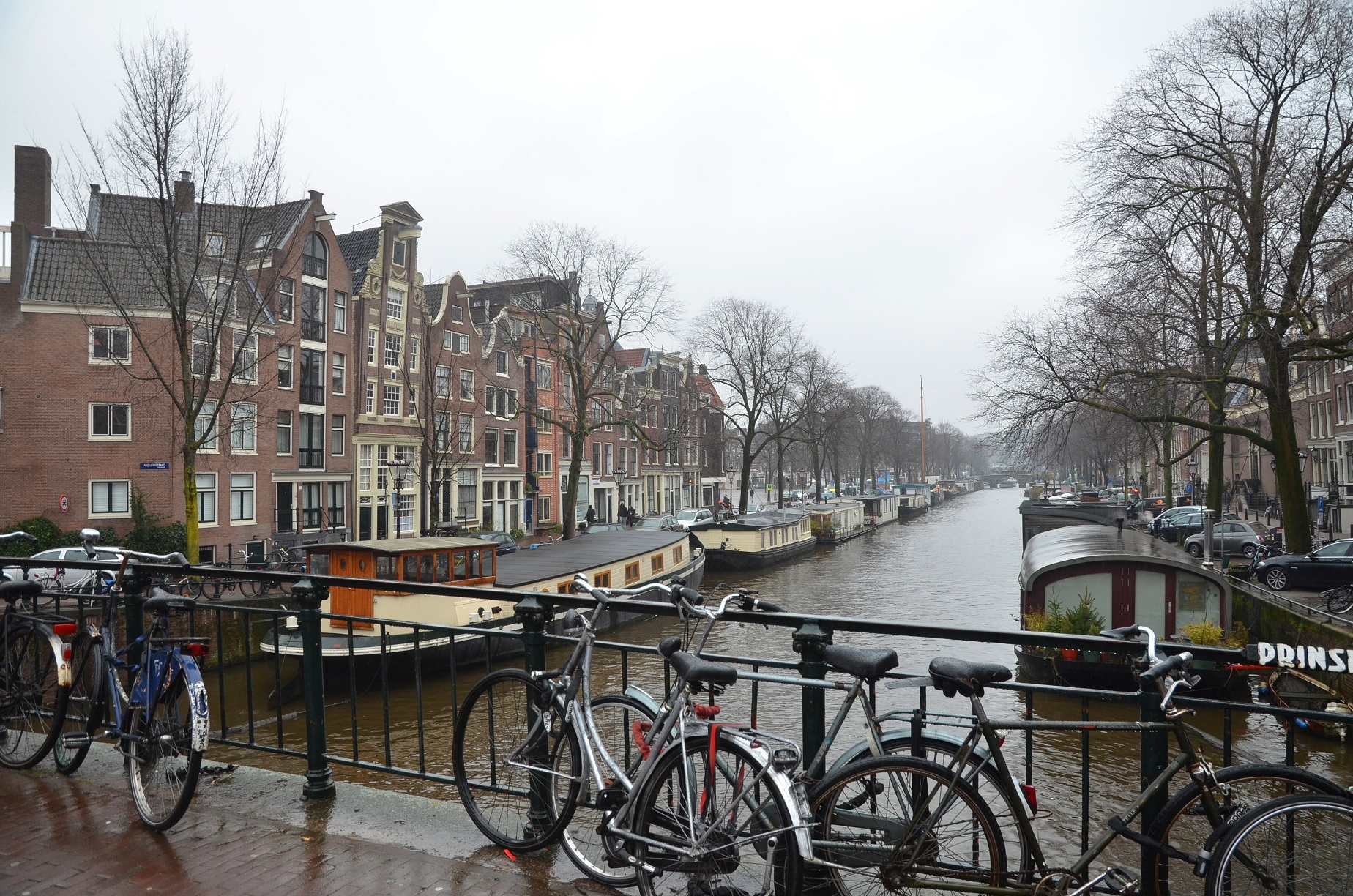
A canal just after sunset

Posted in Amsterdam | 4 Comments

Amsterdam

A canal in Amsterdam

A canal in Amsterdam

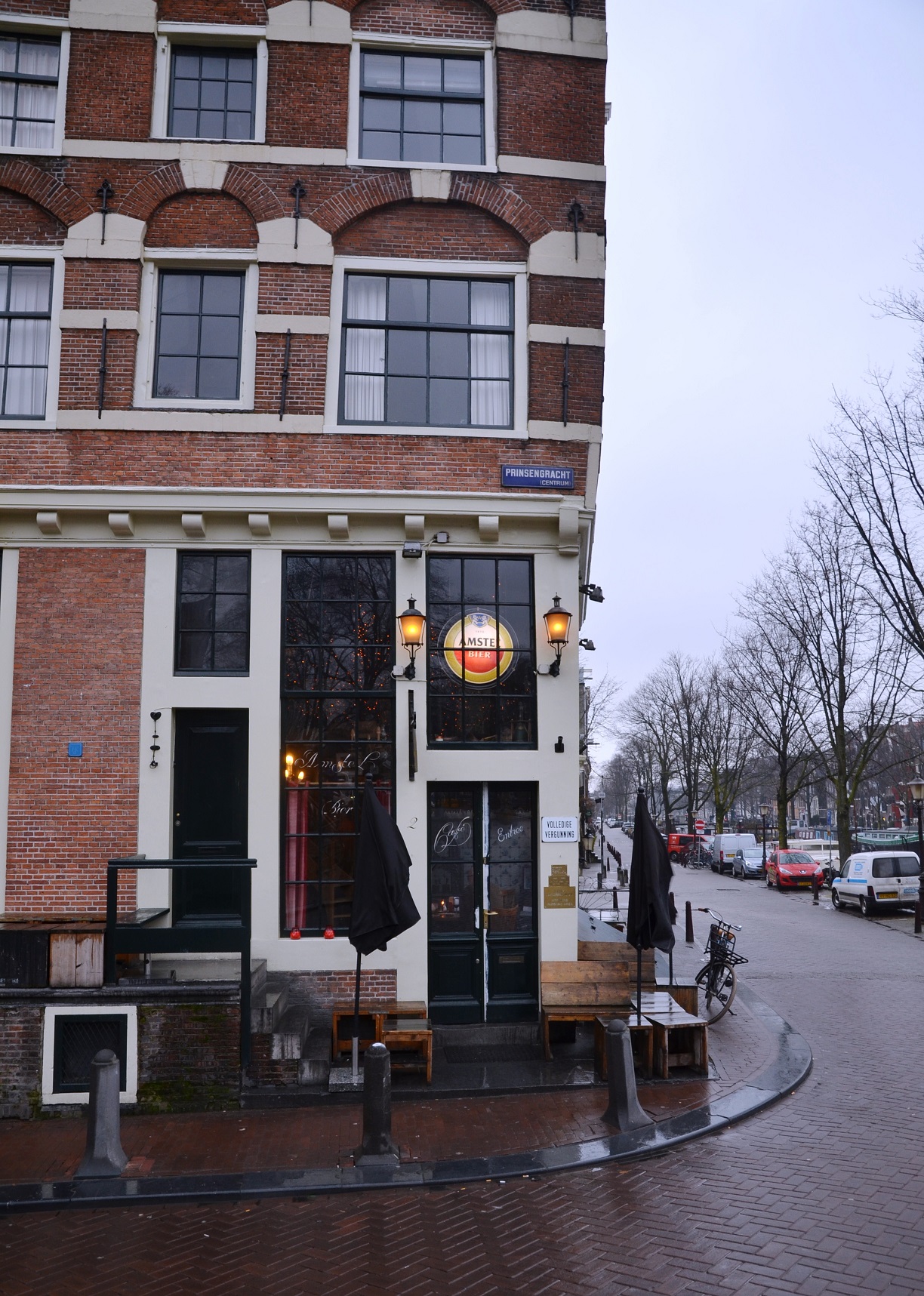
February is not high season in Amsterdam.  Still, my sister and I made the most of our first day here, despite cold, foggy, drizzly weather.

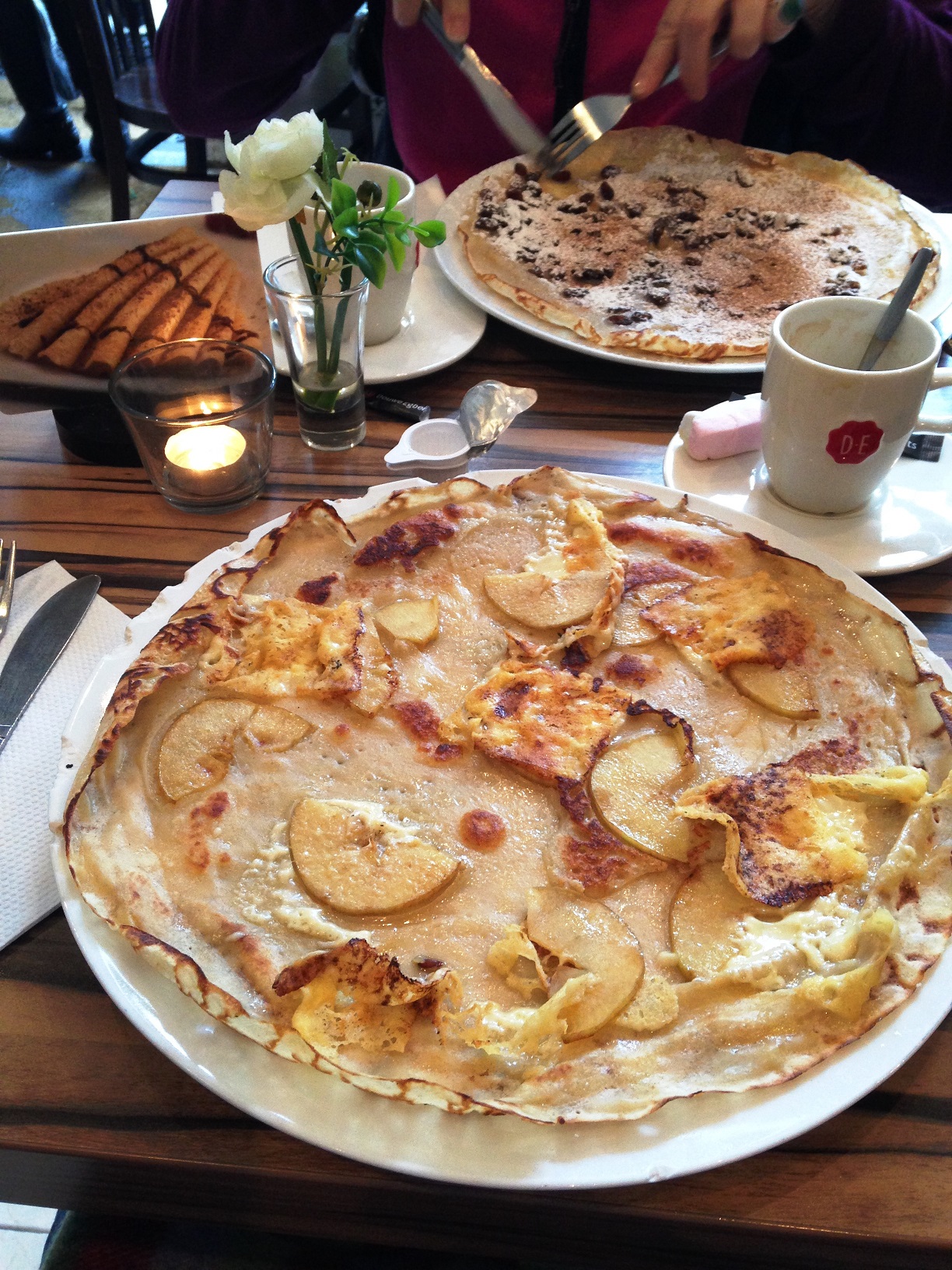
As we walked the cobbled streets along the canals, the inescapable fumes of pot permeated the air in nearly every block.  Locals take this weather in stride as bicycles dominated the streets, while tourists stood in a long line even in the rain in Feb. to see the Anne Frank House Museum.  We sampled the famous pancakes for lunch and took a canal cruise in a thankfully warm and dry boat.

The formidable pancakes found everywhere

The formidable pancakes found everywhere

Katy with umbrella

One of the oldest pubs, The Papeneiland, provided a warm and welcoming respite to the drizzly weather.

Oldest pub exterior

Oldest pub exterior

Oldest pub interior

Oldest pub interior

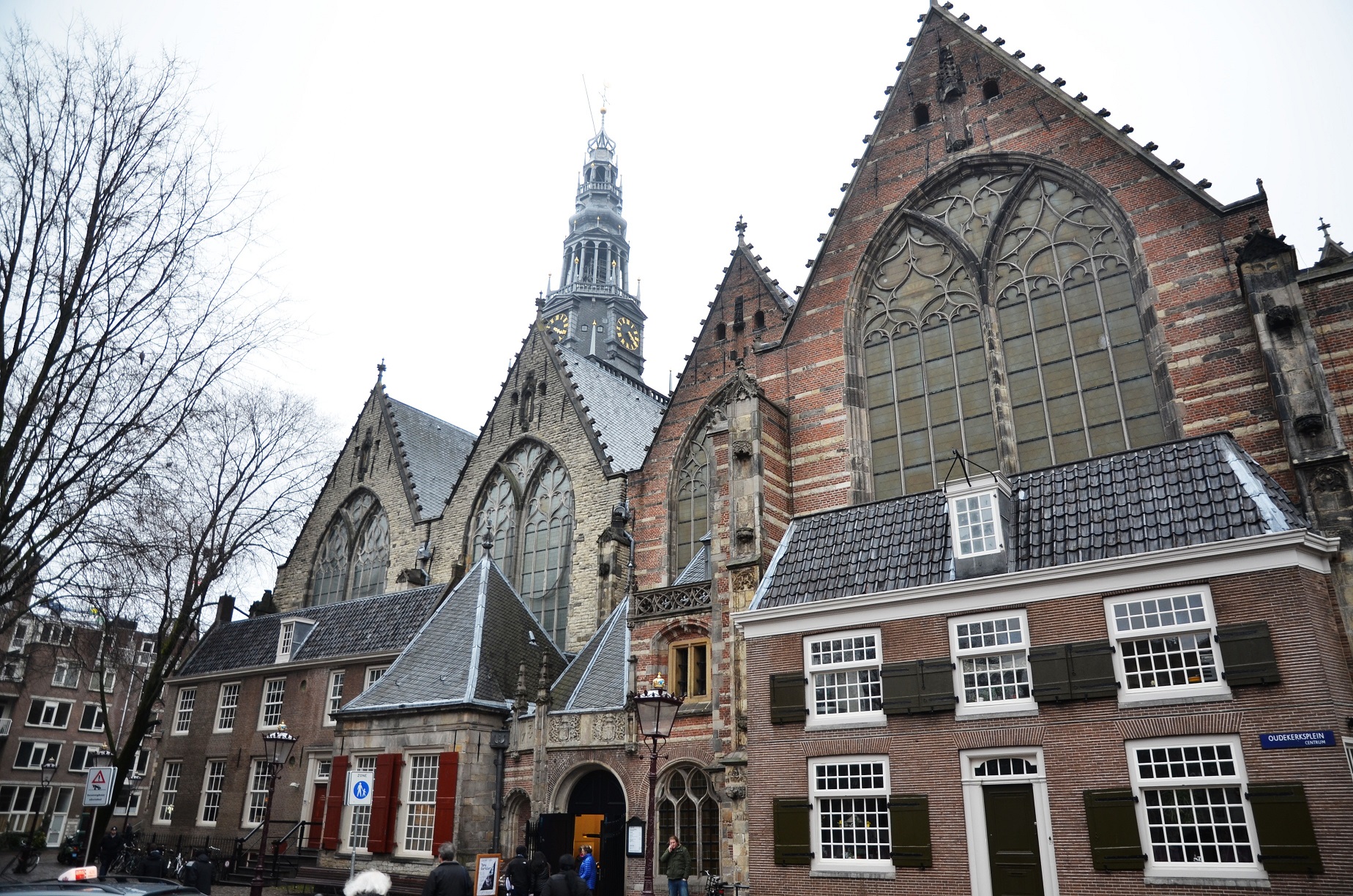
After the rain stopped we walked from the oldest pub to the oldest church, the Oulde Kerk, Amsterdam’s oldest building established in 1306.  It is right in the middle of the red light district, and a beautiful old church.

Exterior of the oldest church

Exterior of the oldest church

Oldest church.   The view that some of the working girls have from the shop just behind me as I took this photo

Oldest church. The view that some of the Sex Workers have from the brothel just behind me as I took this photo

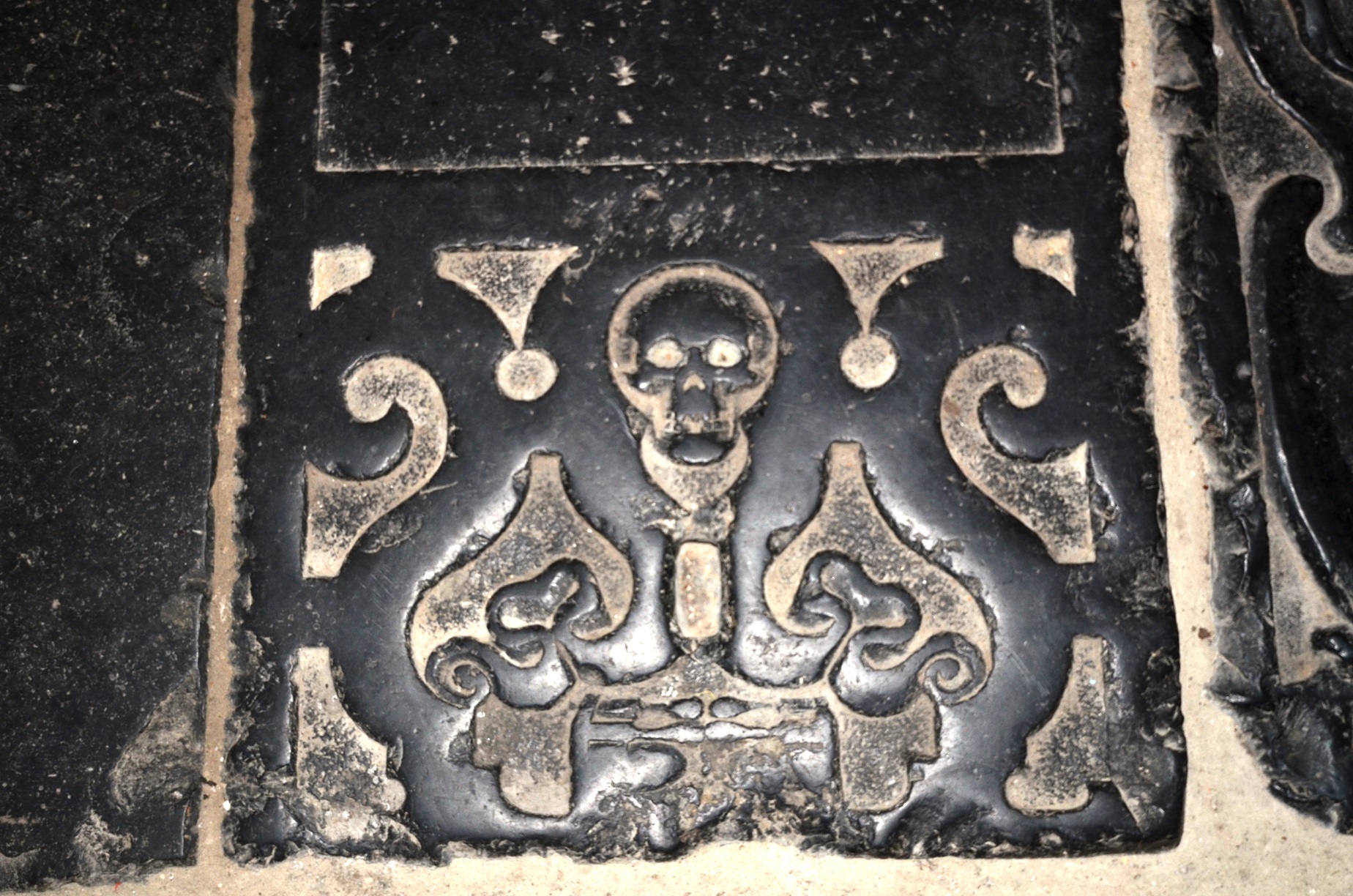
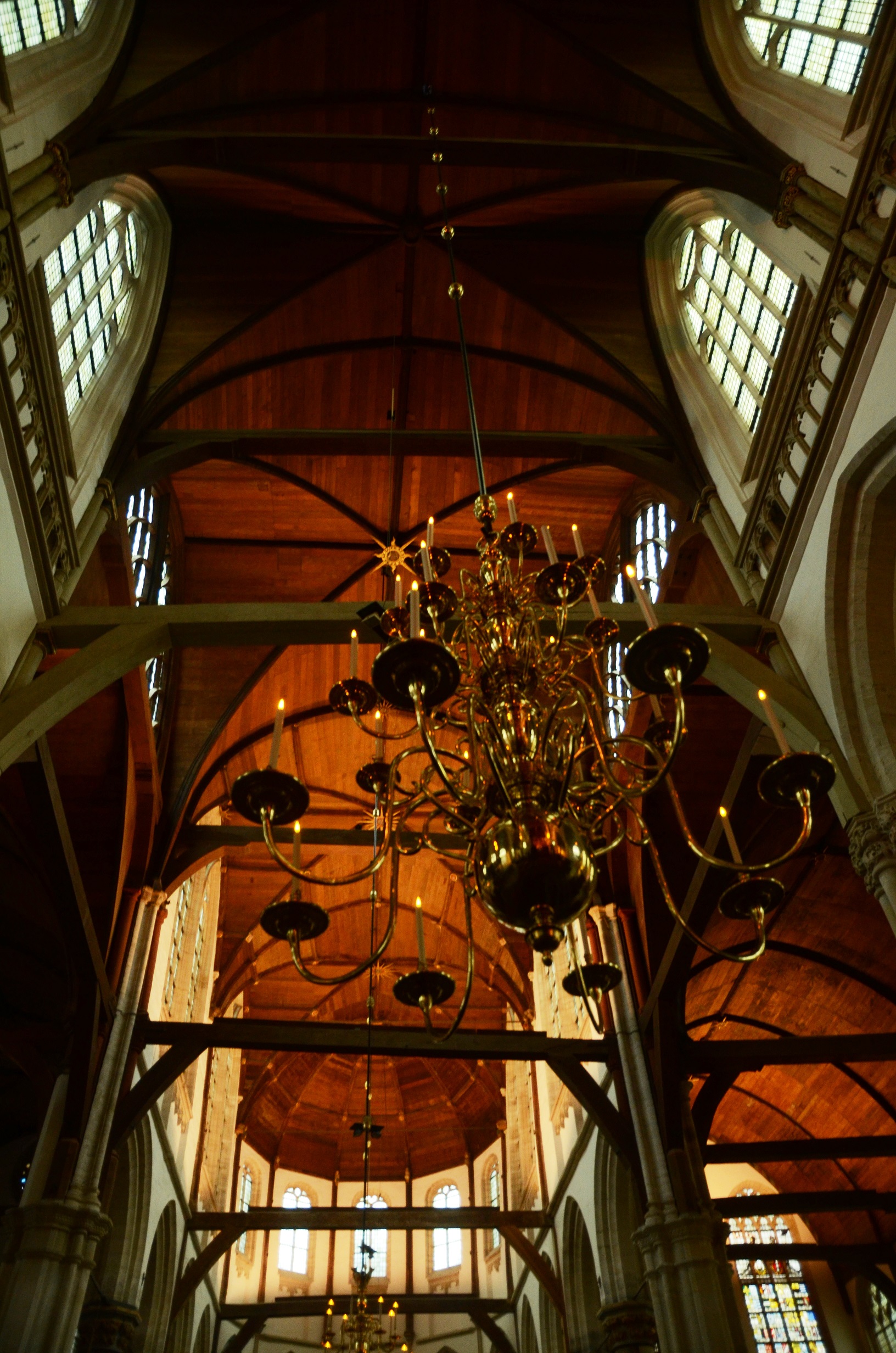
We walked around the inside of the church with its beautiful stained glass windows, wooden barrel vaulted ceiling and a floor made of carved memorial stones.   The church is a covered cemetery with 2500 graves.  The gravestones tell something about the people who had been buried there, but now all graves have been excavated and filled with white sand.

Gravestone floor of the church

Gravestone floor of the church

There was a modern art installation on display inside the church, video clips by Tony Oursler.  I found it rather disturbing, almost creepy, and not at all to my liking.  The brochure described the installation as follows:  Oursler “hacks” the church, using digitally produced performances that emphasize the evolving character of the architecture and the cultural usage of the monumental building.

I guess I just didn’t get it.

Gothic wooden ceiling

Gothic wooden ceiling

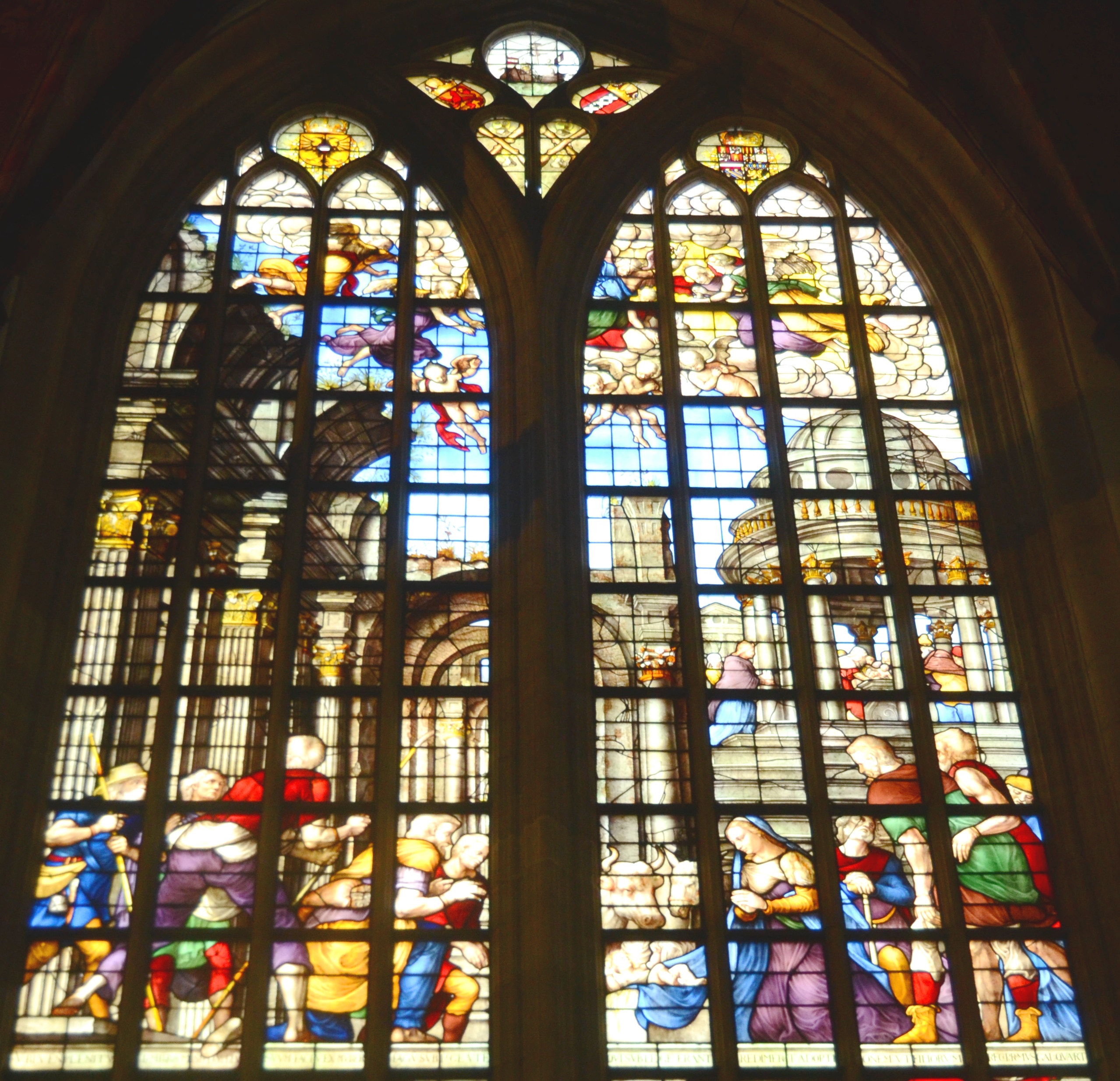
Stained glass windows in the Lady's Chapel

Stained glass windows in the Lady’s Chapel

The Adoration of the Shepherds window in the Lady's Chapel

The Adoration of the Shepherds window in the Lady’s Chapel

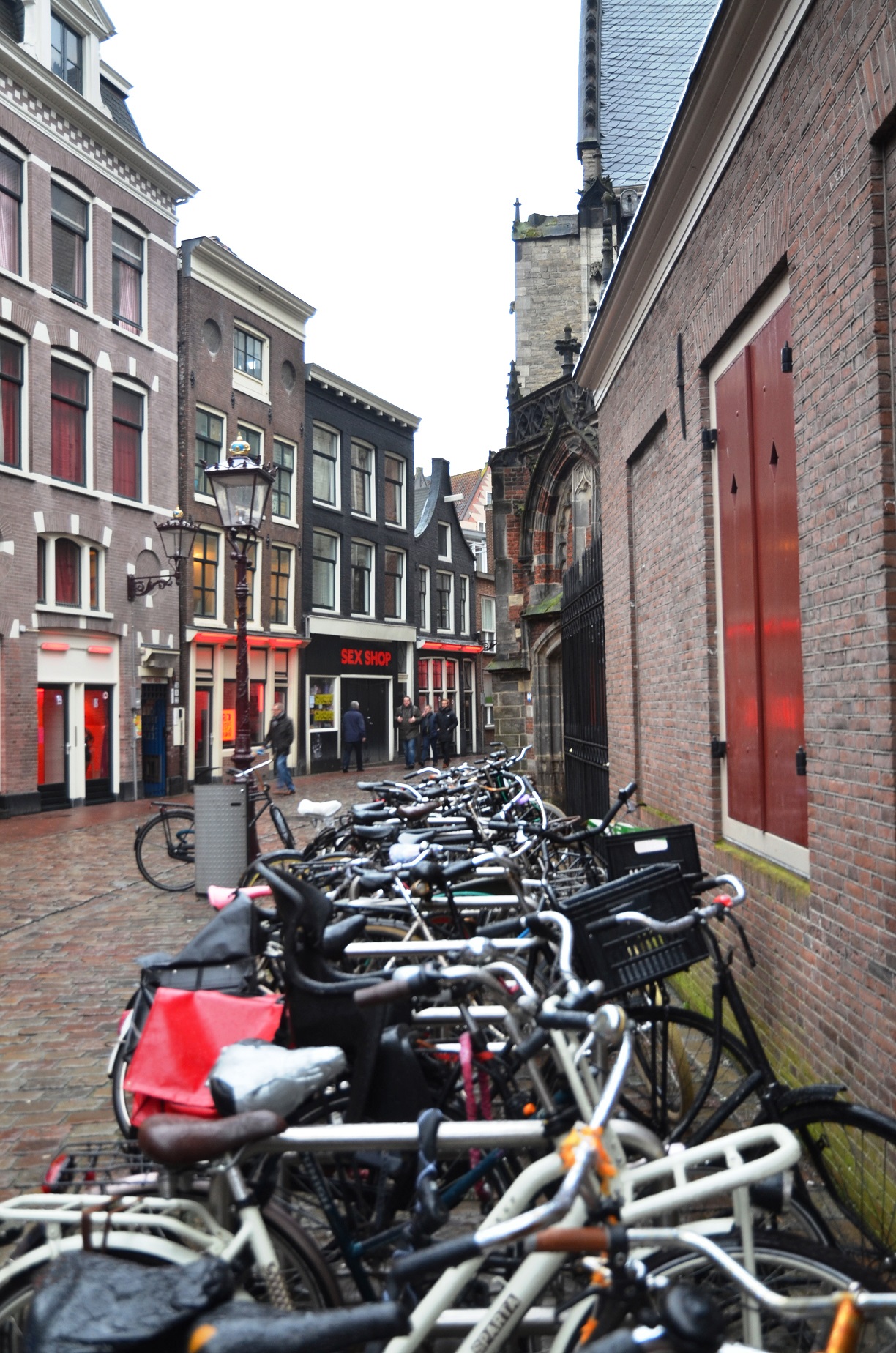
The square around the church is lined with sex shops, window prostitutes, pubs, and all other assortment of commerce.  The world’s first condom shop had a delightfully colorful window display, and no lack of customers.

Bicycles line the back side of the oldest church with Sex Shops across the street

Bicycles line the back side of the oldest church with Sex Shops across the street

The colorful window display in the world's first condom shop, the Condomerie.

The colorful window display in the world’s first condom shop, the Condomerie.


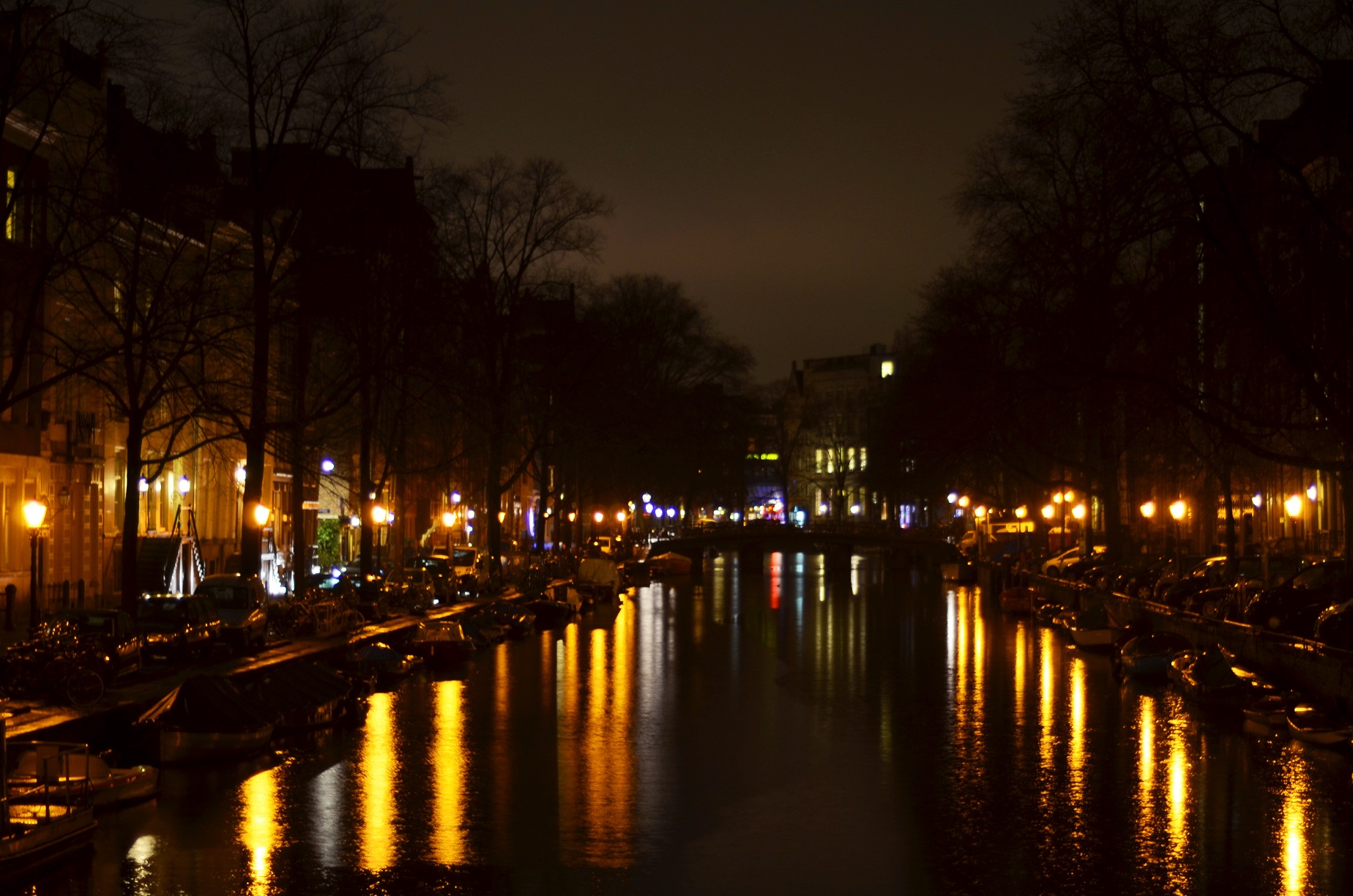
Singel canal at night

Singel canal at night

Herengracht at night

Herengracht at night

Posted in Amsterdam | 3 Comments

Images of Christmas

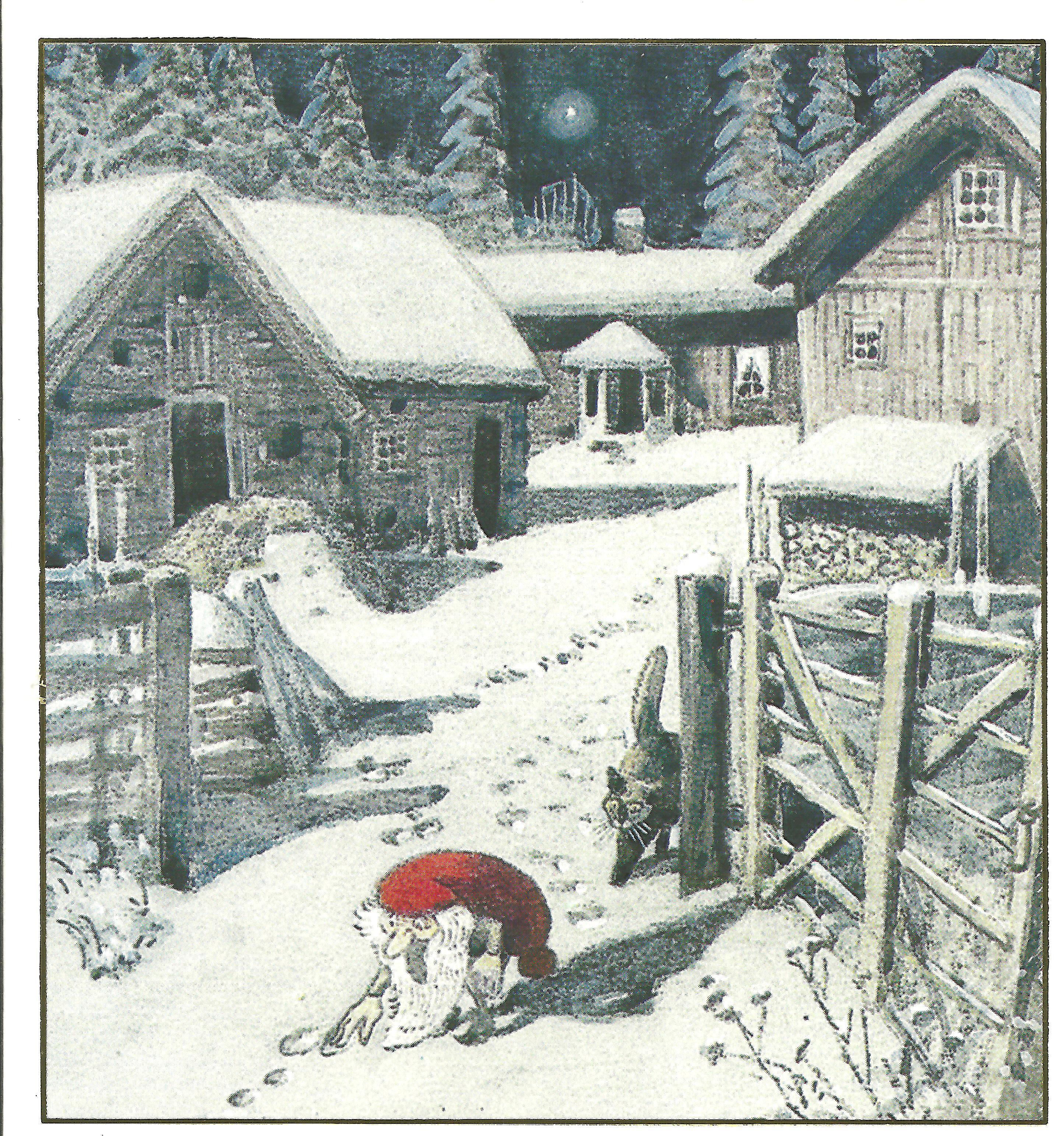
Norweigan Christmas card

Norwegian Christmas card

Christmas cards are a wonderful way to bring art to the holidays.  As I’ve said before, my family is a card family.  We share cards for many occasions, so Christmas is a big card holiday.  I love to send and receive Christmas cards, and am always looking for the perfect card.

While I was in Norway this past January, I picked up these Tomte cards to send this year (first two).

tomte card 001

Another card I particularly like:

"Starry Moose", A Paris Bottman card.  Bottman Design, Inc.  Printed in Canada.

“Starry Moose”, A Paris Bottman card. Bottman Design, Inc. Printed in Canada.

A few of the cards I received last Christmas:

Mom's 2013 card

2013 christmas card

2013 christmas card 001

2013 christmas card 002

2013 christmas card 003

Posted in Seasons & Holidays | Leave a comment

Happy Thanksgiving

Thanksgiving

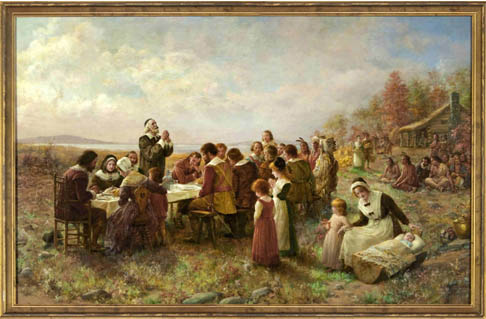
The First Thanksgiving At Plymouth, by Jennie Brownscombe, c. 1914

Happy Thanksgiving, on this day, one of the most American of all American holidays.

The modern day Thanksgiving with its emphasis on shopping, and football, or how much you can eat is nothing like the first Thanksgiving.  The first thanksgiving gathering, in November of 1621, was truly about celebrating being alive, the fall harvest, and preparing for the winter.  The 53 Mayflower survivors, “First Comers” along with several other ships, set out for America in 1620.  They landed in Plymouth in December of 1620.
ferris-the-first-thanksgiving-1600x1025

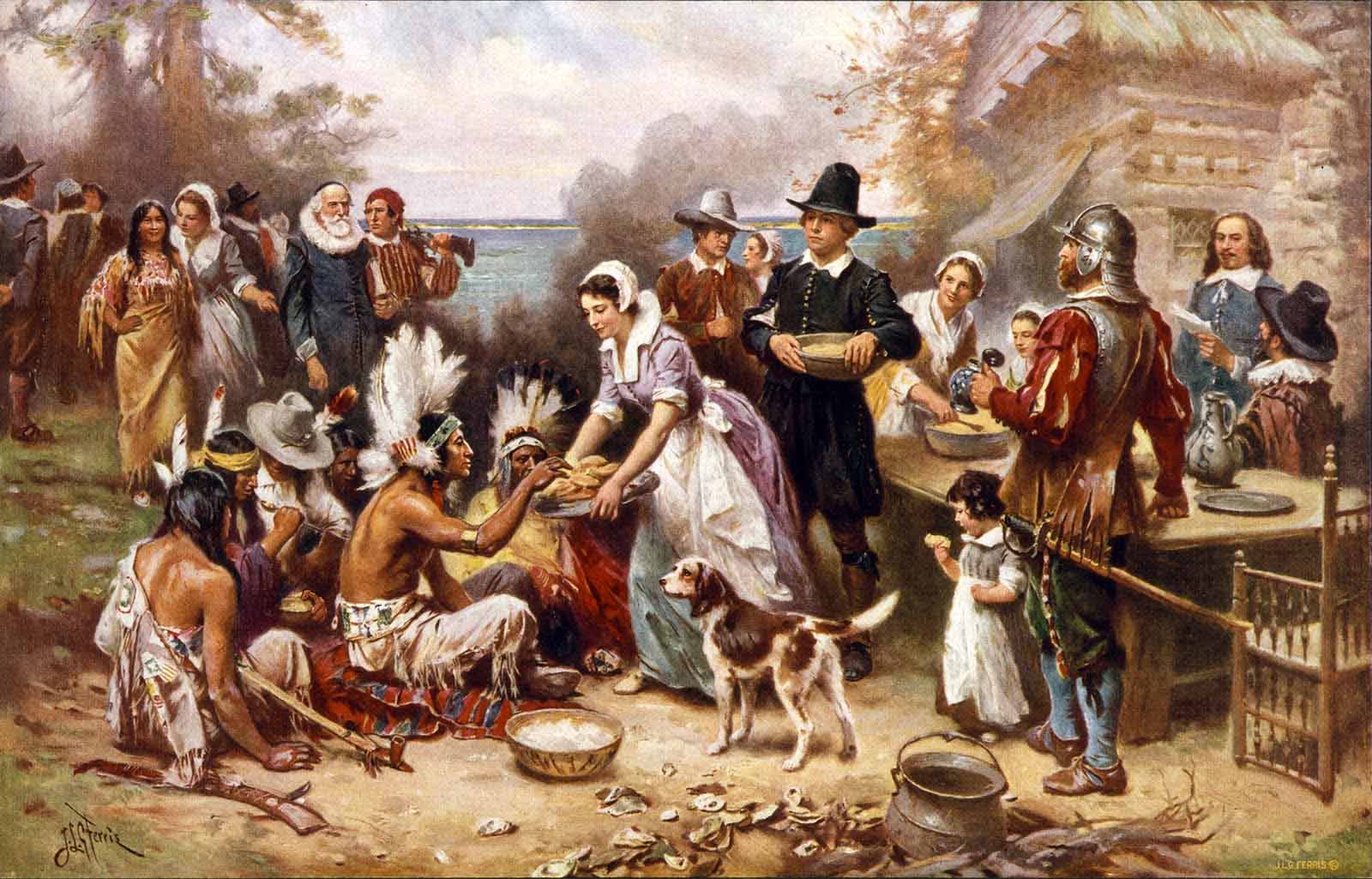
The First Thanksgiving 1621, by JLG Ferris, c 1932

By November of 1621 they had survived one year and were preparing for winter.  Edward Winslow, one of the Mayflower “First Comers”, writes:

“our harvest being gotten in, our governour sent foure men on fowling, that so we might after a speciall manner rejoyce together, after we had gathered the fruits of our labours ; they foure in one day killed as much fowle, as with a little helpe beside, served the Company almost a weeke, at which time amongst other Recreations, we exercised our Armes, many of the Indians coming amongst us, and amongst the rest their greatest king Massasoyt, with some ninetie men, whom for three dayes we entertained and feasted, and they went out and killed five Deere, which they brought to the Plantation and bestowed on our Governour, and upon the Captaine and others. And although it be not always so plentifull, as it was at this time with us, yet by the goodness of God,
we are so farre from want, that we often wish you partakers of our plentie.”

And from William Bradford, another “First Comer”:

“They begane now to gather in ye small harvest they had, and to fitte up their houses and dwellings against winter, being all well recovered in health & strenght, and had all things in good plenty;  For as some were thus imployed in affairs abroad, others were excersised in fishing, aboute codd, & bass, & other fish, of which yey tooke good store, of which every family had their
portion. All ye somer ther was no want. And now begane to come in store of foule, as winter approached, of which this place did abound when they came first (but afterward decreased by degrees). And besids water foule, ther was great store of wild Turkies, of which they tooke many, besids venison, &c. Besids, they had about a peck a meale a weeke to a person, or now since harvest, Indean corn to yt proportion. Which made many afterwards write so largly of their plenty hear to their freinds in England, which were not fained, but true reports.”

The paintings of that first Thanksgiving are idealized of course, but they are probably what Americans envisions for that day.  It seems a shame to me that so many of our traditions and holidays are now focused on shopping and sales, and really have no resemblance of what the original holiday was about.

Norman Rockwell’s famous depiction of Thanksgiving, 1942.  What Rockwell said of this famous turkey scene, “our cook, Mrs. Wheaton, roasted it, I painted it, and we ate it.”

Freedom-from-want_rd_header-400x574


Thanks to the website http://www.pilgrimhallmuseum.com


Posted in Seasons & Holidays | 2 Comments

Mid-October on the Central Oregon Coast

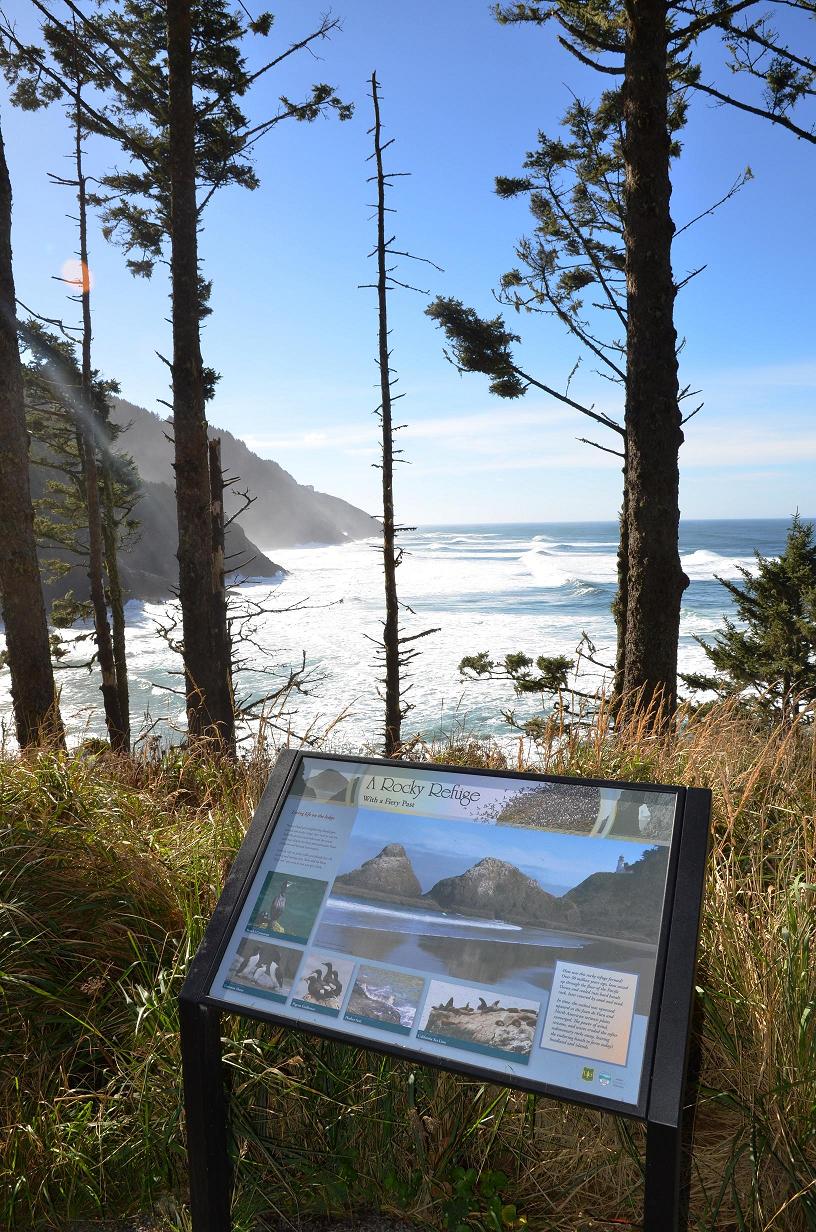
The Oregon Coast in October, looking south from the Heceta Lighthouse.

The Oregon Coast in October, looking south from the Heceta Lighthouse.

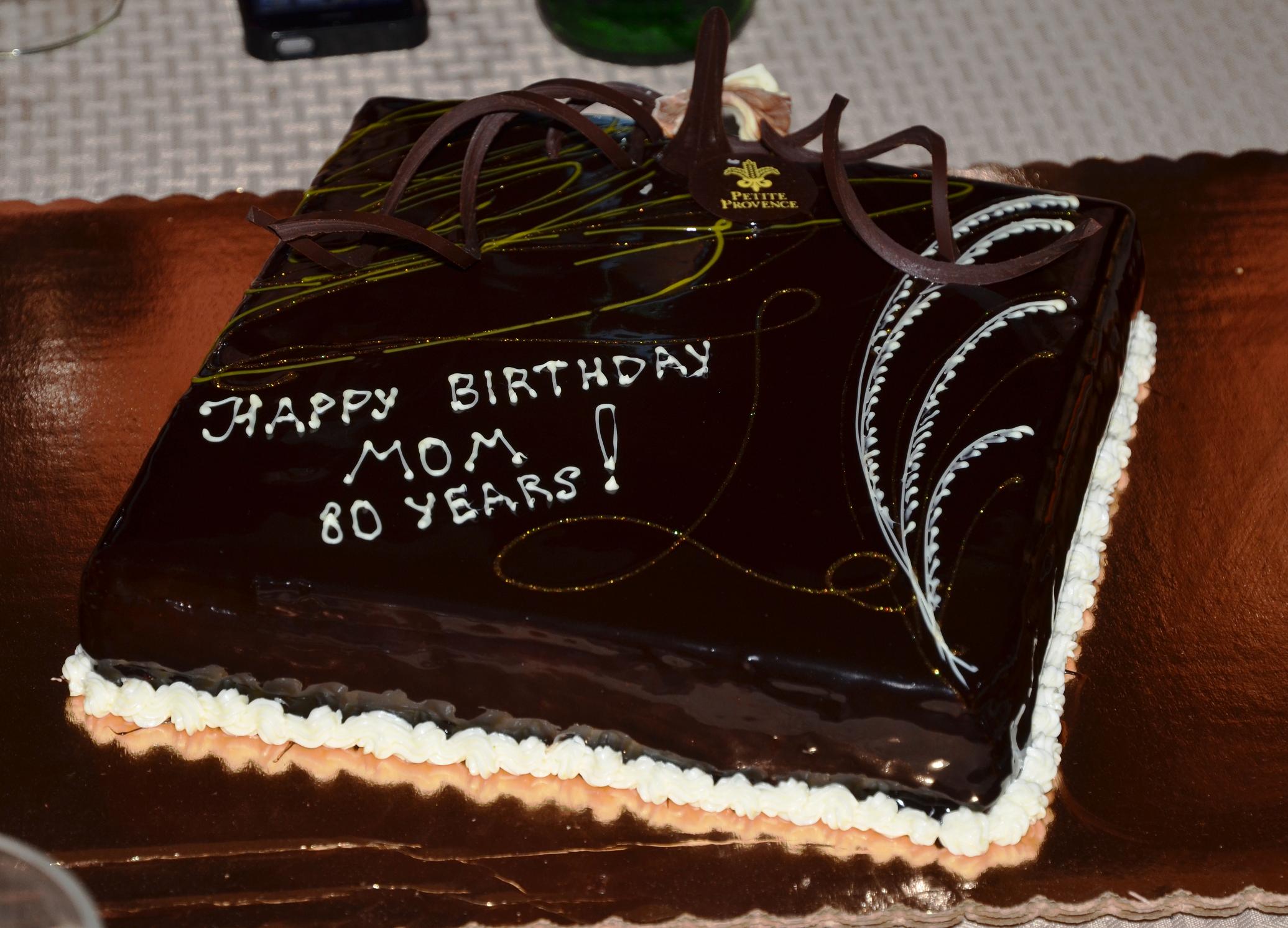
The beautiful summer months are my preferred time to visit Oregon.  But this October my family celebrated a special occasion, so it was back out to Oregon for an Autumn visit.  We took a gamble on the weather and rented a beach house in Waldport to celebrate my mother’s 80th birthday.  October can be very unpredictable as far as the weather is concerned, so we knew we might have cold, rainy weather.  As luck would have it, my mother’s birthday was an unusually nice, warm, sunny, cloudless, windless day at the Oregon beach, pretty much a one in a million day in October.

The view from our rental home on Waldport beach

The view from our rental home on Waldport beach

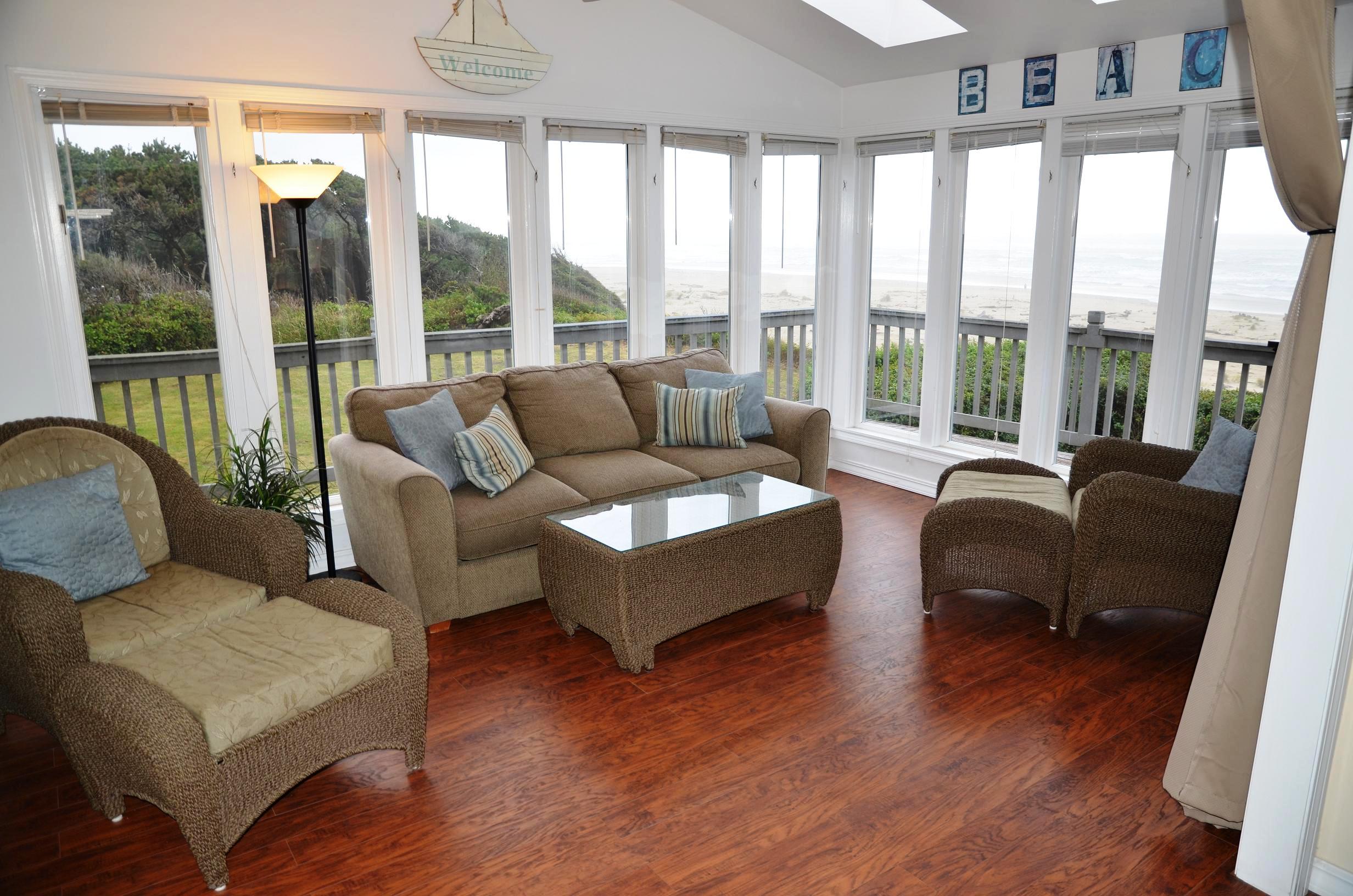
We had good luck again with vrbo.com.  The house was perfect, gorgeous view, and let our three dogs tag along for the party.

http://www.vrbo.com/279256

rental house

The sunroom of the Waldport beach house we rented through vrbo.com

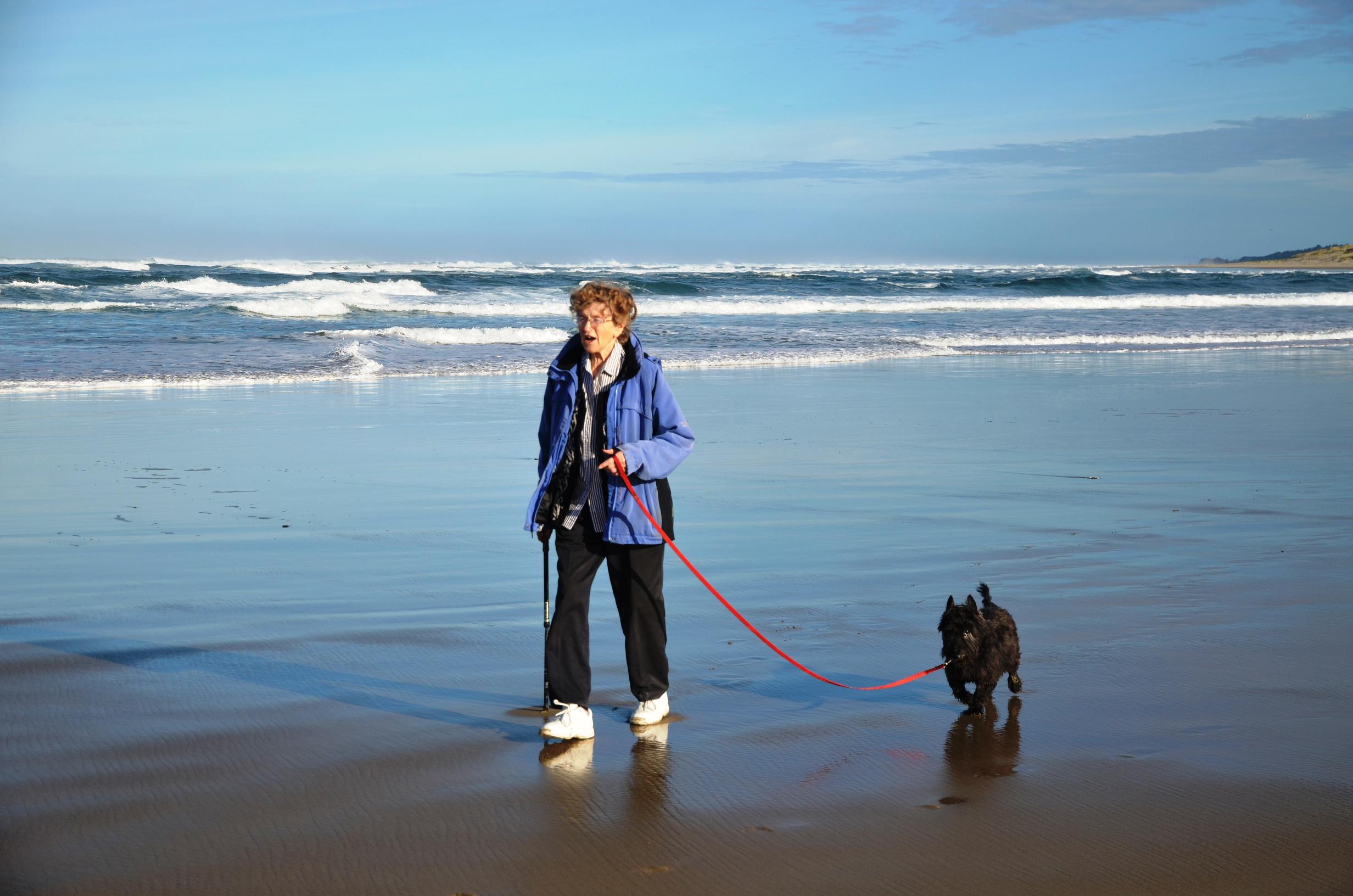
Everyone enjoyed a walk on the beach

Everyone enjoyed a walk on the beach

Morning walk on the beach

Morning walk on the beach

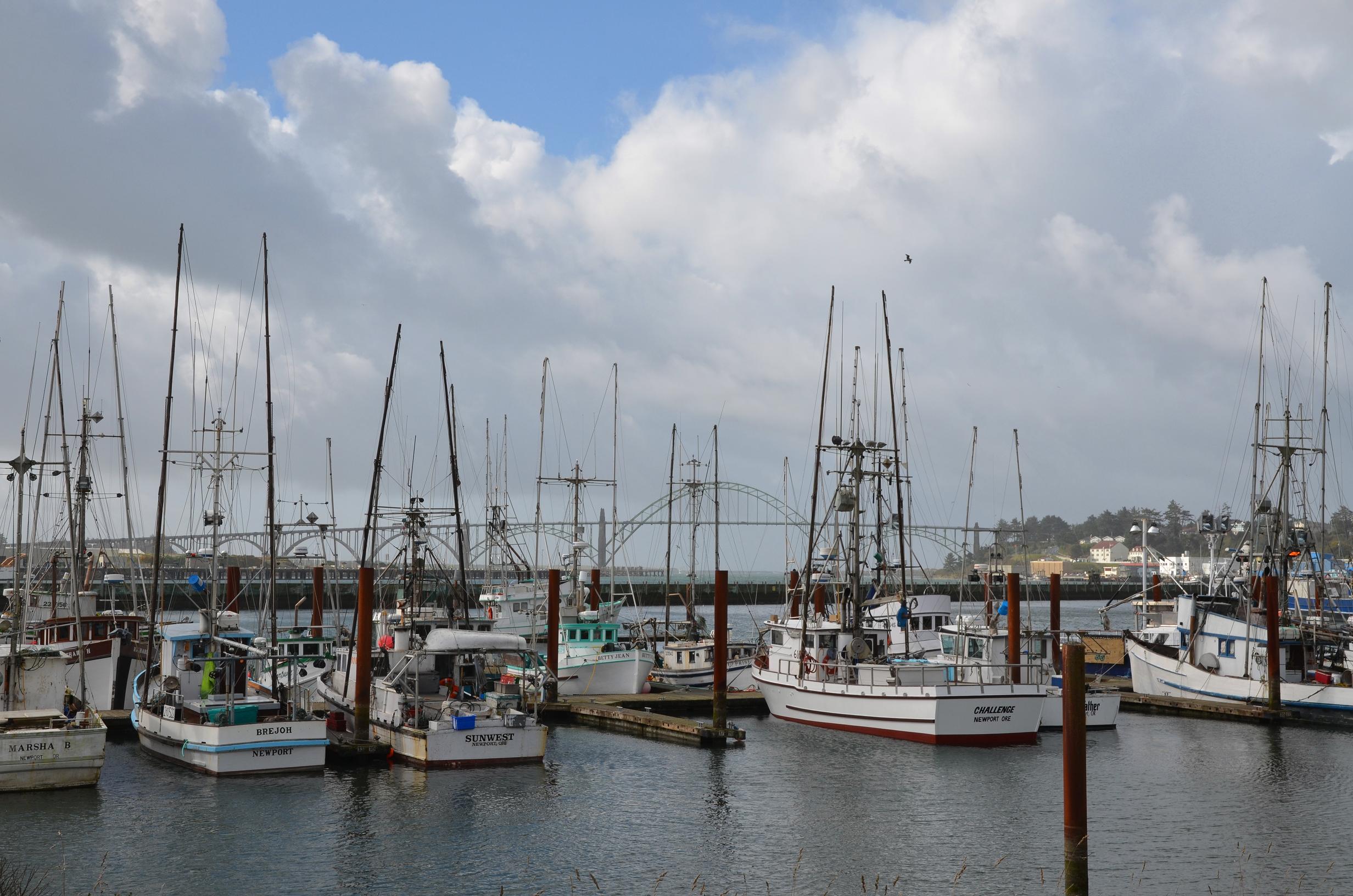
Waldport is just south of Newport, Oregon and just north of the Heceta Lighthouse, both scenic spots I got a chance to visit.

The Newport, Oregon bridge, with the usual Oregon weather of rain squalls and sun.

The Newport, Oregon bridge, with the usual Oregon weather of rain squalls and sun.

Boats in the Newport, Oregon harbor

Boats in the Newport, Oregon harbor

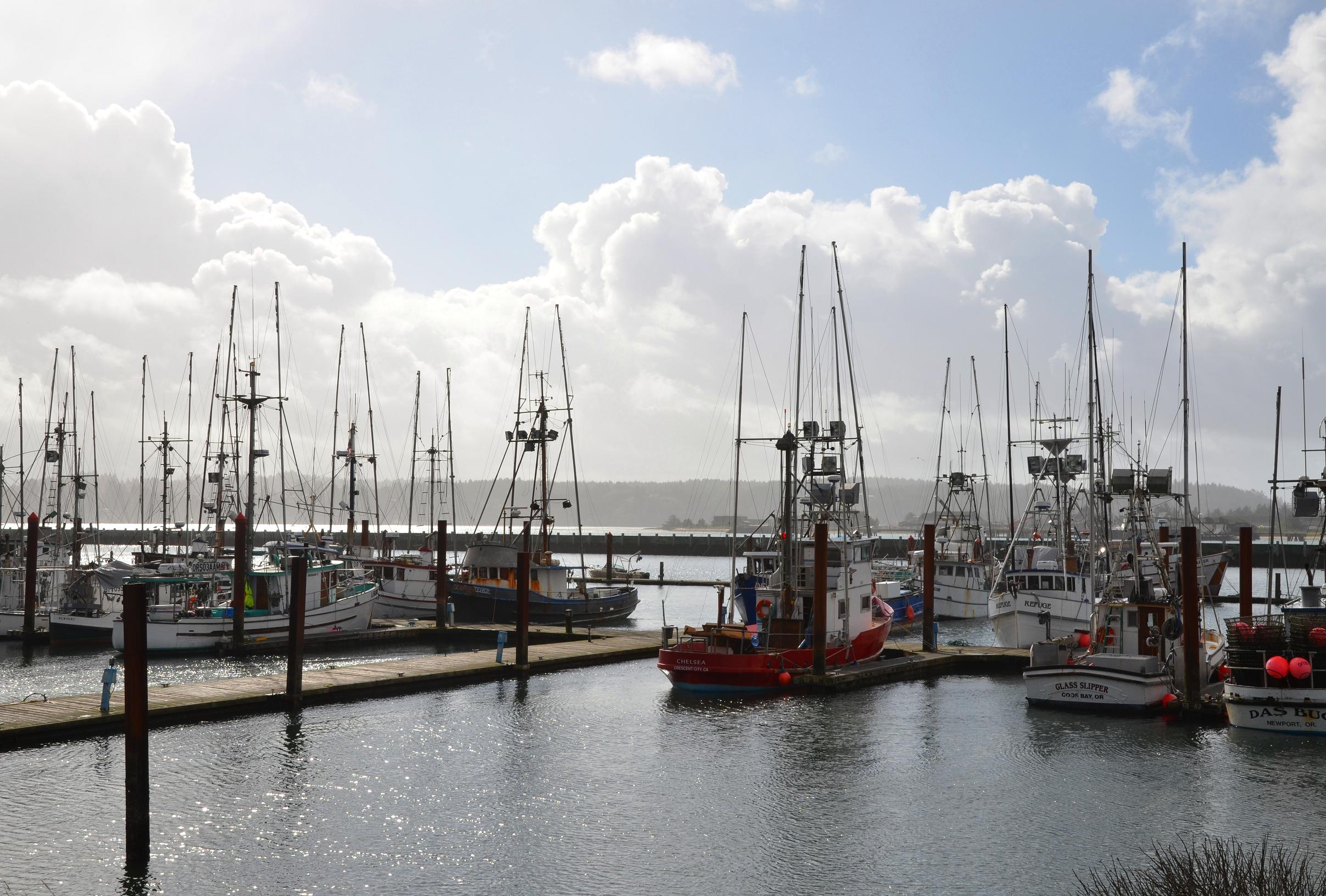
More fishing boats in Newport, Oregon

More fishing boats in Newport, Oregon

Color sketch of fishing boats

Color sketch of fishing boats

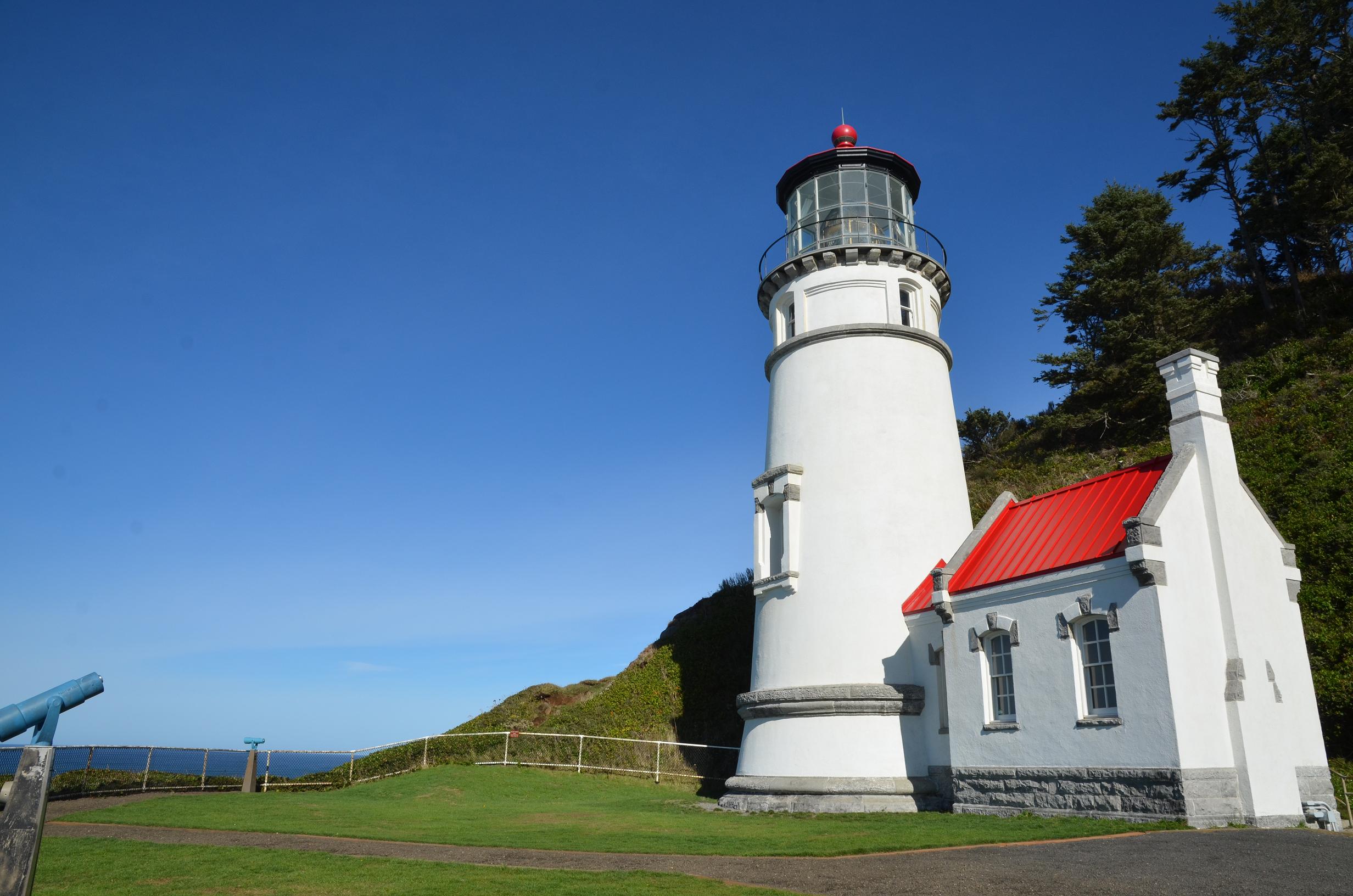
On my mother’s birthday, we drove south to the Heceta Head Lighthouse, built in 1892.  It was restored in 2011, but the lighthouse, the lightkeeper’s house, and the oil house are all original structures.  The Assistant Lightkeeper’s House is now a B & B.  (www.HecetaLighthouse.com)

The trail up to the Heceta Lighthouse

The trail up to the Heceta Lighthouse

trail sign

The Heceta Lighthouse

The Heceta Lighthouse

Nikon Color sketch of the Heceta Lighthouse

Nikon Color sketch of the Heceta Lighthouse

The Heceta Lighthouse taken from a trail behind the structure

The Heceta Lighthouse taken from a trail behind the structure


The Assistant Lightkeeper's House, now a B & B

The Assistant Lightkeeper’s House, now a B & B

For the Big Day, we contracted with Chef Becky to come in and cook for us.  (www.chefbecky.com).  Her menu included;  crab cakes with roasted red pepper aioli, hot artichoke and spinach dip, lobster bisque, greens with baby shrimp and dill tarragon dressing and puff pastry medallions, seared scallops with sage browned butter, couscous with pinenuts and petite french green beans with lemon.  It was wonderful, and having someone else do the cooking allowed all of us to visit with guests.

Chef Becky with her crab cakes

Chef Becky with her crab cakes

The day was a success, the weather cooperated, and friends and family all had a good time.

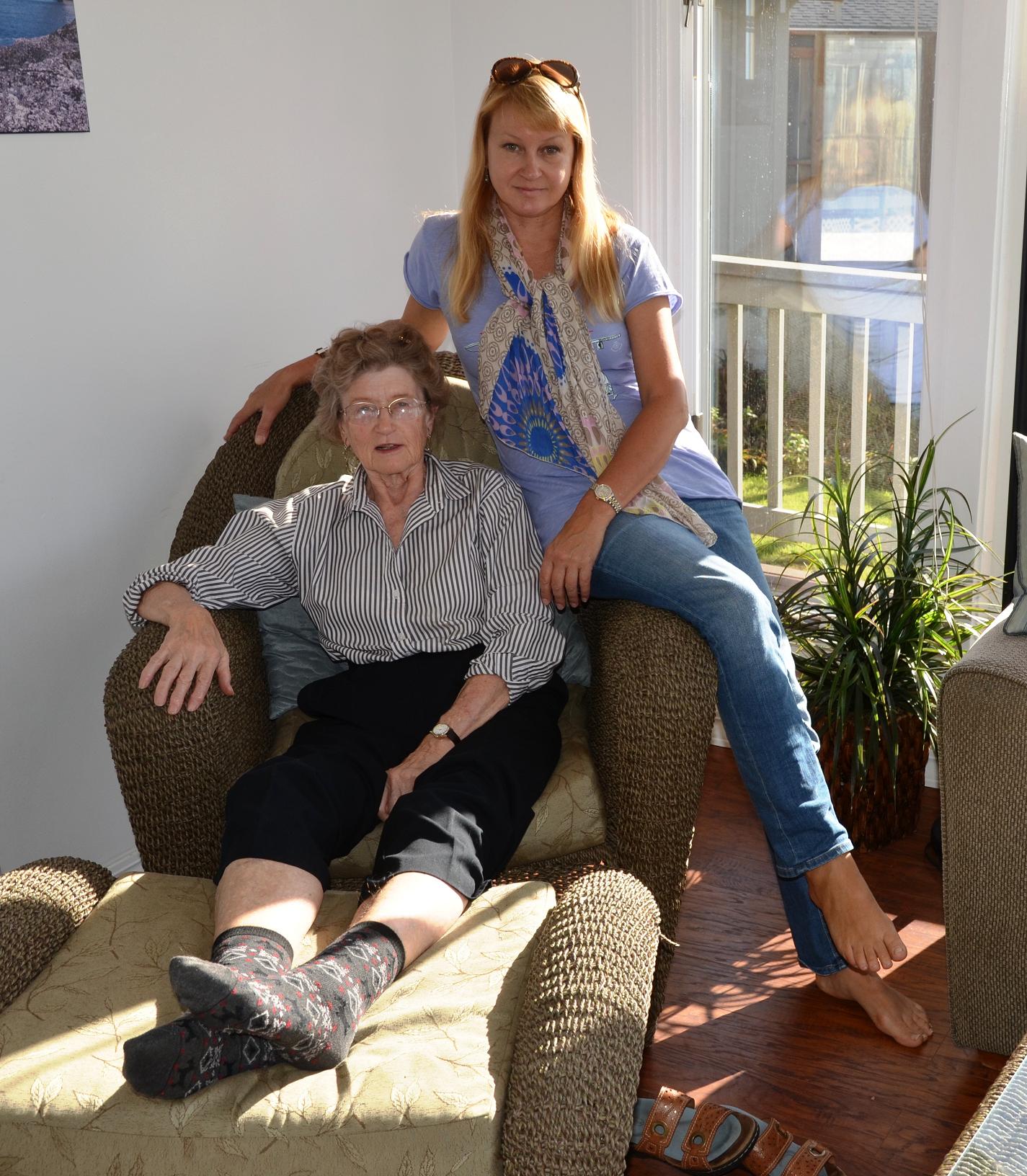
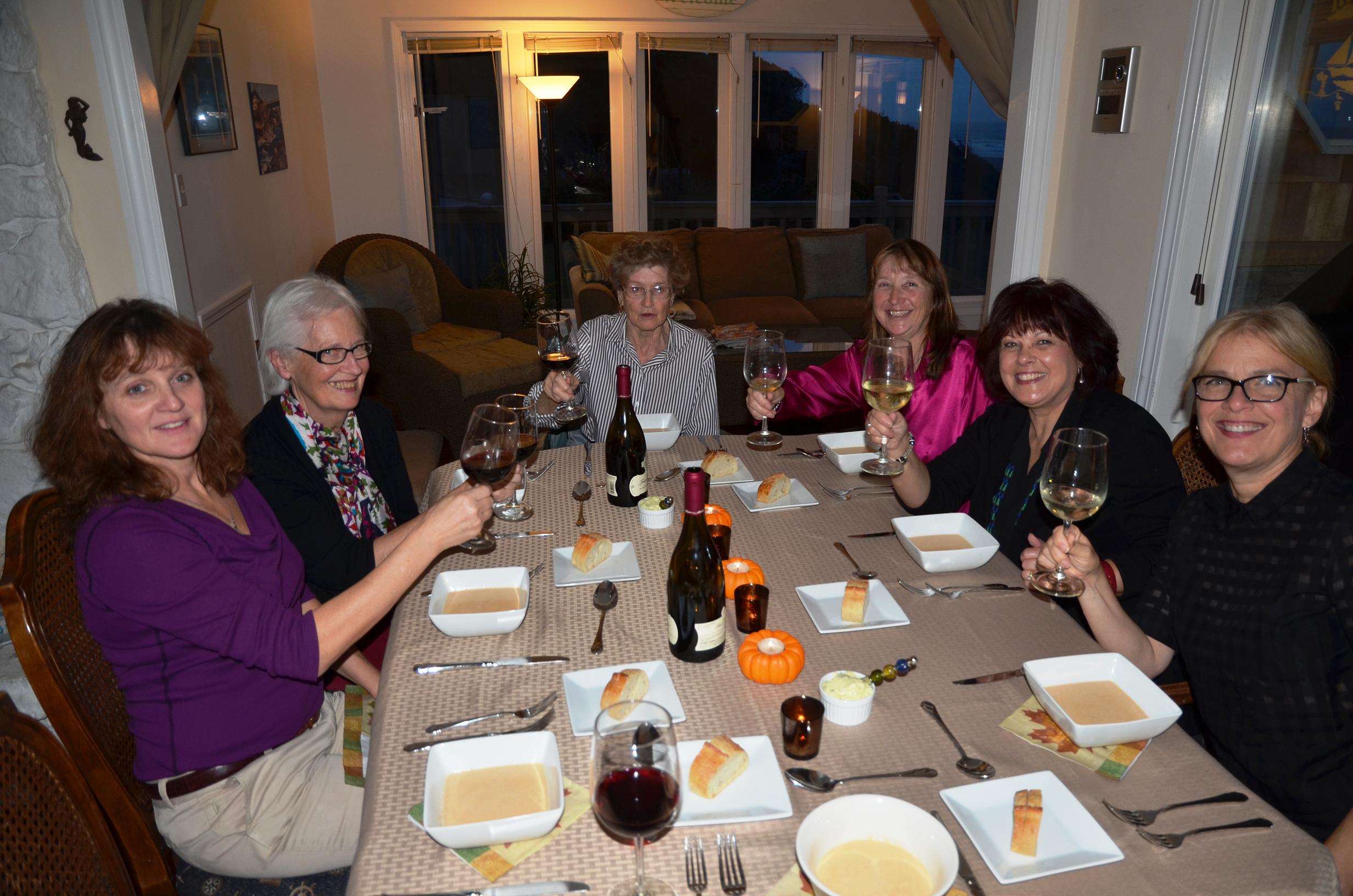
My mom, beautiful at 79 years and 363 days in the photo

My mom, beautiful at 79 years and 363 days in this photo

Me with my mom on her 80th birthday

Me with my mom on her 80th birthday

Friends and family gather to celebrate my mother's birthday

Friends and family gather to celebrate my mother’s birthday

My mother thanks Chef Becky for a wonderful dinner

My mother thanks Chef Becky for a wonderful dinner

cake


Posted in Family, Oregon | 3 Comments

Lake Como

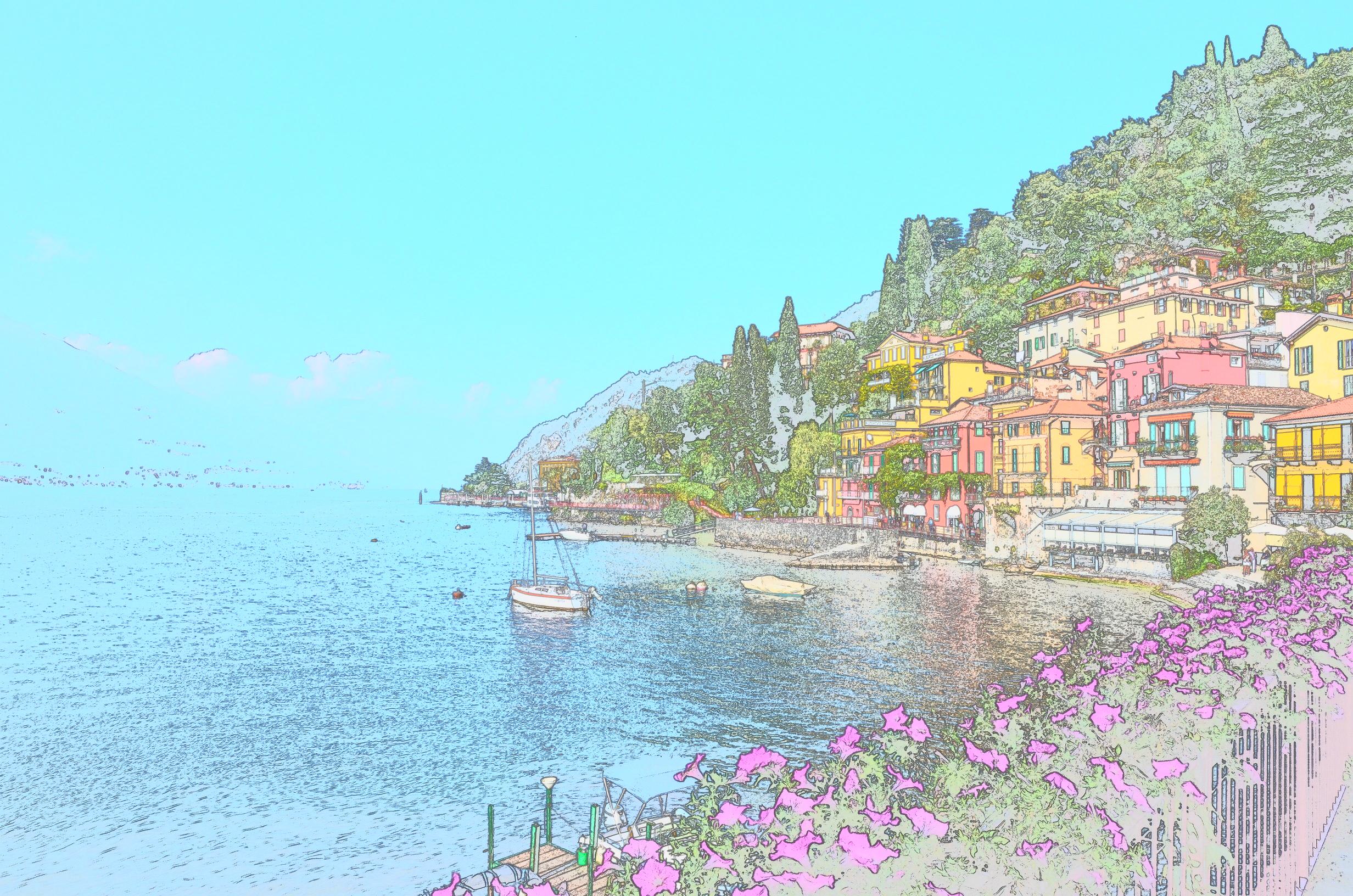
Color sketch of Varenna

Color sketch of Varenna

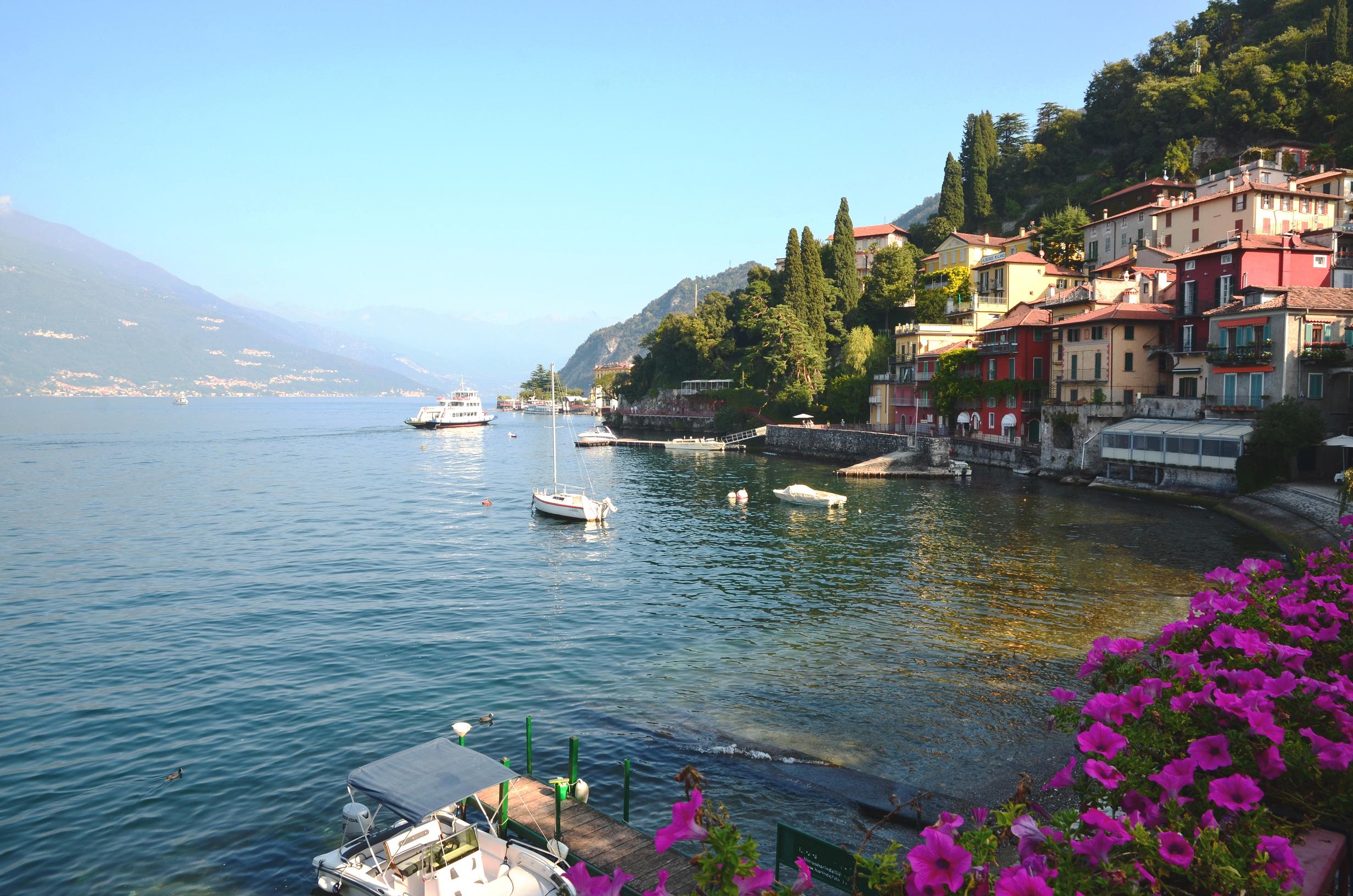
With one full day remaining in Italy, I decided to spend it on Lake Como, and I’m glad I did.  Varenna is just a one hour train ride (6.50 Euros)  from Milan, and a good town to start a visit to the central portion of Lake Como.

Varenna in the morning light

Varenna in the morning light

Lake Como, the third largest lake in Italy, is almost like three long lakes that come together in the center.  A cluster of small towns, including Varenna, Bellagio, Cadenabbia, and Menaggio, hug the shoreline at the center.  I arrived at 930 in the morning and enjoyed a cappucino and a dolce (chocolate filled croissant) before walking the lakeside path into the heart of the little town.  It is quite scenic and has a few restaurants and shops along the waterfront.  It is much less well-known than its neighbor Bellagio, but I think just as quaint.

Varenna from the ferry

Varenna from the ferry

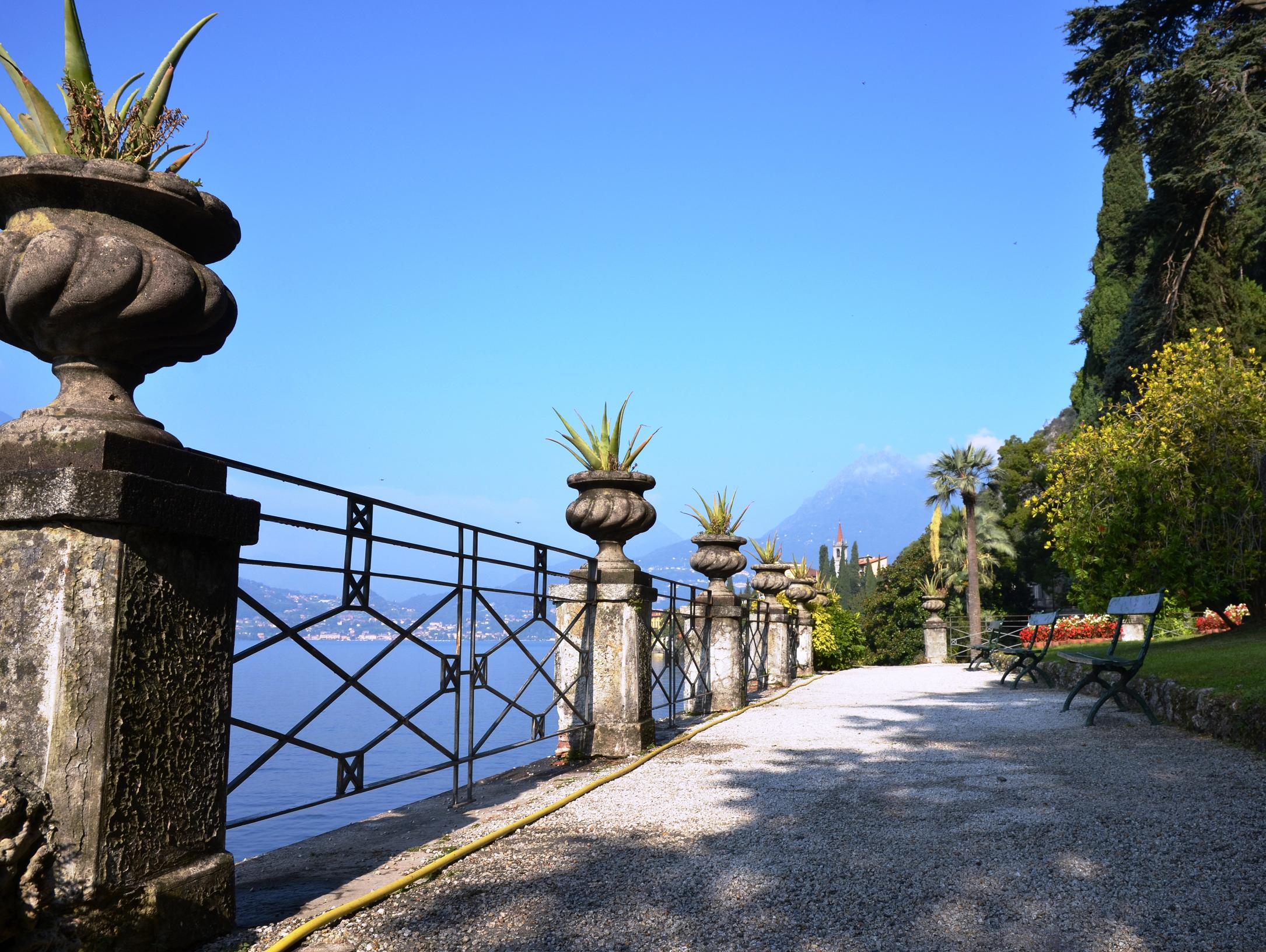
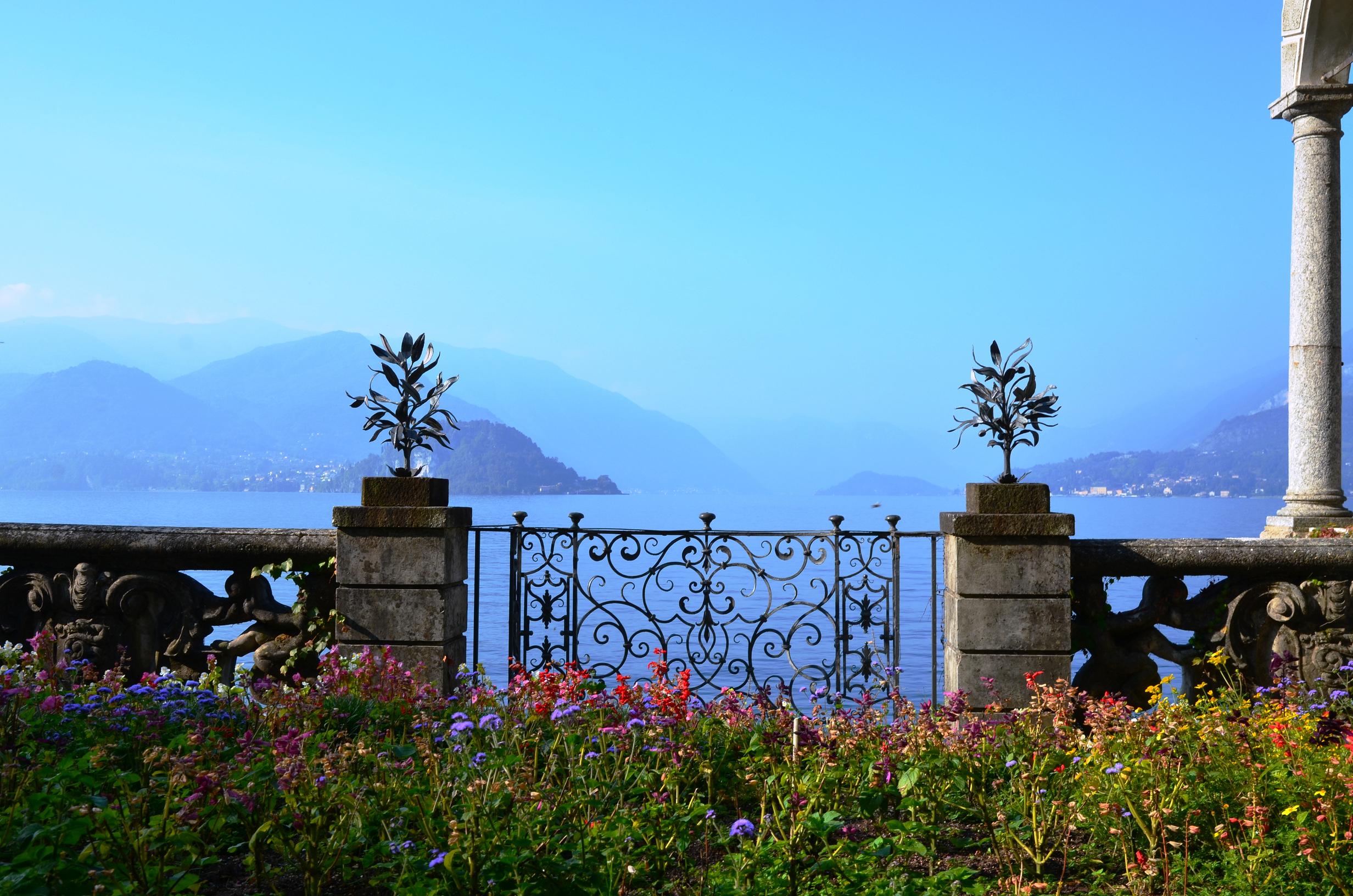
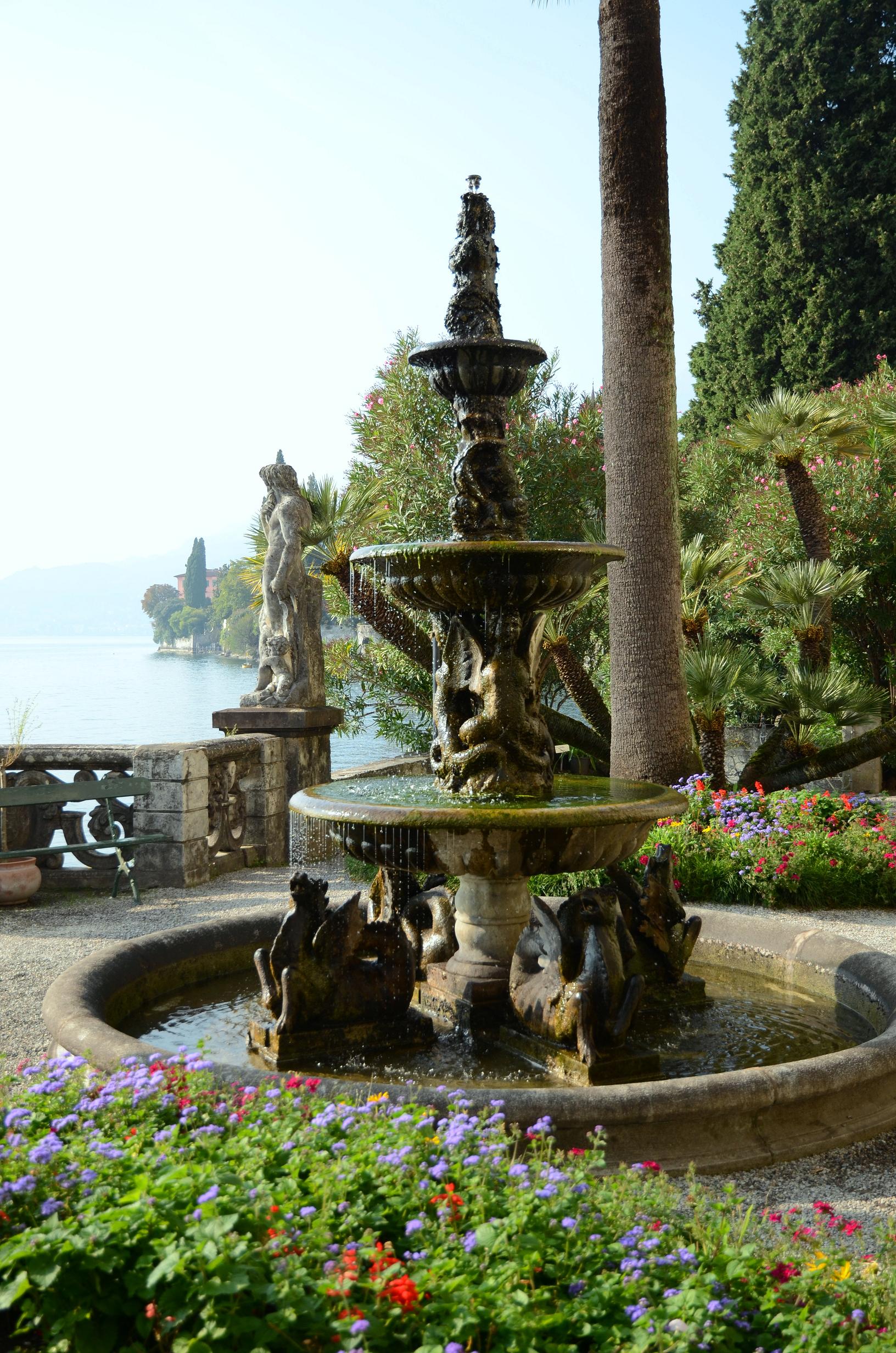
Only the garden was open to tourists at Villa Monastero, but it was definitely worth the 5 Euro admission.  At this early hour, much of the garden was in shade, but I was assured I could come back later in the day with the same ticket.

Lakeside garden at Villa Monastero

Lakeside garden at Villa Monastero

View of Lake Como from the gardens at Villa Monastero

View of Lake Como from the gardens at Villa Monastero

vase

I hopped a ferry at 1130 to Bellagio, enjoying a front row seat for 15 minutes on the lake.  Bellagio is larger than Varenna, and it was much more crowded.  It seems to be best known for its expensive shops, which line the waterfront along with restaurants, pedestrian walkways, a few hotels, and a parking lot.

Bellagio waterfront

Bellagio waterfront

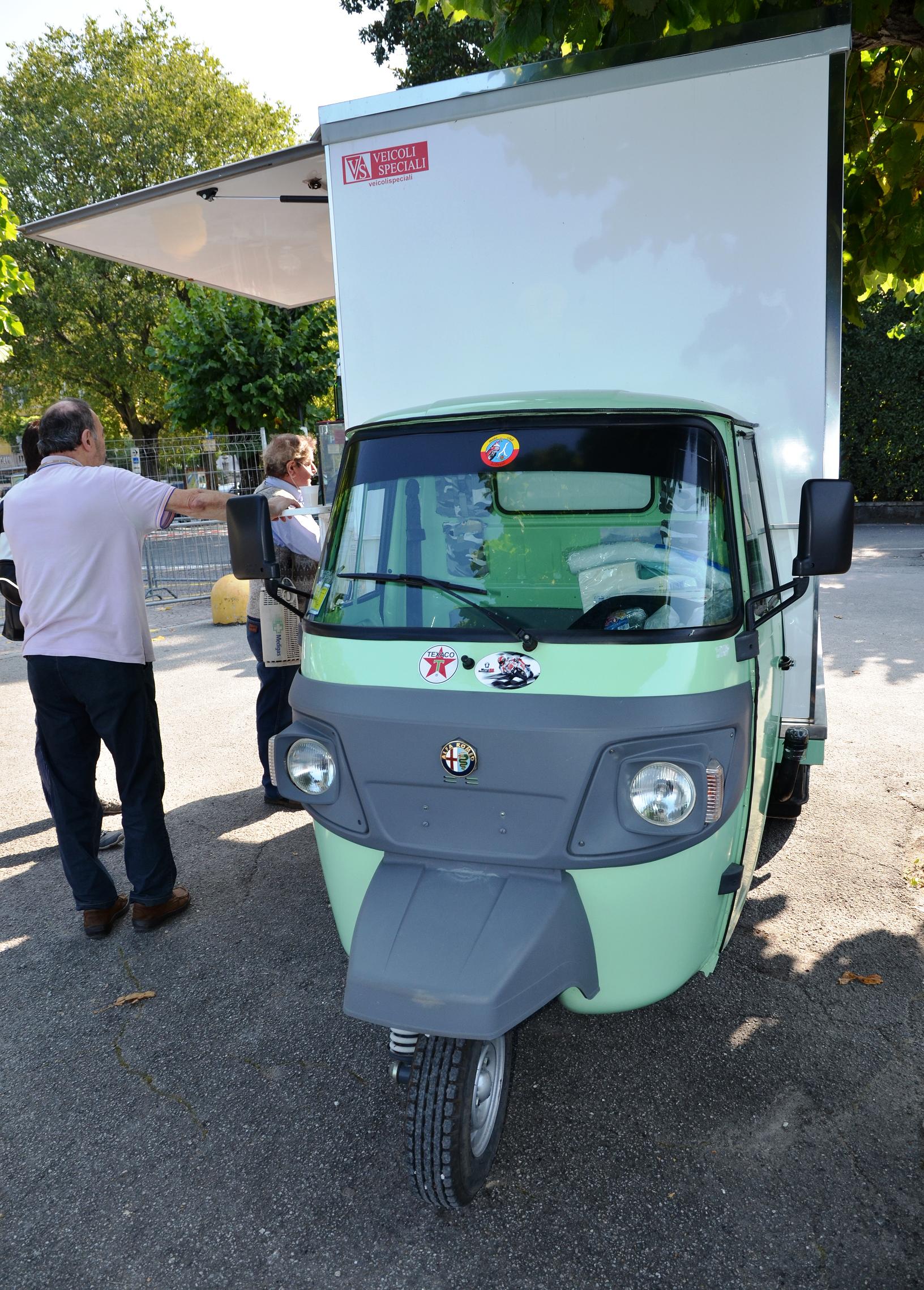
Alfa Romeo food truck in Bellagio

Alfa Romeo food truck in Bellagio

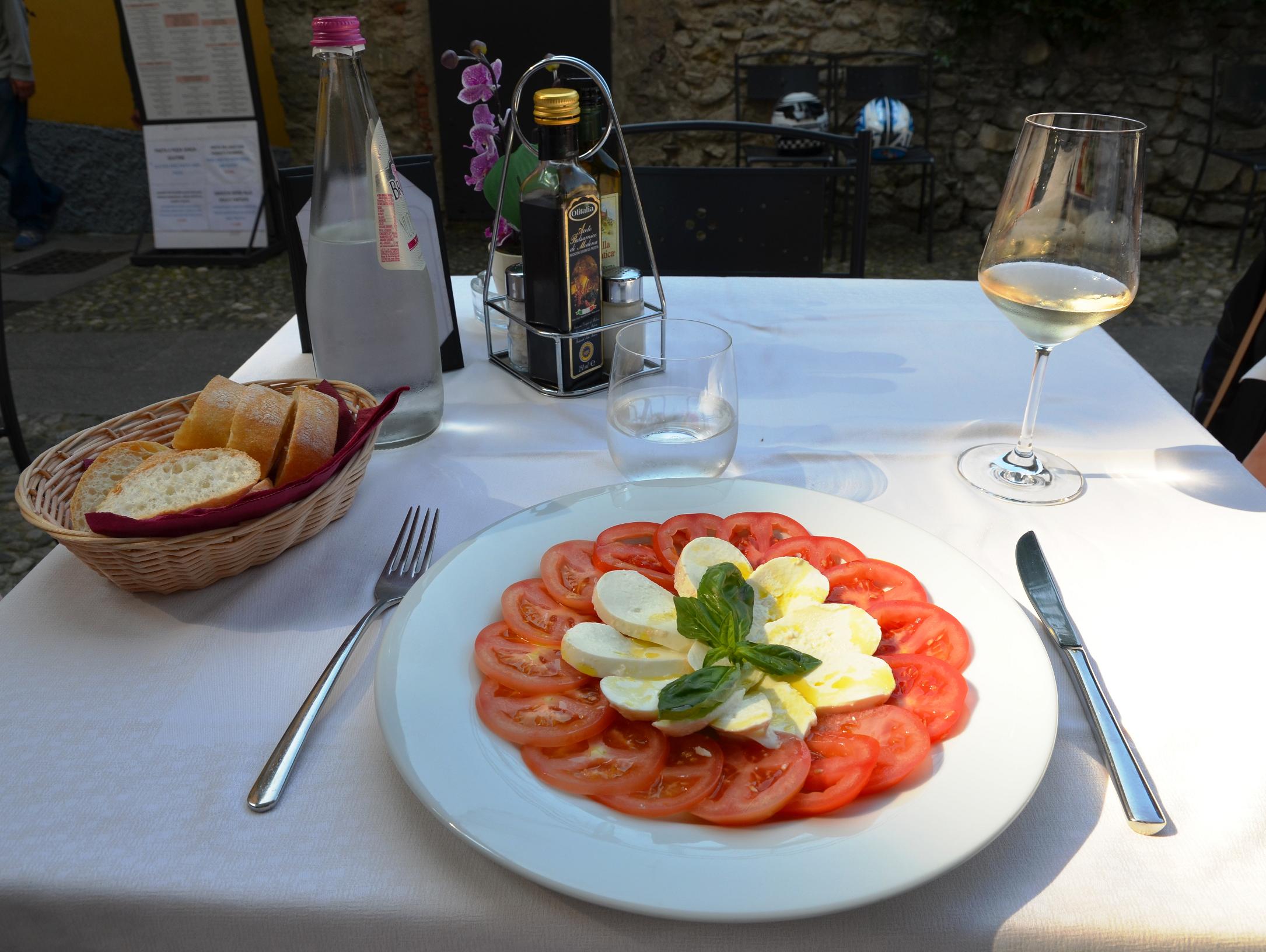
I found a wonderful spot for lunch up the hill on a side street and ordered the specialty of the area; lake perch with risotto and asparagus.  I also sampled a caprese salad, and of course some local wine.

Caprese salad

Caprese salad

Risotto with lake perch and asparagus

Risotto with lake perch and asparagus

Of course it is impossible to go to Bellagio without doing a little shopping, so I obliged.

Looking up one of Bellagio's streets

Looking up one of Bellagio’s streets

Leaving Bellagio on the ferry

Leaving Bellagio on the ferry

Another short ferry ride and I was  back in Varenna, which was much more peaceful.  I went back to the gardens at Villa Monastero for some afternoon sun.

The seawall

The seawall

Statue with a view

Statue with a view

Fountain at Villa Monastero

Fountain at Villa Monastero

Fountain detail

Fountain detail

One hour on the train and I was back in Milano.  It was a good day trip, but I would like to return and spend more time in the Lake District.

Nikon color sketch touch up to a garden photo

Nikon color sketch touch up to a garden photo


Posted in Italy | 3 Comments

The Last Supper, Ultima Cena

Leonardo da Vinci's Ultima Cena (The Last Supper) painted between 1495 and 1498.

Leonardo da Vinci’s Ultima Cena (The Last Supper) painted between 1495 and 1498.

The one item at the top of my list for Milan was one that I had missed 18 years ago.  It had been closed back then, and this time I wasn’t going to leave Milan without seeing Leonardo da Vinci’s Ultima Cena, The Last Supper, at the Chiesa di Santa Maria delle Grazie.

It is no longer possible to just walk up and get in to see his masterpiece.  About one month in advance I went to the website to get tickets (www.cenacolovinciano.net), and to my horror (and near panic) discovered that they were sold out for our dates in Milan.  But my Fodor’s guidebook said that if you call the box-office in Italy, they save some tickets out for phone in requests.  So that’s what I did, and I got us three slots for 11:30 on Sunday Sept. 28th.  The number to call is (+39) 02 92800360.  The museum is closed on Mondays.

Last Supper with names.

Last Supper with names.

It is a reasonable 8 Euros, and strictly controlled.  This was the one place where no one tried to sneak a photo.  You must pass through two sealed rooms prior to entering the Refectory.  The doors open and close automatically every 15 minutes as the old group is herded out and a new group ushered in.

A Last Supper timeline in one of the waiting rooms

A Last Supper timeline in one of the waiting rooms

The number of visitors is limited to a small group.  There was a nun in the room, and although she didn’t have a ruler, she certainly shushed our group several times as the conversation levels rose in excitement as visitors discussed the fresco with their fellow travelers.

Giovanni Donato Montorfano's Crosifissione, on the opposite wall facing The Last Supper, also painted in1495.

Giovanni Donato Montorfano’s Crosifissione, on the opposite wall facing The Last Supper, also painted in1495.

It was beautiful and well worth the trouble to get there.  We learned that Leonardo was experimenting with a new technique, one that allowed him time to contemplate and paint at a slower rate.  Giovanni used the traditional method of fresco painting, and was finished much quicker with the colors lasting longer.

From History of Italian Renaissance Art, by Frederick Hartt (Fourth Edition 1994):

Leonardo’s Last Supper in the refectory of Santa Maria delle Grazie in Milan is often known through prettified versions that conceal its poor condition, which is due to a disastrous technical experiment on Leonardo’s part.  An artist as sensitive as Leonardo to the slightest throb of light in atmosphere was bound to be impatient with the fresco method, which could not allow the time needed to establish his customary shadowy unity to the painting and his perfect luminous finish to the details…Leonardo painted directly on the dry intonaco with an oil tempura whose composition is not yet known.  According to literary accounts, he would sometimes stand on the scaffolding an entire morning without picking up the brush, studying the relationship of tone.  When completed, the painting inspired extravagant praise, but in 1517, while the artist was still alive, it had started to deteriorate, and when Vasari saw it a generation or so later, he found it almost indecipherable.  It was repainted twice in the eighteenth century, it suffered from the brutality of the Napoleonic soldiers and from the monks, who cut a door through it, and it was repainted in the nineteenth century.  In 1943 Allied bombs destroyed much of the rest of the refectory but the painting, protected by sandbags supported on steel tubing, survived.  Extensive conservation efforts after World War II disclosed more of the original under the repaint than anyone had dared to hope, and the picture is currently undergoing a cautious, scientific restoration that has already revealed Leonardo’s delicacy of touch and luminosity of color in the better-preserved areas.

The scientific restoration by Pinin Brambilla Barcilon described above was started in 1977 and took over 20 years.  It would have been ongoing in 1996 when I was last in Milan.

Exterior and courtyard of the Santa Maria dell Grazie

Exterior and courtyard of the Church of Santa Maria delle Grazie

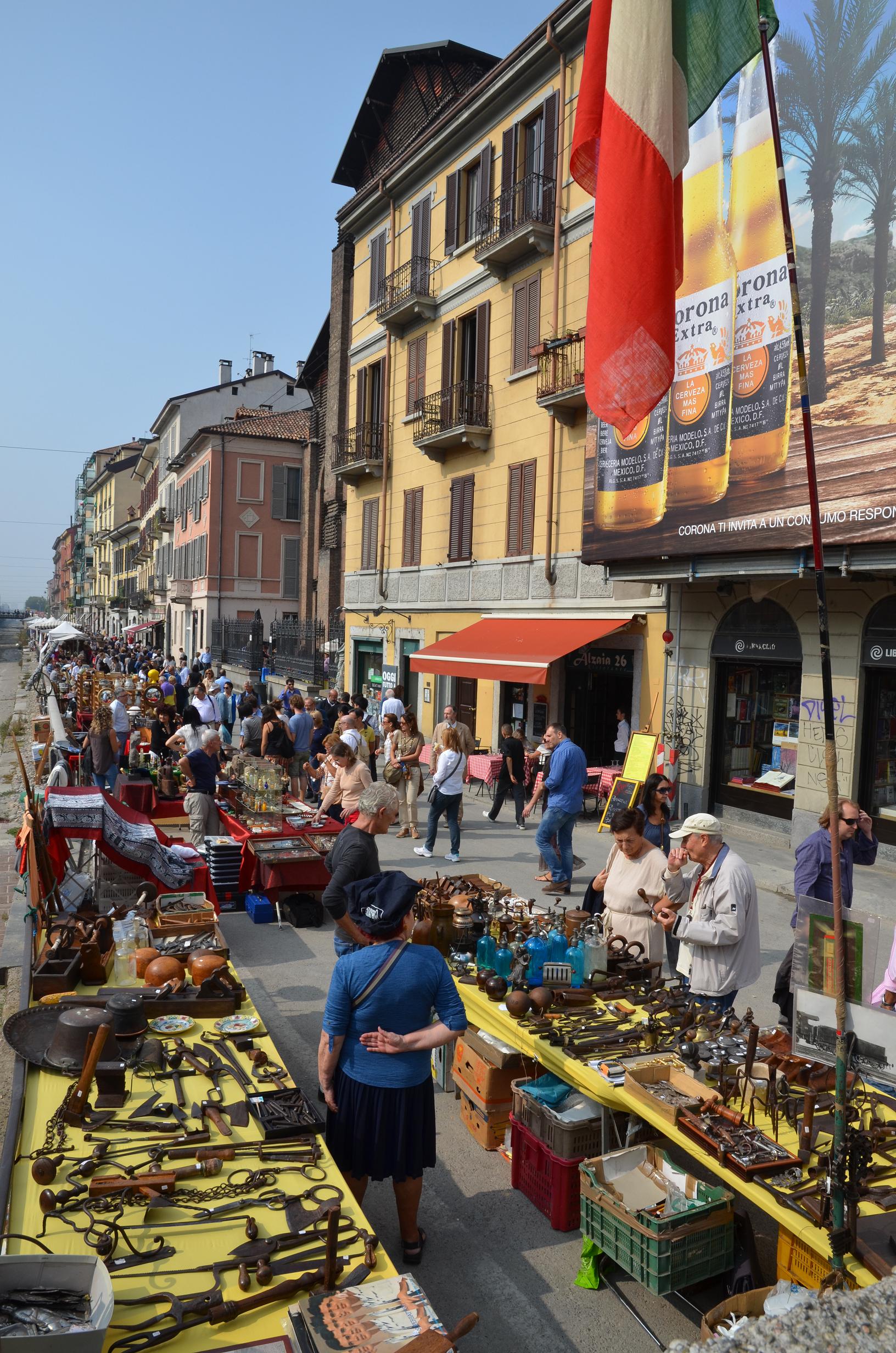
We found ourselves in Milan the last Sunday of the month.  It just so happens that a large antique market is held the last Sunday of the month, so we headed to the Navigli district to see it for ourselves.

Last Sunday of the month in Milan antiques market

Last Sunday of the month in Milan antiques market

at the market

It was huge and covered many streets and along the canal.  The canal was dry and there was construction in the area, but the market was good.  I purchased an antique Deruta water pitcher for 25 Euros, and within one hour had dropped it on the pavement.  Oh well.  I also found another Deruta ceramic piece which did make it all the way back to the US.

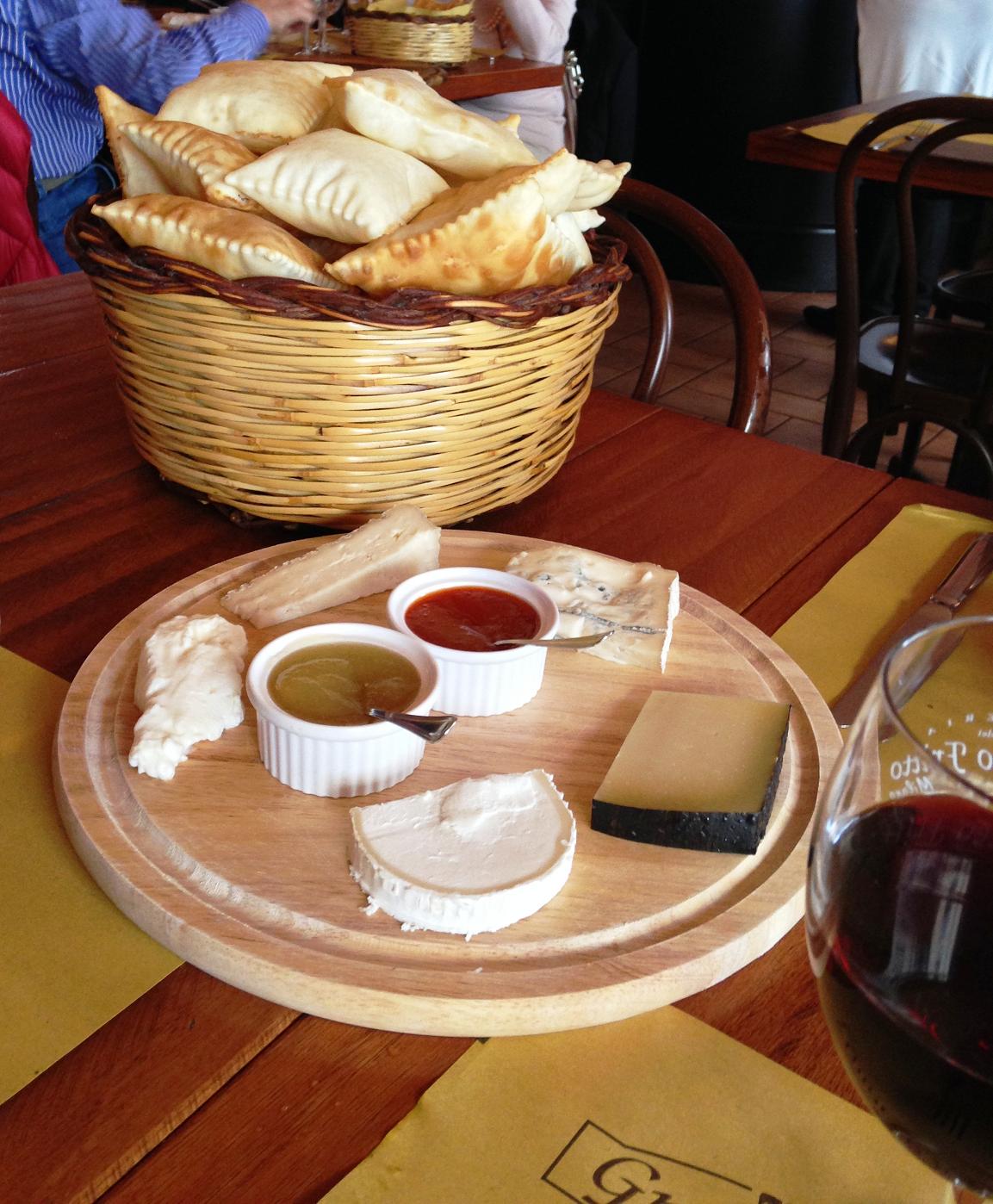
We had lunch at a stellar local place called Osteria del Gnocco Fritto.  We enjoyed a long, leisurely lunch, starting with a cheese plate and followed by linquine with black truffles.  It was mouthwatering good.  http://www.gnoccofrittomilano.it/en/

Cheese plate appetizer at Osteria del Gnocco Fritto

Cheese plate appetizer at Osteria del Gnocco Fritto

L at lunch

The very tasty spaghetti with black truffles

The very tasty spaghetti with black truffles

Walking back through the antique market, still under way,  we passed a vendor with chandeliers.  I would have loved to take this one back to the states, but with only one day left of the trip I didn’t want to spend it worrying about logistics in shipping.

The chandelier I wish I could have brought back

The 200 Euro chandelier I wish I could have brought back

Posted in Italy | 2 Comments

In the hills above Verona

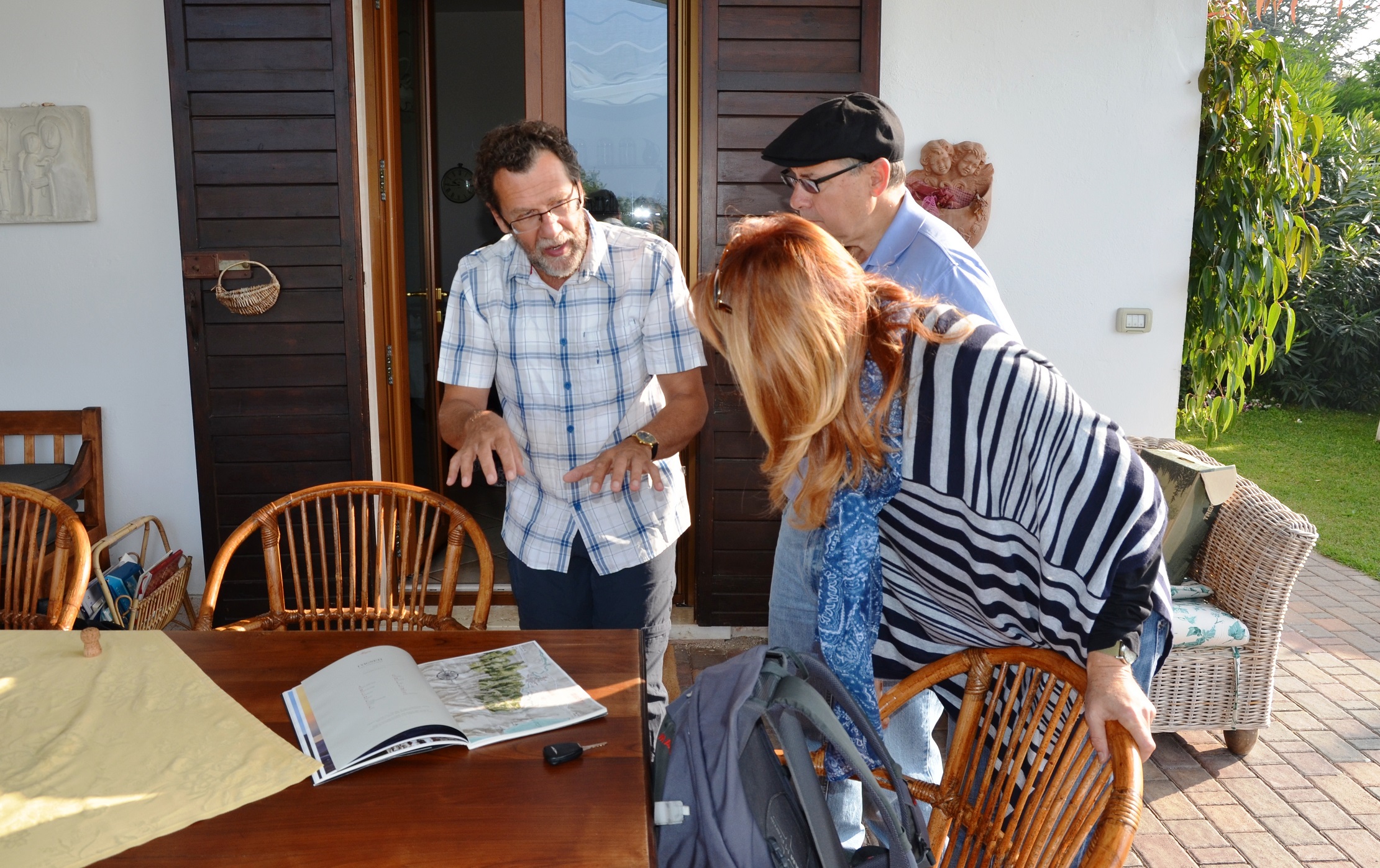
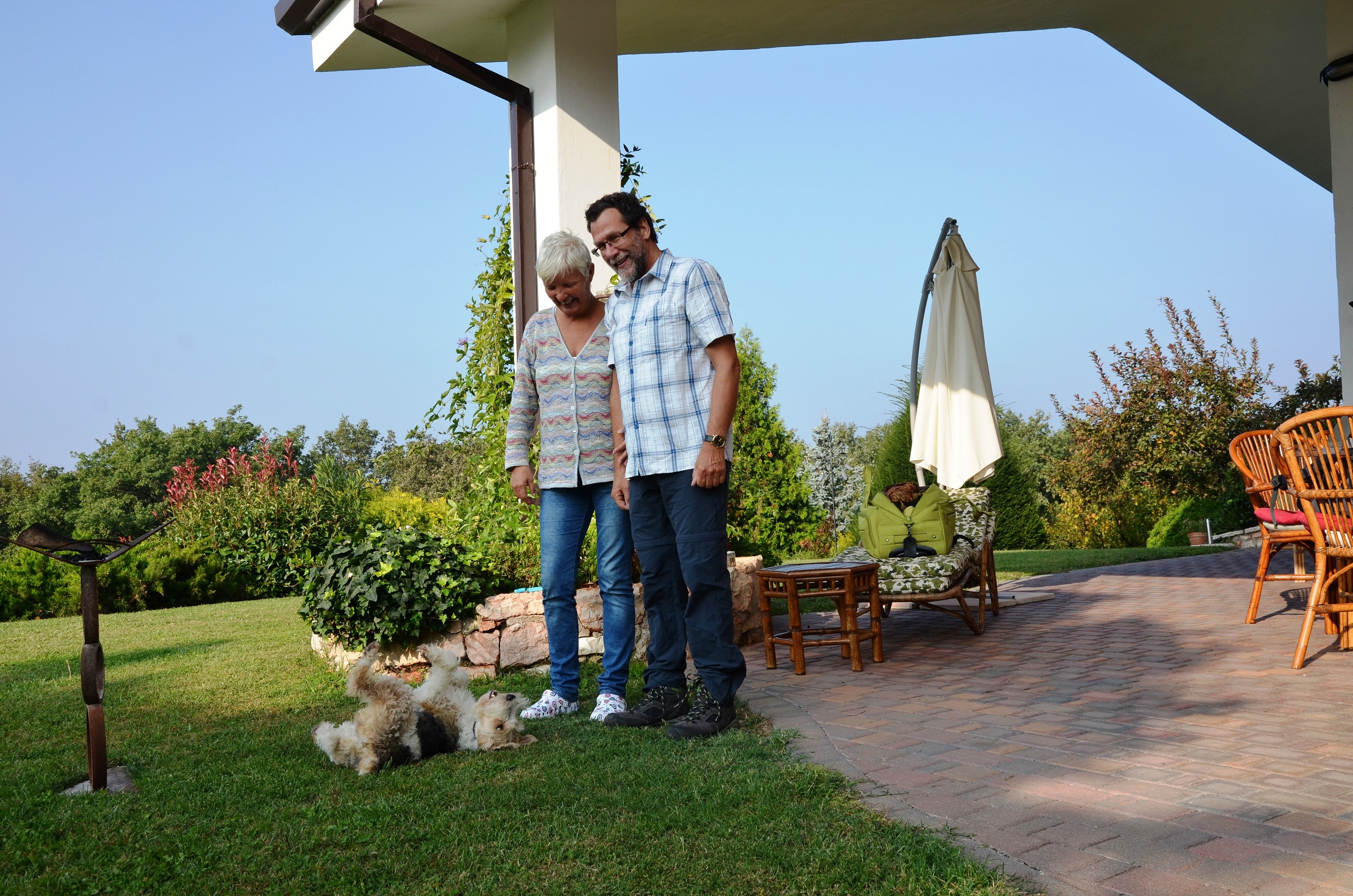
Claudio shows us on the map where we will go hiking, and the area's wine country

Claudio shows us on the map where we will go hiking, and the area’s wine country

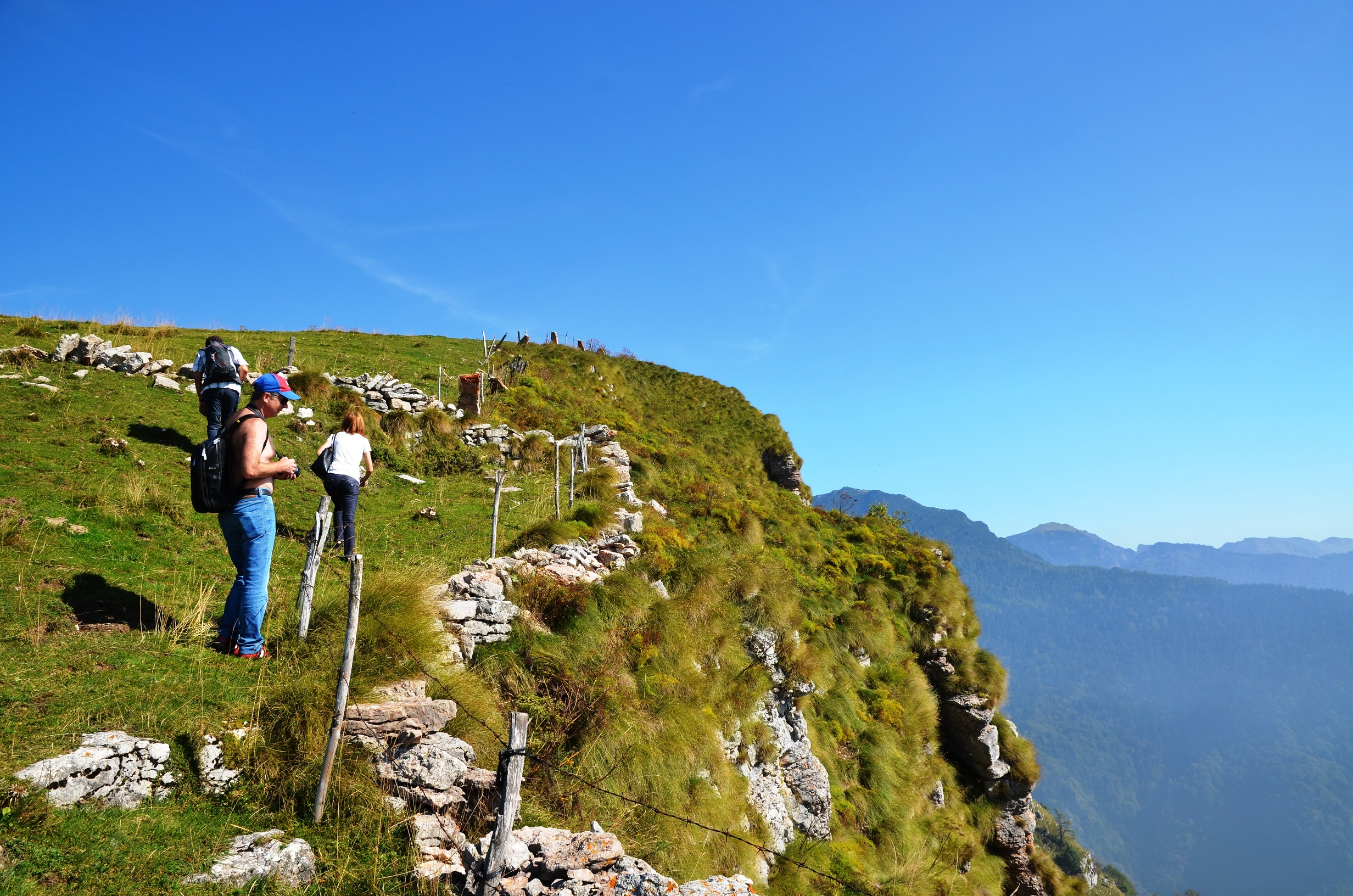
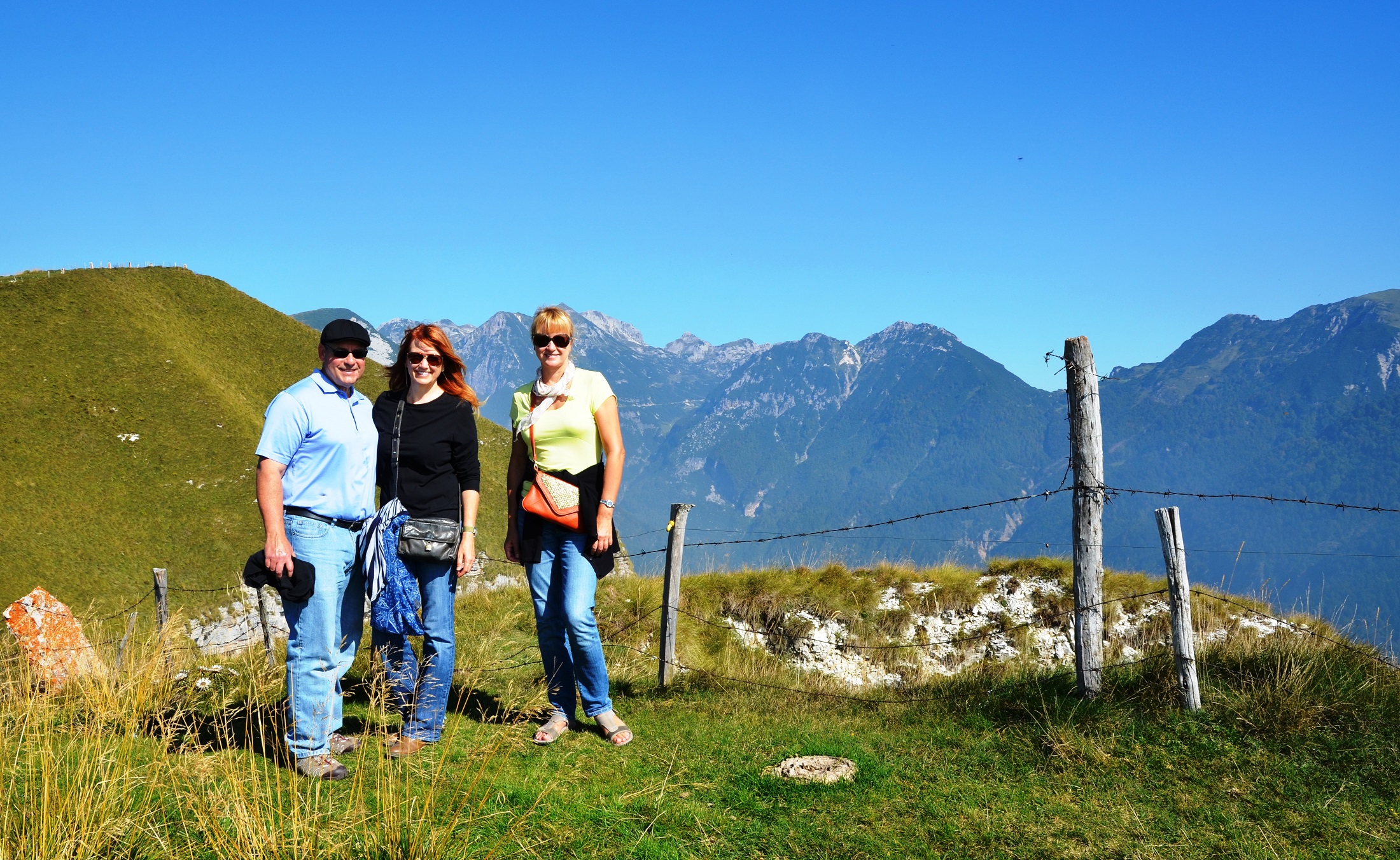
We considered ourselves fortunate to have found the Romy Rocker B & B.  The next morning Claudio took us, and the two other Russian guests, on a personal tour of the nearby mountains.  He has walked these hills and trails all his life with family and his own children.  He said there were no tourists in that area, and he was right.  It was all local people out for a Saturday hike.

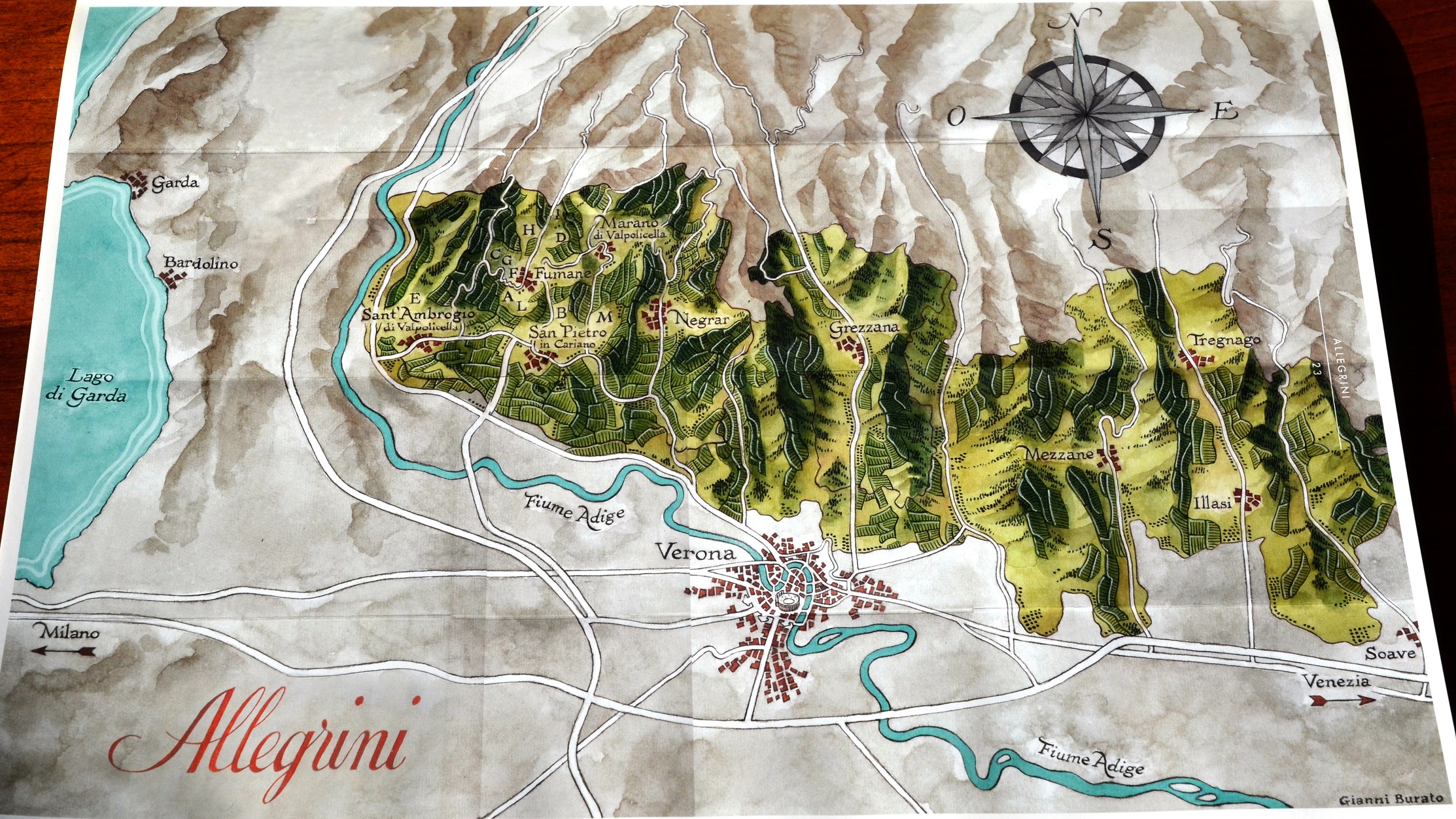
Local wine country map

Local wine country map

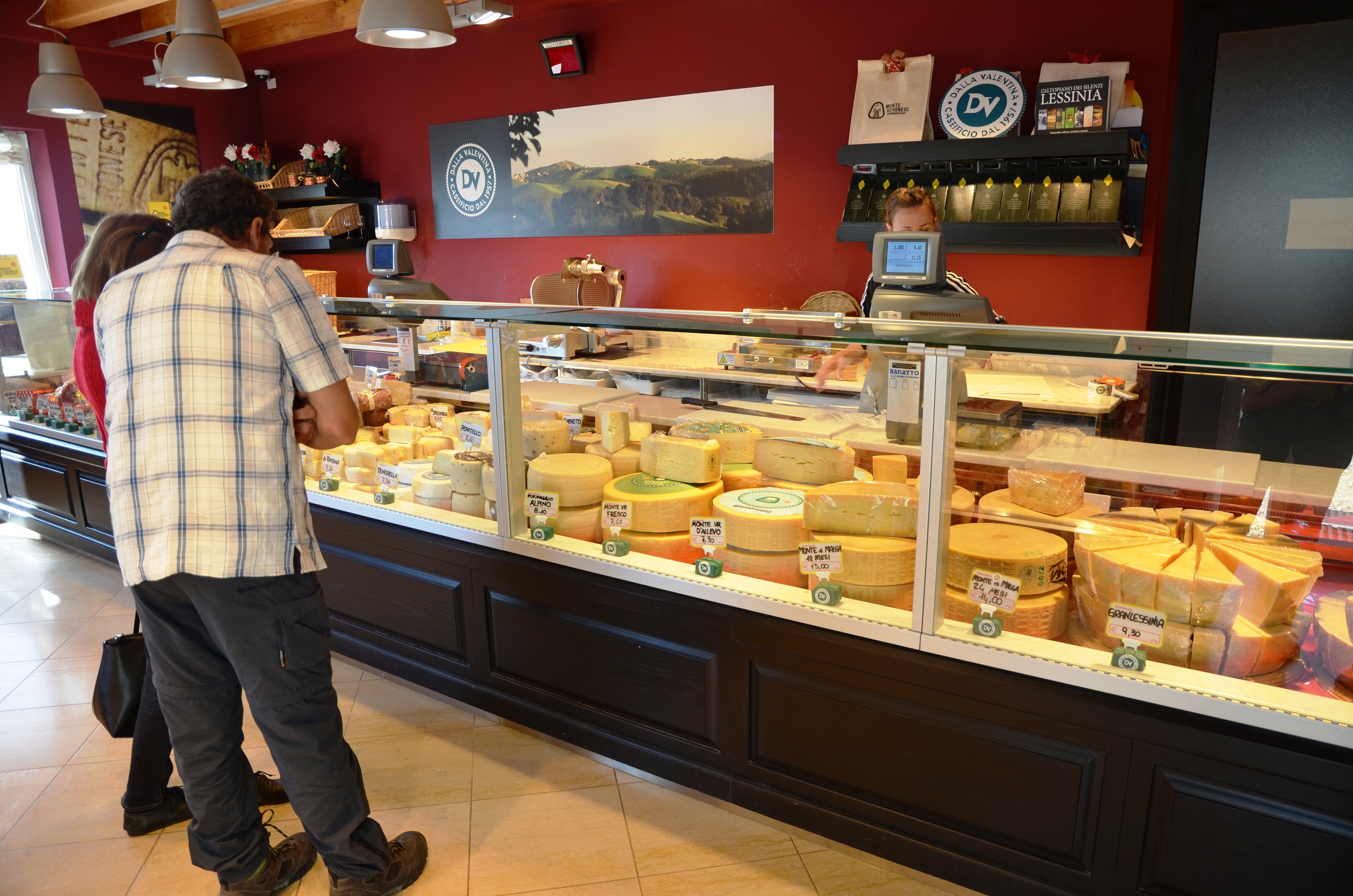
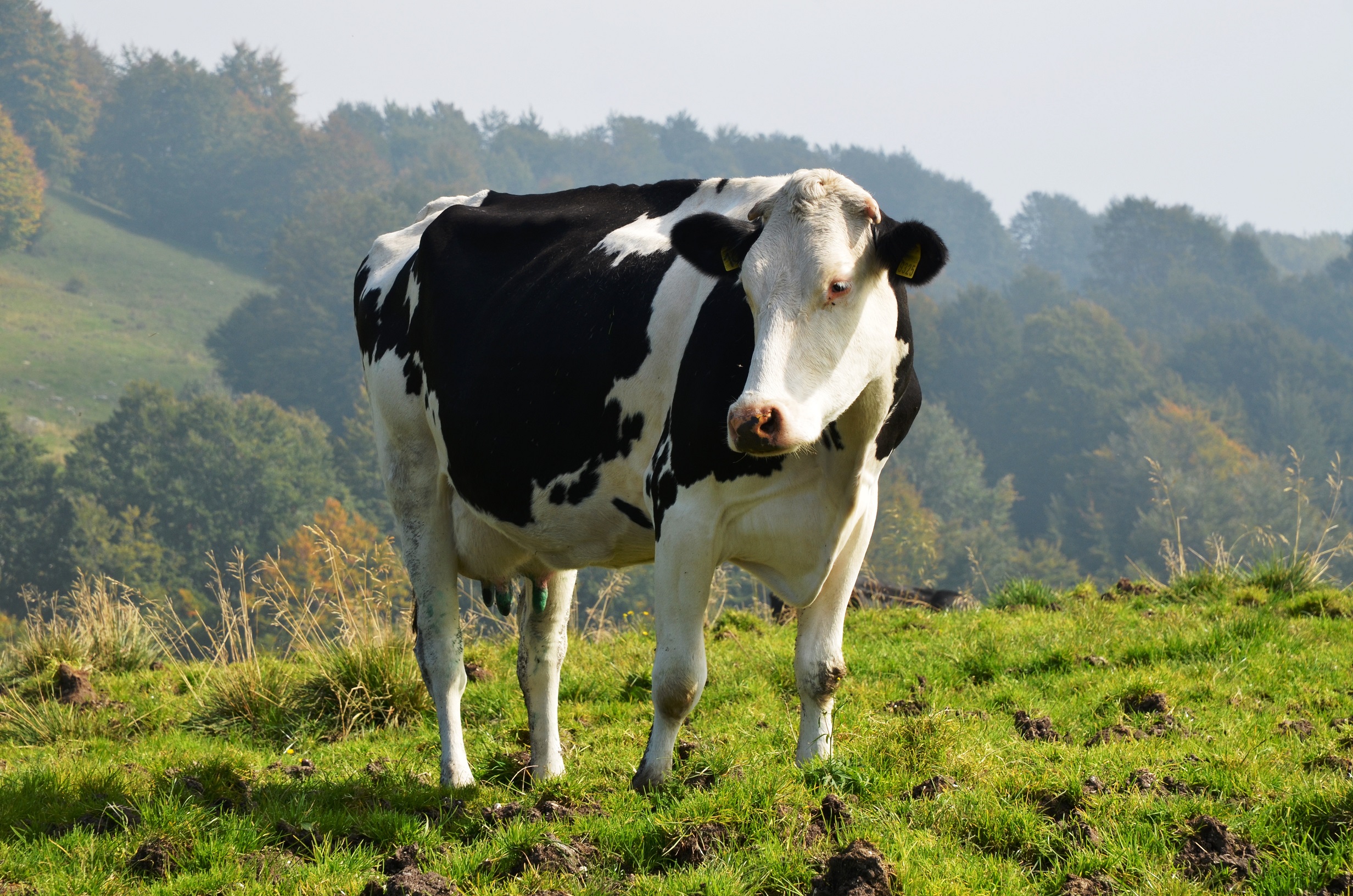
We also stopped to pick up some locally made cheese for the B & B.  These are lucky cows to live in the mountains in the clean air and eating the fresh grass.

Cheese shop, up in the hills

Cheese shop, up in the hills

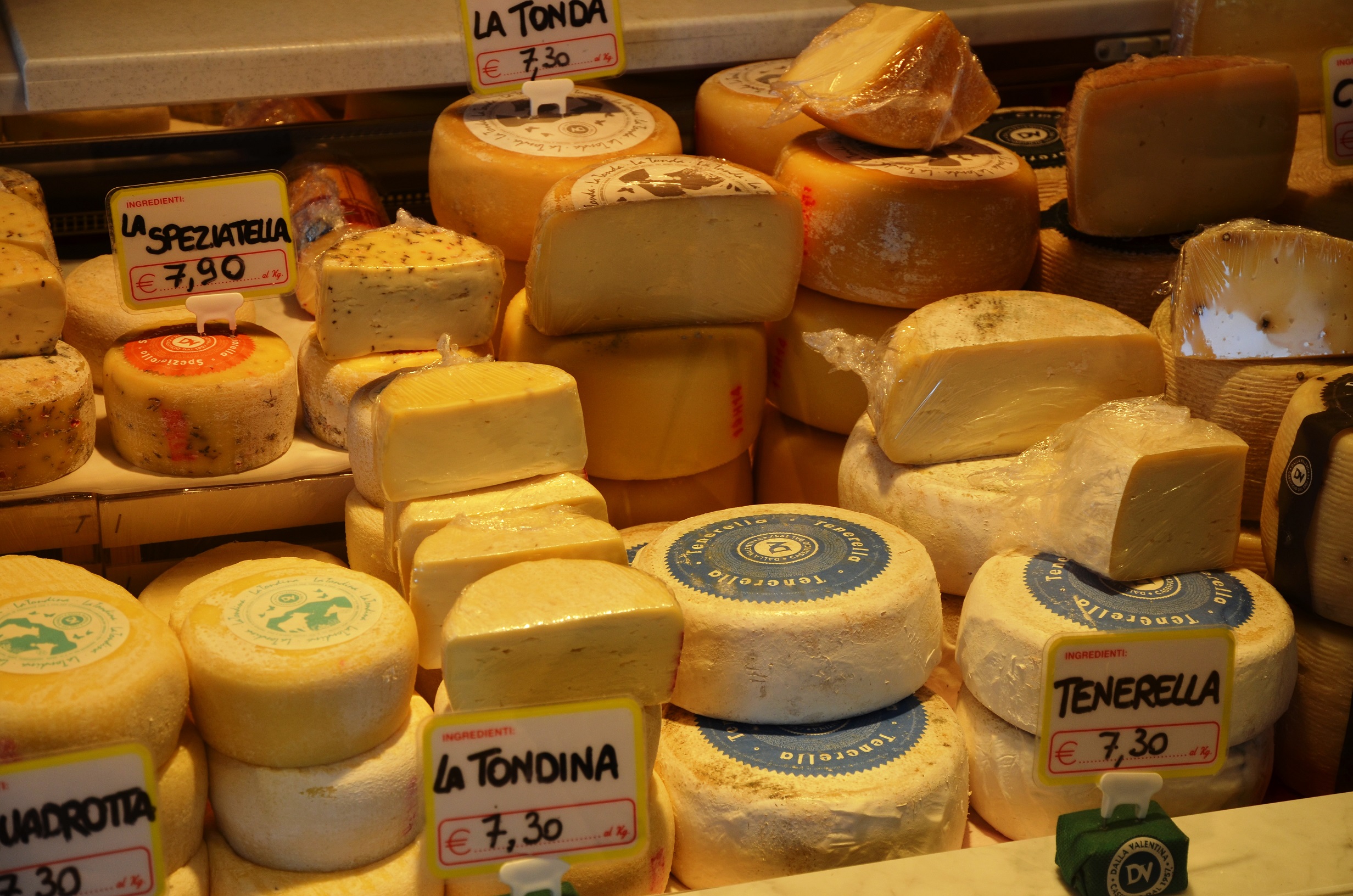
Local cheeses

Local cheeses

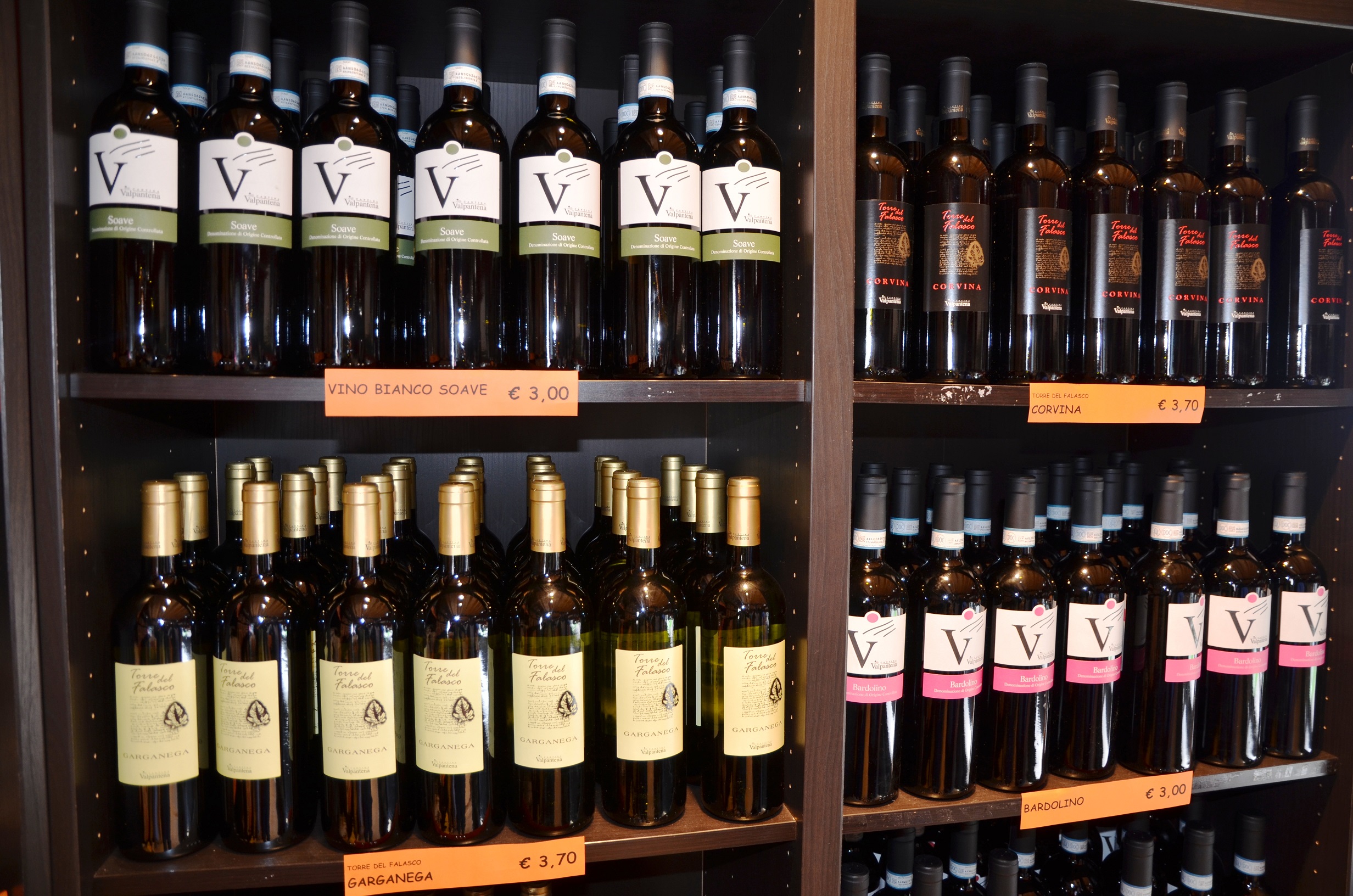
Local wine

Local wine

Local cow

Local cow

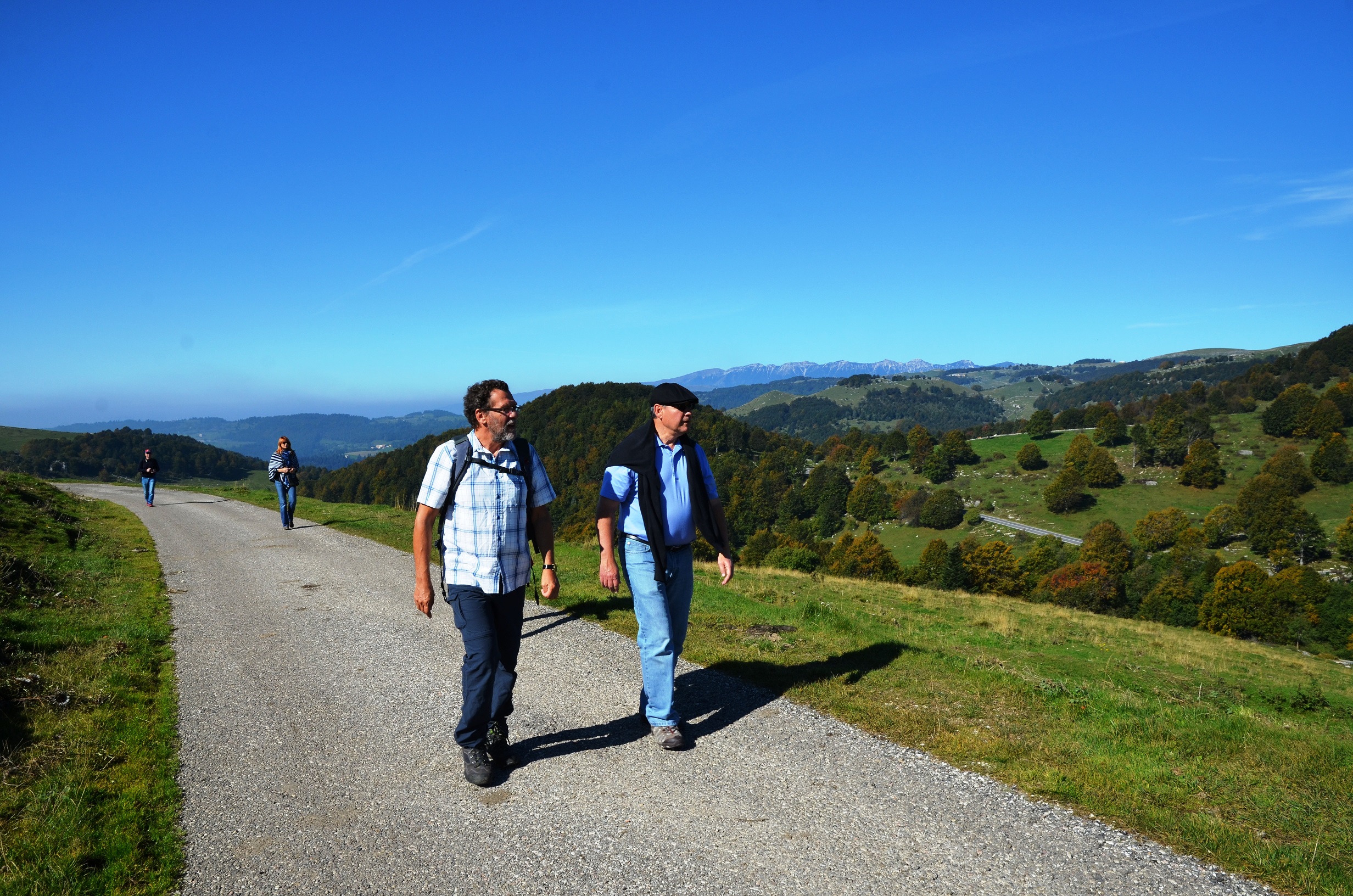
Claudio talked of the history of the area as we climbed higher.  We should have been able to see Lake Garda from up in the hills, but it was too hazy on that day.   We did see lots of walkers with dogs, and a marmot.  One man coming down the trail said he had seen some mountain goats up higher.

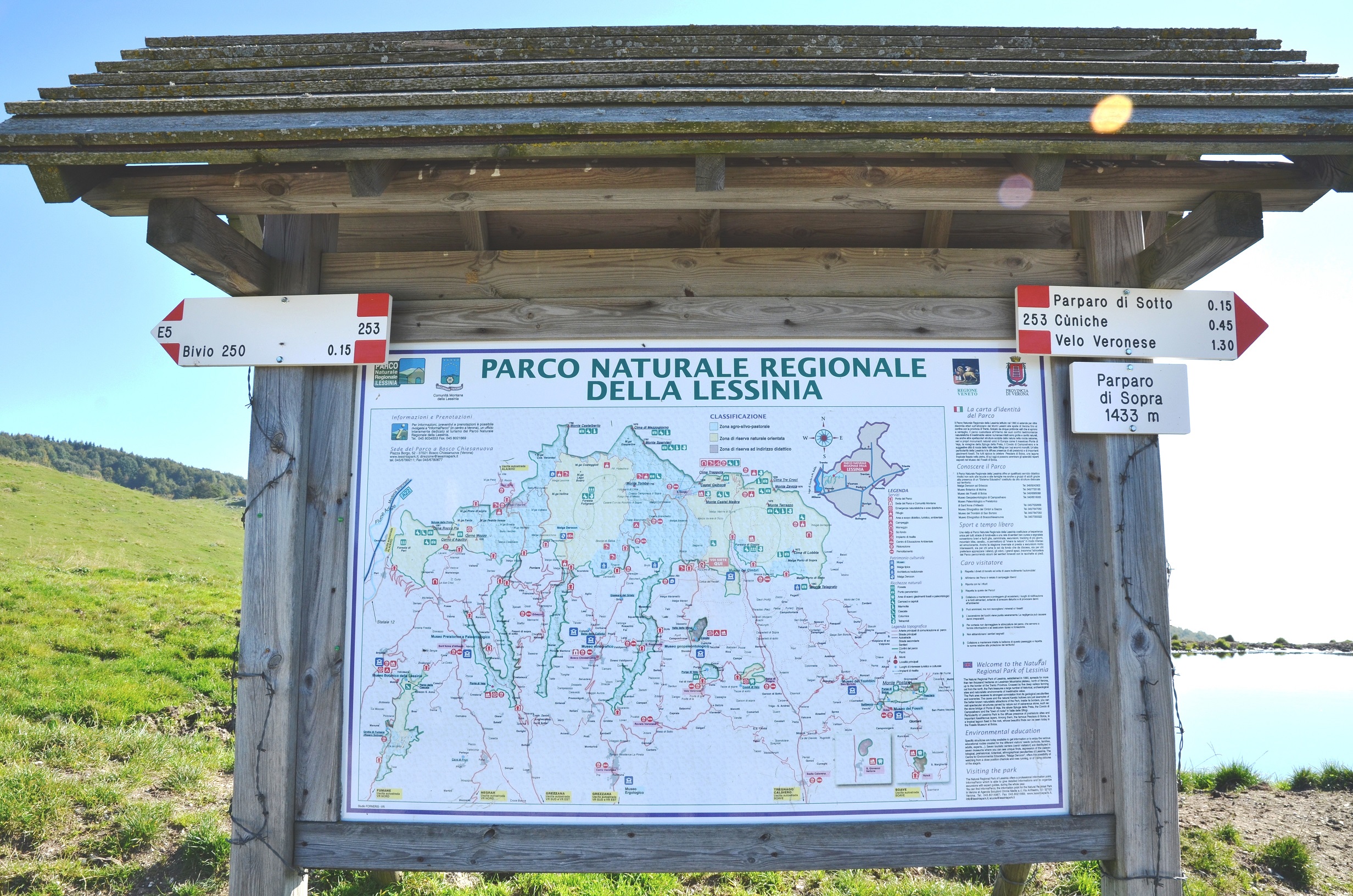
Map of the park and the area

Map of the park and the area

Claudio and Augie early in the hke

Claudio and Augie early in the hke

A little higher up the mountain

A little higher up the mountain

Near the top of where we hiked, but not by any means near the top of the mountains

Near the top of where we hiked, but not by any means near the top of the mountains

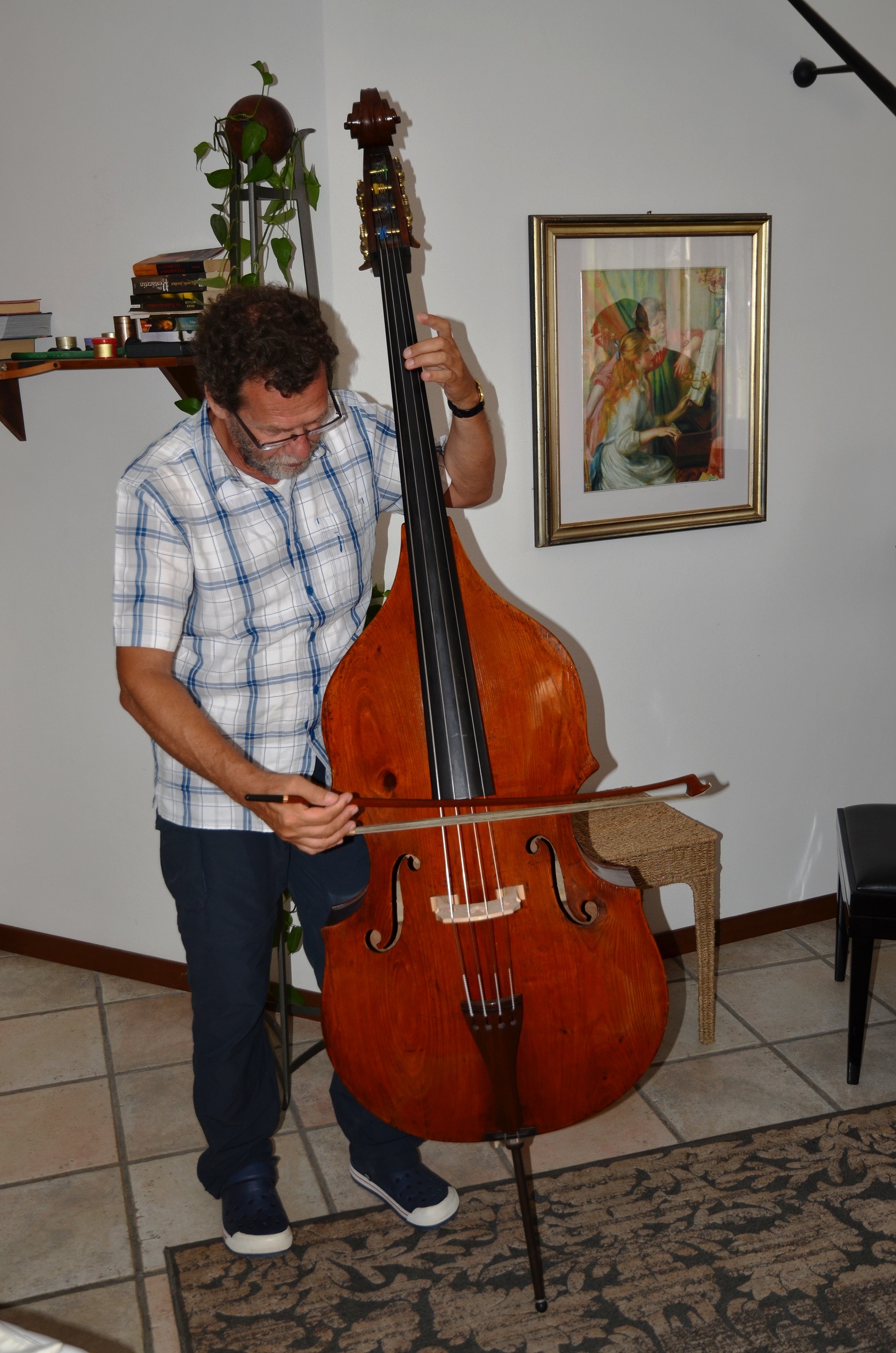
After the hike, we stopped to have lunch at a small farm.  We had “poor man’s meal”, a wonderful pasta with onions.  The pasta was really good, paired with home made beer and local wine.  Back at the house, Claudio gave us a demonstration of the difference in sound between his two bass instruments, and even played a few tunes on the piano.  One is 250 years old.  It was an unexpected and appreciated treat.

Claudio plays the double bass

Claudio plays the double bass

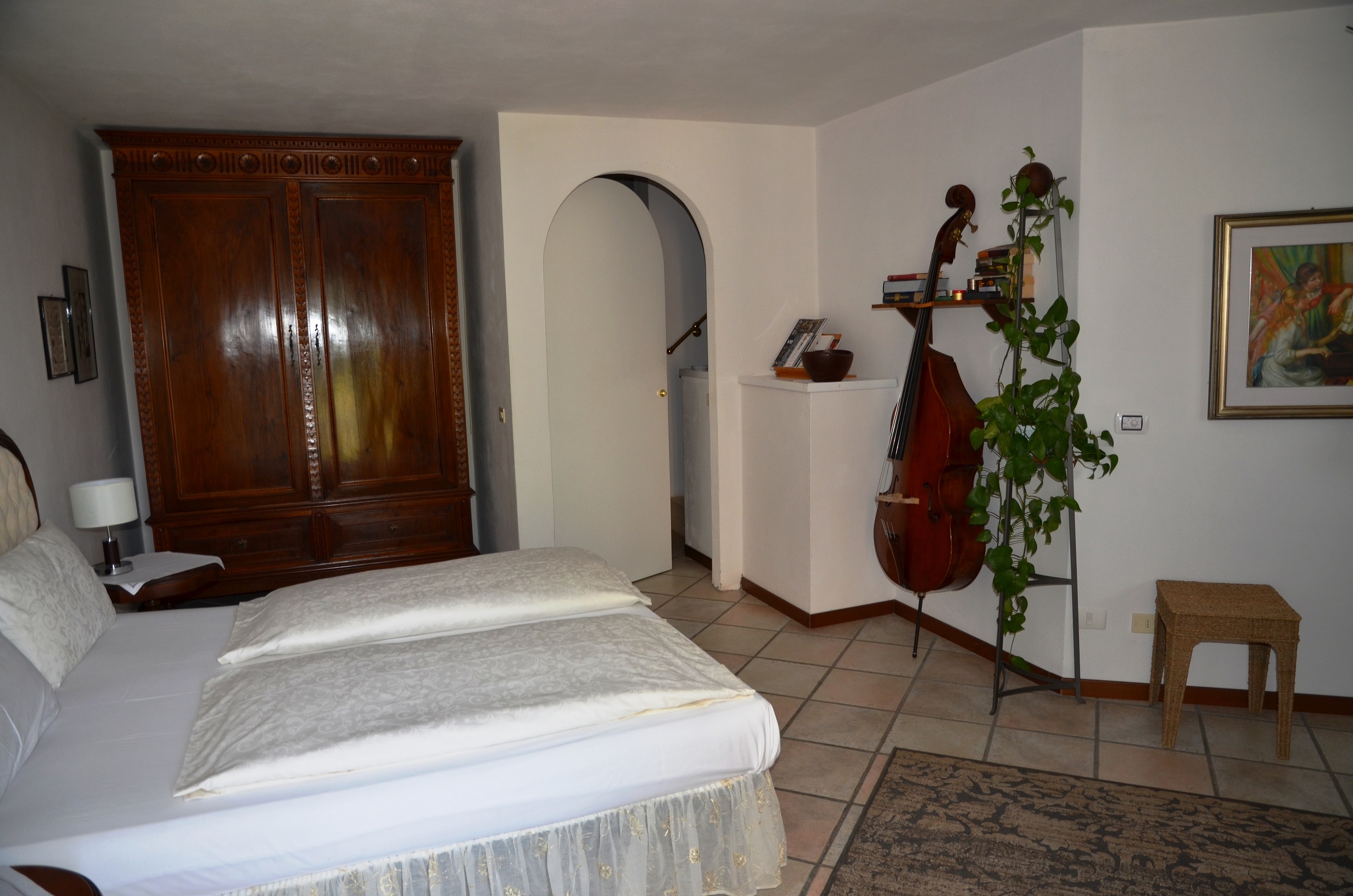
The Music Room at the Romy Rocker B & B

The Music Room at the Romy Rocker B & B

We would have liked to stay longer, using the Romy Rocker B & B as a base and explore more of the wine country, but we had a train to catch for Milan, and three nights hotel already paid.  Claudio generously gave us a lift back to the train station and we were on our way back to Milan.

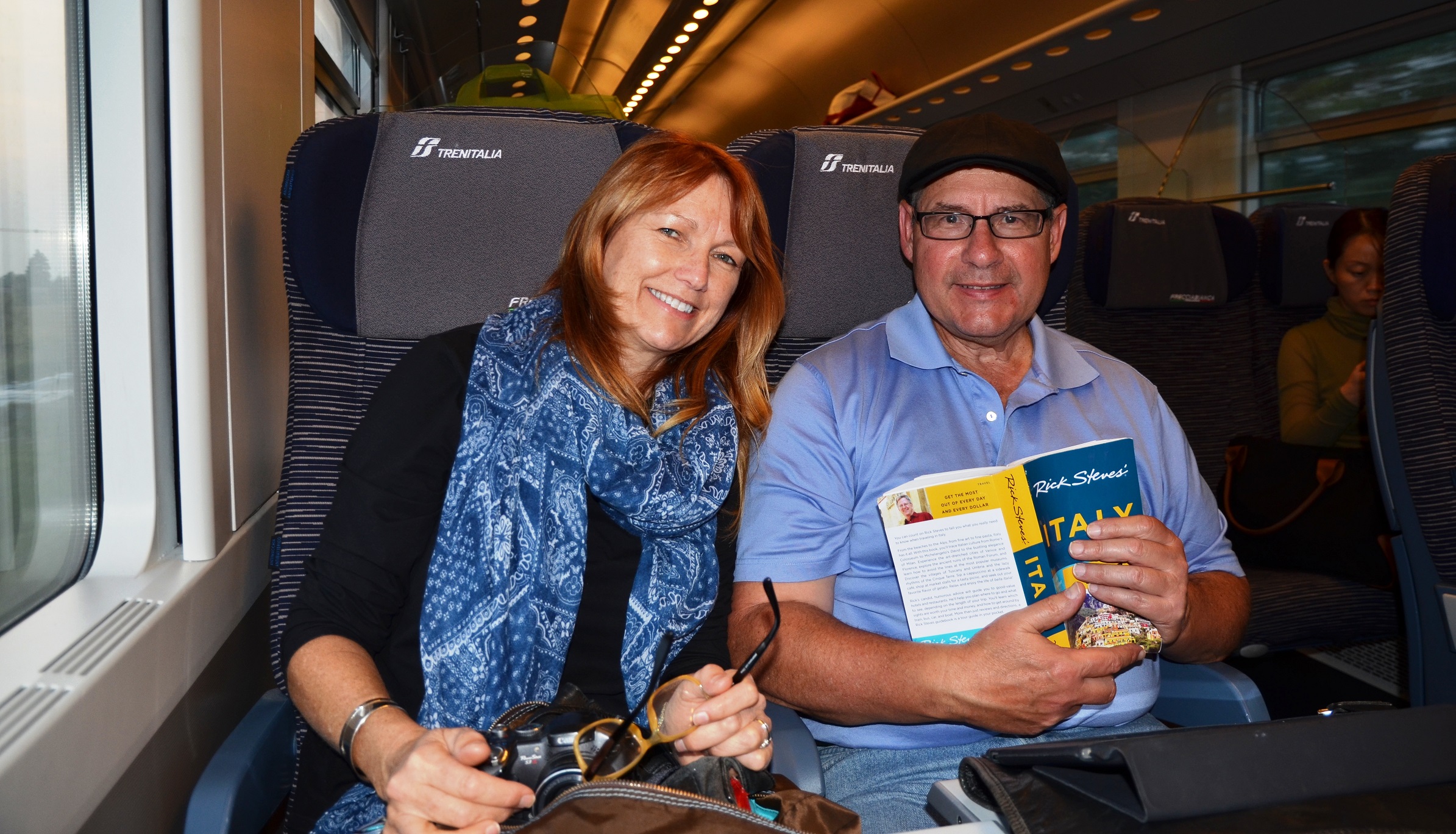
Back on the train.  Our last big train ride between cities.  Only local Milan trains from now on

Back on the train. Our last big train ride between cities. Only local Milan trains from now on

Posted in Italy | 1 Comment

Venice to Verona

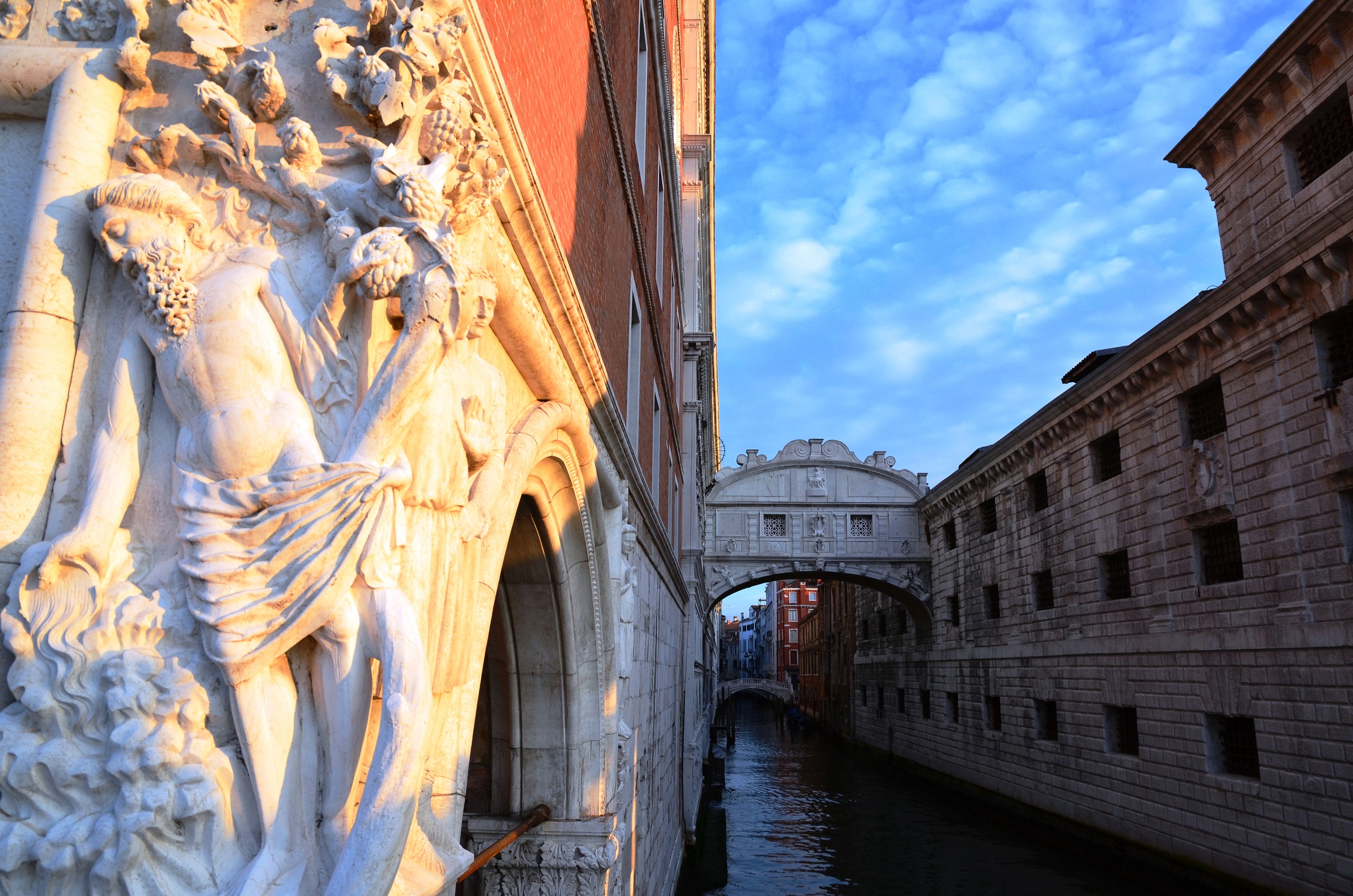
The Drunkenness of Noah, plus the Bridge of Sighs in the pink glow of the early morning.

The Drunkenness of Noah, plus the Bridge of Sighs in the pink glow of the early morning.

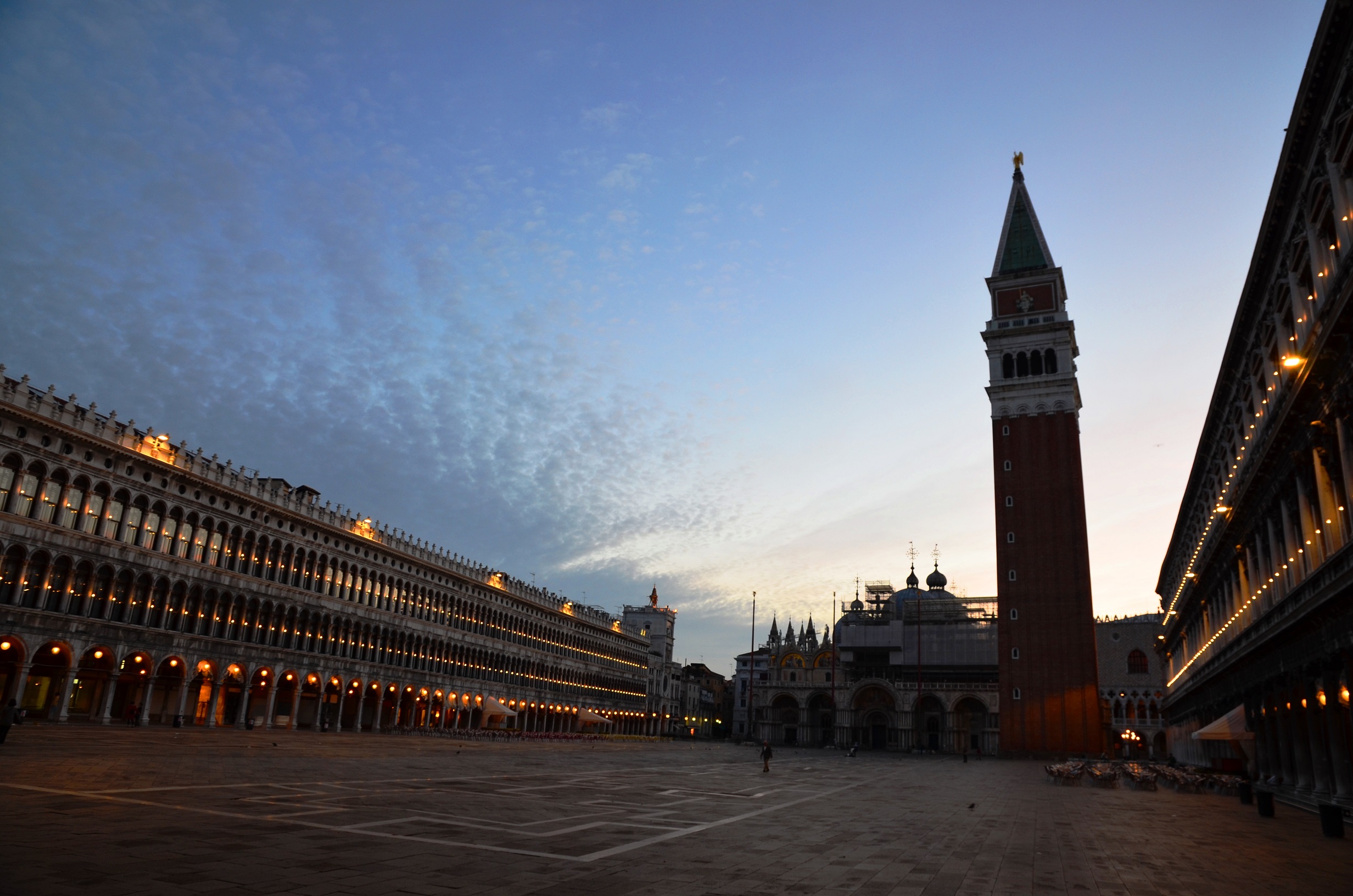
On our last morning in Venice, I awoke at 630 and hustled one last time down to Piazza San Marco for another crowd free Venetian morning.  I was glad of my decision as the sun rose and tinted the sky a pale pink.  Again, only photographers and very early morning workers were out and about.  It was peaceful and beautiful.  I arrived into the piazza earlier than a few days before, and moments before the lights lining the square were shut off.

Piazza San Marco at first light.

Piazza San Marco at first light.

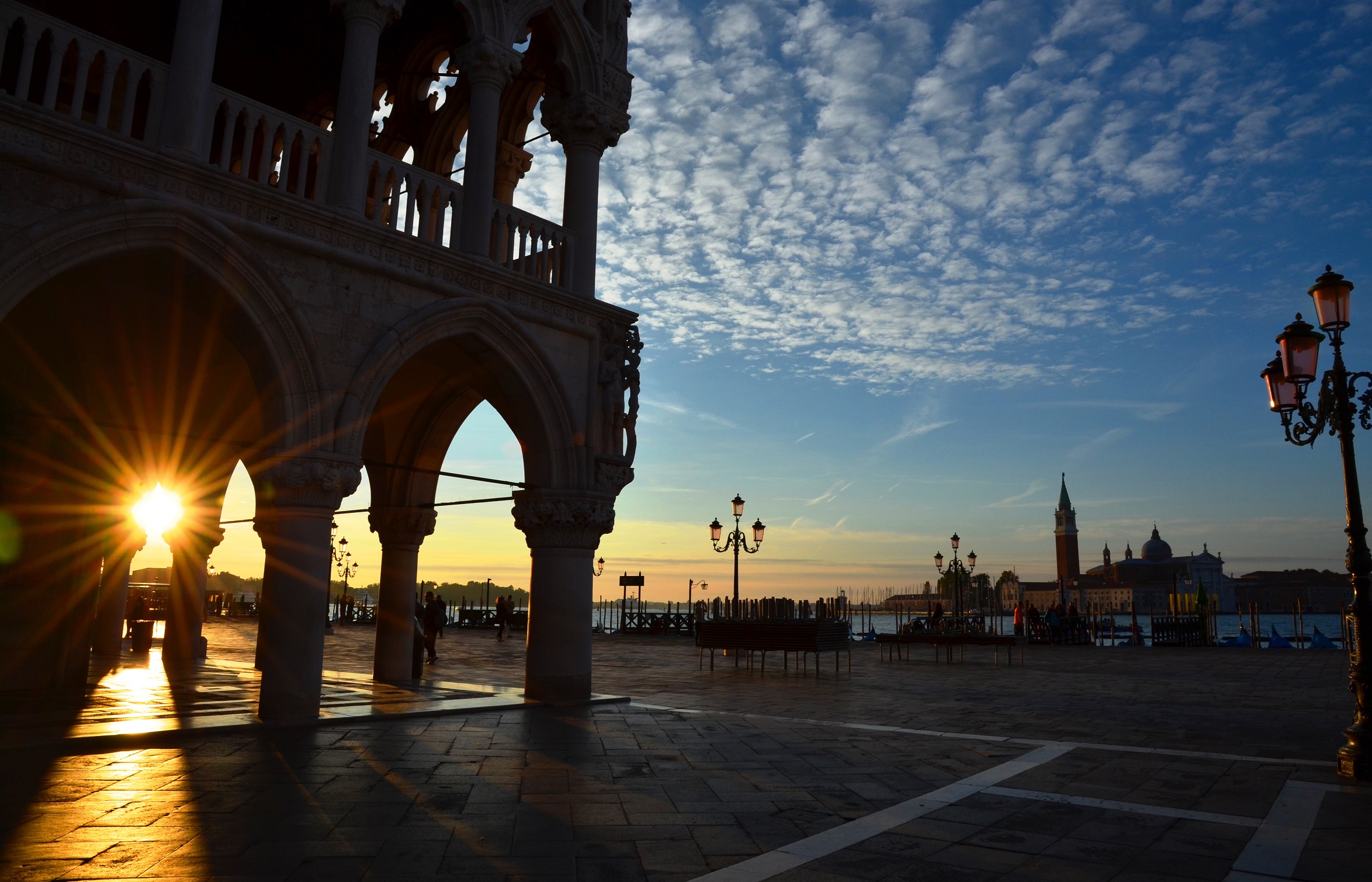
Sunrise in Venice

Sunrise in Venice

The pink morning light in Venice

The pink morning light in Venice

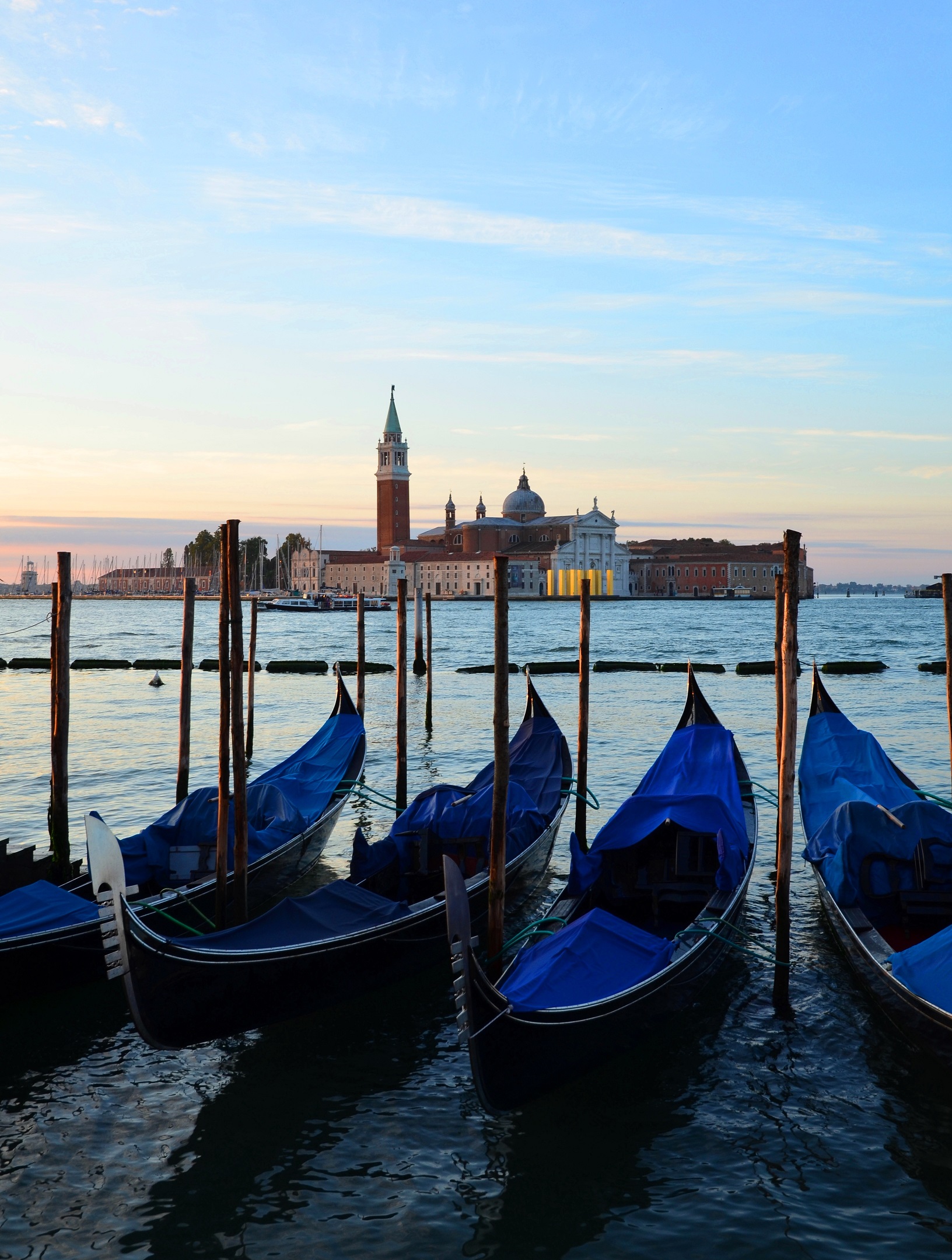
The classic photo of Venice;  Gondolas at St. Marks

The classic photo of Venice; Gondolas at St. Marks

We departed Venice on a train to Verona, a short one hour ride.  We had one last Grand Canal tour as we boarded the water bus for the trip to the train station.  Once again we had trouble printing our tickets, and came to the conclusion that it may be better to buy tickets ‘day of’ instead of having reservations that require a confirmation code to be punched into a reluctant Italian automated ticket machine.

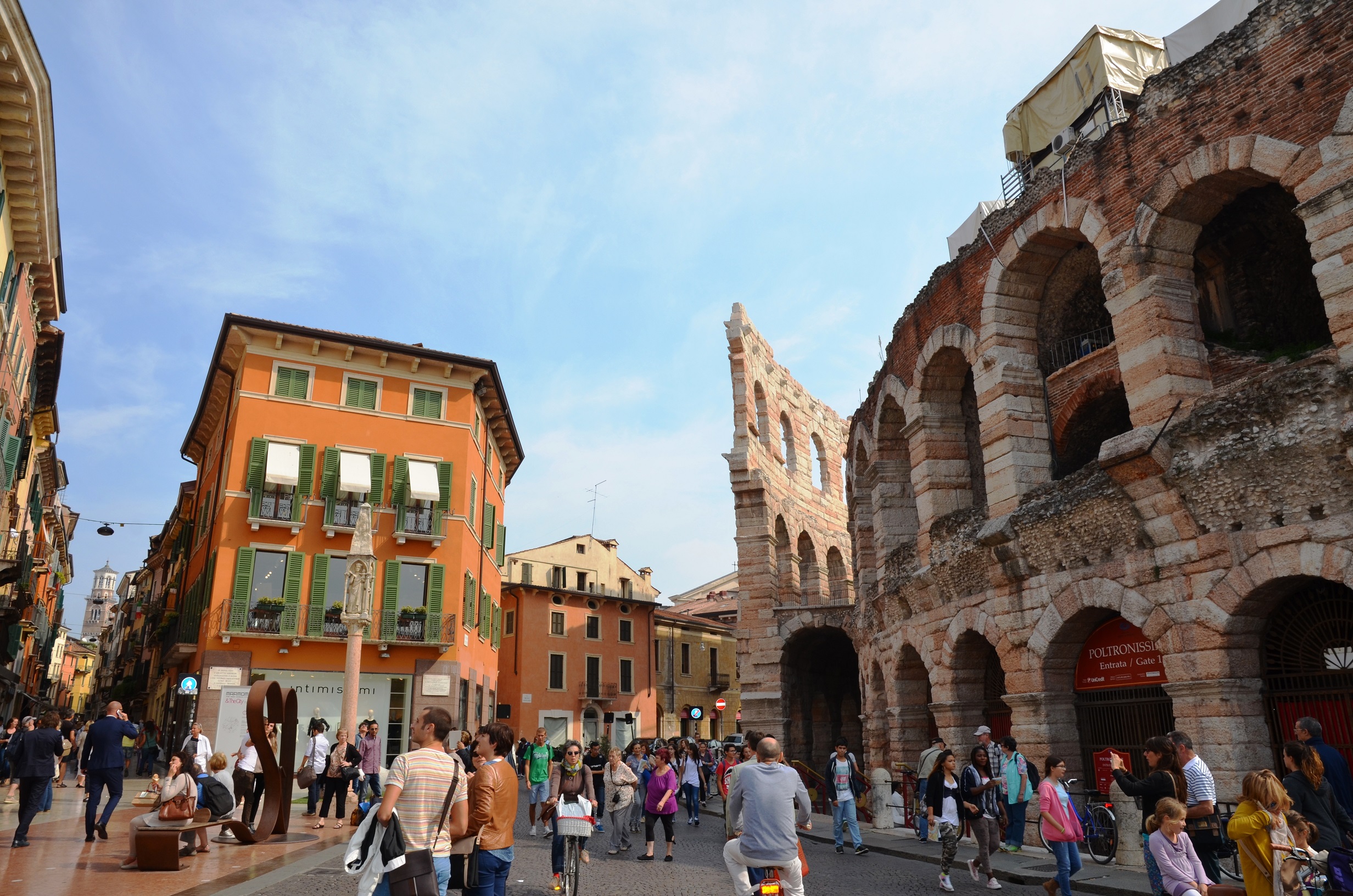
Old meets new at the Roman Arena in Verona

Old meets new at the Roman Arena in Verona

However, we did make it to Verona and here is where Rick Steves started to earn his credibility back, having lost it over a less than stellar restaurant recommendation.  The pick up time for our B & B wasn’t until 6 pm so we had nearly 6 hours of touring and, unfortunately, all of our luggage.  Rick Steves’ book directed us to the baggage hold area where we paid 6 Euros per bag to hold our luggage for 5 hours.  At 18 Euros (I had one large and two small hand bags which they counted individually) I thought it a steep price, but we had no other options.

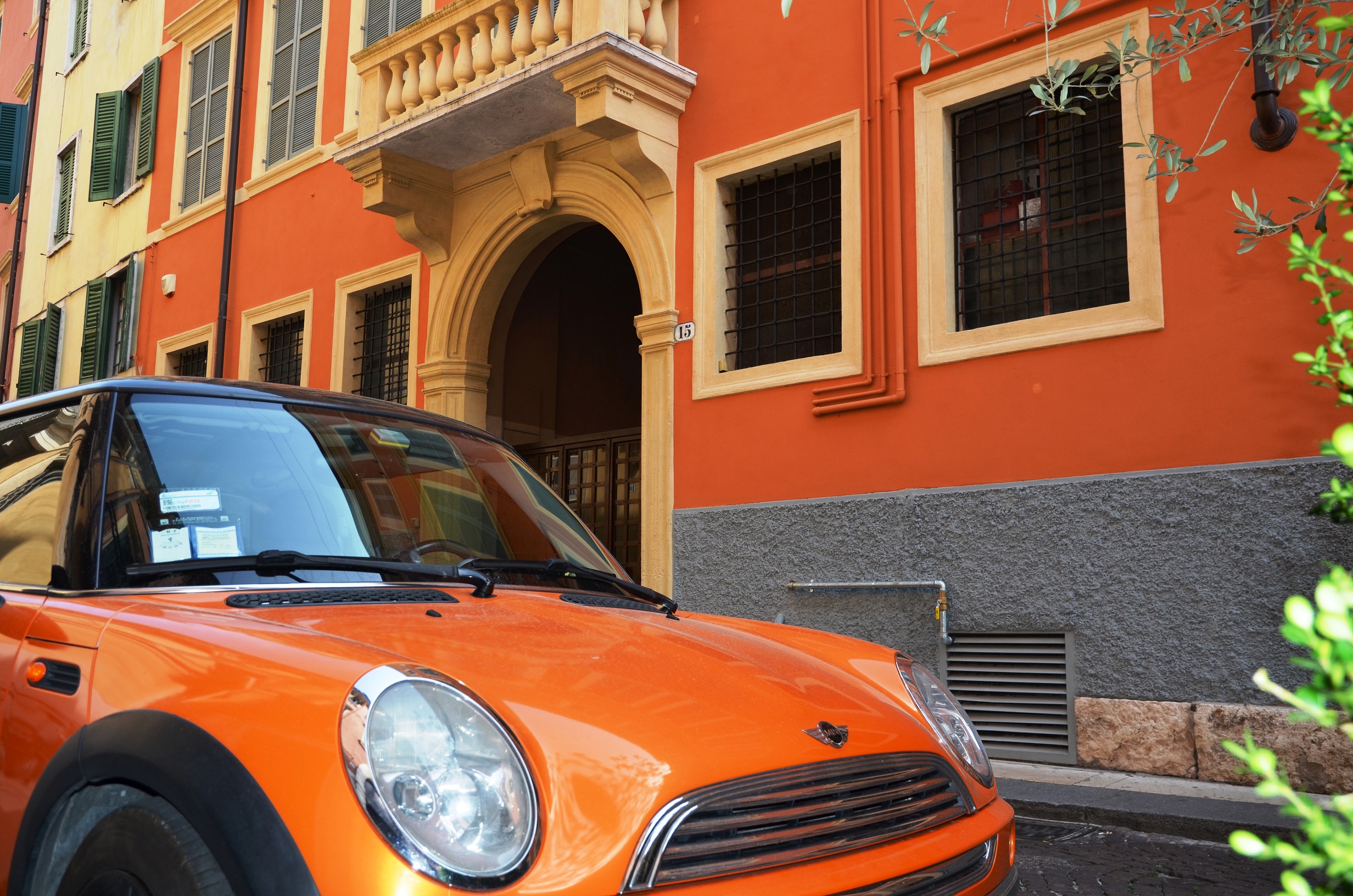
A colorful building in Verona, with a marching Mini Cooper parked across the narrow street

A colorful building in Verona, with a matching Mini Cooper parked across the narrow street

A very good risotto in Verona

A very good risotto in Verona

Another Rick Steves tip had us boarding the 1.80 Euro bus to the center of the town near the arena, saving us a long walk.  Once at the arena, the area has many pedestrian only streets.  We found a nice looking restaurant a short walk up one street and had the best meal in days.  Unfortunately, our meals in Venice were less than wonderful.  Normally I research recommended places to eat, but didn’t for this trip.  I have had good food in Venice before, but not this time.  It was mostly over-priced and nothing to write home about.

Another tiny car that matched the building color....what's going on here?

Another tiny car that matched the building color….what’s going on here?

After lunch we followed the walking tour and meandered from the Roman Arena towards the Piazza delle Erbe.  We found Verona, at least the old center, to be quite clean and scenic.  There is evidence all around of the Roman influence, with the arena, city wall and Roman Bridge as a few examples.  We also stopped in to witness the spectacle of the Juliet House.  Here an enterprising individual installed a balcony and claimed it to be Juliet’s.  Her statue is in the courtyard.  It was packed with tourists despite the fact that Romeo and Juliet is a work of fiction and Shakespeare had never been to Verona before writing his play.  However, there was a history of feuding families in the area, so who knows.

The crowd at the House of Juliet and Juliet's balcony with a cast of new characters

The crowd at the House of Juliet and Juliet’s balcony with a cast of new characters

The balcony, which was added in the 1970s

The balcony, which was added in the 1970s

The statue of Juliet

The statue of Juliet

We walked all over the old town center area and also found the best gelato of the ­trip so far at Amorino, all natural gelato (http://www.amorino.com/en/).  We enjoyed the many pedestrian streets, colorful buildings, cleanliness and the good food.

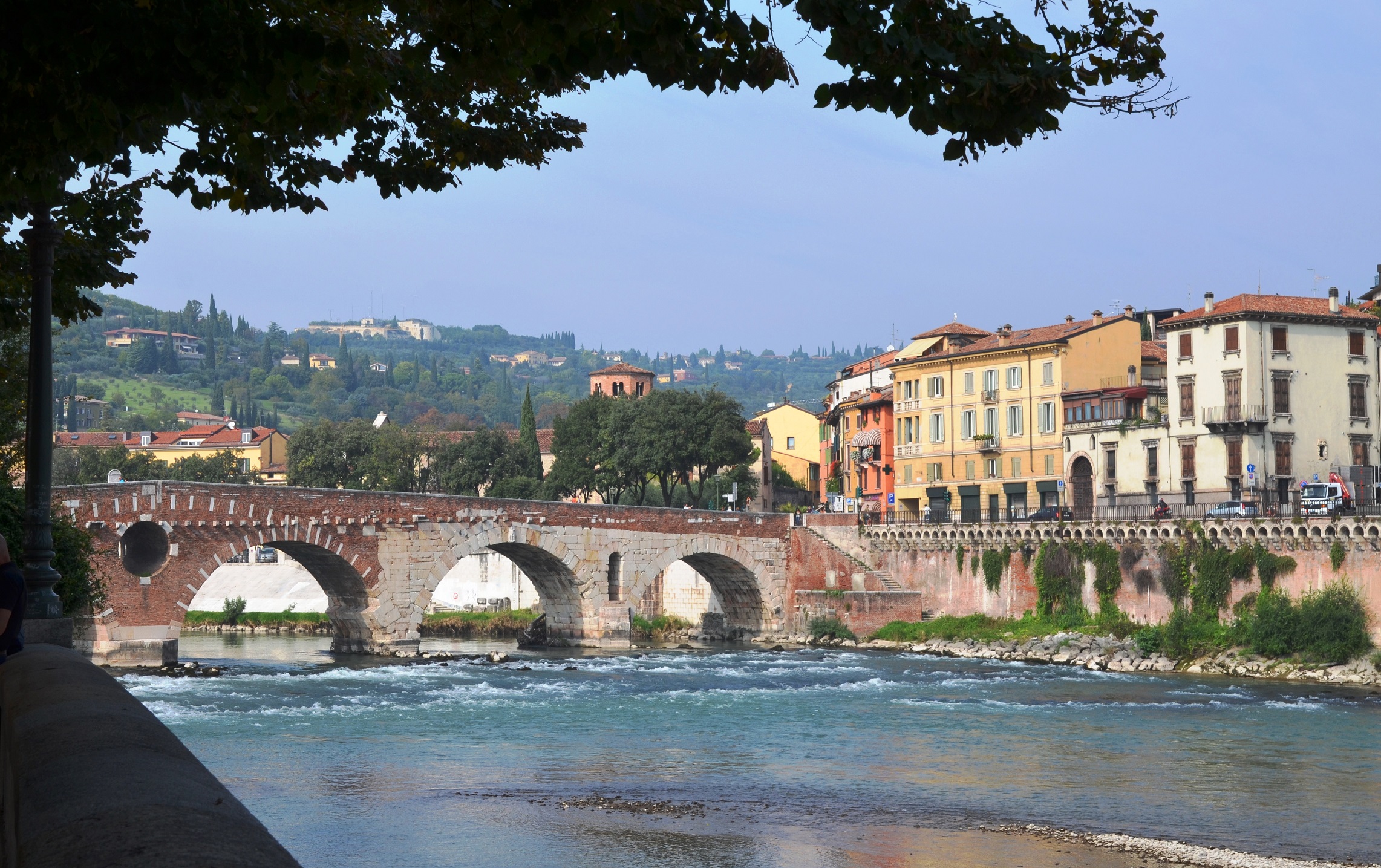
The Roman Bridge (Ponte Pietra) in Verona

The Roman Bridge (Ponte Pietra) in Verona

Augie and Teresa on the Roman Bridge

Augie and Teresa on the Roman Bridge


Colorful buildings in Verona

Colorful buildings in Verona

Back at the train station, we waited at the curb as our ride, B & B proprietor Romy Rocker, pulled up to whisk us out of town and into the hills overlooking Verona.  Normally this is not a service they provide, and we were thankful for the lift.  Romy Rocker B & B is about 20 to 30 minutes out of town, up in the hills.  As Romy drove us to her home, she explained that she was the first B & B in the area, started about 25 years ago.  Most guests stay for a few days, arriving by rental car.  We hadn’t really realized how far out of town it was, but were very pleased to spend a night in the quiet countryside surrounded by vineyards and olive trees.  It was a scenic ride to their piece of heaven and our hosts, Romy Rocker and Claudio Bartolamai were gracious and kind.

Romy Rocker and Claudio Bartolamai of the Romy Rocker B&B in the hills above Verona

Romy Rocker and Claudio Bartolamai of the Romy Rocker B&B in the hills above Verona

We enjoyed a local welcome drink and a view of the lights of Verona spread out before us.  Claudio entertained us with tails of his recent stint playing the double bass in Palermo, and other venues, including Carnegie Hall.  We then walked the short distance into the tiny town of Trezzolano for dinner.  The small restaurant was a few minutes walk up the hill and worlds apart from where we had been for the past four days.  We had homemade pasta with mushrooms and tomatoes and the local wine.  It was a truly tasty and satisfying meal for 10 Euros each, and a bargain for the best meal of the trip so far.

A backyard full of olive trees

A backyard full of olive trees

Without the haze and humidity, you would be able to see Verona from this point

Without the haze and humidity, you would be able to see Verona from this point

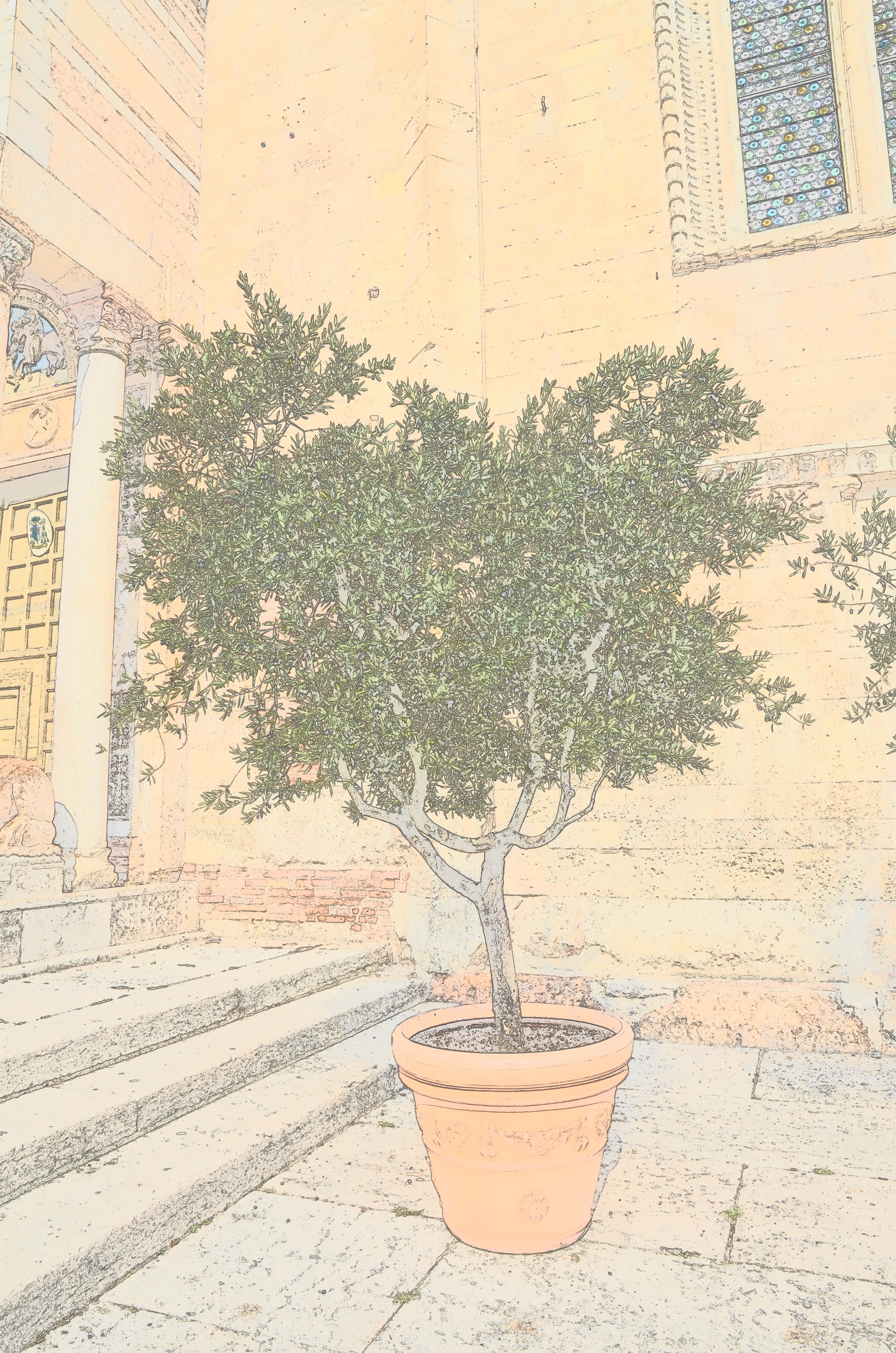
A photo of an olive tree in the Piazza Duomo in Verona, using color sketch by Nikon

A photo of an olive tree in the Piazza Duomo in Verona, using color sketch by Nikon

Posted in Italy | 1 Comment

Altre foto di Venezia

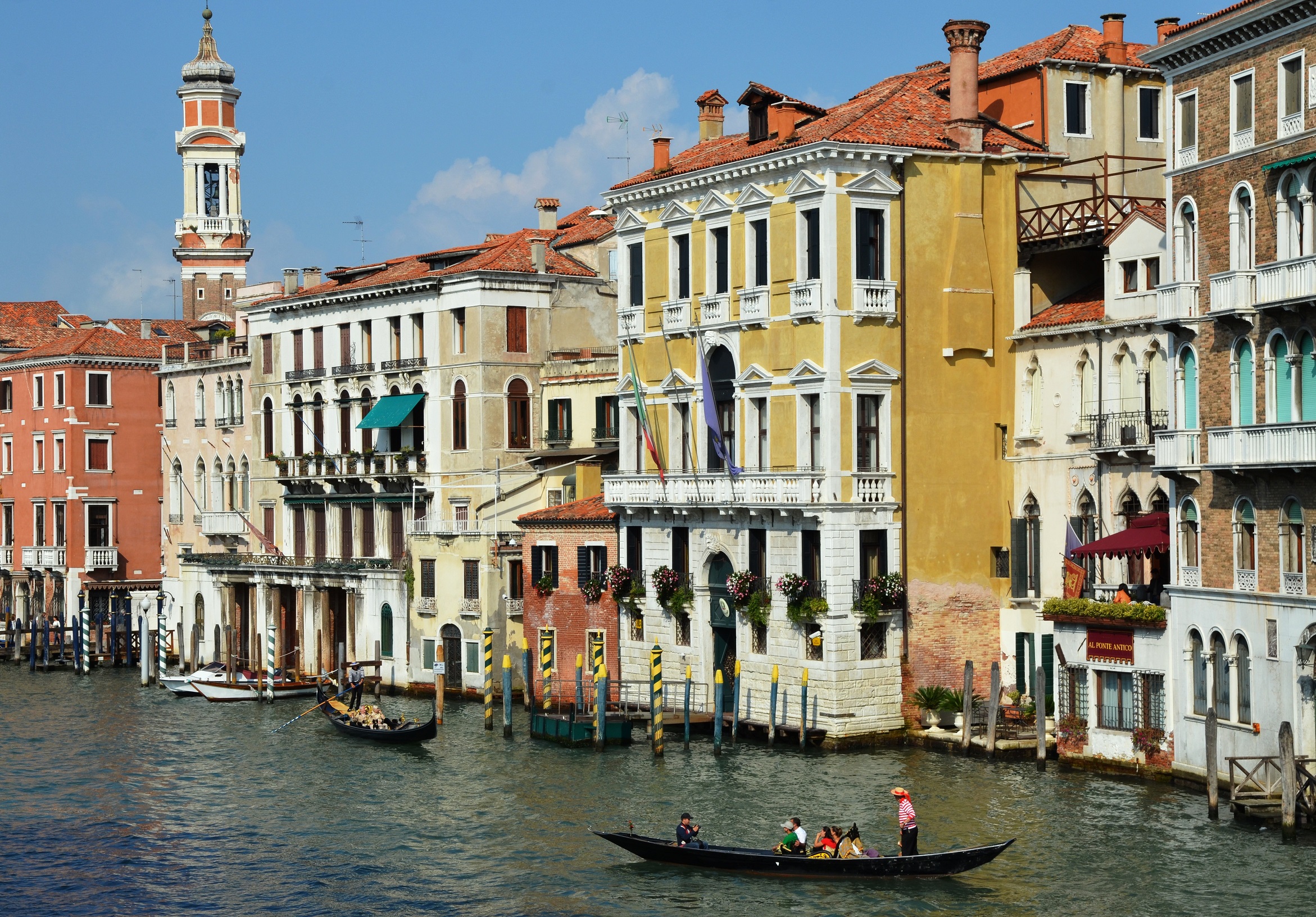
The Grand Canal taken from the Rialto Bridge looking north

The Grand Canal taken from the Rialto Bridge looking north

Another day of wandering the city.  We visited the food market near the Rialto, toured the Ca’ d’Oro, got purposely lost in the winding streets, bought a day pass to hop on and off the water bus and finished with a tour of Ca’ Rezzonico.  Another full day.

Rialto open air market

Rialto open air market

After crossing the Rialto Bridge from the San Marco side to the Santa Croce San Polo side, the open air market is just off to the right side along the Grand Canal.  The fruits and vegetables were all fresh, but nothing was as fresh as the fish.  As the fish stall owner poured another bucket of fish onto the ice at his table, the fish were still flopping around.

Seafood for sale at the Rialto open air market

Seafood for sale at the Rialto open air market

Pesche spada, fresh.  Slice off the size of steak you want.

Pesce spada, fresh. Slice off the size of steak you want.

We hopped the water bus from the Rialto Mercato station to the next stop on the opposite side of the canal, Ca’ d’Oro station. In the Cannaregio neighborhood.  Ca’ d’Oro is the oldest surviving palazzo in Venice.  The “Golden House” (the marble traceries and ornaments were embellished with gold in earlier times) is now a museum.

The Grand Canal from a balcony of the Ca' d'Oro, "Golden House"

The Grand Canal from a balcony of the Ca’ d’Oro, “Golden House”

We hopped another water bus headed towards San Marco and disembarked at the Zaccaria station near the Palazzo Ducale.

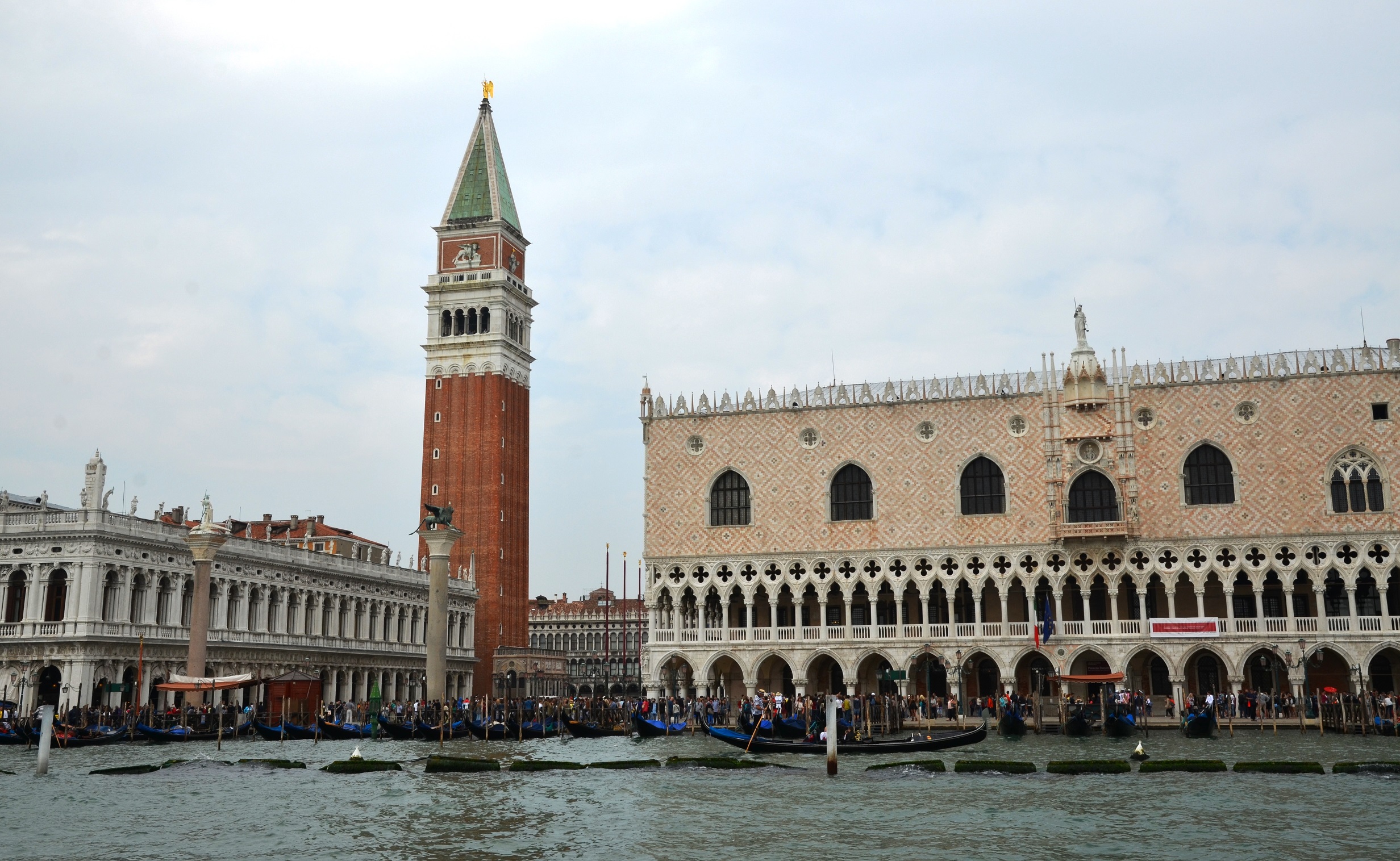
The Palazzo DUcale and the Campanile as seen from the water bus

The Palazzo Ducale and the Campanile as seen from the water bus

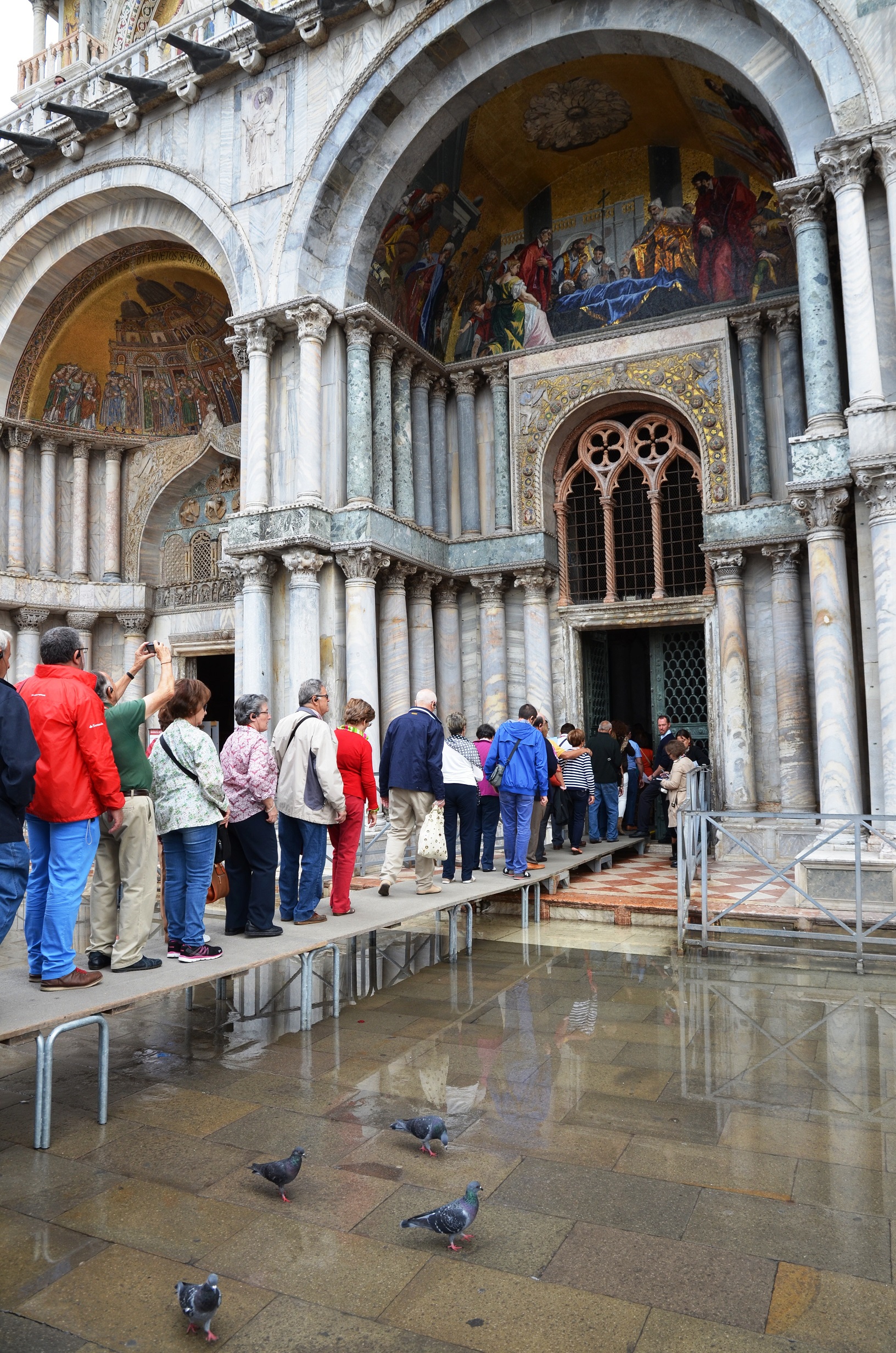
As we walked past the Basilica di San Marco, the tourists were lined up for the entrance on high water planks.  These are stacked all over the city and put into action when the tide is high.  The water was bubbling up into Piazza San Marco.

Tourists wait in line to see the Basilica during high tide

Tourists wait in line to see the Basilica during high tide

We started our map-less wandering and found a good lunch spot.  Right next to the restaurant we also found a mask shop.  Mask shops are all over the city and I had planned to purchase just the right one.  We browsed many shops, not finding what I was looking for.  The masks made in Venice have an authenticity stamp and cost more than the cheap Chinese made masks.  Of course I wanted a mask made in Venice but hadn’t found it yet.  I finally did when we stumbled upon this shop somewhere in the San Marco area.  The mask maker was selling his own masks and painting them right in his shop.  He also had molds filled with hardening paper mache and was glad to show us the process and sell me a very pretty mask that he had made himself.

A mask mold with a drying mask, and a painted finished product

A mask mold with a drying mask, and a painted finished product

The mask maker wearing his painter's bib of many colors

The mask maker wearing his painter’s bib of many colors

Getting lost in Venice is easy to do, but we did it intentionally.  It was Teresa’s desire to walk the streets without reference to the maps just to see what we would find.

Unknown canal during our wandering

Unknown canal during our wandering

We wandered the narrow streets and ended up in the Dorsoduro area.  After enjoying a gelato, we found the Ca’ Rezzonico, a 17th century palace whose main floor is decorated with period funishings and tapestries.  It was the last home of English poet Robert Browning.  The grand ballroom and ceiling frescoes are spectacular.

Ca' Rezzonico grand ballroom

Ca’ Rezzonico grand ballroom

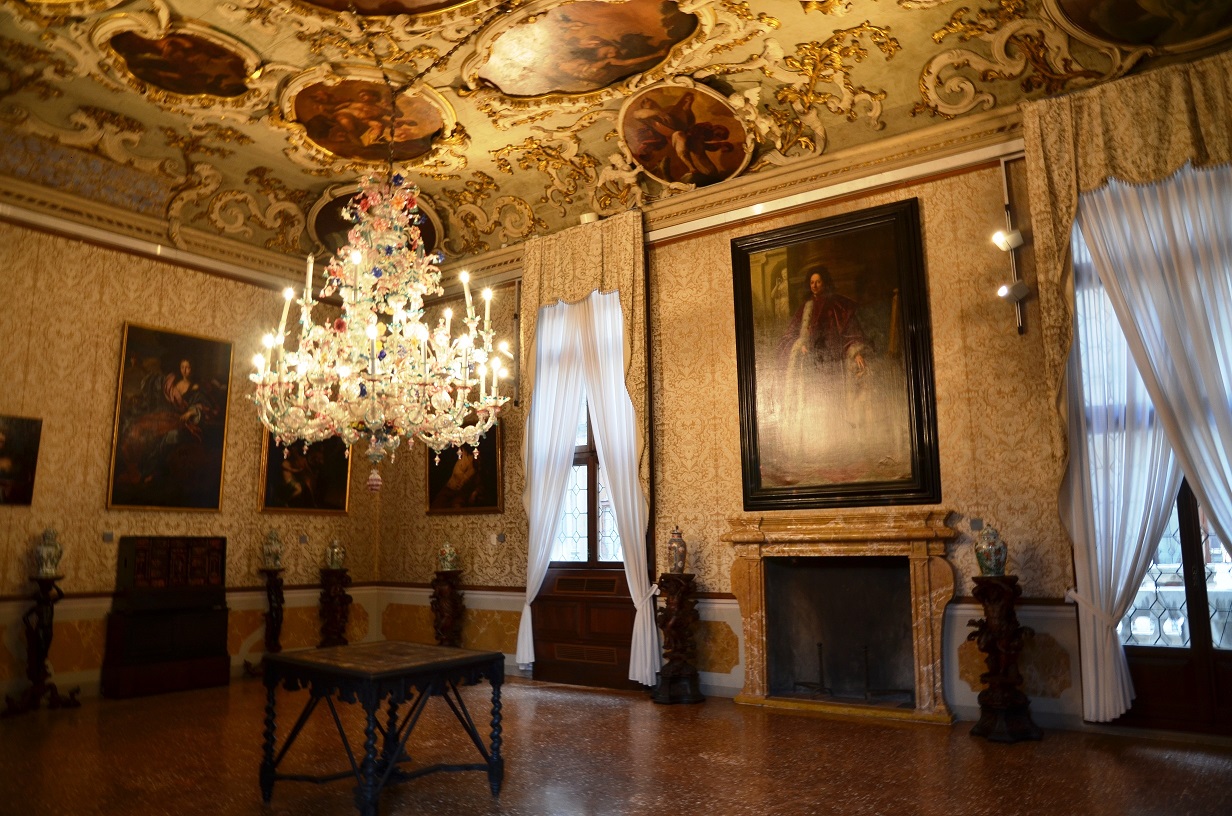
A drawing room in Ca' Rezzonico

A drawing room in Ca’ Rezzonico

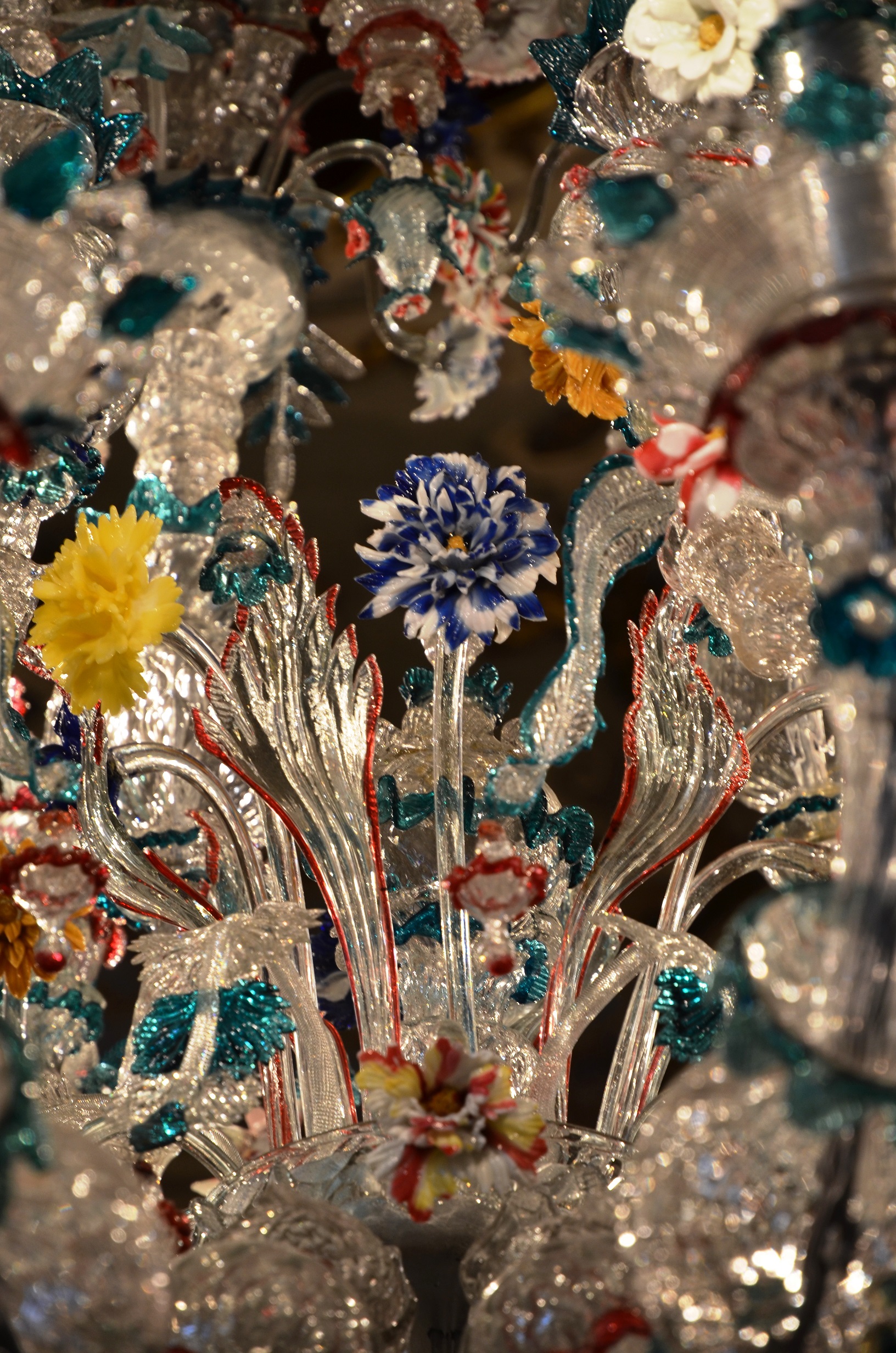
In one of the Ca' Rezzonico room's hangs a chandelier 350 years old.

In one of the Ca’ Rezzonico room’s hangs a chandelier 350 years old.

Detail of the 350 year old chandelier

Detail of the 350 year old chandelier

The apartment we rented was right across the canal from the Ca’ Rezzonico, but of course we had to find a way across.  Once more on the water bus, only one stop away from the Accademia Bridge station and a short walk to the apartment.

Nikon color sketch retouch of a Grand Canal photo:

Colorsketch of grand canal


Posted in Italy | 2 Comments