Of Witches, Raindrops, and Falling Leaves

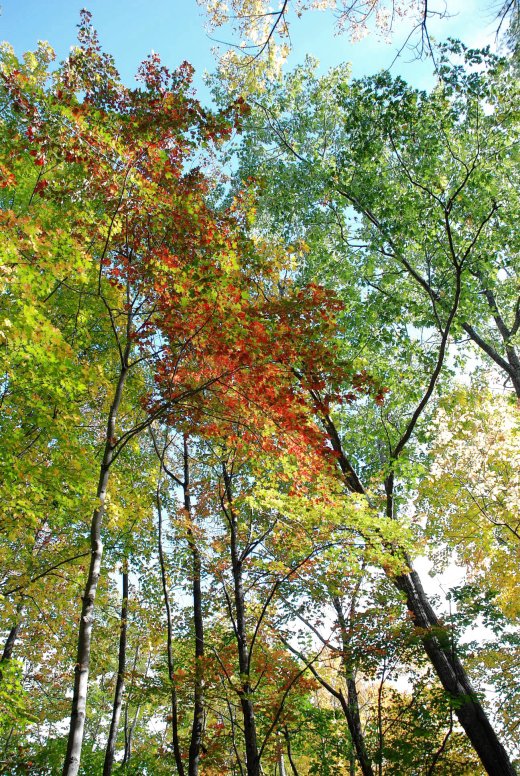
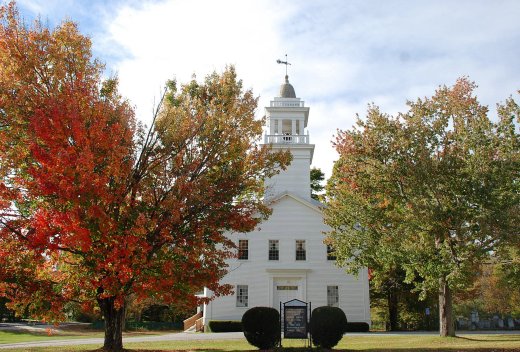
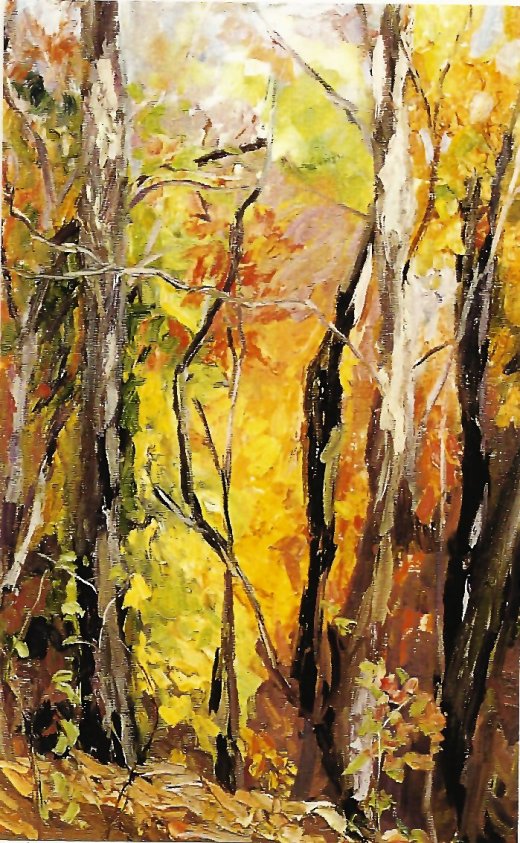
October is leaf-peeping month, and every October I take a trip to Maine to enjoy the colorful display of foliage.  This year, at the suggestion of my dear friends Teresa and Joanie, we added a side trip to Salem, Massachusetts.  There is no city more obsessed with witches than Salem, Mass., but what a difference three centuries have made. 

Witch City postcard
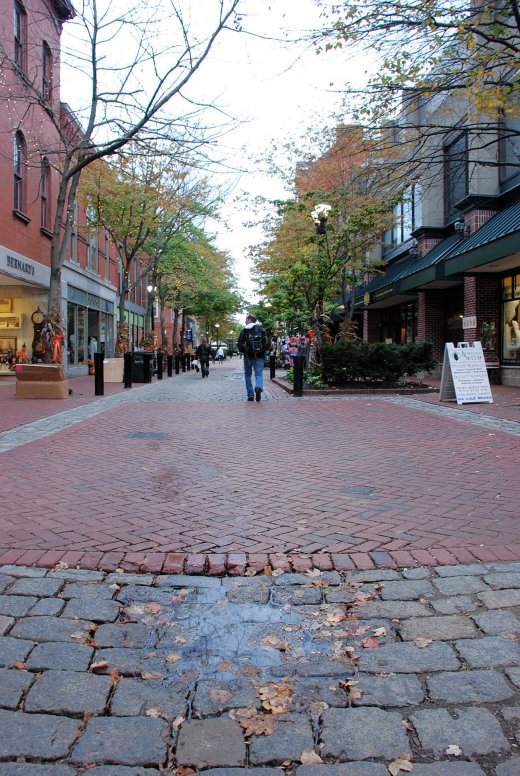
Essex St. Pedestrian Mall, Salem.
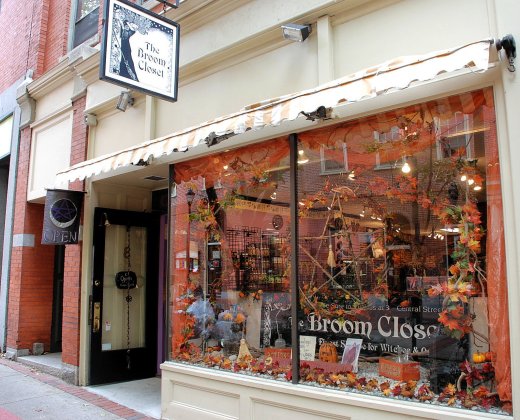
The Broom Closet shop, Salem

 

Walking through the downtown district of Salem, nicknamed Witch City, visitors pass storefront after storefront of witch paraphernalia, psychic parlors and gift shops.  To name just a sampling of the shops, you will find Bewitched in Salem, Hex: Old World Witchery, Omen, Artemisia Botanicals & Witches’ Weeds, and The Cat, The Crow & The Crown.  The shops sell potions, magical curios, herbs, essential oils, and psychic readings.  (A request to photograph the interior of one shop was met with a no and a reminder that they considered the shop a temple as well as a place of business.  I can respect that.)  Rev. Laurie Cabot, H.Ps., of The Cat, The Crow & The Crown distributes “The Witches Do’s & Dont’s” leaflet and a Witches’ Shopping List. 
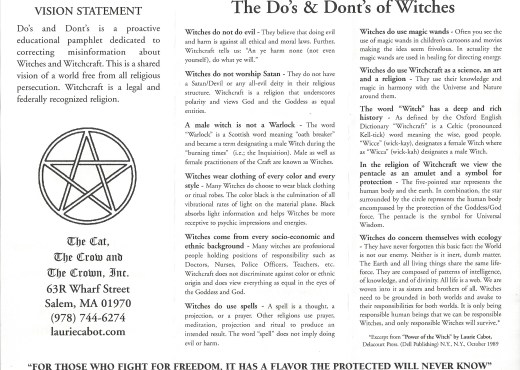
Laurie Cabot's Witches Do's & Dont's

Matching apron and pointed hat.

On the Essex Street Pedestrian Mall you can purchase a matching apron and pointed hat, spiced mead, and matches with witch logos.  Whether the witch references are made in fun or in all seriousness, they are all accepted.  Today the witch theme is light hearted and used abundantly, but there is no humor in the deaths of the Salem Witch Trial victims.  To say that opinions have changed in the past three hundred years would be a severe understatement.  Although the Salem Witch Trials were short-lived, they defined Salem, and it is still what comes to mind when you hear the name of the town.  Nineteen innocent people were hanged on Gallows Hill, 14 women and 5 men, after they were tried and condemned for witchcraft during the 1692 witch trials.  (Condemned witches were hanged in the US and burned in Europe.) 

Salem's oldest graveyard, Old Burying Point Cemetery.
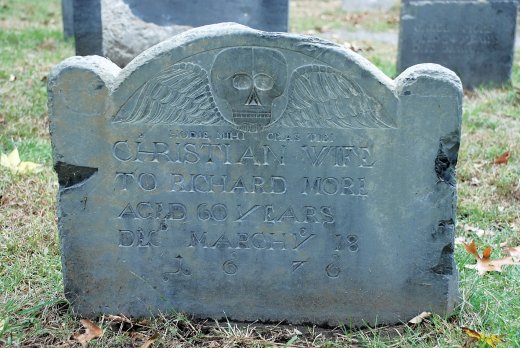
The headstone of a "christian wife" from 1676.

Charles W. Upham, a junior pastor of the First Church of Salem, wrote in 1831:

“The Witchcraft delusion of 1692 has attracted universal attention for the last century,and will, in all coming ages, render the name of Salem notable throughout the world.” 

Pastor Upham was right.  Salem is remembered for the witch trials, but it has also tried to make amends.  “As years passed, apologies were offered, and restitution was made to the victims’ families” (www.SalemWitchMuseum.com).  Next to Salem’s oldest cemetery now stands The Salem Witch Trial Memorial.  The words of the condemned are etched in the stones, as well as their names and the dates of their executions.  Six locust trees, representing the stark injustice of the trials, surround twenty benches with the victims’ names.

The Salem Witch Trial Memorial on Liberty Street.

A bench in the Witch Trials Memorial

The words of the condemned inscribed in stone (Photo credit: Teresa Favazza).

Innocent

The Gordon College Institute show Cry Innocent, The People versus Bridget Bishop where the audience is the jury and hears historical testimonials and cross-examines the witnesses, and the actors respond in character, is the longest running show north of Boston.  You can tour the Witch History Museum or take a historical walking tour whose guides “recount by lantern light actual haunted history as well as our encounters with supernatural Salem”. 

 We walked all over the downtown and waterfront district exploring shops and historical sites.  As darkness descended and the air turned cold and blustery, we took refuge in The Old Spot pub, and warmed ourselves with Spanish Coffees.  One of the local merchants told us that October is the busiest month in Salem.  In all other months of the year, diners do not usually have to wait for a table at a local restaurant.  In October, the wait for a table for dinner on the weekends can run up to 1 ½ hours.  It was cold and windy on our day in Salem, but that made it spookier, which seemed appropriate.
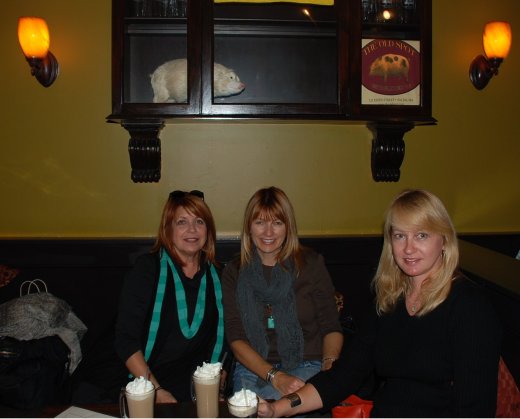
Warming up in The Old Spot tavern, (left to right) Joanie, Teresa and myself.

Salem postcard

HomArt matchbox cover

                Maine residents are often asked which week to come up to see the leaves.  It changes every year and is nearly impossible to predict.  Sometime in October is the best answer, when the nights turn cold and the leaves start to change color. 

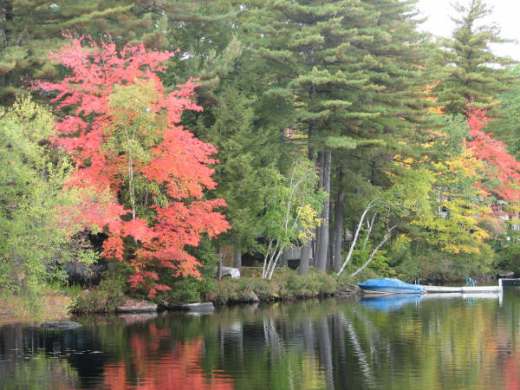
In Maine on Hwy 9, somewhere west of Freeport


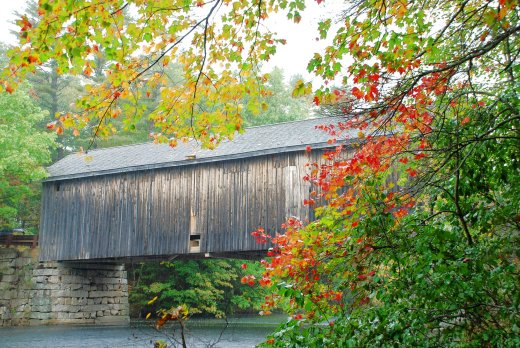
A windy, rainy day may blow the leaves off the trees and onto the ground, making leaf peeping more difficult.  It all depends on the weather.  I was lucky with one sunny day and one very rainy, windy day.  Both days proved productive for sightseeing and photography.  Many thanks to Teresa and Joanie for their companionship and entertainment ideas.

A covered bridge in the rain.
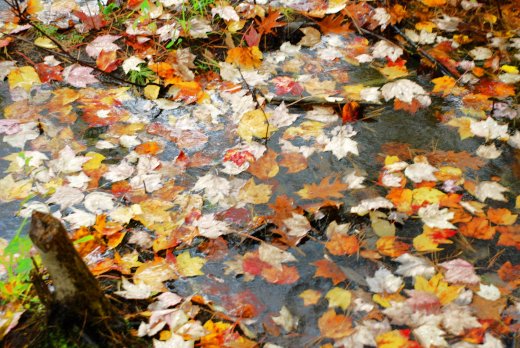
 

Leaves in the rain.


An old graveyard in the rain.


Joanie's festive table centerpiece.

 

Helpful Websites:

Salem Witch Museum;  http://www.SalemWitchMuseum.com

City of Salem October events:  www.Salem.org,  www. HauntedHappenings.org

Cry Innocent:  The People versus Bridget Bishop:  http://www.Gordon.edu/HistoryAlive

The Witch House:  http://www.WitchHouse.info

Haunted Footsteps Ghost Tours:  www.SalemHistoricalTours.com

Ghost Tours:  http://www.SpellboundTours.com

The Tavern in the Hawthorne Hotel:  http://www.HawthorneHotel.com

The Old Spot Pub:  http://www.TheOldSpot.com

Posted in Seasons & Holidays, U.S.A. | 8 Comments

Eating with the Seasons; learning to be a locavore

When I moved to western Michigan this past July, I was thrilled with the local farmers’ markets.  Nearly every small town has its own market, and driving into the countryside you see u-pick farms and roadside vegetable and flower stands every few miles.  It feels like the land of plenty.  During my first visit to the farmers’ market in Holland I felt like a kid in a candy store.  I bought too many vegetables at once, and ate green beans for the entire week.  The Holland market is open twice weekly, so I have now tempered my purchasing to what I can eat in two or three days.  During my first few visits, I exhibited behavior of a typical city/suburb dweller.  I had planned a dinner menu and looked for what I had in mind.  I asked around for asparagus and was told “It’s past asparagus season.”  I looked for broccoli and was told “Broccoli isn’t ready yet.”  So as the months have passed, I have learned to eat what is in season.  I go to the market, see what is in season, and then plan my dinner.  This is the way people used to eat, and is a very green way of living.  Eat what is in season and what is from the local area.  You can do that here in western Michigan pretty easily.  I can buy free range eggs from just down the road, organic cheese from a local farm and any assortment of vegetables that are in season.

Fall mums

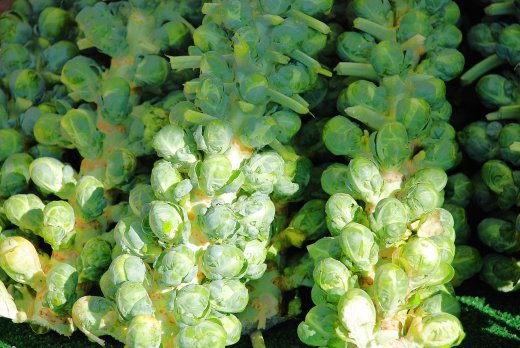
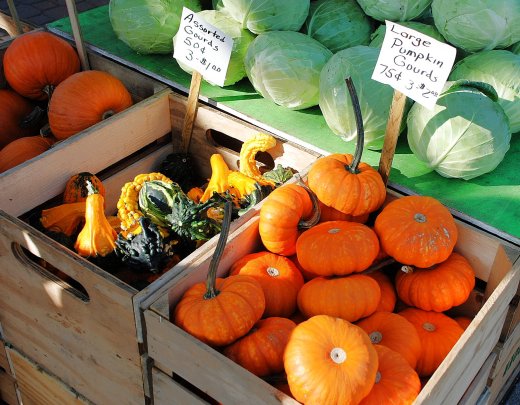
Now that autumn has arrived the market stalls have changed too.  There are no more blueberries and peaches.  The huge mounds of sweet corn are also gone.  Today’s market had an abundance of apples, pears, pumpkins, and squash.  It is now the season for broccoli and brussels sprouts.  The autumn market is very colorful and the air is crisp and clean.  Luckily, the Holland market is open until December 11th.  After that I suppose I will go back to the supermarkets, and wait impatiently for spring.   (http://www.hollandfarmersmarket.com).

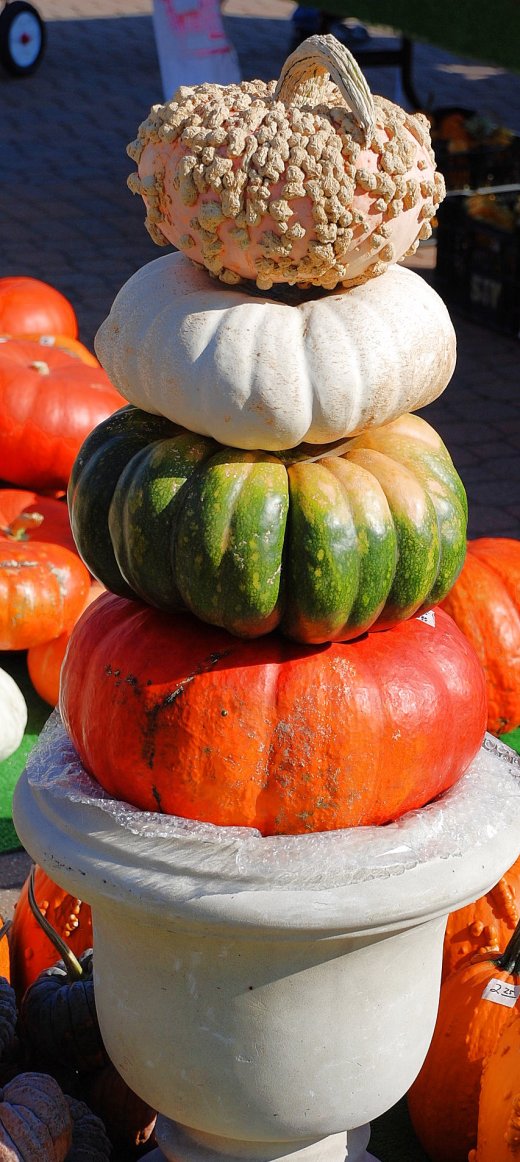
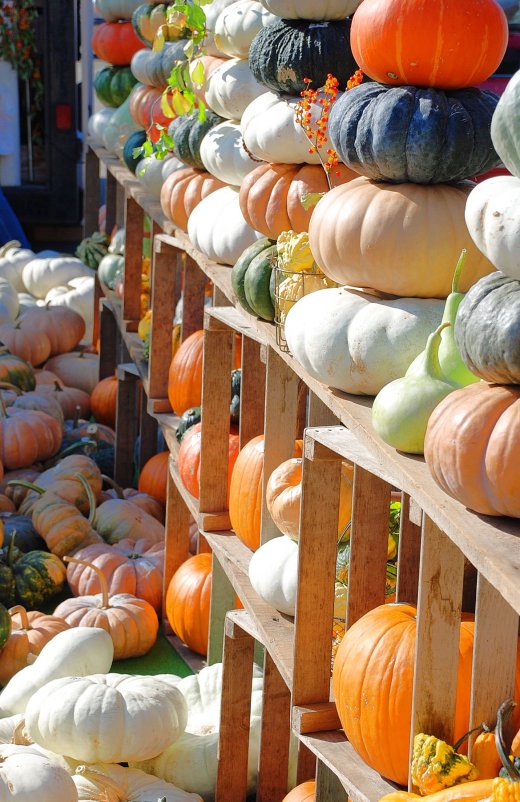
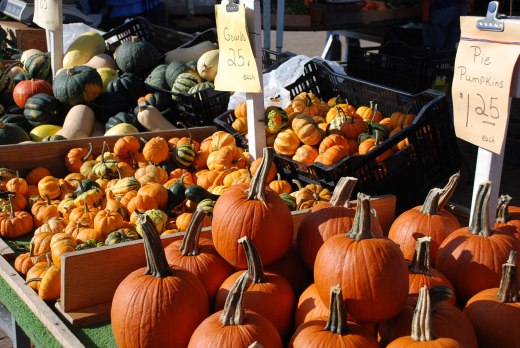
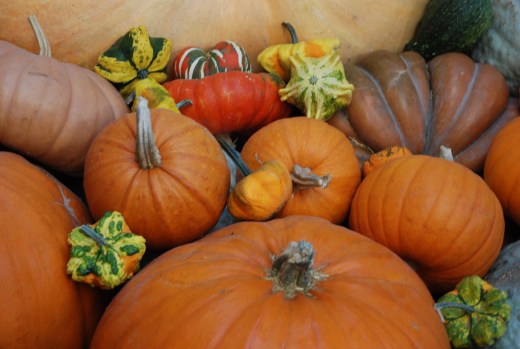
Pumpkins of all shapes and colors are available at the market.

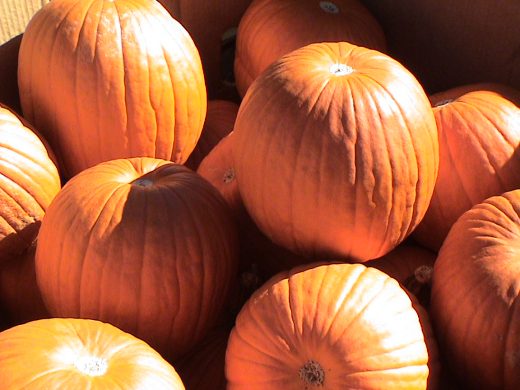
A truckload of pumpkins.

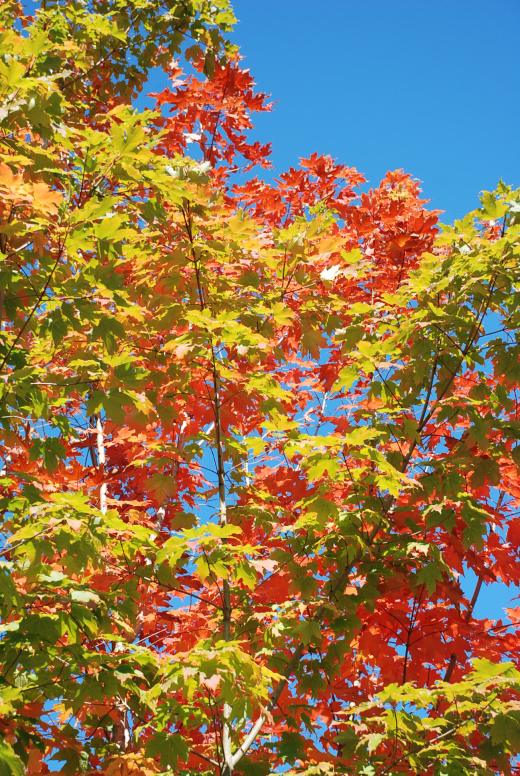
A tree in Holland, MI.

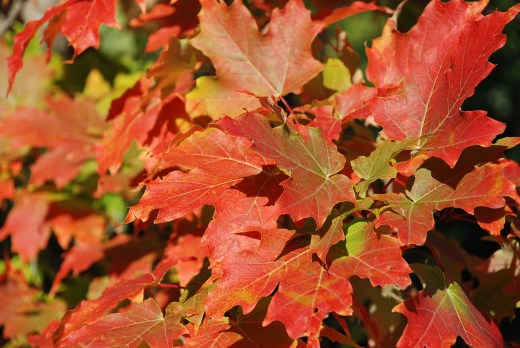
Yellow Michigan leaves.

Posted in Food and Wine, Michigan, Seasons & Holidays, U.S.A. | Leave a comment

Welcome Autumn

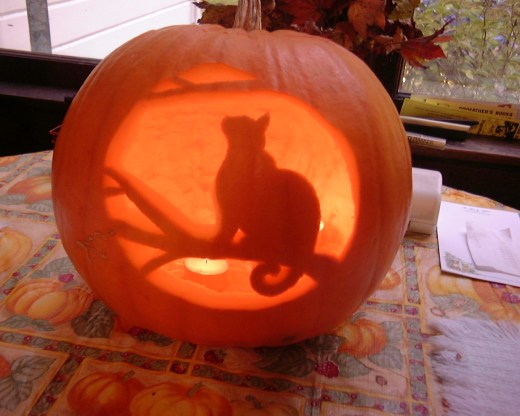
I have always loved the colors of Fall.  When we were kids, our favorite holiday was Halloween.  We lived in an area where October had very spooky weather, dark cool evenings with low lying fog, rain and leaves on the ground.  It was also a time when kids could go trick-or-treating without parental supervision and with no fear, and we loved it.  We often wore costumes made by my grandmother.  Thinking back on it, they were quite elaborate creations.  I specifically remember a black cat costume complete with tail, and a French colonial lady’s outfit.  I was a ghost a few years, made from a sheet.  I still love the feeling of Fall, and carve pumpkins and gather leaves every year.


October’s Bright Blue Weather

O suns and skies and clouds of June,

And Flowers of June together,

Ye cannot rival for one hour

October’s bright blue weather.

When on the ground red apples lie

In piles like jewels shining,

And redder still on old stone walls,

Are leaves of woodbine twining;

When springs run low, and on the brooks,

In idle golden freighting,

Bright leaves sink noiseless in the hush

Of woods, for winter waiting;

O suns and skies and flowers of June,

Count all your boasts together,

Love loveth best of all the year

October’s bright blue weather.


            Helen Hunt Jackson


Oregon Autumn leaves

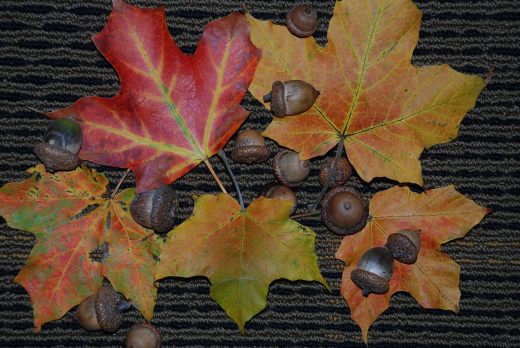
recently gathered Michigan leaves and acorns

Leaves

by Elsie N. Brady

How silently they tumble down
And come to rest upon the ground
To lay a carpet, rich and rare,
Beneath the trees without a care,
Content to sleep, their work well done,
Colors gleaming in the sun.

At other times, they wildly fly
Until they nearly reach the sky.
Twisting, turning through the air
Till all the trees stand stark and bare.
Exhausted, drop to earth below
To wait, like children, for the snow.

Maine pumpkins. Photo Credit: Teresa Favazza

Maine. Photo Credit: Teresa Favazza

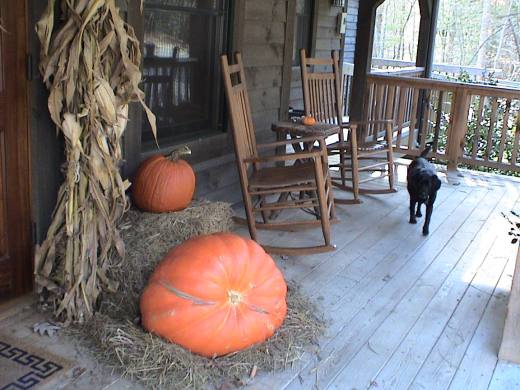
An Asheville, N.C. B & B


Halloween Night                                               

 by Laura Nielsen


Glowing pumpkins at the door                     

Witches, goblins, ghosts and more.                       

What could all this mischief mean?                       

Hooray, tonight is Halloween!                                


What’s that shadow up the path?                          

A headless horseman, or black Ring Wraith?                

Trick or treat?  Do you dare?                                  

It’s Halloween. Best beware.                                   


Demon’s perch upon the ledge,                    

Your life is balanced on knife edge.                       

Will you get in and out alive?                                 

The trick tonight is to survive.                               


Illustration by Louise Clasper Ramley


My dog Bentley loved Halloween too. He was a clown every year.


“When the Frost is on the Punkin”
by James Whitcomb Riley

When the frost is on the punkin and the fodder’s in the shock,
And you hear the kyouck and gobble of the struttin’ turkey-cock,
And the clackin’ of the guineys, and the cluckin’ of the hens,
And the rooster’s hallylooyer as he tiptoes on the fence;
O, it’s then the time a feller is a-feelin’ at his best,
With the risin’ sun to greet him from a night of peaceful rest,
As he leaves the house, bareheaded, and goes out to feed the stock,
When the frost is on the punkin and the fodder’s in the shock.

They’s something kindo’ harty-like about the atmusfere
When the heat of summer’s over and the coolin’ fall is here—
Of course we miss the flowers, and the blossoms on the trees,
And the mumble of the hummin’-birds and buzzin’ of the bees;
But the air’s so appetizin’; and the landscape through the haze
Of a crisp and sunny morning of the airly autumn days
Is a pictur’ that no painter has the colorin’ to mock—
When the frost is on the punkin and the fodder’s in the shock.

The husky, rusty russel of the tossels of the corn,
And the raspin’ of the tangled leaves as golden as the morn;
The stubble in the furries—kindo’ lonesome-like, but still
A-preachin’ sermuns to us of the barns they growed to fill;
The strawstack in the medder, and the reaper in the shed;
The hosses in theyr stalls below—the clover overhead!—
O, it sets my hart a-clickin’ like the tickin’ of a clock,
When the frost is on the punkin and the fodder’s in the shock.

Then your apples all is gethered, and the ones a feller keeps
Is poured around the cellar-floor in red and yaller heaps;
And your cider-makin’s over, and your wimmern-folks is through
With theyr mince and apple-butter, and theyr souse and sausage too!…
I don’t know how to tell it—but ef such a thing could be
As the angels wantin’ boardin’, and they’d call around on me—
I’d want to ‘commodate ’em—all the whole-indurin’ flock—
When the frost is on the punkin and the fodder’s in the shock.

I want a little witch cat

   With eyes all yellow green,

Who rides upon a broom-stick

   Every Halloween.

Who purrs when she is taking off

   Just like a purring plane,

And doesn’t mind a tailspin

   Even in the rain.

I want a cat who dares to light

   The candle of the moon

And set its jack-o-lantern face

   A-laughing like a loon.

I want a cat who laps the milk

   Along the milky way,

A cat of spunk and character

  As daring as the day;

But gentle looking kittens

   Are in the stores to sell

And which cat is a witch cat,

   I really cannot tell.

By  Rowena Bennett

My own little witch cat, The Sultana Miss Beatrice

November, by James Brandess

Posted in Michigan, Seasons & Holidays, U.S.A. | 1 Comment

Ob-La-Di, Ob-La-Da; Off-Season London

            This past February, my sister and I spent four days in London, a stopover before heading further east.  I have visited some of Europe’s most popular cities for tourism, (Paris and Rome for example) usually during the busy seasons of late spring, summer, and early fall.  Dealing with large crowds is the down side, but it is usually nice weather and outdoor activities are nearly guaranteed.  February in London is definitely off-season, and it would be a first for me.  The advantages of off-season travel include abundant hotel choices, smaller to nonexistent crowds, and more affordable rates on airfare and hotels.   We expected cold, rainy weather, and packed accordingly.  

            It was cold, but we got exceedingly lucky in that most of our days were sunny.  Because we had anticipated cold weather and had packed jackets, gloves and scarves, we were able to enjoy the cold but sunny weather by walking a good deal of the time, even visiting the Portobello Road outdoor market.  We also discovered that pub atmosphere and food is even better when it’s cold outside. 


Tulips in the Portobello Road marketplace.


             The best part of traveling during the off-season is the lack of crowds.  There were no lines at Westminster Abbey, so we had plenty of room to stroll leisurely around the interior and read the names on the tombs of the royal and the famous.  Poet’s Corner is the final resting place of Lord Alfred Tennyson, Charles Dickens, and Rudyard Kipling, to name just three. 

Postcard of Westminster Abbey's Henry VII's Lady Chapel

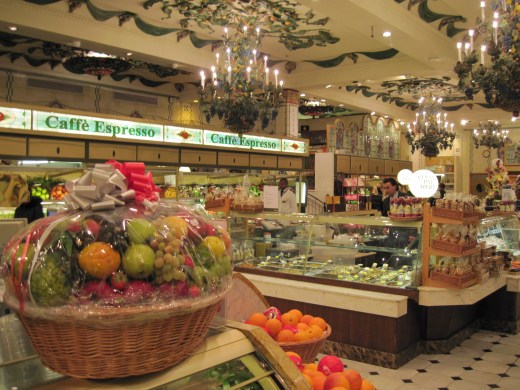
We spent several afternoons at the wonderfully entertaining but terribly expensive Harrods department store, where I was delighted to discover the Veuve Clicquot champagne bar on the first floor.  Now that is an idea we should import to department stores in America.  We even returned to Harrods food halls for dinner one evening.  Another off-season travel perk?  Fantastic theatre seats for less.  We scored center stage seats to Les Miserables for half the usual cost. 

Harrods

The champagne bar in Harrods department store.


            On our one truly cold and rainy day, we walked to the Victoria and Albert Museum and spent an entertaining (and dry) morning and afternoon in what felt like London’s royal attic (http://www.vam.ac.uk).  To our surprise, photography was allowed.  There was only one room in the entire building that prohibited photography.  What a great idea.  I loved it, and used my camera freely.  Entrance to the Victoria and Albert Museum is free of charge. 

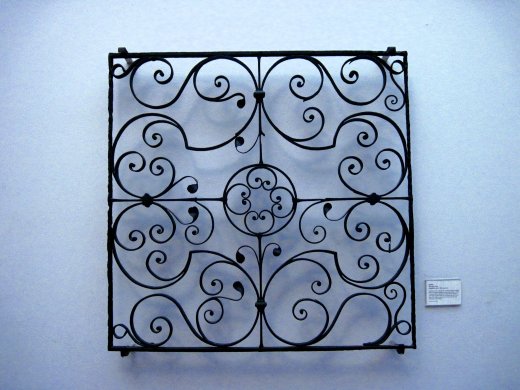
            The V&A Museum has six levels packed with fantastic pieces from around the world.  My favorite galleries included the Asia Rooms, the Fashion Gallery, and the Medieval and Renaissance Rooms on Level 1; the Ironwork gallery on Level 3; and the Ceramic and Glass Gallery on Level 4.  In one day we could not possibly see the entire museum, but we did cover a lot of ground. 

A dress in the fashion gallery


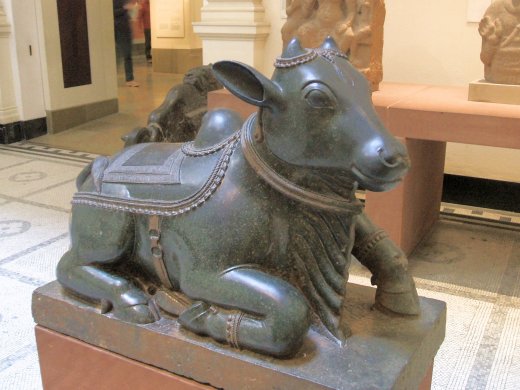
            In the South-East Asia Rooms on the first floor we saw a carved stone elephant and calf from India among hundreds of other items.  In the South Asia Rooms we enjoyed discovering Tippoo’s Tiger from 1793, a painted wooden mechanical automaton.  Too bad it was behind glass, because the description of the actual operation sounds fascinating.  It would be fun to see it in action.  It is described in the museum guide as follows: 

This wooden model of a tiger mauling a European was taken from Tipu Sultan’s palace after his death. The man lies on his back while the tiger sinks its teeth into his neck.  When the handle on the side of the tiger is turned, the man’s left forearm moves back and forth between his mouth and the tiger’s ear, while bellows inside cause the animal to growl and the man to emit a plaintive whooping sound. A flap near the handle can be opened to reveal organ pipes and a keyboard with button keys of ivory. 

Tipu's tiger


My two favorite paintings in the South Asia rooms were Akbar hunts in the neighbourhood of Agra, and Akbar Hunts with Trained Cheetahs, from the Age of the Mughals.  They were painted between 1590 and 1595 in either India or Pakistan.  

Akbar hunts in the neighbourhood of Agra

Akbar hunts with trained cheetahs

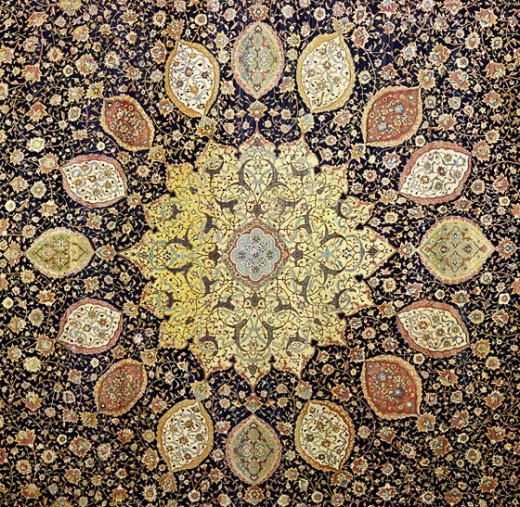
             The Islamic Middle East Room is home to many colorful ceramics and tiles, and the impressive Ardabil Carpet, lighted for only 10 minutes twice per hour to preserve the colors.  The V&A website describes the Ardabil Carpet as “…the world’s oldest dated carpet and one of the largest, most beautiful and historically important in the world.”  The placard next to the carpet reads as follows:  

            The Ardabil carpet is one of the largest and finest Islamic carpets in existence.  It is also of great historical importance.  It was commissioned as one of a pair by the ruler of Iran, Shah Tahmasp, for the shrine of his ancestor, Shaykh Safi al-Din, in the town of Ardabil in north-west Iran.  In a small panel at one end, the date of completion is given as the year 946 in the Muslim calendar, equivalent to 1539-40.  The text includes the name of the man in charge of its production, Maqsud Kashani.  The carpet is remarkable for the beauty of its design and execution.  It has a white silk warm and weft and the pile is knotted in wool in ten colours.  The single huge composition that covers most of its surface is clearly defined against the dark-blue ground, and the details of the ornament – the complex blossoms and delicate tendrils – are rendered with great precision.  This was due above all to the density of the knotting – there are 4914 knots in every 10 centimetres square (304 knots per square inch).  

My first thought after reading the placard was “If this carpet is so culturally important to Iran and so valuable, how come it is in London and not in a museum in Iran?”  I wondered if the carpet had been purchased from someone, or was it acquired in some other manner?  In recent years there have been discussions of returning items of antiquity to their rightful owners.  Egypt has called for the return of many ancient pieces taken illegally, including the Rosetta Stone, now in the British Museum, and a bust of Queen Nefertiti in the Berlin Museum.  It was for the good of humanity that the items were protected and restored, but perhaps it is time to return these items to their original owners, especially if the countries want them back.     

Ardabil carpet

Ardabil carpet detail


            Also on Level 1 are the Buddhist Sculpture Rooms.  The four rooms we toured included forty-seven Buddhist master works, my favorite being The Great Departure of the Buddha, Pakistan, 100 to 200 AD.  That you can get up close to these and see them in a naturally lit environment without glass casements is wonderful. 

The Great Departure of the Buddha


            We wandered through halls of ironwork and marveled at the glass works.  We saw small bronze sculptures and large pieces of antique furnishings.   Many of the galleries contain sculptures of all sizes and materials.  The Medieval and Renaissance Rooms and the Dorothy and Michael Hintze Galleries, Sculpture in Britain, include seven rooms of sculptures.  The V&A is a wonderful way to spend the day, rain or shine. 


St. George and the dragon


Wallpaper design, 1874, V&A Museum

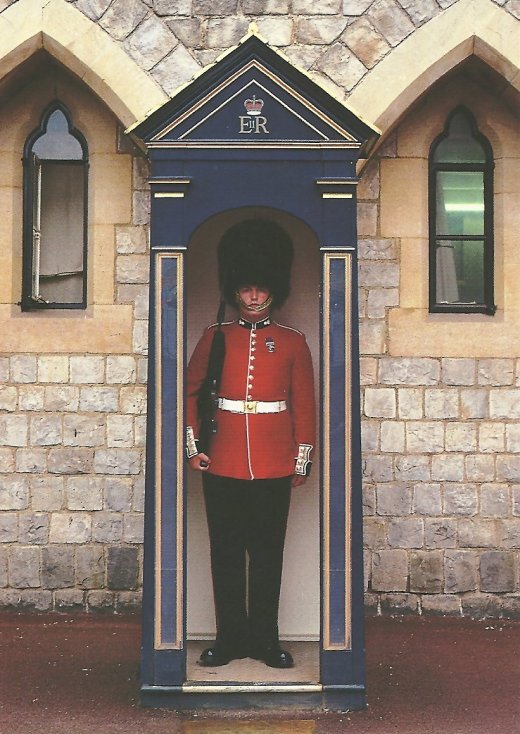
            After a day of wandering the museum floors, we stopped at Harrods food court for dinner as we walked back to our hotel.  On our last morning in London we walked through Hyde Park on a brisk and sunny day, witness to the first crocuses.  A walk past Windsor Castle was on the schedule that morning as well.  Maybe we were incredibly lucky with the weather, experiencing only one day of rain, but I would chance off-season travel again.  I think the advantages outweigh the disadvantages. 


Postcard of a sentry on duty outside the Guard Room

Posted in London | Leave a comment

Navigating Norway; the Great Circle Route from Oslo to Sand and back

I landed in Oslo on a fine, sunny September day.  My brother had flown in a few days before me and met me at the airport.  We were in Norway specifically to visit relatives on my father’s side who live in a small town on the west coast.  In addition to visiting relatives, we both wanted to see the sights of Oslo, so we decided to drive the approximately 250 miles.  A rental car served our purpose of travel to the west coast, plus my brother had an agenda.  He had chosen our driving route with stavkirkes (stave churches) in mind.  We would pass at least five stavkirkes if we drove Highway 40 from Kongsberg to Geilo, then Hwy 7 westbound to Kinsarvik, and eventually passing through Røldal.  The roads in western Norway are often single lane, with rough unlit tunnels, many requiring ferry crossings of the fjords.  It can be slow going, but it is also quite beautiful. 

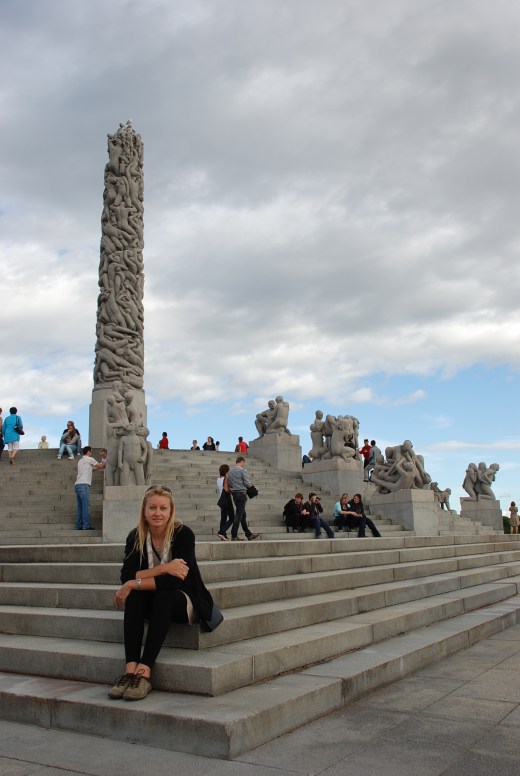
            For my first day in Oslo we toured the Viking museum on Bygdøy, the new Oslo Opera House and waterfront, and Frogner Park.  We spent the night at the Lysebu Hotel in the Holmenkollen ski area above Oslo.  The dinner at the Lysebu Hotel was truly stellar.

Oslo's Opera House


            Leaving Oslo early the next day, we drove southwest on E134 towards Kongsberg, where we picked up Highway 40 northbound.  The first stave church on our route was Flesberg stavkirke, built around 1200 AD.  The name for these old medieval churches comes from the Norwegian word for load-bearing posts, stav.  They were built of post and beam construction, the interiors often elaborately decorated with carvings and paintings.  Only 29 of these churches remain standing, all but one in Norway.  Unfortunately, as would be the case with four out of the five stavkirke we visited, it was closed.  Apparently the tourist season ended with the month of August. We were able to walk around the exterior of the churches, but were unable to tour the interiors.

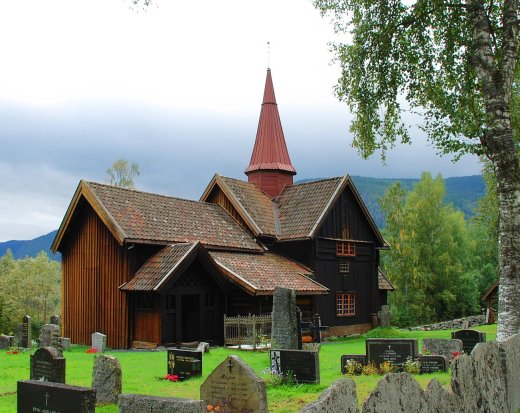
Flesberg Stavkirke


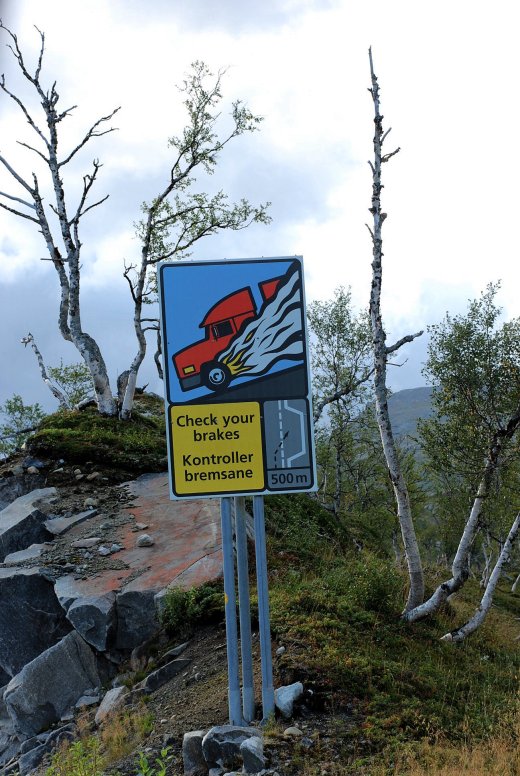
              We left Flesberg heading north, still following Highway 40.  The signs on the side of the road warned (promised? I wanted to see one) of moose crossings, but the only animal we saw was a deer.  Our next stop was the stavkirke in Rollag, originally built in the second half of the 12th century, then rebuilt around 1660 into a cross church.  It was nice to take a break from driving by strolling the church grounds.  We saw no one at the first two churches.

Rollag Stavkirke

            Our third church along Highway 40 was the Nore stavkirke.  Again we were only able to walk around the exterior, which was a disappointment.  The interior of the 1200 AD church is said to be covered in murals.  Several other tourists were wandering the grounds as well.  The weather was cool and a light rain had started to fall. 

Nore Stavkirke

Interior beams, Nore Stavkirke (taken through the window). Photo Credit: Nick Nielsen

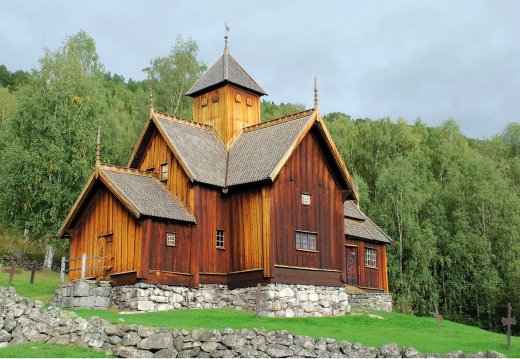
             Continuing our pilgrimage northward, we pulled off the main road near Uvdal.  The Uvdal stavkirke, built just after 1158, was the largest church that we had seen so far.  We were the only people in the area, a beautiful still and verdant hillside.  The interior is richly decorated, or so we read.  It was a little frustrating to be on the site of these churches and unable to see the painting and carving on the interiors.  I promised my brother that some day we would have to drive this same route, but in July or August instead of September.

Uvdal Stavkirke

On the hillside behind the stavkirke.

             We continued our drive northward to Geilo, considering where to stop for the night.  We had agreed to “wing it” when it came to our overnight stop.  Geilo seemed like a good place to stop (a winter ski area), but upon inquiring at the main hotel in town, we were told it was sold out due to a convention.  So we continued our drive now westbound on Highway 7.

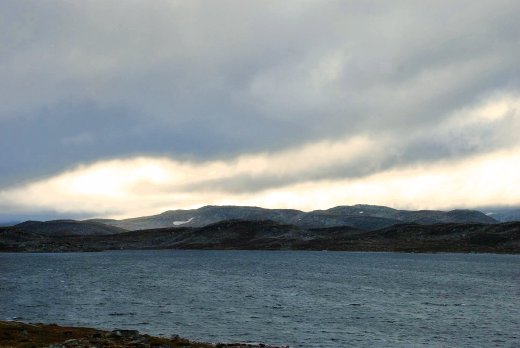
Hardangervidda mountain plateau

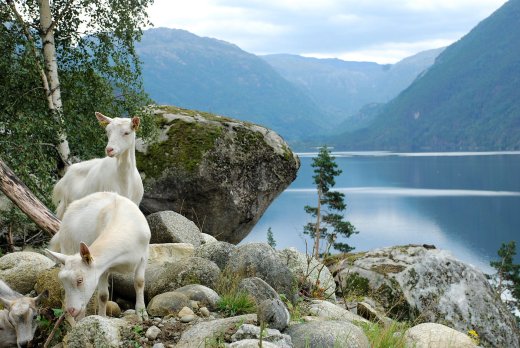
             The surrounding countryside started to change as we drove across the Hardangervidda mountain plateau.  It is Europe’s largest mountain plateau, with no trees, covered by rocks and pools of water.  Signs by the roadside advertised goat cheese, and lonely looking structures used by the cross country skiers dotted the landscape.  On the west side of the plateau we passed Voringfossen waterfalls, and descended into Eidfjord. 

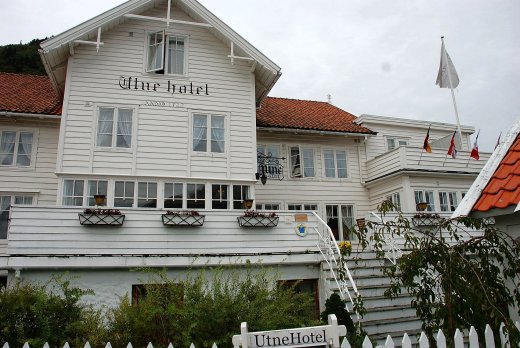
            We stopped in Eidfjord to call ahead to the Utne Hotel.  Yes, they had rooms available and would be open for our late arrival.  We continued west towards Kinsarvik, where we had planned to take the ferry across Sørfjord to Utne.  At the last minute we had to change our plans due to a road closure.  A landslide had taken out the small road that runs along the rugged shoreline.  This is not an uncommon occurrence, but required an extra ferry ride.  We were rerouted via a ferry to Bruravik, continued on Highway 7, and then another ferry from Kvanndal which dropped us literally at the front door of the Utne Hotel.  We had spent 12 hours on the road traveling from Oslo to Utne.

Utne Hotel

The moon on the fjord.

            The Utne Hotel, the oldest continuous operating hotel in Norway, opened in 1722 and since then has seen a number of “reverent extensions and refurbishments to the building. The most recent was in the winter of 2004/2005 when the hotel was totally restored. This project was completed in cooperation with the Directorate of Cultural Heritage, in order to preserve the unique, historical features of the hotel” (from the Utne Hotel website, http://www.dehistoriske.com/hotel/utne-hotel).  The hotel was lovely, comfortable and set a very nice table for breakfast, a personal priority.

The Utne Hotel breakfast room. Photo Credit: Nick Nielsen

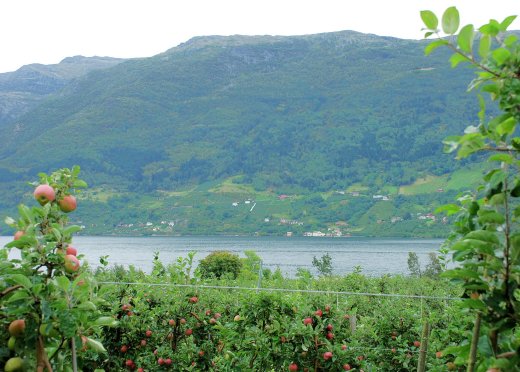
            The following day we departed Utne southbound on Highway 550, following the fjord towards Odda.  It was a very scenic drive with the fjord and orchards on our left and the mountains on our right.  We could see the Folgefonna glacier at times, and we passed many waterfalls.  We picked up Highway 13 south of Odda and continued towards Røldal.

Looking across the fjord. The small roads run right along the water, squeezed between the fjord and the mountains.

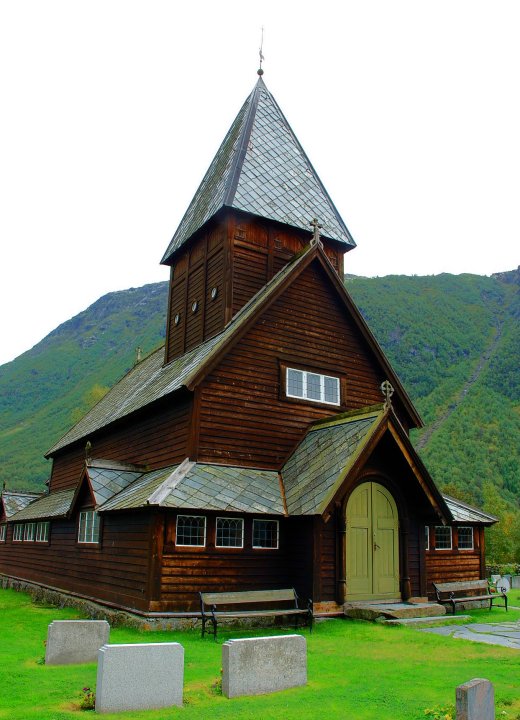
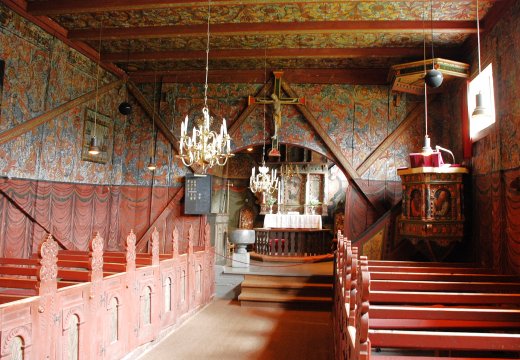
             Luck was on our side in Røldal.  As we approached the Røldal stavkirke, the door opened and the caretaker emerged.  He was expecting a group of tourists for a private showing, and while he waited for their arrival he agreed to show us the interior.  The stavkirke was built sometime in the 12th century, and decorated in the 16th century.  The Røldal stavkirke’s interior is beautifully painted.  The caretaker told us that the medieval crucifix above the altarpiece was said to have healing powers, and sick people made pilgrimages to the church to be held up to touch the cross.  It was a wonderful experience to tour the church with someone who could tell us details and stories about the church and its history.

Røldal Stavkirke

Røldal interior

The healing crucifix inside the Røldal stavkirke.

            Leaving Røldal, we continued on Highway 13.  The road becomes narrow and winds along fjords and lakes.  It was a beautiful drive and we stopped many times for photographs.  At this writing, two of the  West Norwegian Fjords – Geirangerfjord and Naerøyford – are UNESCO World Heritage sites.

Somewhere along the road between Roldal and Sand.

            Eventually we turned off 13 and onto 46, the even smaller road into Sand.  We had arrived.

Sand, Norway

 We spent 5 nights in Sand, visiting relatives, harvesting our aunt’s plums and apples, and cleaning up her garden in preparation for winter.

Harvesting plums.

In my aunt's garden.


            It was a pleasant respite from driving, and infinitely less expensive than staying in hotels.  Visiting relatives in Norway always includes invitations for dinner, and many afternoon gatherings involving cake and coffee.  When the time came for us to depart, accompanied by our cousin Marta, we left Sand on 46 then picked up Highway 13 southbound towards Nesvik.  There we crossed the fjord on the Hjelmelandsvagen ferry.  We continued southbound on 13, winding through mountains and countryside, following it to Tau.  In Tau we boarded another ferry and spent forty-five minutes enroute to Stavanger, approaching the city in the fog with a light rain.

Driving onto the ferry to Hjelmeland

My cousin Marta and my brother on the ferry to Stavanger.

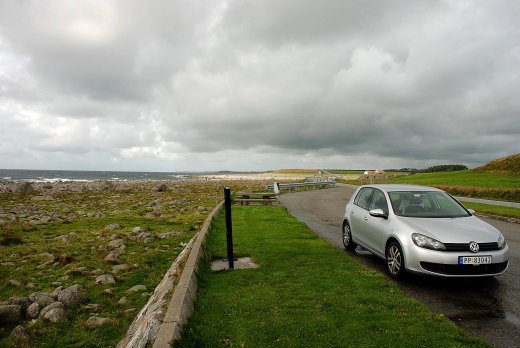
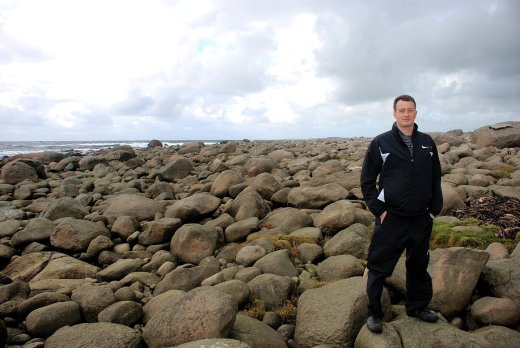
             In Stavanger our cousin Marta left us and we drove E39 until we could leave the main road and catch Highway 44, also known as the North Sea Highway.  Our intention was to drive the smallest road closest to the sea, hoping for the best scenery and views.  The plan was a good one.  It was an enjoyable and scenic drive, winding through small towns, on narrow rocky roads with dark tunnels, always skirting the North Sea.  We followed the coastline south and eastbound, stopping where we could to enjoy the views.  We found a Viking graveyard of sorts near the road and hopped boulder to boulder out to the water.  It was very windy on the southernmost tip of Norway. 

Highway 44 south of Stavanger.

The sign at the Viking grave site.


SCENES ALONG HIGHWAY 44 BETWEEN STAVANGER AND KRISTIANSAND

            Eventually Hwy 44 joined E39, and we continued eastbound through Kristiansand.  In Kristiansand we took E18 towards Lillesand.  Anytime we saw a smaller road, we would take it just to see what we could find.  We stumbled upon some of the most beautiful areas on the small roads, 401 & 420, between Kristiansand and Lillesand. 

A cove along the small road between Kristiansand and Lillesand.

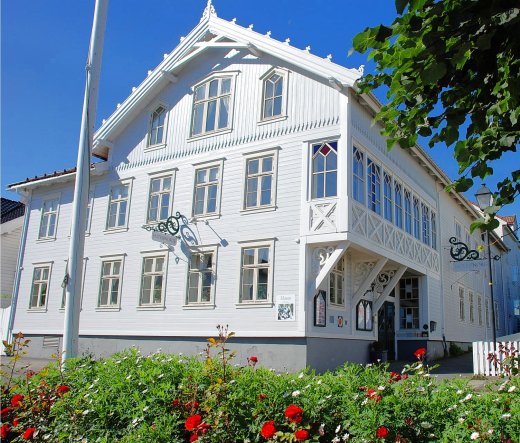
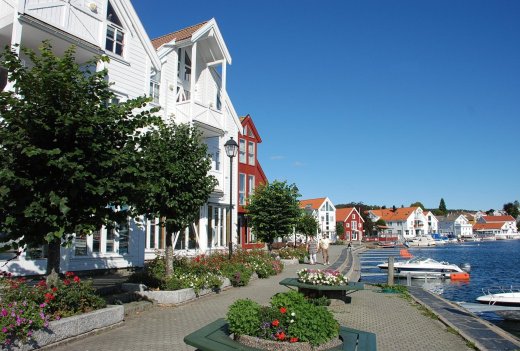
            We had decided upon Lillesand as an overnight stop because the Hotel Norge is in Lillesand.  A copy of De Historiske (www.dehistoriske.com) was our hotel guide, from which we chose our overnight stops, staying in historic properties if possible.  At times, we would modify our route in order to stay at a particular hotel.  From this source we chose the Hotel Norge (www.hotelnorge.no).  What a pleasant surprise for us that the small town of Lillesand was so beautiful.  The next day dawned clear and sunny, and we walked around the town before taking to the road again with Oslo as our destination. 

The Hotel Norge

Lillesand, Norway.


            It was our last full day in Norway, and we had to drive from Lillesand to Oslo.  We opted for the quickest route, the E18.  Not being particularly early risers, at highway speeds we made it into Oslo a few hours before sunset, in time for one last walk around Bygdøy and downtown.  For our last evening in Norway we stopped at Frogner Park as the sun was setting.  It was beautiful, and a fitting end to our trip.  We stayed that night in a hotel east of Oslo, our departure set for the next day.  Including our stops and detours for scenic roads, it took us two full days to drive from Oslo to Sand, and two full days to drive back.

Frogner Park at sunset.

Posted in Norway | Leave a comment

Northern Michigan

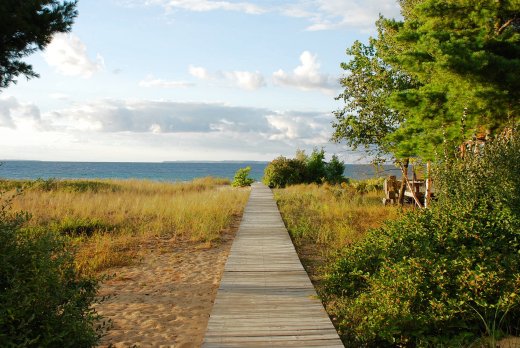
Glen Arbor shoreline

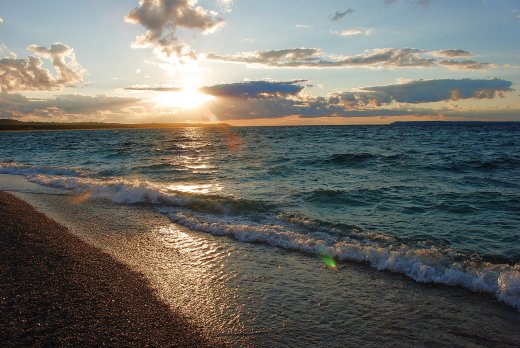
Glen Arbor sunset

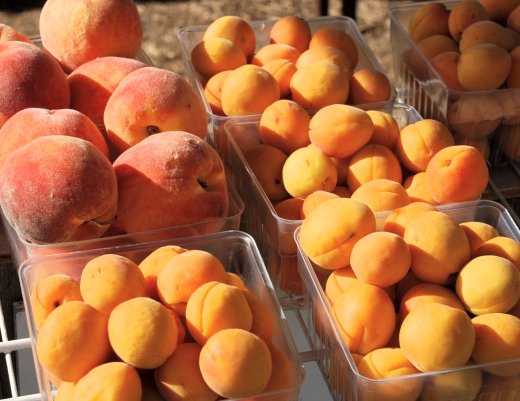
Honor system self serve fruit stand


Michigan orchard

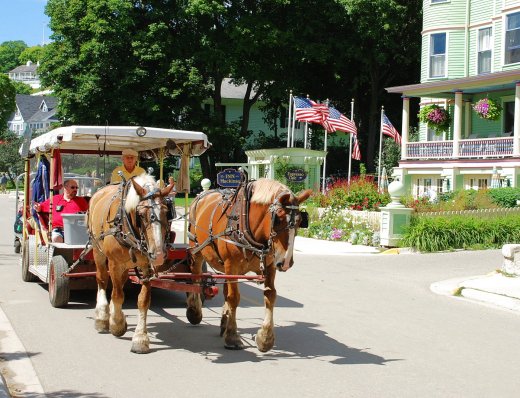
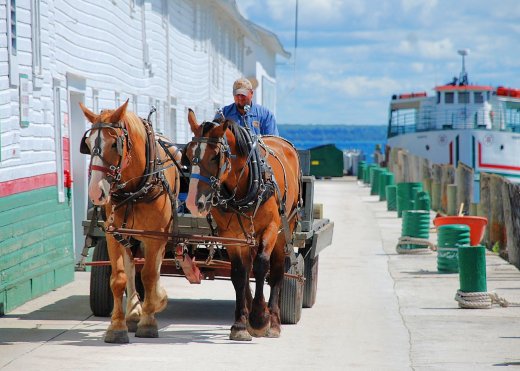
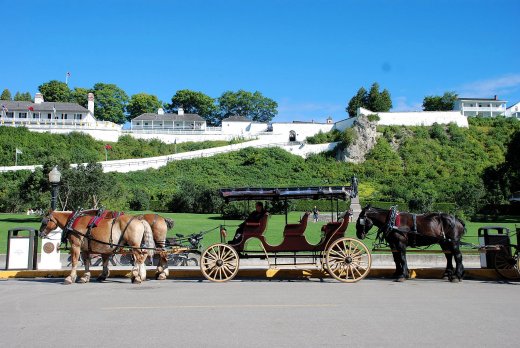
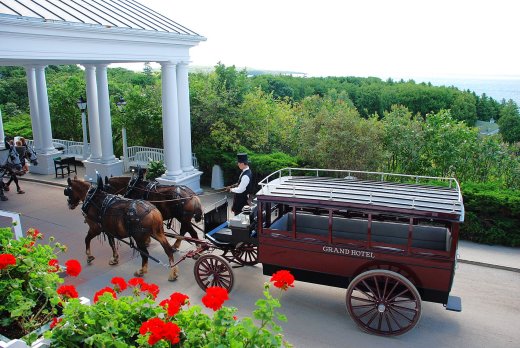
Mackinac Island transportation

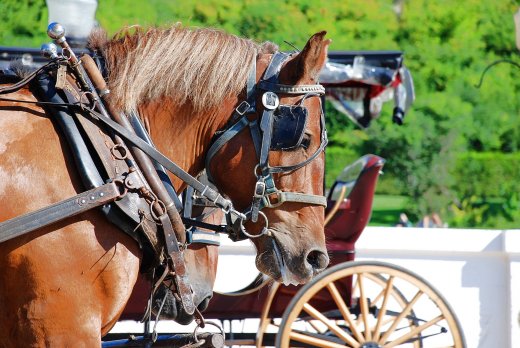
Working horses on the dock

Harbor View Inn, Mackinac Island

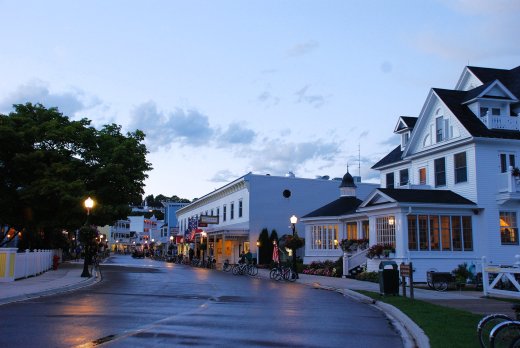
traffic on Mackinac Island

The other mode of transportation on Mackinac.

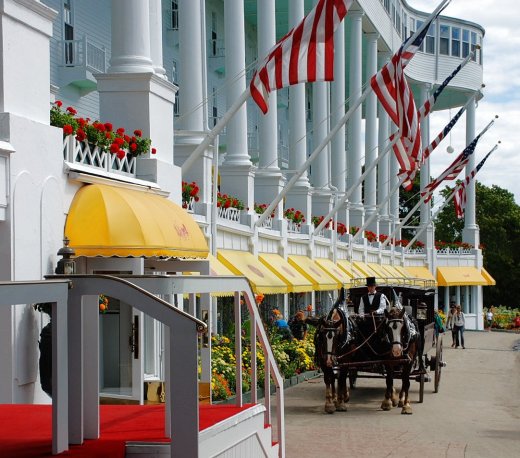
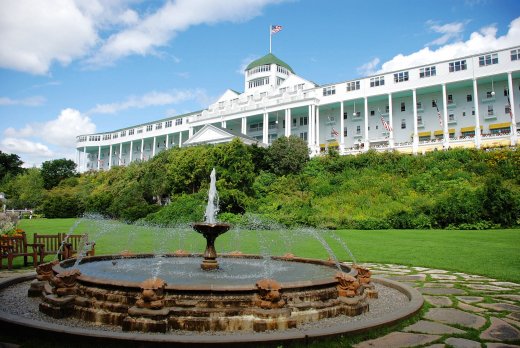
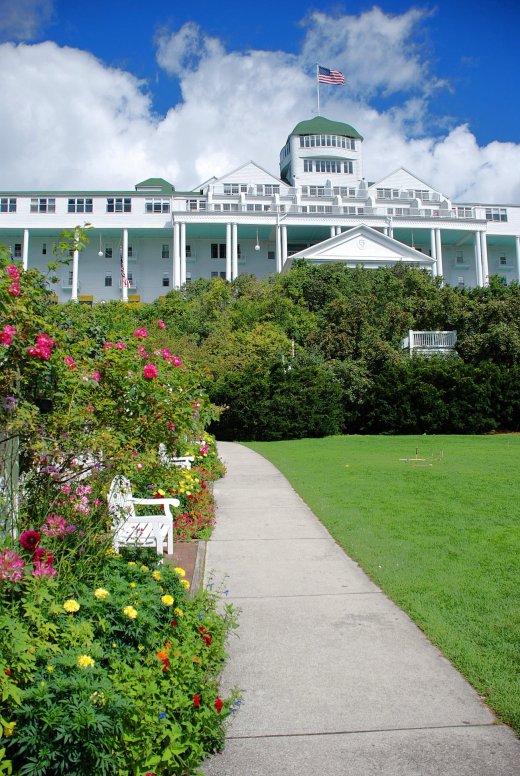
The Grand Hotel, Mackinac Island

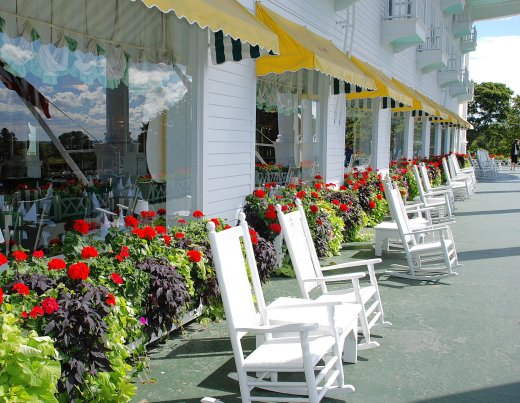
The world's longest porch, The Grand Hotel


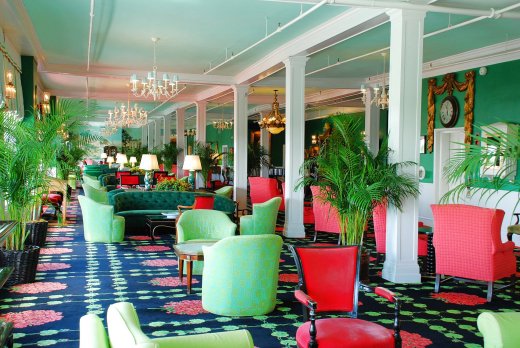
The lobby of The Grand Hotel

The dessert table at The Grand Hotel's lunch buffet.

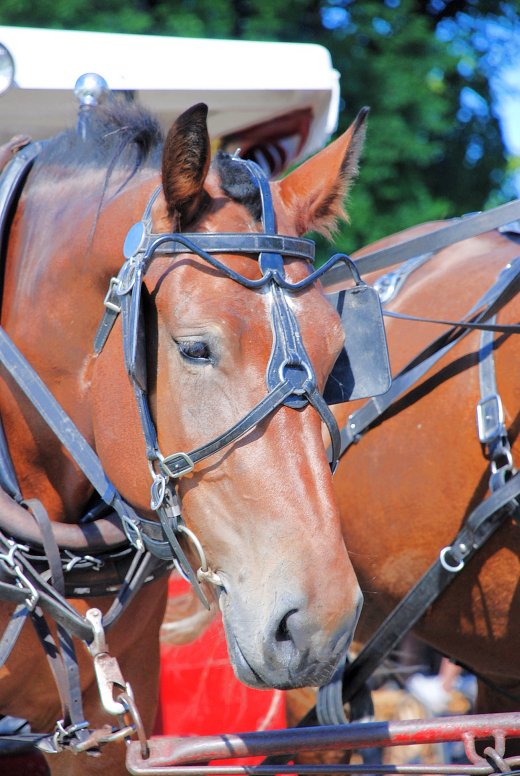
Hard working horse.

One of the many beautiful private homes on Mackinac Island.


Sleeping Bear Dunes National Lakeshore, Michigan

Posted in Michigan, U.S.A. | Leave a comment

Jesus is a mannequin and other observations in Norway

Jesus is a mannequin

Lutheran Jesus from my childhood; Warner Sallman, 1942.

            Growing up, I shared a room with my sister.  On the wall of our bedroom was a framed picture of Jesus, holding a lamb and surrounded by a flock of sheep.  We were not a religious family, but we were baptized Lutherans, and my mother insisted that we attend Sunday school.  That particular picture of Jesus is what you might expect to find in a 1960s west coast Lutheran community.  He had long straight brown hair and a beard, and a kind but pale face.  I now believe that Jesus looked quite differently from that drawing and that the surrounding valley would not have been so lush and green, and even the sheep may have looked differently.  Never the less, this is the image of Jesus that I grew up with and remains in my mind to this day.  That is why, while strolling the shopping district of Oslo with my brother last September, I was immediately struck by the large photo in the window of the H&M department store.  There was my version of Jesus, modeling a coat and scarf in Oslo.  I recognized Him immediately.  Leave it to the Norwegians to use my Jesus to advertise the new Fall line of H&M jackets.

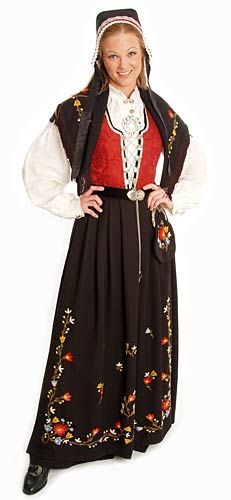
Barbie wears a Hardangerbunad

On my travels, I like to bring home souvenirs to remind myself of my trips.  My brother and I had been in Norway for over a week visiting family and on the road most of the time.  Since it was September, most of the shops in the small towns were closed, and I had no souvenirs other than my photographs.  I was suffering from a severe case of souvenir deprivation at this point, which luckily my brother recognized and made an effort to alleviate.  It was our last full day in Norway as we drove into Oslo and it was a Sunday evening.  Not good for shopping. We pulled into the Bygdøy peninsula just a few minutes before the Norsk Folkemuseum closed.  The carved wooden fjordling pony on the shelf of the museum gift shop was beautiful.  It was hand carved and the likeness to the live fjordling ponies of Norway was incredible, and I wanted it.  Unfortunately, like most of the handmade items in Norway, it was expensive.  Too expensive.  Exhibiting extreme willpower considering I had not shopped for a week, I set it down, and settled for a hand embroidered wool scarf, which I am now very glad I bought.  It is beautiful and useful.  It was a more reasonable 500 Norwegian Kroner, approximately $80.  (Norway did not join the EU, and uses the Norwegian Kroner.)  Everything in Norway was expensive, except the clothes in the H&M store.  The scarf purchase eased my shopping mania, but I still wanted to look around for something else.  My brother and I walked the Oslo shopping area and spotted a typical souvenir shop, in all its tackiness.  With the light waning and the shop getting ready to close, I quickly scanned the shelves.  That is when I saw her.  It was Barbie, in a Norwegian bunad.  OK, it wasn’t the real Barbie made by Mattel, but she was a close relative of the same size and shape, with long blond hair, and looked too cute in the Norwegian Hardangerbunad to pass up.  So I paid the 300 Kroner as the shop closed and walked away satisfied.  My brother went home with five rocks collected from a rocky beach along the North Sea Highway on the southern shores of Norway.

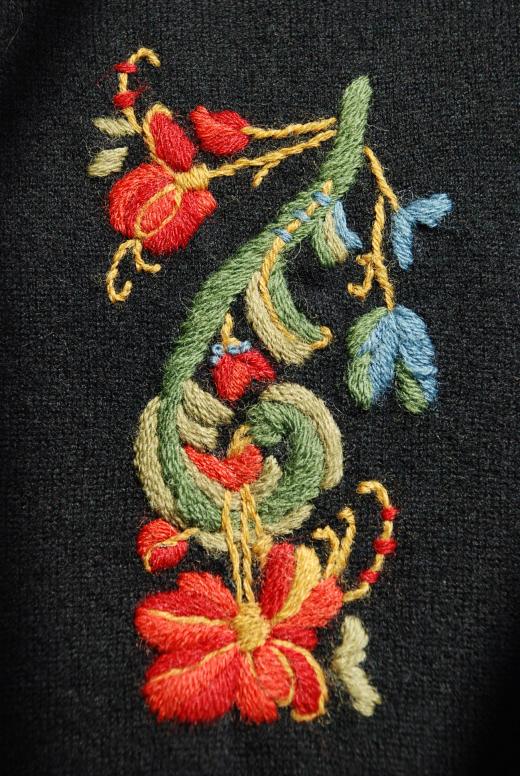
The hand embroidery on my wool scarf, design by Irene Haugland.

Traditional Norwegian Rogaland damebunad

Norwegian roads are built by trolls

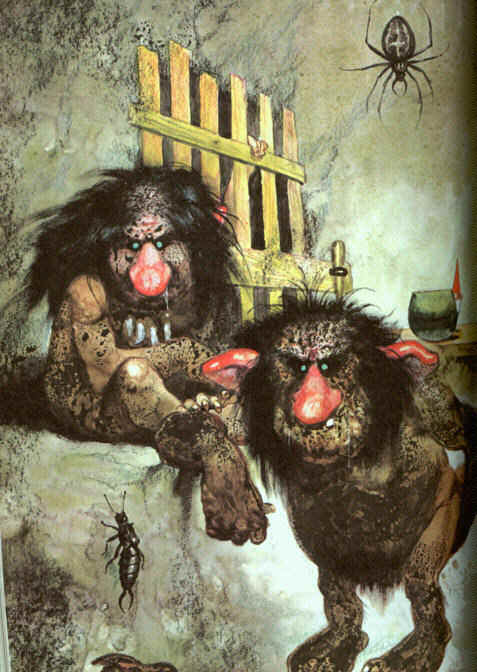
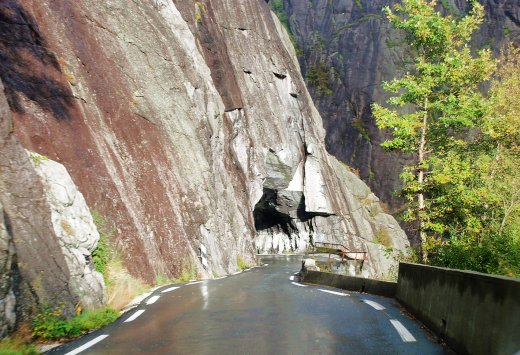
            As first generation Norwegian children, we grew up with Hans Christian Andersen fairy tales, and believing in trolls.  We played with troll dolls sent from Norway, and my mother still has a wooden bowl decorated with carved troll heads.   My first trip to Norway in the early 1980s triggered a lifelong fear of tunnels.  My only explanation for the roads and tunnels of western Norway is that they must be built by trolls.  They are the scariest tunnels on earth.  Many are just dark holes cut into the rock with rough walls, no lights, and gravel surfaces.  The longest tunnel we drove through nearly thirty years ago was seven miles long.  In 2000, Norway opened the longest road tunnel in the world between Lærdal and Aurland.  It is 15.2 miles long.  On my most recent trip to Norway, we did not drive through the longest tunnel, which in photos appears to be lighted and doesn’t look quite as trollish as I remember from the 1980s.  But there still remain plenty of tunnels in Norway that look as though they could have been built by trolls.  During our 2009 drive, at my request we looked for routes with the least amount of tunnels, but avoiding them completely was nearly impossible.  I still become apprehensive when driving through tunnels, and this is magnified 10 times in Norway, but I haven’t actually seen a troll yet.  We seem to have at least one in our family lineage though.  At one time my Uncle Arvid, in describing one of his elderly aunts to me and my siblings, said of her “She vas a troll.”   


Norway is the Promised Land

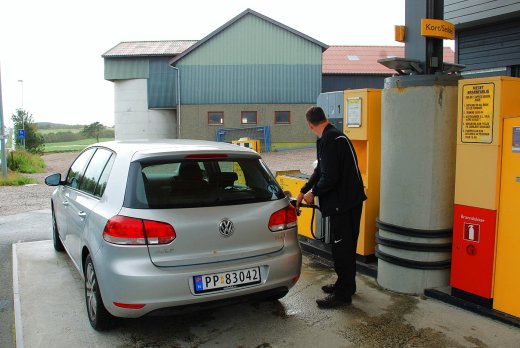
            It is true.  In 2009 Norway was voted the #1 best country in terms of quality of life, life expectancy, literacy and economy.  Norway held that position for six consecutive years from 2001 to 2006.  (I don’t know what happened in 2007 or 2008).  This ranking was released by the UNDP, United Nation Development Programme.  I find myself agreeing with quite a lot of the findings.  My relatives all seemed happy and healthy, with jobs, access to medical care, long maternity leaves, and retirement care.  One relative works in the oil industry, the source of much of Norway’s wealth.  Norway is ranked as one of the richest countries in the world.  As a tourist, Norway is expensive.  The rental car, fuel, food and hotels were priced higher than in other countries I have visited.  We rented a diesel powered VW Golf, which got surprisingly good fuel economy, thank goodness.  The cost of filling the fuel tank of this small vehicle was over $100.  (We purchased the diesel in Kroner per litre, which converted to about $8 to $10 per gallon.)   The fuel economy was so good though, that we only had to fill it twice to drive from Oslo to the west coast and back again.  Public transportation is available in many places, and everyone walks.  We also observed that the people were all of normal weight with very little to almost nonexistent signs of obesity.  My brother and I counted exactly four people in 10 days that could be considered overweight.  We did not see fast food drive-ins, but we did see people outside enjoying the parks, and many men pushing baby carriages; so many in fact that I remarked on it to my brother. 

While traveling, most of the dinners we bought cost us about $100 for two, and hotels were routinely $200 to $300 per night.  We made it affordable by sharing all our costs.  The people we met were friendly and helpful, and nearly everyone spoke English.  Visiting with my cousin and her children, they told us that English is taught in the schools beginning in the 1st grade, and lasting through graduation.  We got lucky with the weather, enjoying many sunny days, despite it being September.  I recommend traveling in Norway if you wish to experience beautiful scenery, friendly people, and good food.  But don’t forget your VISA card, because they don’t take Euros or American dollars, but I do think they’d take your American Express.

Posted in Norway | Leave a comment

One Day in the Life of Nomad Tanzania Serengeti Mobile Tent Camp

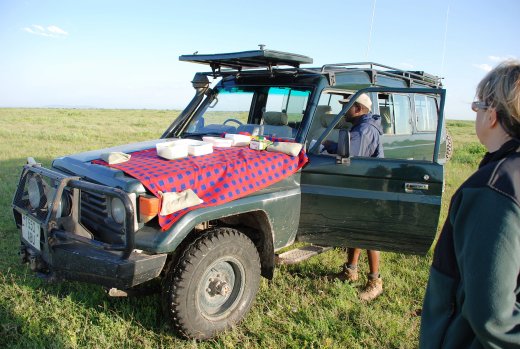
We are gently awakened at 6:00 AM by a camp staffers’ “Hello, hello” at our tent flap. He is carrying a tray of coffee and cream. Our true wakeup call though are the thousands of birds that begin their day before dawn and grow louder and louder as the sun comes up. The air is cool and still, and we dress in layers. At 6:30 AM, and still dark, we meet with our Tanzanian-born guide Chedi at our Toyota Land Cruiser for our first full day of game driving. Dark green with rust spots, canvas upholstery and equipped with fold-open top, winch, two fuel tanks, four-wheel drive, both VHF and HF radios, but no cup holders, this is not your average soccer mom’s Land Cruiser. 


Serengeti sunrise

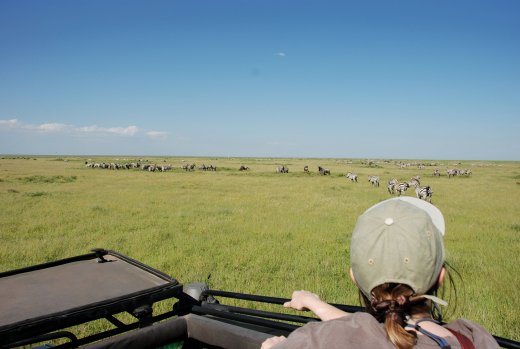
We drive through a small wooded area headed toward the plain, stopping to take pictures of the gorgeous sunrise. Our first animal spotting is a large, solitary bull elephant. We get amazingly close to him; so close we can hear his breathing.  After our elephant encounter, we drive past herds of zebra and wildebeest.  Between 7:30 AM and 8:00 AM we stop on the open plain and spread a picnic breakfast on the hood of the Land Cruiser. Due to the high elevation of the Serengeti Plain, it is still quite cool, and we are happy for our fleece pullovers. The fried egg sandwiches, cereal, fresh fruit, juice and coffee taste like heaven on earth. I take this opportunity to ask our guide Chedi some questions. He is quite patient and answers them all with openness and grace. The subjects range from the local people’s opinion of tourism (quite favorable) to the perspective of colonization from different generations (very interesting with points I had not thought of). Quite an enjoyable conversation, and helpful too.  I am gathering research for a term paper for my Peoples of Africa university course. 


Chedi speaks to us about his family and his home, and how things have changed over the generations. He recalls stories from his grandfather’s time, and we discuss the effects of colonization and how it changed their world.  There is absolutely no looking backwards here.  The people’s thoughts are only of the future.  There is so much to do in Africa they cannot afford to spend time on the past. 

After breakfast we drive further into the plain observing zebras and wildebeest. We see another camp vehicle at a standstill, a near guarantee that something has been sighted. We drive over to see a pride of lions, all sleeping, either fully exposed or covered by long grasses. They hardly move at all, only lifting their heads and swishing tails at the many flies. We are told that the lions are fat and happy because of the abundance of prey due to the birthing season. One cub pops up and looks around, and we are delighted. We are within fifteen feet of the pride, but they do not seem to mind the vehicle. We watch them sleep for about thirty minutes.  The big male lion stands, walks two steps, and lays back down. Chedi says “Well, that’s the action for the day.” 


We leave the sleeping lions to drive back into the heart of the plain where you can see herds of zebra and wildebeest stretching from one end of the horizon to the other. One lone acacia tree stands out and makes a lovely setting for photos. I ask if I can get out of the vehicle to take some pictures. After checking the areas of high grass for predators, Chedi says it is okay, so I walk a distance from the jeep to take some pictures. Immediately the zebra stop and watch me with their ears up. Jeeps they do not seem to mind, but people moving about outside the jeep agitates them.  


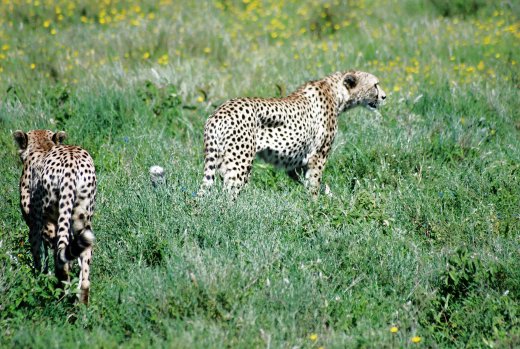
We continue our drive and spot three jeeps in a half circle. This is a sure sign of a sighting. We drive over and see two cheetahs walking toward the large herds.  


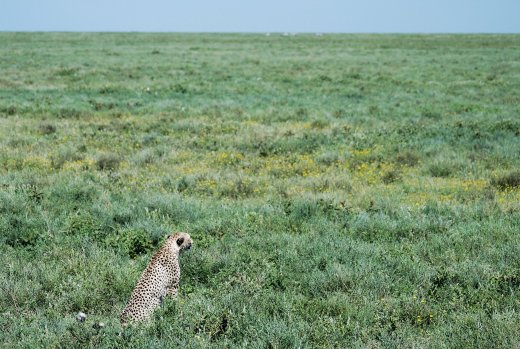
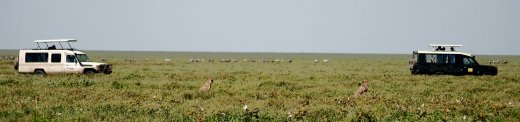
The jeeps keep their distance, following the unwritten safari guide rule that animals on the hunt are observed from a distance.  We watch the cheetahs, stalked by camera-toting tourists as they hunt for breakfast. We are told that cheetah hunt during the day, while the other cats hunt mostly in the evening and at night.  Cheetahs do not like to tangle with the other cats and will give up their prey to almost any other predator. They are the most delicate and lightest of the cats and cannot afford to be injured. They stop for a rest and the herds move away. The guides decide they are no longer hunting and the vehicles all move closer.  


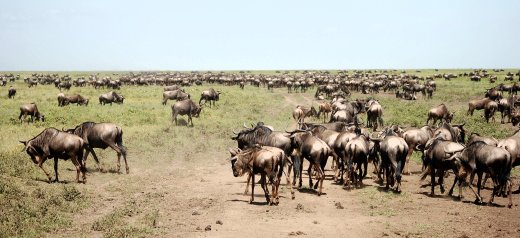
The cats don’t appear concerned, but it gets a bit comical when nine jeeps form a semicircle around the two cheetahs. They practice the art of catness by lying still for long periods, with only an occasional flip of the tail. One rolls onto its back and we see only four paws in the air.  The grass is long on the plain and at times the cats are completely concealed.  Finally they get up and move again toward the herd, so the vehicles all back off. We decide to give them their space and we head right into the middle of the wildebeest herd.  We spot fresh afterbirth on the ground and scan the herd for the baby. We see the calf next to its mother. It is possibly only an hour old, tottering around on unsteady legs. 


Continuing our drive we see two more newborn calves. These are what the cheetahs are hunting. We also see many pregnant zebra, and new baby zebra.  They come to this part of the Serengeti to give birth because the grass is plentiful and full of the nutrients the babies need. The plain is greener and the grass taller than we expected. It is dotted with many yellow, white, and purple flowers. Chedi tells us that it has rained more than usual in the past few months. We drive back to camp for lunch. 

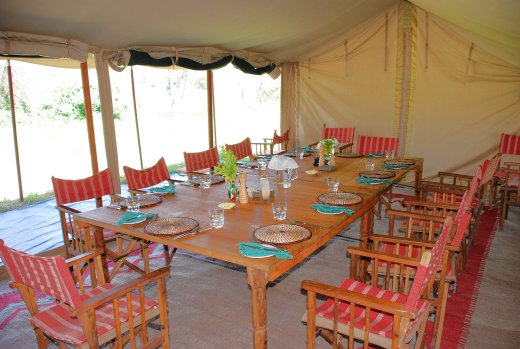
We arrive back in camp at 12:30 PM for a lunch served at 1:00 pm. The dining tent is quite nice with one long table we share with the other campers. There are only six guest tents in the compound. As we sit down for lunch one couple arrives chattering excitedly. They have seen a leopard, the most elusive cat and the rarest sighting. After a lunch of vegetable pizza, potato salad and green salad, we retreat to our tent to rest during the hottest time of the day.  


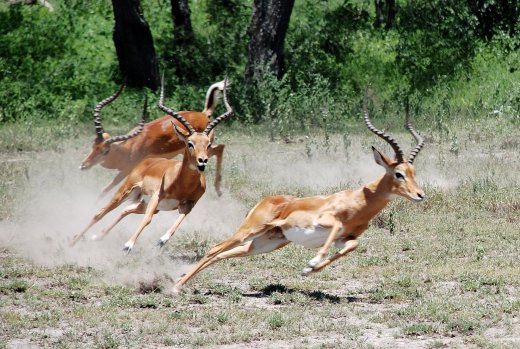
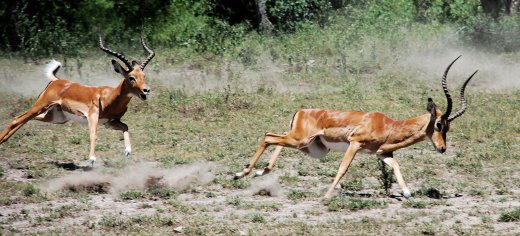
At 4:30 PM we again meet Chedi at the vehicle and head in the opposite direction from the morning drive. We pass a soda lake, climb a hill and drive into a small forest. Here we spot hartebeest, Thompson’s gazelles and impalas.  There is a skirmish between two of the impalas.  One chases the other away, while Chedi tells us that the victor is guarding his harem. 


We also see a herd of nine or ten giraffe, including some young.  A little further and we encounter our bull elephant from the morning. He is giving himself a dust bath. He sucks the dirt and blasts it all over himself, and us, as we are that close. We get within about fifteen feet of him and watch for quite some time. It is fascinating. He slowly moves off.  


The light is turning perfectly beautiful now at about 6:15 PM.  We reluctantly turn towards camp for the drive back, stopping to photograph a dik-dik and many different types of birds. As we make our way slowly along a dirt track, my sister and I stand with our heads out the top of the Land Cruiser. We are approaching the soda lake we passed earlier. Suddenly there is excited chatter in Swahili coming over the radio. Chedi is speaking with another guide. Our pace quickens, but he tells us nothing. Throughout the day Chedi has been driving slowly and carefully, inquiring at each bump if we are okay. Now we start to race down the dirt road along the shore of the lake, faster than we have driven before, ignoring potholes. We are standing so our legs cushion the shocks. My sister and I exchange glances. We know something is up. Now we are careening along the shoreline bouncing with the wind full in our faces. The sun is setting over the lake and it is beautiful. I yell down to Chedi to stop so I can take a picture. He slows down, we stop and he calmly says, “You might want to make it quick, there was a leopard sighting near camp.” I snap one quick photo and scream “Go!”  He hits the accelerator and we are off again at breakneck speed. 

My on the fly sunset photo, racing towards the leopard sighting.

Now we know the reason for our mad dash. We fly along the lakeshore sending up a cloud of dust in our wake. We race by a pack of hyenas so fast they don’t have time to be startled. We spot the other camp vehicle waiting for us. They had just seen the leopard coming toward them along the side of the road. It headed into the tall grass, bushes as high as the vehicle. It is twilight now, the cameras useless. The guide points down a ravine and says the leopard had headed downhill. We stop both vehicles. Then Chedi has an idea. He turns our vehicle around and heads back down the dirt road. He stops just long enough to jump out and turn the hubs so we have four-wheel drive available. Chedi jumps back in the jeep and says “We may need it.” The excitement and drama have built to a fever pitch. He heads straight into the ravine. It seems useless to us, but suddenly the leopard streaks from left to right about forty feet ahead of us. It hesitates as it reaches the tall bushes, just long enough for us to get a good look, and then it is gone and we see the tail disappear. It is in the tall bush now, and we stop and watch.  It is getting dark quickly. Chedi decides to follow the cat into the bushes and we drive through grass and bushes as tall as the jeep. The other vehicle joins us and we stop to listen. We wait and peer into the area where the cat disappeared. We are all looking intently into the brush. It is nearly dark, about 7:00 PM.  Suddenly Chedi says “There he is.” The leopard is 180 degrees behind us at quite a distance, nowhere close to where we were looking. This is typical of leopards, the guides say, and call them elusive, quick and sneaky. The leopard is walking casually away at a slow pace, secure in the knowledge that in moments the darkness will conceal him completely. We watch silently, happy to have seen him at all. 

The leopard in this photo is not from the evening in this article. It was too dark and the leopard moved too quickly for a photograph. Photo Credit: Michael Murray.

Chedi heads the jeep back to camp. We thank him profusely for his efforts. He turns to us with a big grin and admits, “I love these game drives as much as you do.”  It shows.  I have to say that flying along the road, head out the top of the vehicle with the wind in my face, racing toward a leopard sighting was one of the best moments of my life.  Now I understand why dogs love this so much.  There is no better way to experience all the sights, sounds, and smells of your surroundings.  It is a great way to watch the world go by.  

Pulling into camp with wildly tangled hair and covered in dust, we couldn’t be happier. We shower with five gallons of water heated painstakingly over a fire and change for dinner. All the lamps here are solar charged battery operated, no electricity, and no running water.  Dinner conversation is mostly of the leopard and plans for the next day’s game drive. We are served leek and cheese casserole, sautéed zucchini and roasted potatoes. It is delicious.  We are back in the tent at 10:00 PM to find turn down service completed, including a hot water bottle between the sheets on our cots.  A very nice touch, and greatly appreciated. Life is good. We are meeting Chedi at 6:30 AM and hope for a repeat performance. 

Posted in Tanzania | Leave a comment

Costa de Azahar; driving the coastline from Granada to Barcelona

Spanish coastline, southeast of Granada

A square in Valencia

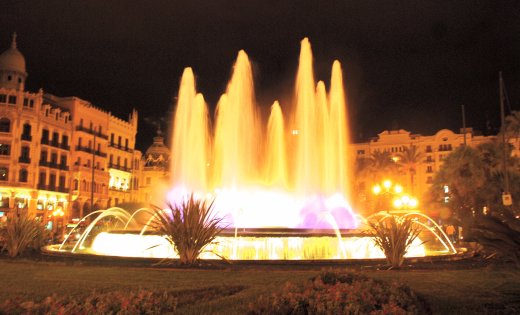
Fountain at night in Valencia. Valencia has some of the best night lighting of fountains and buildings.

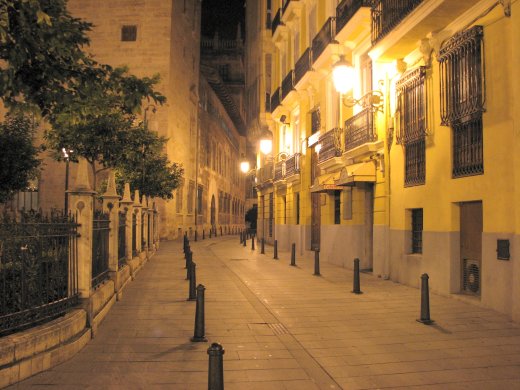
Valencia street. Photo Credit: Teresa Favazza

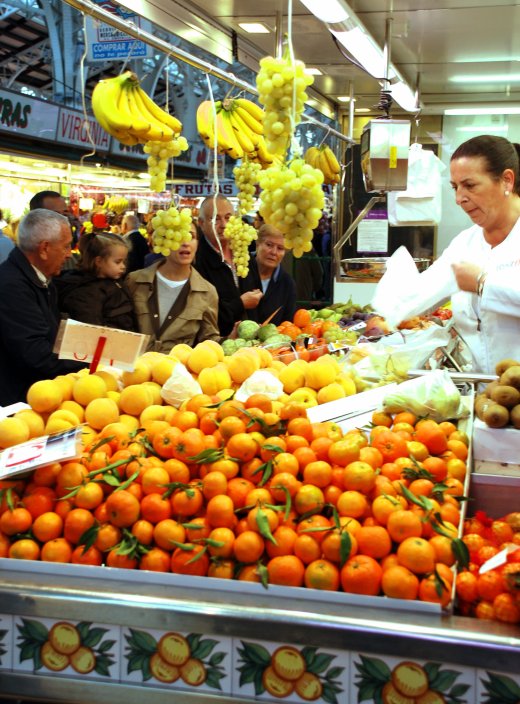
Valencia oranges at the Mercado Central/Central Market Valencia

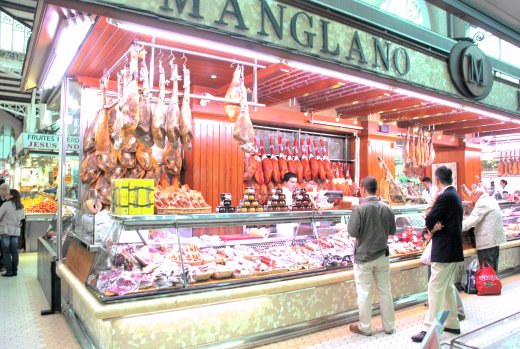
Mercado Central, Valencia

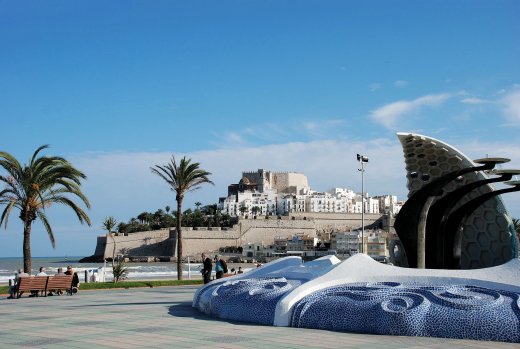
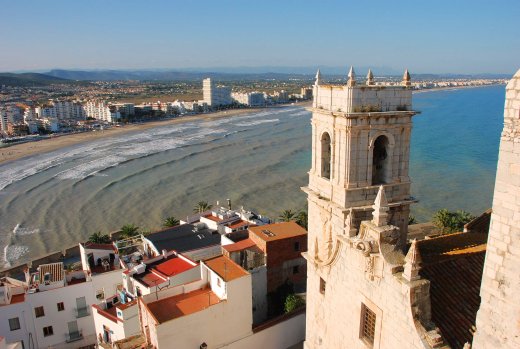
Peñíscola, Spain. Spanish modern art fountain (foreground) and the 13th century Castillo de Peñíscola (background).


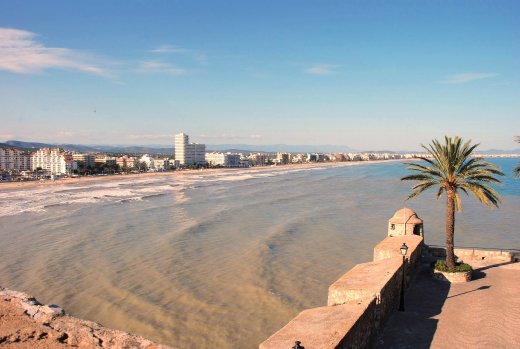
Peñíscola beach

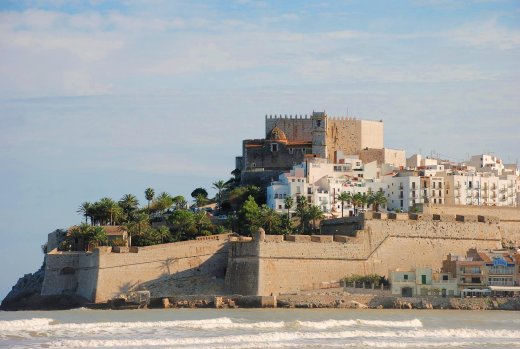
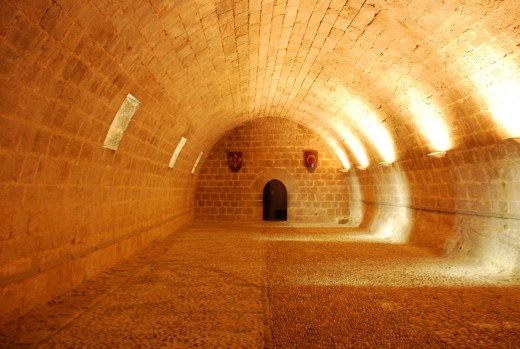
A room inside the Castillo de Peniscola

Looking into the castillo stables


Tortosa

This 10th century fortification in Tortosa is now The Castillo de la Zuda, a parador.

The coastline between Tortosa and Barcelona

C-31 Carretera de Barcelona a Valls

Motorcyclists love this twisting, scenic road.


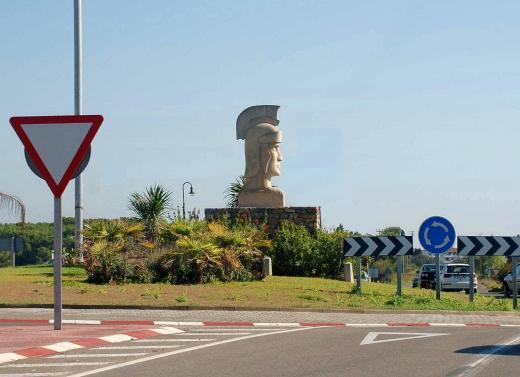
Many of the roundabouts have artwork in the center.

Arrival in Barcelona.

Posted in Spain | Leave a comment

Barcelona

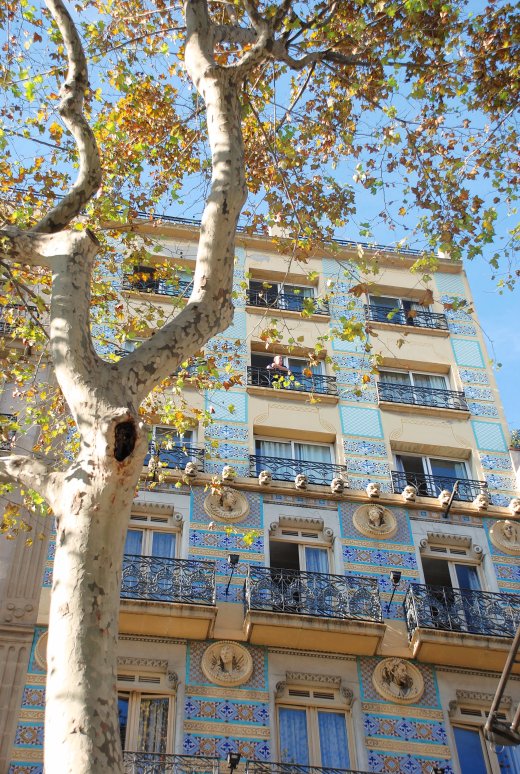
One of the many beautiful buildings along Las Ramblas

Las Ramblas

Farmers' market Barcelona

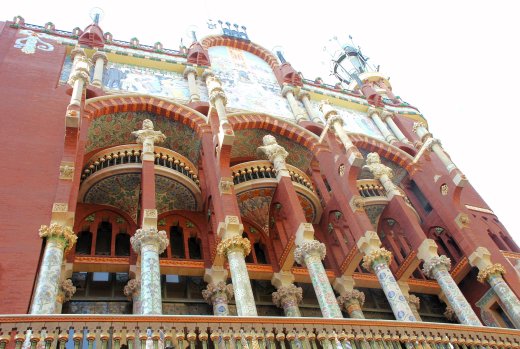
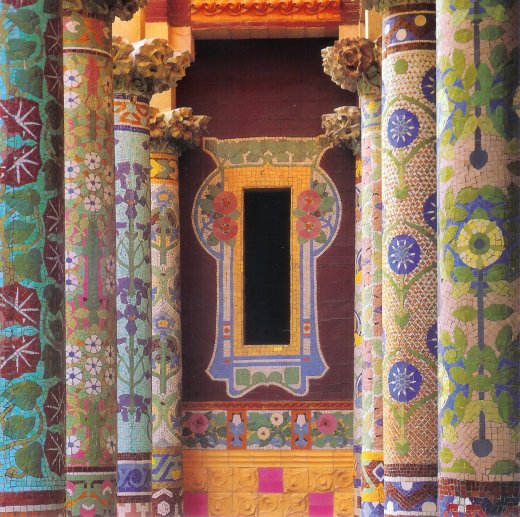
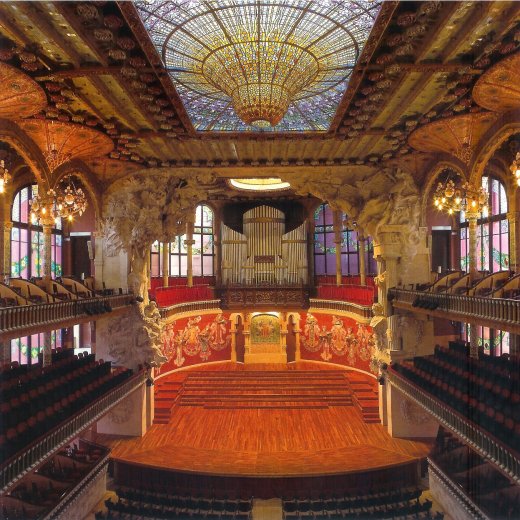
Palau Musica Catalana. Of the many outstanding examples of architecture in Barcelona, this was my personal favorite.

Designed by Lluís Domènech i Montaner

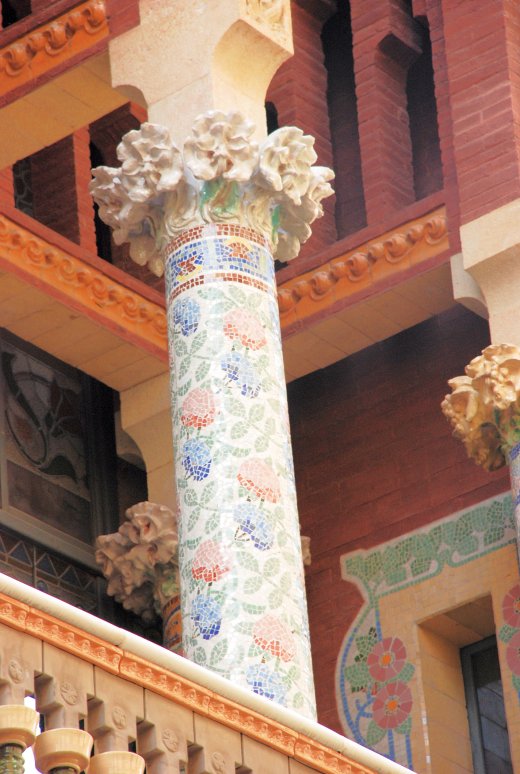
Column detail

Post card of the Palau columns

Palau Musica interior. We were incredibly lucky in that the night before our departure from Spain, we were able to buy tickets to, and enjoy a concert in this venue. It was one of the highlights of the trip. (Photography is prohibited inside the building. This is a postcard.)

The base of La Sagrada Familia, designed by Gaudi

Detail of La Sagrada Familia

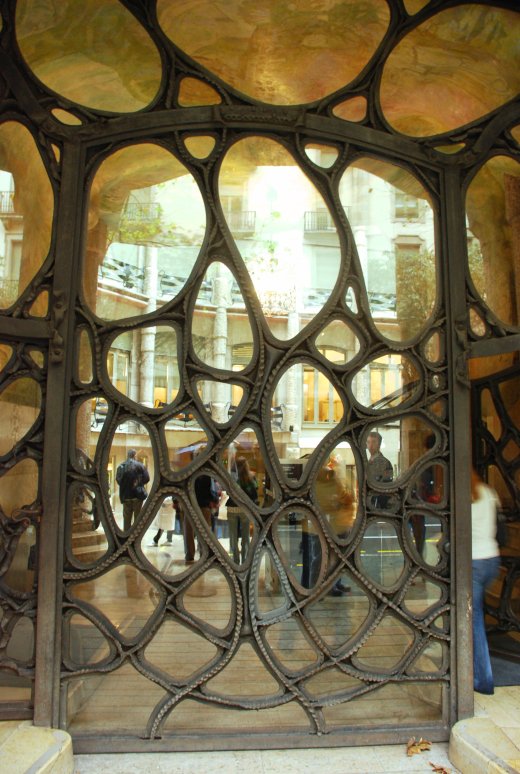
Casa Milà


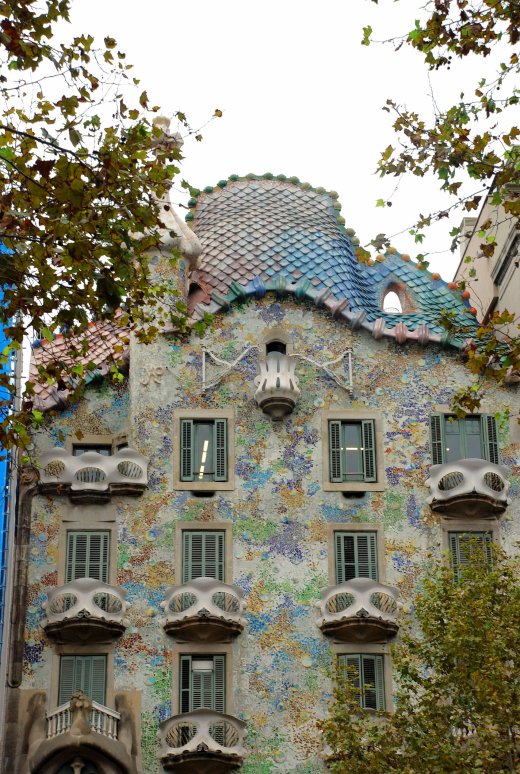
Casa Batllo

Posted in Spain | Leave a comment