Victoria Falls, Zimbabwe (Mosi-oa-Tunya, The Smoke That Thunders)

IMG_4415

I had read that August was a good month to visit Victoria Falls.  It is the time of year when the water volume is not too much, and not too little.   Before seeing it for myself, I had wondered how too much water could be a problem.  When you experience the spray/mist, then you understand.  There are times when you can’t see the waterfall for the water (spray and mist).

IMG_4419

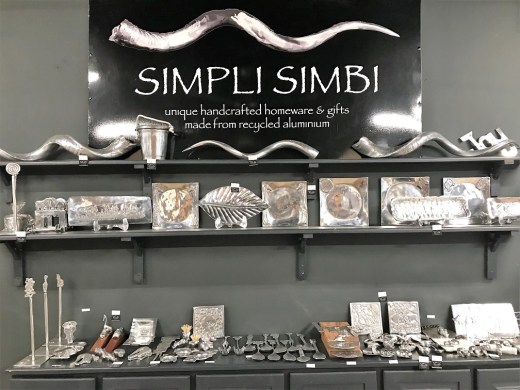
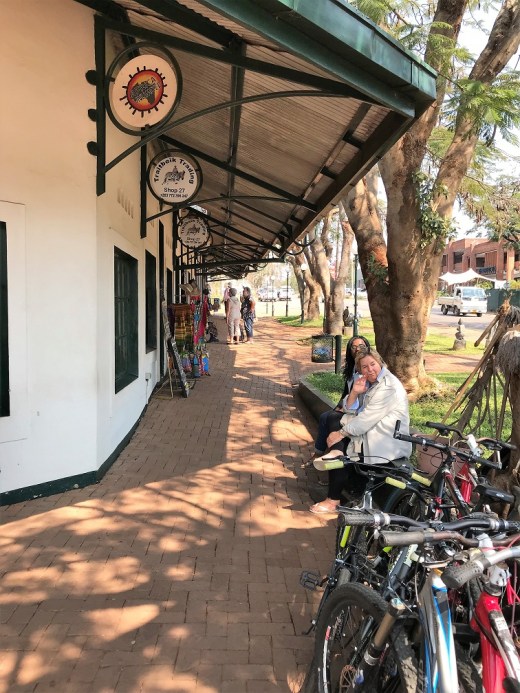
We had two nights in the town of the same name, and one full day.  If you want pictures of the falls with rainbows, the afternoon is the time to visit.  Having been in the bush for days, (no shopping), we spent the morning walking between the small shops in town and poking around for souvenirs.  The town was a short walk from our guest house.

IMG_4408

IMG_4414

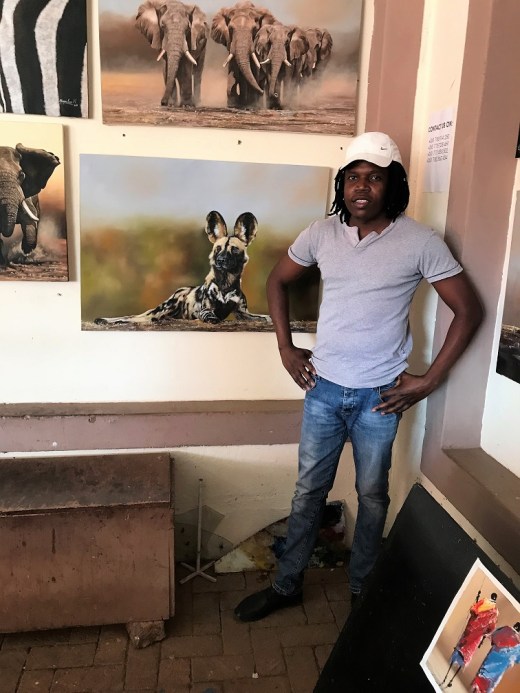
I purchased an incredibly detailed painting of an African Wild Dog from a young Zimbabwean man named Isaac.  My wild dog obsession continues.

DSC_1706

IMG_4422

IMG_4421

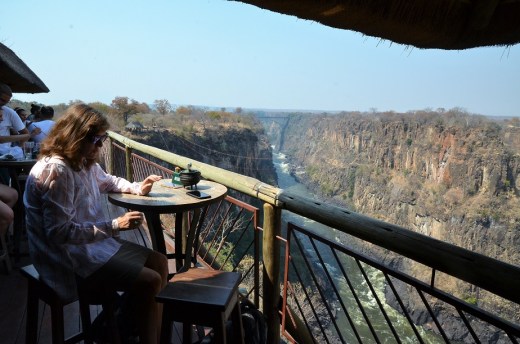
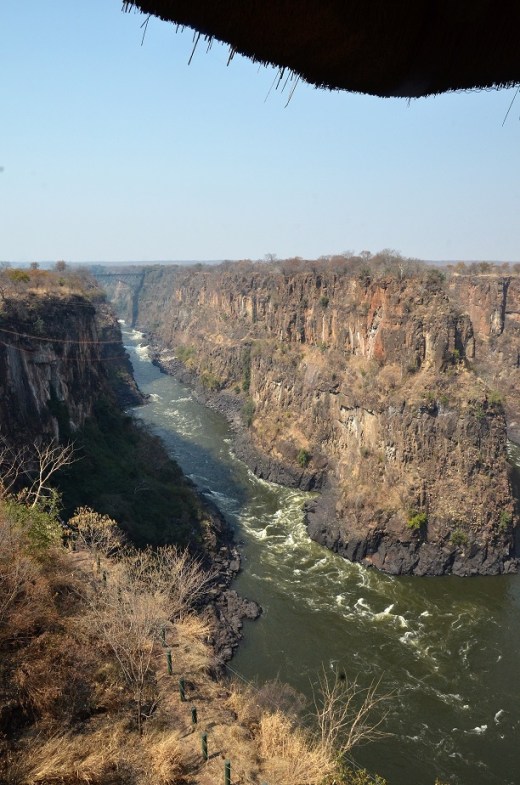
Lunch at the Lookout Cafe was recommended, so we tried it.  It has a great view.  We could see the Victoria Falls Bridge connecting Zimbabwe to Zambia from our table.  We also watched people enjoying a zip line experience.

DSC_1718

IMG_4429

DSC_1721

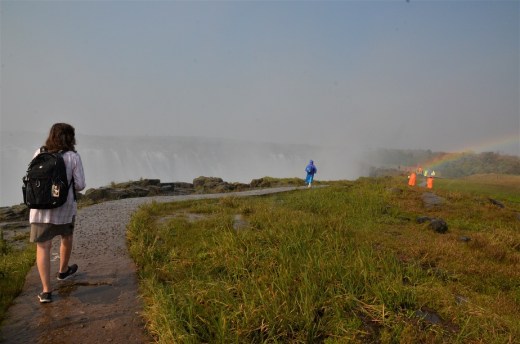
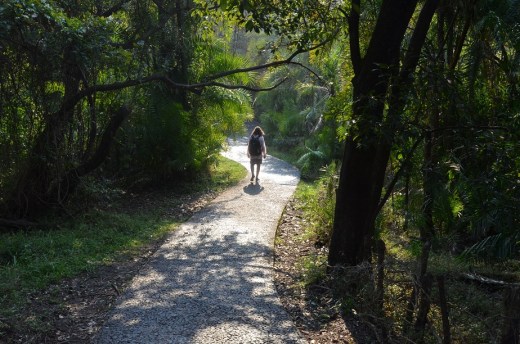
From the entrance of the falls, there is a path along the ridge opposite the falls.  It is very much a rain forest, and you will get wet.  There are 16 view points from the Zimbabwe park side.

DSC_1727

Viewpoint 1 is of the Devil’s Cataract.

Viewpoint 1:

DSC_1742

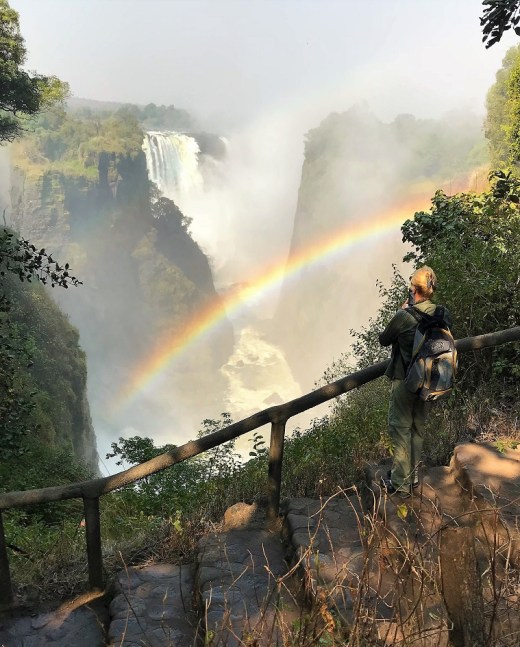
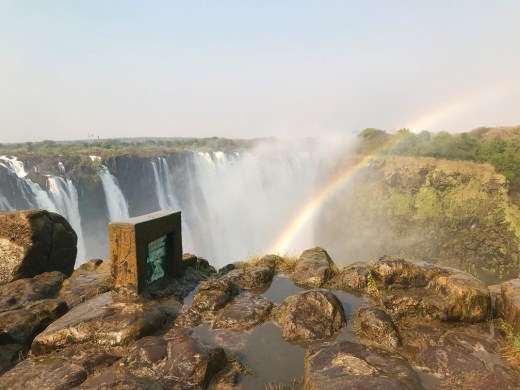
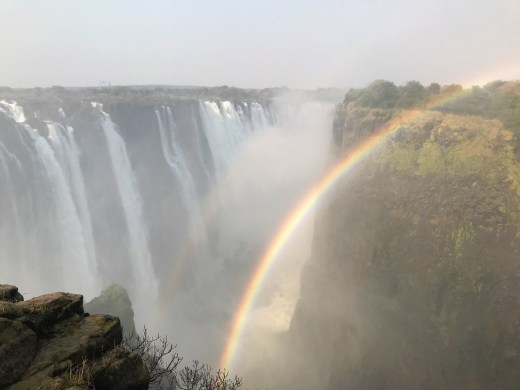
Viewpoint 2 has steps leading down to viewing area, and is a great spot for afternoon rainbows.  We were not disappointed.

IMG_6802

Viewpoint 2:

DSC_1756

DSC_1751

Viewpoints 3 – 6 are also of the Devil’s Cataract, where the main volume of water is concentrated.  There is a lot of spray in this area.

DSC_1761

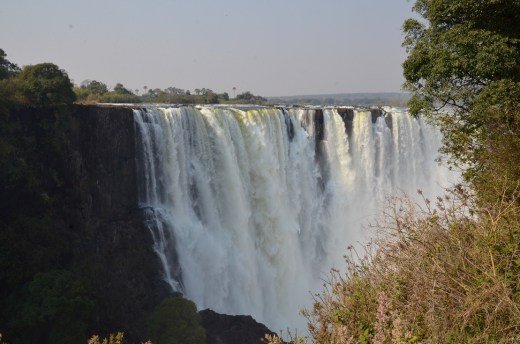
Viewpoints 7 and 8 are The Main Falls.

IMG_4438

DSC_1767

Viewpoints 9 through 12 are of the Main Falls and Livingstone Island.  They say Livingstone lowered a bullet attached to a string into the gorge to measure the height from this island.

IMG_6820

Viewpoints 13 and 14 are of Horseshoe Falls and Rainbow Falls.

DSC_1776

The path between viewpoints 13 and 15:

DSC_1781

Viewpoint 15 is called Danger Point.  You can see the boiling pot below and the Eastern Cataract on the Zambian side.  This part is dry during the dry season.

Viewpoint 15:

IMG_4441

IMG_4440

We got thoroughly soaked between viewpoints 13 and 15, then walked out to viewpoint 16 to see the Victoria Falls Bridge.

DSC_1787

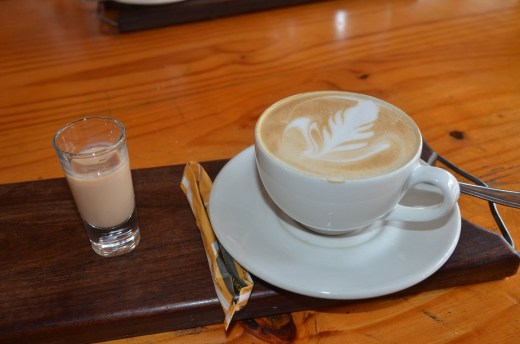
We followed the rain forest trail back towards the entrance and stopped for a cappuccino at the Rain Forest Cafe.  It was the best coffee we had had in a long time as many of the bush camps only served Nescafe.

DSC_1804

DSC_1807

Just outside the gate to the park is another souvenir area, for all your last minute shopping needs!

IMG_4458

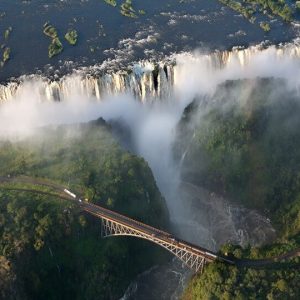
This next photo is not mine, but from the Victoria Falls website.  We did not do the helicopter photo flight, which must be popular as we heard them constantly from sunrise to sunset.

Victoria-Falls-300x300


Posted in Zimbabwe | 4 Comments

Final Game Drive and a Border Crossing Into Zimbabwe

DSC_1407

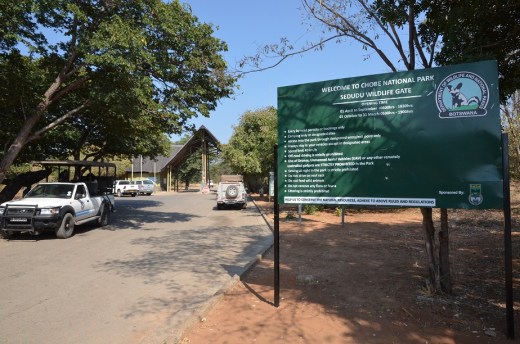
Once again at 0600 we were at the Sedudu Gate to the Chobe National Park, but this time we had a pass for a half day drive, and what a difference it made.  We took a leisurely drive along the river, no rushing, no time constraints.  Mathews was our guide and he was good at it.  We saw a lot of birds, and stopped for a coffee break on Puku Flats, just across the river from Namibia.

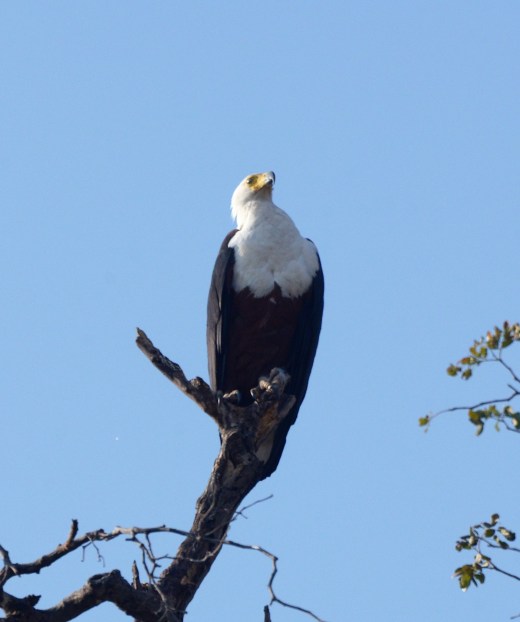
It would be very easy to become a “Bird Nerd”, there are so many beautiful varieties of birds here.  We saw many African fish-eagles, the southern carmine bee-eater, and of course the lilac-breasted roller, who seem to pose on every thorn bush.  There are eleven pages of bird pictures and names in my Tourist Map/guide book for Chobe National Park.  I bought this guide at the Sevuti Gate and am glad to have it.

African Fish-Eagle:
DSC_1428

Southern Carmine Bee-eater:

DSC_1415

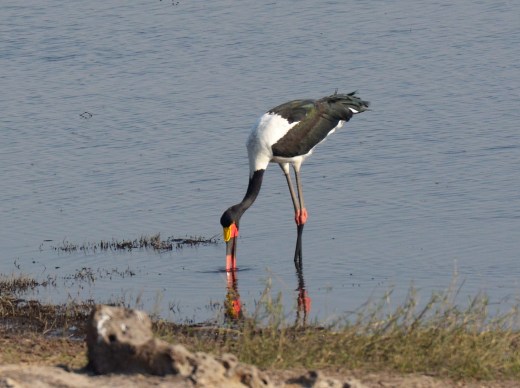
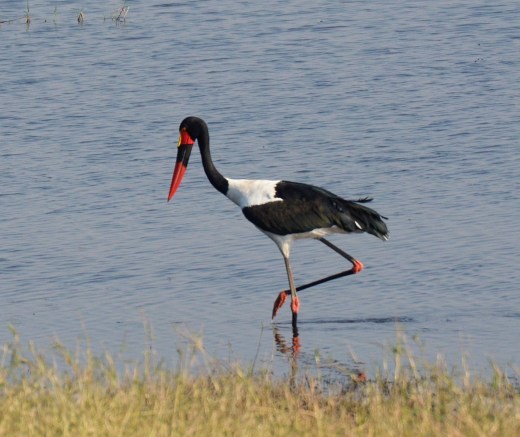
Saddle-billed Stork:

DSC_1432

DSC_1440

Also along the river we saw fishermen in small boats (not something I would do considering the size of the crocodiles we saw) and across the river in Namibia we saw red leschwe and waterbuck.

Continuing our drive, we headed away from the river.  There are three main “roads” in the park here:  the road along the river, and two further inland.  Inside the park you must stay on the tracks.

We found more elephants, not surprising, and baboons.

DSC_1467

DSC_1482

DSC_1493

IMG_4368

IMG_4371

IMG_4373

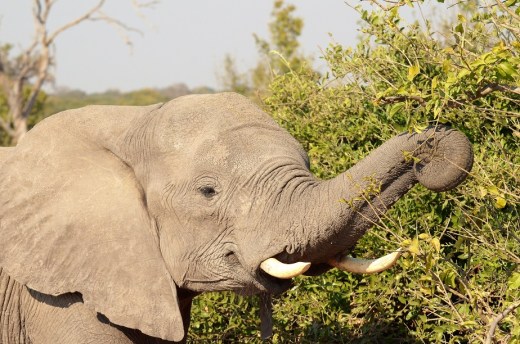
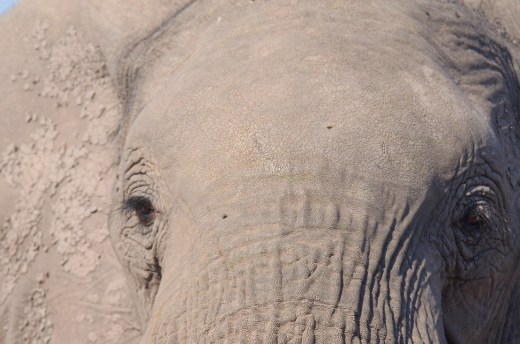
Elephant Closeup:

DSC_1514

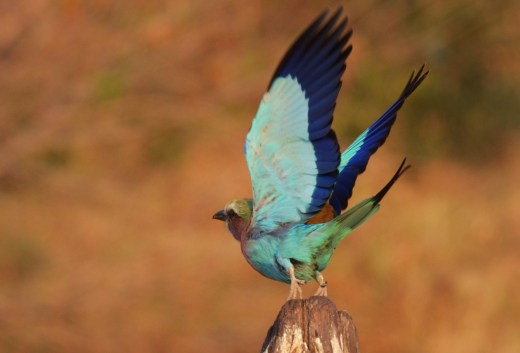
Lilac-breasted Roller: (my favorite picture of my favorite Botswana bird).

DSC_1512

DSC_1504

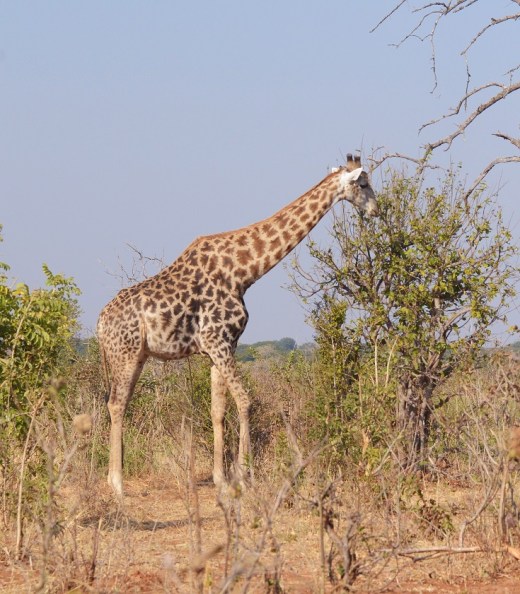
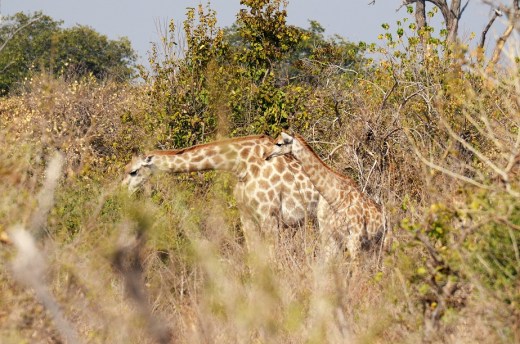
Driving still further, we passed a giraffe family and more lilac-breasted rollers.  They pose on branches quite close to the road.  They are stunning.
DSC_1524

DSC_1531

Mathews stopped at the Serondela picnic site along the river for our lunch.  At first the little vervet monkeys were cute to watch.  But oh my goodness they are smart.

DSC_1537

They know the guides by what they are wearing, and they know an easy mark.  My sister and I were at the picnic table, with boxed lunches open.  The monkeys were at least 6 to 10 feet away.  Mathews turned his back to speak with another guide and took only one step away, and that little vervet monkey saw his opportunity.  Before I knew what was happening, he was on the table and had grabbed two bunches of grapes from my open boxed lunch.  It happened so fast I hardly even saw it.  My sister was laughing and calling me an easy mark.   Mathews turned and yelled at the monkey and he ran up a tree.

The Little Grape Thief before it got my lunch:

DSC_1546

Each time Mathews turned his back, the monkeys would move closer.  All it took to back them off was Mathews turning around, and then they would run up the tree and turn and scream at him.  They definitely knew who was a guide and who was a tourist.

Mathews got a radio call saying someone had spotted lions, so we quickly packed up and headed out.  As Mathews packed our cooler into the back of the vehicle, the little grape thief jumped into the vehicle, eyeing the last cluster grapes in my hand.

DSC_1551

We found the lions, we think the same three lionesses we had seen at a distance the day before.  They were being closely watched by a tower of giraffes.

DSC_1563

DSC_1589

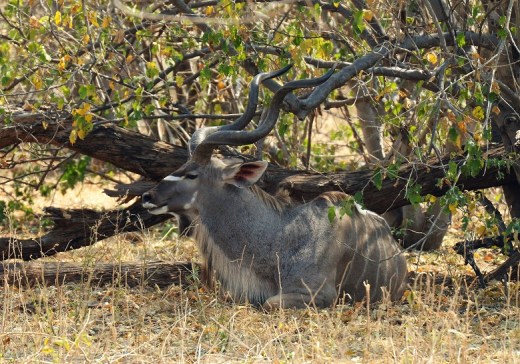
We watched the giraffe watching the lions, then continued on our drive.  We saw zebra, and the very beautiful kudu, both male and female.  The kudu males have some of the most beautiful horns, and the females look like super models.

DSC_1602

Male Kudu:

DSC_1607

Super Model Female Kudu:

DSC_1614

We again set out at a leisurely pace.  The road was quite deep sand and we came upon a stuck vehicle.  Being a national park, you can self drive.  This self drive Toyota was in trouble.  Mathews was a bit wary of getting us stuck as well, so we told the driver we would send help from the gate on our way out.

(The white Toyota facing us was the one that was stuck in the sand.)

DSC_1621

We continued along the sandy track in the general direction of the Sedudu Gate.  I was sitting on the right side, always scanning the brush for wildlife.  My sister was sitting on the left side, also scanning.

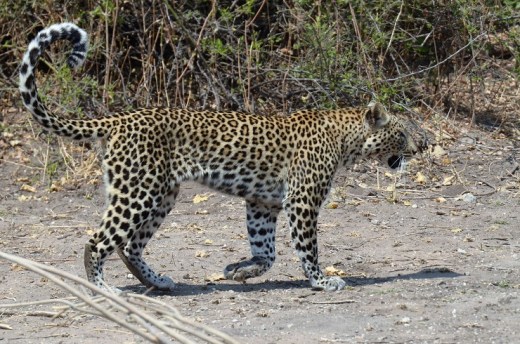
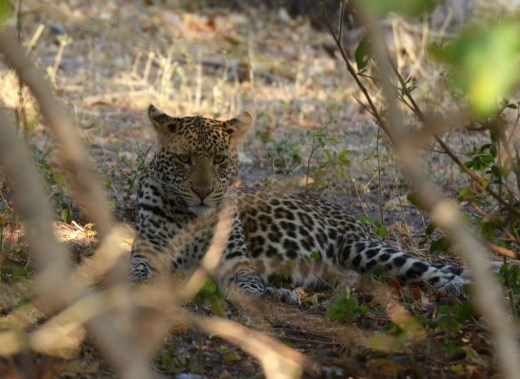
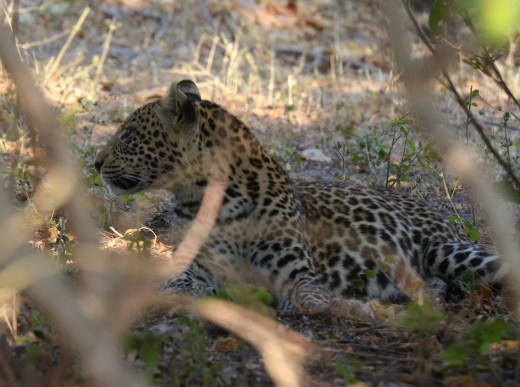
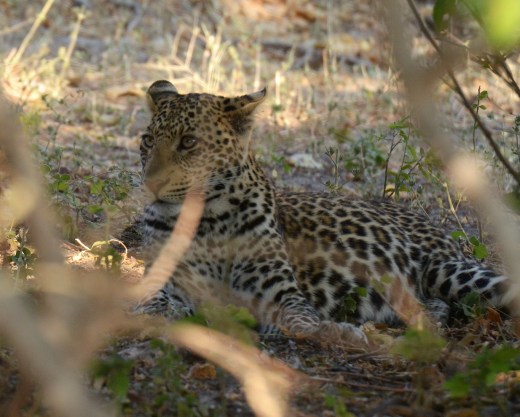
Suddenly my sister shouted “Leopard, leopard.”  Sure enough, she got points for the best spot of the day.  I’m not sure how she picked it out from the surrounding brush, and neither Mathews or I did, but she saw the cat walking, headed towards the river.  You can see the cat in this next photo, if you look closely enough.  Now imagine spotting the well camouflaged cat while moving.  They blend in very well with the surrounding flora.

DSC_1629

Mathews said we’d follow our track until the next road where we could turn down to follow the river road.  We traveled perhaps another mile, then back tracked along the river road hoping to find the cat again.

Good luck, we spotted her, still moving in the same direction.  We were the only vehicle, and kept a respectable distance, but followed her as she made her way through the brush.  We think she was scouting a shady spot to spend the afternoon.  We slowly paralleled her track until she went into the shade under a tree.  It was a very nice sighting, quiet, and we were the only vehicle.  We left her in peace in the shade of the large tree.

DSC_1640

DSC_1661

leopard 1

leopard 2

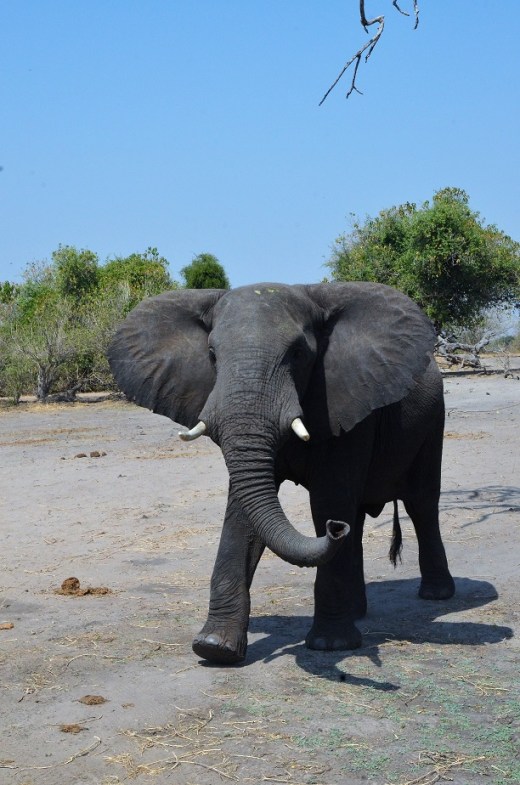
Very happy with my sister’s unbelievably good spotting (even Mathews was impressed) we headed back to the gate.  We passed elephants heading to the water.
DSC_1681

We checked out at the gate and headed back to the lodge.

DSC_1687

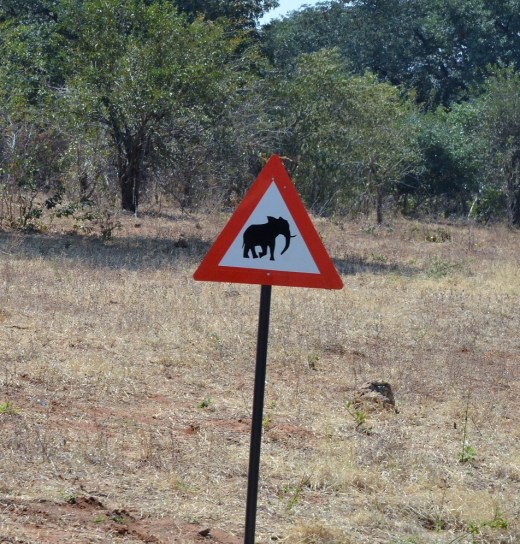
I love this road sign:

DSC_1694

Once back at the lodge, we had a short wait, and then our driver came for the transfer to Zimbabwe.  The border was a short ten minute drive, where we were handed off to another driver on the Zimbabwe side.  You first clear out of Botswana, and then into Zimbabwe with separate offices a short distance apart.  Our Zimbabwe driver waited for us while we spent the 1 1/2 hours in line to purchase our Visa and entrance into Zimbabwe.

DSC_1697

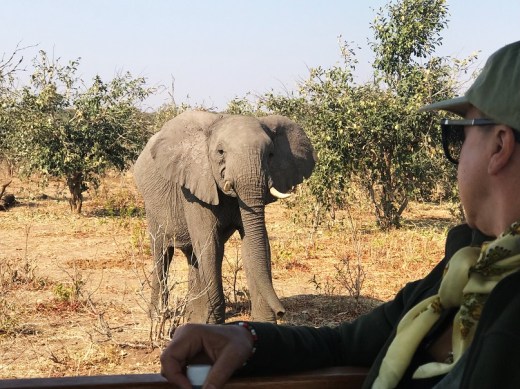
The drive from the border to Victoria Falls was about one hour.  The roads were good, and we saw elephants off the side of the road.

The Road In Zimbabwe:

DSC_1698

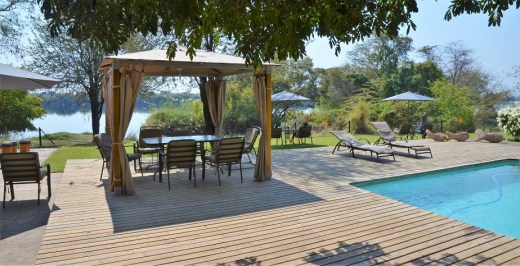
We had two nights stay at Bayete Guest Lodge, a very nice place.  It was a little oasis.

http://www.bayeteguestlodge.com/

IMG_4386

IMG_4388

They very kindly made us a late lunch/early dinner and we settled into a cool room with a hot shower.
Posted in Botswana, Zimbabwe | 2 Comments

A Different Game Drive Experience

DSC_1204

We had planned a three hour game drive starting at 0530 for our one full day in Kasane.  Starting from the River View Lodge, it is about a 15 or 20 minute drive to the Sedudu Gate of the Chobe National Park, all on paved roads.  The gate opens at 06:00 in August and closes at 18:30.  You can purchase a 3 hour pass, a 6 hour pass, or a full day pass, but these were facts that we were initially unaware of, and would make a big difference in our experience.

Having come from the more remote areas, we were accustomed to climbing into our vehicle and driving past the mostly unoccupied gates and into the park, and quite often be the lone vehicle in the area.

This experience was totally different.  We had been told we were to go with Mathews, our guide from the night before.  At 05:30 we were told that Mathews was doing a half day drive and we would go with a different driver for the three hour drive.  We did not know that we had the option for a longer game drive, and at 05:30 not being as quick of mind as we should have been, we went along with the program.

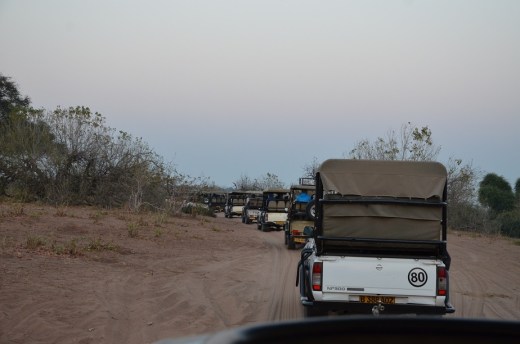
Arriving at the gate at opening time, it reminded me of a Best Buy store the Friday after Thanksgiving, when the doors open and the flood of shoppers is unleashed.  It was the same with the game drive vehicles.  We were in a congo line of vehicles, all jostling for position.  To my sister and I, it was a shock.

But the Sedudu Gate to the park is the closest gate to a populated area, and if you are in Botswana with limited time, this is the type of game drive you would do.

As we sped along the sand track, breathing in the exhaust of the vehicle in front, I was wondering what the rush was all about.  After a while I just couldn’t take it anymore and asked the driver what was going on and why the rush.

We were told we had just three hours to get into the park, possibly see “big cats” (because that is what everyone wants to see) and get out.   The drivers all rush around trying to spot the cats as they settle into their shade areas for the heat of the day.  It was a thoroughly unimpressive experience.

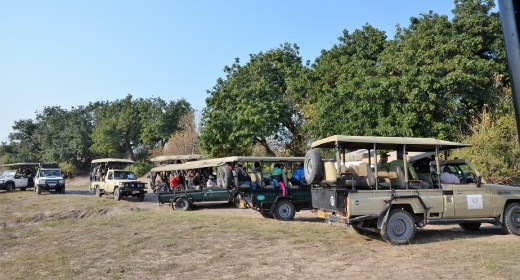
When a leopard was spotted, it was like a three ring circus.  My sister counted 19 vehicles trying to get in a position to photograph the poor thing.  It was chaotic.  I asked our driver to back off so I could photograph the melee.

DSC_1289

I couldn’t fault the driver.  He did not know that we had come from the remote areas and were used to a more leisurely pace and much less competition.  He was just trying to please us by finding the Big Cat.
We did see the leopard, who seemed less than happy with the action all around, but stayed in the shade of the trees.

DSC_1301

DSC_1309

DSC_1311

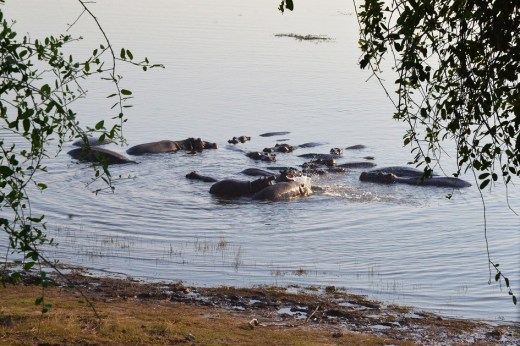
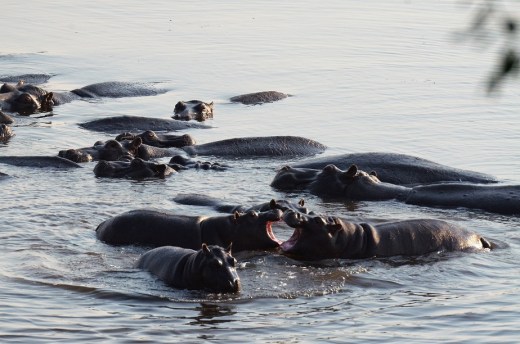
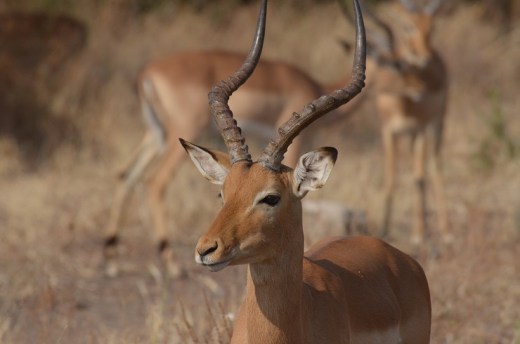
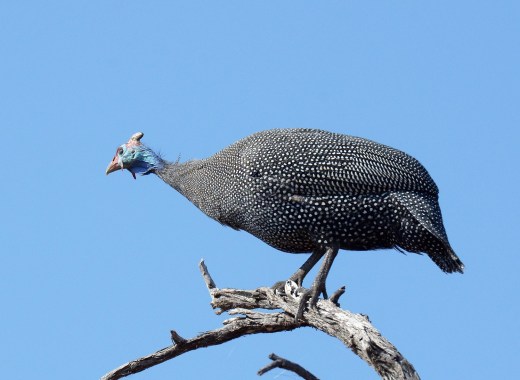
We also saw young hippos playing, giraffe, impala, three lions from a distance, and one of my favorite little birds, the guinea fowl, affectionately known as the Chobe Chicken.

DSC_1241

DSC_1272

DSC_1326

DSC_1320

DSC_1339

We exited the park after three hours, our permit length of time.

DSC_1344

The Sedudu Gate to the Chobe National Park:

DSC_1350

Once back at the River View Lodge, we spoke with the management and arranged for a half day private drive the next day.  We would have to change our Zimbabwe transfer time, but it would be our last game drive of the trip and I was determined to leave with a good experience.

The lesson learned here was that the three hour, fast paced, in and out game drive was not something I would recommend or ever do again.  It was nothing like the remote area drives and was anything but peaceful.

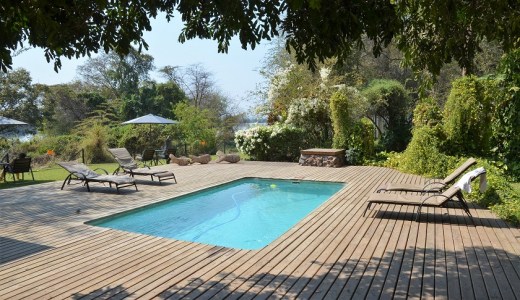
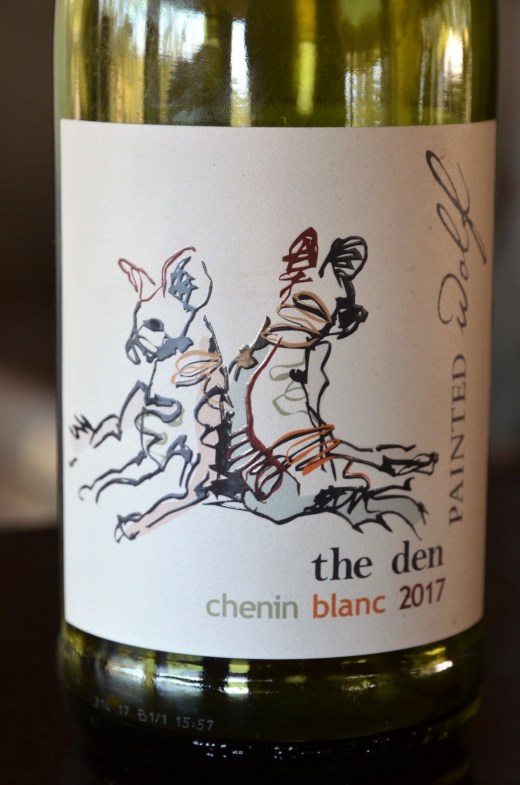
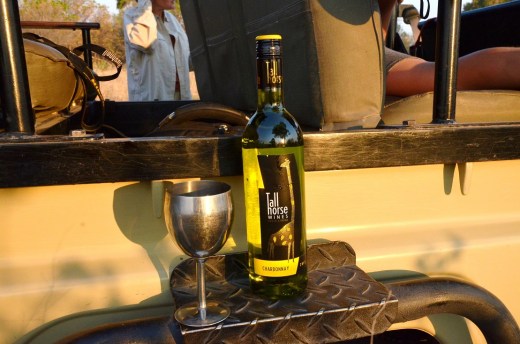
My sister took another river cruise while I relaxed by our pool and sampled some new to me South African wine.

DSC_1051

DSC_1050

DSC_8344

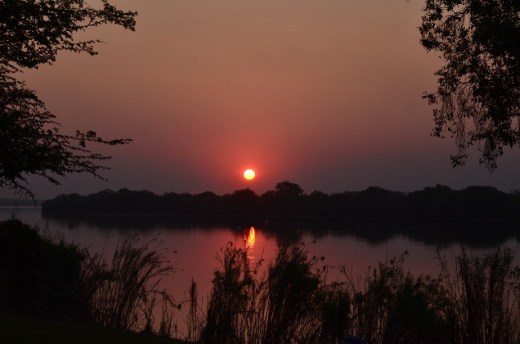
It was a nice sunset from the patio of the lodge.

DSC_1368


Posted in Botswana | Leave a comment

Savuti to Chobe River Front

DSC_1033

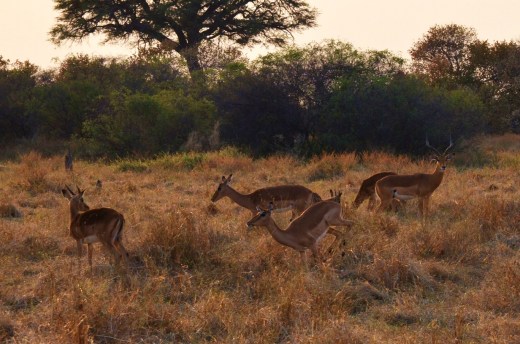
We started our day with an early morning game drive, our last for the Savuti area.  We saw impala, kudu, elephants, tsessebe, steenbok, ostrich, mongoose, black backed jackals and a host of birds.  It was a pleasant and relaxing drive and a nice way to end our stay in Savuti.

DSC_1043

DSC_1035

DSC_1028

After the drive, Bonnie took us out to the airport to meet our Mack Air flight to Kasane.  Typical game drive attire is hat, sunglasses, scarf and long sleeves.  Don’t wear white for game drives, but this was on our way to the airport so it was ok.

L in Sevuti - Copy

airport sign 2

In Kasane we stayed at the River Front Lodge on the Chobe River.  From this area you can stand in Botswana and see both Namibia and Zambia.  Kasane is a small town close to the Sedudu Gate to the Chobe National Park.
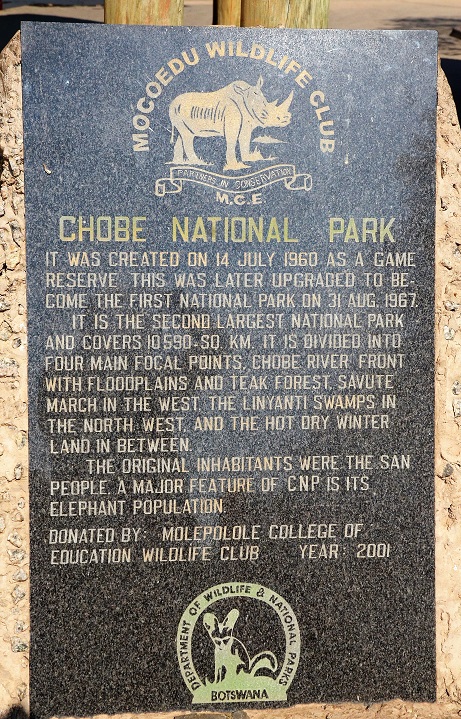
The Chobe National Park is a large area with diverse wildlife and distinct ecosystems.  We just came from Savuti, known for its game and large number of lions.  In Kasane, we are still in the national park, but this area is known as the Chobe River Front and is home to a huge number of elephants who congregate along the river.

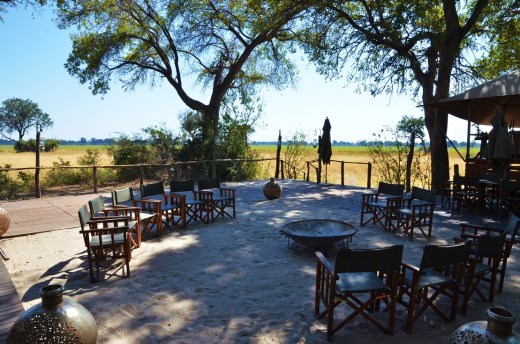
But we were no longer “camping.”  No more tents and we had electricity 24 hours a day.

Our launch site:

DSC_1054

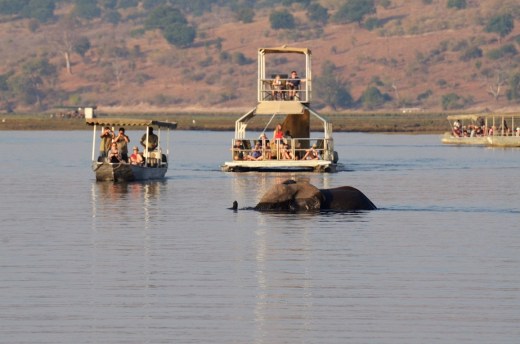
Our first outing was an evening river cruise along the Chobe River.  The river is the border between Botswana and Namibia.  The elephants are protected on the Botswana side, but are subject to harassment and shooting on the Namibia side.  They cross the river at times, and raid the crops of farmers.  We saw elephants swimming the river between the Sedudu Island (very small and still Botswana) and the shore of the river inside the park.
DSC_1120

DSC_1058

We saw many crocodiles, a water monitor, lots of water buffalo and several hippos.

DSC_1062

DSC_1067

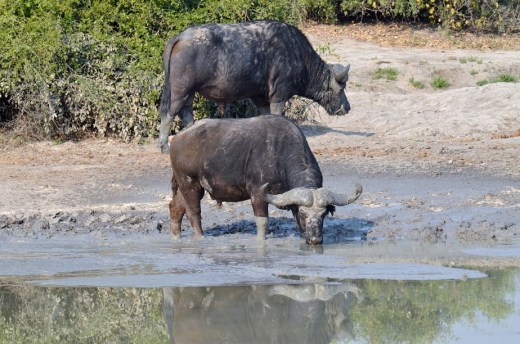
Our guide Mathews told us that the bachelor buffalo are called Daka Boys, meaning Mud Boys.

Daka Boys:

DSC_1174

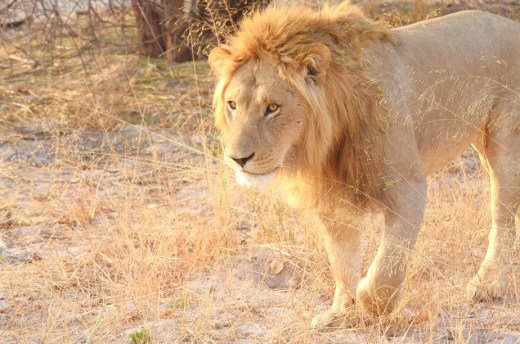
But the truly amazing site was when we came to the river front area where the elephants gather.  It was something to see, over one hundred elephants all together along the river front.  My sister counted them and stopped when she reached 100.  We saw a family with a little one that Mathews estimated to be just a few days old.

DSC_1077

DSC_1090

DSC_1144

DSC_1140

Tiny Baby Elephant:

DSC_1165

DSC_1088

We cruised back to the dock as the sun set.

DSC_1200

Posted in Botswana | 4 Comments

Camp Savuti Day 6: Oodles of elephants, up close and personal with a lion, and curious hyena pups

DSC_0136

Our second full day of game drives at Camp Savuti started with a search of the immediate area for the lions that had been making noise the entire night.   They sounded as if they were right in the camp.  After our usual breakfast at 0630 we crossed the dry gulch and headed into the scrub near camp called Sand Ridge.  But we found nothing of the noisy lions.  Bonnie would stop and speak with the other guide of each vehicle we passed.  Had anyone seen the lions?  Always no.

After cruising the area, we headed out toward the Savuti Marsh to see if we could see any cheetah.  The wide open marsh area is cheetah territory.   We didn’t see cheetahs, but we did see a long list of other animals:  wildebeest, eland, tsessebe, zebra, impala, and ostrich, and I’m probably forgetting a few others.

DSC_0160

DSC_0161

DSC_0173

DSC_0184

DSC_0192

Headed towards the big baobab tree for our coffee break, sharp-eyed guide Bonnie stopped and asked to borrow my binoculars.  Sure enough, he had spotted a pride of lions.  I don’t know what it is he saw.  When the mid morning sun starts to heat up, the lions like to lie flat in the shade and with their color being the same as the surrounding sand, it is very difficult to see them.

DSC_0201

DSC_0203

DSC_0208

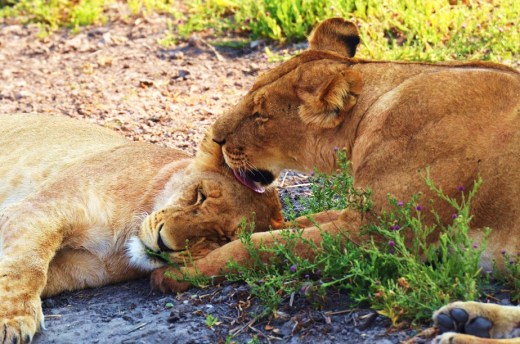
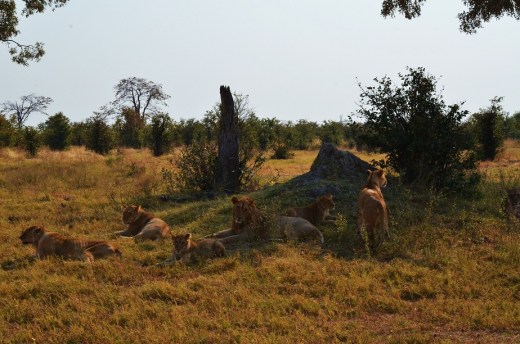
Bonnie drove the vehicle over to the pride and we watched as they relaxed in the shade and groomed each other and looked very much like large house cats.  We were the only one in the area, so we could watch them in silence.

DSC_0278

DSC_0282

DSC_0284

DSC_0287

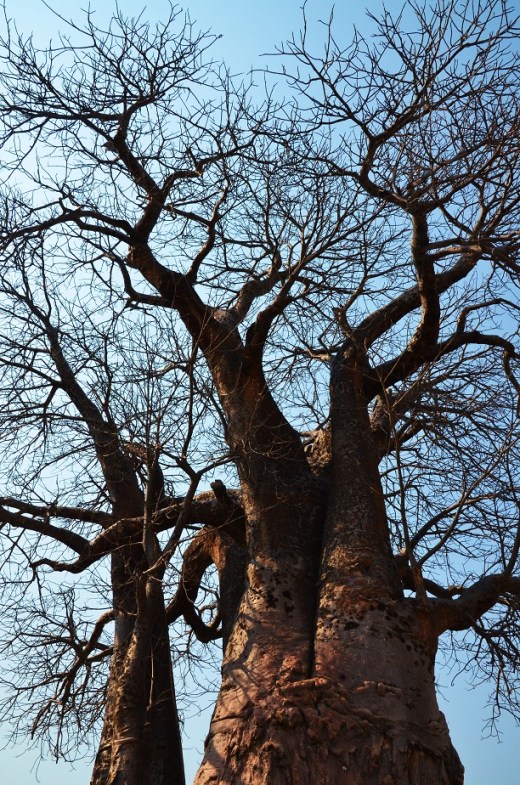
Leaving the lions in peace, and passing four elephants on our way, we took our coffee break under a baobab tree.

DSC_0353

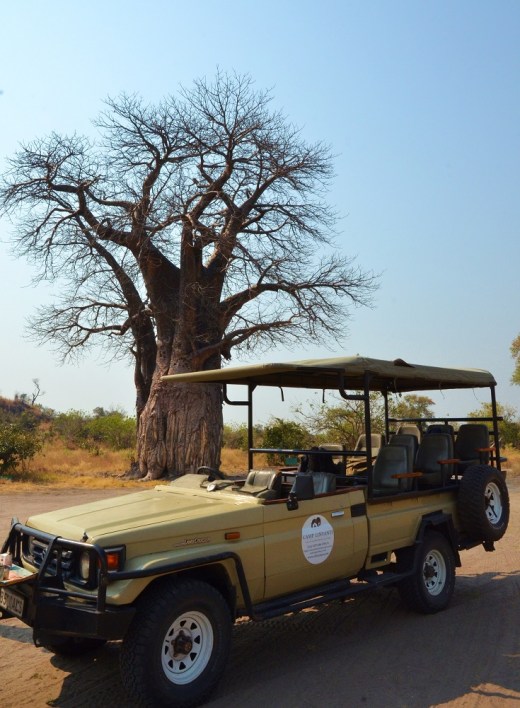
Legend has it that they were thrown down from heaven by God and stuck in the ground like a spear, upside down with the roots pointing up.  Red and yellow billed hornbills were everywhere, and when they saw our cookies, they came hopping around looking for crumbs.

DSC_0362

DSC_0369

DSC_0384

DSC_0390

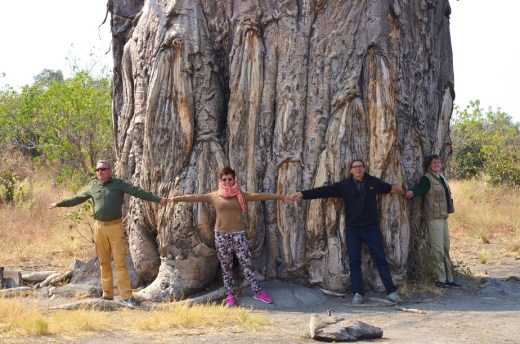
The size of the baobob is demonstrated here with our game drive companions.

DSC_0393

DSC_0391

DSC_0402

After coffee break we piled back in the Land Cruiser and slowly made our way back in the direction of camp, always scanning.  Thoroughly satisfied by our morning drive, we were back in camp for our 11 am brunch.

DSC_0429

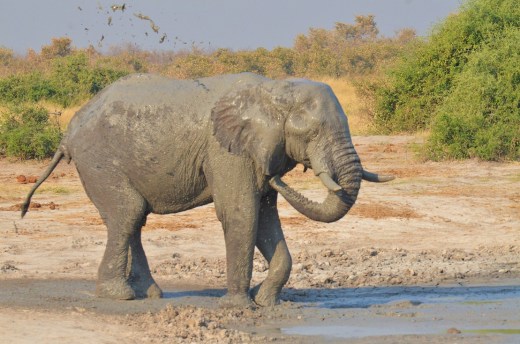
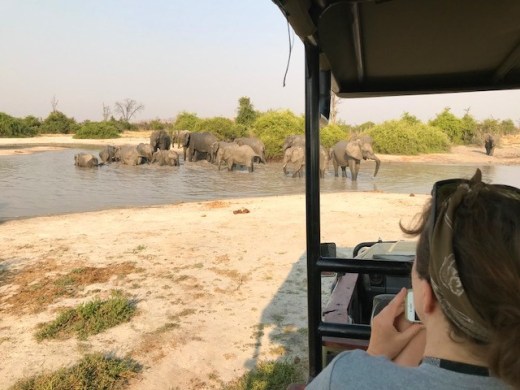
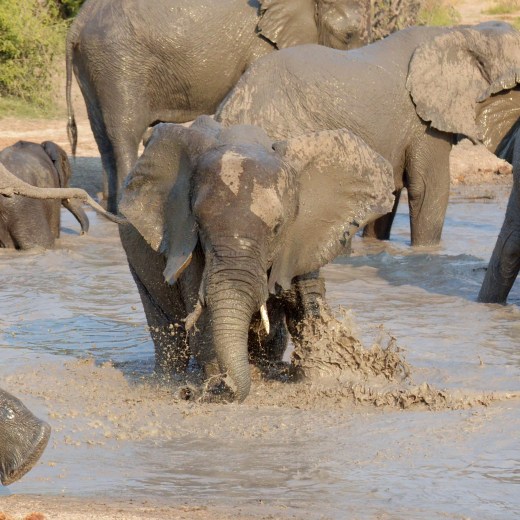
For the afternoon drive, my sister and I had the vehicle all to ourselves.  Our first stop was a water hole where elephants and buffalo go to wallow in the mud.  At first we saw a lone elephant and several buffalo.  The elephant was spraying mud all over himself and the buffalo looked totally caked in mud.  Bonnie suggested we head towards the main section of the water hole and wait to see if the breeding herd of elephants would come down.

DSC_0446

DSC_0448

DSC_0450

DSC_0456

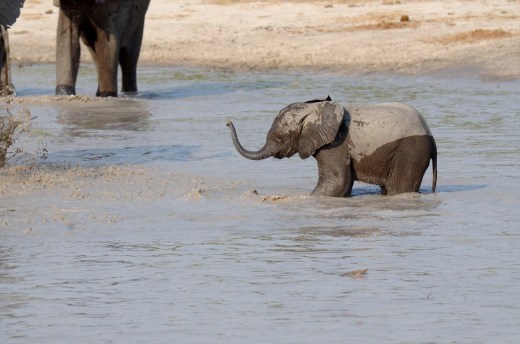
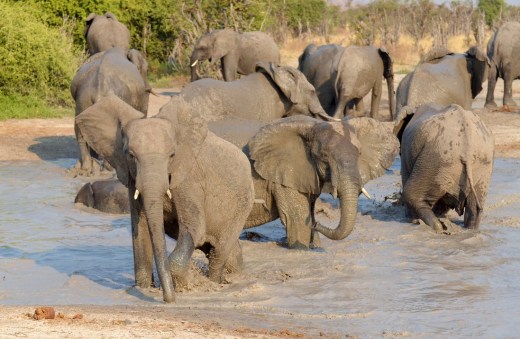
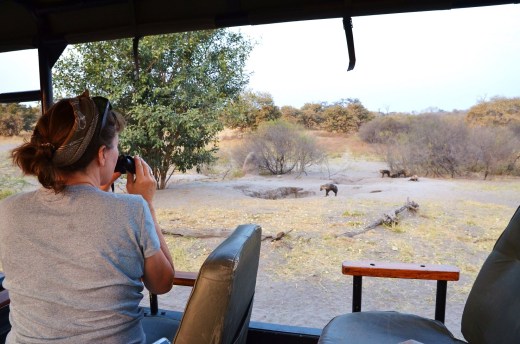
And yes they did.  A large herd came to the water hole, right on schedule, and we watched as they delighted in an afternoon bath.  The herd had several babies with them and one seemed overjoyed with his afternoon water play time, using his tiny trunk to splash in the water and rolling in the shallow water, then the dust.  It was quite a show and we watched until the elephants had finished and they slowly walking away.  All the elephants we watched seemed to never be in a hurry, and it is relaxing to watch their deliberate and dignified movements.

becky watching elephants

DSC_0533

DSC_0618

DSC_0625

We knew the lions we searched for in the morning near camp were probably still in the area.  They must have found a shady spot to spend the hot part of the day, and would still be there.  Other camp vehicles also were searching, and finally someone spotted the three big male lions, as expected, sleeping in the shade, waiting for cooler temperatures and their night time activities to start.

DSC_0720

A half circle of about 6 vehicles, each filled with wide eyed and wonder struck tourists, watched the lions from a respectable distance.

lions and jeeps

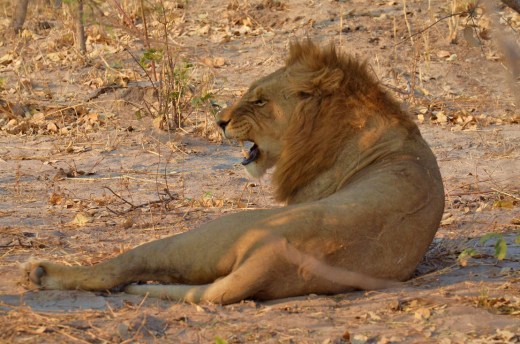
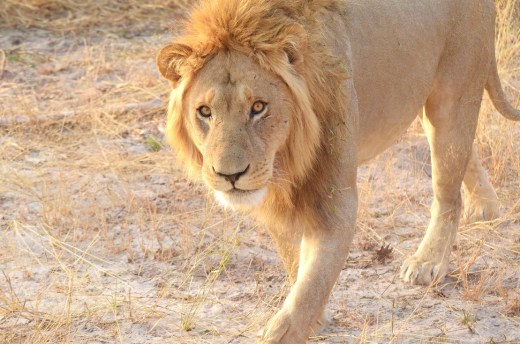
The light was beautiful, casting a golden hue on the big cats.  As we watched, one of the lions slowly got up, stretched, and made his way directly towards our vehicle.

DSC_0758

DSC_0762

DSC_0763

I’m was clicking photos as he approached, until he got too close.  The following pictures show just how close he got.  That is the seat of the Land Cruiser in the picture.  He got so close I couldn’t focus fast enough.  He passed directly behind our Land Cruiser and casually walked off.  It was my closest encounter with a lion.

DSC_0764

DSC_0765

DSC_0788

DSC_0793

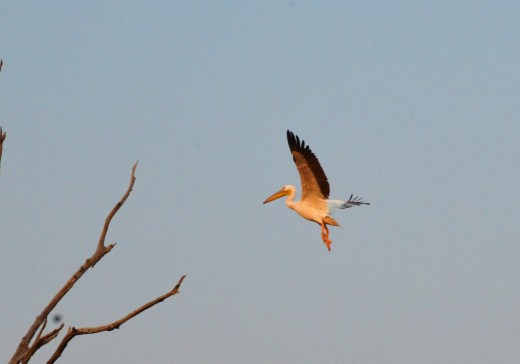
Thoroughly satisfied with our lion encounter we stopped to watch a large flock of pelicans settle into the trees for the night.  They circled the area in one large mass, then one by one made their landing approaches into the tops of trees.  It was the golden hour, that last hour of light before sunset, and a beautiful time of the evening.

DSC_0798

DSC_0808

DSC_0821

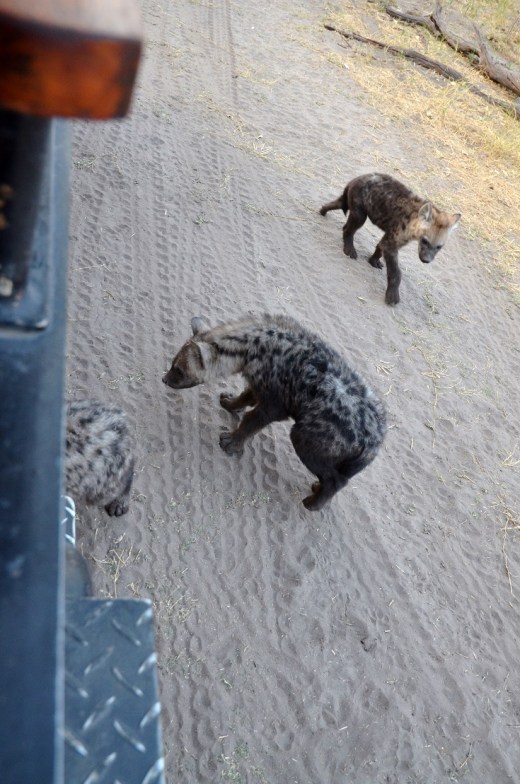
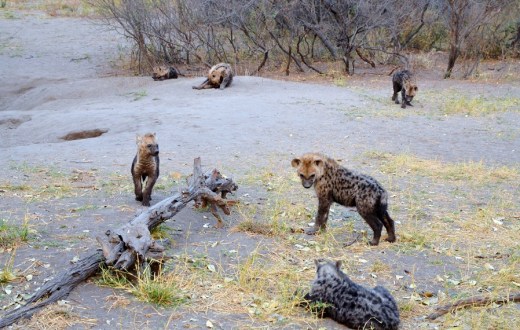
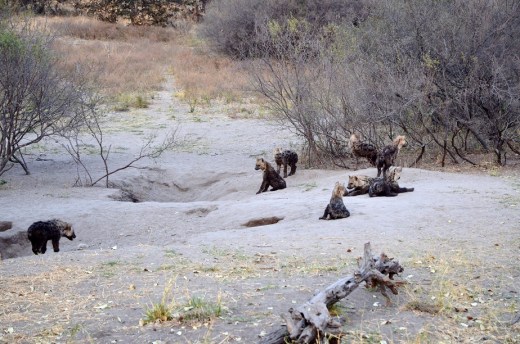
Our last great encounter for the day was at the hyena den.  When we first arrived, there was one other vehicle parked and two hyena pups near the opening of the den.  The other vehicle left and we were left alone.  Bonnie asked if we’d prefer to go have sundowners or stay and watch the hyenas.  Since it was just the two of us, we opted to stay at the den.  It was peaceful, and we sat quietly and patiently.  Soon a third pup cautiously came out of the den.  As we continued our silent watch, eight of the ten pups came out of the den.  We watched as they played with each other.

DSC_0919

Three of them got curious and made their way over to us.  They got so close as to be nearly under us, so Bonnie turned the engine over once to scare them back.  It was nice to sit quietly and watch them.

DSC_0933

DSC_0900

DSC_0935

The spell was broken when another vehicle came to watch and the occupants were chatting.  The puppies quickly disappeared back into the den.

DSC_0938

DSC_0976

A few basic rules of game drives;  be quiet when you see animals, don’t make any sudden moves, don’t wear white, and bring binoculars.

In the growing darkness we turned back towards camp, passing a lone elephant feeding in the pink glow of sunset.  We would enjoy our sundowners back in camp, but it was worth it to experience the joy of seeing the puppies playing and getting a truly up close hyena encounter.

DSC_0979

Posted in Botswana | 1 Comment

Savuti Camp, Day 5: Chobe National Park

DSC_9617

Despite the dry and scrubby look, there is plenty of life in Chobe.

I was here in this same area seven years ago, and it looked quite different.  I remember it to be much greener and there were small lakes and water in the river bed.  I asked our camp manager Jess about that.  She said the water dried up in 2015 and there had been no water in the river bed since then.  To keep the animals in the area, water holes had been dug with pumps powered by solar.  We saw a lot of solar power usage in all the camps.

We saw plenty of wildlife on our first full day of game drives in Sevuti.

DSC_9613

At first light we passed a hyena den.  Two of the ten pups were out of the den and we watched them for a little bit.  We also saw impala and a few water buffalo in the morning.

DSC_9623


Early in the drive we followed two lionesses as they climbed a rocky outcrop and took up a Lion King perch to watch the surrounding area.  These two lionesses were not from any of the local prides.

DSC_9631

lioness 1

DSC_9643

DSC_9660

What we didn’t see, and what I remember from before, were trees filled with baboons and vervet monkeys.  I asked Bonnie about the absence of the monkeys, and he said they left when the water dried up.  All but one hippo left as well.  We felt sad for the one hippo who stayed behind.  He lives all alone in a very small pond, and peeked at us with just his eyeballs out of the water when we stopped to visit him at his pond.

We ended the morning drive with a pride of lions, doing what they do most of the hours of the day, sleeping.  One lioness had a wound on her right side, and one cub had a blind eye.  Bonnie explained how the cub had been stung by bees in a cave when quite young.  The other cub had died from the bee stings.

DSC_9680

DSC_9702

DSC_9704

DSC_9709

Cat’s Claw:

DSC_9840

Back in camp we sat in the main area for brunch.  The days start quite cool, but quickly heat up.  The temperatures swing from the mid 40s F to nearly 90 F.  The tent was too hot for a midday nap, but the outdoor shower was pleasant.

DSC_9854

DSC_9844

savuti camp tent

A snack at 3 pm gets you ready for a 3:30 afternoon drive.

On this drive we were accompanied by a couple from Belgium.  It was quite a pleasant drive as we followed the dry river bed, passing a steenbok, one of my favorite birds, the lilac breasted roller, and a large make kudu.

DSC_0012

DSC_0042

DSC_0044

DSC_9987

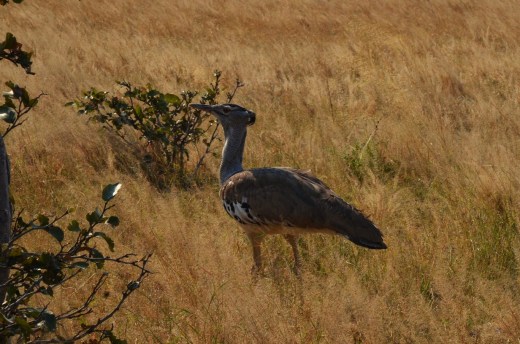
On the plains we saw wildebeest, the national bird the kori bustard and a black backed jackal.

DSC_9866

We got lucky with two less than common giraffe sightings.  One giraffe was drinking, but as soon as he saw us, he righted himself from his ungainly drinking position.  As we continued we saw many more giraffe and two bulls fighting.  The fighting is called “necking”, and can last either a short five minutes, or for much longer.  We watched these two males go at it for a while, then drove off as their dispute continued.

DSC_9888

DSC_9924

DSC_9969

DSC_9971

DSC_9983

DSC_9980

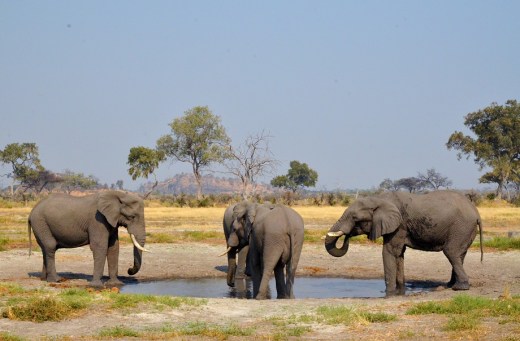
There is a water hole frequented most evenings by elephants, and it was near this hole that we had our sundowners.  We encountered a few bull elephants in the grassy plains on the way to the water hole, and then watched the family herd as they took their turn.

DSC_0064

DSC_0089

DSC_0088

DSC_0055

DSC_0106

DSC_0107

DSC_0109


DSC_0130

DSC_0132

It was a fast paced drive back to the main gate of the park to be exiting by 6:30 PM, but we made it.  The sand is quite deep on many of the driving tracks and four wheel drive is a must.

The dinners at Sevuti Camp are announced with an acappella song sung by Jess and the waiters.  The food was very good, all vegetables were fresh and tasty.

Every night we slept in Kadizora Camp we heard hippos.  All night at Sevuti night, every night, we heard lions.  At times they sounded so close as to be in camp.

Posted in Botswana | 5 Comments

Day Four, Camp Kadizora to Camp Sevuti: From the Delta to the Desert

DSC_9095

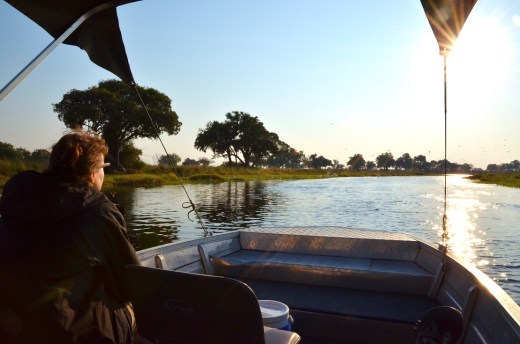
Today was the day we had to transfer from Camp Kadizora to Camp Sevuti, another small plane ride.  In the morning we did a two hour delta river cruise, a birder’s paradise.  It was a beautiful time of day, early, and it was quiet.   It was teeming with life.  It was just the two of us and our guide, and it was quite pleasant.

DSC_9100

DSC_9107

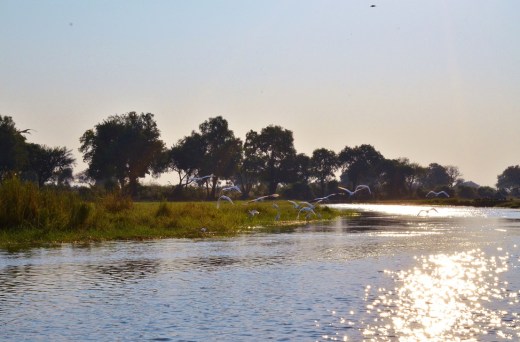
We saw hundreds of birds, including stork, pelicans, king fishers, egrets, African fish eagles and others I can’t remember.  The water was still and we heard nothing but the birds at first.

DSC_9147

DSC_9162

DSC_9179

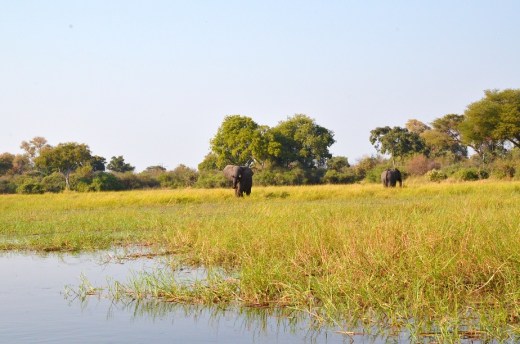
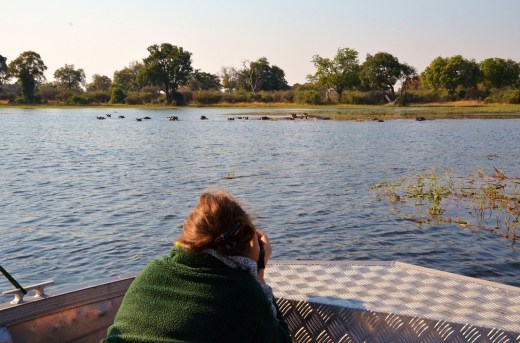
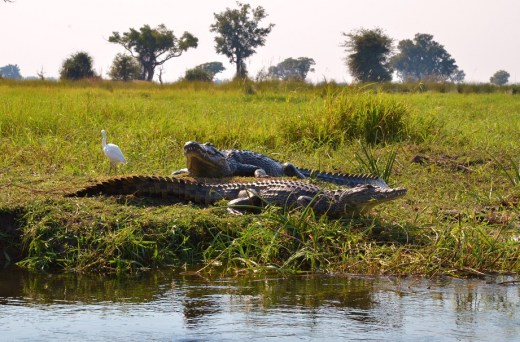
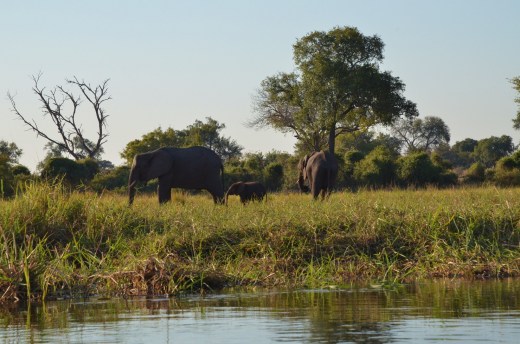
We cruised up the river to the hippo area.  On the way we encountered more crocodiles than you can imagine, and two elephants feeding in the shallows.  The elephants weren’t happy with our presence and turned their backs on us.

DSC_9223

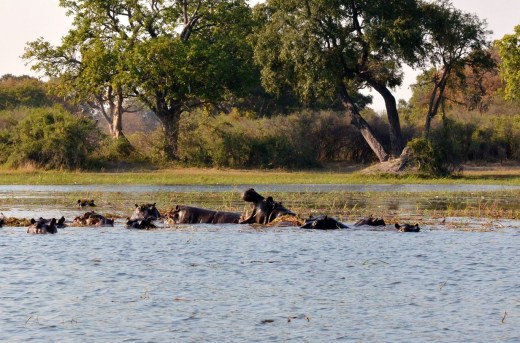
The hippo pond had at least thirty hippos, all of who popped up to watch us approach.  We kept our distance, and listened to their bellows and calls, and watched the jets of water they would create.

DSC_9257

DSC_9263

DSC_9266

DSC_9301

DSC_9284

DSC_9322

DSC_9331

It was a nice way to end our stay at Kadizora.

The last crocodile we saw was the old man of the river.  He is 5 meters long.

DSC_9348

OC drove us out to the airstrip, stopping at a Baobob tree as requested.  I have a thing for these trees and love to see and touch them.  There is one here in Botswana that is said to be over 5,000 years old.

DSC_9380

DSC_9397

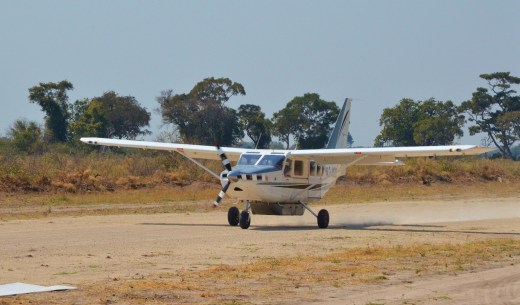
Our next camp, Camp Sevute, was 85 nm east of Kadizora.  I sat in the front of the plane with the pilot and watched the nautical miles slowly count down.  We were only traveling at 115 knots, at an altitude of 5,500 feet MSL, approximately 2,500 feet above the ground.

DSC_9409

The landscape changed dramatically as we headed east.  We left the green and wet delta for a very dry landscape.  It seemed as we approached Sevute that nothing could live here.  I would be wrong about that.

DSC_9435

We were met by a driver from another camp, who gave us a ride to Camp Sevute.  Our camp was a very short distance from the gate to the Chobe National Park.  Our tent was much smaller here and no all night electricity.  They had a generator for power that shut off at 8 pm.  All lights after 8 pm were solar.  You could only charge your camera/laptop batteries at one common station in the main tent from 8 am to 3 pm, which turned out to be problematic for us.  The tent was too hot to be in during the afternoon, but we were given hot water bottles for the beds at night.  That was the extreme temperature swing.  It was quite cold in the mornings on the game drives, but by 10 am we were shedding layers.

DSC_9442

The routine at Camp Sevute was a wake up at 0600, breakfast at 0630 and start the game drives at 0700.   We were usually back in camp around 11 am for brunch.  We had until 3 pm on our own, at which time we would have high tea, and then set out for the afternoon game drive at 3:30 pm.   That drive would start out quite warm, but we would be putting on our jackets after sundowners on the way back to camp.

Our game drives were in the national park, so there were strict rules.  There was no off road driving, so we had to stay on the “roads” (more like tracks) at all times, and we had to be out of the park by 6:30 pm.

We headed out on our first game drive in the Chobe National Park with Bonnie (sounds like Boney) and a family from England (Mark, Lucy, Louie and Max).  We saw impala, giraffe and buffalo, but we had a particular destination in mind.

DSC_9458

On the early morning game drive, the English couple with their two children had witnessed a leopard with a kill.  She had just taken down a male impala when they came upon her.  They saw her drag the impala into the bushes. There was a very good chance she was still at her kill, so we were headed in that direction to find out.

She was still there, and my sister got her first leopard sighting.  We were able to get quite close to the leopard because her belly was full and she was sleepy.  She had eaten part of the impala and was guarding the rest of it.  There were a few other vehicles that came up after us, so we moved on after watching her about 10 minutes.

DSC_9482

DSC_9463

DSC_9511

DSC_9489

DSC_9517

We moved on in search of more wildlife.   As we headed deeper into Chobe, our Toyota Land Cruiser quit.  Bonnie was able to start it twice, but after the third time, it was done.  Yes, another break down.

DSC_9545

We got out and stared under the hood, discussed the possible reasons for the stall, and radioed for help.  Unfortunately, our radio produced no such help.  It was about 4:30 pm when we first got stuck.  It starts to get dark around 6 pm and we were supposed to be out of the park by 6:30.  One other game drive vehicle from a different camp came by, and Bonnie asked the driver to contact our camp for a rescue.

We attempted a push start, with more human power than our previous break down, but it did not produce the same result.  We were stuck.

DSC_9561

With nothing else to do besides watch the African night descend upon us, we broke out the sundowners.

DSC_9549

DSC_9550

DSC_9578

Help arrived about 2 1/2 hours later, and we pulled into camp an hour late at about 7:30 pm, no worse for the wear.

We were disappointed to hear that we missed a possible lion sighting, as the other vehicle from our camp watched a pride of lions with cubs during our break down time, but these things happen.

We had a very good dinner, and headed to our tent with our hot water bottles.  All but our solar lights were out by 8 pm.


Posted in Botswana | 3 Comments

Camp Kadizora Day Three: Wild Dogs!

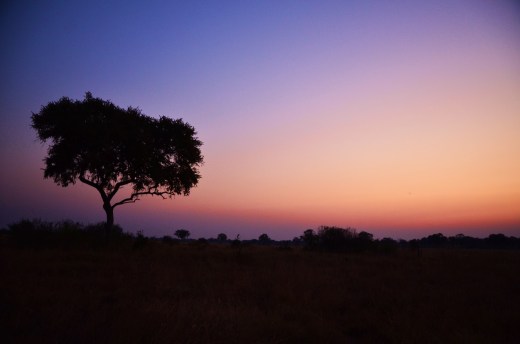
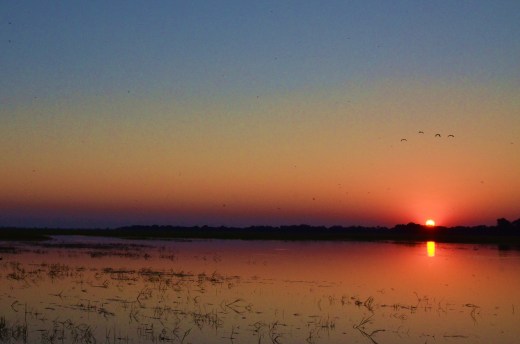
An African Sunrise:

DSC_8514

This adventure to Africa is my fifth.  In all of those trips I have not seen the African wild dog.  It has been a mild obsession of mine over the last two trips.  My goals for this trip were only two; to see wild dogs, and visit Victoria Falls.  We chose this time of year because it is the best for Victoria Falls.  There is no particular time that you can choose to see the wild dogs.

In this part of Botswana, there is one pack of eight wild dogs.  They travel a wide area and are active mostly at night.

We left before sunrise as usual.  OC was tracking lions, stopping to check for fresh lion prints in the soft earth.

DSC_8531

DSC_8528

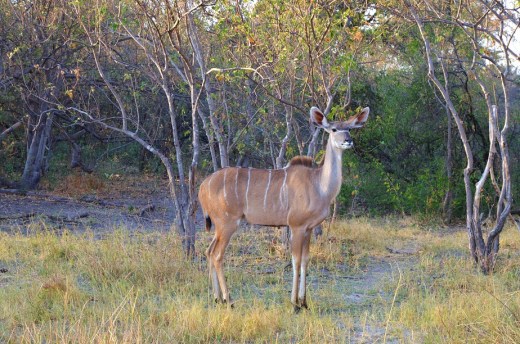
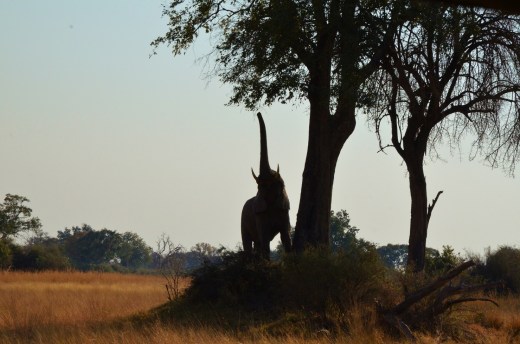
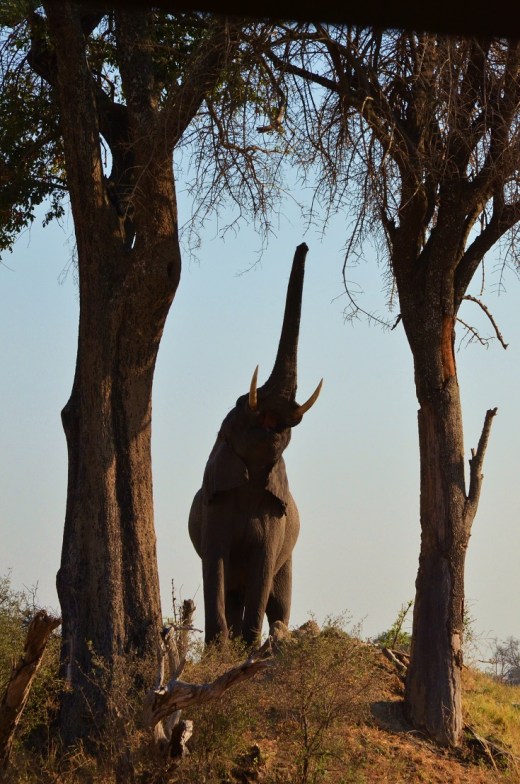
On our drive east we saw some kudu, zebra, and a lone elephant who gave us a show of reaching high in a tree for something to eat.

Kudu

DSC_8610

DSC_8614

DSC_8619

DSC_8631

OC pulled over to speak with another guide who was stopped for coffee with his guests.  He gave OC some directions for an area where the dogs had been seen recently.  We drove slowly, looking for tracks.

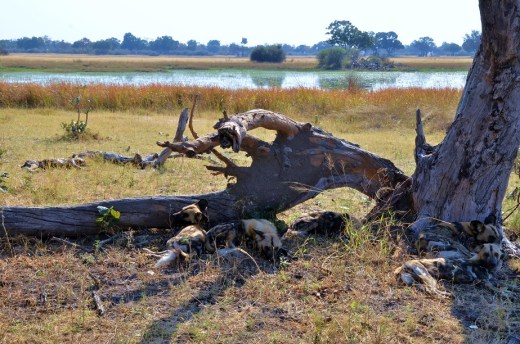
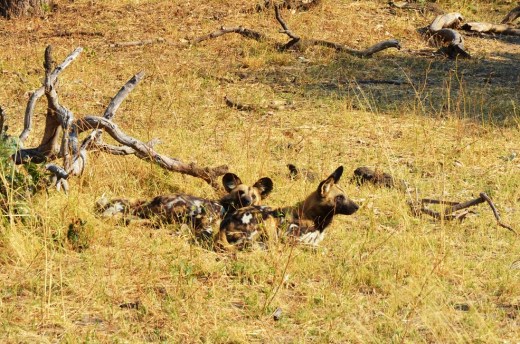
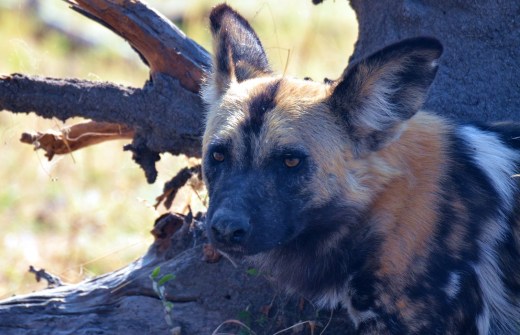
At one point OC said for us all to keep an eye out as the dogs were hard see.  At this time of day they are resting in the shade.  It was like looking for a needle in a haystack, but this time we prevailed.  I spotted the tips of the ears of one dog, as the pack of eight lay in the shade of trees and logs.

wild dogs 5

DSC_8645

DSC_8638

DSC_8674

DSC_8695

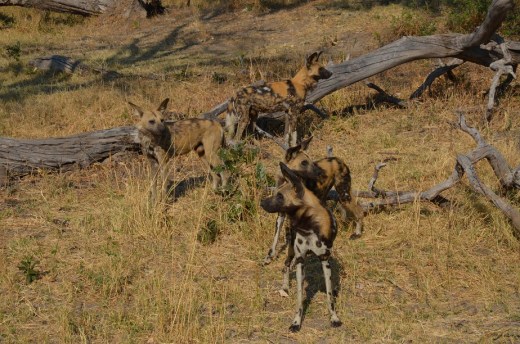
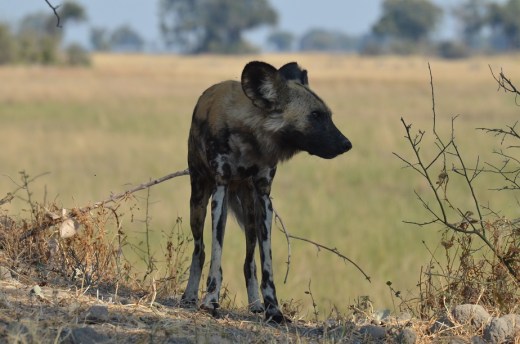
Thank the gods, I finally got to see the African wild dog, and it was as thrilling as I had hoped.  There are only 8,000 dogs left in African and only the one pack in this area.

We watched them for a while as OC radioed other guides to give our location.  When another vehicle arrived, we left to find a good spot for a coffee break.  I was over the moon happy.  This sighting had made my entire trip worth while.  Eleven years and five trips to Africa to finally see the wild dogs.  It was my sister’s third day of game drives, so lucky for her.

DSC_8651

wild dogs 2

wild dogs 3

wild dog 4

wild dog 1

We had a leisurely coffee break and made our way back to camp.

coffee break

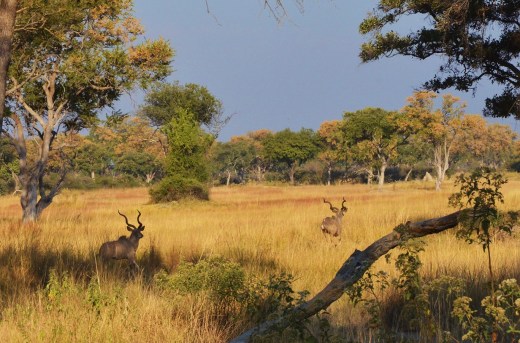
After lunch and a rest, we headed back out for an evening game drive and sundowners.  Starting out from camp we came upon two large male kudu, who ran off as we drove by.  Kudu seem to be shy, and always hide or run off when the Land Cruiser approaches.

DSC_8905

DSC_8926

Continuing towards the sunset spot we also saw a giraffe.

DSC_9013

DSC_9003

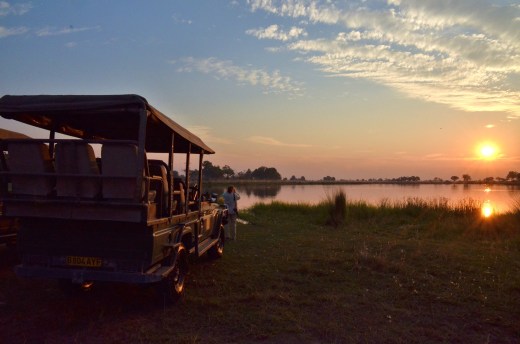
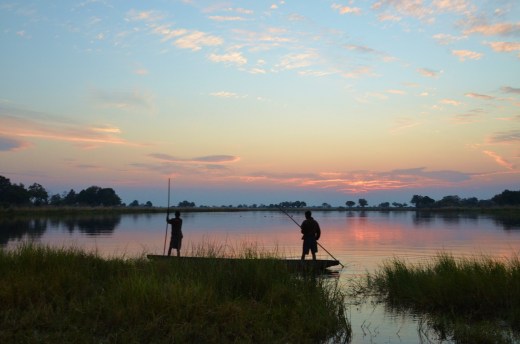
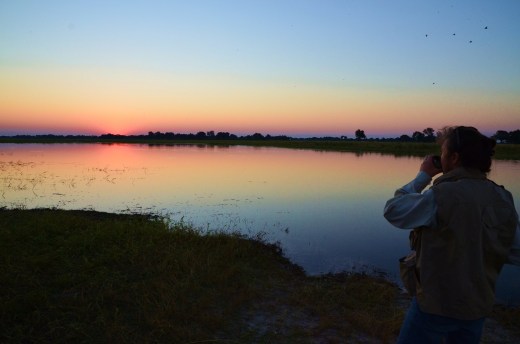
Sundowners were enjoyed on the edge of a lake.  Hippos gave us a show as the sun went down and I had my customary Amarula over ice.  Local fishermen in a mokoro poled up and sold the guides some freshly caught fish.

DSC_9019

DSC_9040

DSC_9022

DSC_9053

DSC_9077

On the drive back to camp, with just about 2 km to go, a large porcupine ran from right to left directly in front of the vehicle and in full view of the headlights.  It was totally dark.  That was another rare sight and the perfect ending to a perfect day.

Posted in Botswana | 1 Comment

Camp Kadizora, Day Two: A Lion Extravaganza

Our first full day at Camp Kadizora was also my sister’s birthday.  The plan was to start the day with a hot air balloon safari.  To do this, you must rise at 0400 and leave the camp at 0430 to meet the balloon crew at a small grass airstrip east of camp between 1 ½ to 2 hours drive.

We climbed into our Toyota Land Cruiser at 0430, but it would not start.  Our guide, OC, called the camp mechanic who came with a new battery.  Still no luck.  So they pushed started our rig with another one, and off we went.  Our drive to the balloon site was in total darkness.  As OC drove, he also swept a spot light back and forth, looking for the reflection of eyes.   We spotted a rather rare sight, a sable antelope, lying in the tall grass.  It jumped up as we saw it.  Our next night drive sighting was an African wild cat, another rare sight.  We couldn’t get very close, but we did identify it.  Then we got quite lucky, spotting another African wild cat and this time got quite close.  It was a young cat, striped, and was playing like a kitten.  It was quite a good sighting.

Early Morning Coffee with the Balloon Pilot Marvin:

DSC_7647

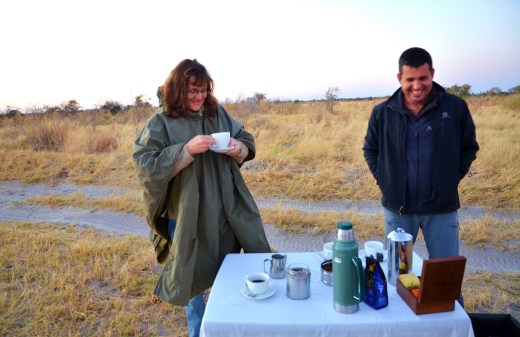
Reaching the balloon staging area, we were told the flight had been cancelled due to the winds.  The wind had shifted and would take us over water, so we did not go up.  Instead we got a quick cup of coffee and a private game drive beginning at sunrise.

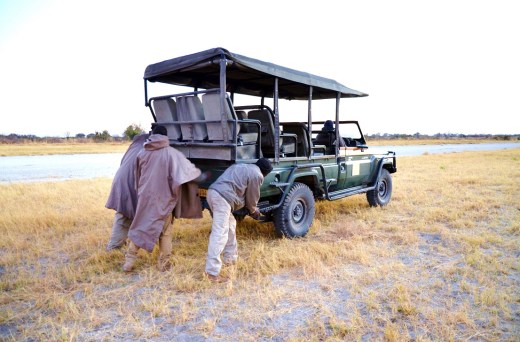
Due to our starter issues, OC had not been shutting off the engine at animal sightings, which is the norm.  He would leave the engine idling.  At the balloon site, he shut it off to see if it would start.  It did not.  Again the Land Cruiser had to be started with a push.

DSC_7645

Leaving on our game drive, we brought along another guide, and OC said he would have to leave the engine running.  No worries.

DSC_7727

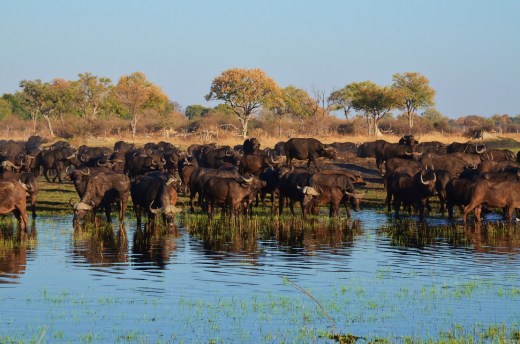
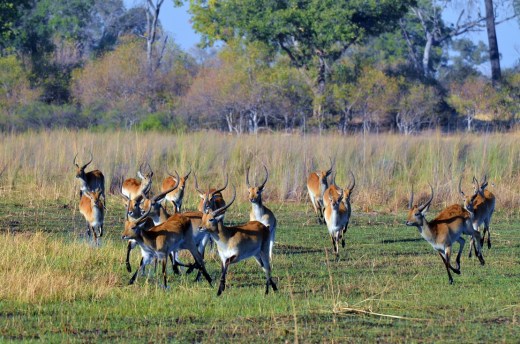
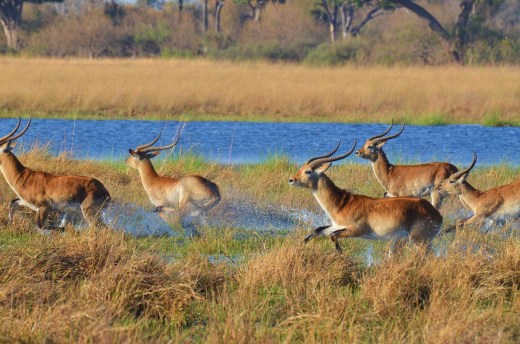
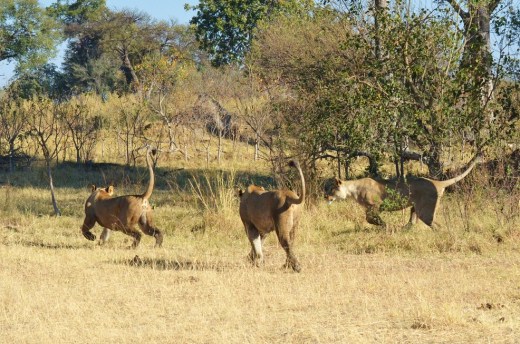
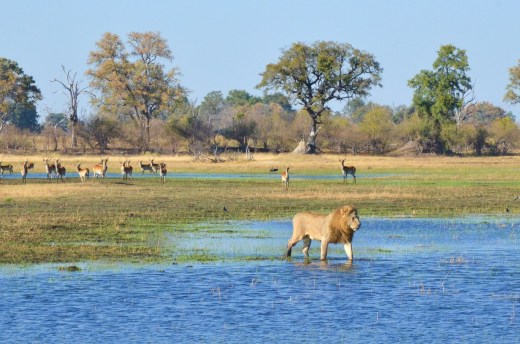
We found a herd of buffalo crossing a marshy area, and then we saw a large herd of very  nervous antelope.  The source of their edginess soon became apparent.  Three lionesses were stalking them.  We watched as the lions approached the herd and saw the antelope bound away through the water.  The lionesses did not seem to be terribly serious in their hunting attempts.

DSC_7779

DSC_7814

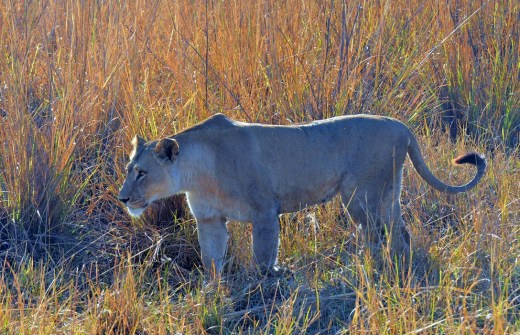
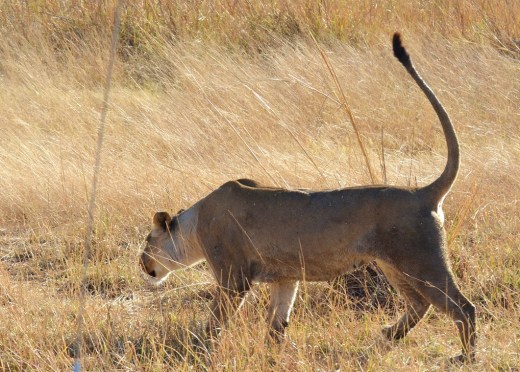
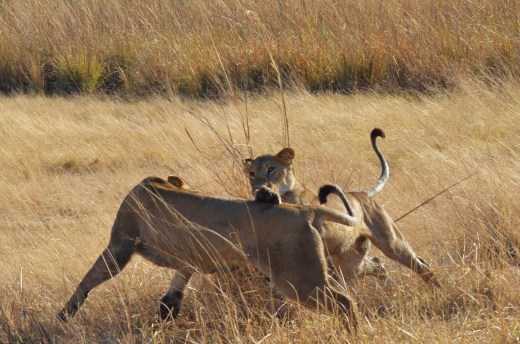
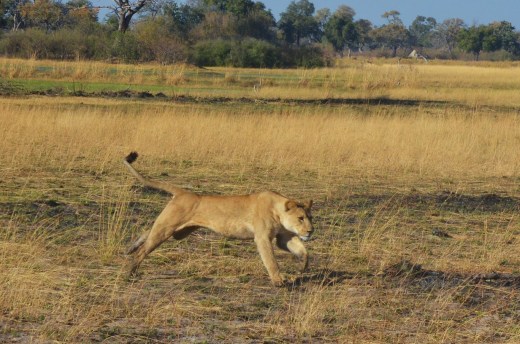
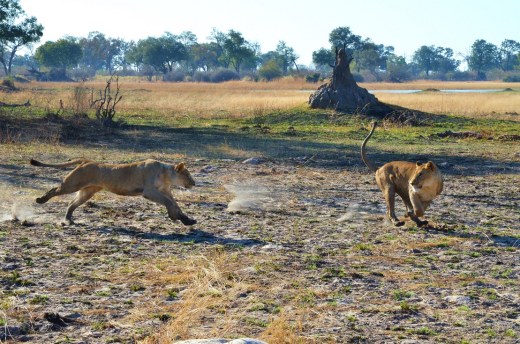
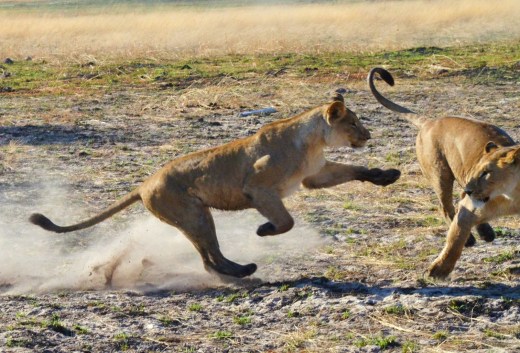
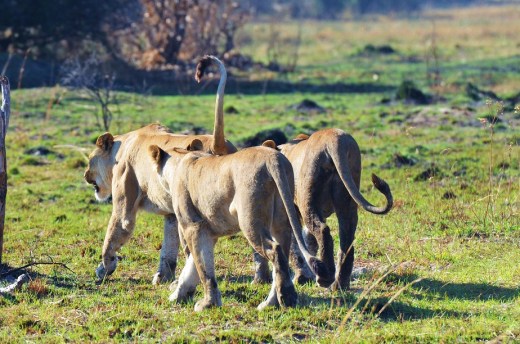
We followed the “ladies” (this is what OC called the lionesses) for a while.  It was a mother lioness and her two grown daughters.  They played and chased each other and did some half-hearted stalking.  It was a truly beautiful sight.

DSC_7860

DSC_7865

DSC_7866

DSC_7889

DSC_7886

DSC_7937

DSC_7986

DSC_7990

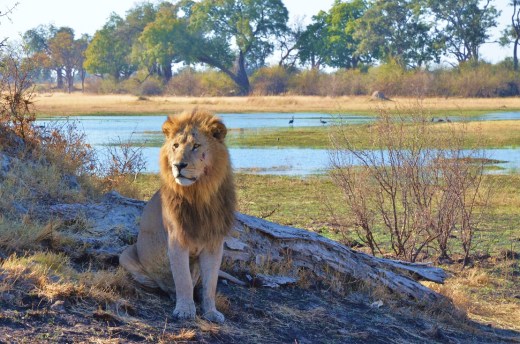
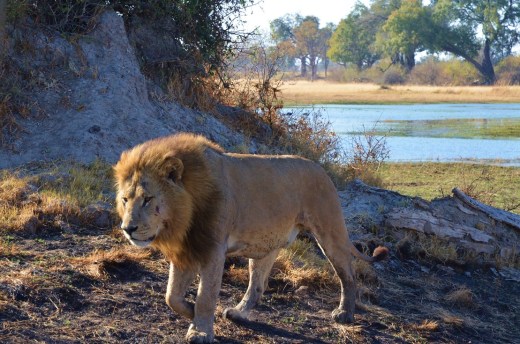
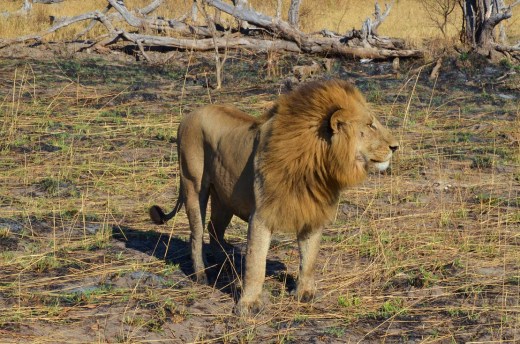
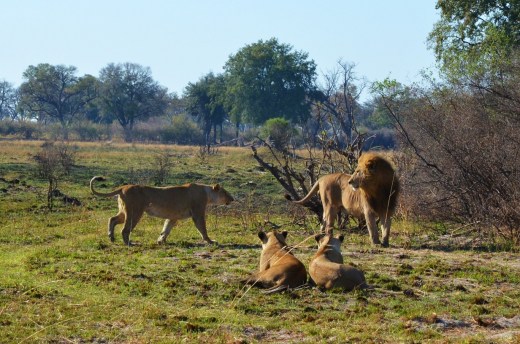
As we watched the lionesses and followed them around, we became aware of two male lions.  They were watching the females as well.  One large male lion was across a marsh, while a second one was sitting on a small rise.  We pulled up to within about eight feet of the one large male lion sitting on a small rise, and OC turned off the engine.  He immediately turned around and said “Oh, I forgot.”  Force of habit from years of watching lions had him turning off the engine any time you sit and watch, and in the excitement muscle memory took over.  We were dead in the Land Cruiser, surrounded by lions.

DSC_7994

He made an attempt to start the engine, but it would not.  We sat in our disabled vehicle as the big male lion sat next to us.  His brother across the shallow marsh came walking over.  The lion next to our vehicle got up and started walking towards the lionesses, who were now walking away from us.  With the big male lions preoccupied, my sister, the other guide, and I got out of the vehicle and started pushing.  OC was able to compression start the Toyota and we were back in business.

DSC_8029

DSC_8031

DSC_8034

DSC_8076

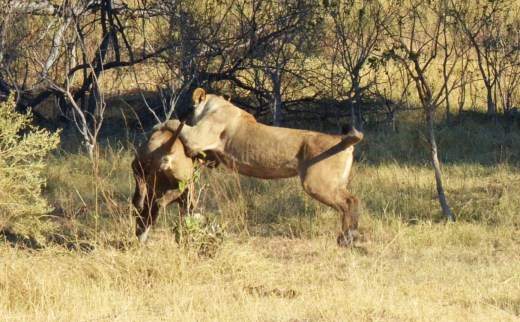
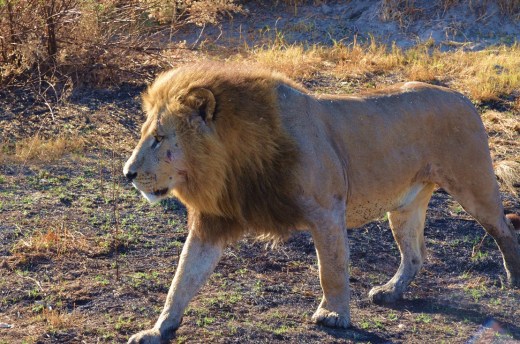
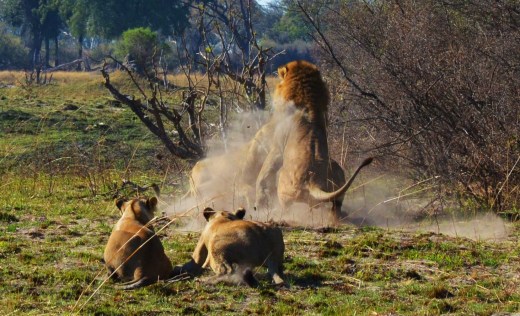
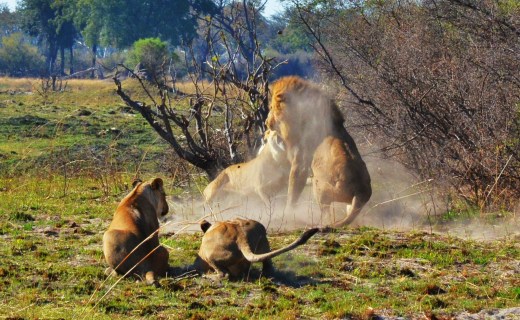
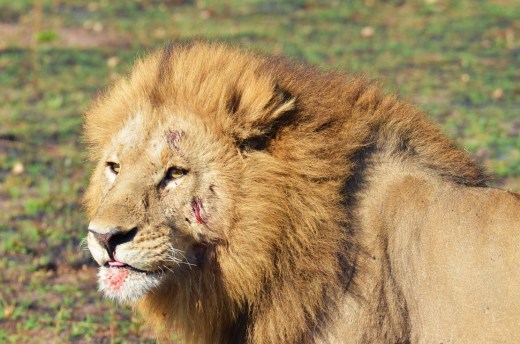
We continued to follow the lions.  There was a confrontation with the first male and the three females.  The older lioness came up to the male and smelled him, but when he turned to face her she slapped him across the face and a scuffle ensued.  He ended up bleeding and the ladies moved on again.

DSC_8113

DSC_8118

DSC_8119

DSC_8155

The “ladies”move on:

DSC_8138

It was the most action I have seen in any lion encounter.  Many times you see them and they are asleep and lying in the shade.  Sometimes they get up and move.  To see them playing and stalking and interacting with each other was a real treat.  It was especially nice for my sister, since it was birthday and she is a leo.

DSC_8269

DSC_8282

We headed back to camp and arrived around noon.  It had been a seven hour game drive.  OC told us that it was one he would remember.  We asked him how often that happens and he said “Three years ago I had a flat tire in the middle of lions.  I will remember this one.”

At Camp Kadizora we had an activity in the morning, lunch, and then rest time until high tea at 4 pm, followed by an evening game drive.

DSC_8295

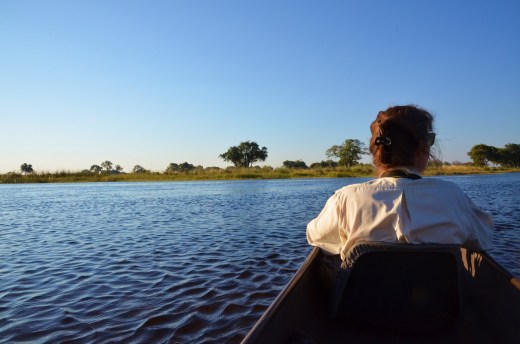
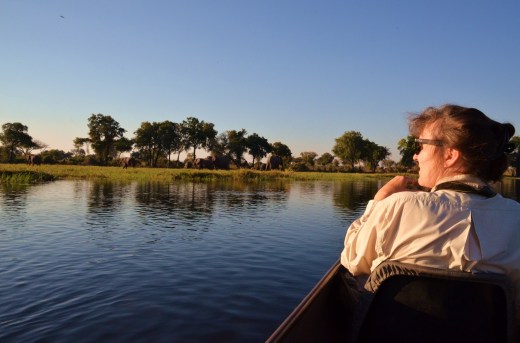
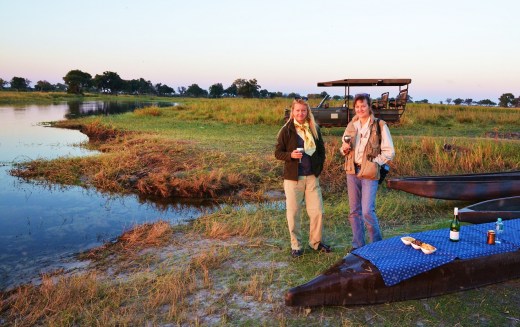
My sister’s choice for the evening activity was a mokoro ride.  A mokoro is what the locals have always used in the delta, a long thin canoe.  We set out in the mokoro moving with the current.  We saw some elephants in the shallows and many birds.  We turned around and poled our way up current to the hippo area.  We saw some hippos but kept our distance.  If you value your life you do not pole a mokoro into a known hippo area.   Back on the banks of the channel we had our sundowners.

DSC_8370

DSC_8379

DSC_8383

DSC_8426

DSC_8450

DSC_8433

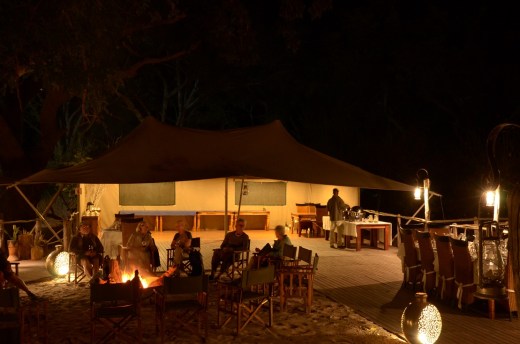
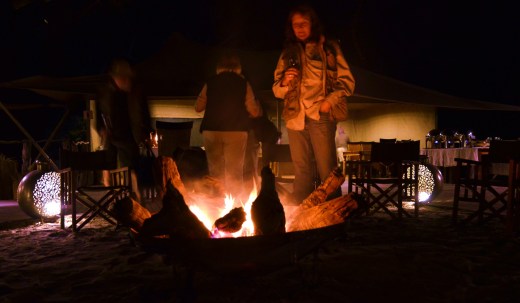
Dinner was served at 730 pm in the main area.  Pre and post dinner drinks are enjoyed around a central fire pit.

DSC_8481

DSC_8489

Posted in Botswana | 3 Comments

Kadizora Camp, Botswana

DSC_7470

I am back in Africa after a five year hiatus.  This time my sister and I are starting in Botswana, which I visited seven years ago and loved it.

We met in Atlanta and took the nonstop flight to Johannesburg.  The following day we flew from JNB to Maun, Botswana and connected up with Mack Air, one of the camp to camp small plane services.

DSC_7459

The Airport Terminal:

DSC_7471

DSC_7476

Our arrival into the dirt strip at our first camp, Kadizora was at 430 pm on Tues, a full 48 hours after beginning my travels in Florida.  We were greeted by our guide and driver OC, who said he would drive us to camp, just 10 minutes away, and we could have a snack and settle in.  But we said, “No, we want to do a game drive.”  He hesitated, but a radio call to the camp approved our request and we headed directly out into Africa.  Three male lions had been seen earlier in the day, and we made our way to that spot, 1 ½ hours of driving over dirt and sand tracks.  Lions usually sleep all day, so there was a pretty good chance they were still in that spot.

DSC_7492

DSC_7497

DSC_7486

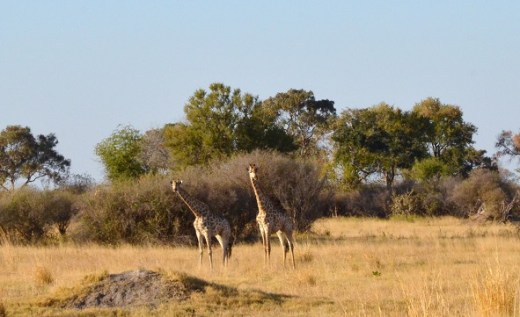
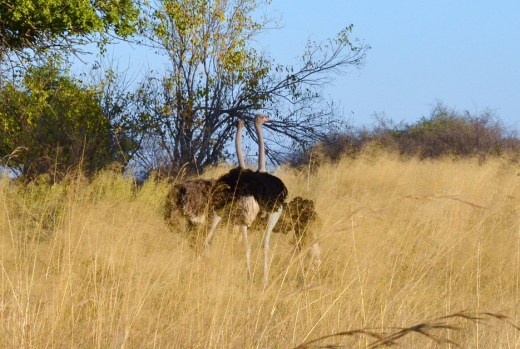
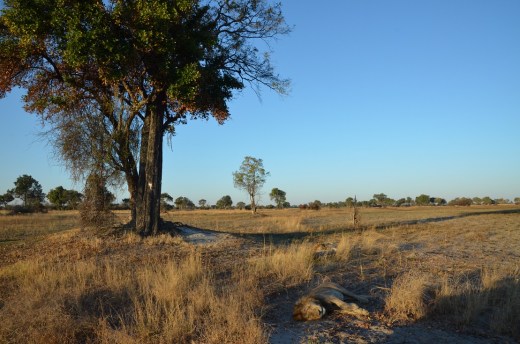
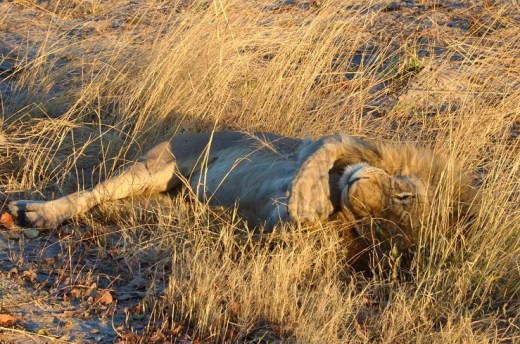
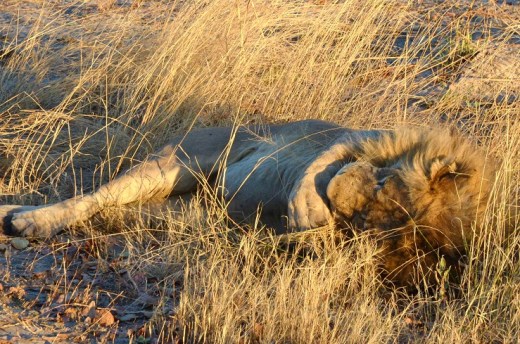
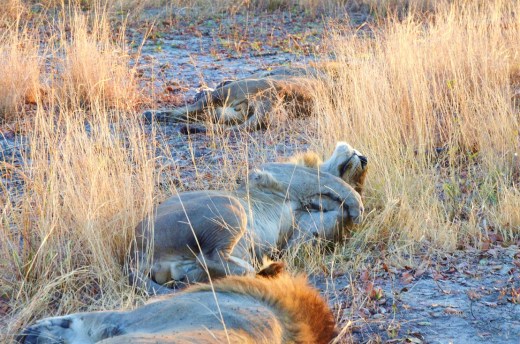
On our way to the lion spot we saw elephants, giraffes, ostrich, zebra and wort hogs.  And then we saw the lions, still sleeping.  They were unconcerned with the vehicle, snoozing and sighing, and looking like large house cats.

DSC_7499

DSC_7504

DSC_7508

DSC_7509

DSC_7519

DSC_7520

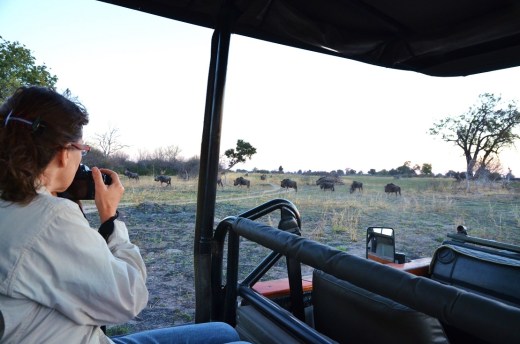
We watched the sleeping cats for a bit then had to head to the camp, as it would take one and thirty minutes to get back.  We passed through a buffalo herd, cruised a bunch of wildebeest, and watched a dazzle of zebra cross a swampy area.   The light is perfect in the late evening in Africa, the colors beautiful.

DSC_7537

DSC_7554

DSC_7568

DSC_7579

We pulled into camp at 730, three hours after we left the airstrip.  Dinner was being served.  The tent is great and we have running water and solar lighting.  We kept the tent flaps open, (screens keep the bugs out) and listened to hippos as we went to sleep our first night.

This photo was taken from our deck, with a 20 second shutter:

DSC_7622

Posted in Botswana | 3 Comments