Midsummer in Sweden

Dancers around a maypole during a Midsummer festival near Råshult. 
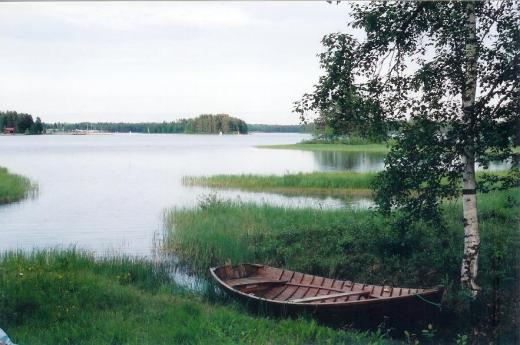
Midsummer is one of the biggest holidays in Sweden, if not the biggest.  It is a time to celebrate the beginning of summer, the season of fertility, and the longest day of the year where the sun does not set in the north. 

With Midsummer approaching, my thoughts turn to Sweden.  I usually get a strong feeling to visit Sweden this time of year, and in 2005, my mother and I did go to see family and enjoy the Swedish countryside at this beautiful time of year.  We flew into Stockholm and then drove out to Mora in the Dalarna area where we rented a cabin on Lake Siljan. 

The forest near Lake Siljan

The area is absolutely gorgeous, the people friendly and we had a wonderful time.  Being midsummer, the sun just barely dipped below the tree line at night and one night at 2 am I had my mother take a photograph of myself with a sign reading “2 am”, to show the perpetual twilight. 

A birch tree with lilacs, near Mora.
During our stay in the cabin in Mora we took a few day trips.  Two of our day trips were to visit the Anders Zorn museum in Mora, and the home of Carl Larsson in Sundborn, Sweden.

Anders Zorn’s “Love Nymph”, 1885

The Flower Window, Carl Larsson
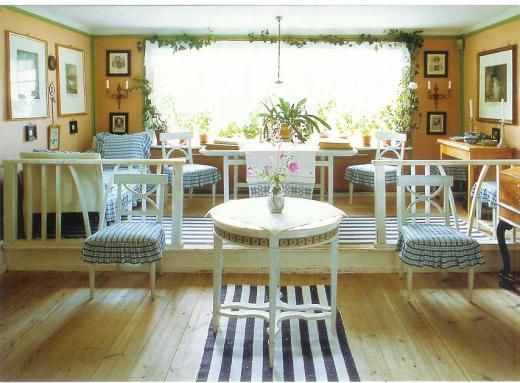
The best parlour in Carl Larsson’s home.

My mother sitting outside Carl Larsson’s home.
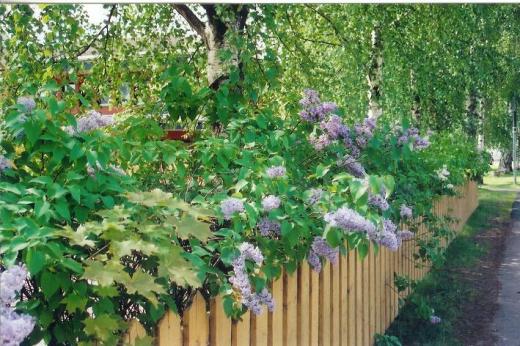
A fence covered in lilacs in Mora.

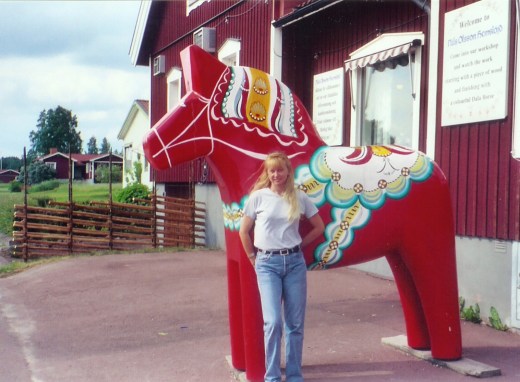
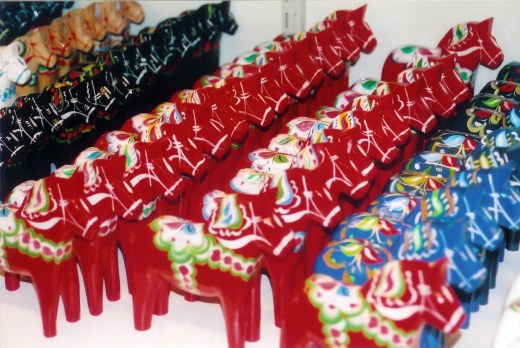
Near Mora we also visited a few shops where they make the traditional Dalarna horse (Dalecarlian horse  or Dalahäst), a horse figure carved from wood, then painted.
My mom and a giant chicken.
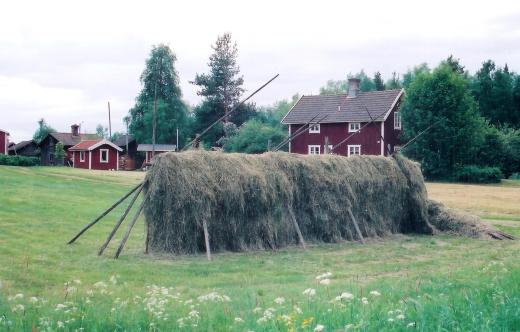
Haymaking the old way in the countryside near Mora.

After our stay in the cabin, we drove south to Älmhult, in Småland, to be with family for the actual midsummer celebration.  This is the part of Sweden where my ancestors lived, and we began the holiday weekend in Melbystrand at my cousin’s home on the coast.  My cousin and his wife Berit made the traditional meal items, including boiled new potatoes with dill, and cake with strawberries.  We watched the dancers around the maypole and drank shots of schnapps.  I learned some Swedish drinking songs.  It was great.

For more on the Swedish midsumer festivities:

http://www.sweden.se/eng/Home/Lifestyle/Traditions/Celebrating-the-Swedish-way/Midsummer/

Picking 7 different types of wildflowers, as instructed by my cousin’s wife Berit.
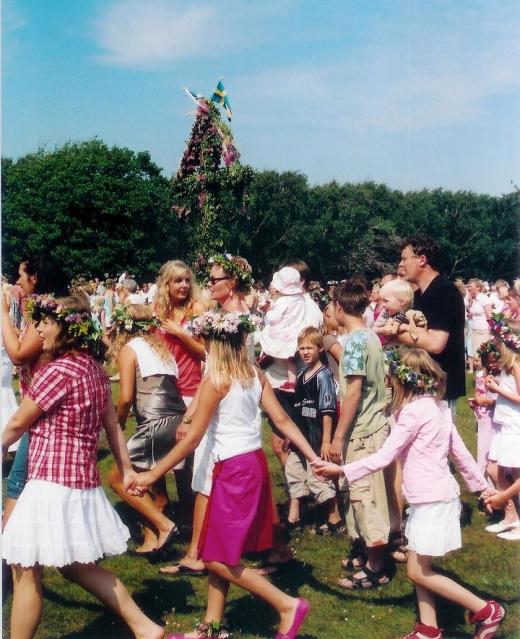
The local people in Melbystrand dancing around the maypole with flowers in their hair.
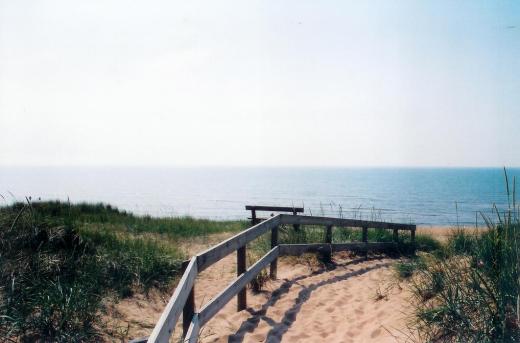
The beach at Melbystrand.
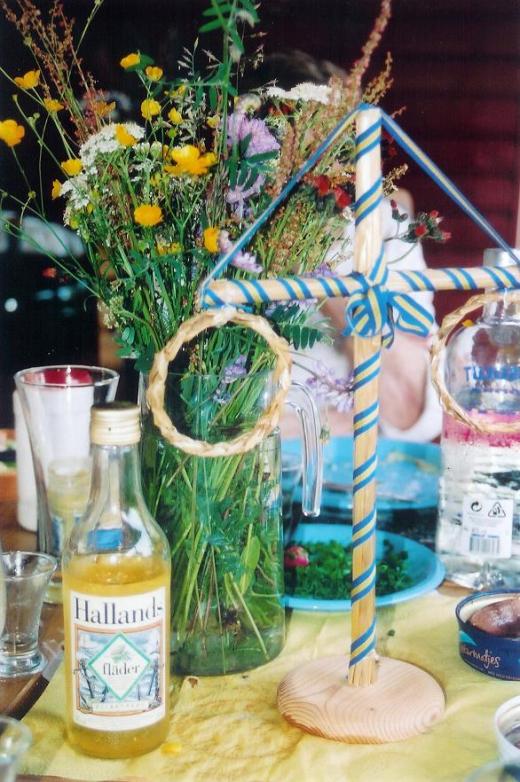
  

Midsummer table decorations.
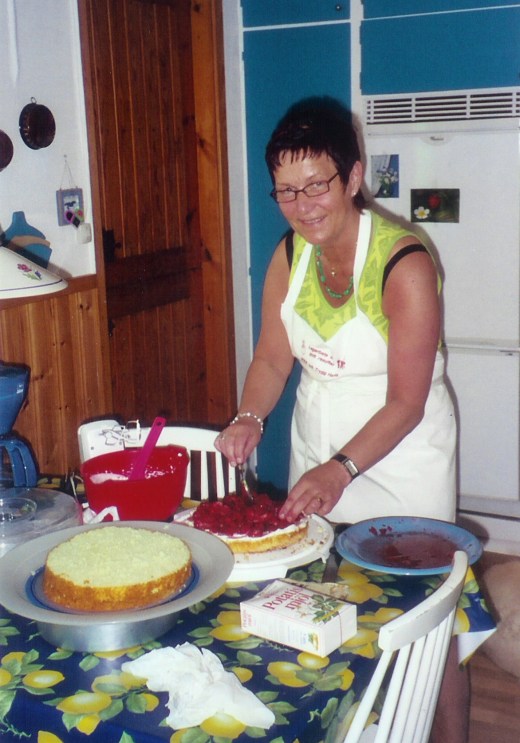
Berit making the cake with fresh strawberries, a tradition.
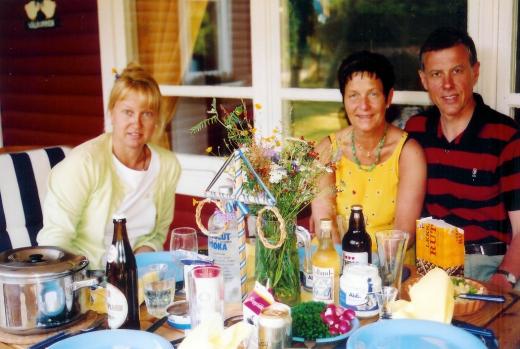
Me, my cousin Christer, and Berit.
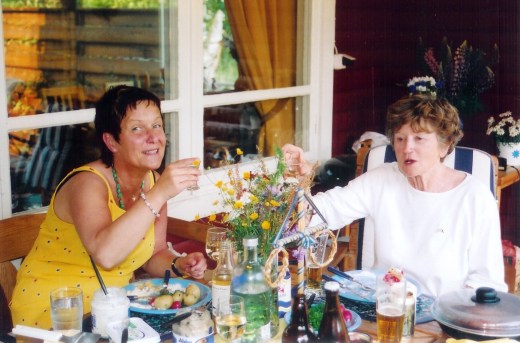
 

The festivites were fun and colorful and lasted all night.  

We continued our holiday celebrations by visiting the birthplace of Carl Linnaeus in Råshult.    (http://www.linnesrashult.se/?lg=2)

The birthplace of Carl Linnaeus.

On the grounds of Carl Linnaeus’ birthplace.

Near Råshult we saw more dancing around the maypole with many in traditional costumes.  The music was lively and everyone was in high spirits.

The Midsummer festivities near Råshult. 

Carrying in the maypole.

A postcard of one of the traditional folk costumes of Småland.

During our stay in Stockholm, we toured the Skansen outdoor folk museum and the Vasa museum. 
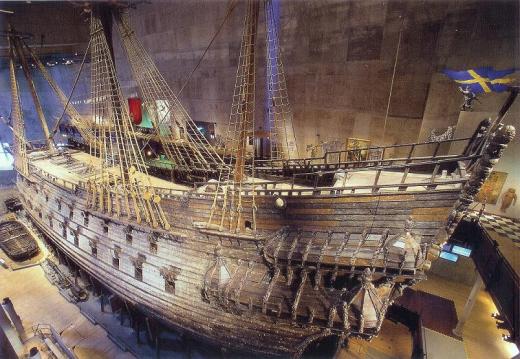
A postcard from the Vasa Museum in Stockholm.

http://www.vasamuseet.se/en/

http://www.skansen.se/en

Other photos from Sweden:

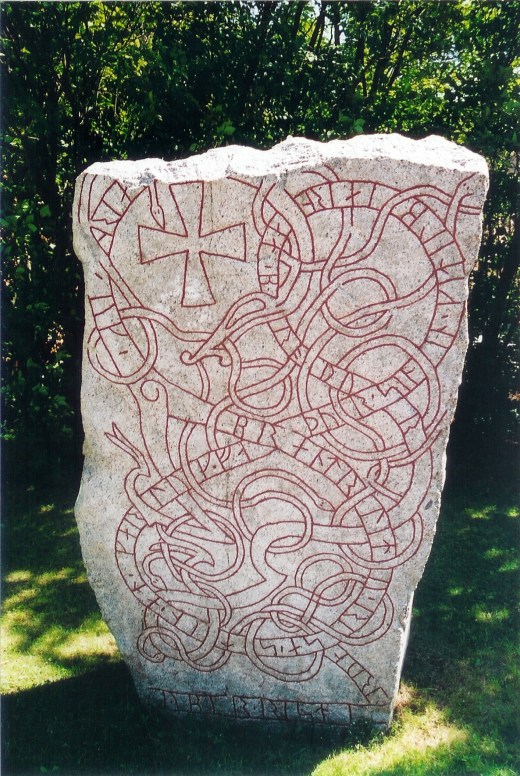
A rune stone in Uppsala.

A ship on the waterfront in Stockholm.
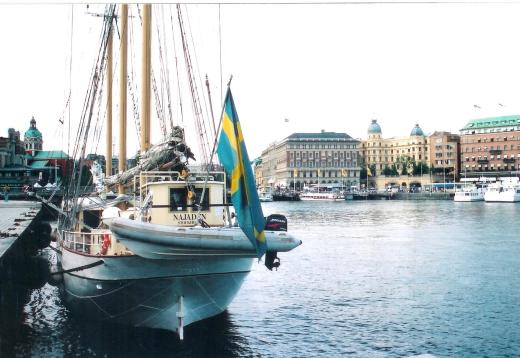
 

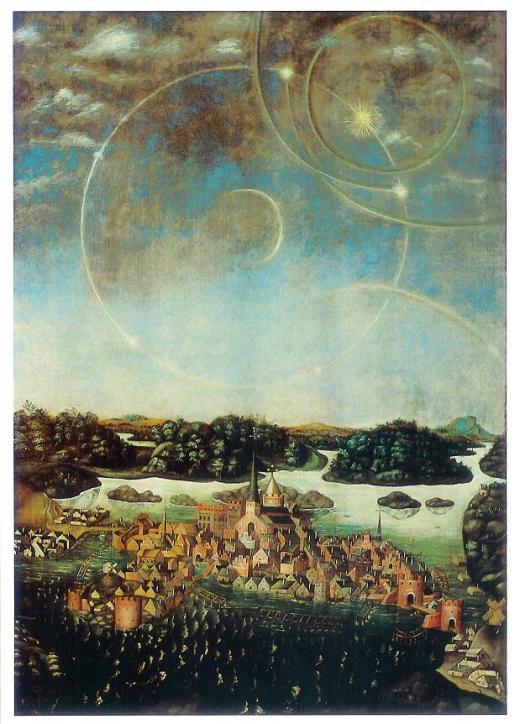
I fell in love with this painting in the Stockholm Cathedral in Gamla Stan, Stockholm. Vadersolstavlan, by JH Elbfas,  1636.

More on this painting:

Vädersolstavlan (“the Sun Dog Painting”) is a painting depicting a halo phenomenon observed over Stockholm in 1535. The original painting, commissioned by Olaus Petri shortly after the event and traditionally attributed to Urban målare, is lost, but a copy from 1636, attributed to Jacob Elbfas, is still hanging in the Stockholm cathedral. The painting was restored in 1998-1999.
Posted in Seasons & Holidays, Sweden | 2 Comments

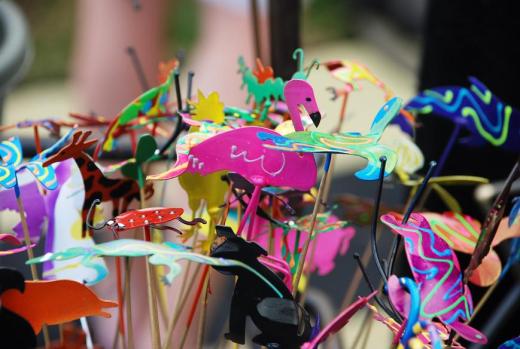
Sunshine, yard flamingos, and curly fries. Yes, it sounds like another outdoor festival in Florida.

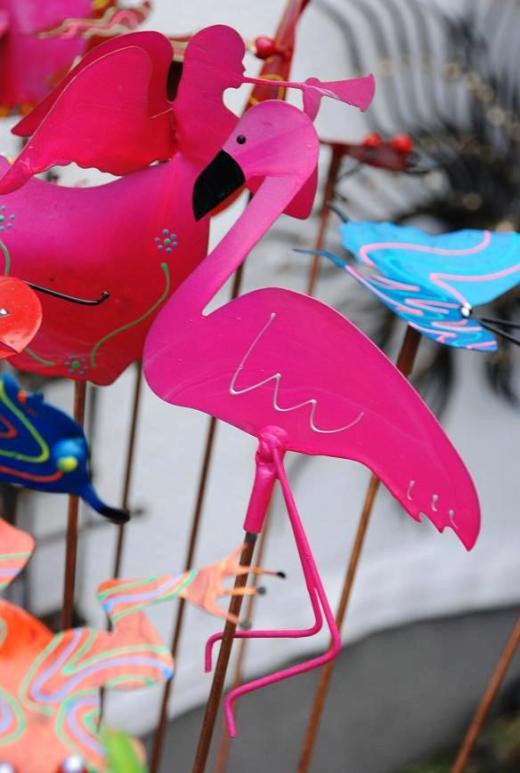
Flamingo yard ornament

This year marks my 26th year of living in Florida.  In those years, I’ve seen  my share of outdoor festivals, which they do rather well down here.  This past weekend was one of my favorites, The Mainsail Arts Festival in St. Petersburg.  It was the 37th Annual Mainsail Arts Festival, and probably my 20th or so year of attendance.  Nothing says Florida outdoor festival more than sunshine, pink flamingos and curly fries.  (http://www.mainsailartsfestival.org/)

The rows of tents at the 37th Annual Mainsail Arts Festival.

But this year we almost lost out on the sunshine.  Saturday was a near washout with heavy rain, lightning and a tornado watch by Saturday afternoon.  No problem.  If you don’t like the weather in Florida, wait a few minutes and it will change.  So my friends Leigh-Anne and John and I took a chance on Sunday and it turned out to be a gorgeous day.  Not only did the sun come out, but the temperature was pleasant (I have been to Mainsail when people were fainting from the heat), the beer was cold, the band was playing and we got to see who won the awards because we stayed until nearly closing on Sunday evening.

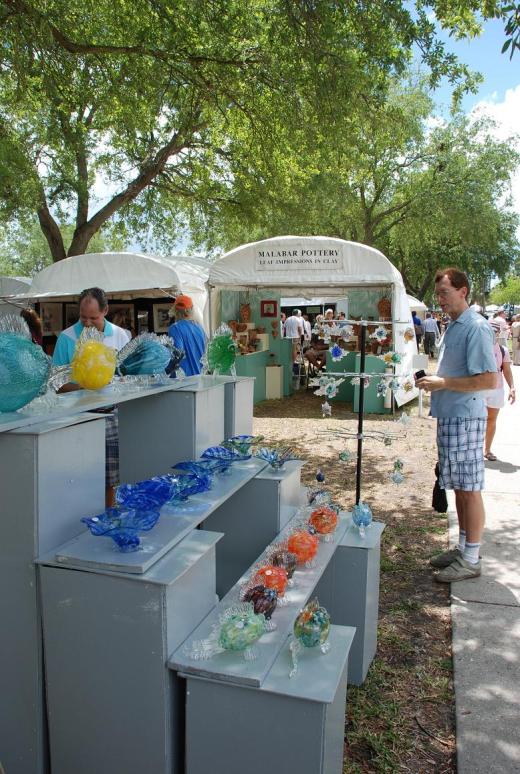
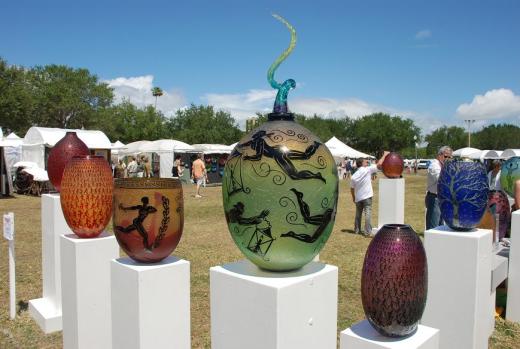
One of the exhibitors at Mainsail.

Over 250 exhibitors were there, many coming annually.  $50,000 in awards were handed out to deserving artists, the top prize of $10,000 to the Best of Show.  Leigh-Anne, John and I browsed the rows of tents and admired the innovation and imagination of the artists.  The categories were as follows; ceramics, digital art, fibers, glass, graphics, jewelry, metal, mixed media, oil/acrylic, photography, sculpture, watercolor and wood. 

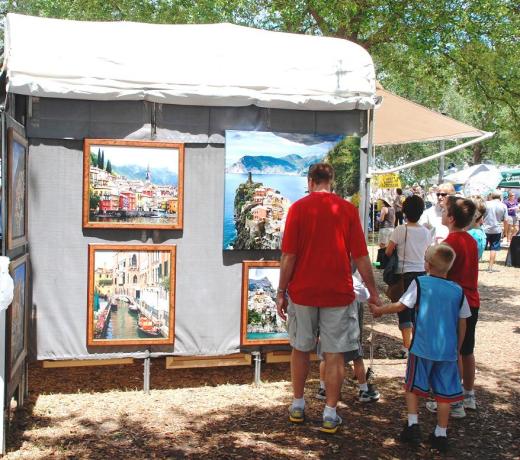
Photos of Italy.

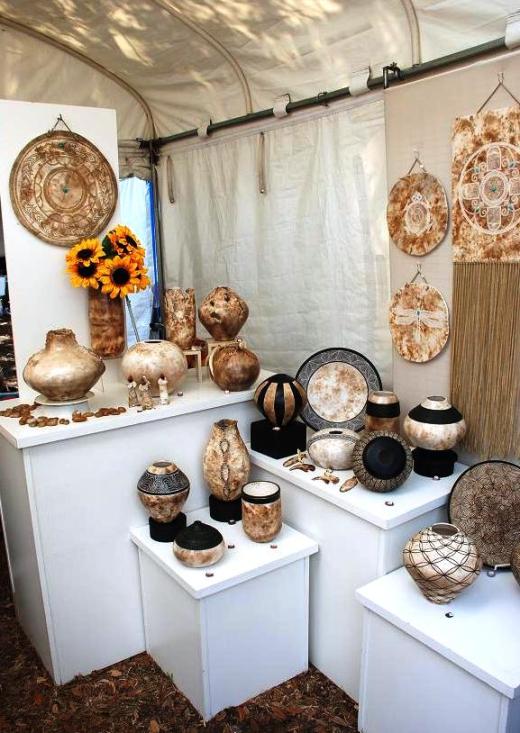
Porcelain.

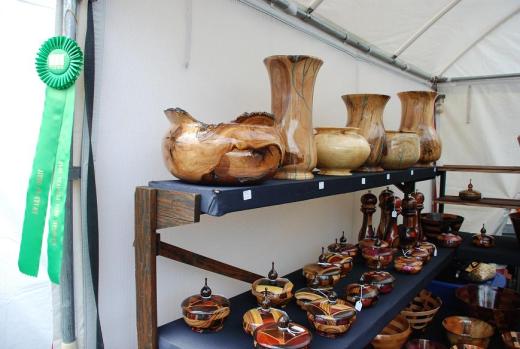
 Much of the art was out of our price range, with artwork priced from a few thousand dollars up to a high of $18,000.  It may have gone even higher as we didn’t check the prices on all the items for sale.  But we did find reasonably priced art as well.  We each bought a yard ornament for $10, and I couldn’t resist a cute wooden bowl with a lid, which was $45.  Tom Sullivan, woodturner from Crystal River, Florida won an Award of Merit.

An Award of Merit went to Tom Sullivan where I bought a little wooden bowl with a lid.

The least expensive artwork we saw, and bought, $8 plant ornaments.

No outdoor Florida festival is complete without food stalls, and we were not disappointed.  Yes, there it was, the food stand with the curly fries, a staple of all Florida festivals.  

Corn dogs and curly fries.

It was mostly sunny, with just a few passing clouds and a short rain shower now and then.  But it’s Mainsail, so I would have attended rain or shine.

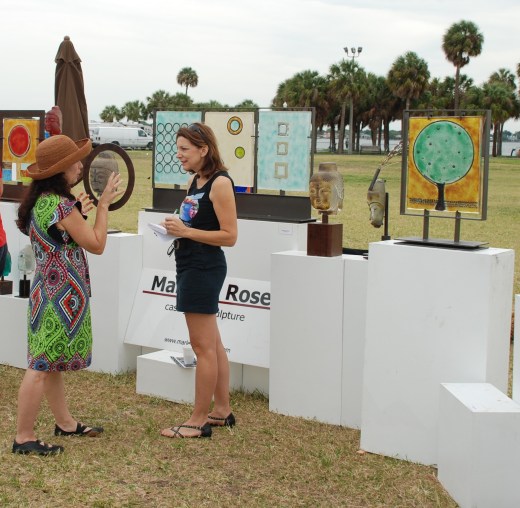
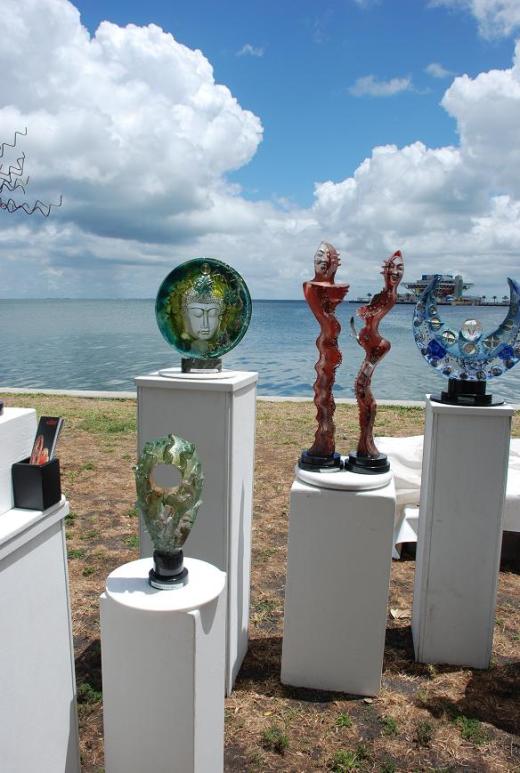
One of my favorite pieces at the show, a cast glass sculpture by Marlene Rose. Her husband is from Cape Town, South Africa, so we stopped to chat a while.

Cast Glass Sculpture by Marlene Rose.

One of my favorite artists from this year was Marlene Rose.  Her website is www.marleneroseglass.com

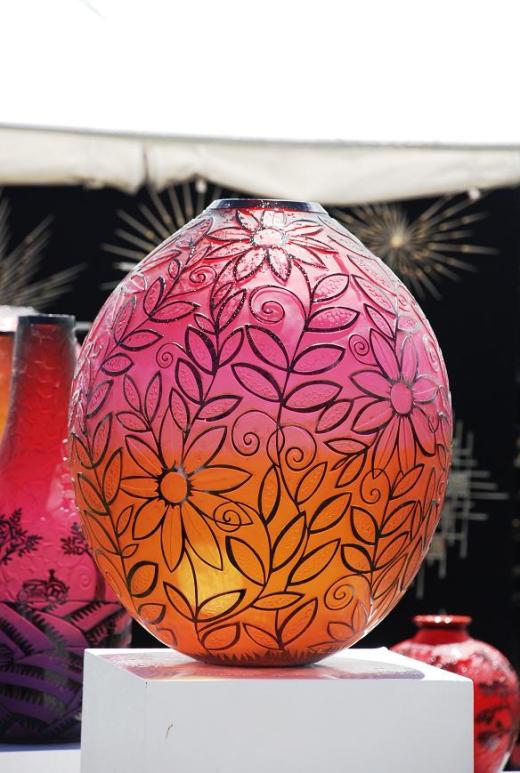
We saw quite a few glass exhibitors, including Susan Gott of Tampa, www.gottglass.com.

Susan Gott's glass art.

Susan Gott's green Buddha.

More glass by Susan Gott.

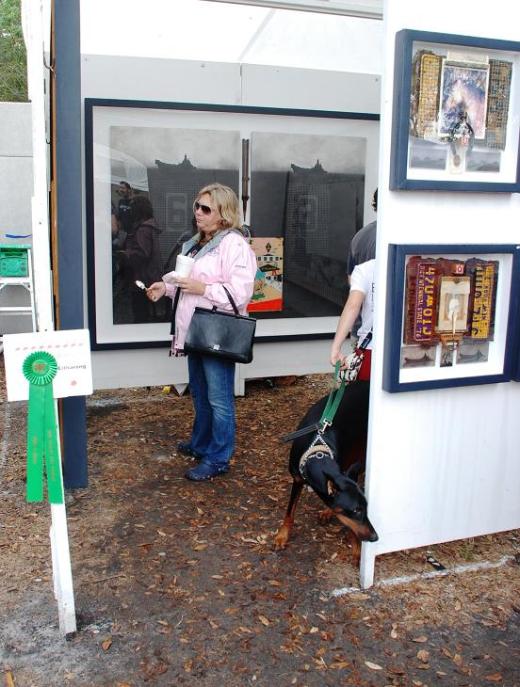
Dogs are another staple of the outdoor festival, and of course people brought them to Mainsail.  This doberman might not agree with his owner, or the judges, about art appreciation.  This mixed media artist won an Award of Merit.

Discerning doberman.

Mixed Media Award of Merit.

Two local artists from Gulfport, Florida, George and Diane Bragg, won a Purchase Award for their metal art.

Gulfport artists George and Diane Bragg won a Purchase Award.

There was also the unusual.

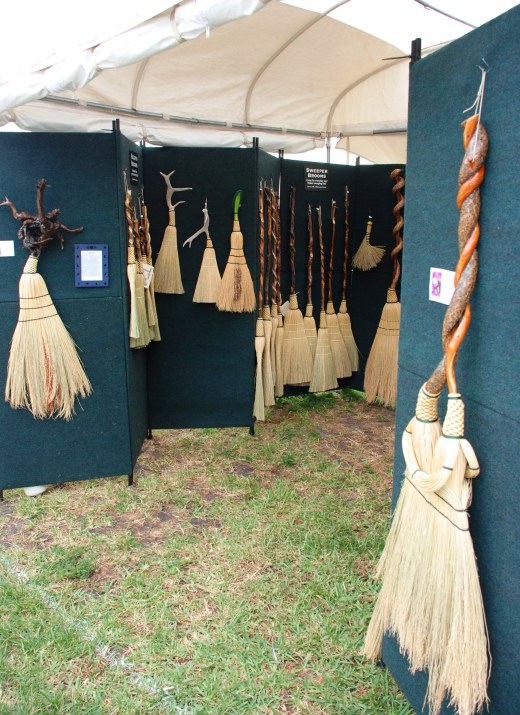
Pretty cool brooms.

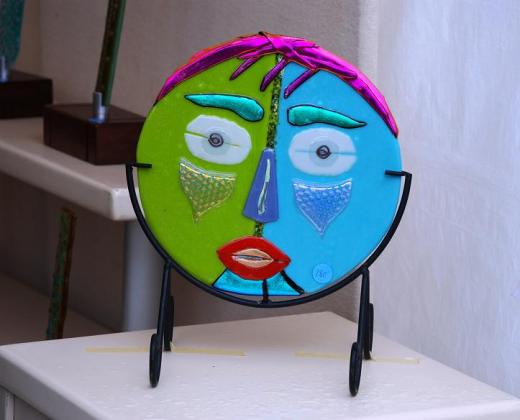
A colorful face.

A wind ornament for your yard. Very cool, about 8 feet tall, and over $2000.

Large colored glass butterflies and dragonflies.

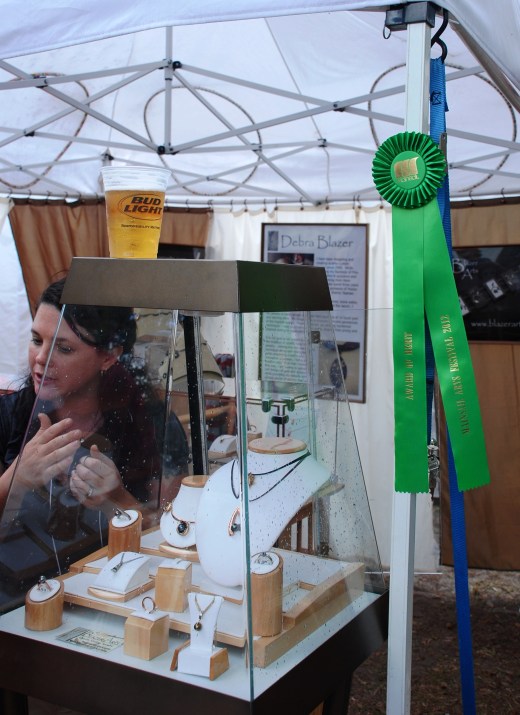
There were quite a few jewelry displays, but we saw only two with awards.

Debra Blazer jewelry. She won an Award of Merit.

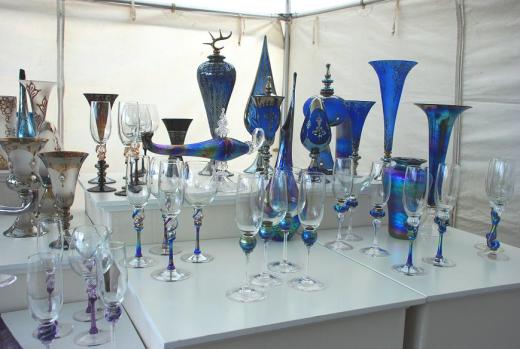
Minh Martin won an Award of Merit for his glass.

The goblets were beautiful and we stopped to look at them, but still out of our price ranges at $100 per pair.

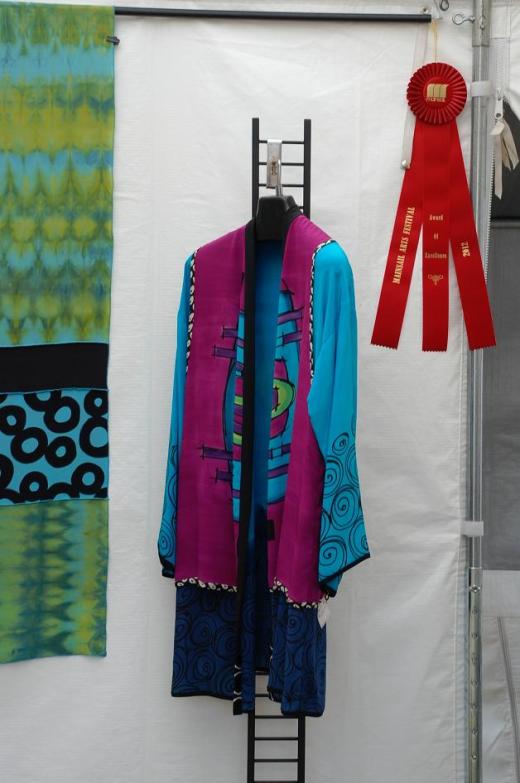
And an Award of Excellence went to Jean Yao, an exhibitor in the Fibers category.

And the winner is….  The Best of Show Award, a prize of $10,000 went to artist John Mascoll, category wood.  Here is a photo from his booth.

Best of Show winner, John Mascoll.

For a list of all of the award winners, go to:

http://www.mainsailartsfestival.org/artist_awards.cfm

Posted in Florida, U.S.A. | 1 Comment

Everything Karen: Nairobi, Kenya

In 2007 when my sister and I took our first trip to Africa, we landed in Nairobi late one evening and spent two nights and one full day in the Karen suburb before continuing on to Tanzania.

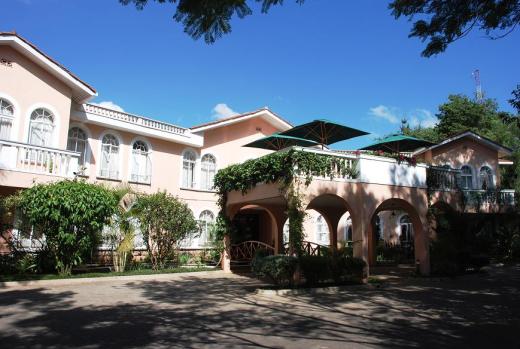
The House of Waine in the Karen suburb of Nairobi.

Our short stay in Nairobi was at the House of Waine, a wonderful boutique B&B in the Karen suburb of Nairobi.  The house and grounds were beautiful, and the service extraordinary. http://www.houseofwaine.com/main.htm

The pool at the House of Waine.

We had only one day to explore the area, so we had to pick and choose how we spent our time.  Ever since I read the opening line of Out of Africa, “I had a farm in Africa, at the foot of the Ngong Hills”, by Isak Dinesen (Karen Blixen), I wanted to see her home.  That was a top priority. 

Karen Blixen's home in Nairobi.

Karen Blixen’s home is now a museum, located in the suburb of Nairobi known as Karen.  Everything it that area is called Karen.  We saw the Karen Country Club, the Karen School and the Karen shopping mall.

The front of Karen Blixen's home.

From Lonely Planet:
 
The house/museum is where Karen Blixen lived from 1914 to 1931. She left after a series of personal tragedies, but the lovely colonial house has been preserved as a museum. It was presented to the Kenyan government at independence by the Danish government along with the adjacent agricultural college.

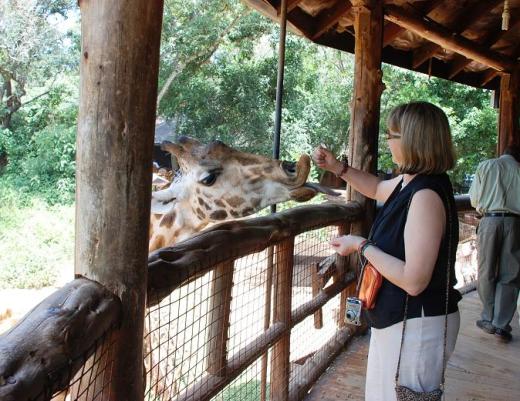
I had also heard of Giraffe Manor and the giraffe park on its grounds, so we did that as well.  A nice lunch, some local shopping, and relaxation by the pool, and we had spent our first full day in Africa, adjusting to the time zone changes in preparation for our first safari.

Giraffe Manor in the Karen suburb of Nairobi.

My sister feeding a giraffe.

A shop in Nairobi.

Shopping.

Posted in Kenya | 1 Comment

Franschhoek, South Africa

My sister and I spent our last three days in South Africa in the little town of Franschhoek.  After dropping off our bikes at Karoo Biking in Cape Town, we rented a car and drove about an hour out of town, into the wine country, to the small town of Franschhoek. I chose Franschhoek as our  base to expore the Cape Winelands due to its reputation as the gourmet capital of South Africa.


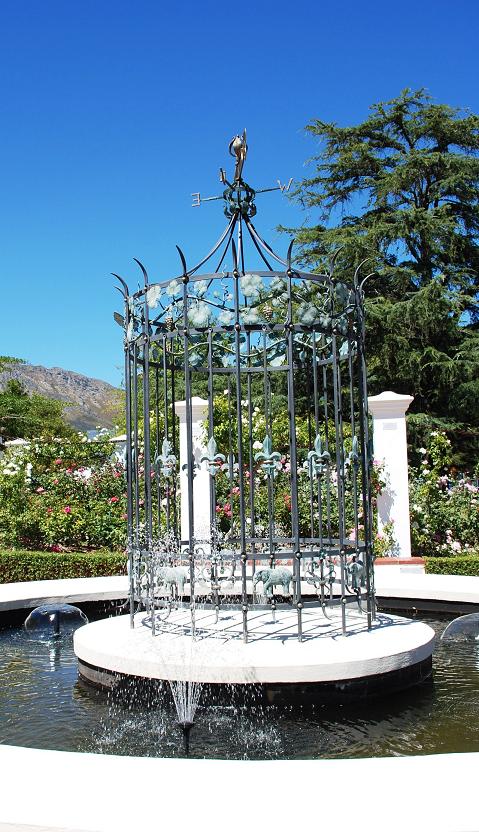
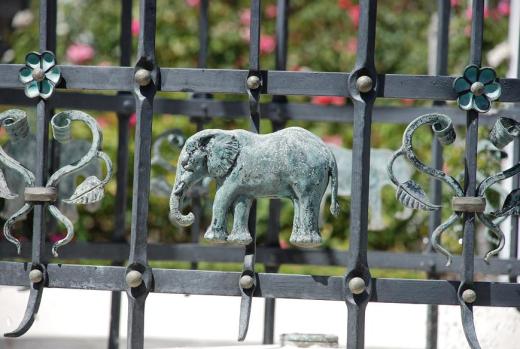
Although the last elephant to be seen in Franschhoek was in 1850, it used to be called Oliphantshoek (Elephant’s Corner), for the large herds of elephants that roamed the valley.  We saw a nod to the elephants in a fountain downtown, and the B&B where we stayed, The Elephant Lodge.  When the Dutch government gave the land to French Huguenots who fled their homeland after the revocation of the Edict of Nantes in France in 1685, (outlawing Protestantism), the valley was renamed Franschhoek (French Corner). 

Franschhoek from the Elephant Lodge.

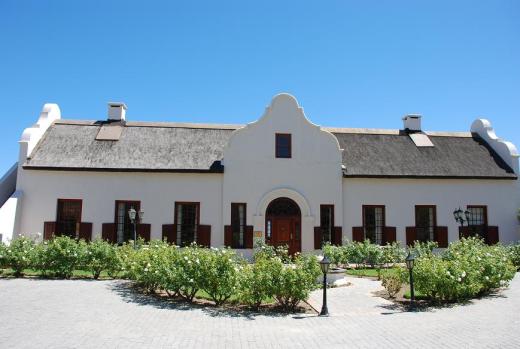
The Elephant Lodge.

 We enjoyed wonderful food at every place we ate.  I don’t think you can get a bad meal in Franschhoek.  Of course a large draw to the area are the vineyards.

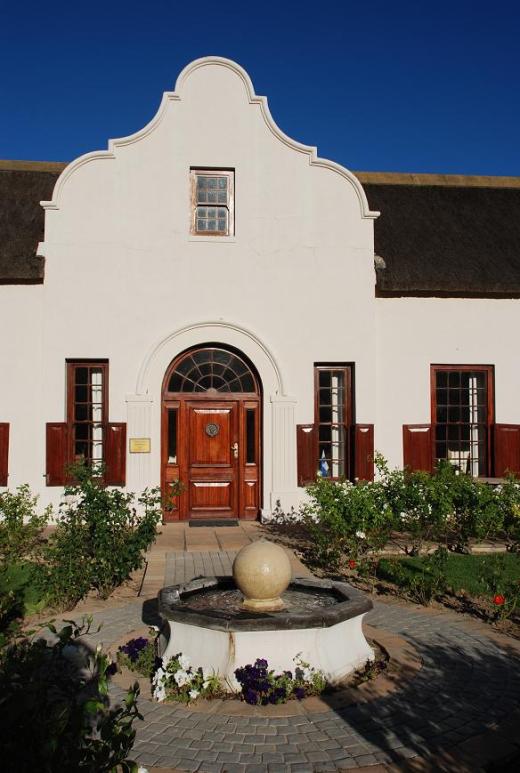
Dutch architecture in downtown Franschhoek, with the full moon.

Our very last day in South Africa we spent walking downtown Franschhoek, seeing the Huguenot Monument, shopping, and wine tasting. 

The main street through downtown Franschhoek.

Along the main street in downtown Franschhoek we passed the boutique hotel The Quartier Francais, a Relais and Chateaux property that is also home to The Tasting Room.  http://www.lqf.co.za/ 

The Huguenot Monument in Franschhoek.

One shop at the end of the main street in downtown sold animal skins and horns among other souvenirs.  Not in the market myself, I was curious about the procedures for buying animal skins.  The owner was more than happy to show me the certificates and explain the export process.  A top quality zebra skin with the appropriate certificates (legally culled from a managed herd) costs about R 16,000 ($2300.)

Zebra skin for sale.

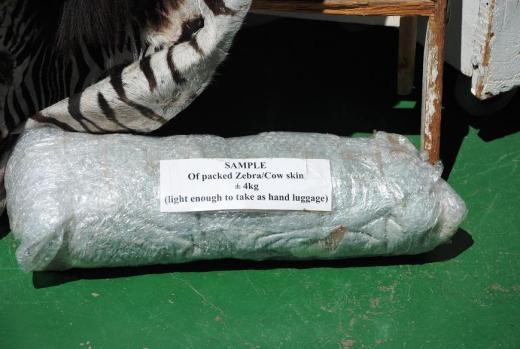
On the front porch of the store was an example of a zebra hide ready for shipping.

A zebra skin wrapped for hand luggage/export.

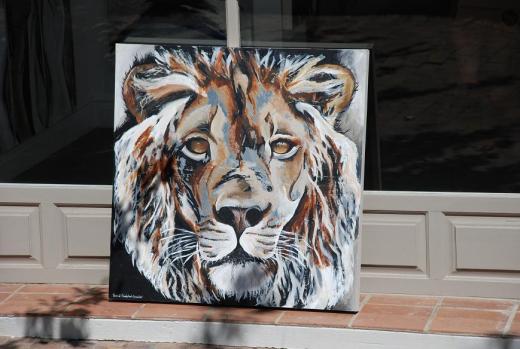
I fell in love with this lion painting at Oryx Place, but didn’t want to try to get it back to the US.

Oryx Place, Franschhoek.

Another wonderful meal at a downtown cafe in Franschhoek.

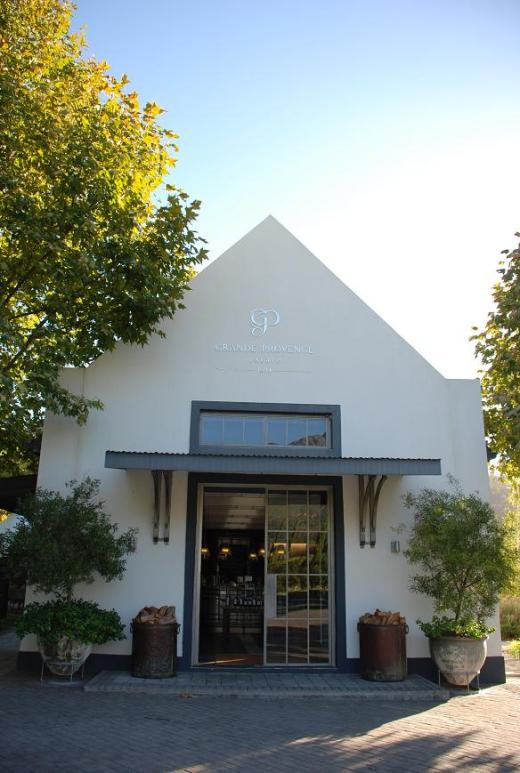
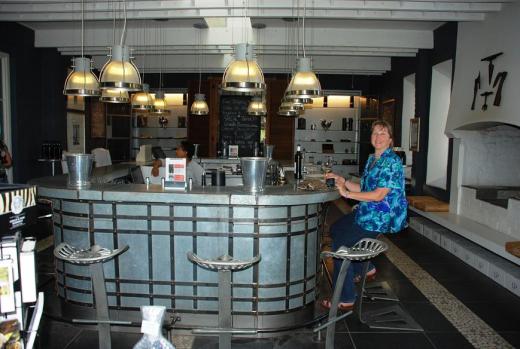
We visited the Grande Provence winery and tasted some fabulous wines, which are not exported to the US.  I bought two bottles to carry back with me to the states.   The tasting sheet says this about the 2011 Sauvignon Blanc:

This medium bodied wine has tropical fruit, green apple, pear and fig followed by touches of green pepper.  These aromas follow through to the palate which is refreshing and zesty.

We loved it.  The 2011 Sauvignon Blanc that I brought back to the US was enthusiastically tasted by friends who all agreed it was fantastic. 

Tasting at the Grande Provence.

The delectable and award winning 2011 Grande Provence Sauvignon Blanc.

The Franschhoek Valley and the Grande Provence vineyards just before sunset.

It was a relaxed and enjoyable last day.  Franschhoek is a beautiful little town with wonderful food and wine, and friendly people.  I highly recommend a visit to this slice of heaven on earth.

Another wonderful meal. Even the casual places had great food.

Posted in South Africa | Leave a comment

Dinner at The Tasting Room, with stories and props.

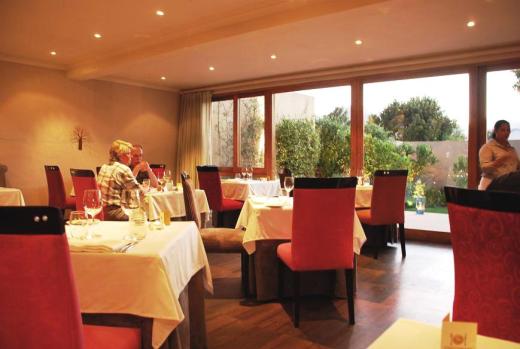
The Tasting Room, a small fine dining restaurant at Le  Quartier Français in Franschhoek, has won Best Restaurant in Africa and the Middle East 4 times, and San Pellegrino Top 50 Best Restaurants 7 times.  (Reservations are a must, ours made three months in advance for a Tuesday night, which was completely full).

http://www.lqf.co.za/cuisine/the-tasting-room.htm

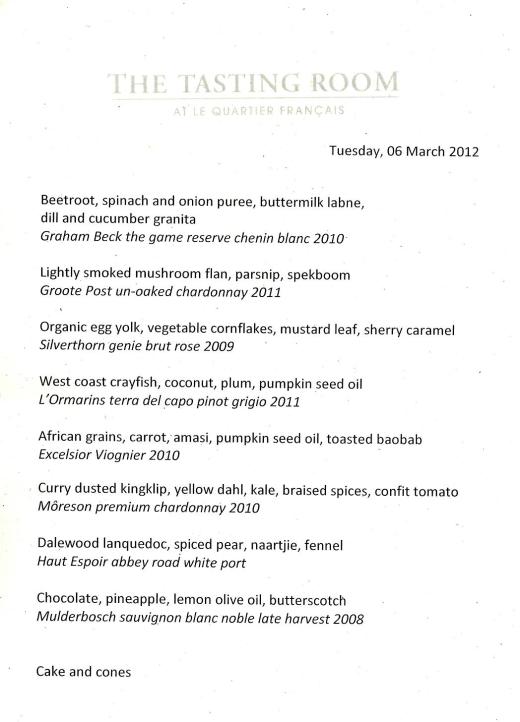
The chef, Margot Janse, has an African Inspired Surprise Tasting Menu, which is what we wanted to experience.  After we sat down at our table, one of only about a dozen, we were asked whether or not we were “up for” the accompanying wine pairings, a taste of a local wine with each of the eight courses.  I liked that, and enthusiastically accepted the challenge.  (It actually did turn out to be a challenge, but I made it through all the wine tastings and most of the food).

The Tasting Room.

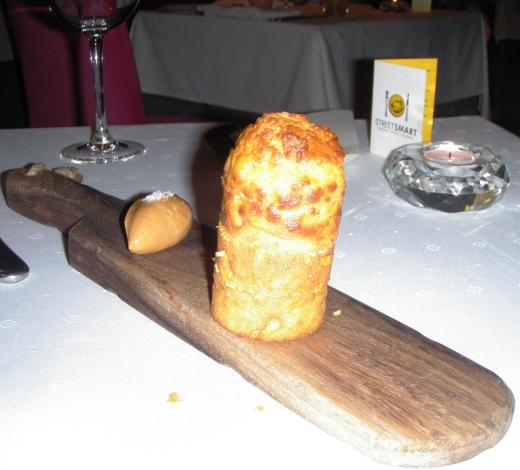
Each new course came with a prop, story, or explanation.  The bread and butter that arrived first even came with a story.  The chef has her own cow, Daisy, at one of the  local farms, and uses the milk from this cow to make the butter for the restaurant, carmelized and without preservatives.  The bread was baked in a tiny can, a nod to the cans that the corn flour used to be sold in.  The salt on the table was from the Kalahari Desert.

Bread and butter.

Most of the time my sister and I were served the same course, but occasionally we got different tastes.  While I had the smoked mushroom flan, she had a soup made with Baobab tree seed pods, and she got the prop.

Soup and Baobab seed pod.

Smoked mushroom flan.

Westcoast crayfish.

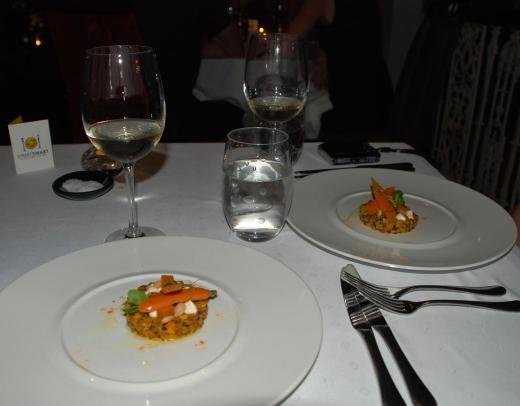
Course #5, African grains.

Course #6 Kingklip.

Course #7

The dinner did take 3 to 3 1/2 hours.  It was fantastic, and I would highly recommend this to anyone visiting Franschhoek.  My favorite courses were the poached organic egg yolk (of which I didn’t get a good photograph), the African grains, and the curry dusted kingklip fish course. The little tomatoes that came with the kingklip just melted in your mouth.  I asked the server how they were prepared, and after returning from the kitchen he told us;  they were blanched in hot water to remove the skins, then cooked slowly in olive oil for about one hour on medium heat.  They were exquisite.

Even though the food tastes  and the wine pairings were small, it did start to add up, and I just couldn’t eat anymore by the time the chocolate cake and mini cones came around.  What a pity.  After dinner we walked up and down the main street of Franschhoek, bellies bursting.

Chocolate cake.

Mini cones.

Posted in Food and Wine, South Africa | Leave a comment

Franschhoek, South Africa and horseback riding on Noordhoek Beach

The Elephant Lodge, Franschhoek

Our last three days and nights in South Africa were spent in and around Franschhoek, one of the wineland area towns.  I chose to stay in Franschhoek because of its reputation as the gourmet capital of South Africa.  The Elephant Lodge proved to be a very nice place to stay, and manager Cecilia was a gem.  The Elephant Lodge is set right in the middle of a vineyard, with a fantastic view of the valley, the mountains, and a lovely pool. 

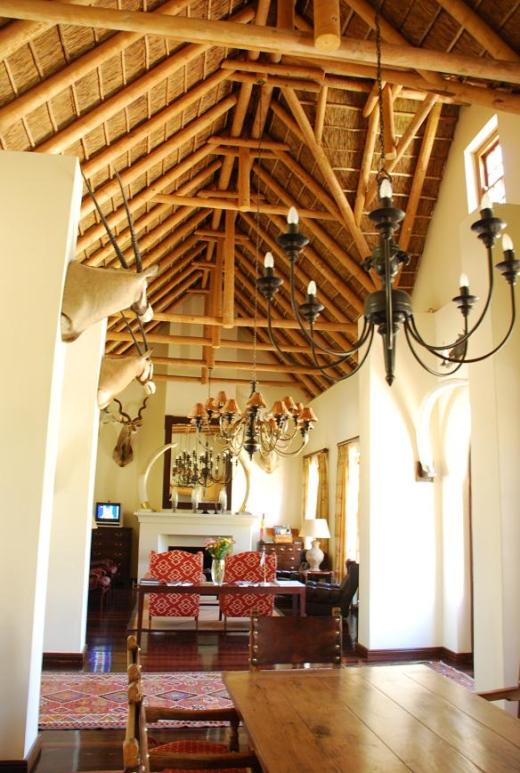
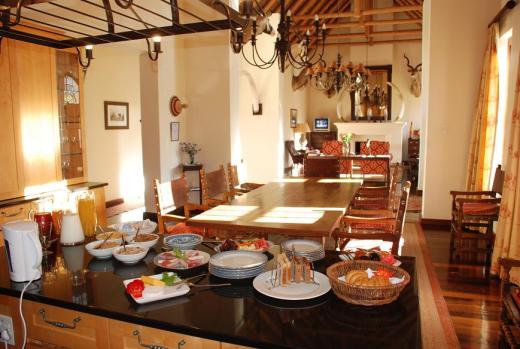
Elephant Lodge interior.

The view from the pooldeck.

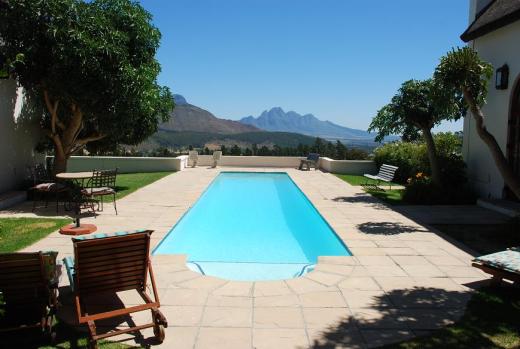
The Elephant Lodge pool.

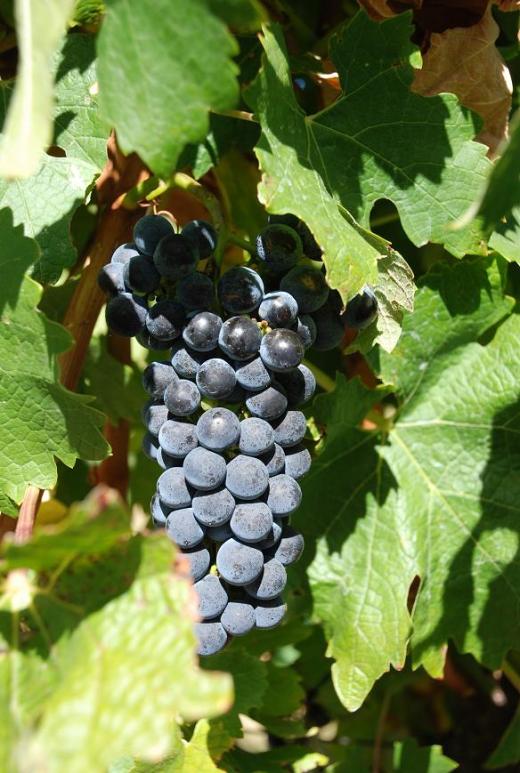
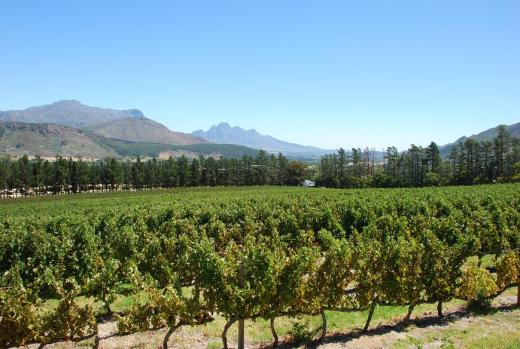
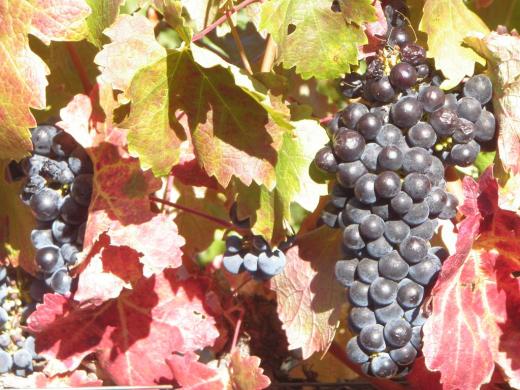
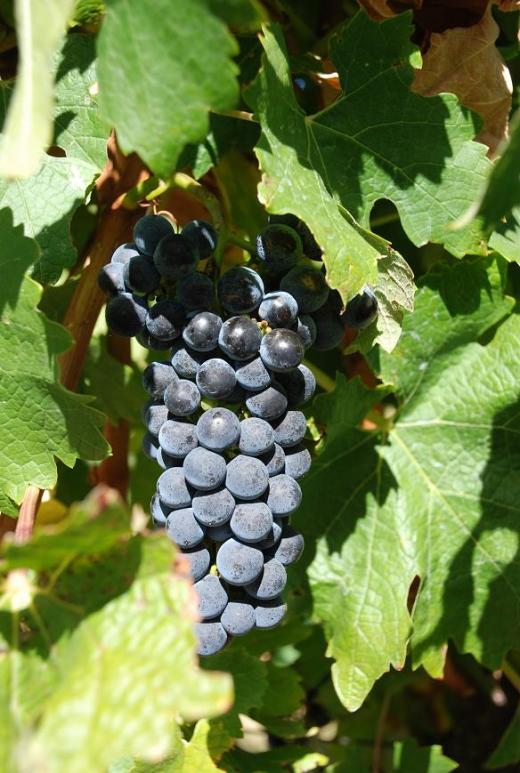
Grapes on the vine (Photo credit Katrina Nielsen).

Elephant Lodge breakfast.

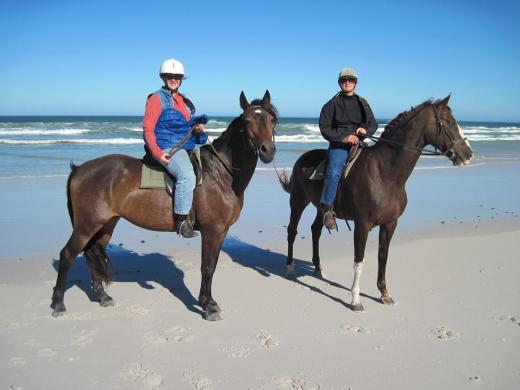
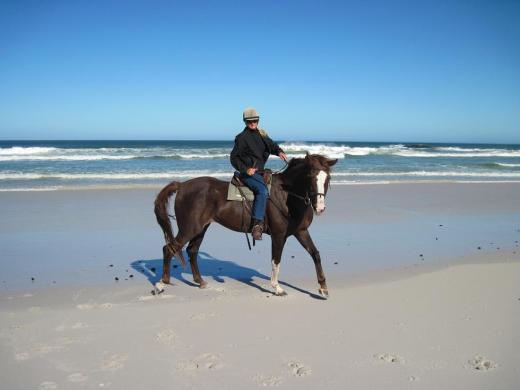
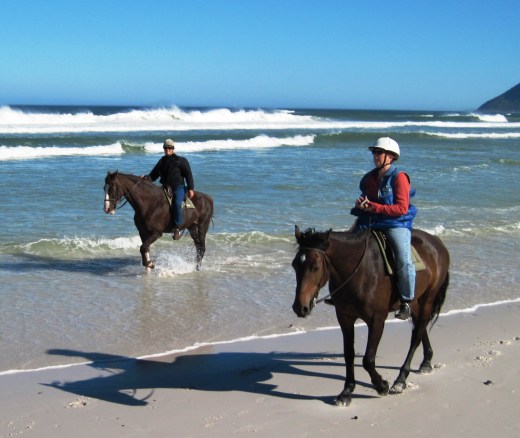
Upon check-in, we received two bottles of the estate wine.  The Sauvignon Blanc was wonderful.  Our first morning in Franschhoek was spent driving to Noordhoek beach for a horseback ride.  Logistically, this should have been something we experienced while we were staying in Simon’s Town (much closer), but this is one of the things that happens when you book activities from out of the country and are not familiar with the area or the roads.  It took us 1:45 to drive to Noordhoek beach, but it was a nice drive through Stellenbosch and along the coast, the roads were good, and we were there by the appointed time of 08:30 for our morning ride.

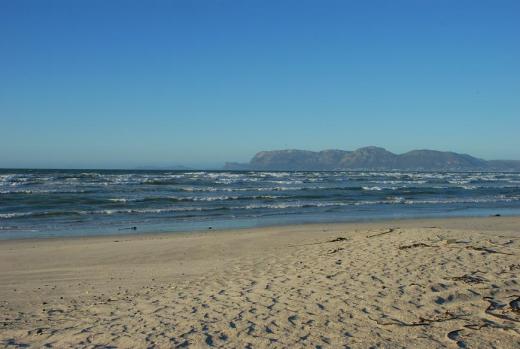
Early morning beach along R310 east of Muizenberg.

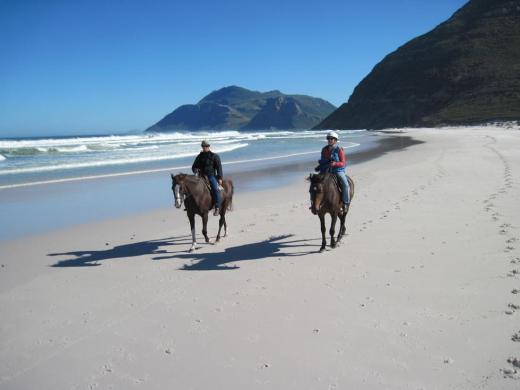
It was only my sister and myself on the ride, just a two hour jaunt on the beach.  It was fun, and despite the drive, we were glad we did it.  We had brunch at a nice little cafe right at the farm after the ride. 

Horseback riding on Noordhoek Beach.


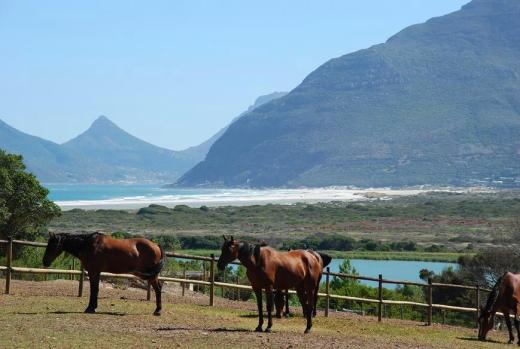
Noordhoek Beach from the farm cafe where we had brunch.

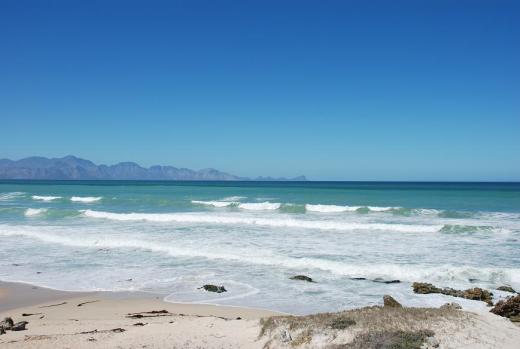
On our drive back to Franschhoek from Noordhoek Beach we passed beautiful beaches along the northside of False Bay.

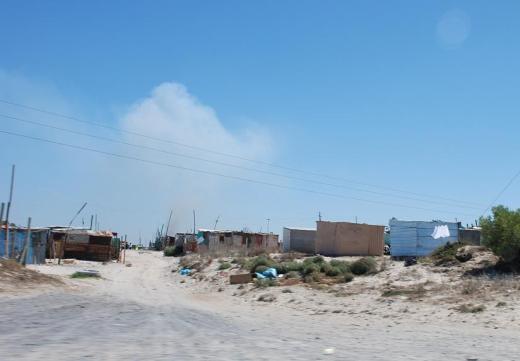
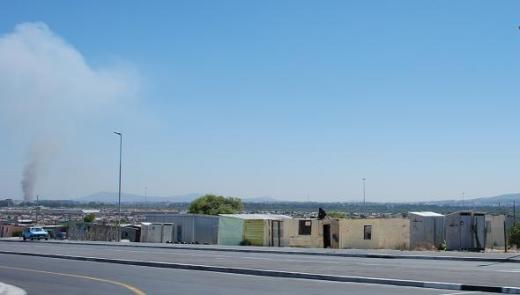
On the drive to and from Franschhoek, we did pass the Cape Flats area and saw the township area.  We were told by locals not to stray off of the N2, but our route took us directly past the area.  The photos we got were taken from our moving rental car.  We did not see anyone on the road.

Township area just south of the N2 and west of R310.


After our horseback ride, we relaxed by the pool at the Lodge until our dinner.  Dinner was scheduled for 730 PM at The Tasting Room.  The Tasting Room in Franschhoek is a world famous dining experience.  We made our dinner reservations in December, three months in advance.  The place sells out nightly and reservations far in advance are required.  We were told to allow 3 1/2 hours for the experience, and we were looking forward to the evening.

Franschhoek grapes.

Posted in South Africa | Leave a comment

The Cederbergs to Cape Town

March 5th;  The Cederbergs to Cape Town

Bushman's Kloof open air breakfast

A weaver attending to its nest.

Very reluctantly, after an early morning breakfast on the open air patio watching the weavers dart in and out of their nests, we packed our bags, loaded up the bikes and bid farewell to Bushman’s Kloof.  We both wished we had more time at the resort, but the bikes were due back in Cape Town by 5 pm and everyone told us that it was a five hour drive back to Cape Town on the direct road, and of course we didn’t want to take the direct road.  We had planned our route to head south initially, and then to turn west towards the coast, and then south again on R 27, through the West Coast National Park and into Cape Town.

Packing up the bikes for our last day of riding.

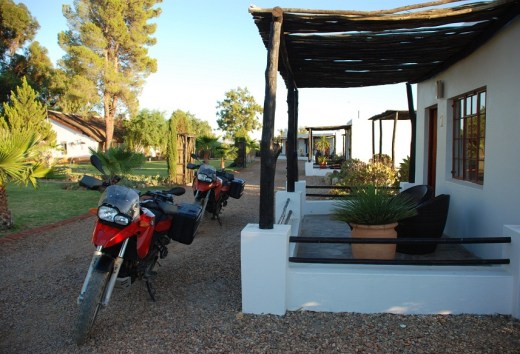
The bikes in front of reception at Bushman's Kloof.

Ready to hit the road.

We left Bushman’s Kloof at 8 am, on schedule.  We had to backtrack on the 8 km of dirt road, then the R 364 to the N7.  More backtracking southbound until we saw the town sign we were looking for at the bottom of the pass, and turned towards the west.

The red dirt road from Bushman's Kloof the main road.

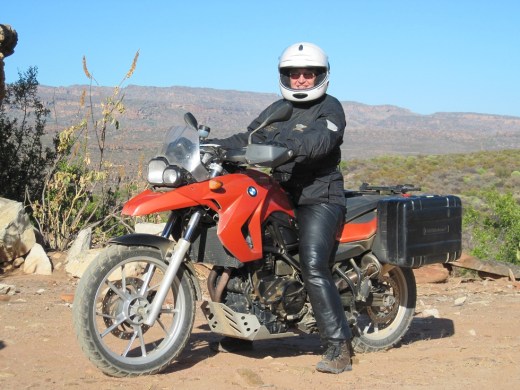
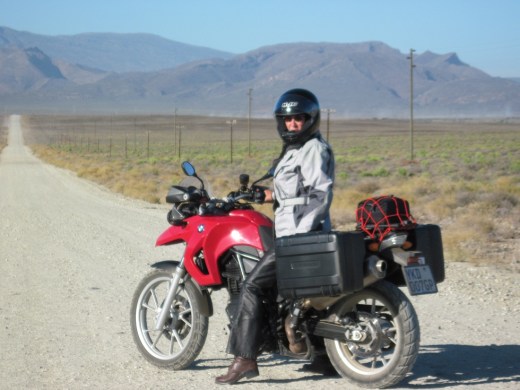
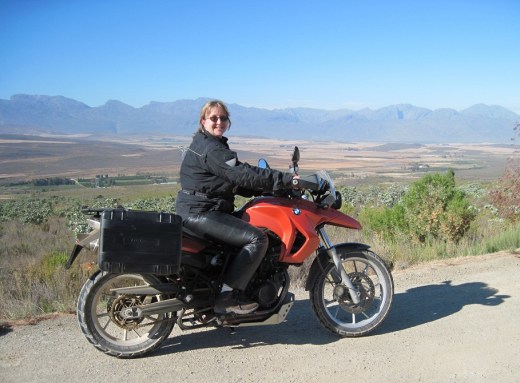
Me and my little red F650 on our last day of riding.

My sister and her little orange F650.

We had to come through the same construction on the pass and one lane areas that we had driven through on our way northbound.  At the bottom of a one lane construction site, a tanker driver first in line pulled over and motioned the entire line of cars past him, and then continued up the hill.  Both my sister on her bike and I honked and waved in thanks for the kind gesture.  Personally, I have seen more courteous driving practices here than back in my home state of Florida.  We were both warned, prior to our arrival, of how dangerous it would be to rent bikes and ride from Cape Town around the Western Cape (ok, so the warnings may have been part of the draw to do it.)  We are both convinced that only people who have not been to this area would think like that.  Our experience here has proven otherwise.  The roads are cleaner, the drivers more courteous and the road crews more prolific than what we see back home.  We were treated with respect and kindness at all our stops, even just for fuel.

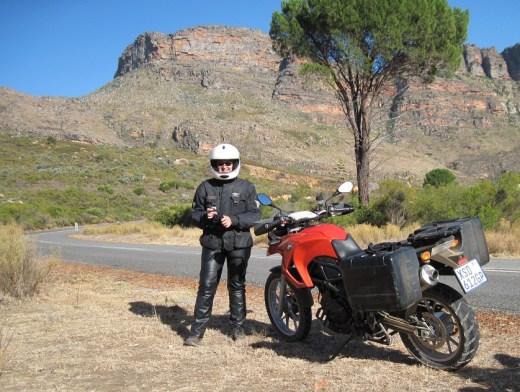
The bikes along R 364.

We enjoyed the drive south, and the area around the westward turn.  The scenery started out with red rocks and baboons, and turned into rolling hills, small towns and farmland.  We stopped for fuel in Velddrif and then turned due south along the coast.  Unfortunately for us, the winds were terribly strong, and would stay that way nearly all the way into Cape Town.  In Langebann we pulled over for fish and chips at a roadside take out place.   It was true road food, greasy and filling.

Entering the West Coast National Park.

Inside the West Coast National Park.

Shortly after our lunch stop, we left the main highway to take the alternate through the West Coast National Park.  This area is mostly known for its Spring flowers, and the land was rolling sand hills and scrub, but not terribly scenic in the autumn months.  We did see some Ostriches, tortoises, and nice beaches and the Atlantic Ocean, but we continued without stopping.   We reconnected with R 27 and again were headed due south.  The last two hours of our ride were mostly battling strong winds.  It takes a lot out of a rider to brace against not only the forward relative wind of the bike, but also a strong crosswind.  By the time we reached Cape Town I was utterly exhausted, but I still hated to see the bike go.  I could have spent another week exploring the area on that sweet little F650, and was very sad to turn it in.   But we did.  We dropped off the bikes and took at taxi to the Avis rental car office and picked up a car for the last three days.  It really wasn’t too hard to switch driving from the right side of the road to the left, but it was harder to do in the rental car than the bike.  I had a mantra that I chanted every time I had to make a turn or change lanes “Look right, keep left.”  It really worked.  The hardest part of all was using my right hand to signal a turn.  I kept turning on the windshield wipers instead of signaling a turn.  Eventually, after about one full day, I got the hang of it.

We drove the hour out of town to our home for the next three nights, The Elephant Lodge in Franschhoek.  Franschhoek is the gourmet food capital of the Western Cape, if not all of South Africa, and also known for its historic vineyards and wineries.  That is why I chose it for our last three days, with good food and wine in mind.  We arrived at the lodge at 6 pm, with the wind howling so strong it was hard to stand straight up. It felt cool too, up in the mountains.  We checked in and decided to get a quick meal at a pub and call it a night.  It took a lot out of us to battle winds for so long on the bikes.  We got a pizza and some local wine at the Elephant and Barrel Pub on the main street of Fronschhoek, then headed back to our comfortable room at the Elephant Lodge.

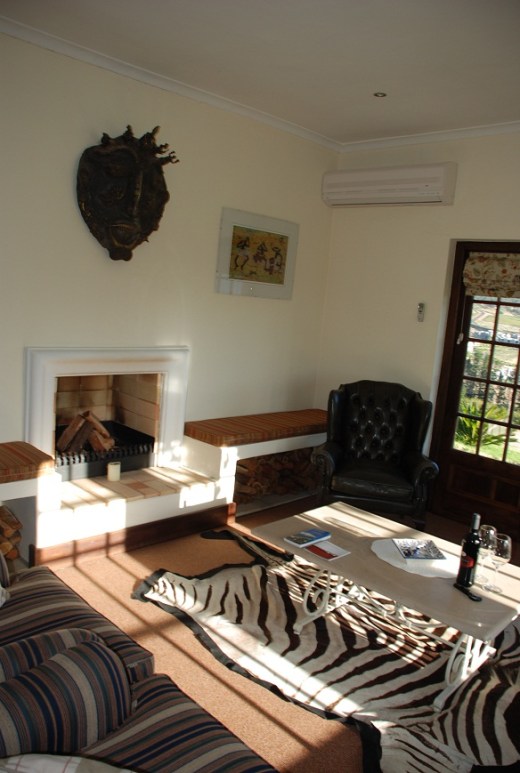
Our room at The Elephant Lodge.

Posted in Cars & motorcycles, South Africa | Leave a comment

Bushman’s Kloof

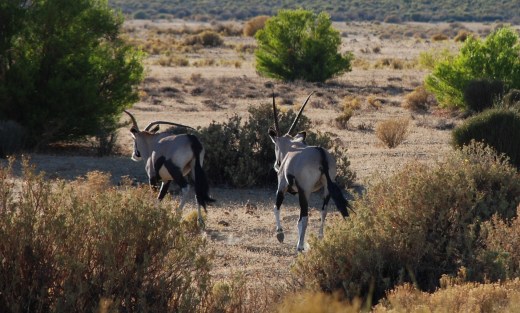
The Oryx we saw on our early game drive to the Rock Art site.

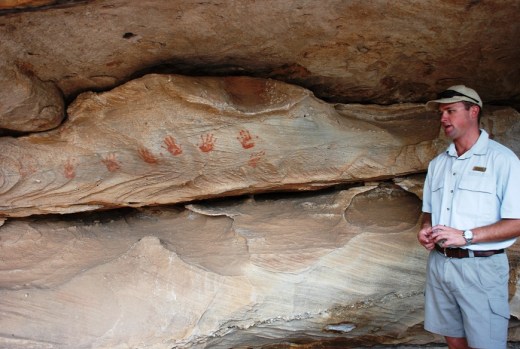
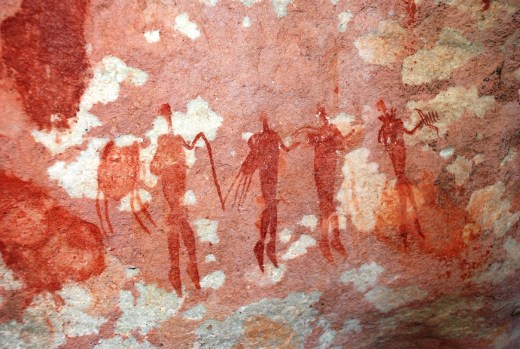
We gave the bikes a rest on Sunday March 4th, spent the day at Bushman’s Kloof, and celebrated my birthday.  We started with a morning drive to one of the 149 San Bushman Rock Art sites and spotted Oryx along the way.

The Oryx is also known as Gemsbok.

We had coffee and muffins in the vehicle, sundowner style, viewed the Rock Art, and then drove back to the lodge.

Coffee and muffins during the morning drive.

Regardt describes the San Rock Art history.

San hunters.

This San Rock Art painting was modified slightly and used as the Bushman's Kloof logo.

A real breakfast was enjoyed in the open air dining area.  After breakfast we took a short hour long walk on the ‘mountain trail’ and then we relaxed.

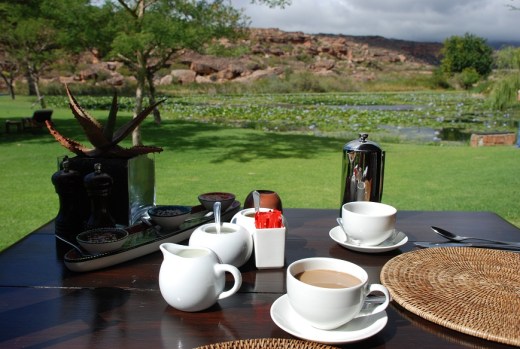
The breakfast table at Bushman's Kloof.

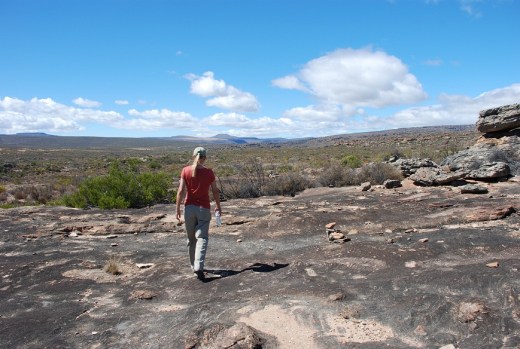
Mountain Trail hike.

Mountain Trail Hike: Natural colors of the Cederbergs; RED

Mountain Trail Hike: Natural colors of the Cederbergs: YELLOW

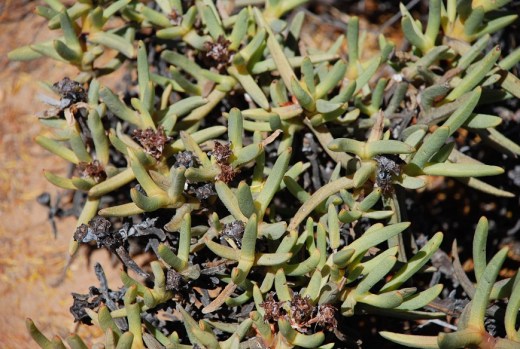
Mountain Trail Hike: Natural colors of the Cederberg; GREEN

The Dassie we saw on the hike.

Bushman’s Kloof has a gorgeous spa, of which I availed myself.

The Bushman's Kloof spa.

In the afternoon we relaxed around our pool and waited for High Tea.  We had arranged for a night game drive/star gazing session, so we decided to skip the evening game drive.  For my birthday dinner, Bushman’s Kloof set up a private table in the open air dining area, next to a fire, and we had a very nice birthday dinner complete with cake and candles.

Birthday dinner setting.

My sister and I enjoy a birthday toast with champagne.

Birthday cake.

After dinner, at 10:30 pm, we set out on the night game drive.  I was really hoping to see a leopard or a caracal, but we didn’t.  We did see bat-eared foxes and quite a few hares.  Regardt gave us the Khoisan story of the Orion and the milky way.  We had a night cap under the stars of Amarula and called it a night.  A great way to end a birthday in Africa.

Posted in South Africa | Leave a comment

To the Cederberg Mountains

March 3rd;  Inverdoorn to the Cederberg Mountains:

A cactus flower at Inverdoorn, near the Tankwa-Karoo National Park.

Loading up the bikes in the morning.

This was taken at about 730 am before leaving Inverdoorn. We found that between 6 am and 8 am, and 6 pm and 7 pm were the best times to take photos.

We left Inverdoorn early, 8 am.  We had experienced the warmest temperatures so far here, in the Karoo, and the coolest hours to ride were the early hours.  The first 15 km were gravel and we wanted to get that part over with.

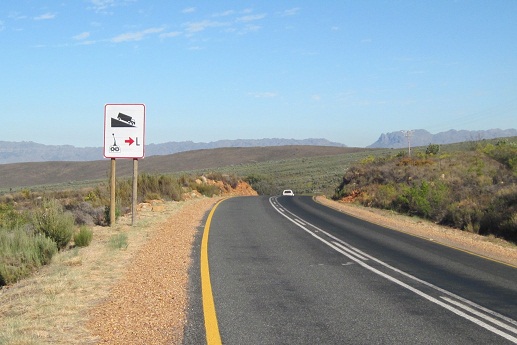
We backtracked along R356 to R46 and headed west.  The town of Ceres was a large orchard growing, fruit packing town.  We descended into Ceres, and saw the “low gear” sign for trucks.

My sister on her BMW f650, overlooking Ceres.

The "low gear" sign before descending into Ceres.

From Ceres we took R46 through some passes, past olive and wine farms and along the Groot Winterhoek Wilderness area.  The first time I saw a “Baboons in the road” sign I thought it was funny.  We saw the sign a few more times, but no baboons.  We started to disregard the warning.  As we headed north on R44 we passed through a few more passes.  I had just passed some cars and accelerated to 120 km in order to have some fun on the curving pass road when I rounded a corner and saw not just one or two, but an entire troop of baboons in the middle of the road.  I braked hard and maneuvered around them like cones on an autocross track, while they seemed unfazed by my bike, my sister’s bike behind me, and the cars behind us.  From then on, I took the baboon warning sign much more seriously.  I later asked one of our guides why I hadn’t seen any dead baboons in the road.  He said in the 10 years he’d driven in the area he had seen only one hit on the road, and that they are quick and agile and you would have to really try to hit one.  (I really wanted a photo of the baboon warning sign, but each time we came upon it, the location was too dangerous to pull over).

We followed R44 northbound, passing Portersville, until we connected with the larger N7, where we hit major road construction.  We saw quite a few road works projects, and they seemed to handle the traffic and delays rather well.  The road was down to one lane, and the traffic had to be stopped periodically on each end, and the waiting traffic sent through.  We didn’t really wait too long, ten minutes at the most, and then were climbing the pass into Citrusdal. We continued on the N7 which runs along the Olifants River and is a very pretty valley with rolling hills and farm land.

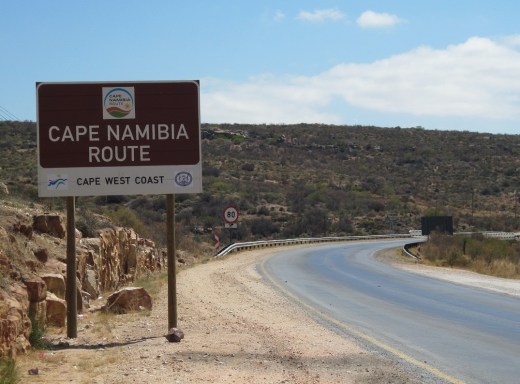
The N7 in this area is also known as the Cape Namibia Route.

The Cederberg Mountains were off our right side.  When we reached Clanwilliam, we turned off on R364, expecting gravel.  Our map was somewhat out of date, as it had been tarred.

The bike along the R364.

The stretch of R364 from Clanwilliam to the gates of Bushman’s Kloof were very scenic, curving mountain roads, red rocks and baboons in the rocks watching us pass.  We reached the gates of Bushman’s Kloof, our destination, and they buzzed us in.  The next 8 km were all red sand, and we had to continue at a pretty slow pace.

The Bushman's Kloof road.

Bushman’s Kloof, http://www.bushmanskloof.co.za/, was the spot I had chosen as my birthday location.  It was voted “Best Hotel In The World” by Travel Leisure in 2009, and Condé Nast Traveler USA World’s Best Awards Top 50 Resorts in Africa (2011).  It looked like a nice spot to celebrate my birthday and the right distance for a comfortable and fun ride.  We rode straight through, stopping only for fuel or to check the map, and it took us 5 hours from Inverdoorn to Bushman’s Kloof.  We arrived at 1 pm, but our room wasn’t ready.  So we had lunch and they showed us around the place while we waited for our room.

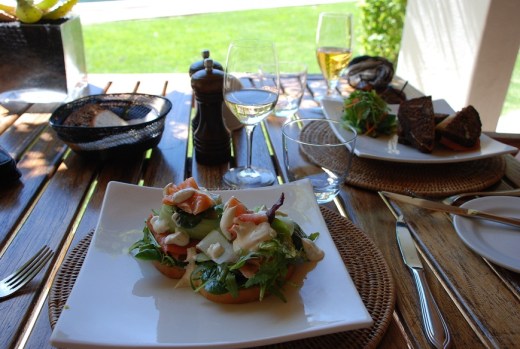
Lunch at Bushman's Kloof

The room was beautiful, perfect.  We had a nice pool to share with 3 other villas and a wonderful patio.  We used the pool, relaxed, and enjoyed a bottle of champagne while waiting for High Tea.

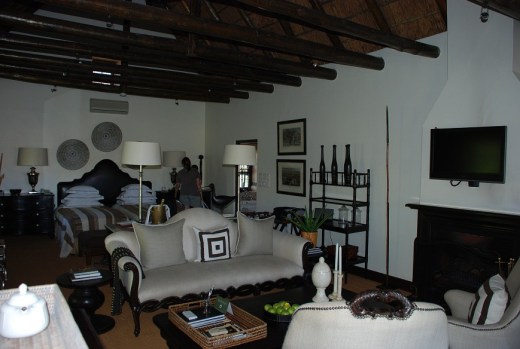
Our room at Bushman's Kloof

Our pool.

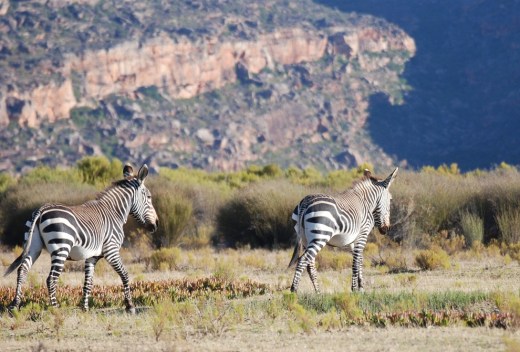
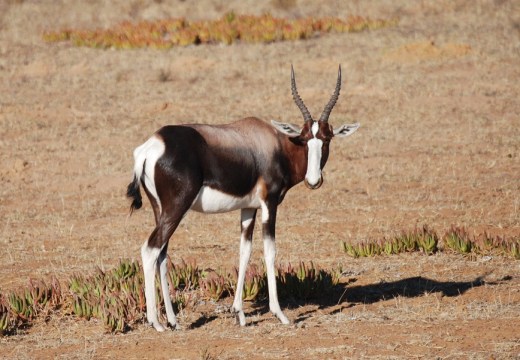
At 4 pm each day High Tea is served, which includes light sandwiches, tea, coffee and cakes.  At 5 pm each day an afternoon game drive sets out.  The 18,000 acre spread has a perimeter fence, but nothing else.  Leopards and a few small predators such as Caracal and African Wild Cat are in the area and free to come and go.  The staff have seen them on occasion.  Mostly we came to see the Cape Mountain Zebra (endangered), the Oryx and the Rock Art of the ancient San people.  On our first drive we did see the Cape Mountain Zebra, Eland, Bontebok, Springbok, and Hartebeast.  We saw the Oryx on our second drive the following morning.

Cape Mountain Zebra.

From the Bushman’s Kloof brochure:

Bushman’s Kloof has been instrumental in the quest to save the rare and endangered Cape mountain zebra from extinction and is the proud owner of one of the larfest privately owned herds among the estimated total population of 1200 animals worldwide.

Two other guests, Marton and Vivian from the UK, joined us on our evening game drive.  As our guide Regardt pointed out some Ostriches and explained that they are constantly grazing, Marton observed that the guests at the hotel were much like the Ostrich.  Breakfast is served from 7 am until noon, lunch from noon until 3 pm, high tea at 4 pm, and dinner at 8.  God forbid you ever become hungry.  Impossible.

Springbok.

Bontebok

Eland

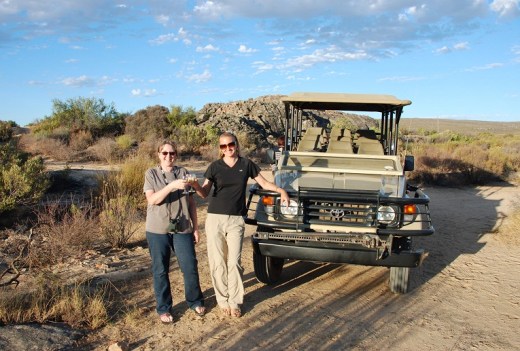
Sundowners were served, as usual, on the tailgate of the Toyota Land Cruiser.

Sundowners.

Happy Hour was at 730, at the River Boma.  We sat and watched the stars, with a terrific view of the Southern Cross.  Dinner was served at 8 pm and was  very tasty.

Happy Hour at the river boma with the Southern Cross in the night sky.

Posted in Cars & motorcycles, South Africa | Leave a comment

Swellendam to Inverdoorn: Through the Waboomsberg

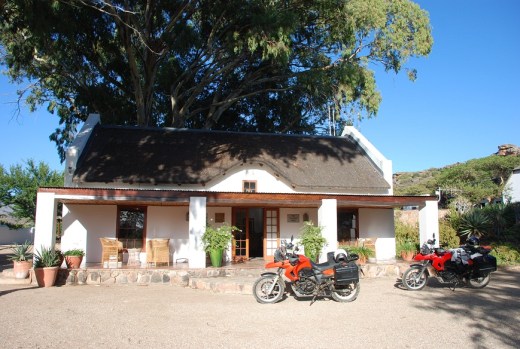
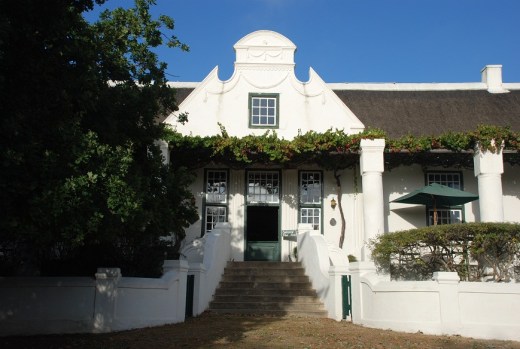
Klippe Rivier Country House.

March 2nd;  Swellendam to Inverdoorn, Through the Waboomsberg

We left Klippe Rivier reluctantly, after the best night’s sleep in ages.  We loved the old country estate and wished we could have stayed on another day.  Leaving Swellendam on the R60 we rode through rolling hills of farm land and some vineyards.  From R60 we turned towards Montagu and then into the Waboomsberg Mountains.  The passes were a lot of fun, but unfortunately, it is impossible to take photographs of the best riding roads.  We temporarily forgot about the cameras and enjoyed the drive.

Leaving Klippe Rivier, over the bridge.

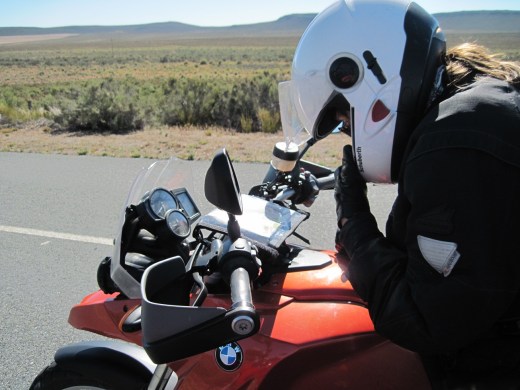
Consulting the map.

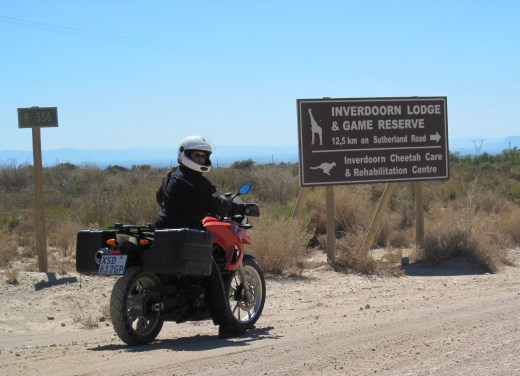
We followed R318 through several passes, then a short stint on N1 before a turn off onto R46.  Our destination was the Inverdoorn Nature Reserve and Western Cape Cheetah Conservation project and guest lodge.

The crossroads of R355 and R356.

The road turned from hard surfaced “tar” roads to gravel on R355 and R356, which lasted approximately 15 km.  The ride took us 3 ½ hours, so a short day of riding.

The road turned from tar to gravel.

Inverdoorn is a private game reserve on 10,000 hectares (about 24,000 acres) with over 1200 wild animals.  They have three lions, three rhinos, giraffe and many of the other wild animals you expect on a safari game drive.

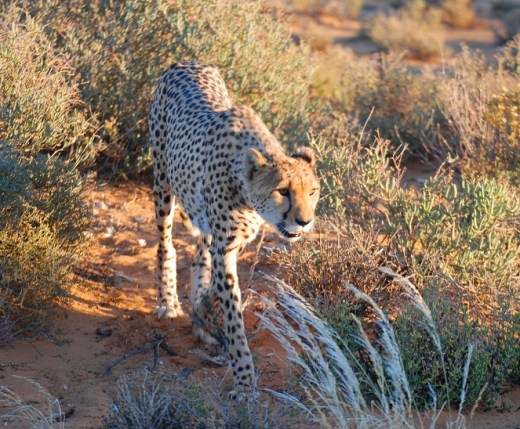
But it is the Cheetahs, nine of them, that we came to see.  We had bad timing on the Cheetah viewing as a vet had been there the day we arrived and the afternoon Cheetah close encounter had been canceled.  But we were promised a surprise during the evening drive.

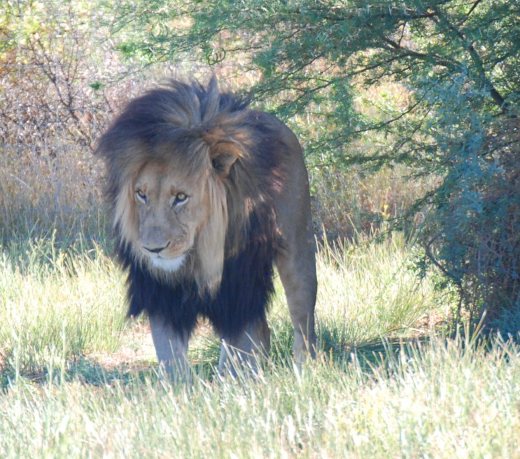
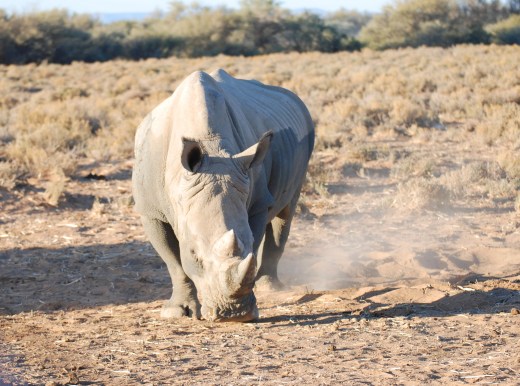
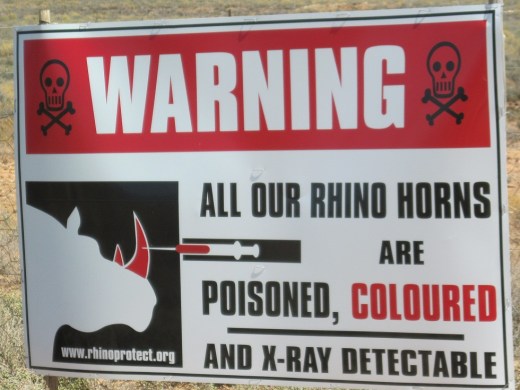
They have done many good things here, including rescuing many of the animals you see during the drives.  The largest lion, a beautiful, huge, black-maned male, was rescued from a farm where they beefed them up on steroids and sold them for “hunting trophies.”  This handsome guy would have ended up on someone’s wall or floor.  The practice of canned hunts (lions in fenced enclosures sold for “trophies”) has been outlawed.  Inverdoorn has had their lion for almost nine years and have two females as well.  They have also rescued three rhinos, and have signs out warning poaches of the dye they have injected into the horns.  The poaches have threatened not only the rhinos here, but the workers’ lives too.    The Cheetah rehabilitation program has been in place since 2001 with specialized care, breeding, and repopulation.

Ten year old rhino male.

Four year old rhino female calf.

The sign along the outside fences.

Our evening surprise was that we were alowed to watch the cheetahs exercise.  They run the cheetahs on a dirt runway, letting them chase a rag bundle pulled along at a high rate of speed by a machine at one end of the runway.  There are viewing stands and you get to see the speed of a cheetah in action.  It was growing dark as we watched this, so my photos isn’t as good as I had hoped, but you get the idea.  The cheetahs are beautiful.

One of the four female cheetahs getting her exercise.

Inverdoorn was a nice experience for Cheetahs and the closest we have gotten to rhinos, but since we have had game drives in the wild, it seemed less of a safari experience knowing the area is fenced and the animals fed.  They have to feed them as the land was over farmed and has lost all its nutrients.  They are working hard at restoring the land and doing good things.  The guides are dedicated and full of information.

Inverdoorn bar with a fire pit.

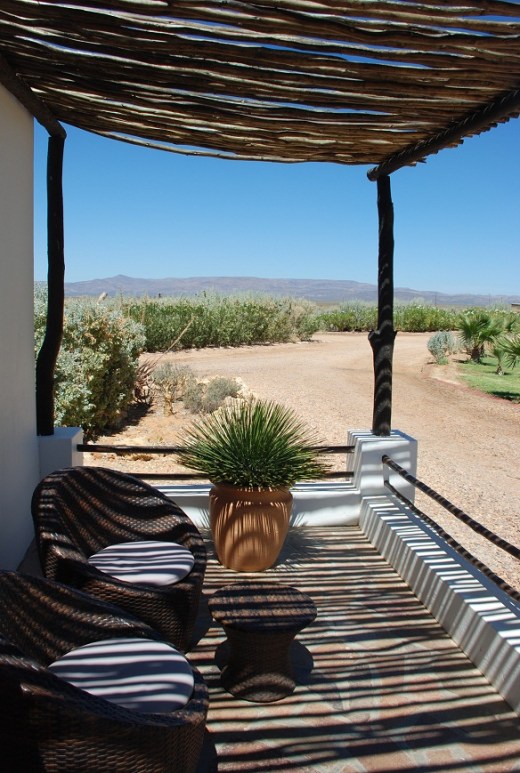
The dinner was wonderful and the lodge facilities are very nice.   The natural beauty of the Karoo is a stark, empty beauty and the lodge area is set up with local vegetation that thrives in the dry climate.  With Bedouin tents and drought tolerant shade trees Inverdoorn gives visitors an oasis under the vast skies of the Karoo.

Inverdoorn dining tent.


Posted in Cars & motorcycles, South Africa | Leave a comment