Cape Agulhas

March 1, 2012;  Cape Town to Cape Agulhas to Swellendam

Today we left Simon’s Town in our rental car, headed back to Cape Town.  After dropping off our car, we picked up the BMW F650s at Karoo Biking at the BMW pavilion on the waterfront.  We will be on the bikes for the next 5 days, and have only the room in our BMW hard bags for our luggage.  That means we had to leave two rolling duffel bags and one roll aboard bag with the bike rental office.  The hard bags hold less than you might think, and I had to really restrict the amount of luggage.  One side bag has just enough room for my camera bag and computer and the other holds just one backpack.

My sister along the R44

We left Cape Town on the N2, three lanes wide, and well-marked.  From the N2 we turned off on the R44 southbound.  This next stretch turned out to be the best biking road of the day.   It is small and winding and follows the coastline, and is also known as the Whale Coast Route.  During the winter months here in the southern hemisphere, the southern right whale, humpback whales, and sperm whales can be seen from the shore here.  The view is spectacular and the road is fun to drive.  It took us two hours to get from Cape Town to Hermanus, where we stopped for lunch.

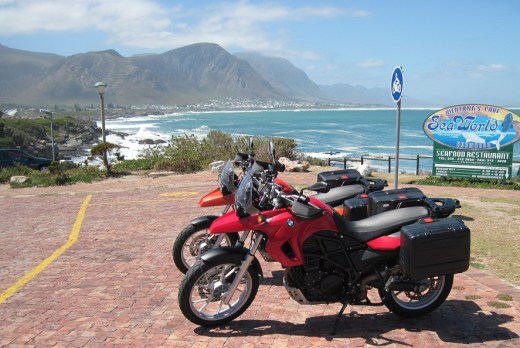
Our bikes at the Hermanus waterfront

Lunch in Hermanus

Back on the bikes, our new destination is Cape Agulhas, the southern most point in Africa.  We took the R326 and R316 from Hermanus, through Napier and on to Bredasdrop.  Napier looked very Dutch and all the signs were in Afrikaans.  After leaving the coastline, the country became mostly agricultural with many sheep and dairy farms, mostly wheat and a few vineyards.  It reminded both myself and my sister of the Eastern Oregon countryside.

Me and my bike at the southern most point in Africa, Cape Agulhas.

From Bredasdrop it is a straight shot south to the coast.  It took us 1:45 to drive from Hermanus to Cape Agulhus.  The roads were in very good shape, the directional signs more than adequate.  We were never in question of where we were, or which way to turn.  There were many road crews out and there is virtually no litter.  We also passed may veterinary clinics and saw very well cared for dogs on leashes and with their owners.  So far we have not seen one stray dog.
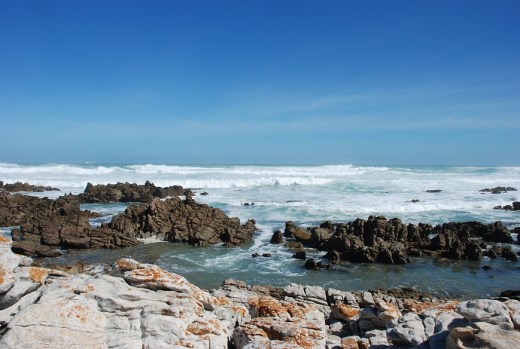
Where two oceans collide.

Me on the southern most point marker

The driving was easy.  The only drawback of being on the bikes today was the very strong wind.  For at least one hour, or more, we really battled a strong crosswind.  We are on small, lightweight bikes, and it was a struggle at times.  No matter the “helmet hair”, at Cape Agulhas no one would have great hair as the winds were blowing a gale.  The monument at Cape Agulhas marks where the Indian Ocean and the Atlantic Ocean meet.  It is the southern most point on the continent.  It is rocky, wild, windy and beautiful.

At Cape Agulhas we took our photos, walked the boardwalk, picked up a few rocks, then headed north again.  We wanted to make our overnight stop before dark.  We left the Cape at 3:45 and pulled into the Klippe Rivier country house in Swellendam about two hours later, and before dark, which was our goal.  We are greeted by not one, but two resident cats.

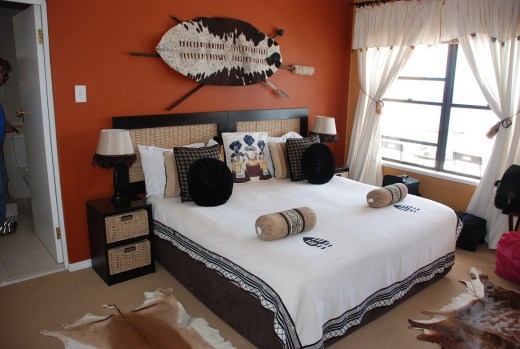
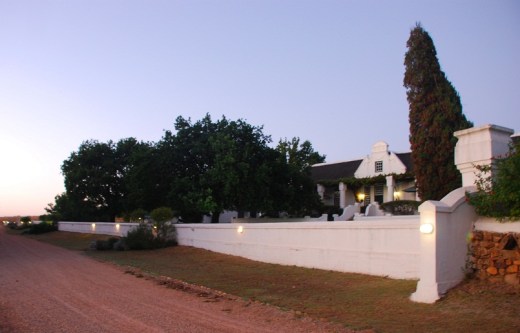
Our room at Klippe Rivier

The Klippe Rivier Country House was built in 1820 and was the family house of past-Presidents Steyn and Reitz.  It is gorgeous, with a thatched roof and beam ceilings.  We are staying in the portion that used to be the stables.  The room is large and beautiful and we are happy to be off the bikes.  We spent 8 hours traveling today and made good time and distance.  Too tired for a sit down dinner, we drove to a near-by market and bought a bottle of wine for R35 (Boland Cellar, Trots suid-Afrikaans sedert 1947, Sixy-40, Chenin Blanc Sauvignon blanc 2011, $5) and some pasta salad, bread and cheese.  A perfect way to end the day, picnicking on our beautiful verandah.
Posted in Cars & motorcycles, South Africa | Leave a comment

Cape of Good Hope

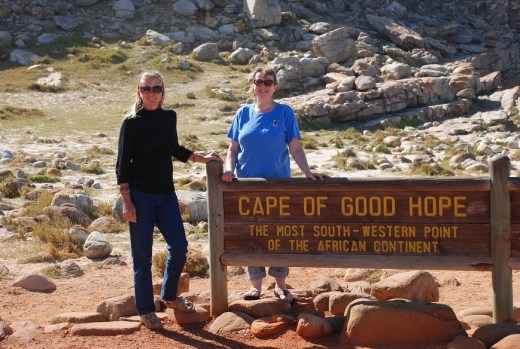
The sign at the Cape of Good Hope.

The Cape of Good Hope has been on our must see list for years.  It was well worth the wait.  The scenery was wild, gorgeous and stunning.  My pictures do not do it justice, but I am posting them anyway.  We arrived at the park early, and had the cape viewpoint all to ourselves.

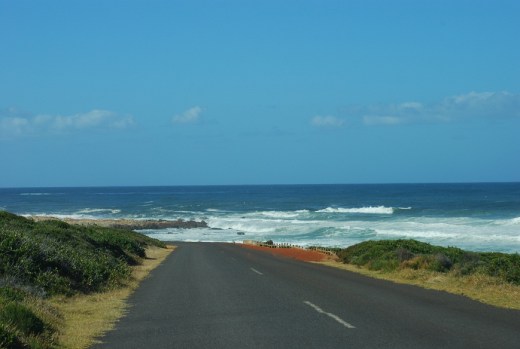
The road to the Cape of Good Hope.

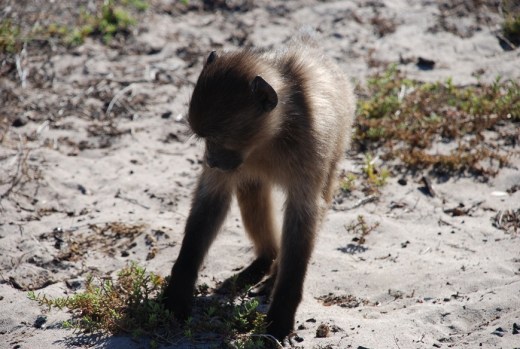
One of the baboons along Maclear beach, just before the Cape.

We also were very lucky in that we ran into a troop of baboons at Maclear Beach, just prior to reaching the actual Cape.  The scenery was breathtaking, the waves were large and wild.

Big waves along the coast.

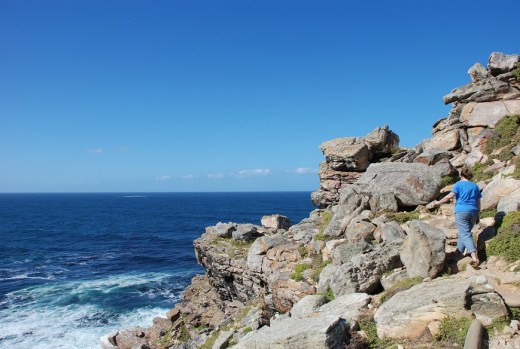
This is part of the trail up to a viewpoint above the Cape.

At the top of the viewpoint trail at the Cape of Good Hope.

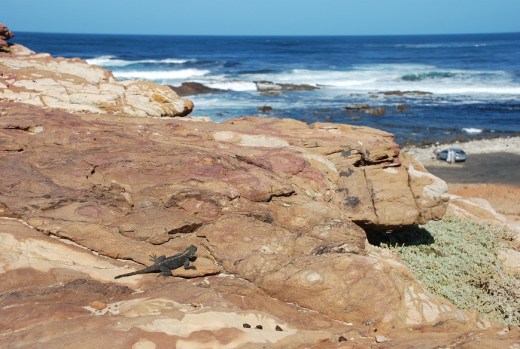
A lizard with a view.

View from the top, Cape of Good Hope.

A seagull from above, and the churning waters of the Cape of Good Hope.

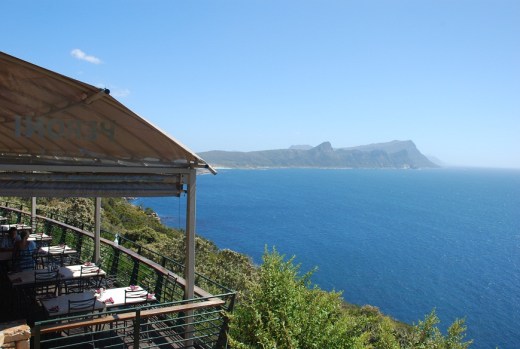
We found the actual Cape very unspoiled, but the lighthouse area was full of tour buses.  We walked up to the lighthouse and then had lunch at the Two Oceans Restaurant.  The view was spectacular and the food was too.

The Two Oceans Restaurant

Cape Point logo.

We did some beach combing and some roadside shopping on the way back to Simon’s Town.

Platboom Bay

Baboon prints in the sand.

Roadside shopping.

Posted in South Africa | 1 Comment

Cape Town to Simon’s Town

Early morning on the V&A waterfront.

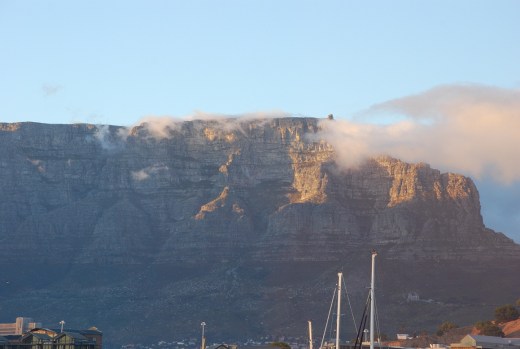
Sunrise on Table Mountain.

We were up early this morning to watch the sunrise light up Table Mountain.  It was clear at first light, but the “table cloth” started to form as the sun came up, and became more and more evident.

The Table Cloth

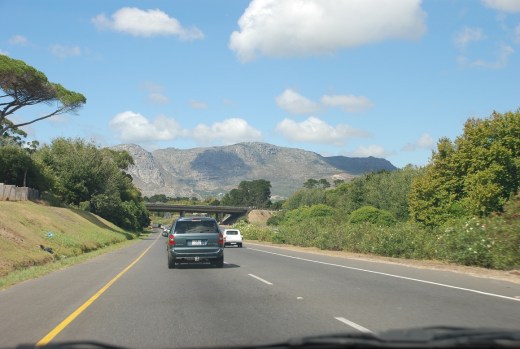
As we left town in our rental car, headed south on the M3, the cloud cover had increased.  We were happy we experienced Table Mountain the day before, when it remained clear the entire day.  The roads are good, easy to navigate and the signage is more than adequate.

The M3 leaving Cape Town.

As we headed south the road became more narrow and hugged the eastern shoreline of the peninsula.  The drive time from Cape Town to Simon’s Town was only about one hour.  We are staying at a B&B, the Whale View Manor, in Simon’s Town.

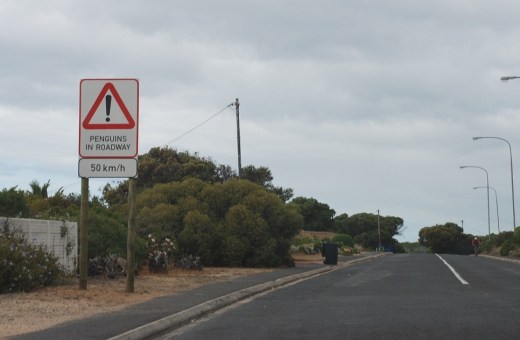
A road sign warns of penguins in the road.

In our rental car, at a scenic pull out along the M4.

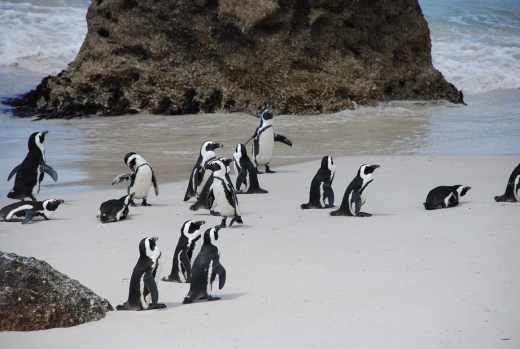
Simon’s Town is known for its colony of African penguins at Boulder Beach.  The R45 entrance fee allows you to walk the boardwalk to the beach and watch the penguins on the beach and in the surf.  A separate beach and entrance lets you swim with the penguins.  They are very cute and a definite tourist attraction.  As we left we saw three large buses pulling in.

Boulder Beach in Simon's Town, South Africa.

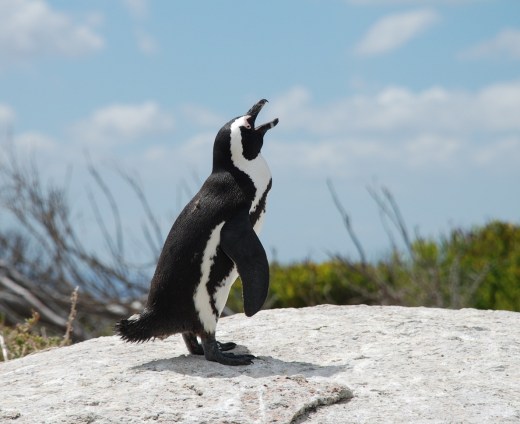
A nesting penguin.

The penguin viewing boardwalk.

We got our first taste of rain today.  After the rain, my sister noted that the smell was similar to The Lost Coast, the northern coast of California.  We dipped our toes into False Bay this evening, for the first time.  I expected colder temps.  It was warmer than Maine, and about the same as the water temperatures along the Oregon coast during an El Nino season.  I do believe that the water is warmer here in the bay than the water along the Atlantic or Indian Ocean coast.

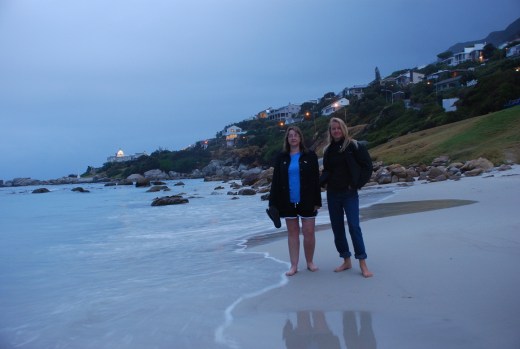
Sunset on the beach below the Whale View Manor, Simon's Town, South Africa.

We had dinner tonight at the Boulder Beach Restaurant, inside the Boulder Beach Hotel.  They are on the outskirts of Simon’s Town (the third oldest city in South Africa), near a penguin colony.  We could hear the “jackass penguins” during dinner, and they do sound like donkey’s.  The dinner was excellent, a wonderful risotto, with the resident cat, Linda Rose, occupying the adjacent table.

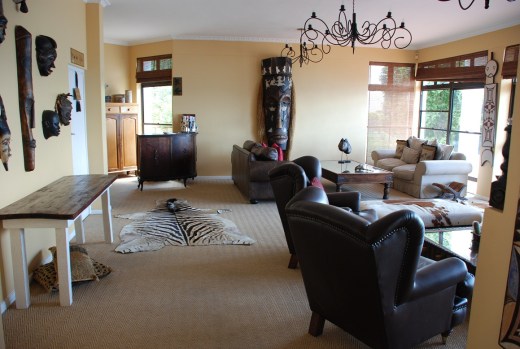
Whale View Manor living room, Simon's Town

Our room at the Whale View Manor

Observations on South Africa:

1.  You can get a good glass of wine for R16 – R35 ($2 – $5), and a very decent meal for R50 – R100 (exchange aprox. 7 R to 1$).

2.  Dress code;  casual, southern California surfer attire acceptable.

3.  Too many sock and sandal combinations (on men) observed.  (Northern visitors to a southern climate).

4.  The roads are good, no litter, well marked with signs.

5.  The people are very friendly.

6.  If there is a tourist draw, expect to pay a nominal fee.  We paid R195 for a round trip cable ride up to the top of Table Mountain, and R45 to see the penguins.

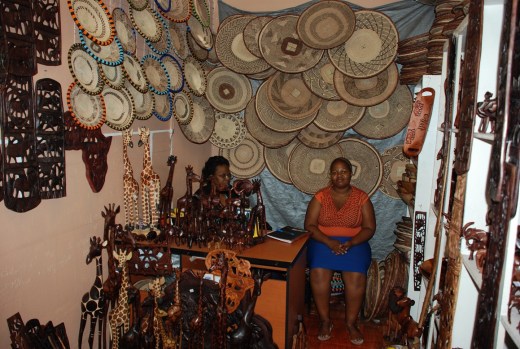
7.  Souvenirs are prolific.  Beaded animals, which are cool, are everywhere.  There is no end to the carved wooden animals, wooden masks, (not necessarily made in South Africa) bracelets, necklaces and woven baskets (my favorite).

Very large lion made of beads. There were many small animals made of beads being sold on the street.

Posted in South Africa | 1 Comment

Cape Town, South Africa

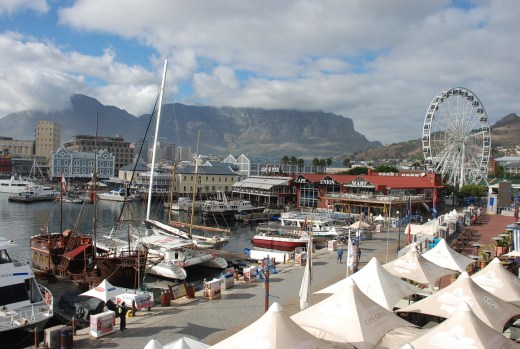
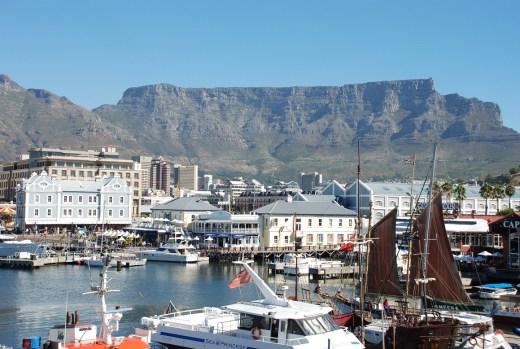
The Victoria and Alfred waterfront, Cape Town, with Table Mountain in the background.

The cable car up to the top of Table Mountain.

Another birthday is approaching, so that means another trip.  This year my sister has joined me in Cape Town, and the Western Cape of South Africa.  We endured the over 20 hours of flight time and landed in Cape Town Sunday night, Feb. 26th.  We are here in the city for two nights, then the Cape Peninsula area for two nights, after which we pick up BMW F650s and head out for 5 days of touring the Western Cape area.  Our motorcycle ride is followed by three nights in the wine country.

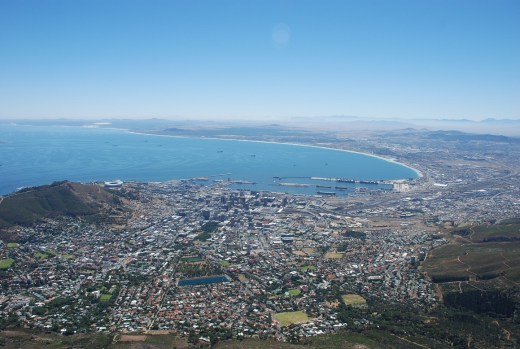
Cape Town from Table Mountain.

For our first full day in Cape Town we headed straight up to Table Mountain.  It was a clear day and the locals suggested the cable car up to the top of Table Mountain.  No “table cloth” today, it remained clear.  It is a stunning view, and full of tourists.  Oh well, we are part of the tourist crowd here.

The top of Table Mountain

Looking south from Table Mountain, along the west coast and the Atlantic Ocean.

After Table Mountain we walked the Victoria and Alfred Waterfront, which reminded both of us of the Sydney Harbor area.  The people here are friendly and the atmosphere casual and fun-loving.

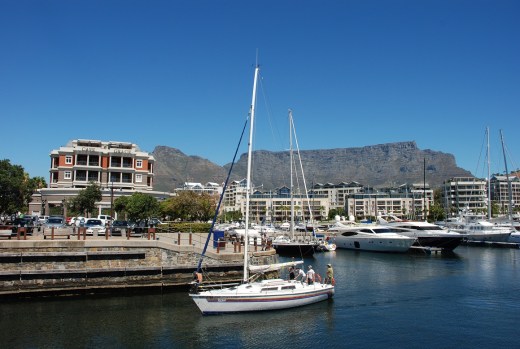
Cape Grace hotel, sailboat and Table Mountain.

Craft shop with baskets, and more.

Shopping was on the menu today with the waterfront area able to satisfy just about anyone’s taste.  I purchased only one basket so far, a few bracelets, but was disturbed by the abundance of zebra skin accessories.

Zebra skin accessories.

With over 6 sunset cruise options, we figured that was a must do, followed by dnner on the waterfront was crowded, but fun and the food was excellent.

Champagne sunset cruise.

Cape Town at sunset.

Posted in South Africa | Leave a comment

Mystery solved

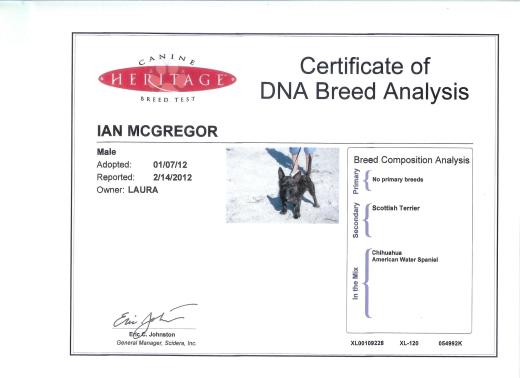
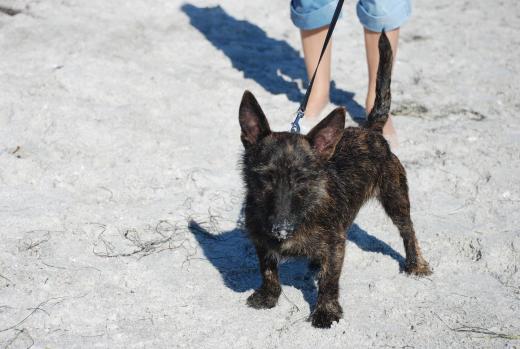
The results are in.  Ian’s DNA test came back as Scottish Terrier the predominant breed, and “in the mix” are Chihauhau and American Water Spaniel.  The Chihauhau I had already guessed, but the American Water Spaniel was quite a surprise.

Ian

So here are the three dog breeds, side by side, that make up MY dog:

Posted in Family, Uncategorized | Leave a comment

Who’s Your Daddy?

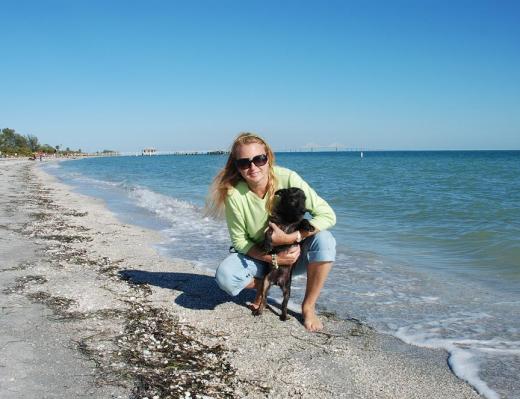
This little guy, now known as Ian, came to live with me about three weeks ago.  I adopted him through a rescue organization here in Florida.  He’s a happy little dog, very friendly, and is slowly being accepted by the resident cats.  His first trip to the beach brought many inquiries as to his breed.  That is a question I can’t answer, at least until the DNA test results come back.  I sent away for the Canine Heritage Breed Test, ( http://www.canineheritage.com/) swabbed the inside of his cheek, and sent the samples back.  In a few weeks I will have my answer to the question we have been asked nearly every time we go walking, “What kind of dog is he?”

Posted in Family | Leave a comment

Backyard Pool Project: the anatomy of a pool.

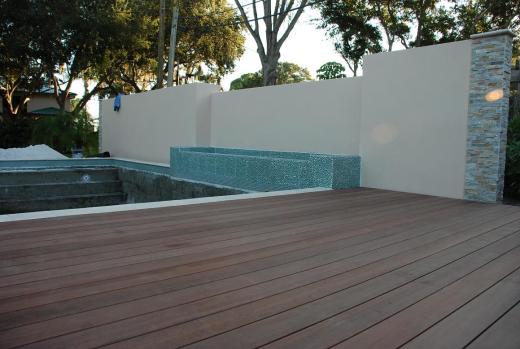
I love before and after pictures, and having spent months working on this project, it was perfect for comparisons.

Backyard before, looking NW:

Backyard afterwards, looking NW:

Backyard before, looking SW:

Backyard after, looking SW:

\

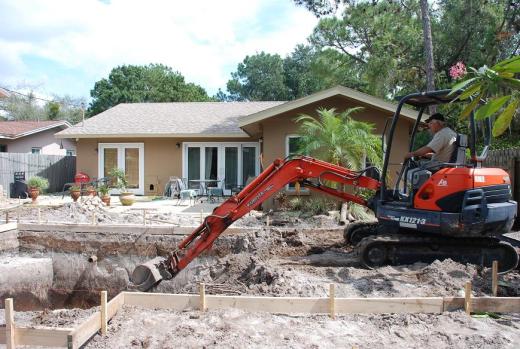
The big dig:

The rebar:

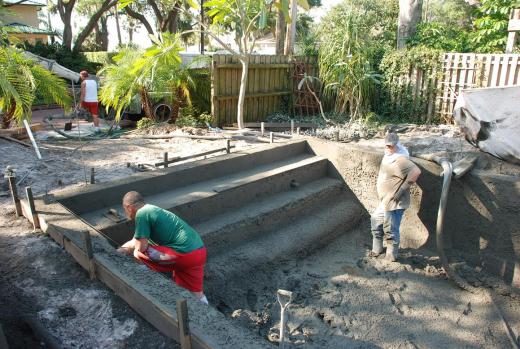
Shooting the concrete:

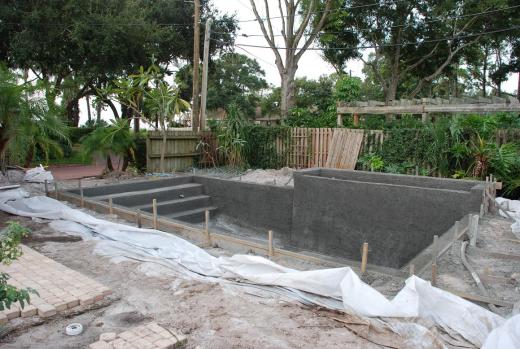
The cement pond:

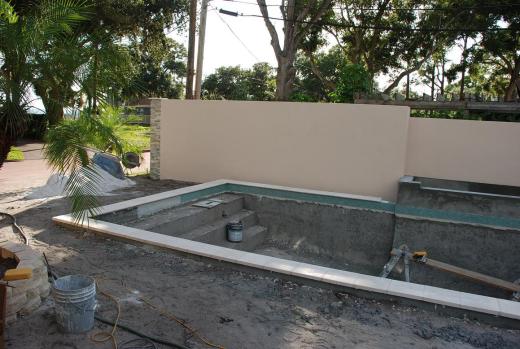
Creating the wall:

The deck:

One week until finished:

Almost completed:

Close to finished, watering going in the pool:

Posted in Florida, Uncategorized | 1 Comment

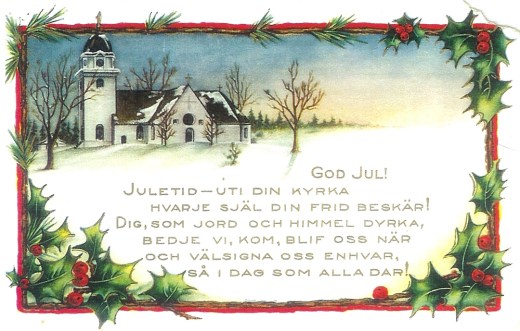
Merry Christmas, God Jul

I just received this old postcard from my mother.  It was purchased over 100 years ago by my maternal great grandmother Hannah, who was born in Yxnas, Sweden in 1860 and immigrated to the US in the early 1890s.  She never did send the postcard and it remained in my grandmother’s things, and now my mother’s care.

Posted in Seasons & Holidays | 1 Comment

The Oregon Wine Country On Two Wheels

My sister belongs to the Airhead Club in Oregon.  It is a group of BMW riders who live by the motto “The simplest engineering solutions are the best.”  She owns two airheads herself, plus the “K” bike, which is my favorite.  There does seem to be a bit of preparation involved prior to riding older bikes; some tender loving care, oil, air in the tires, and attaching the panniers, what I call “dinking around”. 

The pre-ride prep in an airhead can take a bit of time.

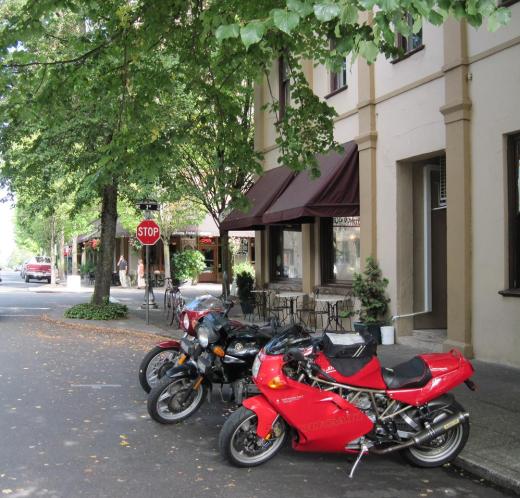
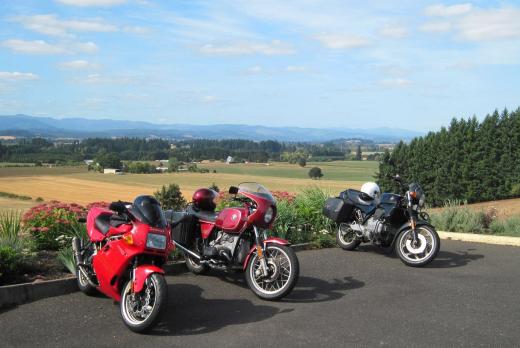
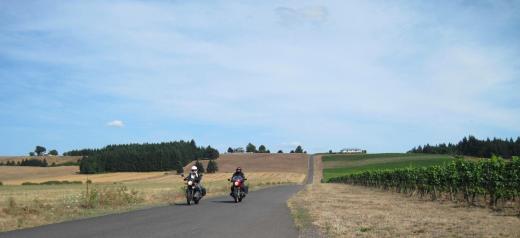
We spent a beautiful Oregon September day on her bikes touring the wine country near Portland, Oregon, joined by a friend on his 1996 Ducati.

The Willamette Valley southwest of Portland is Oregon's wine country.

There are several fun bike roads in Portland, including Germantown Road and Skyline Blvd.  We left Portland headed south, rode Germantown, then made our way through Beaverton traffic until we were back on the country roads from Scholls southbound, climbing Chehalem Mountain with its many curves, and descending into Newberg.

Our first stop was lunch at McMenamins in McMinnville at the Hotel Oregon.  McMenamins is an Oregon company, founded by two Portland brothers, with a chain of nearly sixty brewpubs, microbreweries, music venues, historic hotels, and theater pubs.  (www.mcmenamins.com) 

Lunch stop at the McMenamin's Hotel Oregon in McMinnville.

McMenamin's Hotel Oregon rooftop.

For our first wine tasting, we stopped at the Anne Amie Vineyards in Carlton, Oregon.  Anne Amie is set in a beautiful area with a well-appointed tasting room.  Here the tasting was $10 and included two whites, two Pinot Noirs and an ice wine.  As it turned out, my favorite taste of the day was here at our first stop, a very smooth Pinot Noir ($35).  www.anneamie.com

The grounds at Anne Amie Vineyards.

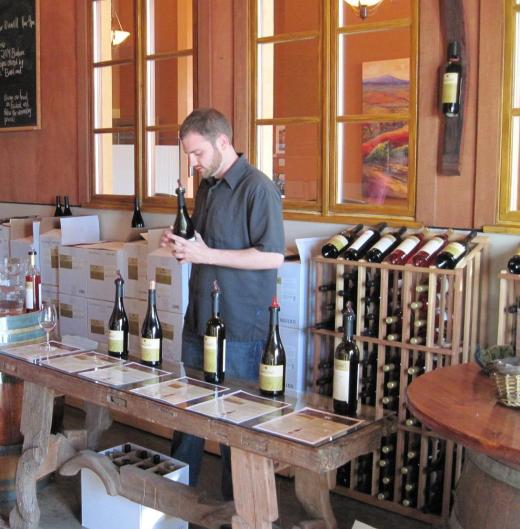
Our second wine tasting was at the Cana’s Feast Winery, just outside of Carlton.

Cana's Feast Winery tasting room.

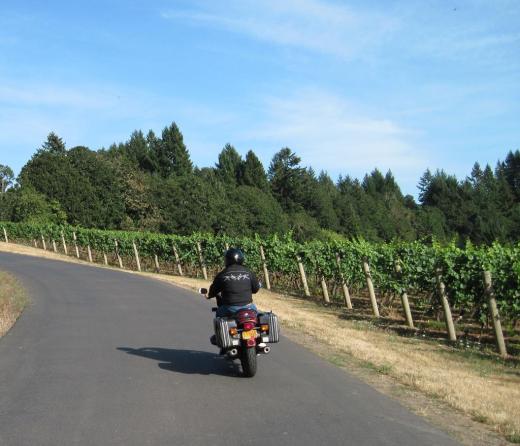
This area is very nice for motorcycle touring; not so much traffic, scenic country roads and some nice curves in some places.  We have toured this wine country before, on four wheels.  Erath Vineyards is a favorite as well as Argyle and Duck Pond, but today was more about finding the good bike roads and stopping at a few vineyards we had not visited in the past.  From Cana’s Feast we drove through Yamhill and into Gaston.  The turn off for Elk Cove Vineyards is just before Gaston when traveling from Yamhill.  The back roads headed up towards Elk Cove were beautiful and winding, great for bikes.

The Elk Cove vines.

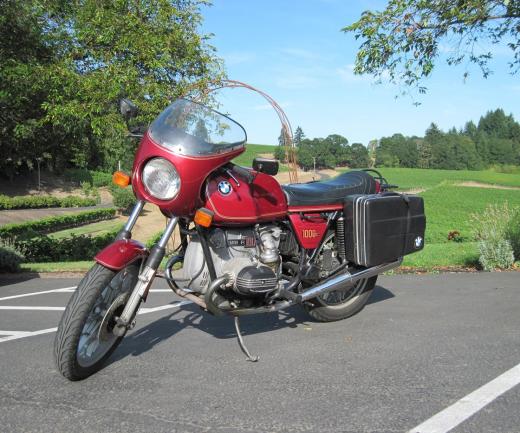
1978 BMW R100S

1987 BMW K75

After Elk Cove, we drove the very short distance to Montinore Estate in Forest Grove.  This is a particularly scenic winery where the Willamette Shakespeare Company presented “All’s Well That Ends Well” on the winery lawn in August.  Unfortunately, the tasting room closed promptly at 5 pm, but they did allow us to see the tasting room. 

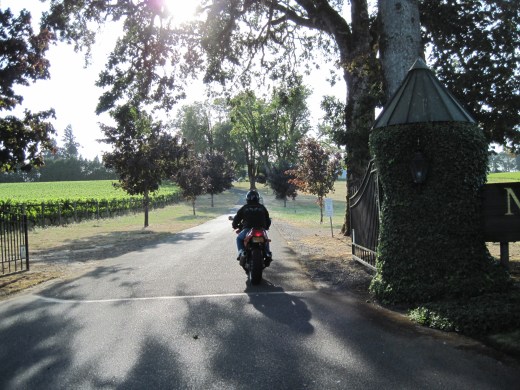
Through the front gate at Montinore Estate.

A last stop at one more McMenamin’s, the Grand Lodge in Forest Grove, and we were back on the bikes for the ride home via Skyline Blvd.

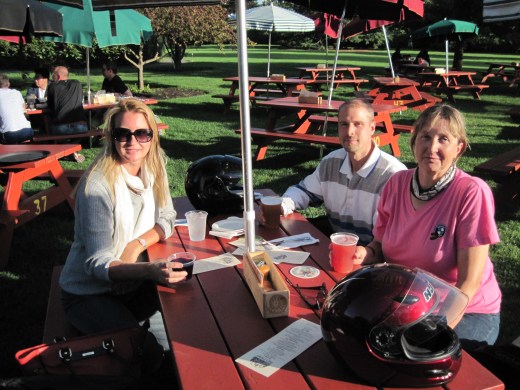
The outdoor picnic tables at McMenamin's Grand Lodge.

The best roads for motorcycling were over Chehalem Mtn, near the Elk Cove winery and Skyline Blvd.  The Ducati was the odd man out on this tour, and as much as I like the purring of the BMW engine, I have to admit that the Ducati’s sexy engine rumble was quite appealing.

Posted in Cars & motorcycles, U.S.A. | Leave a comment

What’s In An Emblem?

Anyone who knows me, knows I love cars.  My favorite television show is BBC’s Top Gear.  I was watching it the other night when they featured the new McLaren and toured the factory.  I noticed the McLaren logo and my first thought was “That doesn’t belong on a car.”  That started me thinking about the origins of some of the most recognizable car emblems.  Here is what I found, starting with a personal favorite.

The BMW roundel is actually a propeller, and the blue and white colors come from the traditional flag of Bavaria.  From the BMWism.com website:

 Originally BMW was an aircraft engine company, however as a result of the Treaty of Versaille (June of 1919)  Germany was not allowed to produce the airplanes,  BMW stepped initially into the production of engines for boats and agriculture, returning to the production of aircraft and car engines in the mid-1920-ties.

The Mercedes three-pointed star represents the original car producers’ wish to build motors which could be used on water, land and air.  The Mercedes Benz emblem was later combined with Benz laurel wreath, symbol of victory and glory, in 1926.

The prancing horse on the Ferrari is another favorite of mine.  When I was in grade school, I had a Ferrari magazine advertisement tacked on my bedroom wall.  The slogan back then was “What can be conceived can be created.”  I have always kept that in mind, and always loved Ferraris.  From the website http://www.etiziano.com

On June 17, 1923, Enzo Ferrari won a race at the Savio track in Ravenna where he met the Countess Paolina, mother of Count Francesco Baracca, an ace of the Italian air force and national hero of World War I, who used to paint a horse on the side of his planes. The Countess asked Enzo to use this horse on his cars, suggesting that it would bring him good luck. The original “prancing horse” on Baracca’s airplane was painted in red on a white cloud-like shape, but Ferrari chose to have the horse in black (as it had been painted as a sign of grief on Baracca’s squadron planes after the pilot was killed in action) and he added a canary yellow background as this is the color of the city of Modena, his birthplace. The Ferrari horse was, from the very beginning, markedly different from the Baracca horse in most details, the most noticeable being the tail that in the original Baracca version was pointing downward.

The Maserati trident is the traditional symbol of Bologna, where the cars were originally made.


The Aston Martin wings.  The Aston in the name comes for the Aston Hill Hillclimb races near Aston Clinton, and Martin is Lionel Martin’s last name, one of the founders.  As for the wings, this comes from www.astondriver.co.uk: 

There have been four styles of badge. Lionel Martin built cars were graced with a small circular badge featuring the letters AM neatly superimposed. A die-cast emblem was the adopted from 1928, in which the full name was set against a pair of wings.

During 1930 a new version of the winged badge was introduced, which being a pressing, could be plated with the radiator shell. The first samples of a new enamelled badge appeared shortly after the introduction of the Second Series early in 1932. Although still of the winged variety, the new design bore no resemblance to any previous type, the wings being more angular and of a symbolic nature, whilst the name Aston Martin was inserted in a central panel, complete with the hyphen.

The enamel badges didn’t appear on production models until the introduction of the Mark II model in 1934, and became standardised. The David Brown addition was used from the DB2/4 to the end of that era, and with only minor variations, has remained in use to the present day.


Ferruccio Lamborghini was born in Italy under the zodiac sign of Taurus, the bull. In 1962, Lamborghini visited the Seville ranch of Don Eduardo Miura, a renowned breeder of Spanish fighting bulls. He was so impressed by the majestic Miura animals that he decided to adopt a bull as the emblem for the car manufacturing company he started in 1963.


According to wikipedia, “Porsche’s company logo was based on the coat of arms of Free People’s State of Wurttemberg of former Weimar Germany, which had Stuttgart as its capital.”


The origin of the cat logo on the front of Jaguar cars, according to www.famouslogos.org:  

The professional Jaguar logo design was seen for the very first time in 1935 on the first new style of sedan that was produced at the time (known as the S.S. 100 Jaguar), but later on, when it started the production of Jaguar cars, it renamed and altered its logo to the famous wild cat ‘Jaguar’ leaping over its Word mark logo name.

Shape of the Jaguar Logo:
The logo consists of a jumping jaguar across the company’s name possibly representing velocity, control and quickness of the cars manufactured by the company.

Color of the Jaguar Logo:
The use of black color in Jaguar logo very well goes with the company’s image and also compliments the physical jaguar.


From www.logoblog.org:

Although not used with the Rolls Royce logo, “The Spirit of Ecstacy” or “The Flying Lady” is also an important element of Rolls Royce. It was designed by Charles Sykes as a statue to embellish Rolls Royce cars. The mascot was commissioned by Claude Johnson to ‘counteract a craze among motorists for fixing golliwogs, toy policemen and other unseemly objects to their cars’.  The Rolls Royce logo and ‘The Spirit of Ecstacy” had adorned the radiators of Rolls Royce motor cars since 1911.


Audi’s 4 rings, named after August Horch, whose family name would be “Audi” in Latin(www.cartype.com):

The History of the Four Rings. A brief summary.
The Audi emblem of the four rings denotes one of Germany’s oldest automobile manufacturers. It symbolizes the merger in 1932 of four previously independent motor vehicle manufacturers: Audi, DKW, Horch and Wanderer. These companies are the foundation stones on which the present-day AUDI AG is built.

From these few examples, you can see that there is a lot of history behind the emblems.  They represent the local region, or something very specific.  Now here is what McLaren uses:

McLaren Automotive logo.jpg

I think it reminds me too much of the Nike swoosh, so it makes me think of shoes not cars.  I read that the air scoops on the car resemble the logo.  That may be, but it is more an abstract design than history.  The MP4-12C is truly a remarkable car (with a remarkable $231,000 price tag), getting high reviews and giving the traditional supercars a run for their money.  I just wish they had used some history or something from a good story for their logo. 


2012 McLaren MP4-12C
2012 McLaren MP4-12C
Posted in Cars & motorcycles, Uncategorized | Leave a comment