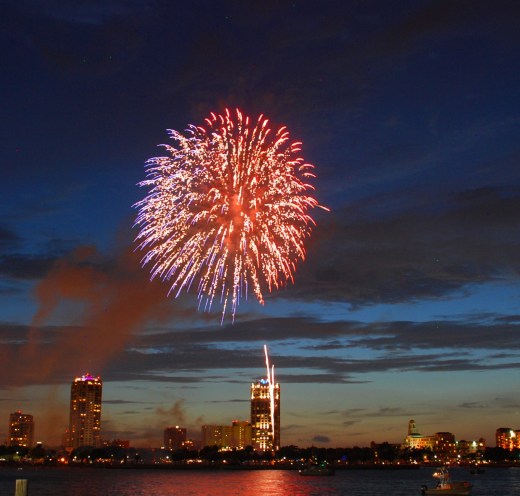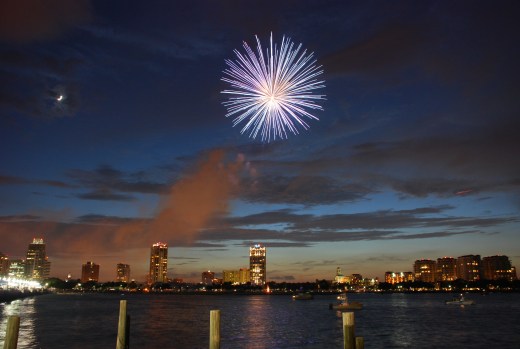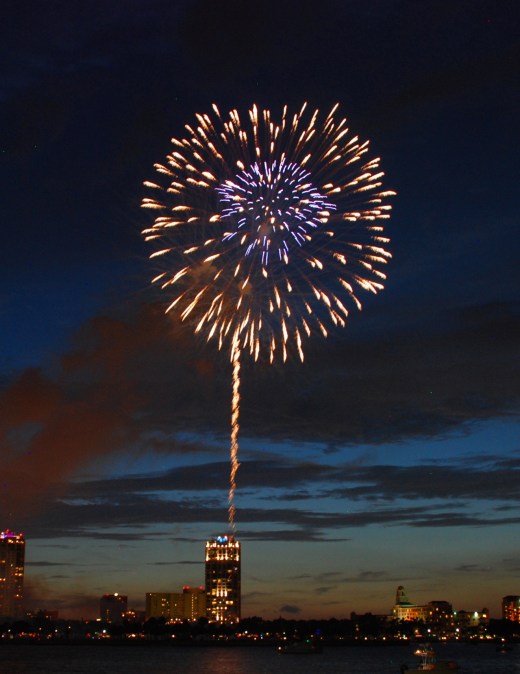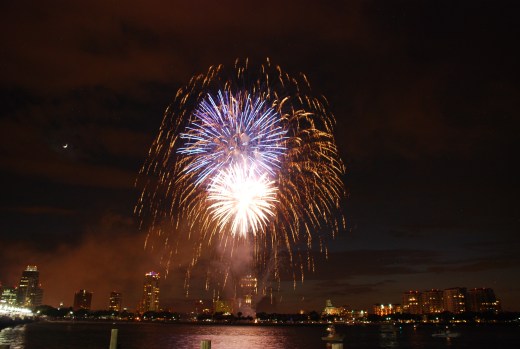
Happy July 4th, from St. Petersburg, FL

I have left Michigan behind and am back in my adopted home town of St. Petersburg, Florida.  St. Petersburg celebrates two holidays with a very good fireworks show, New Years Eve and July 4th.  They did not disappoint last night.  I parked near the USF campus and walked past the new Dali Museum towards The Pier, a good vantage point for the fireworks.

The new Dali Museum is right on the downtown waterfront, next to the Mahaffey Theater.

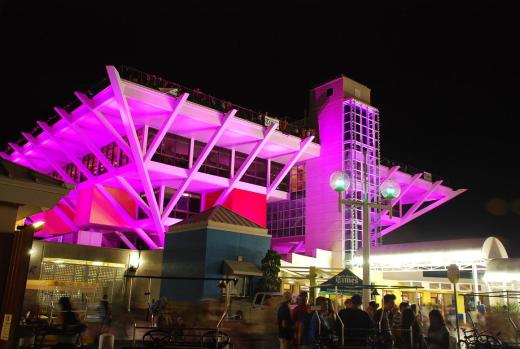
The St. Petersburg Pier, a good spot to watch the fireworks. The Pier houses shops, an aquarium and several restaurants.

The downtown St. Petersburg fireworks, photographed from The Pier.


The Pier, at night. The exterior has an ever changing light show of its own, from yellow, to green, blue, red and pink.


The new Dali Museum at night. It is in a beautiful location with grass terraces and a grove of lighted trees.

The Dali Museum entrance at night.

Posted in Seasons & Holidays | Leave a comment

70 Years of Grace and Beauty

My mother in 1941 (left), and my mother 70 years later in 2011. The same bunny, Peter, and the same lilac bush.

During my most recent visit home to Oregon, my mother allowed me to recreate a photo taken of her on Easter Sunday, 1941, when she was six years old.  She stood in the same spot in front of her lilac bush holding the same Peter Rabbit of 70 years ago.  I consider myself incredibly lucky to have been raised by two wonderful people, my mother and father.  (Three actually, as my mother’s mother lived with us and part of her is in all of us).  My childhood memories are happy and full of love and caring.  My mother introduced us to music, art and literature.  She would argue this, but she is a talented artist.  She sends handmade cards of her own drawings.  Here are some of her original watercolors.

This was painted by my mother as a Christmas card, and sent to Norway to my father's parents. On the back of the painting my mother wrote: "This is the view from our window. I painted this this morning - Dec. 19th. The yellow house way up on the mt. is 'Silcox Hut' where Kaare operates the Sno-Cat from. Chair lift is to the right."

A portrait of my dad, painted by my mother.


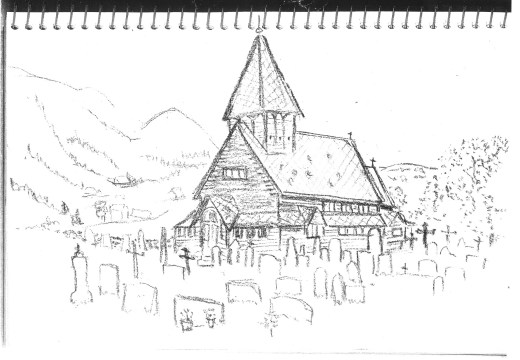
My mother’s sketch of the Røldal Stavkirke in Norway.


This is one of my favorite photos of my mother when she was little, with her mother.

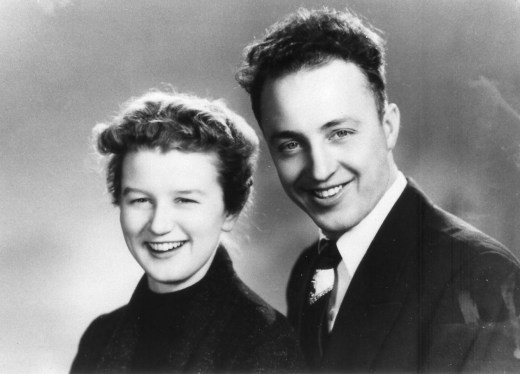
A portrait of my parents, taken in 1957. They were married in 1956.

Posted in Family | Leave a comment

Happy Father’s Day, and I hope you like your elephant.

Milk Rush, by Angela Sheldrick; from the David Sheldrick Wildlife Trust website.

There comes a point in many people’s lives where they don’t need any more stuff.  My parents, and myself too for that matter, have reached that point.  For birthdays and other gift giving holidays, they don’t  expect or want us to give them stuff.  Being told that you are loved and appreciated is a far better gift to receive than soap or ______ (fill in the blank).

One year for Christmas my family made donations to Best Friends Animal Sanctuary (http://www.bestfriends.org/)  instead of giving gifts to each other.  I have done something similar this year to honor my dad for Father’s Day.  A baby elephant, Shukuru, has been sponsored in my dad’s name, at a very special foundation, The David Sheldrick Wildlife Trust.  http://www.sheldrickwildlifetrust.org/index.asp

Since 1977, the David Sheldrick Wildlife Trust has been helping save the lives of baby elephants and rhinos as well as many other conservation programs in Kenya.  Their website has a list of all the elephants available for sponsorship, and a description of the other good works they do, such as the de-snaring program and mobile veterinary unit .  A recently released film, Born To Be Wild, shows much of what they do in an entertaining IMAX 3D story.

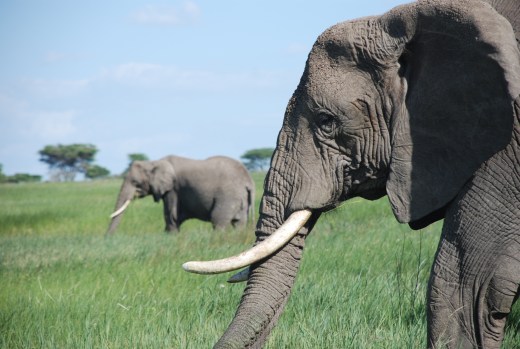
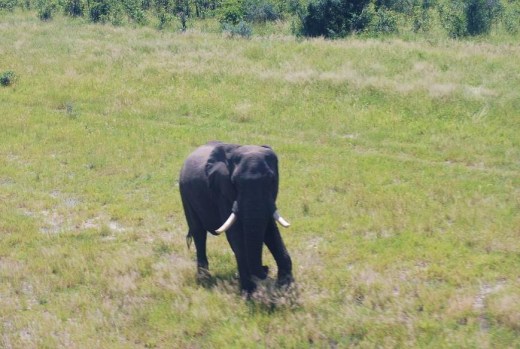
This is one of the elephants in the very first wild herd I saw in Tanzania.

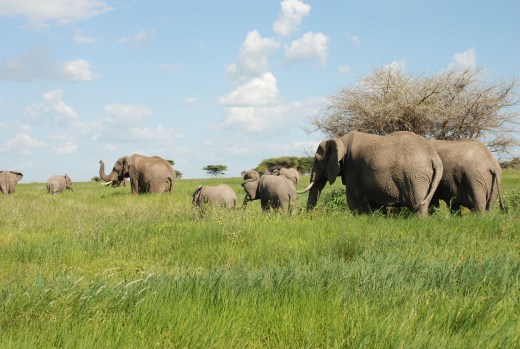
I don’t know why, but I have always been fascinated by elephants.  The first wild elephants I saw were in Tanzania in 2007.  I was surprised by how silently they moved, covering a long distance in a short amount of time.  My sister and I were in a safari jeep on a dirt road, and we watched them appear on the horizon on our right, cross the road in front of us, and disappear off to the horizon on our left.  You could hear them rumbling and speaking to each other.  It was captivating.

Elephants crossing the road in Tanzania in 2007.


Elephant dust bath, Tanzania 2007.


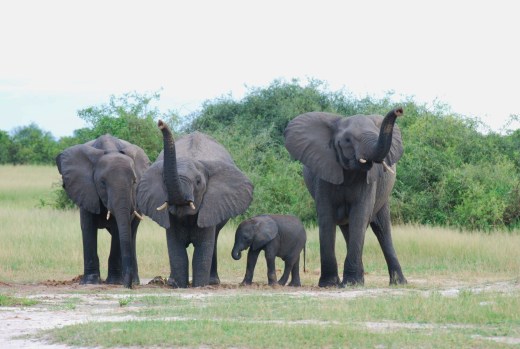
Botswana 2011.

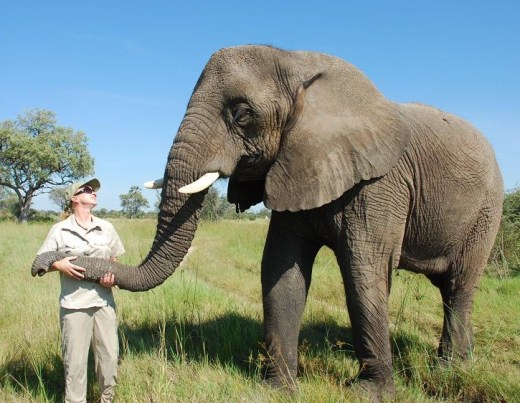
Me and Jabu at the "Living with Elephants" Foundation in Botswana.

Elephant closeup.

Happy Father’s Day Dad.  I love you, and I hope you like your elephant!

Tusk Bearers of Tomorrow, a watercolor by Angela Sheldrick; from The David Sheldrick Wildlife Trust website

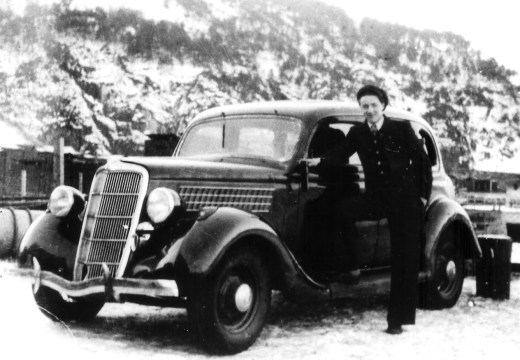
My dad, taken in Norway, I believe some time around 1940.

My dad, with early evidence of his lifelong love of cars.


My dad and my little brother on his first birthday.


My dad with the five of us, and our beloved horse Molly.

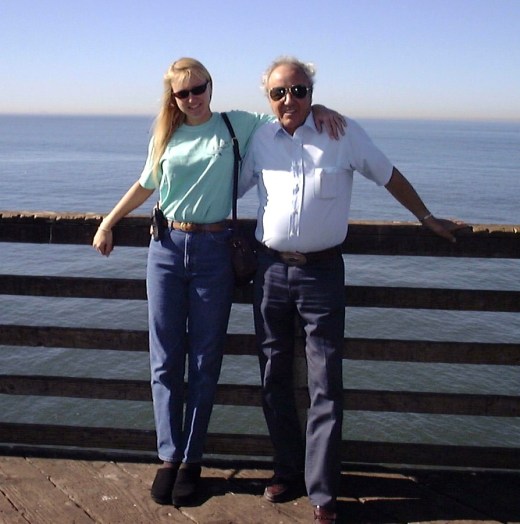
Me and my dad.

Father's Day celebration 2008.

Posted in Family, Seasons & Holidays | 5 Comments

Is it possible to love a car?

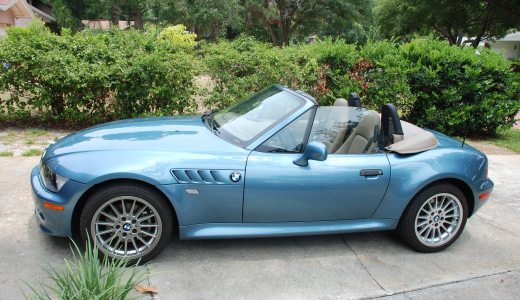
BMW Z3 with a 3.0 engine and 5 speed stick shift.
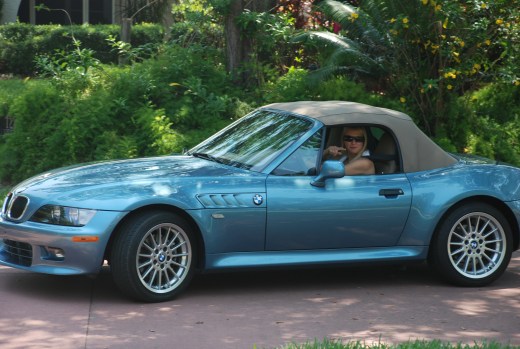
 I think the answer is yes, you can love a car.  The car I love is not new and exotic, and I didn’t really know I loved the car until last week.  I drove it to a car dealer with every intention of trading it in on a newer, much more exotic and truly iconic sports car.  One of the true super cars.  When it came right down to it, I couldn’t go through with it.  I couldn’t part with this little sports car that I have owned for over 10 years.  I don’t know if it is our history together, or just that it is such a cute and fun car.  I didn’t get the super car and will no doubt own this little BMW for another 10 years.

I drove myself to my USF graduation ceremony in this car.

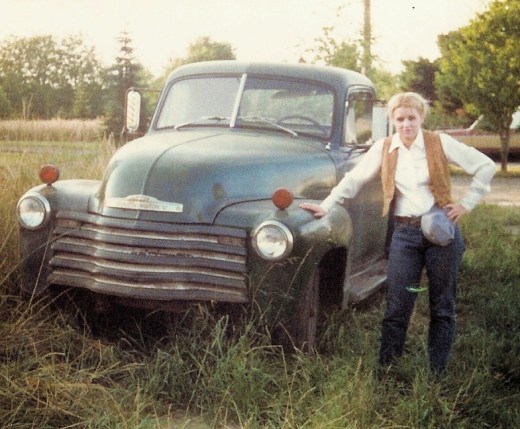
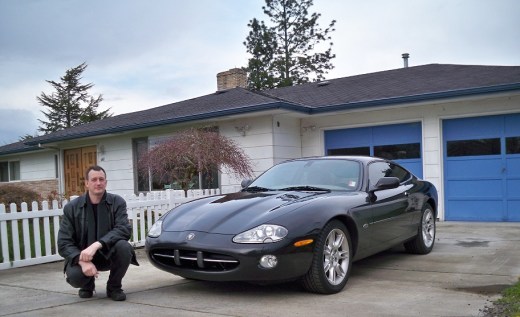
 I come from a car family.  We did not have boats and didn’t go boating, but we did love cars and attend swap meets, car shows, and car auctions.  I inherited my love of cars from my dad.  I couldn’t say how many cars he has owned in the past 70 years, but he could.  He could tell you the year, make, and model of each car, and a story about each one too.  Like almost every family, we have some inside family jokes.  One of these jokes is “the pose.”  It started with my dad, years ago, when he was still in Norway.  Over the years we have photographic evidence of “the pose”, and it passed down to us kids from him.

First evidence of "the pose"

"The pose" comes to the US on a Timberline snocat.

My oldest sister modifies "the pose" in front of her truck.

Another sister shows her version of "the pose" with her 1953 Chevy pickup.

I adapt "the pose" to aviation, first with a helicopter...

...and later in seaplanes.


My brother really breaks with tradition here in this photo of his recent Jaguar purchase.


"The pose" endures, after all these years.

Posted in Cars & motorcycles, Family | Leave a comment

Memorial Day Weekend in Oregon: Lessons in genealogy and a vineyard horseback ride.

Welcome to Astoria

With 5 days off from work, I headed to Oregon for the Memorial Day weekend and my sister Katy’s birthday.  It was typical spring weather in Oregon, mostly cloudy skies with brief moments of heavy rain, followed by patches of sun, and temperatures between 50 and 60 degrees.  My mother lives near Astoria, at the mouth of the Columbia River.

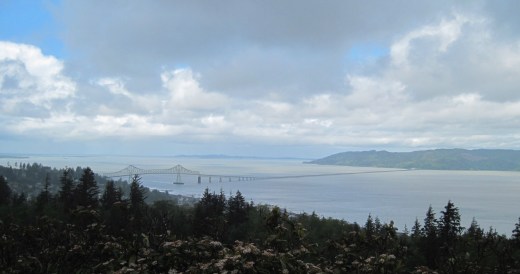
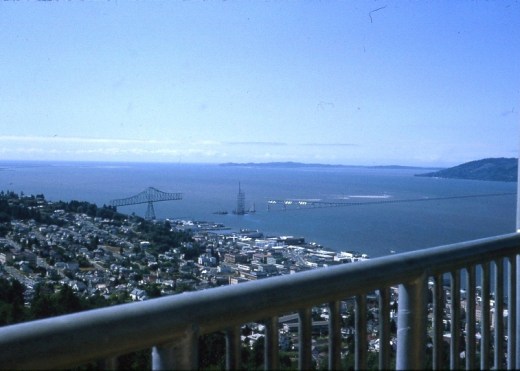
The Astoria Bridge, taken from the Astoria Column.

The bridge under construction. My uncle took this photo.

The Astoria Bridge links Oregon and Washington over the Columbia River.


For me, every visit to Astoria requires a stop at Josephson’s Smoked Fish store where you can purchase the best fresh smoked spring chinook salmon in the country.  It is truly food for the gods.  A very close runner up for the title of best local delicacy is Dungeness crab.

Josephson's Smoked FIsh store in Astoria, Oregon.

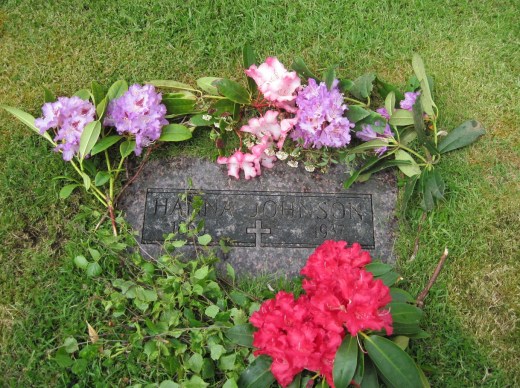
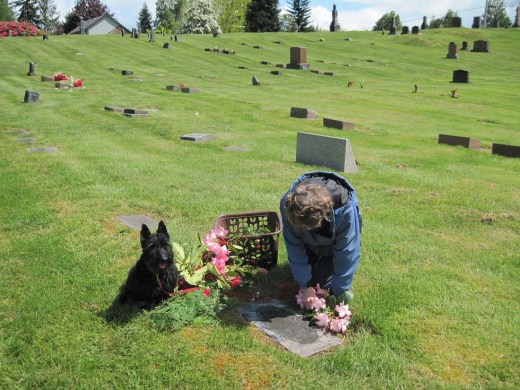
We made the required stop enroute to the Ocean View Cemetery in Clatsop County Oregon.  My mother’s parents and her maternal grandmother (my great-grandmother) rest in peace at this cemetery near the Pacific Ocean, and each Memorial Day we visit to place flowers on their graves.  My mother’s mother’s mother who lies here, Hanna Johnson, immigrated to the US from Sweden in 1890.  We try to keep the grave stones clean and decorated with flowers, and the memories fresh.  My mother’s brother is here as well.

The Oceanview Cemetary on Memorial Day weekend.

Ocean View Cemetary, Clatsop County, Oregon

My great-grandmother Hanna Johnson is remembered with rhododendrons and birch branches.  I have been to Ellis Island in New York and found the documents and passenger logs of her arrival in the US.

The following day we made another Memorial Day stop at the Prairie Cemetary in Knappa Oregon.  This cemetery is where my mother’s Aunt Hedvig lies (born here in the US in 1896, their first child) along with her parents Able and Katrina, my mother’s grandparents on her father’s side.  This is the Katrina for whom my sister was named, and whose birthday I had come to Oregon to celebrate.

Able Hepo-Oja  (my mother’s paternal grandfather) immigrated to the US with his wife Katrina.  He was born in Pulkkila, Oulu (the province) Finland, Sept. 12, 1863, 100 years before my own birth.  His wife, Katrina Sohviia Ranta-Junttila, was born in Vihanti, Finland, April 25, 1870.  Their children (my grandfather Oney and great-aunt Hedvig) were born here in the US.  Another child, born in 1900, died at the age of one year, and was buried in a small grave near their home.  My mother can still locate the gravesite and small marker in the woods near her home.  Katrina died on her 50th wedding anniversary, Oct. 20th 1944.  It was nice to visit their resting places and hear the stories my mother remembered.  They were my great-grandparents and I fear the memories will be lost if they aren’t written down.

My mother places flowers on the graves of her paternal grandparents.

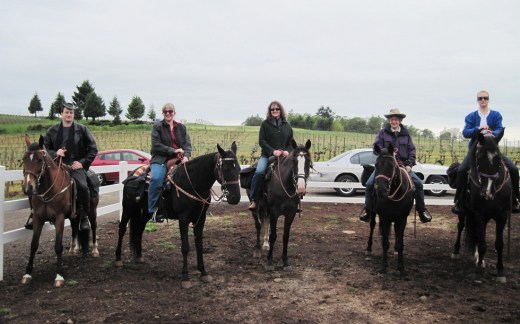
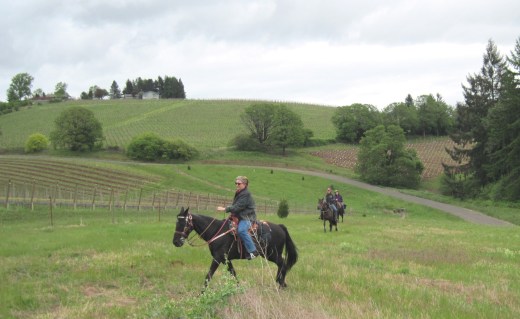
The main purpose for my visit to Oregon this weekend was to celebrate my sister’s birthday.  She requested that we all join her in a Willamette Valley wine tasting tour and lunch on horseback.  The Willamette Valley is now a wine destination, which we have toured many times, but never on horseback.  She read about this experience in an article in Sunset Magazine.   The operator, Equestrian Wine Tours, and Jake Price Stables of Carlton, Oregon made it all very simple.  We arrived at the appointed vineyard at 11 am and met Jake and wrangler Sarah with the saddled horses.  The ride was short, but it was fun to arrive at the tasting rooms and then our picnic lunch on horseback.  Longer rides are available for those comfortable at all paces.  http://www.equestrianwinetours.com/

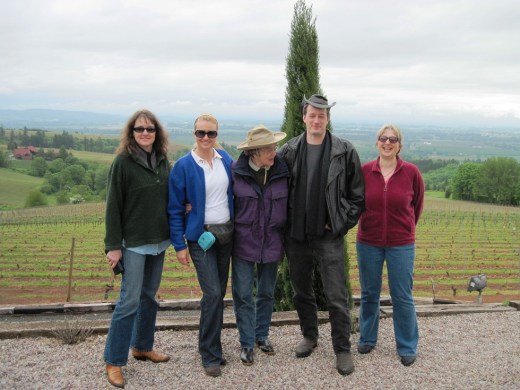
My brother, two sisters, my mother and myself on the vineyard ride.

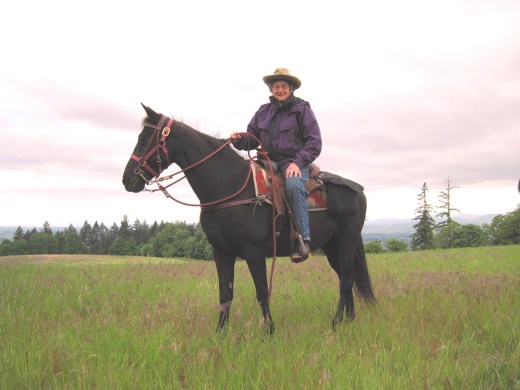
The Big Deal, my stead for the vineyard lunch tour, a former 3 year old grand champion.

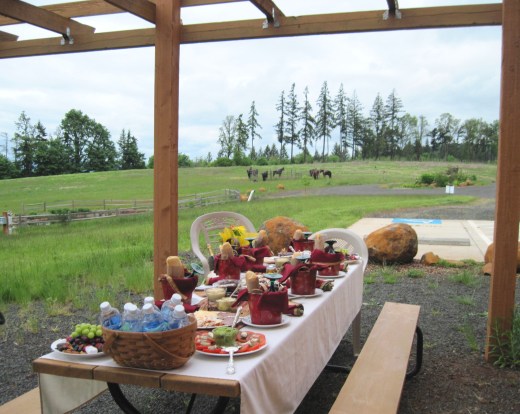
The lunch was fabulous and my mother’s return-to-the-saddle inspired grin made the entire day worth while.

The lunch is served outside at one of the wineries, with the horses in the background.

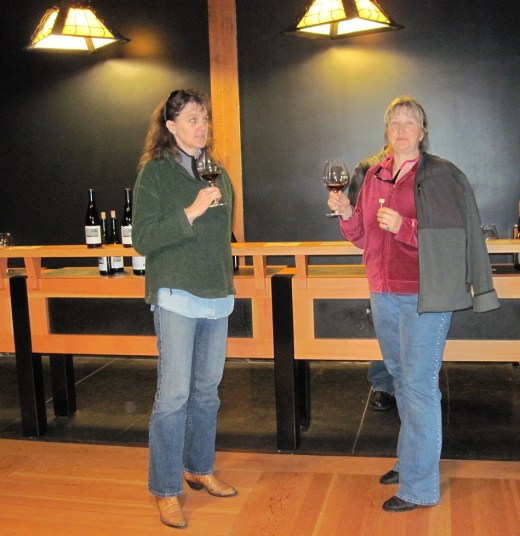
My sisters enjoy wine tasting at the White Rose Winery.

The White Rose Estate is located in Dayton, Oregon:  http://www.whiteroseestate.com/

My mother was happy to be back in the saddle,

It is a somewhat rare occasion that we can all get together for a family portrait.

Sure, it would have been nice to have warm sunny weather for the entire weekend, but then it wouldn’t be Oregon, and it wouldn’t be as green as it is.  The lilacs were in bloom, which was the icing on the cake for this visit.

Lilacs in bloom at my mother's house.

Posted in Family, Oregon, Seasons & Holidays, U.S.A. | Leave a comment

Spring Flowers


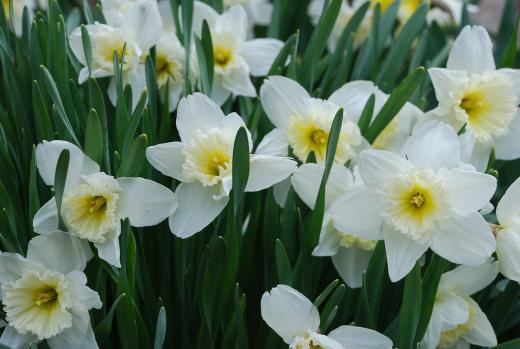
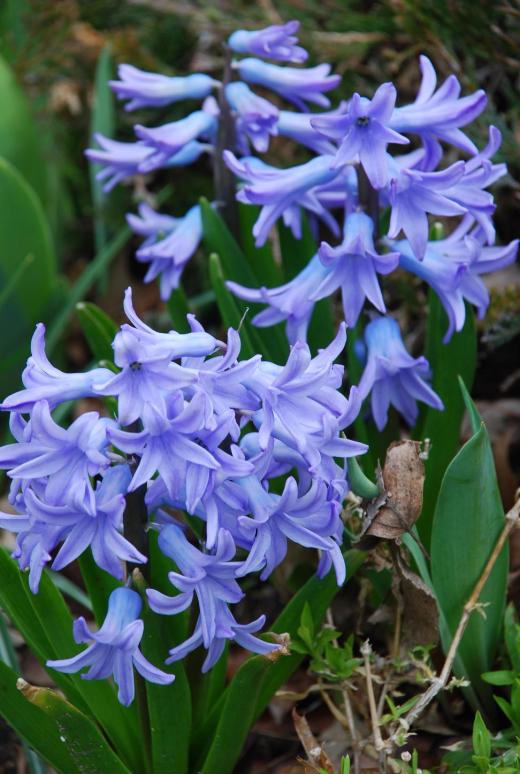
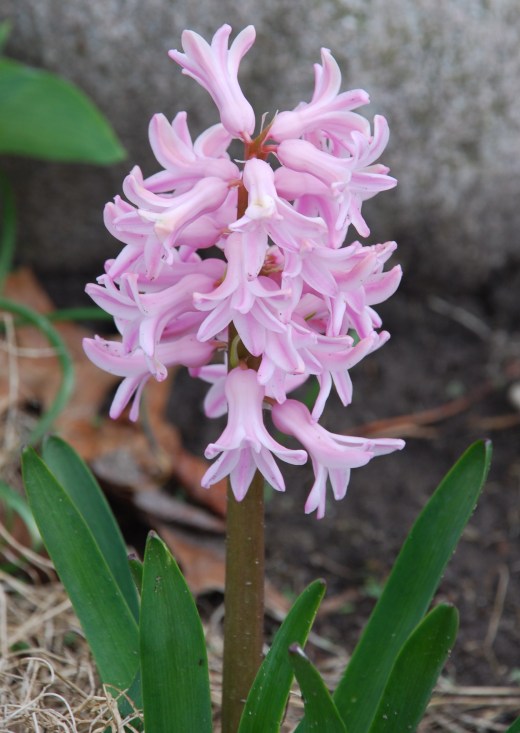
Unable to be with my family in Oregon this Easter, I took a walk around the neighborhood here in Michigan, where I saw the first signs of Spring.

Happy Easter
Posted in Seasons & Holidays | Leave a comment

Happy Easter, Happy Spring

 
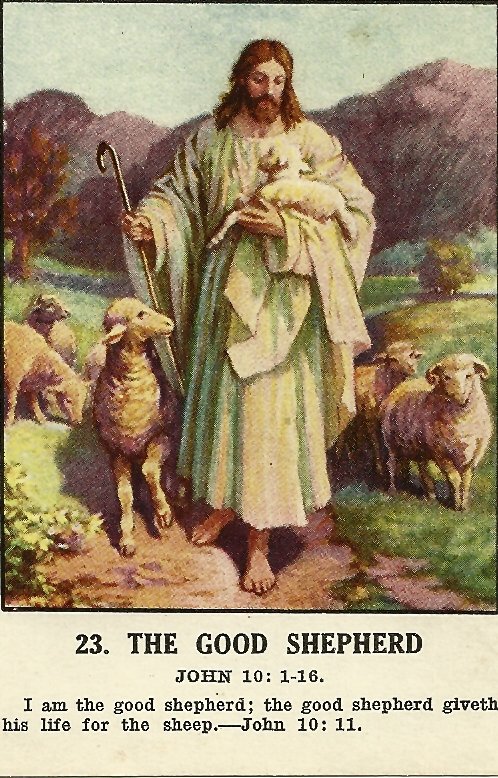
Jesus painting, circa 1900
 
It is Spring in Michigan, at least by the calendar.  So far in April, we have had one day with two inches of snow, and one day of 85 degrees.  April in Michigan is unpredictable.  This Sunday is Easter, one of the holiest days in the Christian faith.  It is a day to celebrate the Resurrection of Christ.  But before the time of Jesus, at this time of year the ancient Saxons celebrated the pagan goddess of spring and offspring, Eastre.   The goddess Eastre’s earthly symbol was the hare.  Eastre’s hare became the Easter bunny.  The egg, in most early cultures, signified birth and resurrection.  The Roman’s had a proverb:  Omne vivum ex ovo, “All life comes from an egg” (Panati’s, 1987, p. 56).  The church and its missionaries turned ancient festivals and rituals into Christian observances.  Commercialism has turned these days of faith into sales opportunities.  Today you will see more images of bunnies and colored eggs than of Christ rising from the grave.

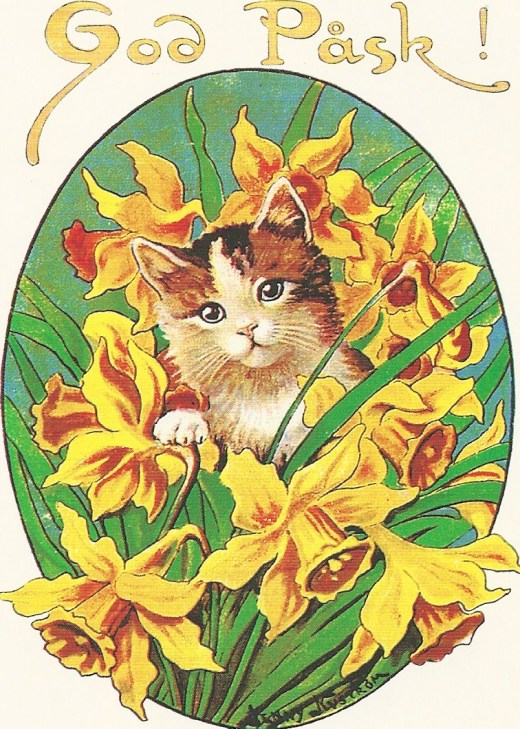
God Pask! card from Sweden.  Illustration by Jenny Nystrom.

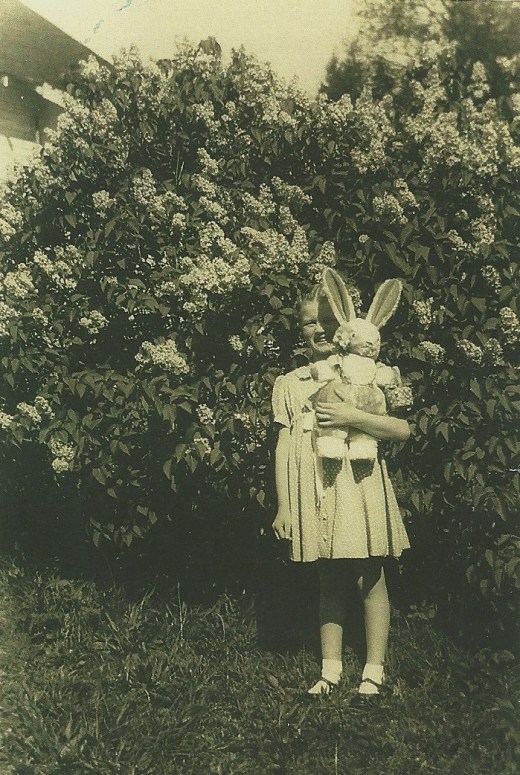
I received a God Pask! postcard from my cousin Laila in Sweden, and an Easter card from my mother.  The Easter card my mother sent included a photo of her taken on Easter Day 1941.  She is standing in front of a lilac bush holding Peter Rabbit.  70 years later, the woman, the lilac bush, and Peter Rabbit are still in the same place.  We recreated this photo in the same spot a few years ago.  Peter Rabbit is a little worse for the wear but my mother looks just as good.  That same lilac bush blooms every year around Mothers Day.

My mother, Easter 1941

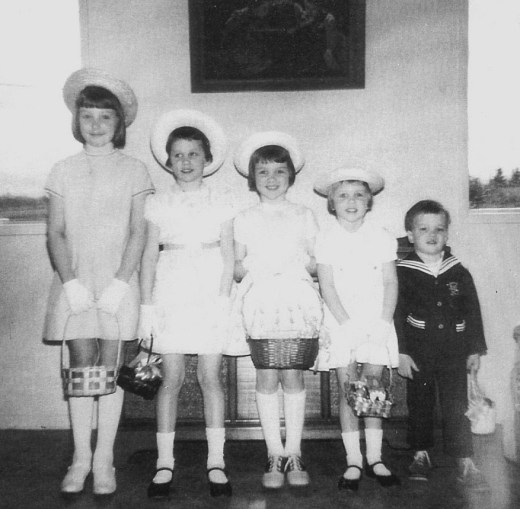
When we were little, in the 1960s, my mother would dress us in our Sunday best, complete with hats and gloves, and take us to Easter Sunday church service.  We also colored eggs and woke up to find Easter baskets full of candy.

Easter Sunday, 1966 or 1967. From left to right; my sisters Katrina, Kristine and Rebecca, myself, and my brother Nick.

Posted in Seasons & Holidays | Leave a comment

Stanley’s Camp

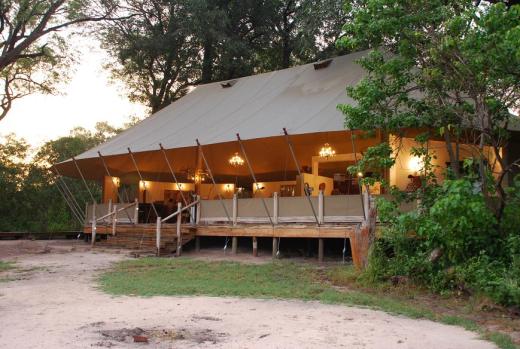
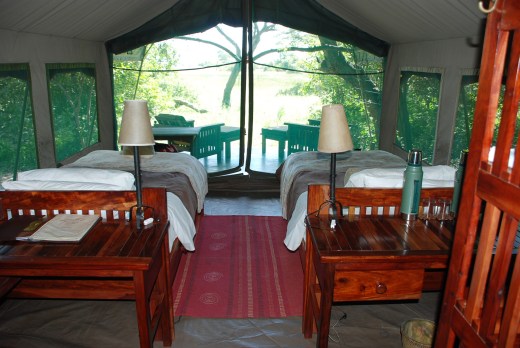
From the Chobe National Park and Sevute Under Canvas, I flew Safari Air to Stanley’s Camp, a permanent camp just outside of the Moremi Game Reserve in the Okavango Delta.  Stanley’s Camp is run by Sanctuary Retreats, and is a beautiful camp.  The tents have canvas sides, but the floors are hard wood and the bathrooms have running water.  The food here, created by Harry, the chef and camp manager, was very good.

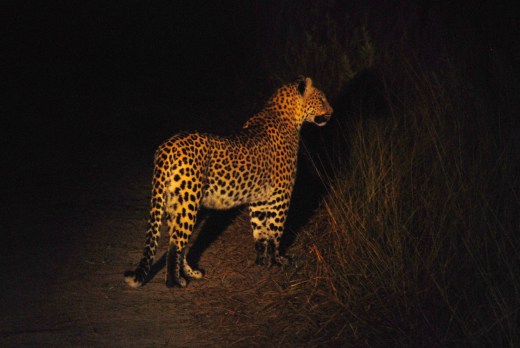
Because Stanley’s Camp is in a private concession, night game drives are allowed.  I arrived in the afternoon and got a night drive the first evening.  We drove out of camp at around 5 pm, slowly making our way through the bush.  Just before sunset we stopped, Sundowners were served, of course, and then we drove back to camp in the dark.   We had a lucky night, and saw some elusive carnivores; an African Wild Cat, a Genet (Viverridae family), and a Leopard.  It had rained in the evening and the trees and bushes were dripping.  We came upon the leopard in our headlights as it walked along the dirt road we were driving, trying to stay dry.  We stopped the vehicle as the leopard went into the bushes.  It passed us, and then popped back out onto the track, headed in the direction we had just left.  We used the spotlight to watch it as it walked away.  Cats, hyenas and predators are OK to spotlight.  Elephants, giraffe, zebra, impala and other prey are not, and we did not use the spotlight to see them.  The technique is to quickly scan the sides of the road with the light, looking for the reflection of eyes.   The color of the eyes will tell you what you have found.

Genets are nocturnal and very difficult to find.  On my night drives, I was lucky and had genet sightings three times.  They are smaller than I had realized, but with a long striped tail, and move very quickly.  We watched one in our spotlight as it hunted.

I chose Stanley’s Camp because of its association with the Living With Elephants Foundation (livingwithelephants.org).

Living With Elephants is run by Doug and Sandi Groves, and supports their three rescued elephants, Jabu, Thembi and Morula.  Guests can join the elephants on their daily walk, and become personally acquainted with them.  Living With Elephants is involved with research and educational projects, and each year offers the residents of neighboring villages the opportunity to touch, feel and walk with Jabu, Thembi and Morula.  The Foundation has set up an explorative research project to understand more clearly how increasing human pressures alter elephant activity and vice versa.  The findings from the research have been passed on to Botswana’s Department of Wildlife and National Parks, to use towards developing effective mitigation strategies in dealing with negative encounters between elephants and humans.  I spent three hours with the elephants and their handlers and very much enjoyed the time.

Jabu and me.

Morula and me.

I had both day and night game drives at Stanley’s Camp.  The driving in this part of the Okavango is slow going, on bumpy dirt roads and some of it in areas of high water.  Here are photos from those drives.

A road in the Okavango Delta.

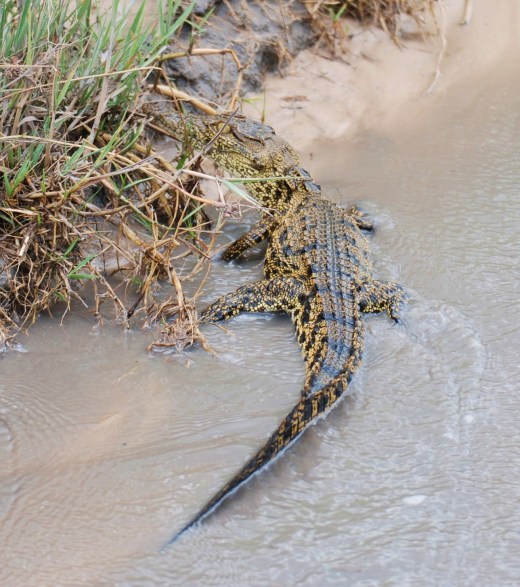
Baby crocodile.

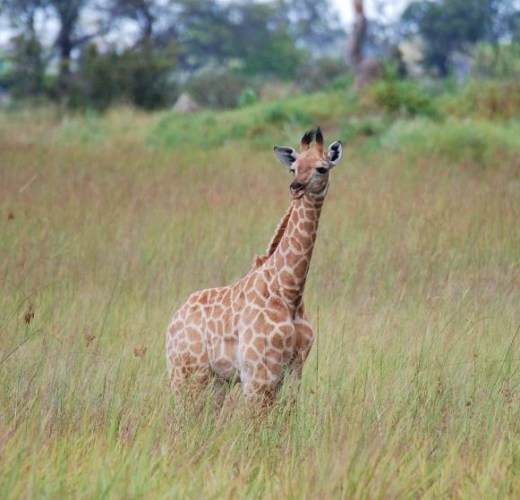
A family of giraffes. My guides estimated the baby to be about one week old.

Morning light.

A Steenbok.

Zebra.

Botswana's version of AAA.

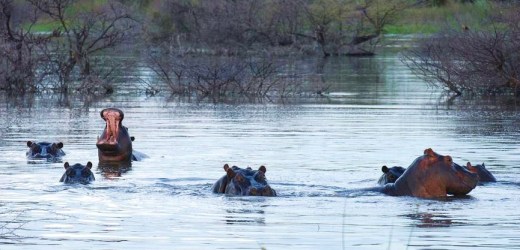
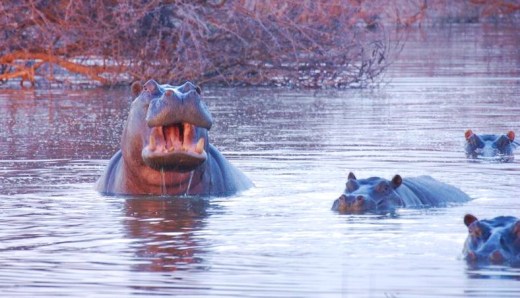
On my last evening game drive, I requested we drive out to the hippo pond, a drive time of about 1:30 to 1:45.  I had my Amarula sundowner out at the hippo pond and watched as the hippos became more active as the sun went down.

An angry hippo.


After the sunset, we headed back to camp in the dark.  At one point, my guides shut off the engine of the jeep and we listened, rewarded with hearing two lions roaring.  The two brothers lived in the area and were out and about after dark.  We found this one as we drove slowly back to camp in the dark, struggling to find the dirt track.

The lion we caught at night.

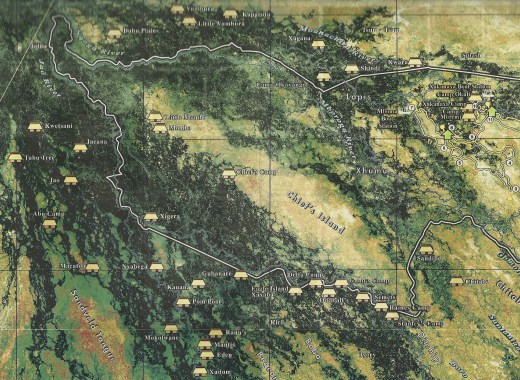
Map of the Moremi Game Reserve. The white line is the boundary of the reserve. Stanley's Camp, in the lower right hand corner, is just outside the reserve boundary. Macatoo Camp sits next to the sandveld Tongue, an area that does not flood. Chief's Island is in the middle of the reserve.

Posted in Botswana | Leave a comment

Sevute Under Canvas

After leaving the Macatoo camp I spent three days and nights in a mobile tent camp in the Chobe National Park.  All transfers between camps in the delta are done by small aircraft.  In a jeep, 5 km can take you an hour to drive.  The flight from Macatoo was on Safari Air, and we made several stops along the way to drop off and pick up other passengers at various camps. 
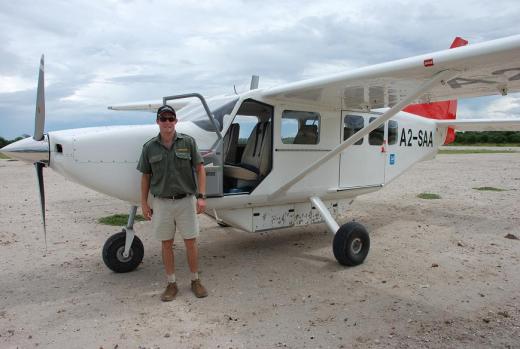
Scott of Safari Air.
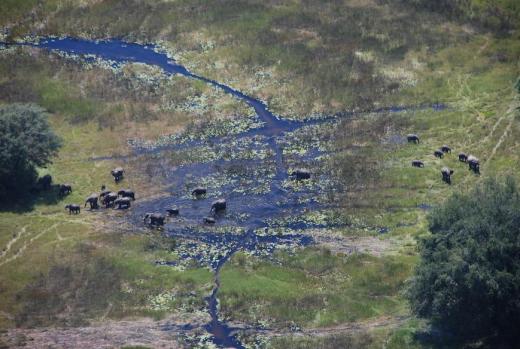
Elephants from the air.

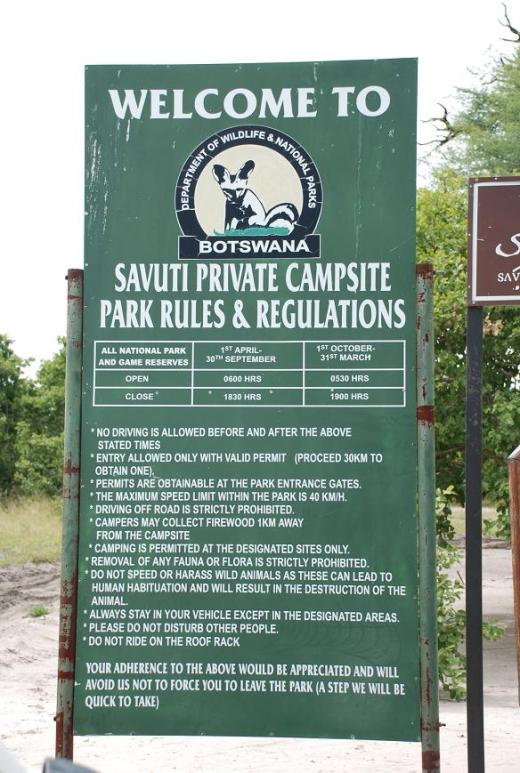
Sevute is within the Chobe National Park, and therefore visitors must abide by the park rules.  Night driving is prohibited (you must be back in camp by 7 pm), and you must stay on the tracks at all time.  March is the off-season, and I found out why.  The grass was tall and the trees were green with leaves, so the game was hard to spot.  I also discovered that the game doesn’t like the tall grass because they can’t see the predators, and with little game around, the predators are also scarce.  
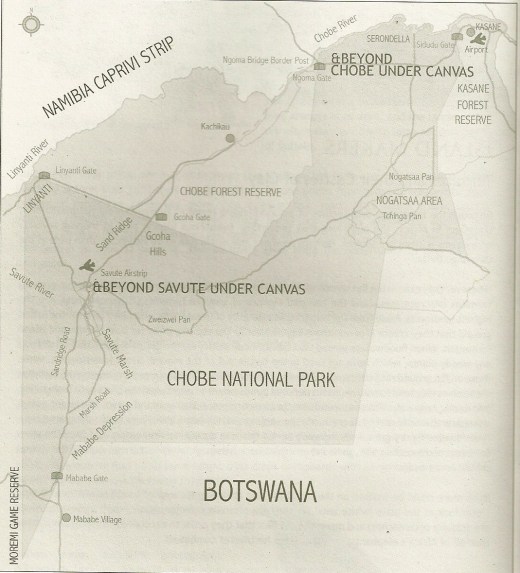
The Chobe National Park in northern Botswana. Savute is a famous battleground for lion and spotted hyena, captured in the National Geographic documentary film "Eternal Enemies."

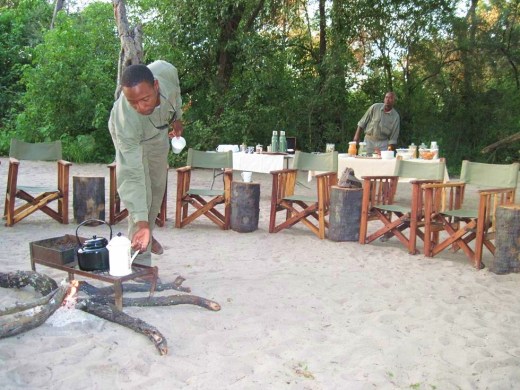
The camp is moved every 3 or 4 days.  The tents are large, with comfortable beds, and 30 litre bucket showers.  The cooks, Ishmael and BK, did a wonderful job of creating tasty meals from a mobile tent kitchen, and all the guys working in the camp were wonderful.  They worked very hard, doing whatever needed to be done to make the stay a pleasant one.
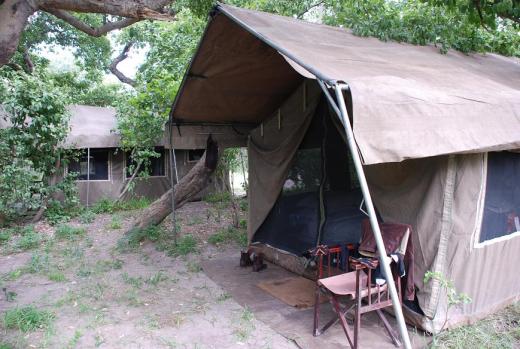
Sevute tent


Bucket shower.
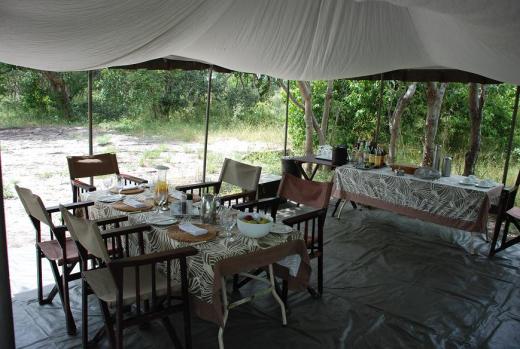
Sevute Under Canvas dining tent

The morning game drives started at 6:30 after a 5:30 wakeup and 6 am breakfast.  We saw mostly impala, some zebra, giraffe, and many, many birds.  I started to list the birds we saw and filled three pages.
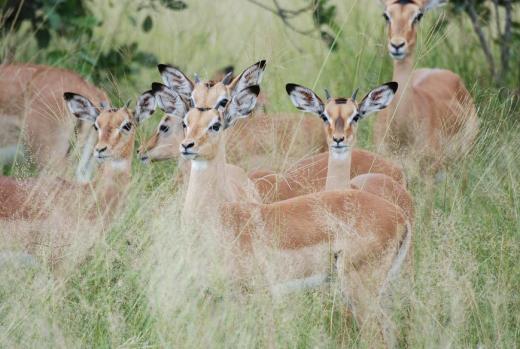
Impala.

Zebra.
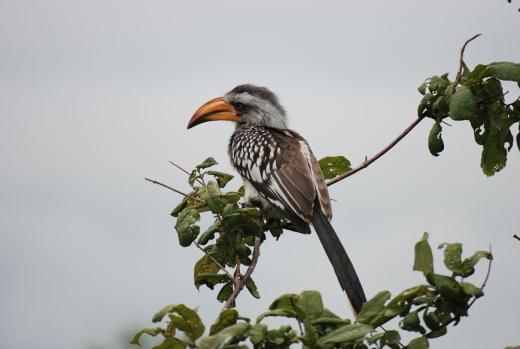
Southern Yellow-billed Hornbill

I arrived on a saturday, along with a few other guests.  On sunday, I was the only guest, so I was able to tailor my game drives as I liked.  At my request, we toured two other permanent lodges in the area in the early afternoon, Orient Express Sevute Elephant Camp, and the Desert and Delta Chobe Game Lodge.  Both were very nice lodges in good locations with elephants visiting the water holes daily. 
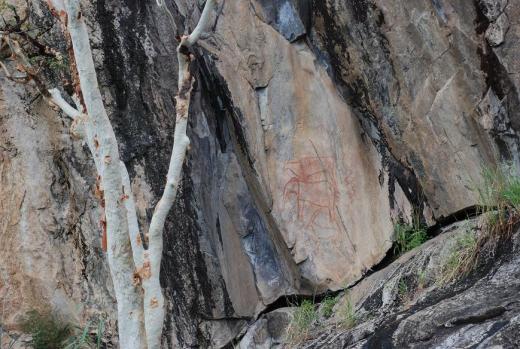
San rock paintings.
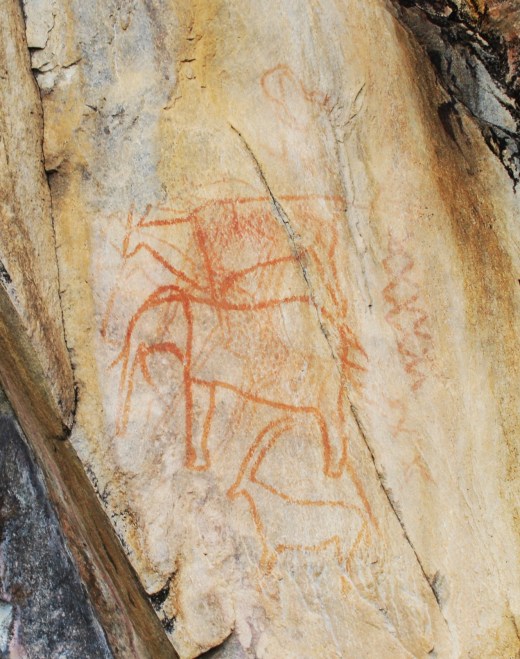
San rock paintings. The exact age of the paintings is unknown, but may be as much as 20,000 years old.

In the evening we went back out for our game drive, stopping to climb the rocks to see the San rock paintings and finished with sundowners.  (Tsodilo Hills, in northwest Botswana and west of Chobe National Park, is a Unesco World Heritage Site with over 4500 San rock paintings.)  Sundowners are an evening drive tradition.  I tried Amarula for the first time, which became my nightly sundowner preference.  Amarula is a cream liqueur made from the fruit of the African Marula tree (locally called the elephant tree.)  It is made in South Africa. 
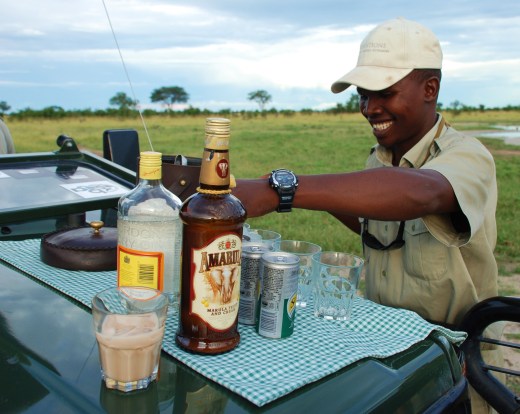
Pat, my guide, serving up my nightly sundowner of Amarula.
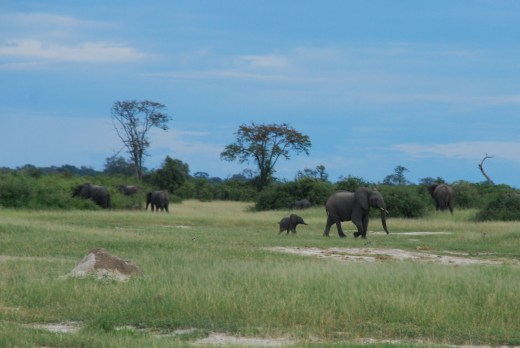
Breeding herd of elephants with quite a few babies.
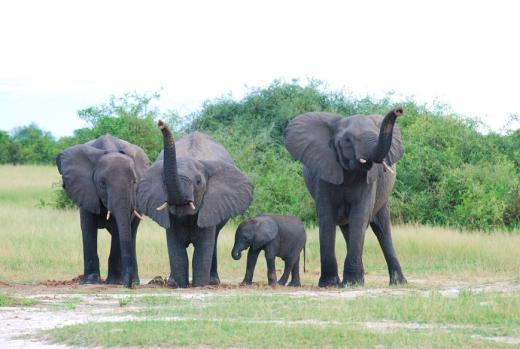
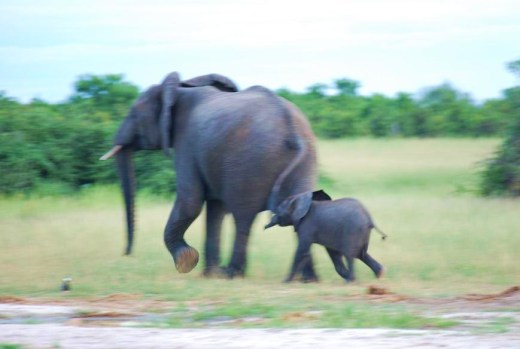
Baby elephant running to keep up with mama.
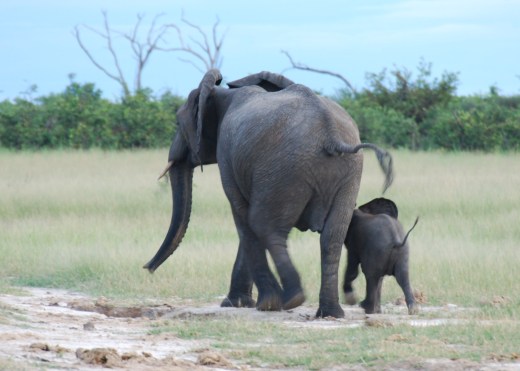
Sunday night our sundowner was held in the presence of a breeding herd of elephants.  It is fun to watch little elephants and their families.  My guides estimated this little elephant to be about 6 months old, and was still learning how to control his trunk.
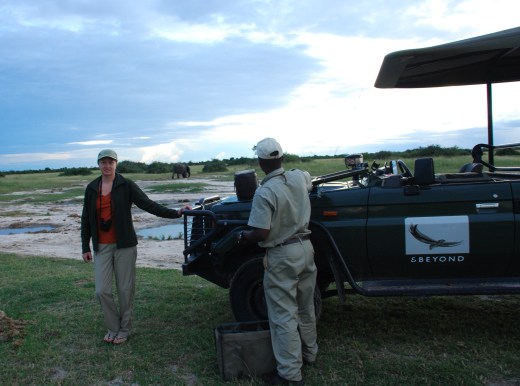
Sundowners with elephants.

Monday morning I was once again the only guest, so I requested we skip breakfast in camp and instead pack a picnic and have breakfast out on our drive.  We had seen mostly impalas and a large kudu when we got a radio call from the guide on the Orient Express vehicle.  
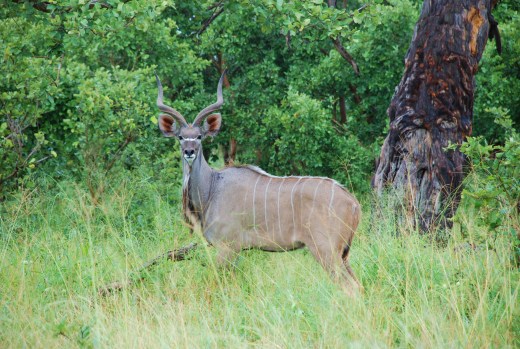
Kudu buck.

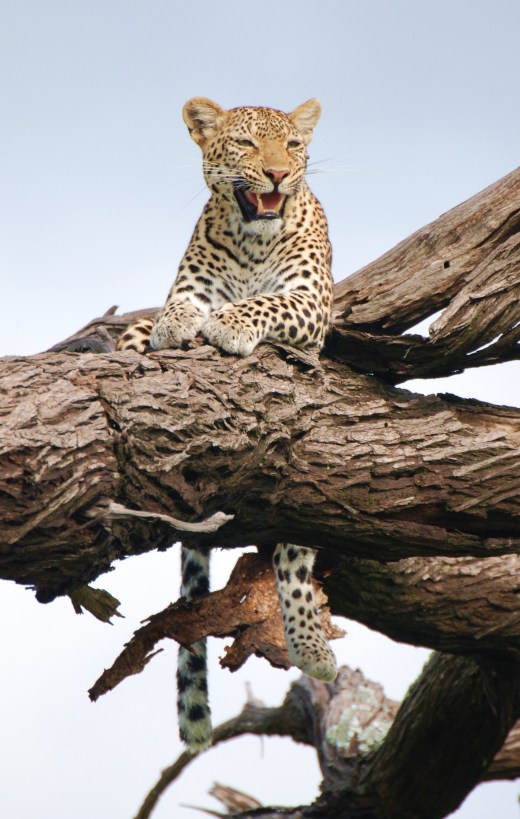
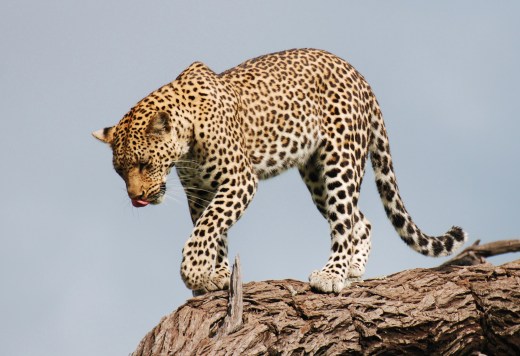
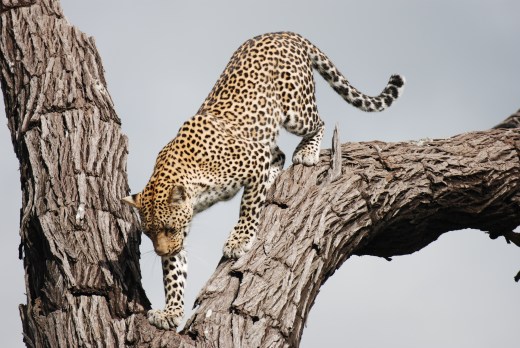
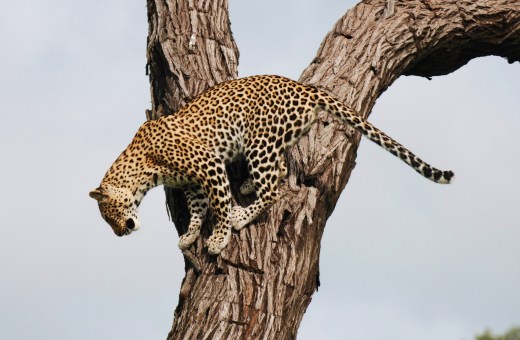
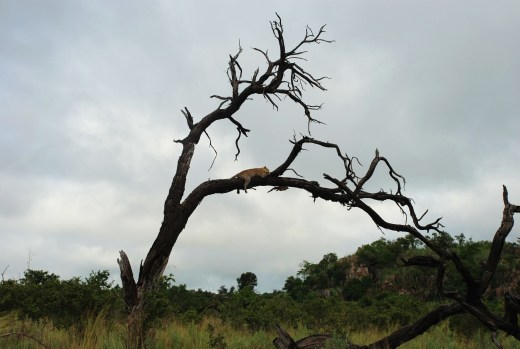
He had spotted a leopard in a tree, and was giving my guide Pat the location.  It is common for guides from all of the lodges to share sighting information.  We hustled over to the sight, near Leopard Rock as it turns out, about a 30 minute drive on the bumpy dirt roads.  The other vehicle had left, but the leopard was still there.  The leopard in the tree was the mother of a cub born last year and about 8 months old.  She was watching her cub practice stalking in the tall grass.  She was quite relaxed, but when an impala settled down and her cub was sneaking through the grass, she sat up and paid close attention.  The cub did not catch the impala, but I think he was just getting some practice in.  I could have sworn she was posing for me as she shifted positions and yawned and stretched.  A super model indeed.  We watched the two for about 45 minutes, until mama leopard called to her cub, climbed down from the tree and settled into the long grass, a cooler option once the temperatures started to rise.
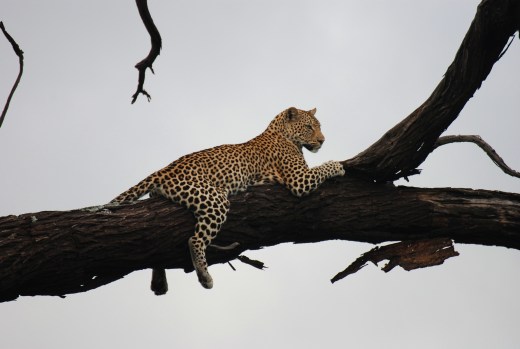
Mother leopard in the tree Monday morning, March 7th, watching her cub in the grass.
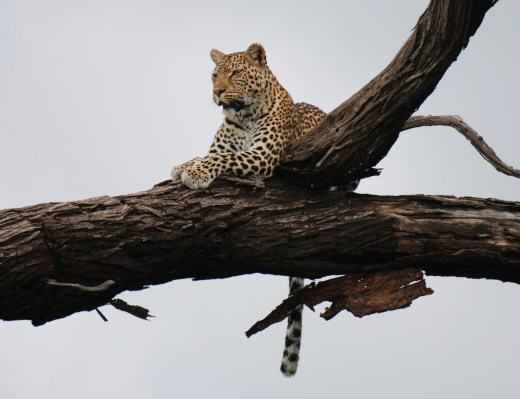
In this photo she is calling her cub.
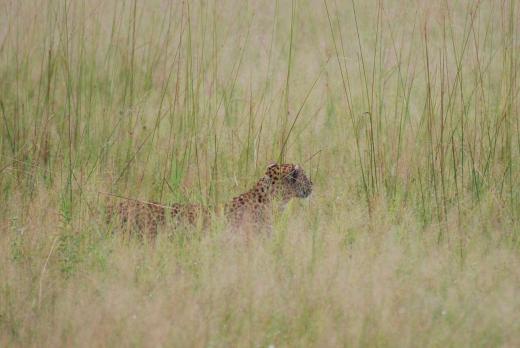
Leopard cub in the grass stalking an impala.
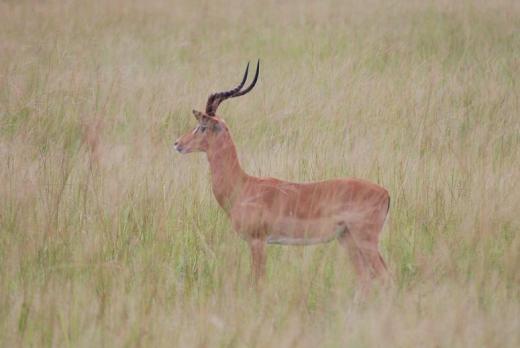
The impala being stalked. It saw the leopard cub and ran.
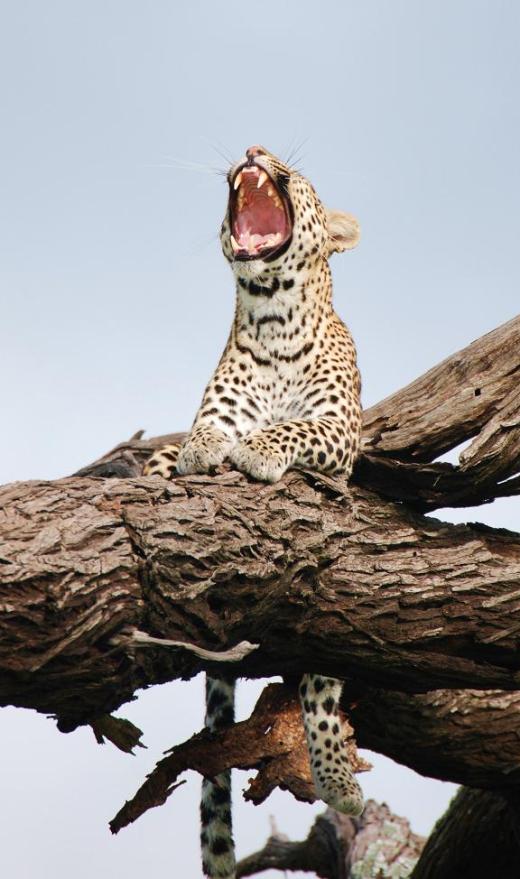
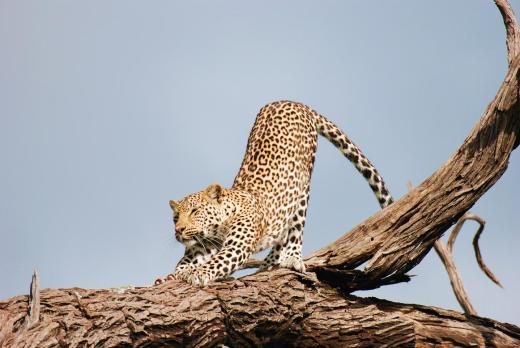
After the incredible leopard sighting, we drove a short distance away and had our breakfast outside on the hood of the Toyota.  Most of the game vehicles were Toyota Land Cruisers.
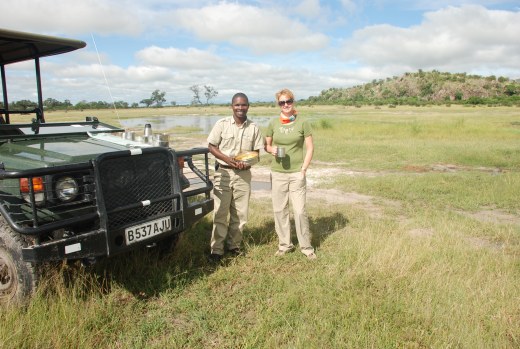
Breakfast on the game drive. Leopard Rock is in the background.

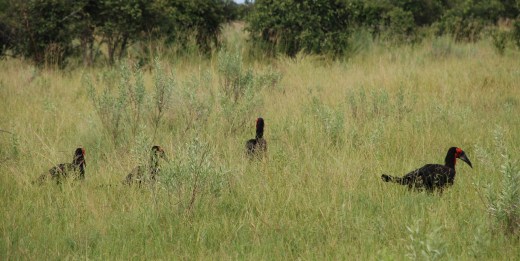
After breakfast we continued our drive.  We saw a group of Ground Hornbills and watched them fly from the tree to the ground.  Eddie, guide in training, told me of a Bantu belief involving the Ground Hornbill.  If a man was irresponsible and did not care for his family, the heart of a Ground Hornbill would be mixed with other ingredients and fed to the man.  The man would then become responsible and caring towards his family, as the Ground Hornbill is.  Not so good for the Ground Hornbill.
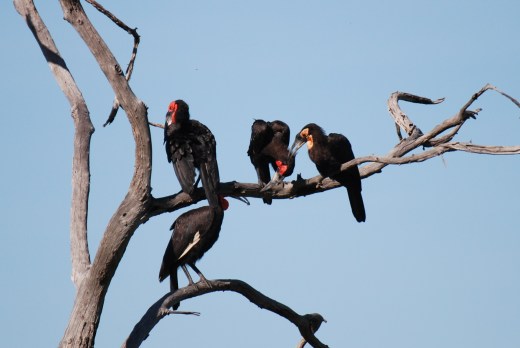
Four Ground Hornbills in a tree.
Monday evening I was joined on the game drive by two more guests.  We crossed the Savute Marsh, saw a rainbow, watched fabulous cloud formations, saw many more birds and enjoyed sundowners by Leopard Rock.  The Lilac Breasted Roller, of which we saw hundreds, is Botswana’s national bird.  It is most colorful in flight.
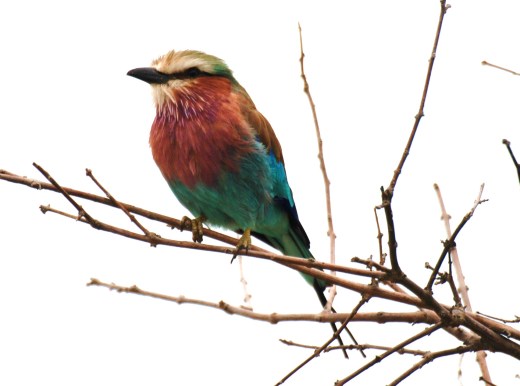
Lilacbreasted Roller, Botswana's national bird.
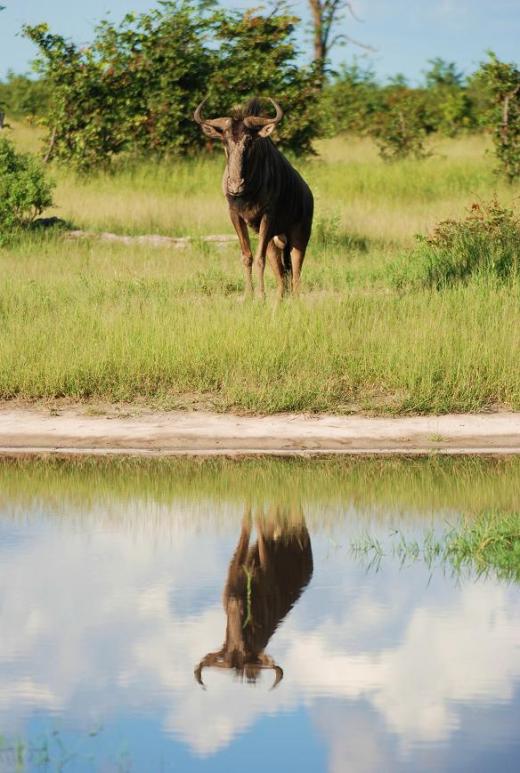
A wildebeest posing. Everyone was posing for me that monday.
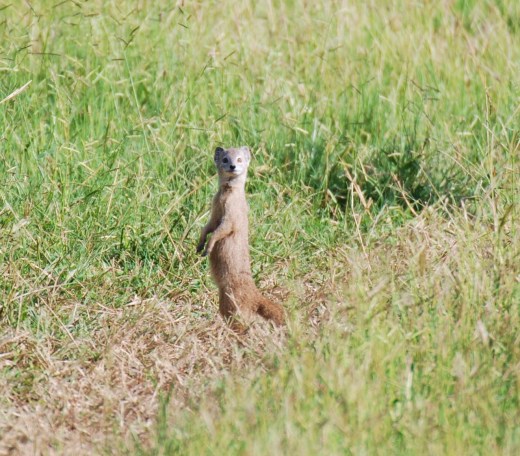
A yellow mongoose. We saw a business of mongooses all running together. It was quite a sight.
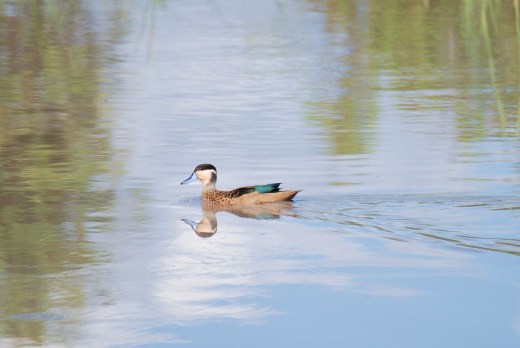
Hottentot Teal
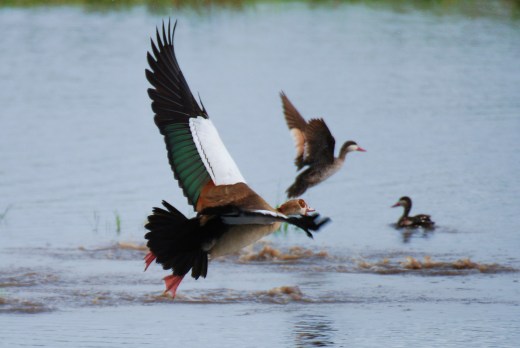
 

Egyptian goose.
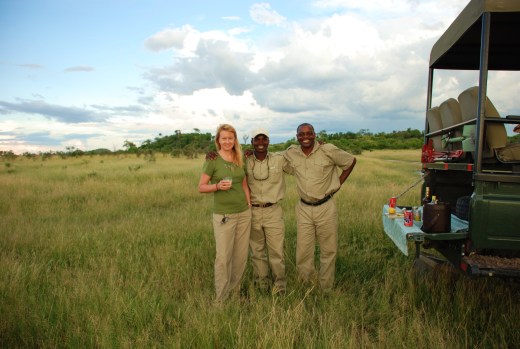
Sundowners Monday night with Pat and Eddie.

At 7 pm when we returned from the evening game drives, the bucket showers would be filled with hot water.  The water smelled slightly of campfire smoke, but was welcome.  It is possible to shower in 30 litres and it got so that I didn’t even use all the water.  7:30 to 8 pm was spent at the “bush tv” as the camp workers called the fire.  The pre-dinner gathering around the campfire is another tradition at all of the camps I have visited.
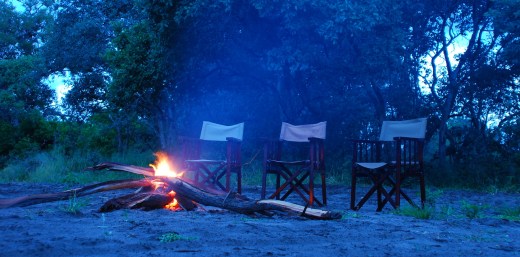
Bush tv

 Tuesday morning was my last game drive in Chobe.  I was hoping to see Wild Dogs, as they had been spotted near our camp, but they are elusive and did not show that morning.   We did see vervet monkeys, impalas and giraffes, and I got a lesson in the names of groupings of animals.  Here is part of what I learned;  a journey/tower of giraffes, a business of mongoose (mongooses?), a herd/parade of elephants, a dazzle of zebras, a shrewdness of monkeys, an obstinacy of buffalos, a pride of lions, a crash of rhinos, a raft/pod of hippos,  a leap of leopards, a coalition of cheetahs, a skulk of jackals, a pack of wild dogs, a dray of squirrels, and a parliament of owls.  At 11:30 we were back out at the dirt airstrip for another Safari Air transfer to the next camp.  On takeoff, I quickly snapped this photo of an elephant just off to the side of the departure end of the runway.  (The camera I use is a Nikon D80.  All of the leopard and bird shots were taken with the Tamron SP70-300mm F/4-5.6 Di VC USD lens.  It was my first experience with this lens and I was very happy with it.  The other lens I traveled with was the Nikon 18-135mm).
Posted in Botswana | 1 Comment

Macatoo

elephants from the air, near Macatoo

The Macatoo horseback safari camp is just outside of the Moremi Game Reserve in the Okavango Delta.  The flight from Maun (where I landed on Air Botswana coming from Johannesburg, S. Africa) to the Macatoo camp airstrip was about 35 minutes in a small single engine plane.  We were low enough to spot animals along the way.  Once on the ground, the drive to camp was another 30 minutes.

On the road to the Macatoo camp


The Macatoo camp, run by African Horseback Safaris was exactly what I had hoped it would be; pure fun, wonderful rides, and great dinners.  The tents were comfortable, each with a propane water heater and a flushing toilet, not exactly roughing it. 

Macatoo tent

The rides were like nothing I have done before, through deep water, cantering across flood plains, and mingling with game.  There is no better way to get close to the animals than on horseback.  You can quietly observe the animals without the annoying jeep.  The rides in the morning lasted about 4 hours, then a break for lunch, then an evening ride from 5 pm to 7 pm, and dinner at 8 pm.  The dinners were parties every night, all of us gathered around a large table. 

Breakfast.

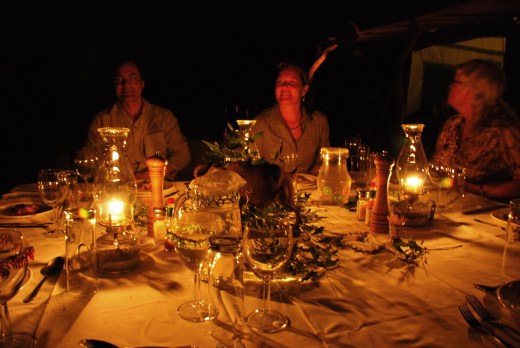
In the evenings, it was a dinner party every night.

Every ride took is in a different direction, from plains, to marshes to forests.  One day we came upon a journey (or tower) of giraffes and walked along with them.  We stopped for a break of apples under a large baobab tree.  Elephants were everywhere, and see saw them on horseback every day. 

Me on Kwai, with giraffe in the background.

Taking a break under the baobab


Macatoo will take guests out in a game viewing vehicle, and we did that to watch the lions, and on the evening of my birthday.  Because the camp is not within the game reserve, night driving is allowed.  The evening of my birthday, we drove to a tree platform for a champagne toast.  As we climbed the ladder we heard a leopard call, and it sounded very close.  I was hoping to see a leopard in the trees that evening, but instead we watched a herd of elephants emerge from the trees across the water, and followed their splashing as they crossed, passing nearly underneath us.

Game drives in the delta can be difficult, and very wet.

The tree stand.


Bongwe prepares the champagne for my birthday toast.

"Pula!"

Birthday celebration at Macatoo camp.

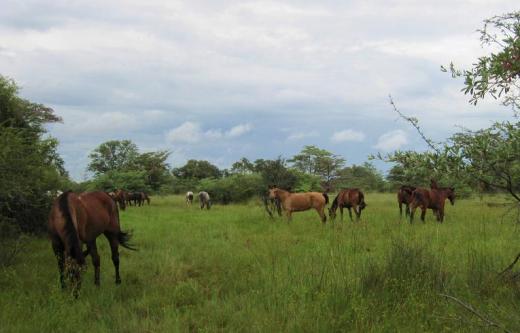
On my last day at the camp and during the morning ride, we passed the enclosure where the horses spend their days.  At night they are all in the barn, but during the day they are allowed into a pasture accompanied by armed guards.   Only once did a lion attempt to crash the horse pasture.  That last morning Bongwe showed us where an elephant had died the previous year.  Other elephants came and scattered the bones around.  The tusks are still there.

The horses out at pasture during the day.


The last morning ride.

 The website for Macatoo camp is http://www.africanhorseback.com/

Posted in Botswana | 1 Comment