Nicaragua Unveiled

The two volcanoes on the island of Ometepe in Lake Nicaragua are Concepcion and Maderas. Lake Nicaragua is the largest lake in Central America and is home to the only freshwater sharks in the world.

The name Nicaragua comes from the words nicarao and agua. Nicarao Indians were the first Indian tribes to occupy Lake Nicaragua, and “agua” is Spanish for water. Nicaragua is “The Land of Lakes and Volcanoes” according to Nicaragua’s tourism website (visitnicaragua.us). We got a little taste of that when Gabriel took us on a 12 hour road trip he calls Nicaragua Unveiled.

We hooked up with the Pan-American highway very near Lake Nicaragua, and turned north.

Local traffic on the Pan-American highway. The highway is the longest in the world, stretching from Proudhon Bay, Alaska to Ushuaia, Argentina.

As we headed northbound on the highway we drove past sugar cane fields, plantain farms, and cattle fields.

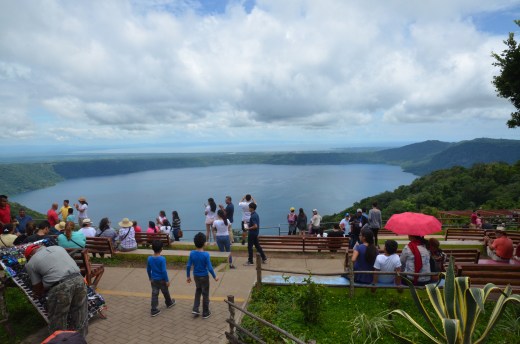
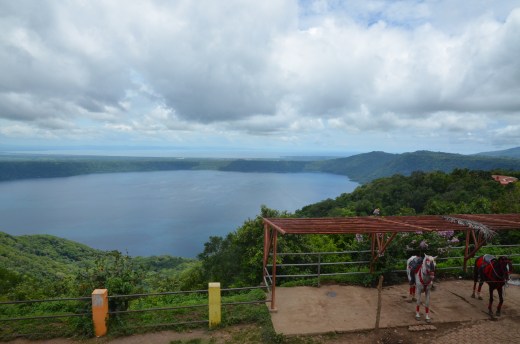
Our first stop was the town of Catarina. We stopped at a view point to see Laguna de Apoyo and Granada on the shores of Lake Nicaragua.

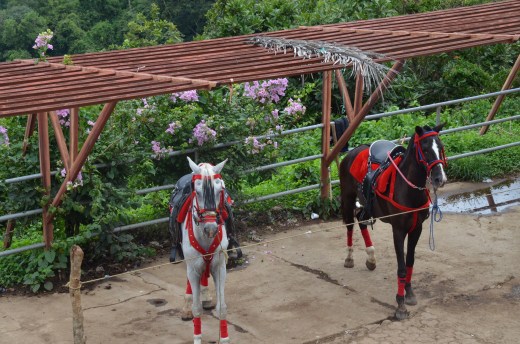
It was a party atmosphere at the view point with live music, street peddlers, and food. We took in the view and continued towards Granada.

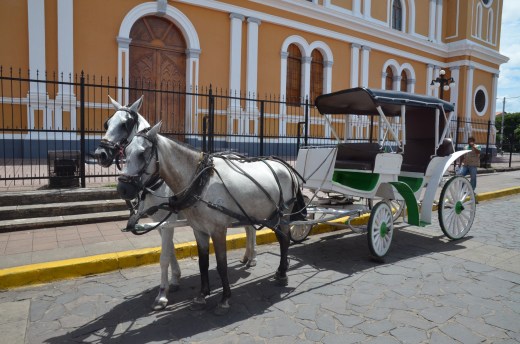
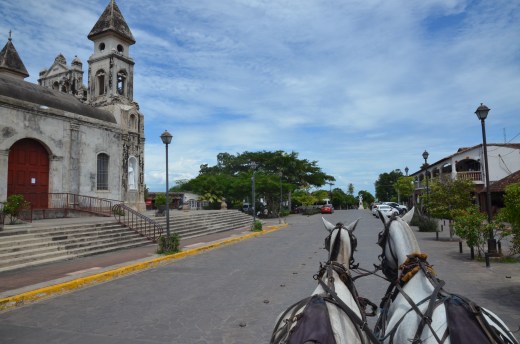
Horse drawn carriages are a popular way to see Granada.

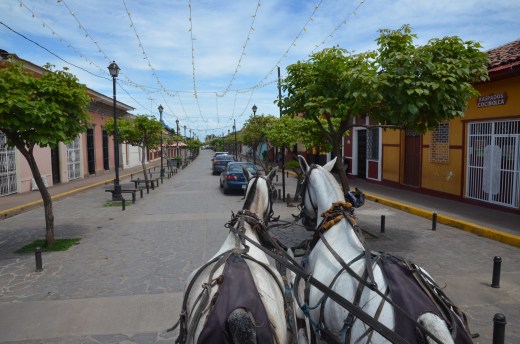
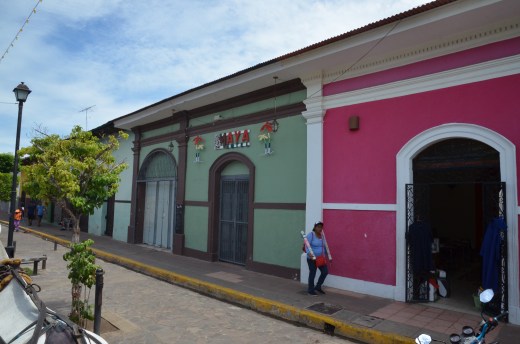
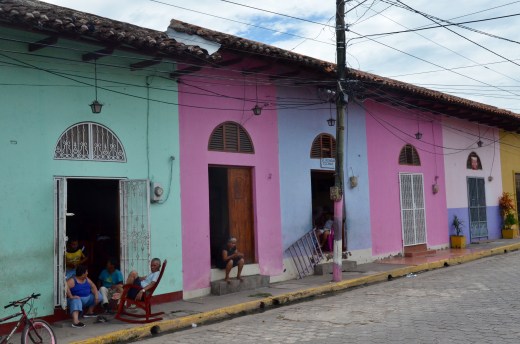
Gabriel had set up a tour of Granada for us. It was founded in 1524 by the Spanish conqueror Francisco Hernandez de Cordoba. We breezed through the town at a fast trot. The following pictures of Granada were mostly taken on the fly.

We stopped a few times as Jonathan gave us facts about the town or specific buildings and houses.

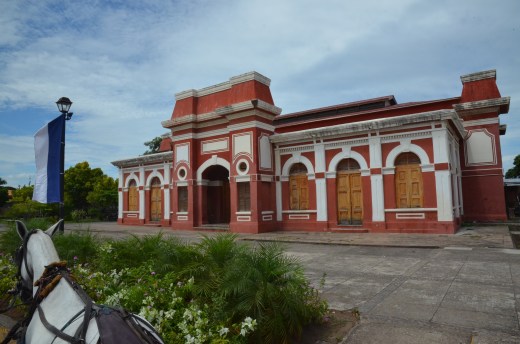
The shuttered railway station, no longer in use.

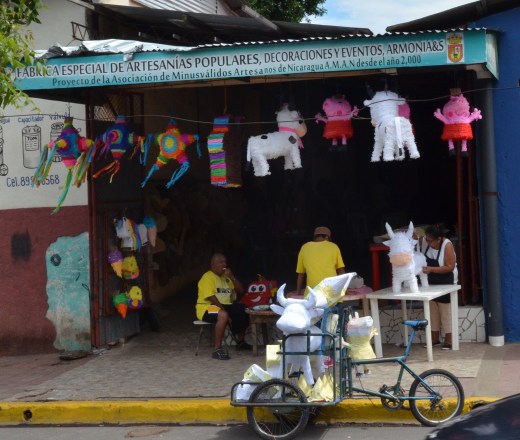
A piñata shop.

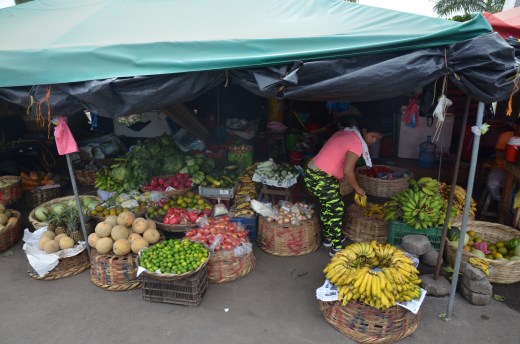
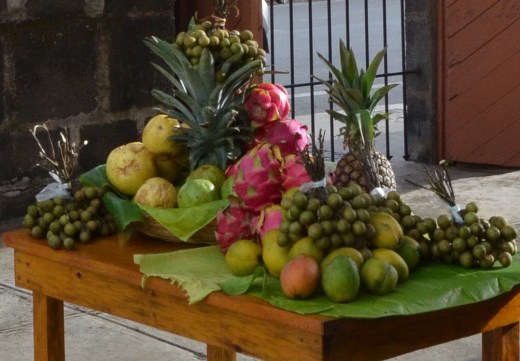
Local women selling fruits and vegetables.

We stopped at the La Polvora fortress and gave the horses a breather in the shade. The fortress was built in 1748 as a supplier of gun powder. It also served as a prison and housed troops.

William Walker house, an American mercenary who usurped the presidency of the Republic of Nicaragua in 1856. He was defeated in 1857 by a coalition of Central American armies.

We covered a lot of the town, including the non tourist areas.

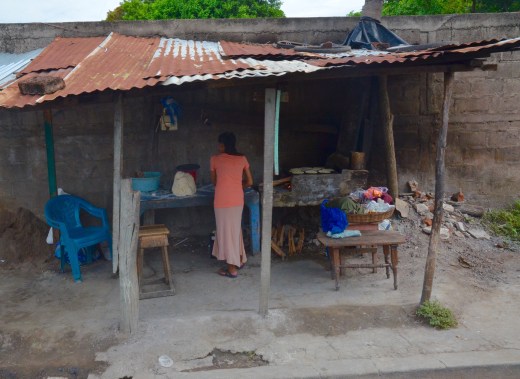
A woman cooking tortillas.

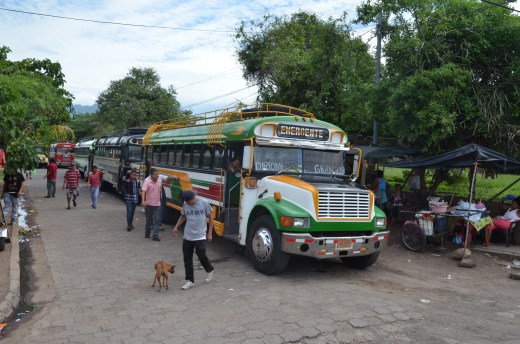
Colorful local buses, also known as a chicken bus.

Jonathan dropped us at Restaurante Las Colinas del Sur where we met Gabriel for lunch. The food and atmosphere were great. The entire country had experienced an electrical outage for quite a few hours, but the restaurant cooked with propane and was open air anyway. I would highly recommend this spot for a good local meal.

After a tasty lunch we drove the short distance to Masaya. The Lonely Planet guide book had suggested Masaya’s local art market as a good stop.

While driving through Masaya traffic we watched as these two boys ran up behind this pick up and hopped a ride, while it was moving. They enjoyed being photographed.

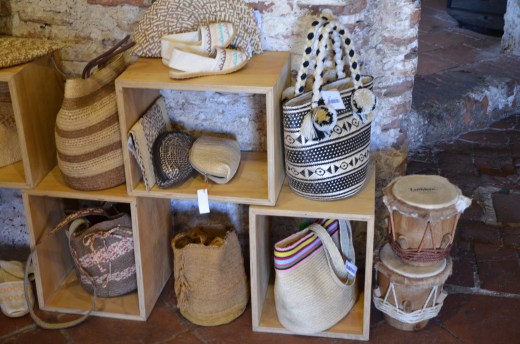
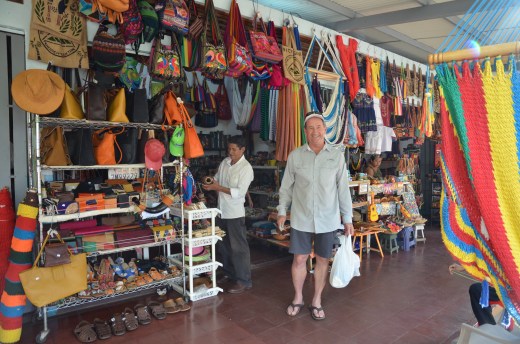
We parked and spent about an hour in the market. We all made a few purchases.

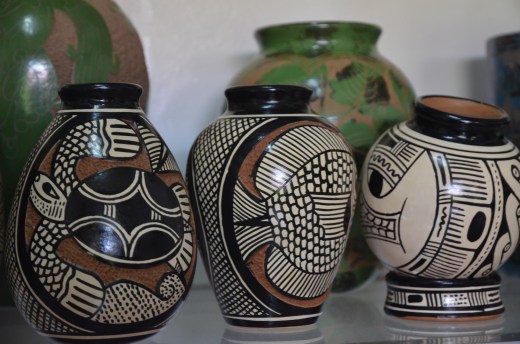
Locally made ceramics.

The market wall was decorated with a large, beautifully painted mural.

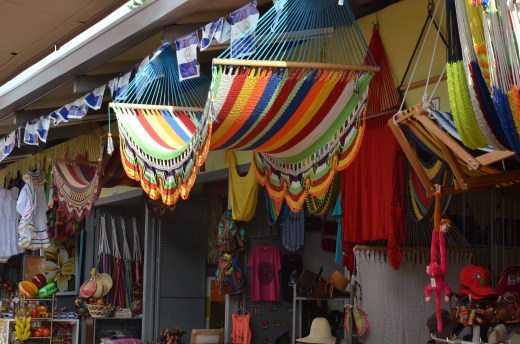
The market place was nothing if not colorful.

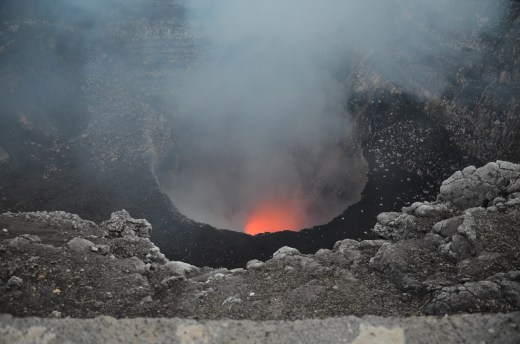
With purchases in hand, we continued with our day long odyssey. The most spectacular sight of the day was still to come. Our destination was the Parque National Volcano Masaya, Nicaragua’s first national park established in 1979. I’ve seen hot lava in Hawaii and witnessed Mt. St. Helen’s eruption in 1980, but those could not compare with walking right up to the edge of a caldera and looking down into a pit of red hot bubbling lava. It was truly spectacular.

The road to the viewpoint.

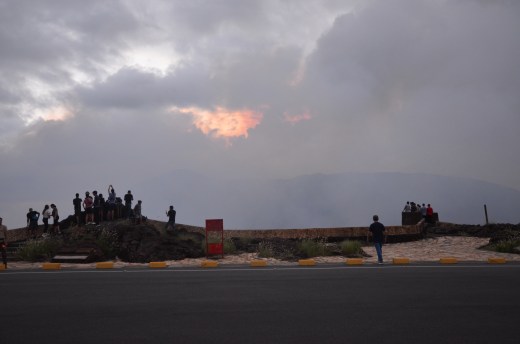
The park has a day time price, and reopens again at 530 pm with a $10 per person night time admission. You really need to see this at night. We got to the viewing point just before sunset. Great timing.

Looking over the edge. A great spot for pictures.

The pictures don’t even do it justice. It’s a sight that must be seen in person.

Completely happy with our day of Nicaragua Unveiled, we sat back and relaxed (sort of) as Gabriel drove us back to the resort. The night drive was an adventure of its own, but we did make it back all in one piece. Many thanks to Gabriel for a job well done, and all the driving.

Posted in Nicaragua | 3 Comments

Messing Around Orquidea del Sur

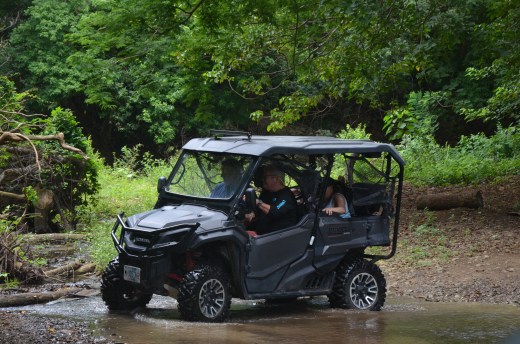
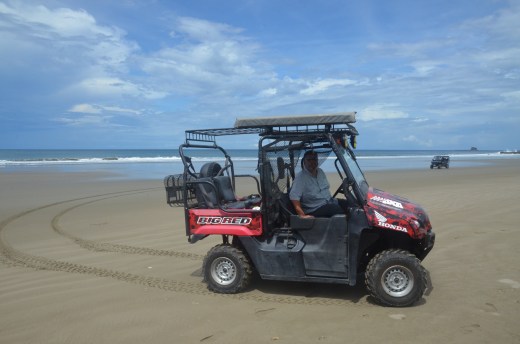
We had a few days to explore the area around Orquidea del Sur. One morning we all climbed into the four wheel drive ATV’s and got a tour of the area.

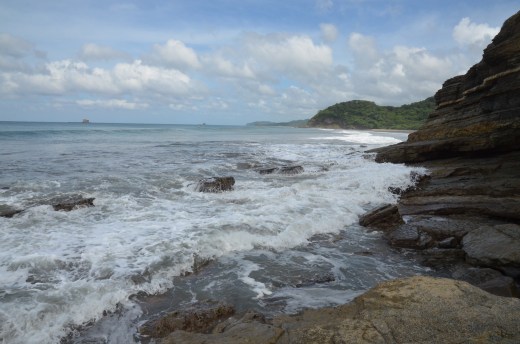
There are a few developments in the area with lots for sale. This part of Nicaragua is the Pacific Region, also known as The Emerald Coast. It got that name for a reason.

The main road to the resort.

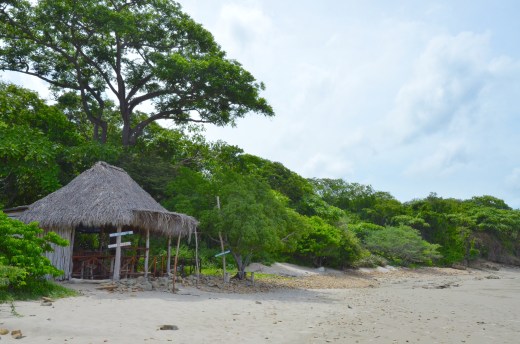
Playa Yankee.

Local residents.

Survivor Nicaragua was filmed in this area in 2010. Gabriel knows where all the filming locations are but isn’t giving it up.

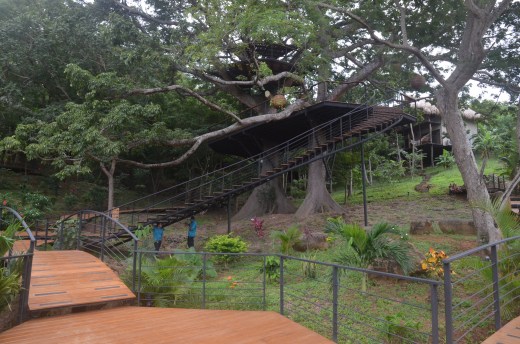
One afternoon we visited Treecasa Resort, a retreat built around two giant Ceiba trees (treecasaresort.com).

Their chef created a tasty seafood platter for us, out of professional courtesy for Gabriel.

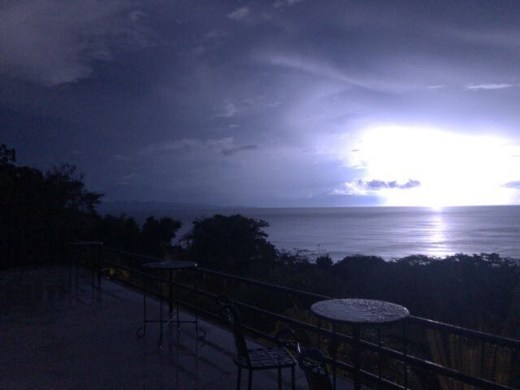
Mother Nature provided us a light show in the evening.

Posted in Nicaragua | Leave a comment

The Old Men (and Woman) and the Sea

We pulled out of the resort at 0515 am, headed to the small port town of San Juan del Sur. There we loaded up Hog Tide, a 32′ Panga, with coolers of food and beverages.

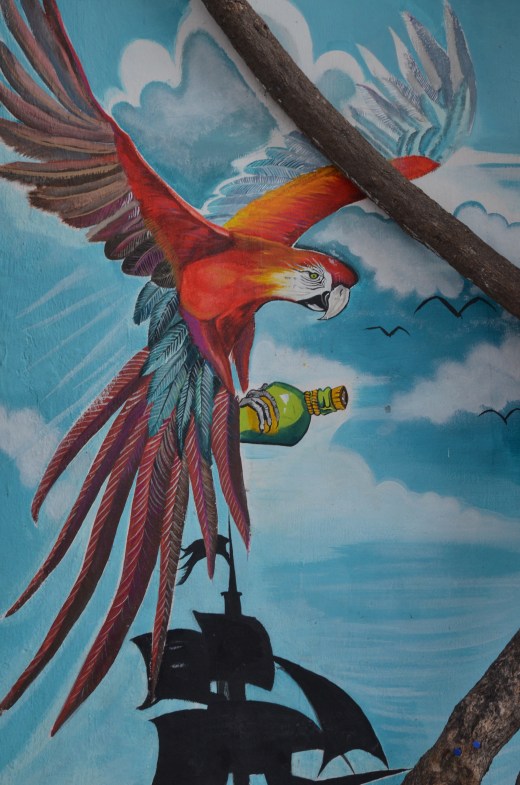
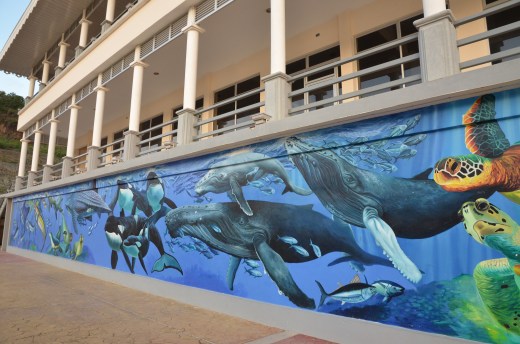
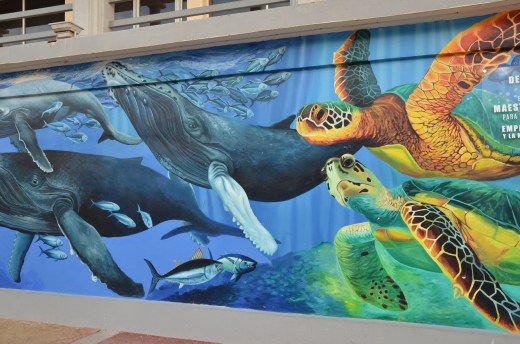
I was impressed with the detailed mural on the side of a building on the dock. A true work of art.

Our last stop before heading seaward was the bait shop. This one was right in the harbor.

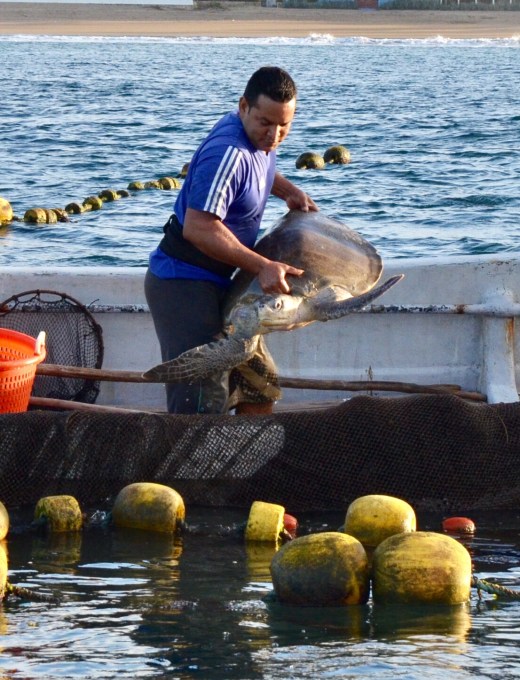
As we waited for the bait, one of the fishermen held up a turtle from the net. I was concerned at first for the well being of the turtle, but I shouldn’t have been. The turtle was released.

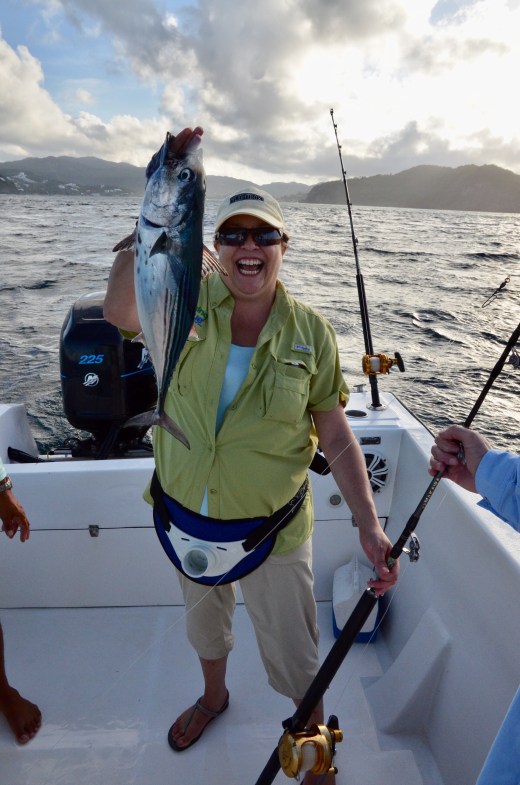
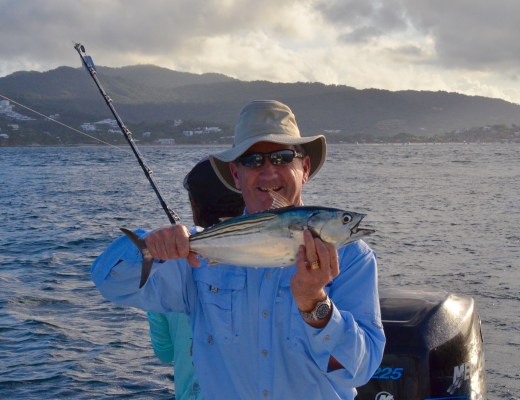
As we cruised towards open water, José and Dorian rigged the trolling lines. In no time at all, we were hit by a barrage of Bonita.

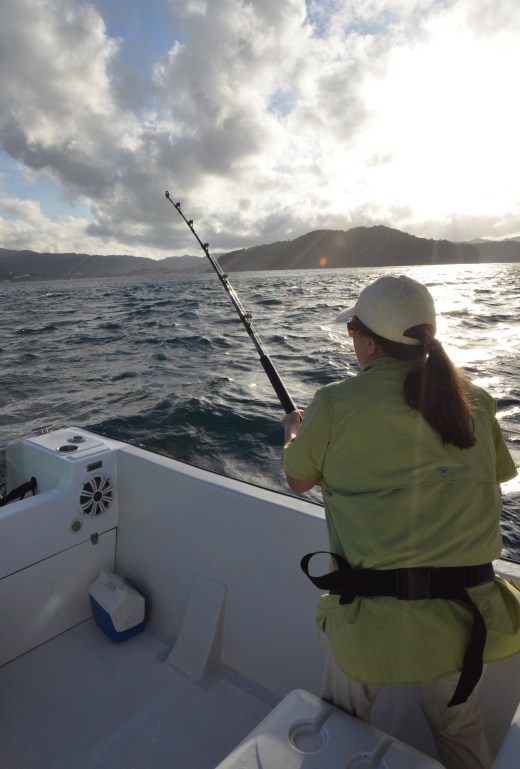
Yana has a fish on.

The Bonita were biting, and everyone pulled in several.

At one point there were fish on three lines. All hands on deck.

Jim and his Bonita.

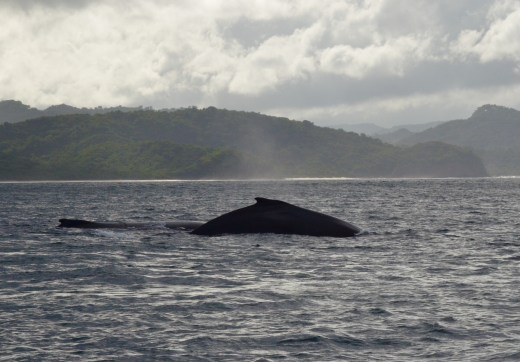
After the Bonita bonanza we cruised south. The highlight of the day for me was seeing the Humpback whales.

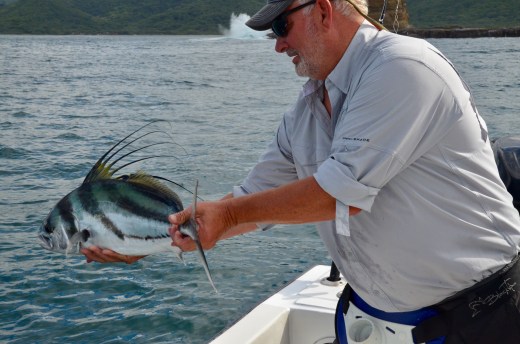
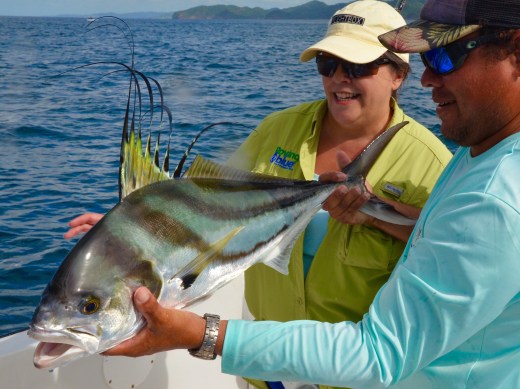
Someone requested a Roosterfish so Dorian steered the boat to an area known for them. Like clockwork, the lines went in the water and all three anglers got one. They are catch and release.

Jim releases his Roosterfish.

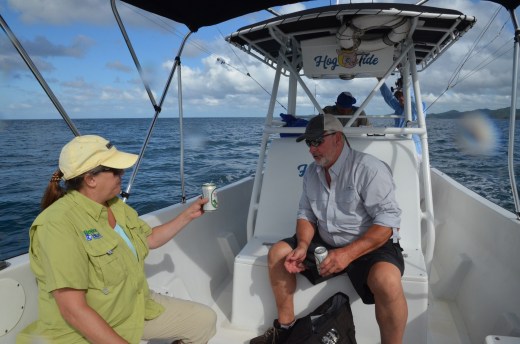
Yana and Jim make a toast with the local beer.

José and Dorian, hogtidefishing.com.

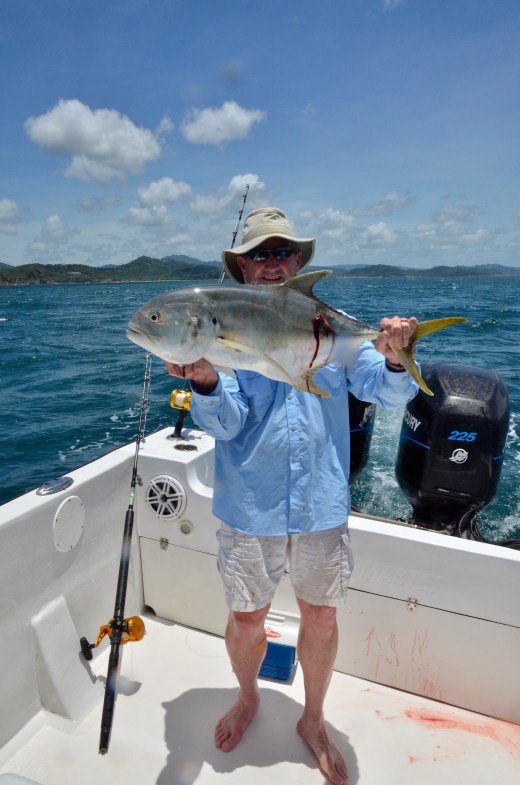
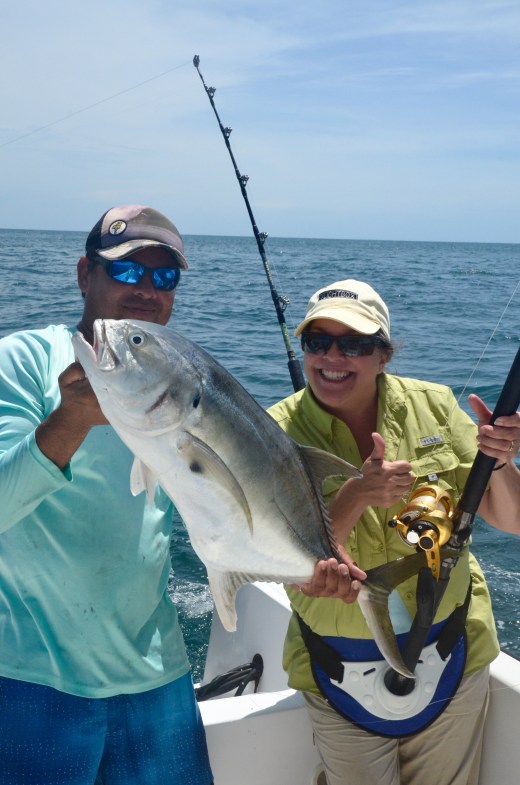
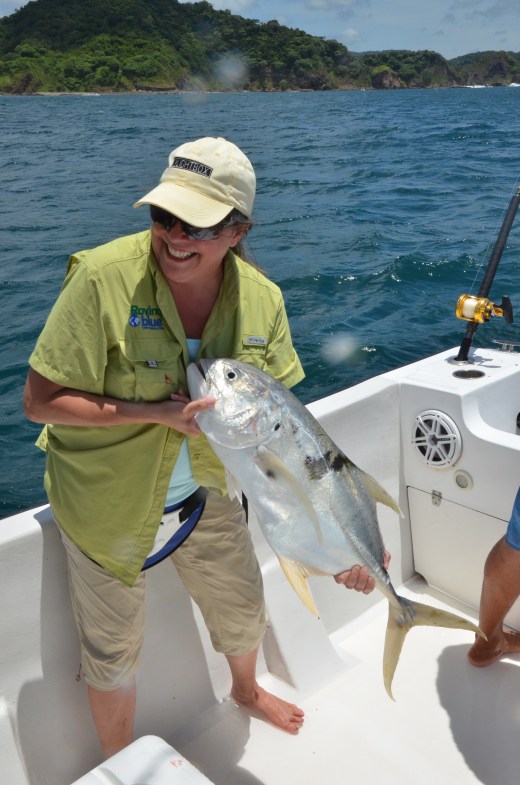
With the sport fishing checked off the list, we needed to catch something for dinner. We headed north along the coast passing San Juan del Sur. José and Dorian must have known what they were doing because once again, we got what we were looking for, Jack Crevalle and Mackerel.

Tucker’s Jack Crevalle.

Yana got her Jack.

Jim’s Jack.

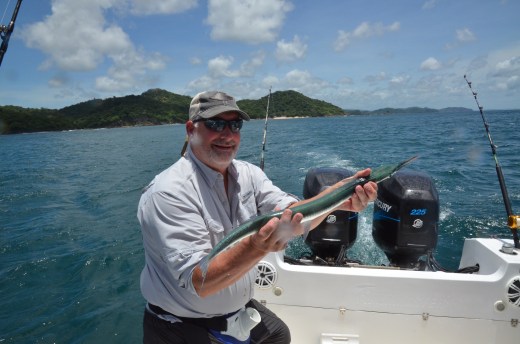
Jim also got a Needlefish.

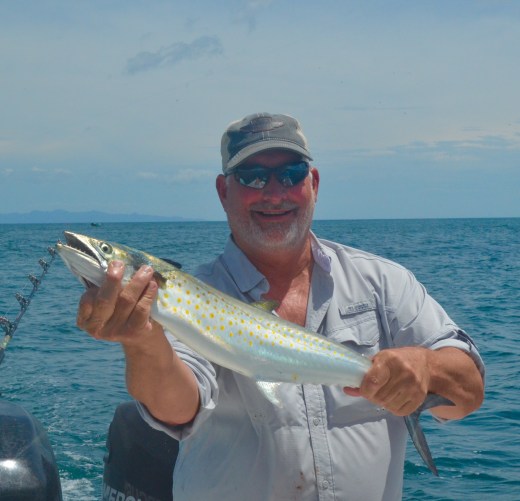
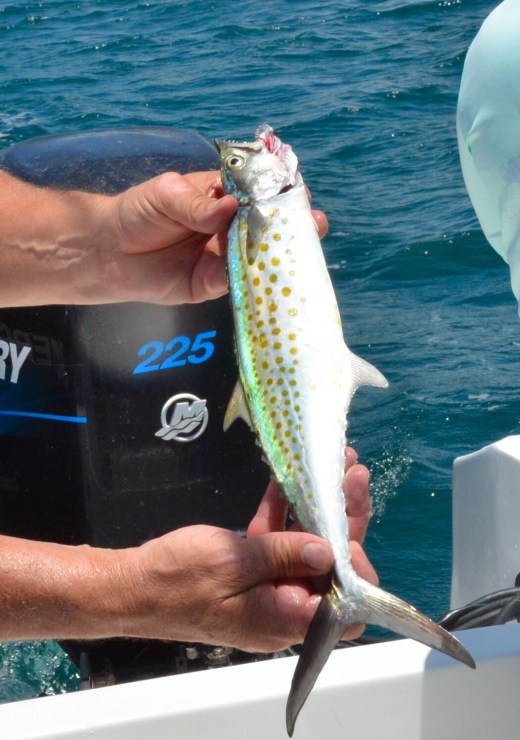
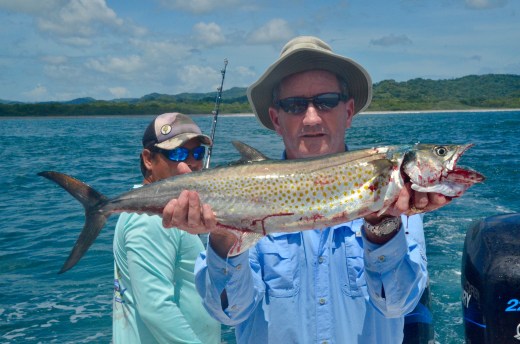
The final catch of the day were the Mackerel.

With all the fish coolers full we headed back into port.

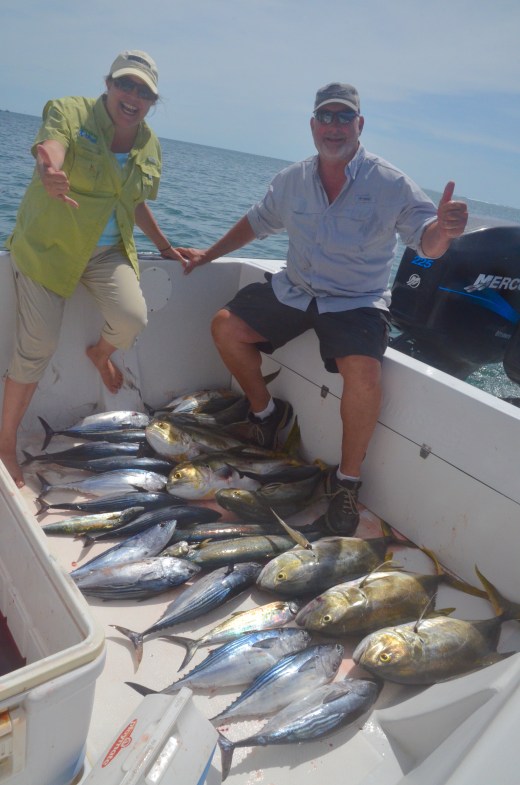
The day’s catch.

The anglers celebrate.

Gabriel was at the dock to welcome us and inspect our haul. He is a chef as well as running the resort and was anxious to see what we had caught for dinner. We stopped at a few shops in San Juan del Sur, in search of a few bottles of Sauvignon Blanc. We found some Argentinian wine and drove back to Orquidea Del Sur.

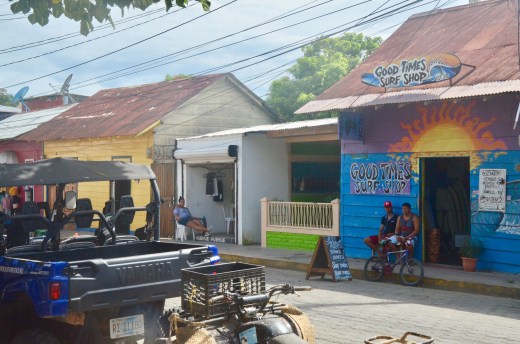
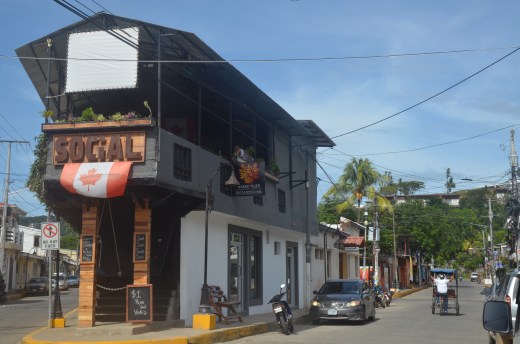
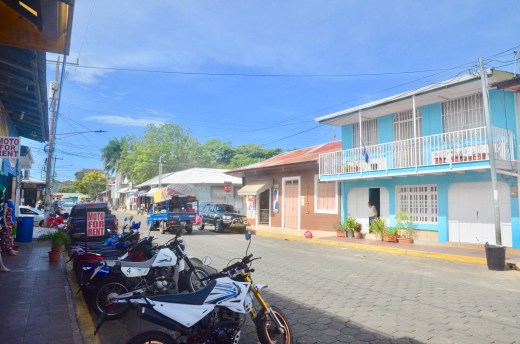
The streets of San Juan del Sur.

Hog Tide Fishing

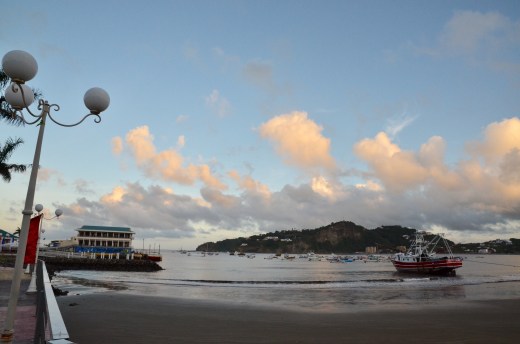
San Juan del Sur.

The Mackerel.

Today, September 15th, is Nicaragua’s Independence Day. In 1821 Nicaragua, along with Guatemala, Costa Rica, El Salvador and Honduras declared their independence from Spain. Happy Independence Day!

Posted in Nicaragua | 2 Comments

Off The Beaten Path In Nicaragua

If your idea of heaven on earth is similar to mine; swim suit temperatures, deserted beaches, soft warm breezes, cold drinks, and a view, then you would agree that I have found a slice of it here. I am on the Pacific coast of Nicaragua, not just off the beaten path, but also off the paved roads.

This particular slice of heaven is called Orquidea del Sur (Orquideadelsur.com). It’s remote, but it didn’t take all day to get here from the US. A less than four hour flight from Atlanta will get you to either Managua or Liberia, Costa Rica.

We flew into Liberia and were met by our handler, Fermin. He drove us up to the Nicaraguan border. There, after walking across the border dragging our bags, we were placed in the care of our Nicaraguan handler, sent by the resort. After paying the required $12 and having our bags X-rayed, we were back on the road. It took approximately one more hour to get to Orquidea del Sur.

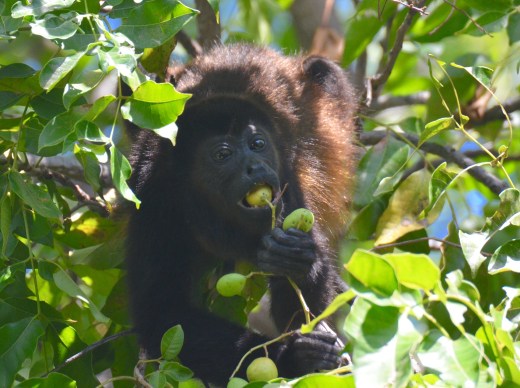
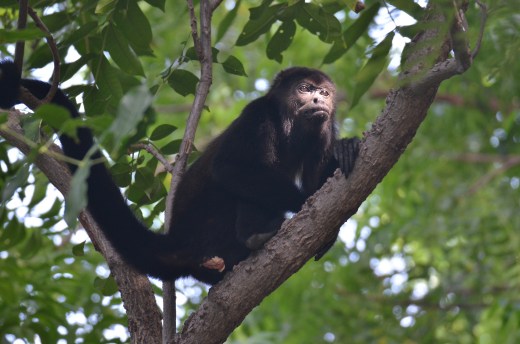
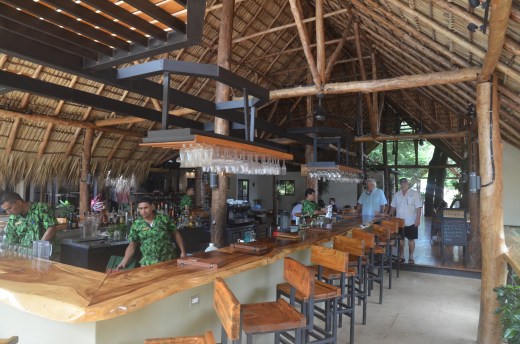
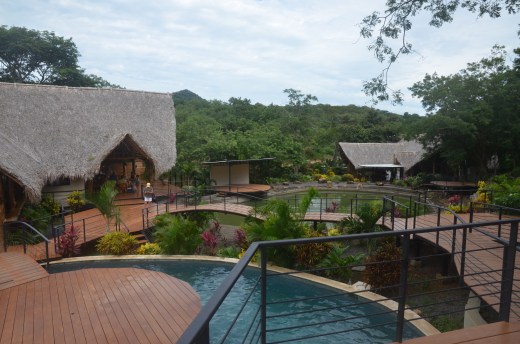
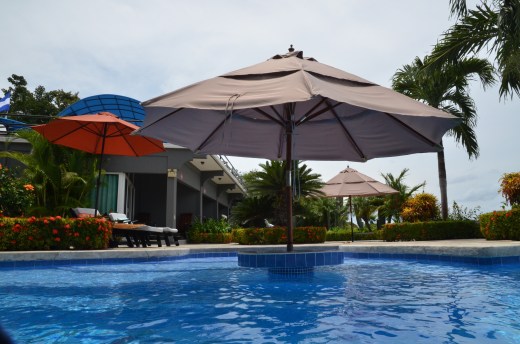
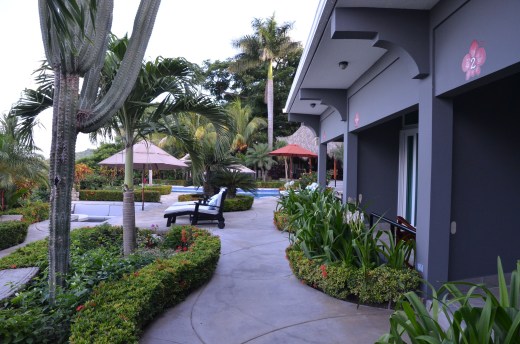
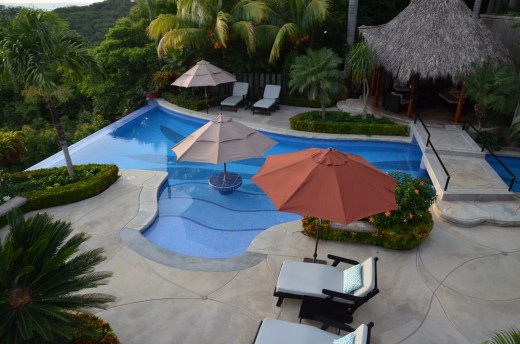
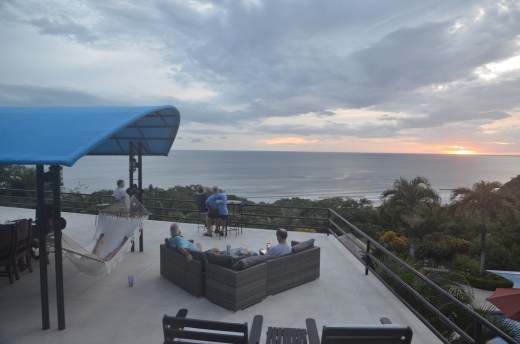
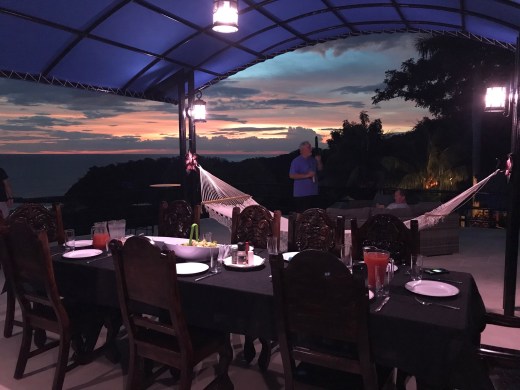
The lovely resort is run by our gracious hosts Gabriel and Robyn. With stunning views of the Pacific, good food, and howler monkeys for entertainment, we enjoyed a few days of relaxation.

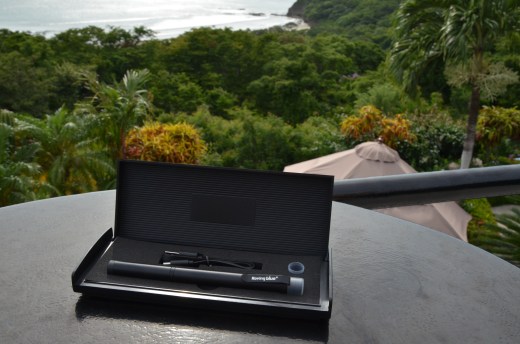
I am the “Plus 1” on this trip, a guest of my travel companion who is here on business. That business is Roving Blue, a water purification technology company (rovingblue.com). I have used one of their products during my travels. Among other products, they developed and market the O-Pen, a compact personal water purifier. For travelers (you’ve seen the signs – Don’t Drink The Water), campers, hikers, anyone concerned with water purity, it’s a light, portable ozone generator that kills bacteria and viruses on contact.

The Roving Blue team

With the business meeting completed, the fun began.

Posted in Nicaragua | 3 Comments

Notes On Gotland

Windmills:

DSC_8659

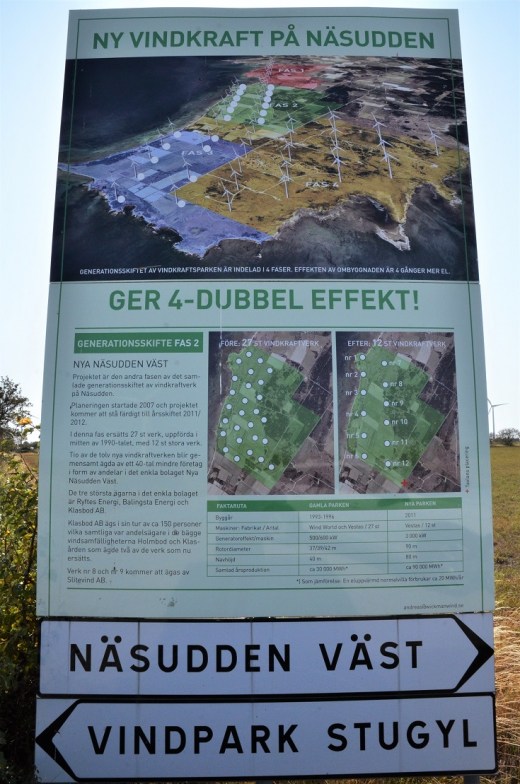
We saw many picturesque old windmills while driving around Gotland, and some newer ones too.  One day we drove out to an area where we saw many large new windmills.

Sweden aims to be carbon neutral in 2045.  In 2017, 12.4% of their power came from wind power.  The sign at the location described the size of the windmills and how much power they generated.

DSC_8656

Roads:

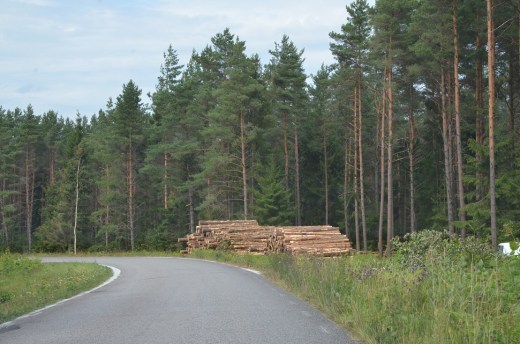
We did some exploring in our Volvo rental car.  The busiest roads are two lanes, and it gets even smaller in some areas.

DSC_8578

Typical road scene.  The church is the Sundre church.

DSC_7553

We also found out that road construction sites use the honor system, no flaggers necessary.

DSC_8915

DSC_8865

Sheep in a roadside field.

DSC_8923

Roadside spectators.

Churches:

There are 95 parishes in Gotland, and 92 churches.  We saw quite a few in our wandering, and it always seemed as if you could see a church bell tower from where ever you might be, at any time.

DSC_7881

The Fårö Church is a medieval Lutheran church on Fårö island in Sweden.

DSC_7838

DSC_7541

Vineyards:

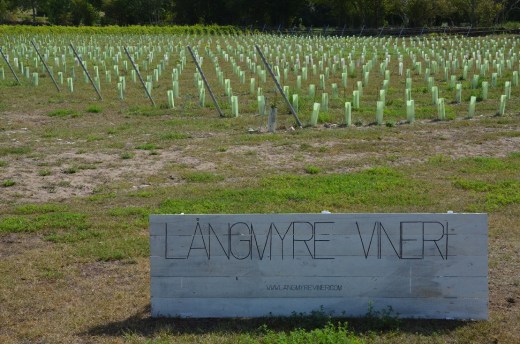
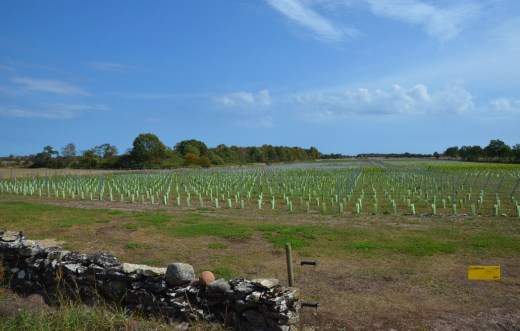
We found the one and only vineyard on Gotland.  We’ll have to go back when they have a tasting room.

From their website http://www.langmyrevineri.se/

Långmyre Vineri is a certified organic vineyard established in 2018 and will be harvesting for the first time in 2020. Our full capacity is 26.000 bottles, with minimal impact on the environment.

DSC_8845

DSC_8842

Lilacs:

During our travels around Gotland we saw many large lilac bushes.  We were not there during the flowering season, unfortunately.  We asked our host Maria and she said yes, the island has a lot of lilac bushes and it is a wonderful time of year when they bloom.  When asked for possible lilac season dates, she guessed somewhere around June 10 to June 20, so right around Midsommer.

sensation lilac

Visby:

We flew out of Visby back to Stockholm, so we had one last chance to wander around Visby, which now was no longer in the Medieval period.  But the normal everyday Visby is quite beautiful on its own, without all the medieval characters.

DSC_9001

The botanical gardens were lovely, and this time we were able to walk into some of the church ruins, which had been closed during the medieval festival.

DSC_8995

DSC_8970

St. Catherine’s ruin, also known as the Church of St. Karin, in the Visby Town Square.

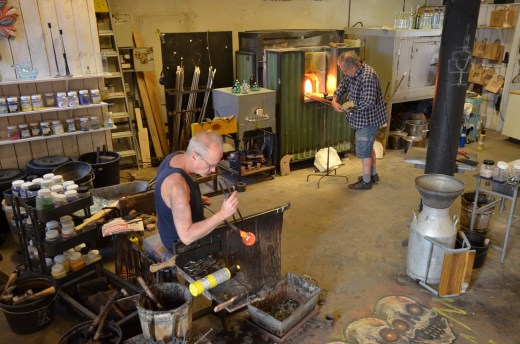
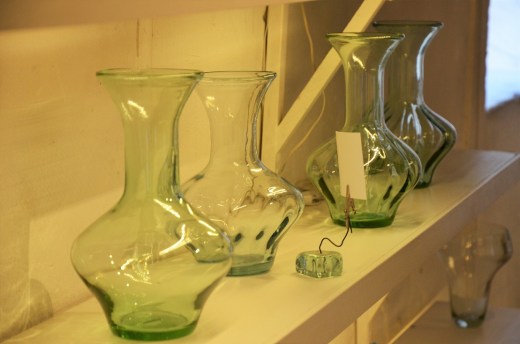
We stopped in at the Visby glassblowers, and had our final meal on Gotland at Bak Fickan.

DSC_8949

DSC_8953

IMG_8133

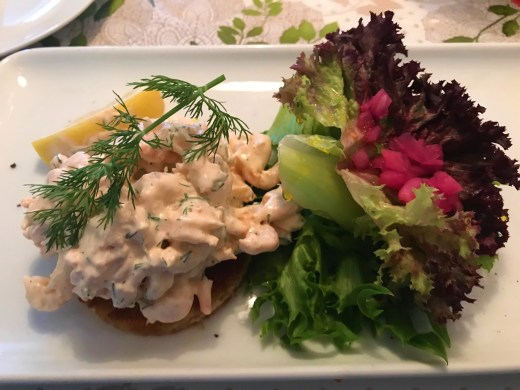
Shrimp salad at Bak Fickan.

IMG_8135

Fish soup.

http://bakfickanvisby.se/


Posted in Sweden | 3 Comments

Part 4: Gotland Stones

DSC_7977

The sea stack known as the “coffee pot” or the “dog” in the nature preserve Gamle Hamn on Fårö.

Natural rock formations, stone Viking ship graves, picture stones, city walls made of stone and stone houses.  Gotland has them all.

One day we took the drive north to Farosund, crossed the ferry and toured the island of Fårö.  It was about a 2 1/2 hour drive from the southernmost part of Gotland to Fårö.

DSC_7937

The sea stacks at Langhammars.

Fårö is known for its sea stacks, natural limestone rock formations, known as rauks.  There are many places on Gotland to see rauks, but the most well known are on Fårö.

sea stacks people free

20190809_131639

The “coffee pot” or the “dog” from the water side.

DSC_7989

There are 350 stone viking ships on Gotland, the best one being the Ganarve stone ship near Fröjel on the west coast.

DSC_8739

DSC_7820

We also walked through Gålrum, which has 100 viking grave sites, seven are boat shaped.   The sign near the site dated it from 1500 BC to the birth of Christ.  There was also a picture stone dated from the 8th century AD, which had been moved there.  It  has eroded and the pictures are gone.

DSC_7556

DSC_7555


The largest picture stone we saw is in the Bunge Museet open air museum just south of Farosund.

DSC_8007

IMG_2609

Many of the homes are made of stone.  You can tell approximately which century they were built by the shape of the stones.  The oldest homes are built from shaped stones, in large blocks.  The “newer” homes from the 18th century and on were stones covered with mortar.

DSC_8823

DSC_8833

This ruin is the medieval farm called Fredarve.  It was abandoned in the 18th century.

DSC_8828

From the sign post at the Fredarve medieval farm site:

The Gotland farmer was often both farmer and trader.  in the Viking Age and Medieval Period, huge fortunes were amassed on many farms through trade with foreign lands.  Skilled craftsmen were employed to build churches and houses of stone, chiefly storehouses for the merchandise.  About 200 of these houses still survive in the Gotland countryside.

The general economic decline on Gotland after 1350 put a stop to the building of churches and stone houses.  Wooden post-and-plank houses with roofs of boards or stone slabs became common.  The outbuildings were often thatched with sedge.

When wood became scarce in the eighteenth century, the state granted twenty years tax relief to those who built houses of stone.  In the stone houses that were subsequently built, the walls were no longer of finely hewn stone but of dry-walled stone, plastered both inside and outside.

The two farm museums we toured had the latter style stone construction, as well as the house we rented.

The wall around Visby, the UNESCO World Heritage Site, was started in the 12th century.

visby wall


Posted in Sweden | Leave a comment

Gotland Part 3: Farms old and new

DSC_7650

DSC_7657

Just up the main road 142 from our temporary home in Sundre, is Bottarve Museigård, in the Vamlingbo parish.  It is a very lovely 19th century farm.

DSC_7693

The morning we toured the farm a woman in period dress was getting the fire in the kitchen ready for baking bread.

IMG_7970 (1)

The house was faithfully restored in 1920, tools and equipment collected for the museum.  It had been passed down from one generation to the next, until 1917.   It was sold in 1918 and purchased by Hoburgs hembygdsforening, a foundation created to preserve it as a typical Gotlandic farm.  The lovely gray-blue color in various shades, usually called Gotland blue, has become Bottarve’s mark.  It is made from linseed oil and Kimrök (carbon black) and zink white (oxide).  The sandstone slab roof weighs thirty tons.

IMG_7963 (1)

To the right of the main entrance is the parlour.  All the furniture is original to the farm except the settee and the chest, from 1702.

IMG_7962 (1)

IMG_7964 (1)

The parlour was heated with this white tile stove.

DSC_7665

The living room, next to the kitchen, is where the family ate, slept and carried out work during the winter.  The furniture is original to the farm.  The cabinet beds are the only two left on Gotland still situated on the original places.

DSC_7668

The old folk’s room, downstairs on the main floor.  It has a green tile stove.

IMG_7975 (1)

IMG_7978 (1)

DSC_7677

In the upstairs rooms is a collection of household and farm equipment, including these bells from a horse harness.

http://www.bottarve.se

It is as nice as anything you’d see at Skansen.

DSC_7695

The barn is now a handmade craft shop.  The description below is how the roof is made.

DSC_7686

We very much enjoyed touring the old farmhouse, and purchased two hand made rugs from the gift shop.  Continuing north on 142, we took the turnoff for 140.  Just a few kilometers up the road a sign points to Petes Farm Museum.  At first we thought it was Pete’s, but there is no apostrophe and does not sound the same.

From the Gotlands Museum website:

Petes

Under the wide sky and the long horizon in the Hablingo parish on southern Gotland lies the beach of Petes. The farm is from the 19th century and was bought by the pharmacist Ada Block in 1947. She donated the entire farm to Gotlands Museum in 1965.

Mårten Peders, or Petes was first mentioned in the late 16th century.  Records of the farm and its different generations of owners can then be traced all the way down the centuries.

DSC_7754

DSC_7751

Another beautifully restored farm house from 1820, they had converted the barn just last year into a cafe.  We toured the house and had a wonderful lunch outside with a view of the water.

IMG_7981

The downstairs room.

IMG_7987

IMG_7982 (1)

The wall cupboard is part of the original farm.

DSC_7714

IMG_7993

The West Room on the second floor, and Ada Block’s bedroom.

DSC_7727

DSC_7732

The view from Ada’s window.

IMG_8001

The East Room.  The tile stove was made on Gotland.

DSC_7742

This cupboard was made by the Gotlandic cabinet maker Olof Blomberg in 1790.

DSC_7739

The grandfather clock was made by Peter Norsell, a clockmaker from Visby, in 1778.

DSC_7725

The house was beautiful and the location wonderful.  The barn was converted to a cafe just last year.   We had a very good soup and sandwich.

DSC_7761

DSC_7768

DSC_7769

https://www.petesgarden.se/

We toured both of the farm museums in one day.  It was quite delightful.  On another day, we toured the Bunge Museet, an open air folk museum.  It is on the north side of the island near Fårösund and has several examples of old houses.   What I like about the two in the south is that they are in their original locations.  The stories of the farm owners are in the museum pamphlets, and it seemed more personal.

http://www.bungemuseet.se

As we drove around Gotland, I took pictures of the every day working farms, of which there are many.  They are not museums, but still lovely in their own way.

DSC_7551

DSC_7409

DSC_7267

DSC_7327

DSC_7515

DSC_8574

DSC_8608

DSC_8611

DSC_8626

DSC_8641

DSC_8761

DSC_8772

DSC_8819

DSC_8853

DSC_8898

This one is near Faludden and we believe has been converted into living spaces and is no longer a barn.

DSC_8883

This is one of the few barns we saw that was falling down.  It is on the far eastern point of Gotland.

DSC_7583

This used to be a barn and was converted into shops.  The shop on the left, Lin Living, sells only sustainably made linen goods.  The man holding the dog, Bella, is one of the creators/owners, along with his girlfriend.   The shop is in Ljugarn.  https://linliving.se/

DSC_7576

DSC_7577

On the inside of Lin Living, you can tell it was a barn.

DSC_8778


Posted in Sweden | 1 Comment

Gotland Part 2: Beaches, horseback riding, and wild ponies

DSC_7469

Very near to where we are staying, we found a very nice beach.   The water wasn’t warm enough to swim, for me, but it was warmer than the Pacific Ocean on the Oregon Coast.  We did see some people in the water, enjoying a sunny day by the sea.

DSC_7490

DSC_7494

Further up the coast, we took a two hour guided horseback ride at Änggårde B&B near Ronehamn.  The B&B offers rooms and horseback riding.

IMG_7936

Brushing Pinjo before the ride.

IMG_7943

Prepping Whatson.

IMG_7939

It was quite pleasant.  I chose Pinjo as my ride for the day.  We rode through fields and a forest out to the Baltic.

IMG_7895 (1)

IMG_7899 (1)

IMG_7902 (1)

IMG_7906

IMG_7908 (1)

IMG_7913 (1)

IMG_7915 (1)

IMG_7916 (1)

IMG_7932 (1)

Post ride hug, thanks Whatson.

IMG_7930 (1)

Clean up after the ride.

Hem

We have seen many farms with horses, but it was a highlight for me to pass a field with Fjordling ponies.  I have seen these horses all over Norway, but they are not common in other areas.  These were mares and their babies.

DSC_7585

DSC_7595

DSC_7599

IMG_7951

When I first heard of the wild Gotland ponies, I thought they were all over the island.  It turns out that the wild ponies are in a protected area called Russpark.  Russ is the name of the specific Gotland pony breed.

DSC_8689

From the website lojstahedrussen.se

The Gotland Pony is the only domestic living Swedish pony remaining and it has been classified as an endangered breed by the European Union. The breed is noted for its diligence and well rounded capacity. It’s used in several disciplines, both for riding and driving sports, especially in pony trotting, where it has become recognized for its natural talent. A grand total of approximately 6000 ponies exists world wide.

On Lojsta hed, Gotland, a Swedish island located in the Baltic Sea, a herd of wild Gotland Ponies lives, like their ancestors have done for centuries. The herd consists of approximately 50 mares, and when the foals are born in the spring, the population increases to approximately 80. During the breeding season only one stallion is used in the herd to control the breeding lines. The selected stallion is brought to the herd in May/June and removed in the fall.
The ponies in the herd are jointly owned by approximately 15 Gotland families and Gotlands hushallningssallskap (Gotland Agricultural Society). The aim and objective for the non profit organization is to demonstrate and maintain the breed in its natural habitat.
Historically these ponies were not domesticated and roamed free in the forest regions, which meant they had to find their food wherever they could. Findings/remnants, dating back to the Iron Age, have been discovered at Vallhagar, just a few kilometers from Lojsta, which confirms the early presence and tradition of the horse on the island. Prosperity of the wild ponies was present in the Gotland forests up until the middle of the 1800’s. After that the population was almost reduced to extinction in the beginning of the 1900’s. A group of local Gotland farmers took the initiative to preserve the lasting part of this ancient horse breed. In the beginning of the 1900th century they dedicated a specific area for them at Lojsta. The remaining wild pony population fragments were moved to Lojsta hed which now consists of 650 hectares of fenced-in land divided into three sectors. The ponies’ natural wild diet is supplemented with hay during the winter months, but it is sufficient during the rest of the year. Five times a year the ponies are rounded up using the old methods of searching lines, where people herd them up by foot. These are public events and are carried out at the following times during the year:
– In May/April and December for hoof care and management
– In May/June when the stallion of the season is released in the herd
– In July for the Studbook inspection and registration of the foals and mares
– In November when the foals are separated from the herd and sold. At this time the foals are chip marked and branded with numbers on their neck to verify that they are born at Lojsta hed. Selling the foals preserves the wealth of the remaining mares in the forest.

Our first attempt at finding the ponies was unsuccessful.  But we tried again, earlier in the morning.   We arrived at Russpark at 0920 am, and were the only car in the car park.

DSC_8694

DSC_8704

We walked into the reserve and spotted 6 ponies in an open area.  As we watched them, they headed into the more densely wooded area.  We followed, but it wasn’t easy.   We got a bit closer and could hear them better than see them.  We were happy just to have seen them at all.

DSC_8712

DSC_8713

One of the foals.

DSC_8721

One of the mares.

Another website with Gotland pony information:

http://norsehorsepark.com/gotland.html


Posted in Sweden | 4 Comments

The Battle Of Visby 1361 (658 years later)

DSC_8169

Walking through Gotland’s  Historical Museum (Fornsalen), besides experiencing the very dramatic room of picture stones, you learn about the people’s lives, the history of the Danish invasion of 1361 and see the remains of  medieval armour and some skeletons from that battle.  It is a large part of the history of the island and a large part of the museum.

From the website ancient-origins.net:

The Battle of Visby was a violent Medieval battle near the town of Visby on the Swedish island of Gotland, fought between the inhabitants of Gotland and the Danes, with the latter emerging victorious. The battle left a lasting archaeological legacy; masses of slaughtered soldiers and citizens lay scattered across what was once a blood battle field. Slashed and broken bones, skeletons still in their chain mail and armor, and smashed skulls, some still with spears and knives protruding out of them.

In the summer of 1361, a Danish army set sail for Gotland. The inhabitants of Visby had been warned about the invading Danish force, and prepared themselves for the battle. In late July 1361, Valdermar’s army landed on the west coast of Gotland. The Danish army numbered between 2000 and 2500 men, and consisted mainly of experienced Danish and German mercenaries. The defending Gotlanders, on the other hand, numbered around 2000, and were militiamen with little or no experience of battle.

The Battle of Visby was fought before the walls of the town. Although the militiamen were fighting for their lives, and fought as best as they could, they were simply no match for the professional Danish army. As a result, the majority of the defenders were killed, and the town surrendered to Valdemar.

We toured the museum last week and read about the invasion.  This Saturday, we got to watch the battle live.  On the last day of Visby’s Medieval Week festival, participants reenacted the battle in front of the Visby Wall.  We paid our 150 SEK each and lined up behind the safety rope.

This was the first day we had a sprinkling of rain, and it made the entire production seem very realistic, with wet straw and mud on the ground, bedraggled looking dogs, and people huddled under long wool capes.

DSC_8081

The flags are introduced.

DSC_8120

Women, children, and dogs flee as the Danes approach.

The “battle” began just outside the Visby wall, which made a fantastic backdrop to the activity.  The narrator, a Swedish historian, spoke for about thirty minutes prior to the introduction of the flags.  A woman from Stockholm standing next to me kindly translated much of what he said during the introductions.  But when the battle got going, there was a lot of activity.  Many of the local Gotland spectators got emotional.  We thought we saw some tears.

DSC_8138

Gotland archers behind their blue and yellow striped flag move into position.

DSC_8143

Gotland arrows fly in support of the ground troops.

Without knowing who belonged to what flag, it was hard to tell who was a Dane and who was a Gotlander.  There were swordsmen, archers and horsemen as well and flag bearers with flags representing specific households.  There was one man playing the part of the Danish prince, and one playing the Danish king.  They mostly got heckled and booed by the audience.

DSC_8159

Danish horsemen flank and surround the Gotland archers.

The horses were the best part in my opinion, but they were Danes.  There were about a dozen horses, my favorite being the big black horse.  We think at least half the horsemen were women, and one was riding without a saddle.  It seemed to me it would be hard enough to ride carrying a sword, so I gave the horsemen and women lots of credit.

DSC_8181

DSC_8195

DSC_8201

DSC_8222

Gotland archers regroup and continue the fight.

The Danish horsemen break through the Gotland defenses.

DSC_8282

DSC_8288

DSC_8289

DSC_8292

DSC_8295

DSC_8300

At one point the battle got very close to where we were standing, and the rope divider was knocked down as many participants fell to the sword (but no spectators).

DSC_8338

DSC_8350

DSC_8384

At the end of the battle scene, one Gotlander challenged the prince and was taken down by another Dane from behind, and finished off with a hammer by the Prince.

DSC_8419

DSC_8423

DSC_8429

DSC_8440

DSC_8444

The King of Denmark makes his entrance.

DSC_8456

After the battle, townspeople attended to the dead and dying.   A processional of youths made their way out singing a cappella, and were quite good.  Then a priest made his way from body to body and carts were hauled out to remove the dead.  It was a devastating loss of life for the local people.  We read in the museum that half the men of the Gotland countryside were killed and it altered the future of the island and its people, creating a huge hardship.  Some farms were unable to continue working and producing.

DSC_8469

DSC_8479

DSC_8495

DSC_8508

After the “battle” all the participants lined up and were applauded by the crowd of  approximately 3,000 spectators.  They were introduced in groups of countrymen, some from as far away as Australia.  (No group stepped forward to represent the US, but we saw a group of Norwegians, Swedes and Finns).

DSC_8526

DSC_8538

Posted in Sweden | 2 Comments

Gotland Part 1: Churches, windmills, barns, rocks and sheep

DSC_7243

At first I thought that I had made a mistake by renting a house in Sundre, the southern most part of Gotland, far from anywhere.   Then I realized it was perfect.

DSC_7245

We are on the southern tip of Gotland, about 1 1/2 to 2 hours drive south of Visby.  I found the house on Airbnb.  It is over 200 years old.  I was looking for peace and quiet, and we found it.

We have the house for ten days, with no big agenda.  I have a tendency to over schedule my vacation time, so this was a concerted effort to avoid that problem.

DSC_7288

DSC_7278

The church at Vamlingbo

So far, we have seen many churches, lots of cool looking barns, rocks for all uses, four types of windmills, and sheep. But don’t call them sheep.  One resident said “We don’t have sheep, we have lambs and lamb kids.”

We stopped at the local CO-OP and bought groceries, then followed the directions to our home for the next ten days.

Maria, the home owner, met us and gave us the tour, and strict recycling directions.  We have also temporarily adopted her dog Kia, and two cats.

IMG_7806

IMG_7793

Our aim is to casually explore the area, eat well, and relax.

There are 92 or 95 churches on the island of Gotland, depending upon your source.  Our small parish has a church, the Sundre Church, and we think that churches and parishes define each other.

We have also seen quite a few thatch roofed houses.

DSC_7251

DSC_7530

Rocks are a common theme on Gotland.  They are at the beach, many of the houses are made of stone, and the fences too.

DSC_7262

DSC_7263

DSC_7448

DSC_7333

This photo shows the interior construction of a restaurant where we stopped for lunch, Grå Gåsen.

DSC_7444

Sheep are mostly in the fields, but some areas are open grazing, and signs warn of animals in the road.

DSC_7265

DSC_7437

DSC_7440

Windmills are everywhere.   There are four types, but most of the ones we’ve seen are old and unused.  We did see a few newer ones, and there are quite a few large energy producing windmills along the coast.

DSC_7295

DSC_7522

DSC_8023

This eight-sided cornerjointed windmill was built in 1794 and is on display at the Bungemuseet.

The area is very rural, with many working farms and old barns.  We visited the oldest farm on the island, Kattlunds.

DSC_7350

DSC_7343

DSC_7346

DSC_7385

DSC_7381

There are many good looking barns with very nice windows.

DSC_7409

DSC_7406

The Oja Church.

DSC_7308

DSC_7307

DSC_7323

IMG_7818

We like having a house with a kitchen so we can make our own meals.

DSC_7457

IMG_7851

IMG_7850

DSC_8025

This is the view from our back yard.  The church spire is the Sundre Church.  We heard the bells ringing one evening.  At first I thought it was just the 8 pm bells, but they did not stop ringing.   We saw a smoke plume and realized the church bells must be a call to parish volunteers that help was needed.  It made me think that not much has really changed here.  The parish church was a way to communicate to the surrounding population.  No wonder there are so many churches.  There needed to be a church in bell ringing range to all the people.

Posted in Sweden | Leave a comment