Early Winter

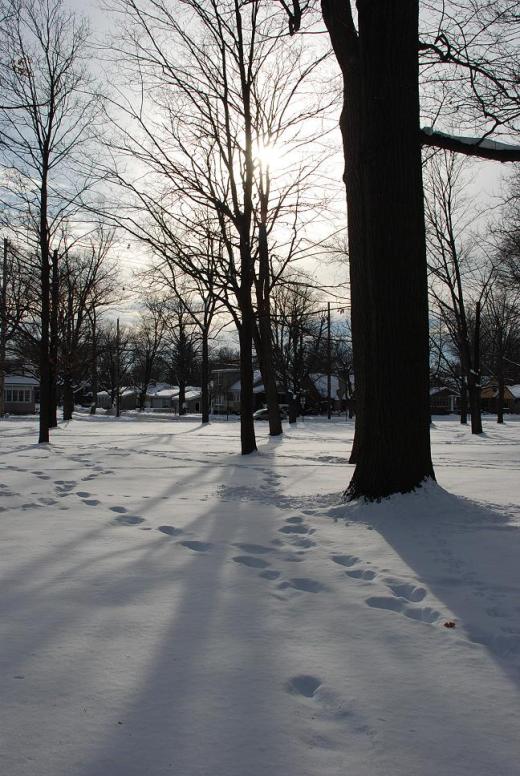
Holland Michigan, taken Dec. 8th

The calendar may still say it is fall, but here in Holland Michigan it sure feels like Winter.  In Florida I have always said that it did not feel like Christmas until I saw ballet dancers on stage, with fake snow falling, dancing to Tchaikovsky’s Waltz of the Snowflakes in the Nutcracker ballet.  With a very real 18 inches of snow on the ground, it is easier to get into the Christmas spirit.

This is what it looked like driving today in Holland.

Old Man Winter

The sun came out for a short while on Dec. 9th

Posted in Michigan, Seasons & Holidays | Leave a comment

Affordable Art

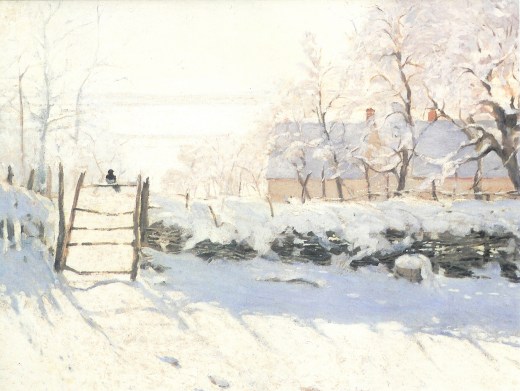
Claude Monet, The Magpie. A Christmas card sent by my cousin Nancy.

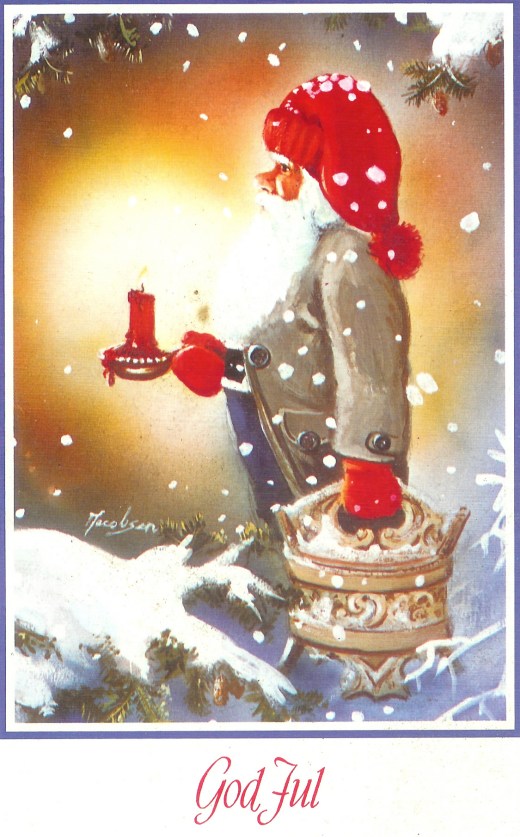
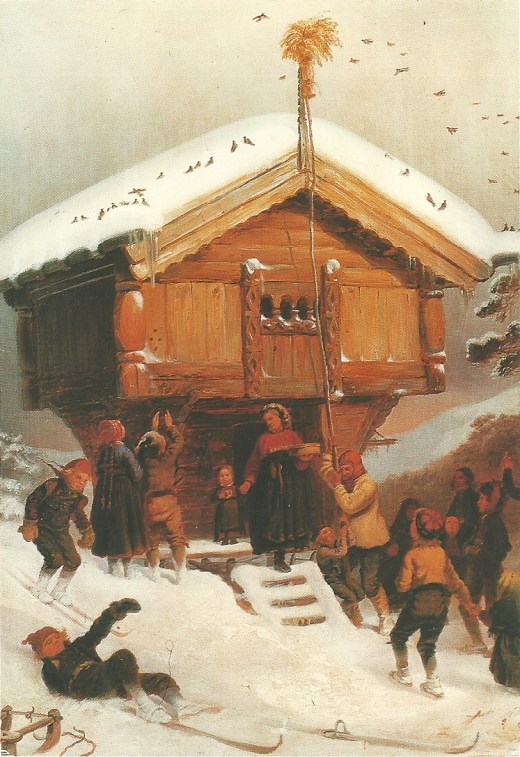
In an earlier post, I wrote that my family is a card family.  We like to send and receive beautiful cards.  I like to think of cards as affordable art, a way to put a smile on someone’s face and brighten their day. I keep most of the cards I receive, storing them in pretty hat boxes.  The Christmas cards I keep in a separate box, so I can look at them each year at Christmas.  Having aunts, uncles and cousins in Scandinavia, I receive Christmas cards every year from Norway and Sweden.  They are some of my favorites.  My parents kept up Scandinavian Christmas traditions, so we grew up familiar with Sweden’s Tomten and Norway’s Nisse Man.  They feature prominently in the Scandinavian Christmas cards, just like Santa Claus does in the US.  I have selected a sampling of some wonderful cards from past Christmases.  I hope you enjoy them.

Swedish Christmas card, by Jenny Nystrom

Norwegian Christmas card, by Johnnie Jacobsen

A Christmas card from Sweden


A Christmas card sent by my Aunt Ruth in Norway

Swedish card, by Ingvor Holmqvist

Norwegian Christmas card


Norwegian Christmas card, Adolf Tidemand; detail from "Juleskikk"

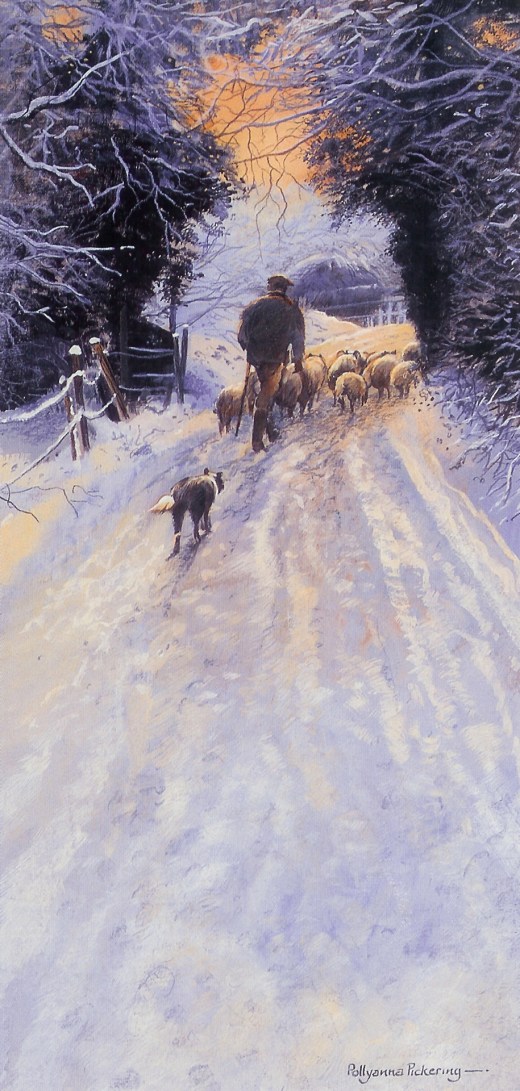
A Christmas card; "From the Hill" by Pollyanna Pickering

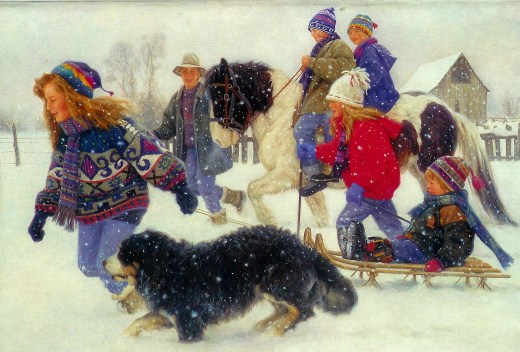
Christmas card by Robert Duncan

By Molly Brett

A card from Sweden

Norwegian Christmas card by Johnnie Jacobsen

Christmas card printed in England

By Brian Paterson

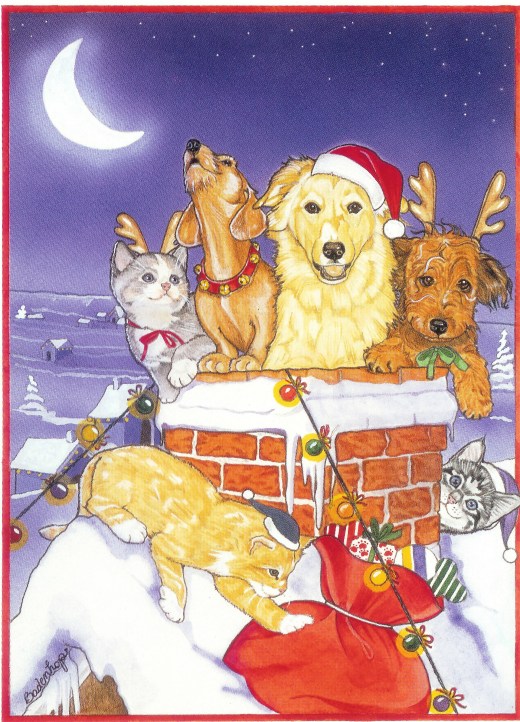
Card by Mary Badenhop

Posted in Seasons & Holidays | Leave a comment

First Snow

December, and winter, have arrived in western Michigan.  This morning was the first time I have used an ice scraper on a vehicle for 25 years.  It has been snowing since late last night, and this morning we had several inches of accumulation.  The people of Michigan take the snow in stride, living in a perpetual state of preparedness.  Holland, I had heard, has heated sidewalks, so I made the one mile trip to the downtown area to check it out.  It’s true.  The main street and the sidewalks were clear of snow and the outdoor fireplace was lit.

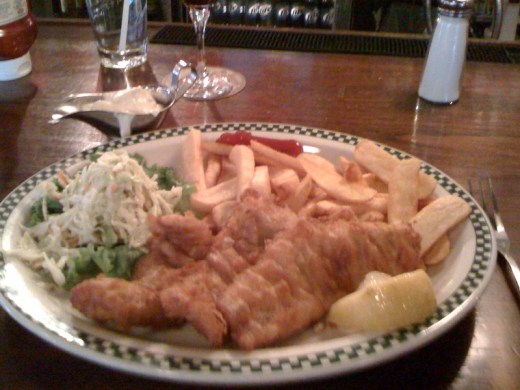
There is no better time to visit your local pub than when it is cold and snowing outside.  Holland is home to a very cozy and authentic Irish pub called The Curragh.  Their fish and chips are the best I have had in the states, and they play wonderful Irish music.  I had my usual, fish and chips.  It was a great way to spend a wintry afternoon.

The Curragh, Holland’s Irish Pub

Posted in Michigan, Seasons & Holidays | 1 Comment

Thanksgiving

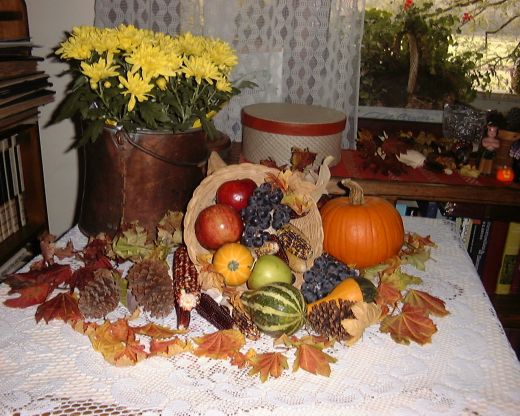
Halloween may have been my favorite holiday as a child, but as an adult, Thanksgiving holds that title.  I love the colors of fall and the idea of gathering with friends and family for a good meal and to give thanks.  Thanksgiving lacks the stress and hysteria of Christmas, and is so much more relaxed.  My family is a “card family”, so thanksgiving cards have been a favorite too. 

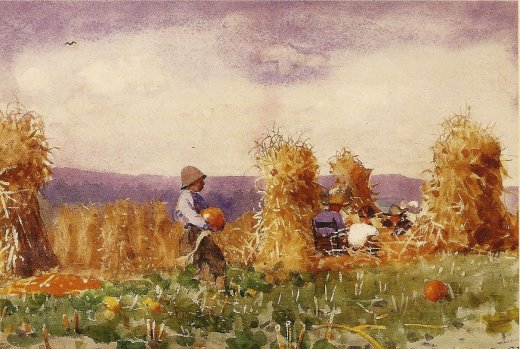
The Pumpkin Patch, Winslow Homer 1878

 For the past 24 years my Thanksgivings have been spent in Florida.  Being a non-turkey eater, my Thanksgiving dinner tradition has been Stone Crab claws.  Stone Crab claws are scarce in Michigan, but I think I may have found a good alternative in Jonah Crab claws from the north Atlantic.  We will see.

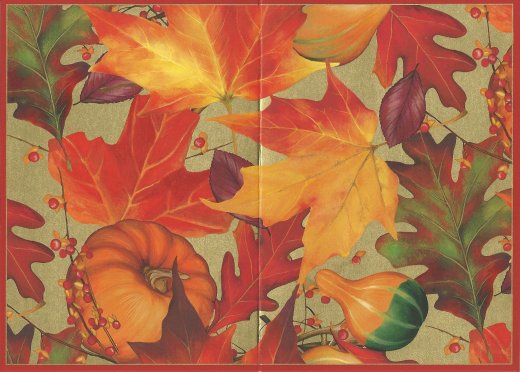
Jan Bergerlind

 Every family has their own Thanksgiving traditions.  But what is the origin of Thanksgiving, and how did it become a national holiday?  I go back to Panati’s for the answer.  Here is what Panati’s has to say:

The 102 Pilgrims who sailed on board the Mayflower, fleeing religious oppression , were well acquainted with annual thanksgiving day celebrations. The custom was ancient and universal.  The Greeks had honored Demeter, goddess of agriculture;  the Romans had paid tribute to Ceres, the goddess of corn;  while the Hebrews had offered thanks for abundant harvests with the eight-day Feast of Tabernacles.  These customs had never really died out in the Western world.

The Pilgrims, after a four-month journey that began in Holland, landed at Plymouth on December 11, 1620.  Confronted with severe weather, and a plague that killed hundreds of local Indians, they had by the fall of 1621 lost forty-six of their own members, mainly to scurvy and pneumonia.  The survivors, though, had something to be thankful for.  A new and bountiful crop had been harvested.  Food was abundant.  And they were alive, in large part thanks to the assistance of one person:  an English-speaking Pawtuxet Indian named Squanto, who was to stay by their side until his death two years later.

As a boy, Squanto had been captured by explorers to America and sold into slavery in Spain.  He escaped to England, spent several years working for a wealthy merchant, and, considerably Anglicized, returned to his native Indian village just six months before the Pilgrims landed.  He had helped them build houses and to plant and cultivate crops of corn and barley.  In the fall of 1621, the Pilgrims elected a new governor, William Bradford, and proclaimed a day of thanksgiving in their small town, which had seven private homes and four communal buildings.

According to Governor Bradford’s own history, Of Plimoth Plantation, the celebration lasted three days.  He sent “four men fowling” and the ducks and geese they brought back were added to lobsters, clams, bass, corn, green vegetables, and dried fruit.

The Pilgrims invited the chief of the Wampanoag tribe, Massasoit, and ninety of his braves, and the work of preparing the feast  –  for ninety-one Indians and fifty-six settlers  –  fell to only four pilgrim women and two teenage girls.  (Thirteen women had died the previous winter.)

The first Thanksgiving Day had all the elements of modern celebrations, only on a smaller scale.  A parade of soldiers, blasting muskets and trumpeting bugles, was staged by Captain Myles Standish, later to be immortalized in Longfellow’s “The Courtship of Miles Standish.”  The ninety Indian braves competed against the settlers in foot races and jumping matches.  And after the Indians displayed their accuracy with bow and arrow, the white men, with guns, exhibited their own breed of marksmanship.

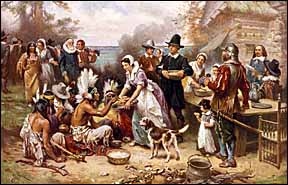
Detail from Jennie Augusta Brownscomb's "The First Thanksgiving" 1914

So the celebration from 1621 sounds familiar, especially that part about the four women doing all the cooking.  My Stone Crab claws aren’t that far off from the original lobster, and I too will have fresh corn.  I will also watch a parade this upcoming Thanksgiving Day, but it will be held by Macy’s, not soldiers.

The Pilgrim Thanksgiving dinner included the following:

Despite popular legend, two major staples of a modern Thanksgiving meal – turkey and pumpkin pie – may not have been enjoyed at the Pilgrims’ banquet.  Though Governor Bradford sent “four men fowling”, and they returned with “a great store of wild Turkies” there is not proof that the catch included the bird we call a turkey.  Wild turkeys did roam the woods of the Northeast, but in the language of the seventeenth-century Pilgrims, “turkey” simply meant any guinea fowl, that is, any bird with featherless head, rounded body, and dark feathers speckled white.

It is certain, however, that the menu included venison, since another Pilgrim recorded that Chief Massasoit sent braves into the woods, who “killed five Deere which they brought to our Governour.”  Watercress and leeks were on the table, along with bitter wild plums and dried berries, but there was no apple cider, and no milk, butter, or cheese, since cows had not been aboard the Mayflower.

And there was no pumpkin pie.  Or bread as we’d recognize it.  Stores of flour from the ship had long since been exhausted and years would pass before significant quantities fo wheat were successfully cultivated in New England.  Without flour for a pie crust, there could be no pie.  But the Pilgrims did enjoy pumpkin at the meal – boiled.

The cooks concocted an ersatz bread.  Boiling corn, which was plentiful, they kneaded it into round cakes and fried it in venison fat.  There were fifteen young boys in the company, and during the three-day celebration they gathered wild cranberries, which the women boiled and mashed into a sauce for the meal’s meats.

The following year brought a poor harvest, and boatloads of new immigrants to house and feed;  the Pilgrims staged no Thanksgiving feast.  In fact, after that first plentiful and protracted meal, the Pilgrims never regularly celebrated a Thanksgiving Day.

But we do regularly celebrate this day, annually in fact.  It was in 1789 that President George Washington first proclaimed a national Thanksgiving Day, but the executive order was not carried out.

The establishment of the day we now celeberate nationwide was largely the result of the dilligent efforts of magazine editor Sarah Josepha Hale.  Mrs. Hale started her one-woman crusade for a Thanksgiving celebration in 1827, while she was editor of the extremely popular Boston Ladies’ Magazine.  Her hortatory editorials argued for the observance of a national Thanksgiving holiday, and she encouraged the public to write to their local politicians.

When Ladies’ Magazine consolidated with the equally successful Godey’s Lady’s Book of Phildelphia, Mrs. Hale became the editor of the largest periodical of its kind in the country, with a readership of 150,000.  Her new editorials were vigorous and patriotic, and their criticism of dissenters was caustic.

In addition to her magazine outlet, over a period of almost four decades she wrote hundreds of letters to governors, ministers, newspaper editors, and each incumbent President.  She always made the same request:  that the last Thursday in November be set aside to “offer to God our tribute of joy and gratitude for the blessings of the year.”

By 1863, the Civil War had bitterly divided the nation into two armed camps.  Mrs Hale’s final editorial, highly emotional and unflinchingly patriotic, appeared in September of that year, just weeks after the Battle of Gettysburg, in which hundreds of Union and Confederate soldiers lost their lives.  In spite of the staggering toll of dead, Gettysburg was an important victory for the North, and a general feeling of elation, together with the clamor produced by Mrs. Hale’s widely circulated editoral, prompted President Abraham Lincoln to issue a proclamation on October 3, 1863, setting aside the last Thursday in November as a national Thanksgiving Day.

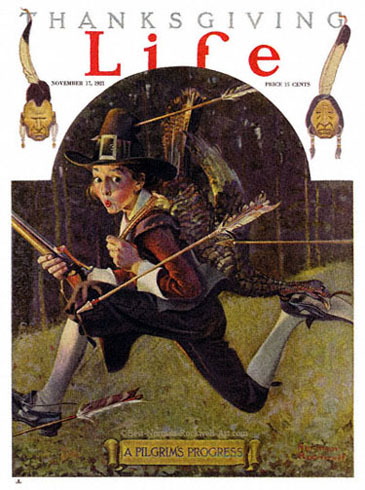
Life cover by Norman Rockwell

I propose that when you sit around the table this year, raise a glass to Mrs. Hale in thanks for her efforts in getting a national Thanksgiving Day on the calendar.

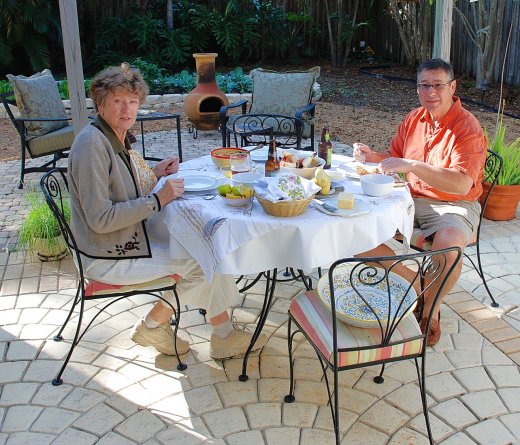
Thanksgiving last year at my house in Florida with my mother and friend Augie.

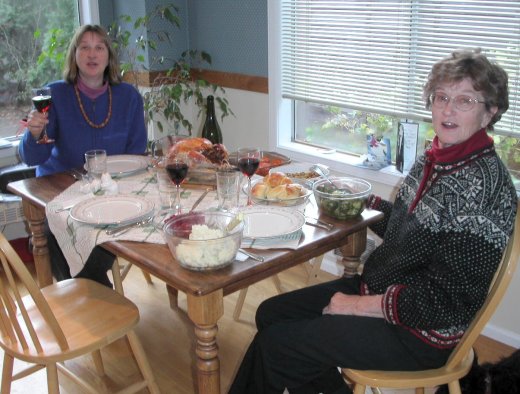
Thanksgiving 2008 at my sister Katy's house in Oregon, with friends and family.

Thanksgiving 2006 at my sister Becky's house in Seattle.

Posted in Seasons & Holidays | Leave a comment

Maine Favorites

I spent another few days in Maine this November.  Tourist season is definitely over, evidenced by the cool and cloudy weather.  What do you do in Maine when it’s cold?  We visited our favorite places, discovered a few new ones and tried a mug of steaming hot spiced mead.  Teresa, Joanie and I enjoyed another girls day out, beginning with our favorite antique store, Antiques on Nine, in Kennebunk Lower Village.  This is a wonderful place full of antiques, unusual items, decorating ideas, and much more.  I always manage to find something I like, Teresa bought a long wooden mould used in the past for rising bread, and Joanie has her eye on an old dining room table for the new house she and Steve are building. 

Preparing for the cold weather!

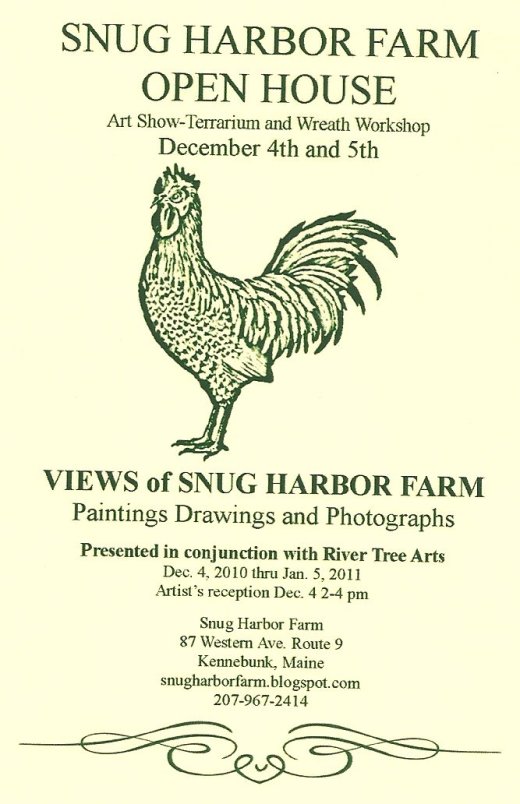
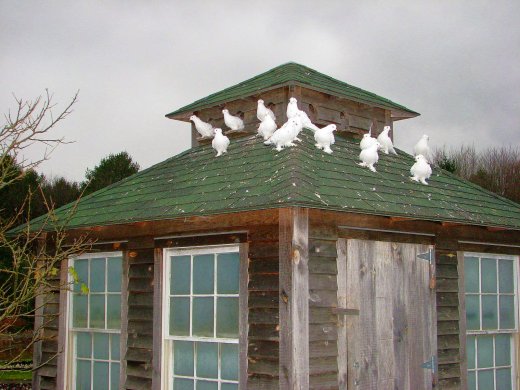
 We stopped by Snug Harbor Farm, a landscape and pottery store, that is home to an interesting collection of chickens, ponies, pigeons, plants, and statues.  For lunch we chose The Maine Diner in Wells, a popular local eatery.  No trip to Kennebunkport is complete without a stop at Return to Cinda, the best clothing consignment shop in the area.  This trip netted me a fabulous black leather jacket for a more than reasonable price (see photo above).

Snug Harbor Farm (Photo Credit Teresa Favazza)


Pigeons at Snug Harbor Farm. (Photo Credit Teresa Favazza)

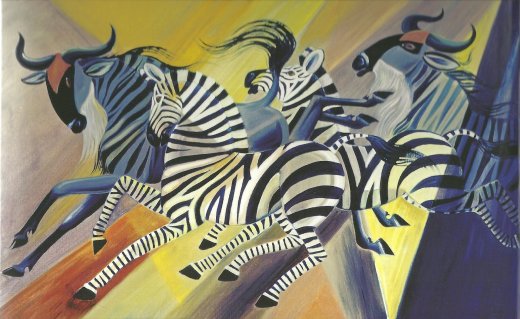
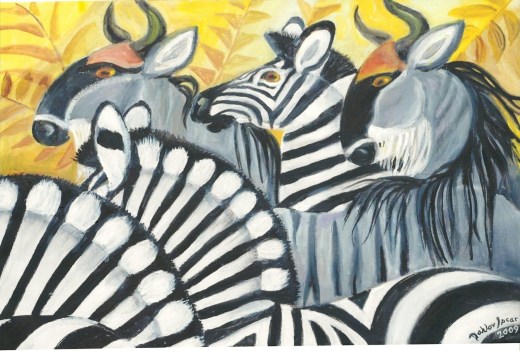
At Teresa’s suggestion, on my solo day I toured the Portland Museum of Art.  The exhibit I specifically wanted to see was the Debating Modern Photography, The Triumph of Group f/64.  It was a very interesting exhibit that anyone who has ever picked up a camera would enjoy.  But my true discovery came when I browsed the rest of the museum.  On the third floor I found a painting by Dahlov Ipcar.  The painting is called Blue Savanna, and I fell in love with it.  The museum shop sold me a notecard with the image, and then brought out a book by Carl Little, The Art of Dahlov Ipcar (Down East, 2010).  The book went home with me that afternoon, and I became a Dahlov Ipcar fan.

Wildebeests and Zebras, by Dahlov Ipcar. Cover painting from The Art of Dahlov Ipcar, by Carl Little.

Dahlov Ipcar is a Maine artist, and although new to me, she is not new to Maine.  Dahlov Ipcar was born in 1917 and has lived in Maine since 1923.  She currently resides in Georgetown Island, Maine.  Her artwork, colorful paintings of animals, is available at Frost Gully Gallery.  The following day Teresa and I drove up to the gallery in Freeport, and met and spoke with Thomas Crotty, the gallery director, and an artist himself.  The gallery has a half dozen or so paintings by Ipcar offered for sale.

Amboseli - Kudo and Wild Dogs, from The Art of Dahlov Ipcar.

Ipcar's Golden Nyika

Dahlov Ipcar painting offered for sale at the Frost Gully Gallery

Associated Websites:

Snug Harbor Farm, www.snugharborfarm.blogspot.com

The Portland Museum of Art, www.portlandmuseum.org

The Maine Diner in Wells,  http://www.mainediner.com/

Posted in U.S.A. | 1 Comment

Sicily, an offer I couldn’t refuse

From the Palermo museum

When my sister suggested that we visit Sicily, I couldn’t say no.  Italy is a favorite destination for thousands of tourists every year, and  I’ll never tire of visiting the mainland, but fewer travelers make it to Sicily.  That is a misfortune.  My sister and I spent a week in Sicily in May 2001, a first time visit for both of us.  Our trip began in Rome, continued with a drive to and a few days stay in Florence, after which we returned to Rome.  From Rome we flew into Palermo to start the Sicilian portion of our trip.  For a few days we toured Palermo, including the Museo Archeologico Regionale, the Norman Palace (exterior only, it was closed on May 1st) and several churches.  We were in Palermo on May 1st, Italy’s Labor Day and a national holiday.  We stumbled upon a political rally, and although we didn’t understand what they were shouting and chanting, we had no doubt it was a protest.  In Sicily we found that most of the local people did not speak English.  It wasn’t a problem for us, we were equipped with an Italian pocket dictionary, knew a few important words such as vino, and found that hand signals go a long way.  We thought is was fun and exciting to be in a place where fewer people traveled.  One evening we did end up with a tuna pizza by mistake, and another night we had insalata di polpo (a salad of octopus tentacles), but all in all, we got by without speaking English.  It didn’t take us long to discover the specialty of the area, pesce spada (swordfish), and it was the best swordfish we ever tasted.

In the Palermo Museum
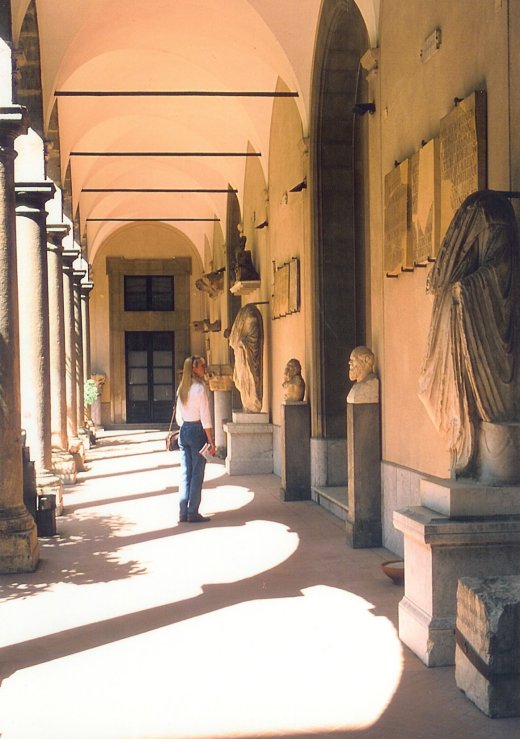
In Palermo (Photo Credit: Rebecca Nielsen)

The Monreale Cathedral, Sicily
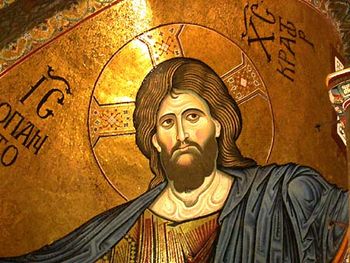
 

In Palermo we picked up our rental car and began our tour of the island.  Just getting out of Palermo was a struggle.  The road signs were nonexistent and we ended up driving around the city for a while trying to find our way out of it.  We finally found our way and drove southbound, up into the hills.  The first town we encountered was Monreale.  We toured the beautiful Monreale Cathedral (above), built in the 12th century. The interior is gorgeously decorated with golden mosaics and a huge Byzantine looking “Christ Pantocreator” gazing from the apse.

The Monreale Cathedral

My sister and me in the Monreale Cathedral

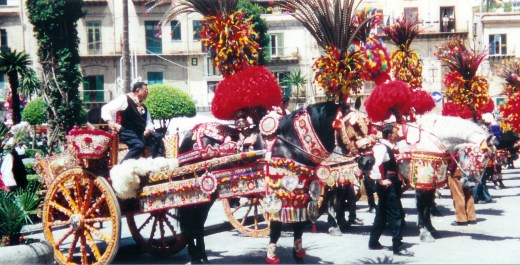
We also happened upon a colorful street parade with horses in plumed harnesses pulling carts.  The narrow streets were crowded with people, carts and horses.  It was wild and confusing, especially since we had no idea what was going on, so we parked the car and joined the party.  The Sicilian horsecart is the image-symbol of Sicily, with the collection in Monreale known as one of the best and most beautiful on the island.

When we finally exited the town, we had to do the tourist round-about (around and around and around while we tried to figure out which way to go), in an attempt to find our intended route.  The road signs were few and far between.

Our Sicilian adventure continued with a tour of an ancient Greek temple at Segesta.  It was quite warm, but we did the hike anyway and were glad for it.  It is a beautifully well-preserved temple and amphitheatre.

Segeste
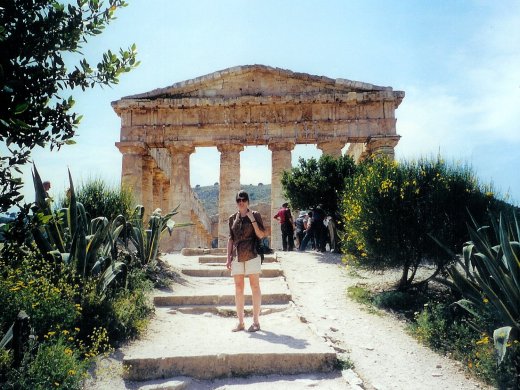
My sister Rebecca in front of the ruins.
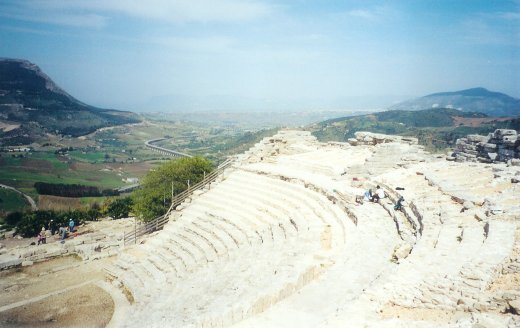
The amphitheatre at Segesta

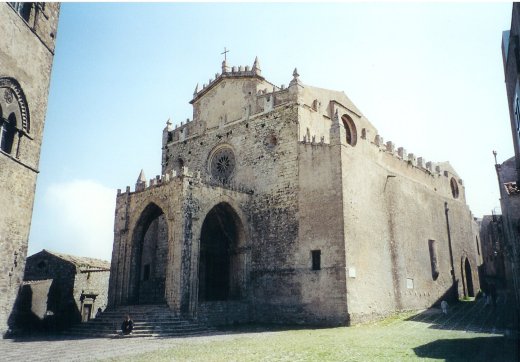
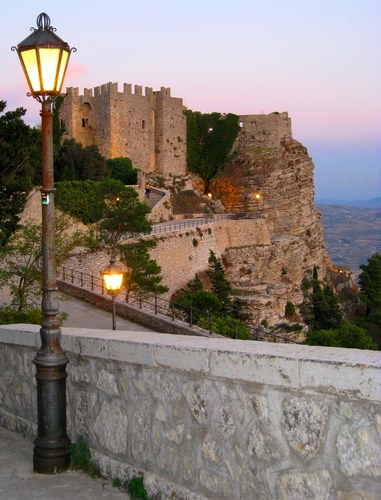
Our first night outside of Palermo was spent in Erice.  Erice is an ancient town sitting about 2000 feet above sea level, reached by a winding and steeply climbing road.  Most of the roads in the small town are too narrow for cars, so we walked around to explore.  We had a dinner of Pesce Spada and a local red wine.  The next day we continued our walking tour of the town, including the Pipoli Castle and the church.  We were lucky in that it was sunny and clear and the view was breathtaking.

Erice castle at dusk (Photo from http://www.Panoramio.com)

Erice, Sicily

Church in Erice

We left Erice headed for Agrigento, continuing our circumnavigation of the island.  My sister drove while I did the navigating.  The driving was hazardous, and my sister’s daily preparation was at least two cups of strong espresso prior to taking the wheel.  It was just like Florence, where it seemed traffic laws are more of a guideline than actual rules.  There is only one other country I have visited where the driving was more terrifying than Sicily, and that was Ecuador.  On one stretch of a two lane road in Ecuador, there were three vehicles abreast speeding towards my brother and me in our rental car. 

Ruins along the southern coast of Sicily (above and below).

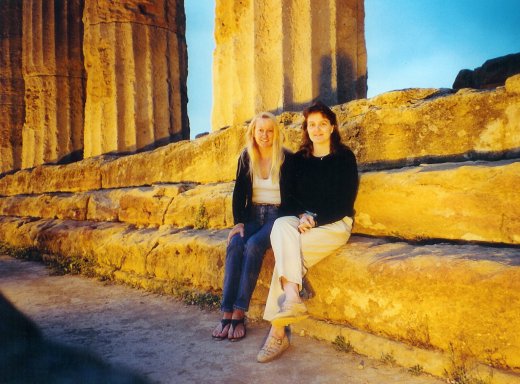
The city of Agrigento, on the southern coast of Sicily, was founded by the Greeks in 6th century B.C.  Its Valley of the Temples is a UNESCO World Heritage Site.  We toured the ruins, which at night were beautifully lit and visible for miles.

Agrigento

We left Agrigento with Piazza Armerina and the Villa Romana del Casale as our destination.  The Villa, a Roman retreat from the 4th century AD, is a UNESCO World Heritage Site.  We arrived early in the morning, and were the first visitors at the site.  That made a huge difference in our enjoyment of the frescoes, no crowds.  The colorful mosaics have been uncovered and restored, an ongoing project.  In the photo below, you can see my sister on the observation platforms.  
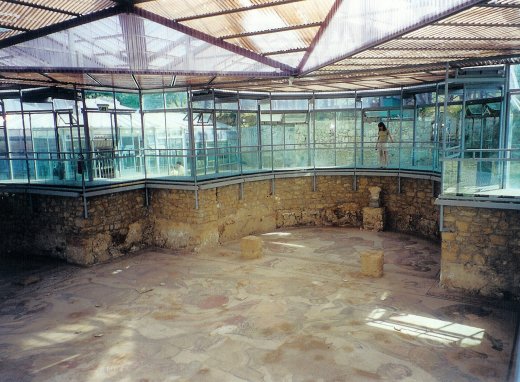
The Villa Romana del Casale in Piazza Armerina.
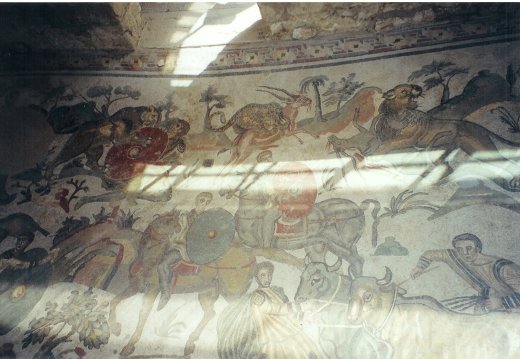
Mosaics in the Roman Villa

A mosaic depicting bikini clad women playing sports.

Because we arrived so early in the morning, without the crowds, we met and spoke with one of the Italian restoration workers.  He showed us around the site, behind the ropes even, and splashed a bucket of water over one of the mosaics to show us how vibrant the colors looked when wet.  The Villa was truly amazing, and I hope to return one day to see it again. 
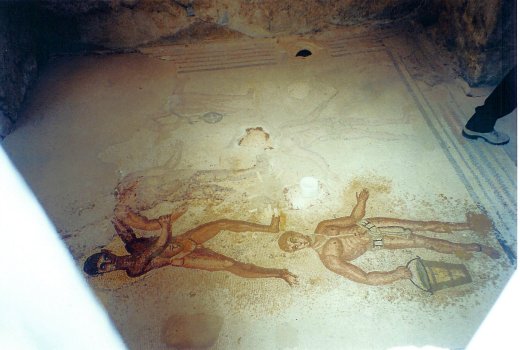
The mosaic colors were more vibrant when wet.
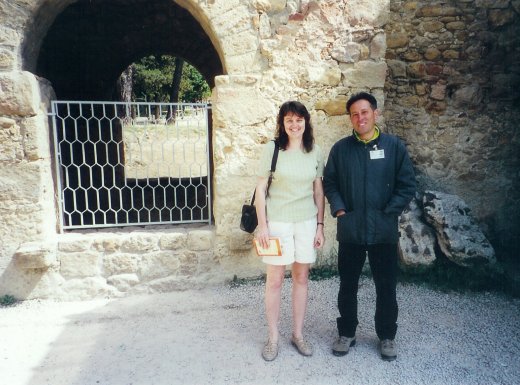
Our personal guide at the Villa.

From Piazza Armerina we drove to Caltagirone, known for its pottery and ceramics.  Everything in the town, including the bridges and stairs, was decorated with tiles.  We enjoyed some very good shopping in Caltagirone, purchasing beautiful ceramic plates and bowls.

The stairs in Caltagirone

Me on the Caltagirone stairs. (Photo Credit: Rebecca Nielsen)

Closeup of the stairs. (Photo Credit: Rebecca Nielsen)

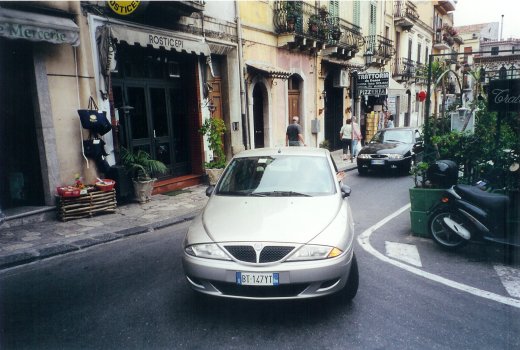
 The last city on our self-guided tour of Sicily was Taormina.  We had a hotel reserved in Taormina, and also planned to return the rental car there.  We drove through the town on the very narrow streets, but could not find our hotel.  We turned around and drove back through the small town, again missing our hotel.  To head off the encroaching feelings of exasperation and bewilderment, we parked the rental car just outside of town and hailed a cab.  The cab drove straight to the walking mall in the middle of town, and backed down the street which was marked with a “no vehicles” sign, scattering pedestrians.  It was no wonder we missed the hotel, and never would have found it on our own.

Our rental car, driving through the small town of Taormina.
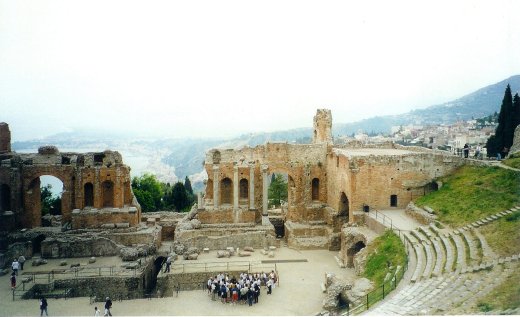
The Greco-Roman amphitheatre in Taormina.

We spent several days in Taormina, enjoying the historical sites, wonderful food and abundant shops.  Taormina is built onto a steep slope with many small streets, narrow stairways, picturesque walking areas, tiny shops, and very good restaurants.  We walked through the Taormina amphitheatre and saw Mount Etna, Europe’s largest active volcano, in the distance.  We were in Taormina in May 2001.  Mt. Etna erupted soon after we left.  Between July 17th and August 9th, Mt. Etna’s eruptions damaged tourist facilities and threatened the town of Nicolosi. 

A ceramic shop in Taormina.

On one of our days in Taormina, we took the gondola ride 200 meters down to the rocky shoreline below, to see the beach and test the water temperature.  Our last dinner in Taormina was fantastic, a leisturely meal overlooking the entire area with little globe shaped ceramic candle holders lined up on the steps of the town.  (I purchased one of those candle holders and brought it back with me, and still have it today).  Many of the homes and buildings had tiles set into their side.  I hand-carried a set of 6 tiles back to the US and had them installed on my own home.  They are the perfect souvenir, and have now been on my home for nearly 10 years.  We left Sicily from an airport close to Taormina, bound for Rome.
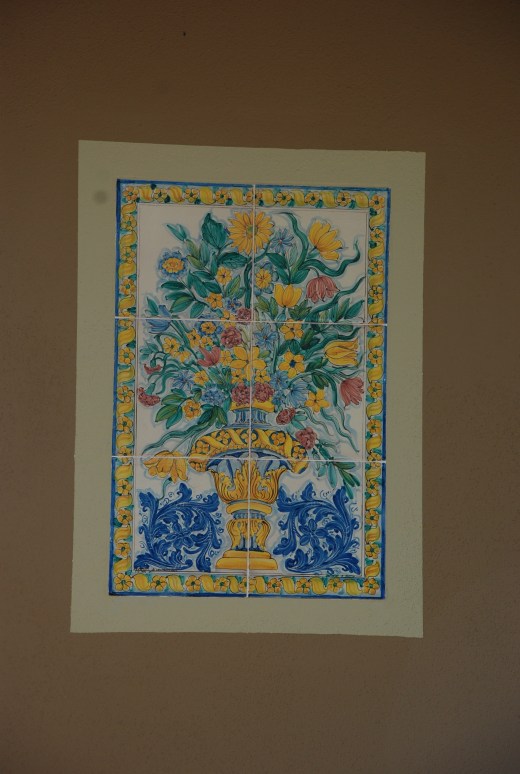
The Taormina tiles I brought back and installed on my home.

The Coliseum in Rome, prior to leaving for Sicily.
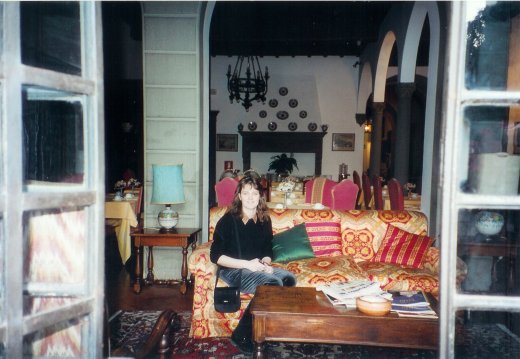
My sister at the Monna Lisa Hotel, Florence (www.monnalisa.it)

Me at the Monna Lisa, Florence.

Posted in Italy | Leave a comment

October Wind Storm

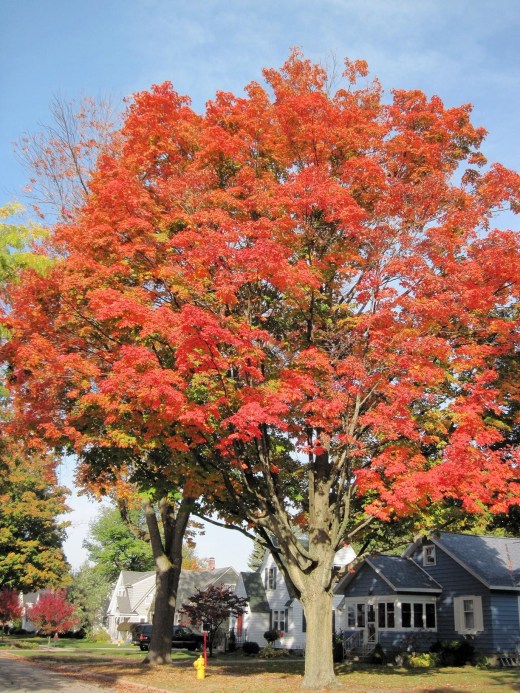
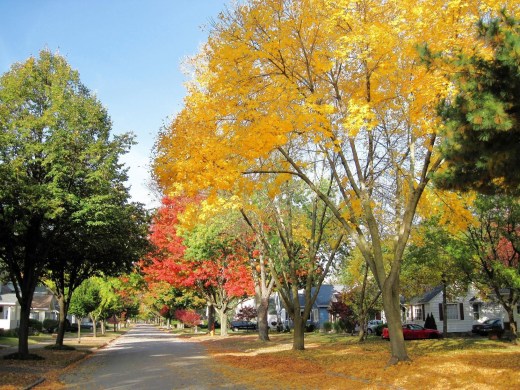
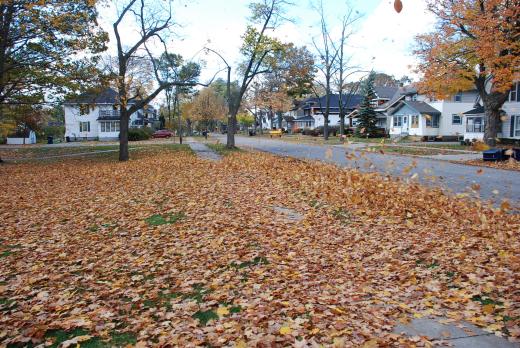
Just a few days ago, the trees were full of colorful leaves.  The colors have been so vibrant, I’ve almost run off the road looking at the beautiful trees, even in my own neighborhood.  In the park across from where I am living, the trees have turned from green, to yellow, to orange and red.

A tree in Holland, Michigan.


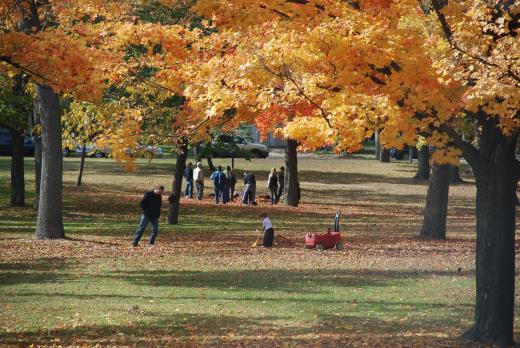
A few days ago in the park

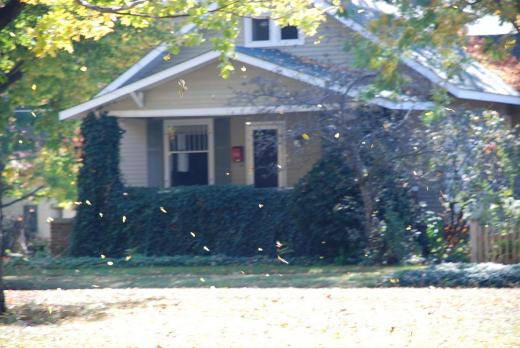
Today we have a high wind warning, and the last of the leaves are flying off the trees.  I tried to catch some of the leaf movement in photographs.  With the winds today gusting up to 56 mph, tomorrow there will be few leaves left on the trees. 

A miniature leaf cyclone.

The day after the wind storm, Oct. 27th, it is still pretty windy.  The trees are nearly stripped bare of leaves.

All the leaves are gone

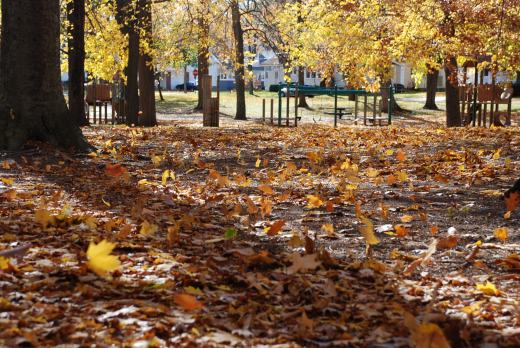
The same trees taken two weeks ago on Oct. 11th

Gently falling leaves two weeks ago.

Posted in U.S.A. | Leave a comment

Halloweens Past

Halloween 1966. I was 3 1/2 and a lamb that year. My brother, behind the Bugs Bunny mask, had just turned 2.

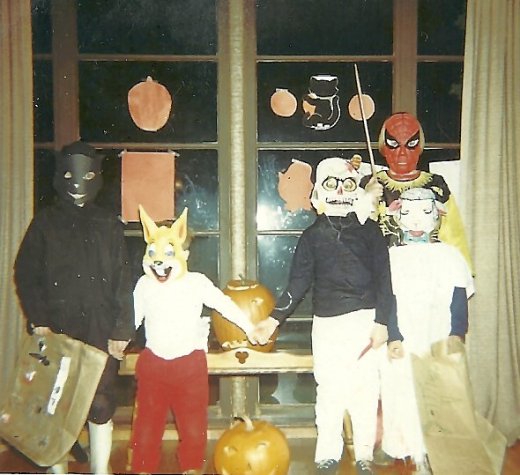
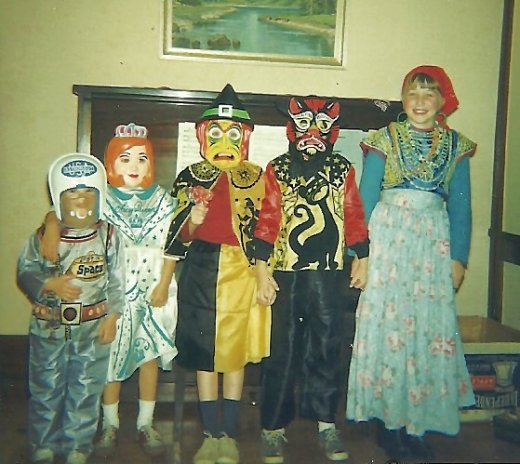
With the approach of Halloween, my thoughts go back a few years to when my sisters and brother and I were little.  As I said in my earlier post Welcome Autumn, Halloween was one of our favorite holidays.  There is no surprise in that.  Parent sanctioned rowdiness combined with large quantities of sugar is any child’s dream.  When we were little, in the late 1960s and early 1970s, parents still let their kids trick-or-treat without supervision, roaming the neighborhood in groups and having the time of our lives.  We created our own trick-or-treat bags from those purple fruit and vegetable bags from the grocery, complete with handles, using crayons to decorate the bags with pumpkins, bats, skeletons, ghosts, what have you.  We always carved pumpkins and my mother would document all of our activities with photographs.  Thanks to my mother’s orderly photo albums that go back decades, and the modern scanner, I have been able to electronically preserve the photos of our childhood and revel in the fond memories they recall.  I feel we grew up in a wonderful time and had an especially wonderful childhood.  I give my parents full credit for this, and only wish it hadn’t taken thirty years to finally thank them for it.

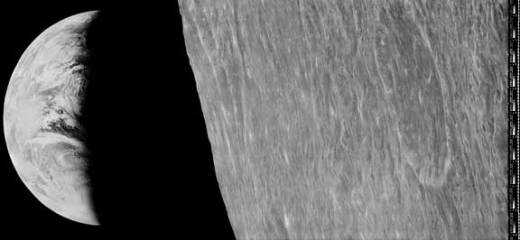
Halloween 1967. I was a princess that year, and my brother was an astronaut. This was a year after the Lunar Orbiter, and before the first moon walk in 1969.

Earthrise, taken from the Lunar Orbiter in 1966.

 I have very specific and vivid memories of the moon walk of 1969.  My parents gathered us around the television and had us watch as Neil Armstrong made history.  I was six at the time.

Nov. 1st, 1970. All Saints' Day. The five of us with our carved pumpkins. Left to Right: My sister Rebecca, brother Nick, sister Kristine, myself, and my oldest sister Katrina.

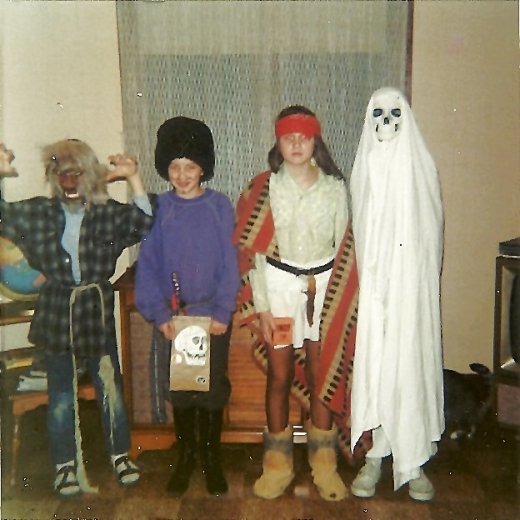
Halloween 1970. I was seven years old and a ghost that year. My oldest sister's friend Marin was with us that year.

My book for reference when it comes to holidays is Panati’s Extraordinary Origins of Everyday Things, by Charles Panati (1989).  Panati tells us that Halloween, All Hallows Eve, dates back to the 5th Century B.C., where dressing up ghoulishly and acting mischievously were done in deathly earnest, and by adults, not children.

Halloween 1972. I was a Cossack that year.

 According to Panati’s:

Named “All Hallows Eve”, the festival was first celebrated by the ancient Celts in Ireland in the fifth century B.C.  On the night of October 31, then the official end of summer, Celtic households extinguished the fires on their hearths to deliberately make their homes cold and undesirable to disembodied spirits.  They then gathered outside the village, where a Druid priest kindled a huge bonfire to simultaneously honor the sun god for the past summer’s harvest and to frighten away furtive spirits.  The Celts believed that on October 31, all persons who had died in the previous year assembled to choose the body of the person or animal they would inhabit for the next twelve months, before they could pass peacefully into the afterlife.  To frighten roving souls, Celtic family members dressed themselves as demons, hobgoblins, and witches.

Halloween made its way to the US with Irish immigrants.  The first jack-o’-lanterns were large turnips hollowed out and carved with a demon’s face.  In the new world, turnips were few and far between, but pumpkins were numerous.  I love to read the origins of what we do today, and speculate as to how long the traditions will remain.  I still enjoy Halloween, although I don’t dress up every year.  I do carve a pumpkin annually and my neighborhood gets a lot of trick-or-treaters, which is fun.  Having no children myself, the dressing up duties fell to my dog, who suffered the indignity with true character and charm.  The cats remain costume free.  That’s a battle I am sure to lose.

Bentley was a clown for many years.

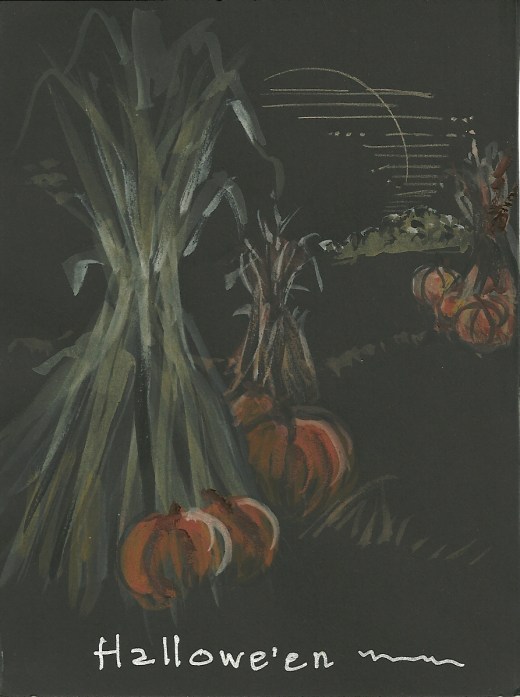
The handmade Halloween card my mother sent this year.


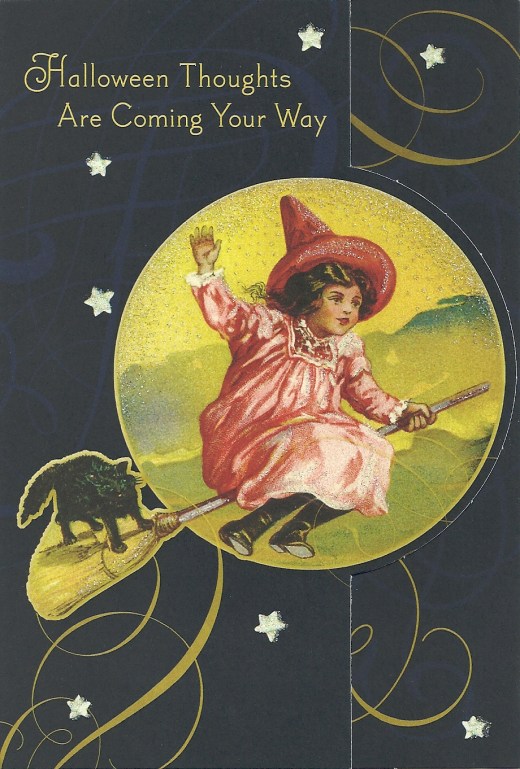
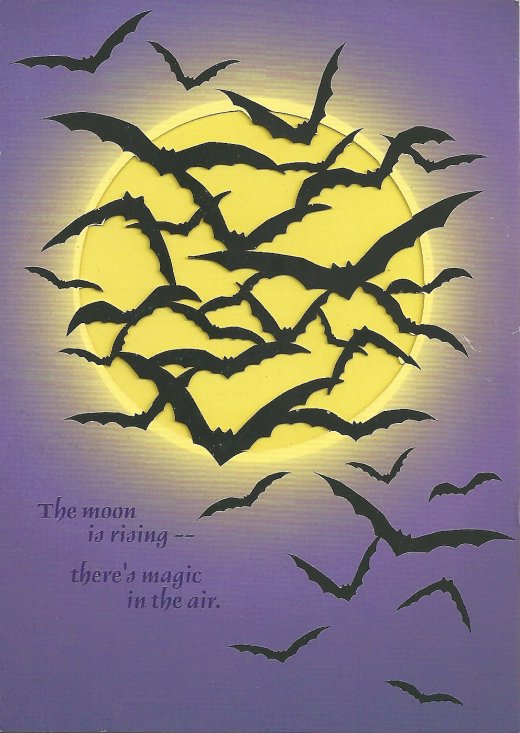
Favorite Halloween Cards

Posted in Childhood memories, Seasons & Holidays | Leave a comment

When I was 6; a trip down Nostalgia Lane

The Tall Book of Make-Believe

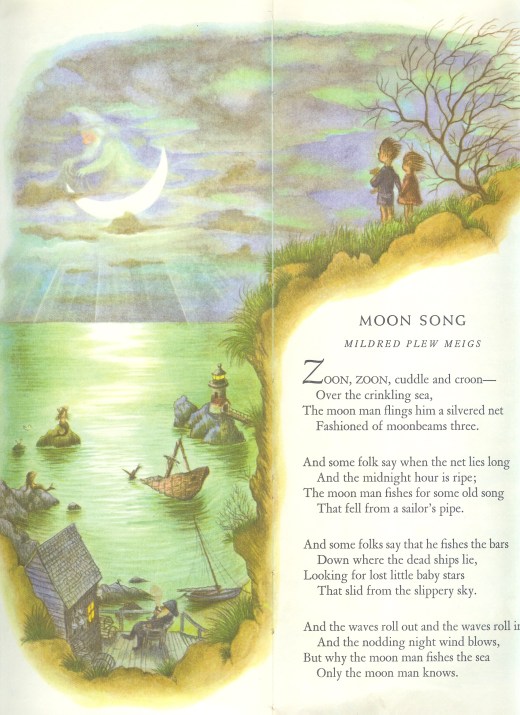
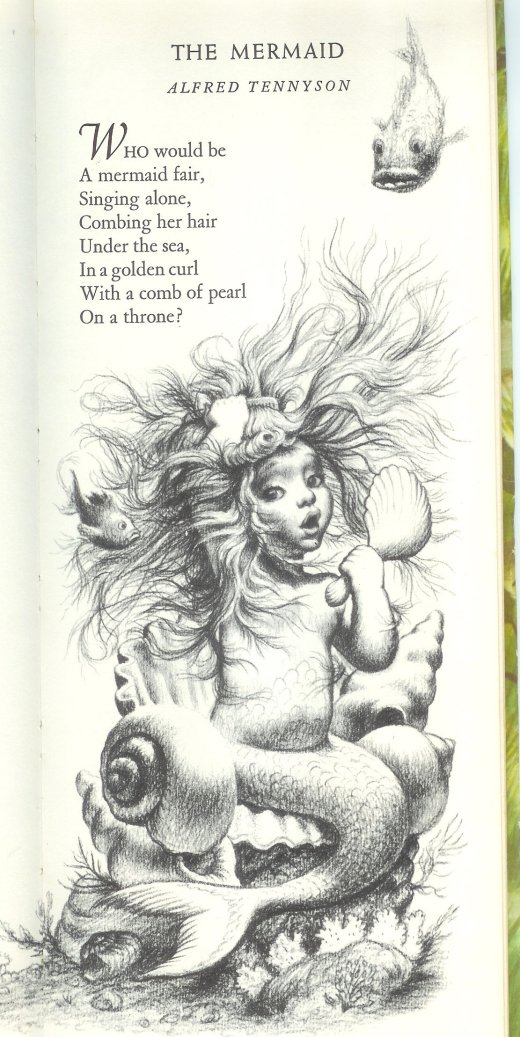
On my 6th birthday, my grandmother (whom we called Goochie) gave me The Tall Book of Make-Believe.  Over 40 years later I still have that exact copy, with my grandmother’s birthday wishes inscribed in the front.  It has been one of my all time favorite books and I love it as much today as I did when I was six.  The poems and stories are accompanied by beautiful illustrations by Garth Williams which held me spellbound when I was little.  Unfortunately the book is now out of print, however I did find four used copies for sale on the internet.  My copy has all the wear and tear you might expect from a book lovingly read over and over again.

The inside cover

Moon Song

The Land of Counterpane

Wynken, Blynken, and Nod

The Mermaid

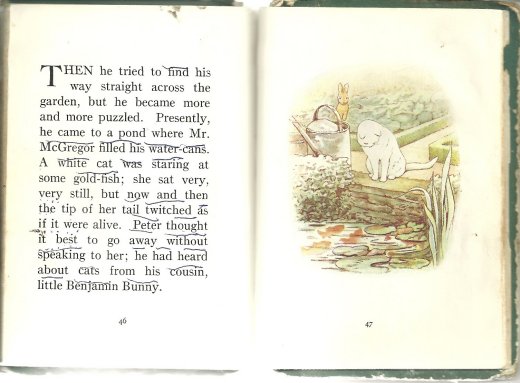
The very first book ever given to me specifically, sometime when I was three, of which I have a strong memory, and which I also still have today, was a copy of The Tale of Peter Rabbit.  It is battered now, but still beloved.

My very old copy of The Tale of Peter Rabbit.

The Tale of Peter Rabbit by Beatrix Potter. Frederick Warne & Co., Inc. New York.

Flopsy, Mopsy, and Cotton-tail went down the lane to gather blackberries.

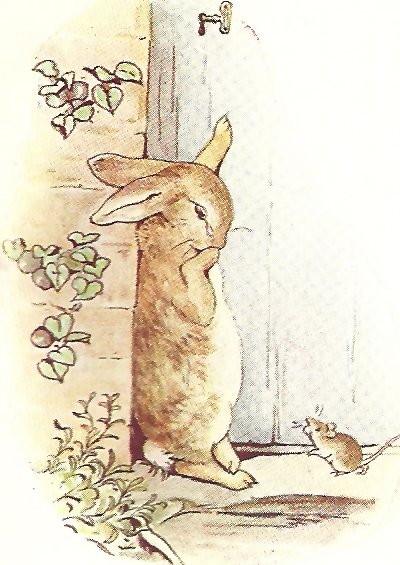
One of my favorite pictures from the book, with text emphasis by myself.

Posted in Childhood memories | 1 Comment

Il mio primo viaggio in Italia

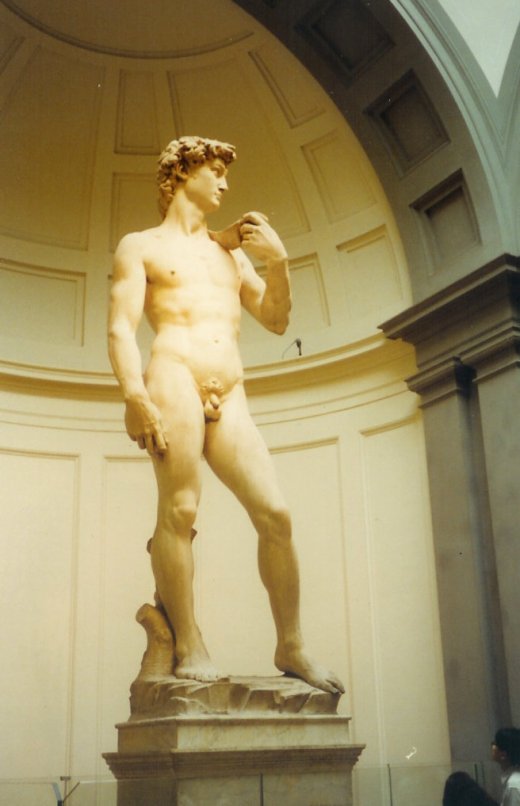
It was 1996 when I made my first trip to Italy.  My sister worked in the travel industry then and I accompanied her on a business trip.  We met in Cannes, France and from there took a train to Milan and then Rome.  During the day while she toured hotels I was on my own.  It is one of my favorite things to be in a new city or new location with a map and no particular plans.  I love to explore and discover, especially at my own pace.  That first trip I saw the Coliseum, the Trevi Fountain and toured the Vatican Museums, St. Pauls Cathedral and the Sistine Chapel.  As it happened, I also saw Pope John Paul II, and was standing within an amazing 6 feet of him.  He emerged from the building and was getting into his car when he indicated to the security guards to move the barricades aside so he could approach a small group of people, including myself, resting on the steps.  It was exciting and a complete surprise.  An Italian woman next to me was screaming “Papa, Papa, Papa!”  My sister and I had dinner in the oldest part of Rome and threw coins in the Trevi Fountain at midnight.  My sister was evaluating a bus route from Rome to Florence, our next destination.  Florence was wonderful, but the bus tour was not.  I was on my own again in Florence, where she continued her business meetings and I once again explored a new city.  Florence was beautiful.  I toured the Uffizi Gallery and saw Michelangelo’s David in the Accademia.  Back in April of 1996 there was no line to see the David.  I walked right in and took these photographs, one of only a handful of people in the entire building.  (On my second trip to Florence in 2001 the line to see David completely circled the building, and I skipped it, glad to have seen it in peace five years earlier.) 

Michelangelo's David, taken in 1996.

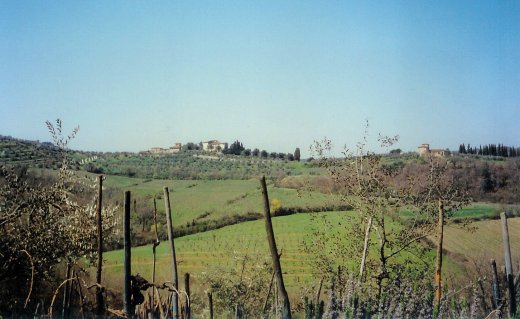
I loved the streets of Florence and of course the Duomo.  The street market had wonderful shopping, of which I took great advantage.  In the evening I would lay my treasures on the bedspreads and my sister and I would look over each purchase again.  That’s part of the shopping fun.  We had many, many incredible meals.  One day we rented a car and drove southbound out of Florence into the Chianti region, following the trail of the black rooster.  We stopped for lunch at a tiny place way up in the hills.  It hardly even looked like a restaurant.  We had our best meal there, including thistle ravioli and peach sorbet served in a frozen peach. 

One of the tiny villages in the Chianti region.


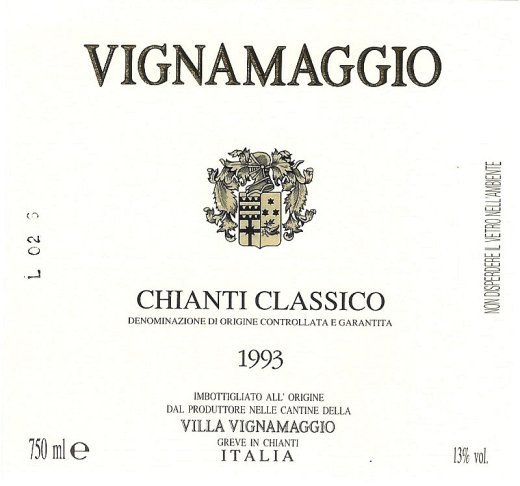
On the schedule that day was a tour of Vignamaggio, the estate where the movie “Much Ado About Nothing” was filmed in 1993 with Kenneth Branagh and Emma Thompson.  It is in the most beautiful setting and we tasted wine from the estate and toured the rooms.  I bought a bottle of Chianti Classico and two bottles of olive oil, which I dragged all over Florence and Venice before getting them home to the US.  I’ve learned a thing or two since then, and try not to purchase heavy bottles halfway through my trip.  Driving the rental car out of, and then back into Florence was rather exciting. With the many one way bridges and suicidal Vespas, it took the complete concentration of two people to manage safely. 

Vignamaggio in the distance.

The Vignamaggio Estate


Vignamaggio's Chianti Classico wine label.

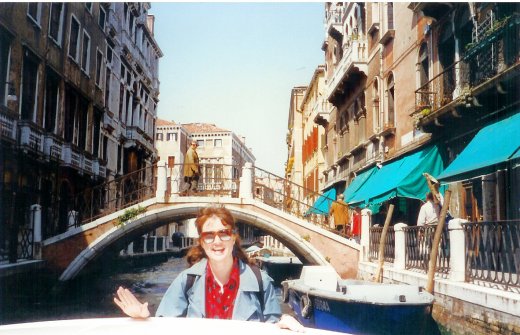
From Florence we took another train to Venice, where we were met by a personal water taxi and taken to the hotel.  What fun that was, and at the time, I didn’t realize how expensive it was.  For future taxi rides we boarded the public water taxi for a much more reasonable price.  I spent several days wandering the streets of Venice with a map and no agenda.  I saw St. Marks Basilica and found a small church in the labyrinth of streets, the Church of Santa Maria Assunta, that has Tintoretto’s Assumption of the Virgin hanging behind the altar. 

My sister enjoying the private water taxi in Venice.

Me on the water taxi.

The Doge's Palace, Venice. (Photo Credit: Rebecca Nielsen)

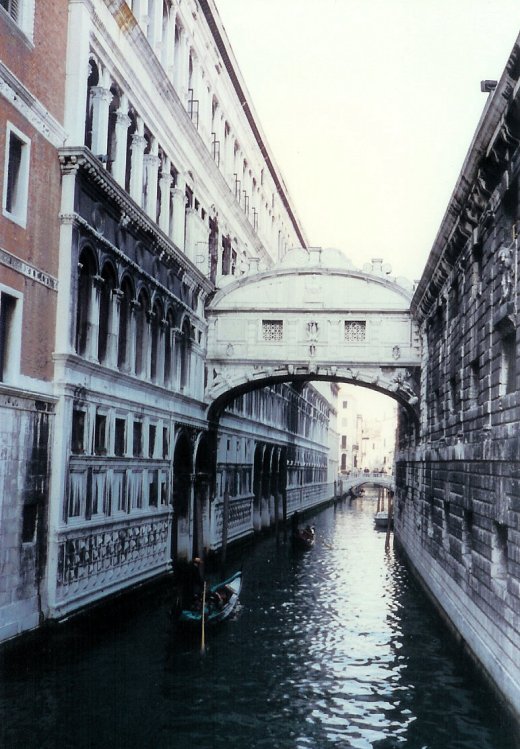
The Bridge of Sighs.

I loved Venice from the moment I stepped onto its streets.  The glass was beautiful, sparkling in the windows of the many shops, and the architecture was amazing.  We took a sunset gondola ride, where my sister took one of my all time favorite travel photos of myself, in the gondola with the Rialto Bridge in the background.  We also took a side trip out to the island of Murano, where much of the glass blowing is done. 

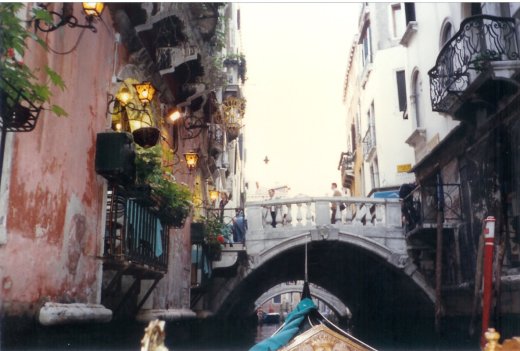
One of the canals on the gondola ride.

Approaching the Rialto Bridge.

Me in the gondola with the Rialto Bridge in the background. One of my favorite pictures.

The food was fantastic.  We had a three-hour lunch that included cuttlefish in its own ink sauce and ended with the best sorbetto in the world.  We also had lunch at Harry’s.  I was trying to speak the language and when I asked for the check “Il canto per favore”, (conto is check) the waiter said with a smile “You want me to sing?”  We all laughed.  And that is one of the best things I found out about Italy, everyone was charming.  The people laughed a lot, and I don’t remember ever feeling terribly out of place or made to feel embarrassed.  Our last night in Italy was in Venice.  My sister had already gone to bed; she was working all day and I was on vacation.  I couldn’t let this last night just slip quietly away, so I forced her out of bed and into her clothes and we walked to Piazza San Marco where we sat at one of the many cafes with a string quartet playing.  We ordered hot chocolate, served in a silver pot, listened to the live music and watched the moon rise over the piazza.  It was the perfect ending for a first trip to Italy, and one of my most lasting travel memories.  The next day we took the train from Venice to Switzerland to catch our flight home.

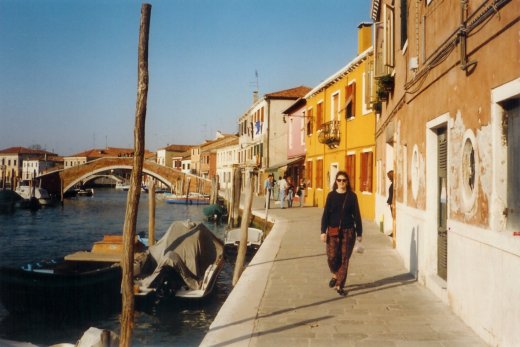
Murano, Italy.

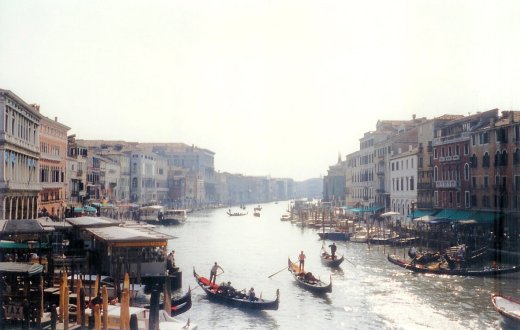
The Grand Canal, from the Rialto Bridge.

Associated Websites:

The Vatican, Rome:   http://www.vatican.va/

Florence’s Duomo:  http://www.duomofirenze.it/index-eng.htm

The Uffizi Gallery:  http://www.uffizi.com/

The Vignamaggio Estate:  http://www.vignamaggio.it/

Harry’s Bar in Venice:  http://www.harrysbarvenezia.com/

The Churches of Venice:  http://www.churchesofvenice.co.uk/

Posted in Italy | Leave a comment