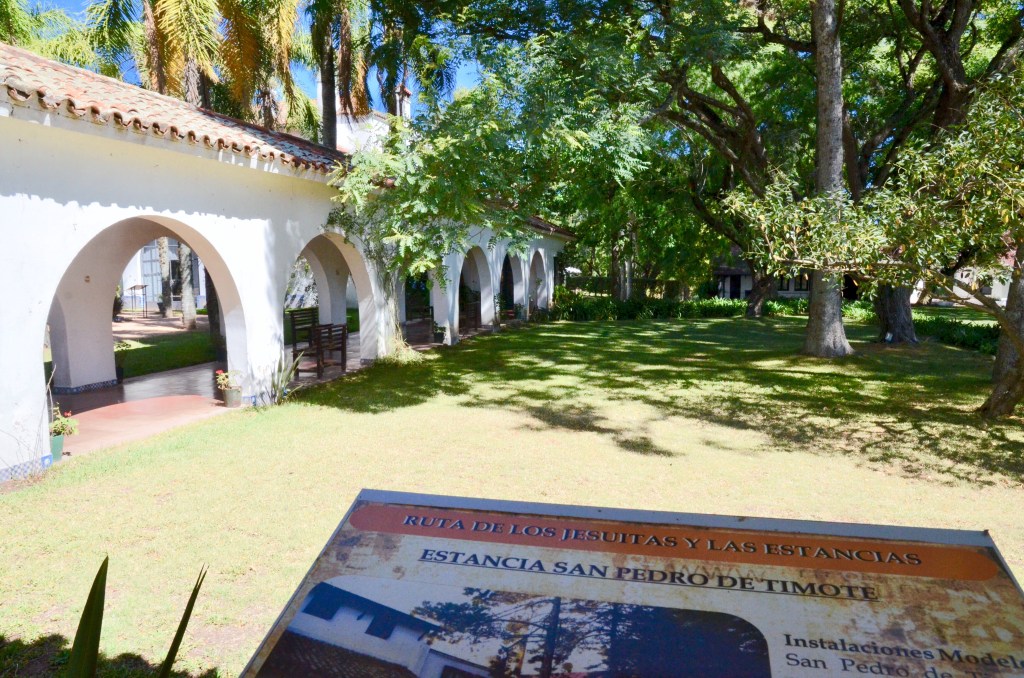
San Pedro de Timote

We drove 2 1/2 hours north of Montevideo into the Florida region of Uruguay.

When it looked like we were in the middle of nowhere, we a saw sign with an arrow, and drove another 14 km on dirt roads to find the historic estancia.

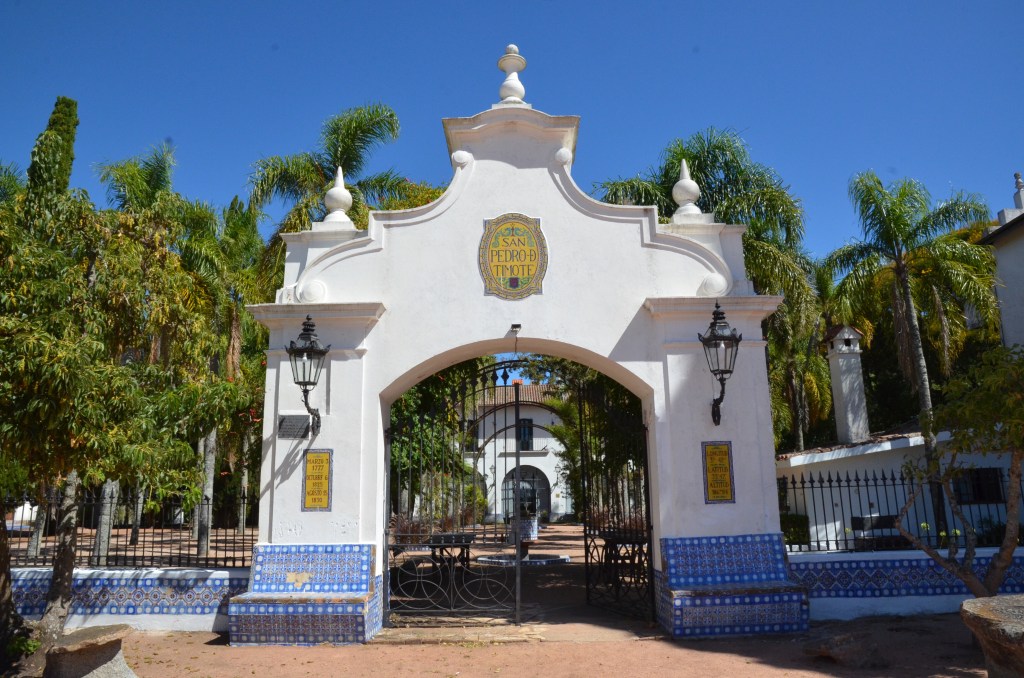
As an estancia, it was founded in 1854 by Pedro Jose Jackson. But the land’s history as an agricultural venture goes back to the Jesuits and 1740. It was roughly 250,000 acres then.

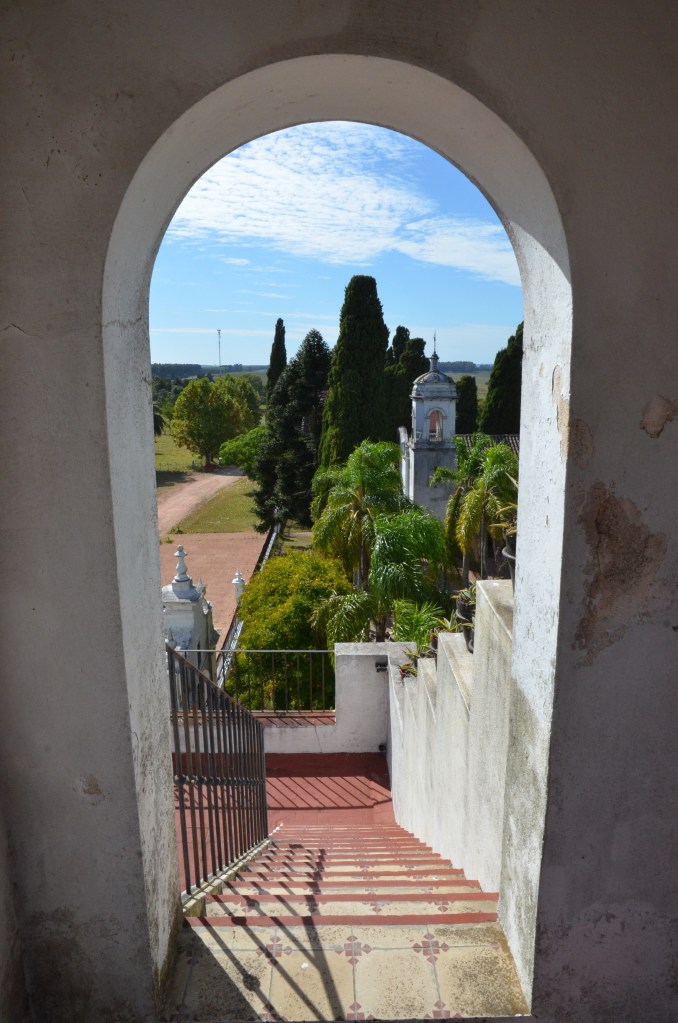
It is now mostly a tourist Estancia. There are 1200 acres and the beautiful house.

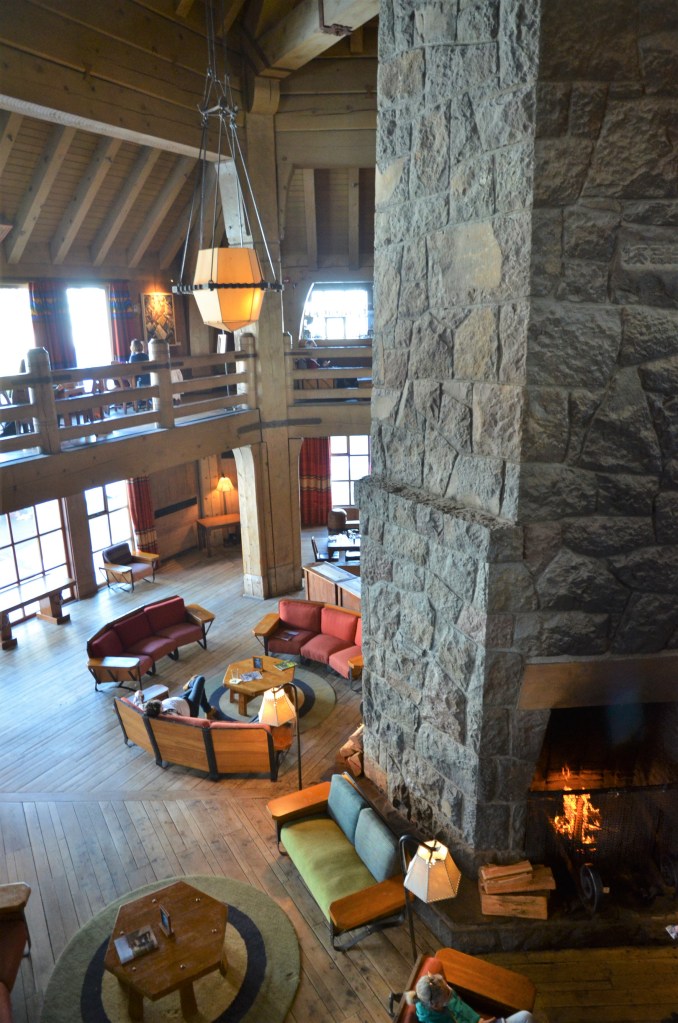
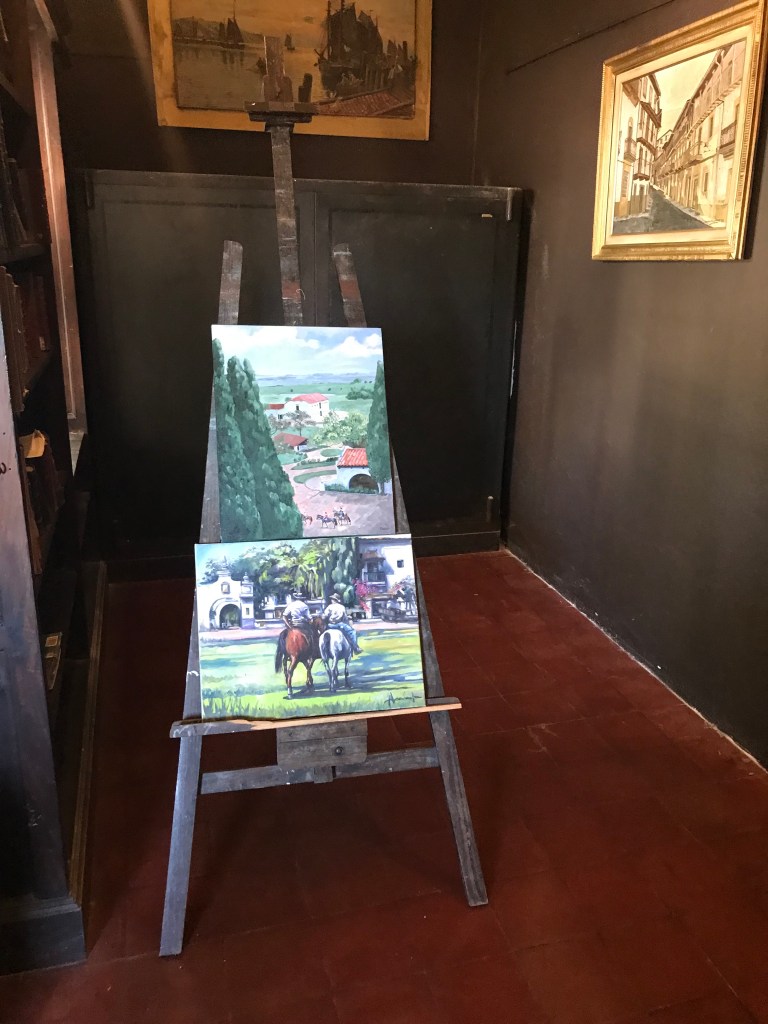
The library at San Pedro de Timote.

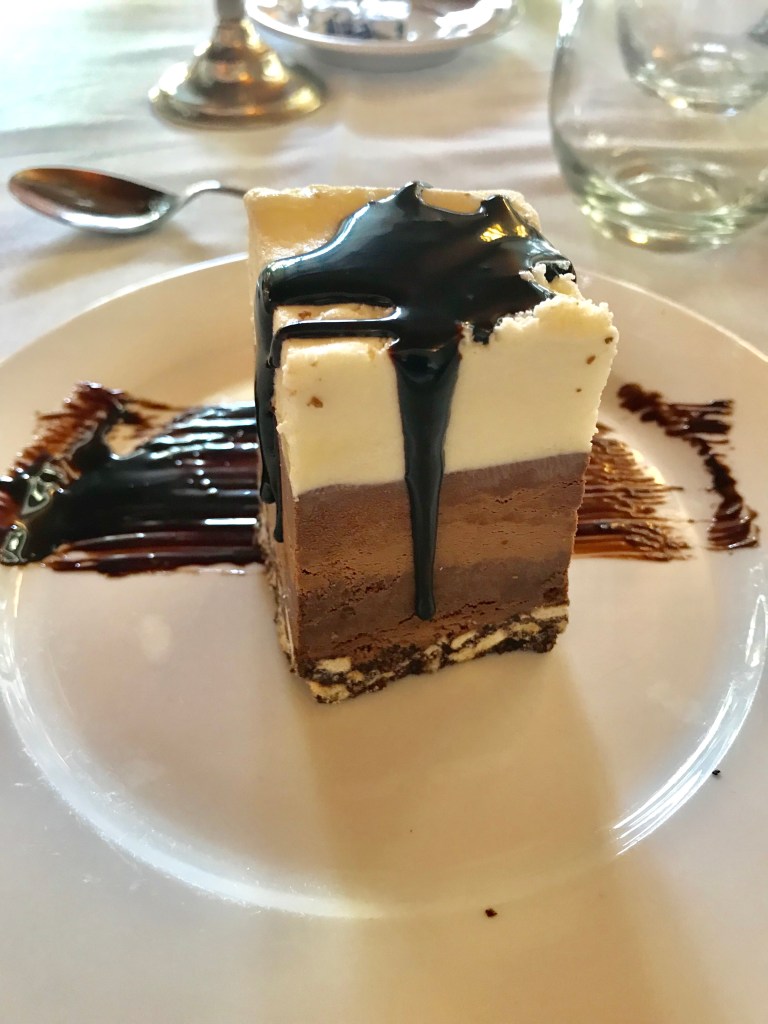
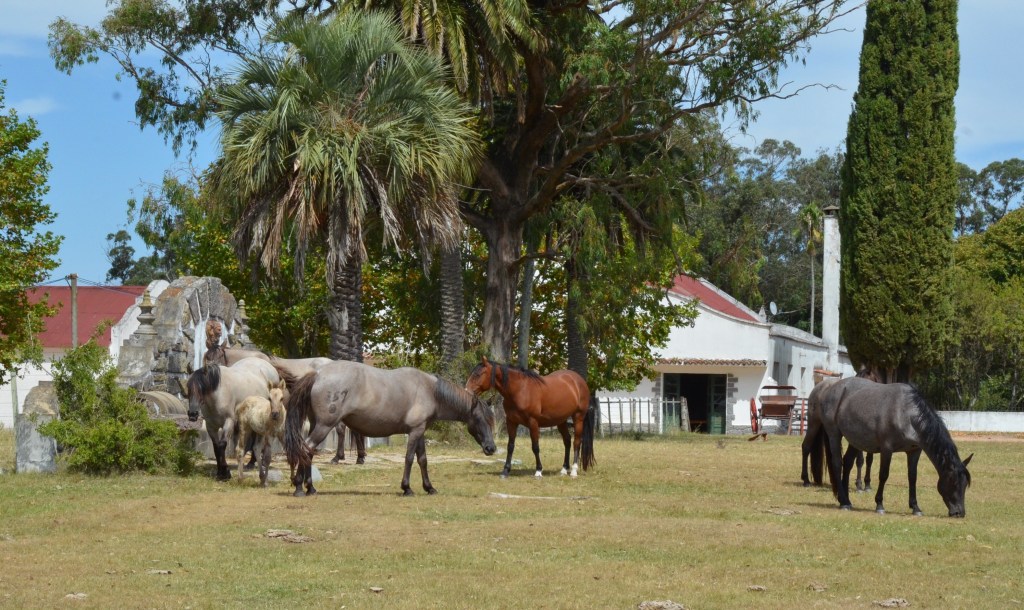
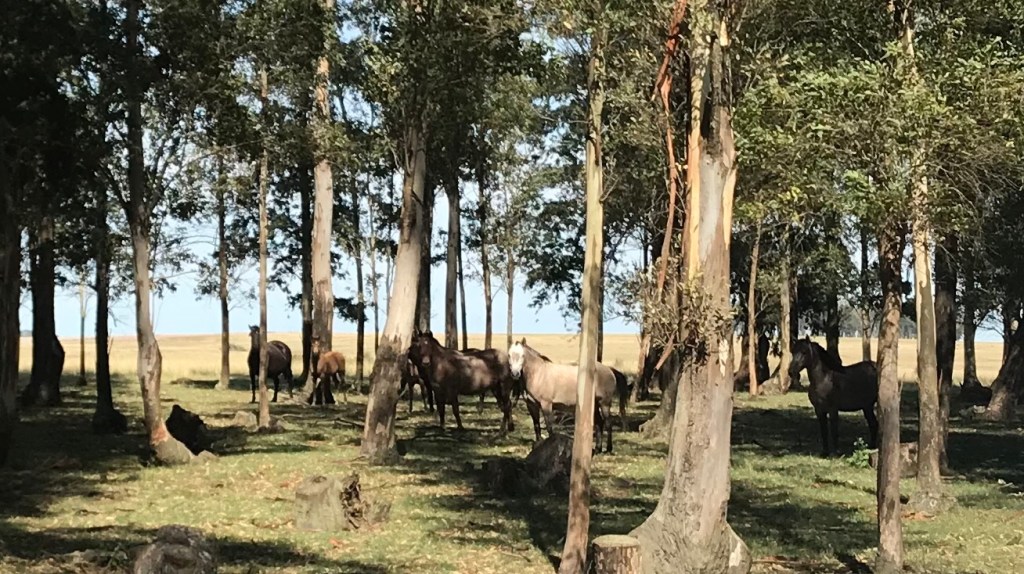
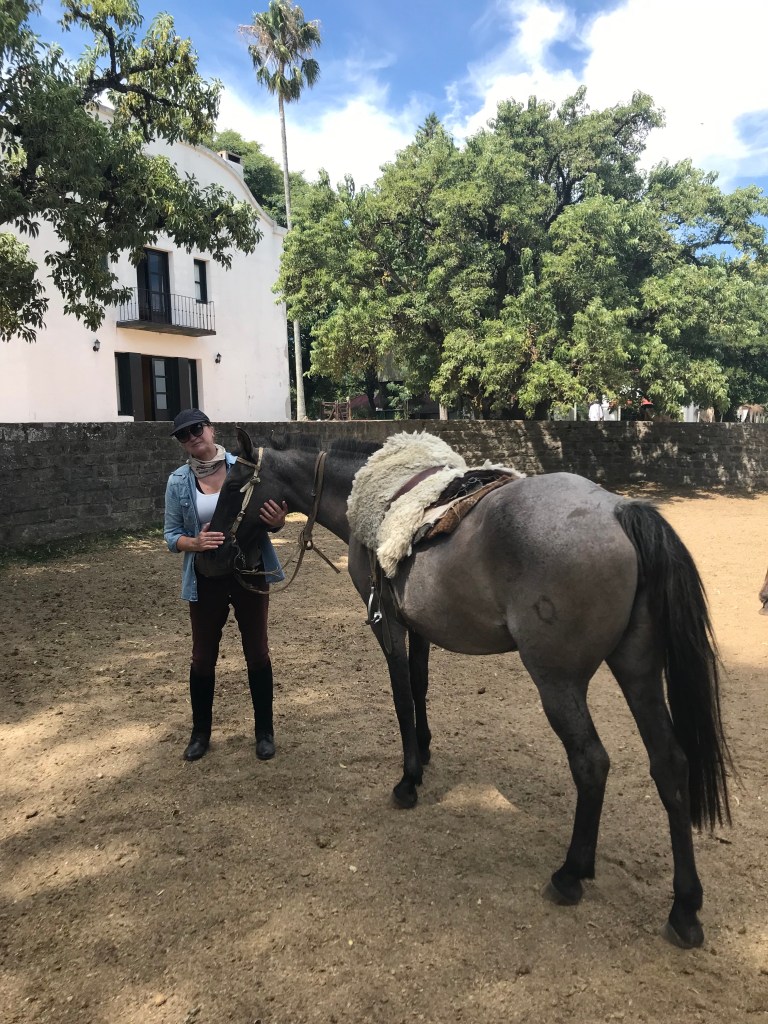
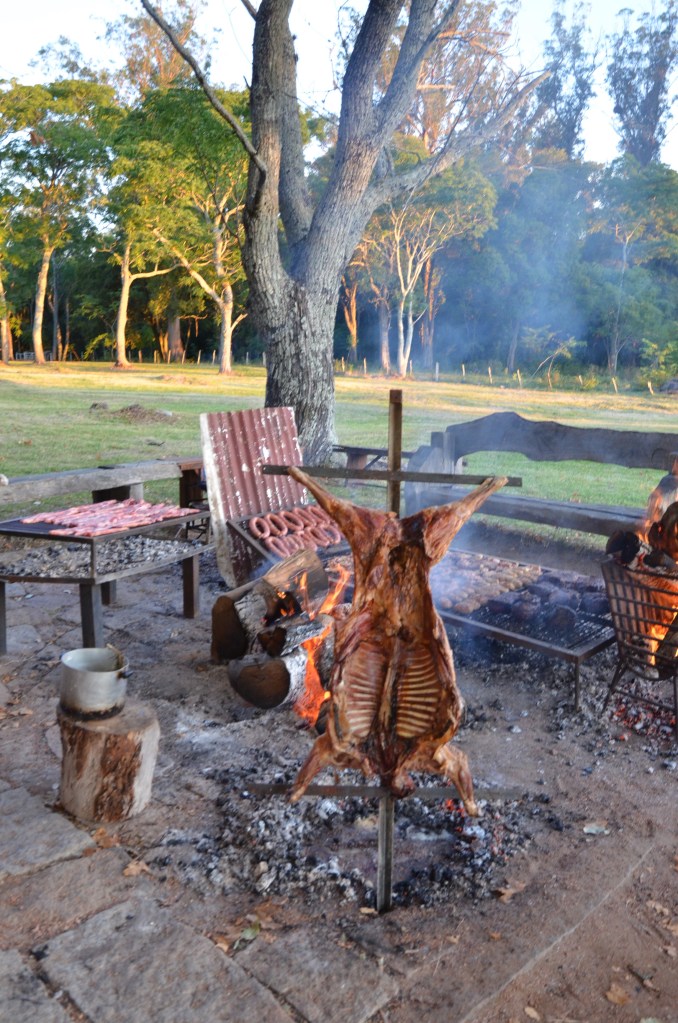
The meals are good, the people friendly and the horses well fed.

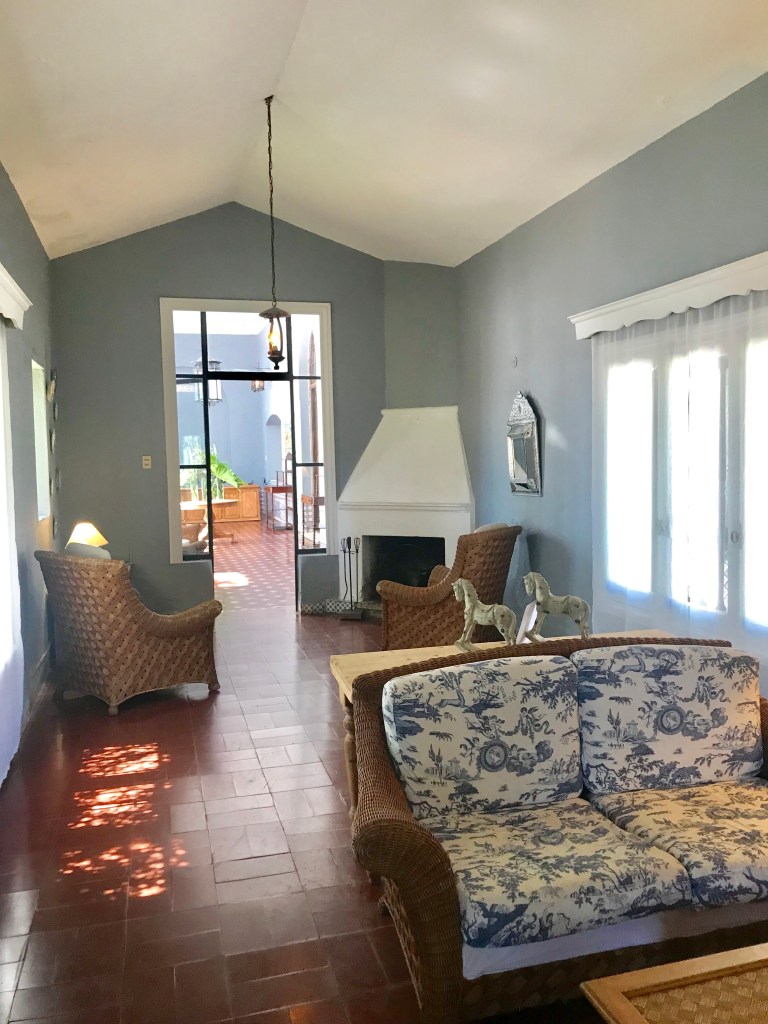
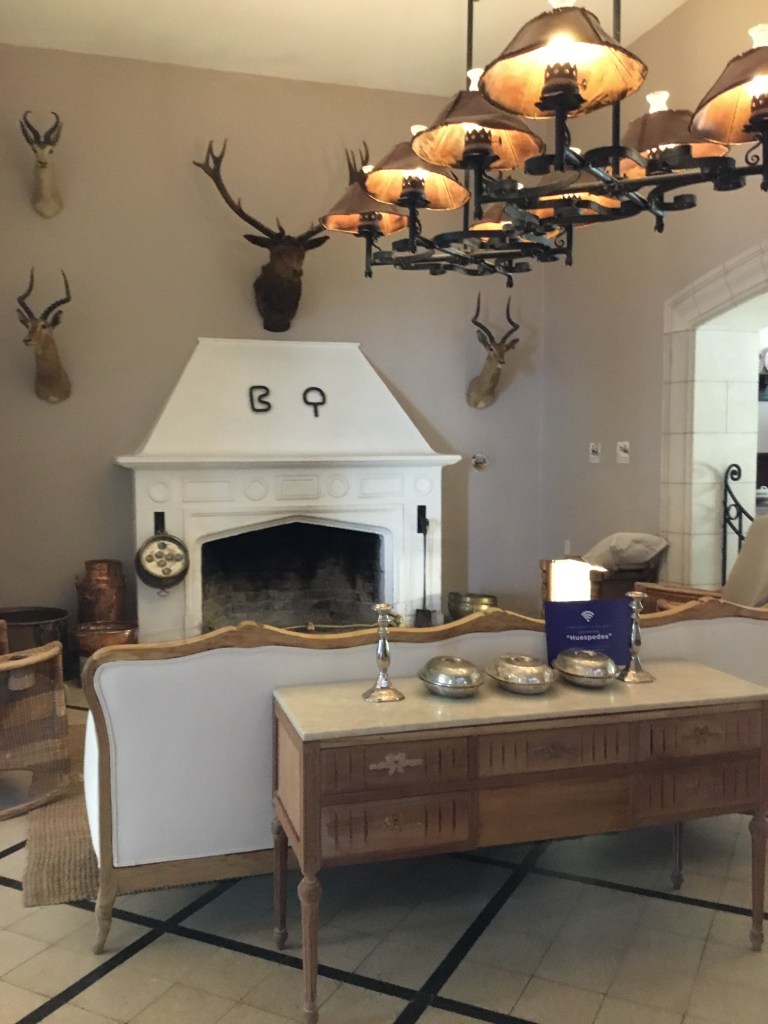
Reception.
“We still have much to do”
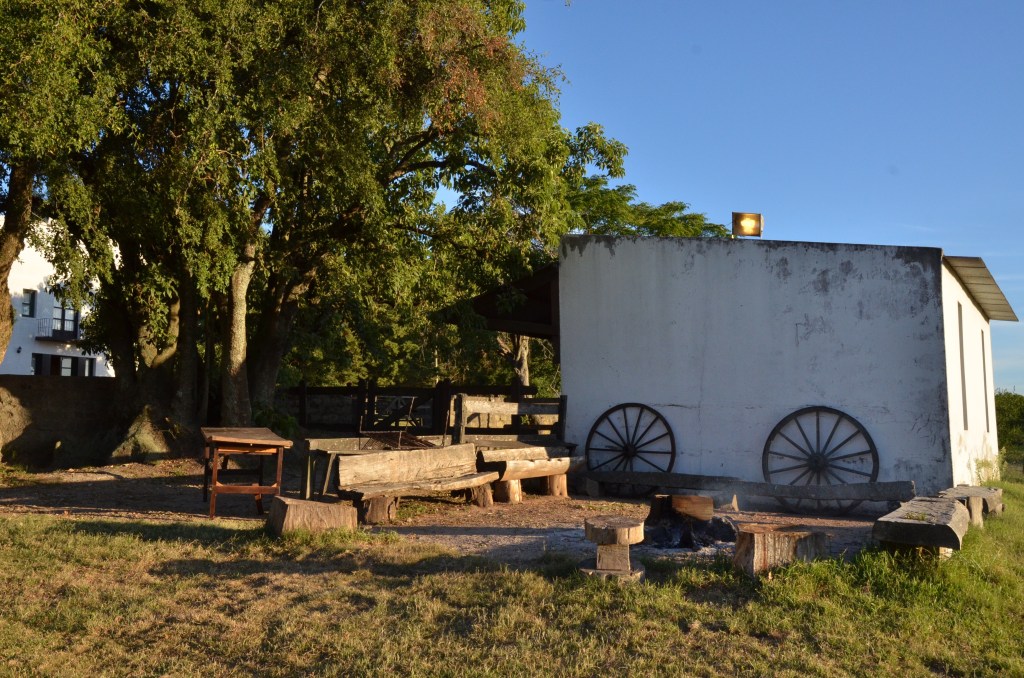
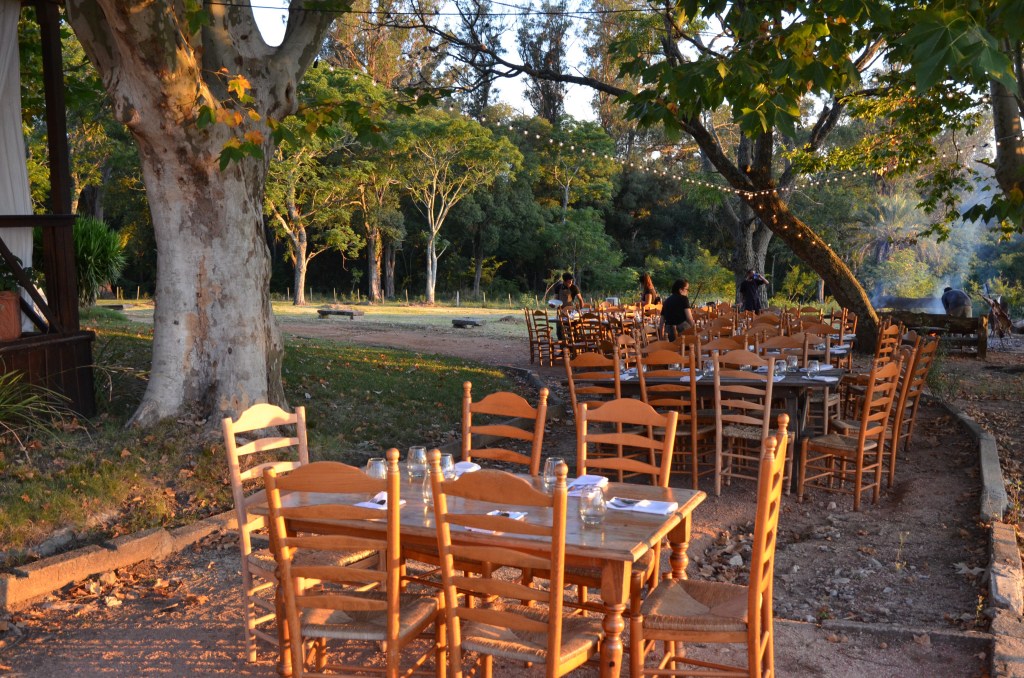
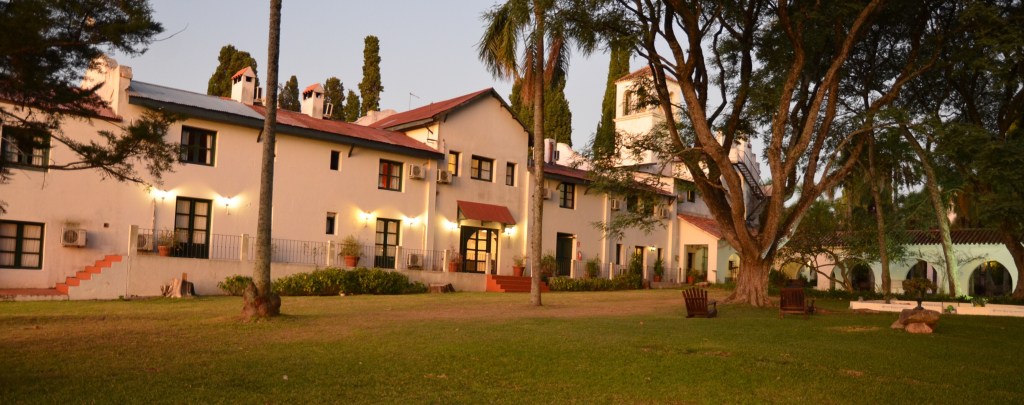
The estancia at dusk.

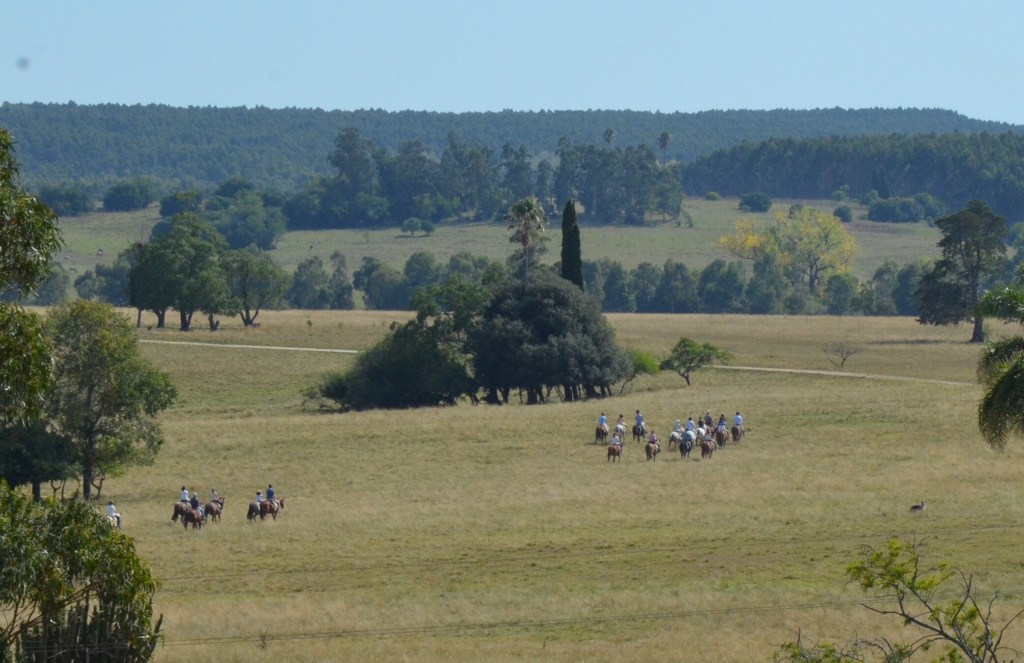
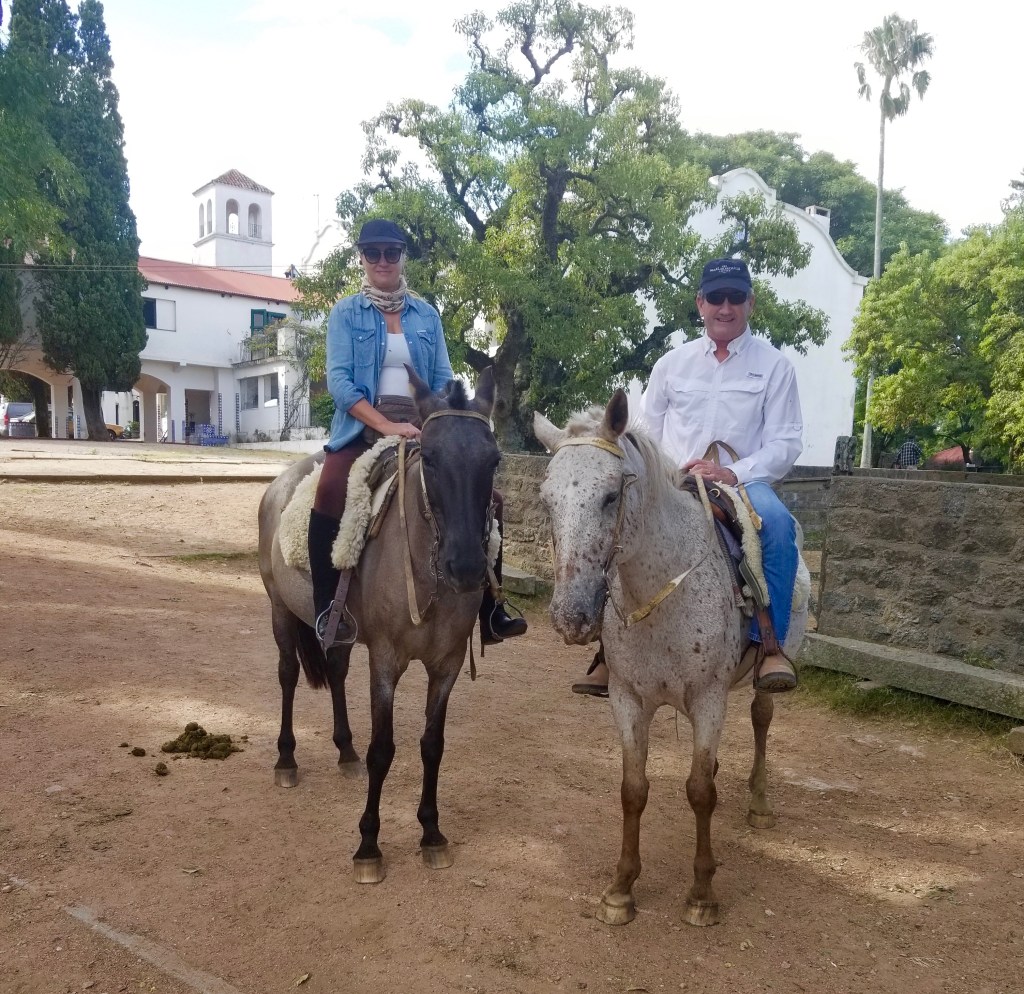
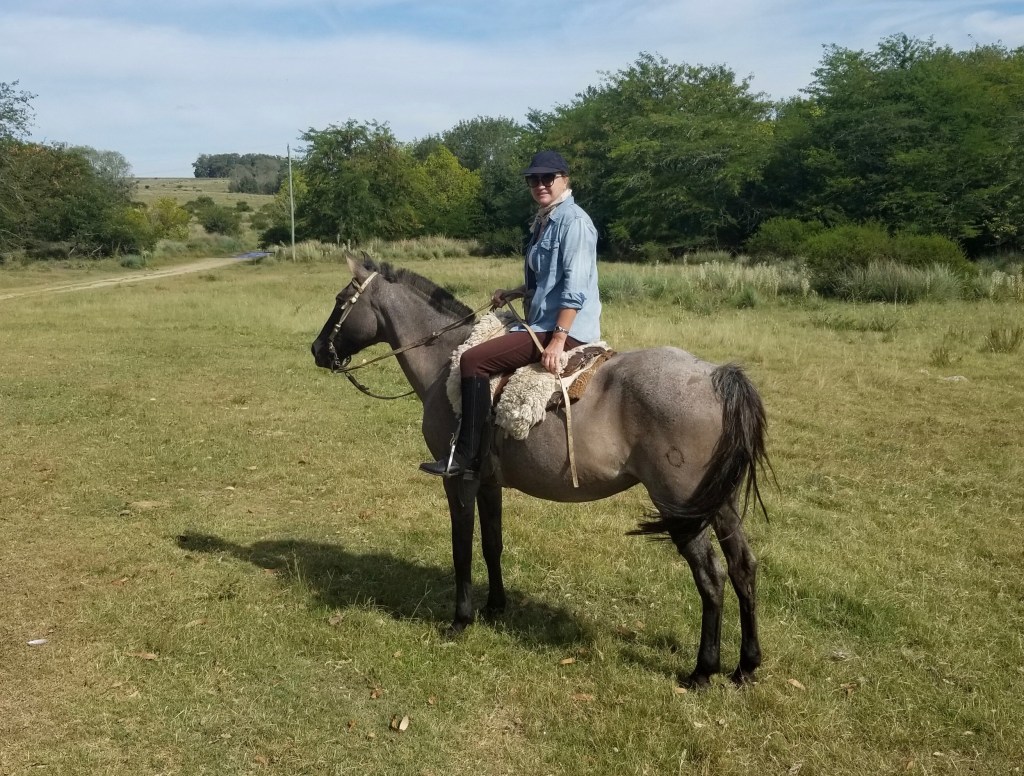
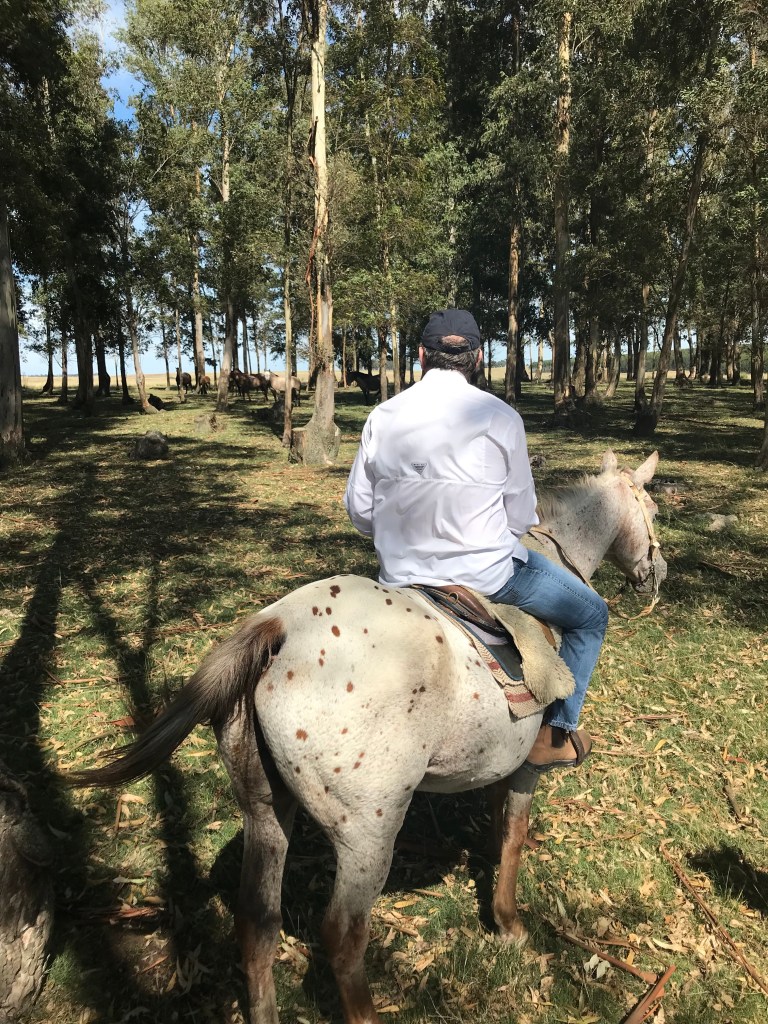
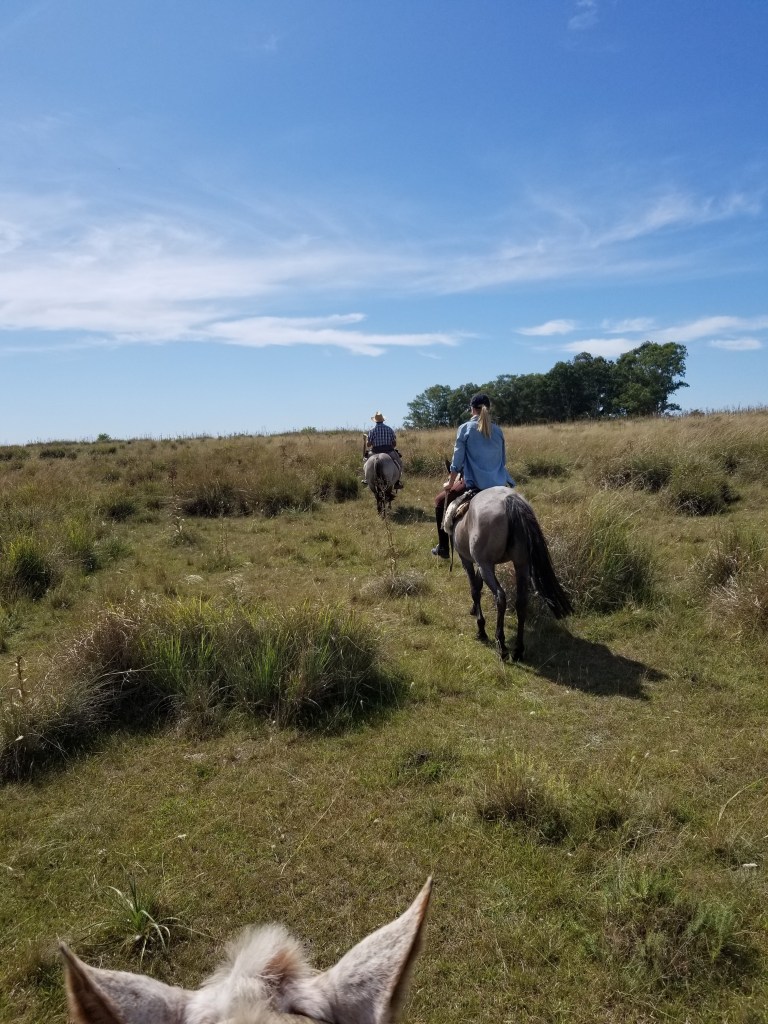
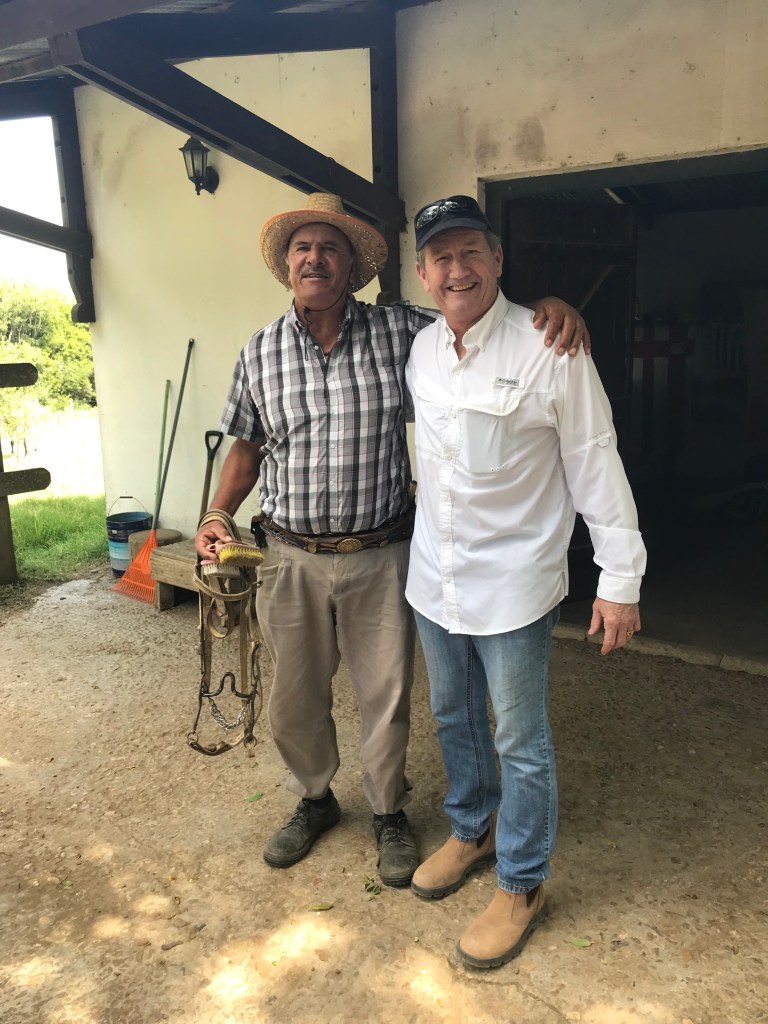
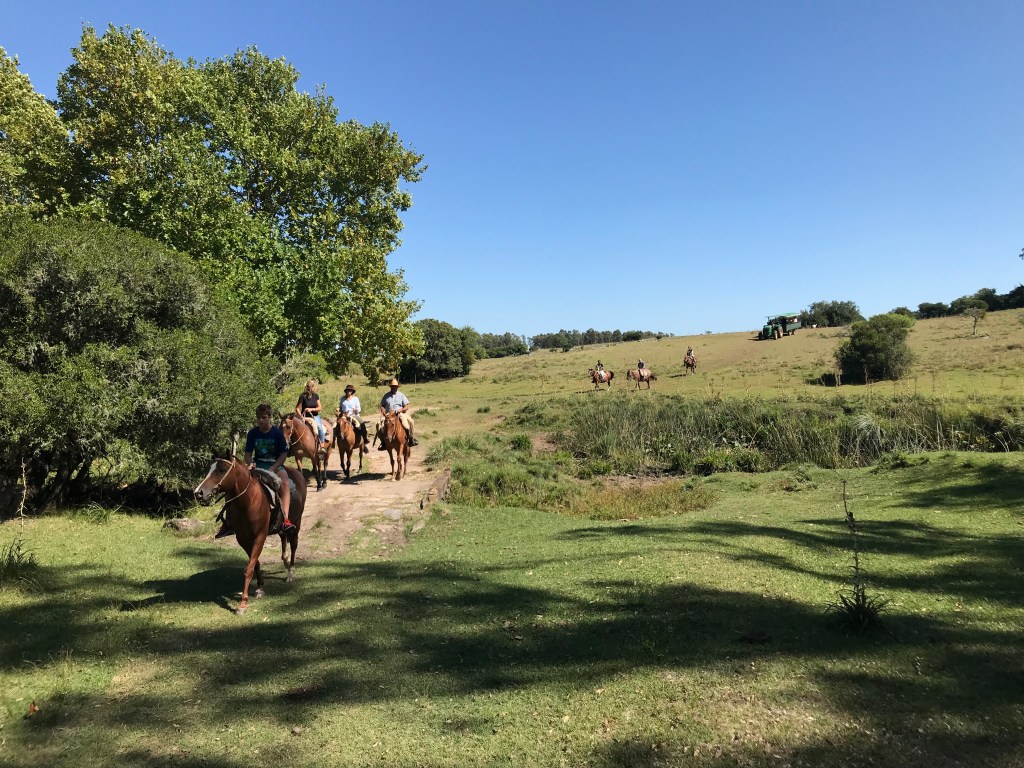
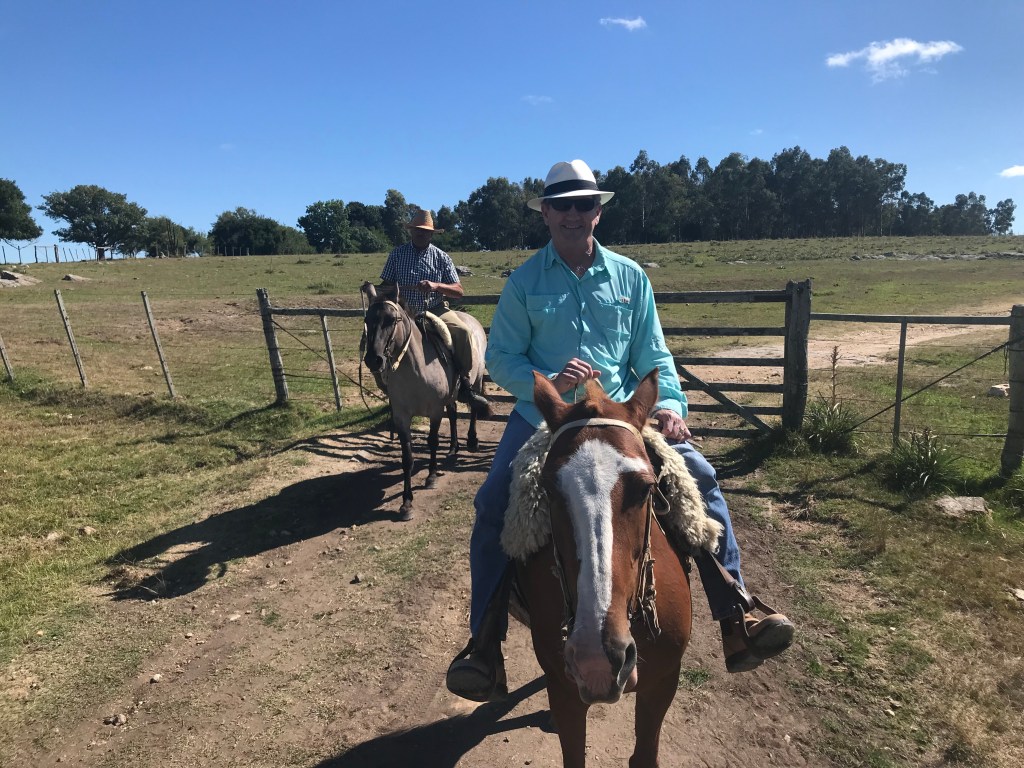
We went for a mid morning ride with Beto.

Beto explaining the property to me in Spanish. I understood very little, but he tried.
Posted in Uruguay | 2 Comments

Uruguay, first impression.

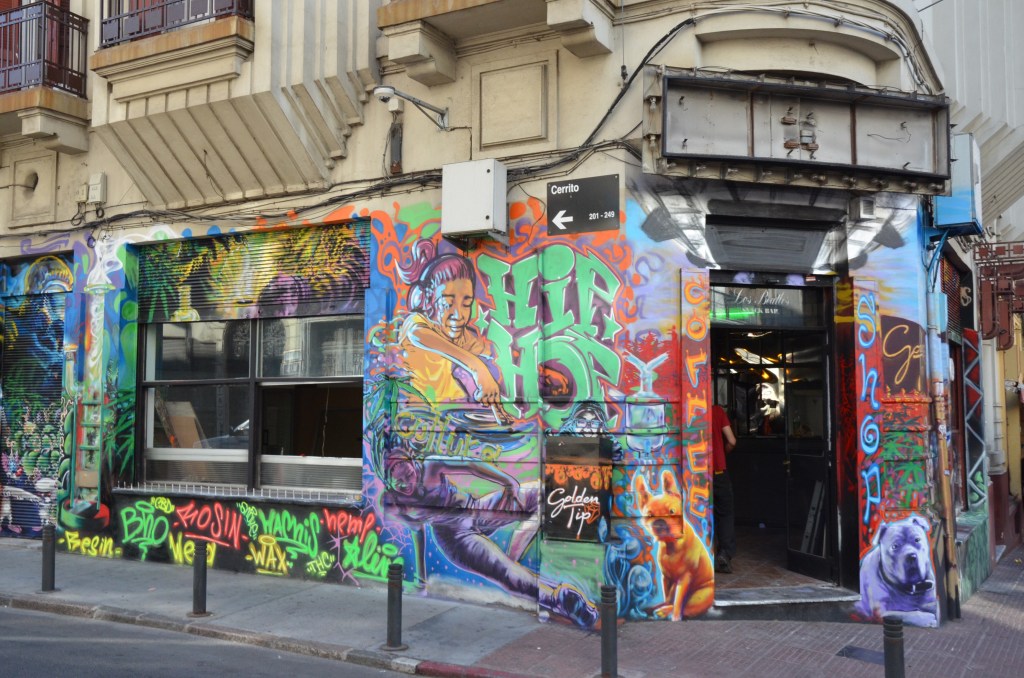
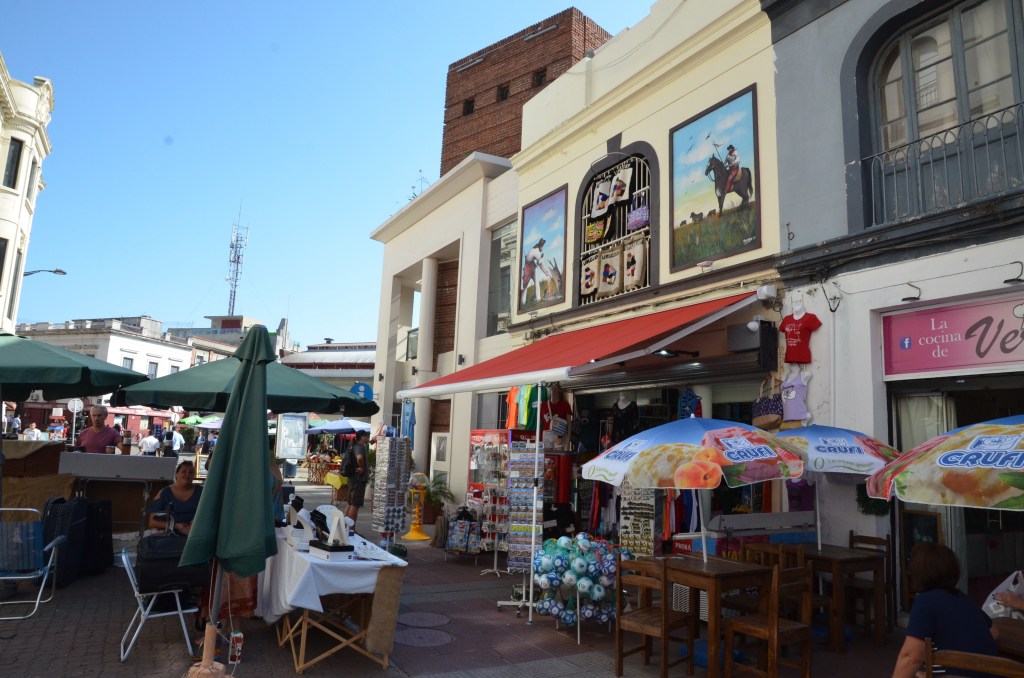
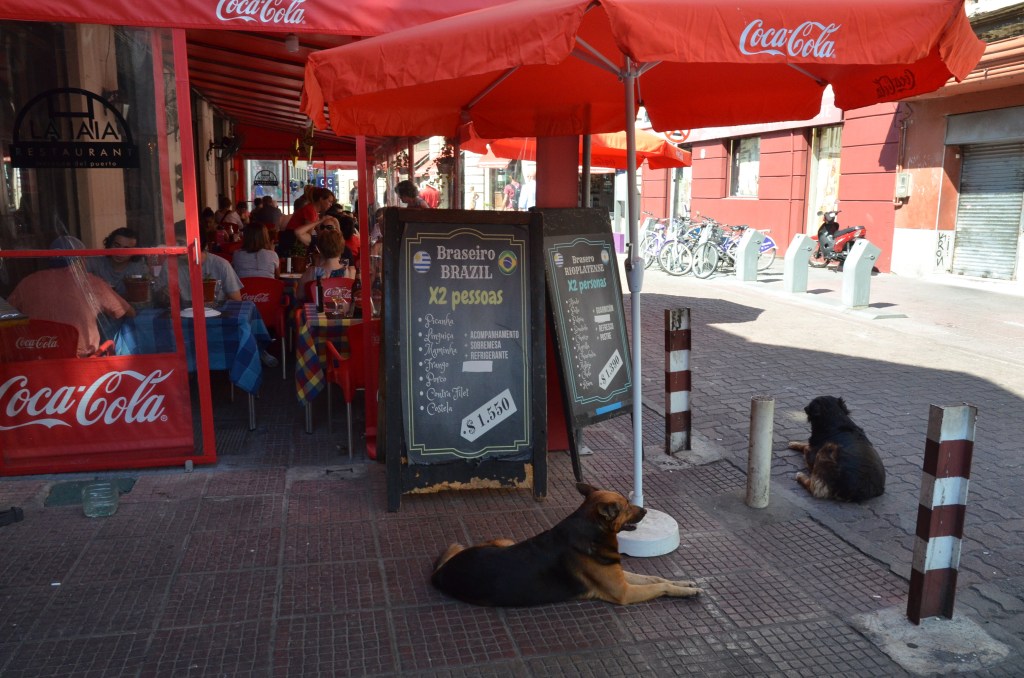
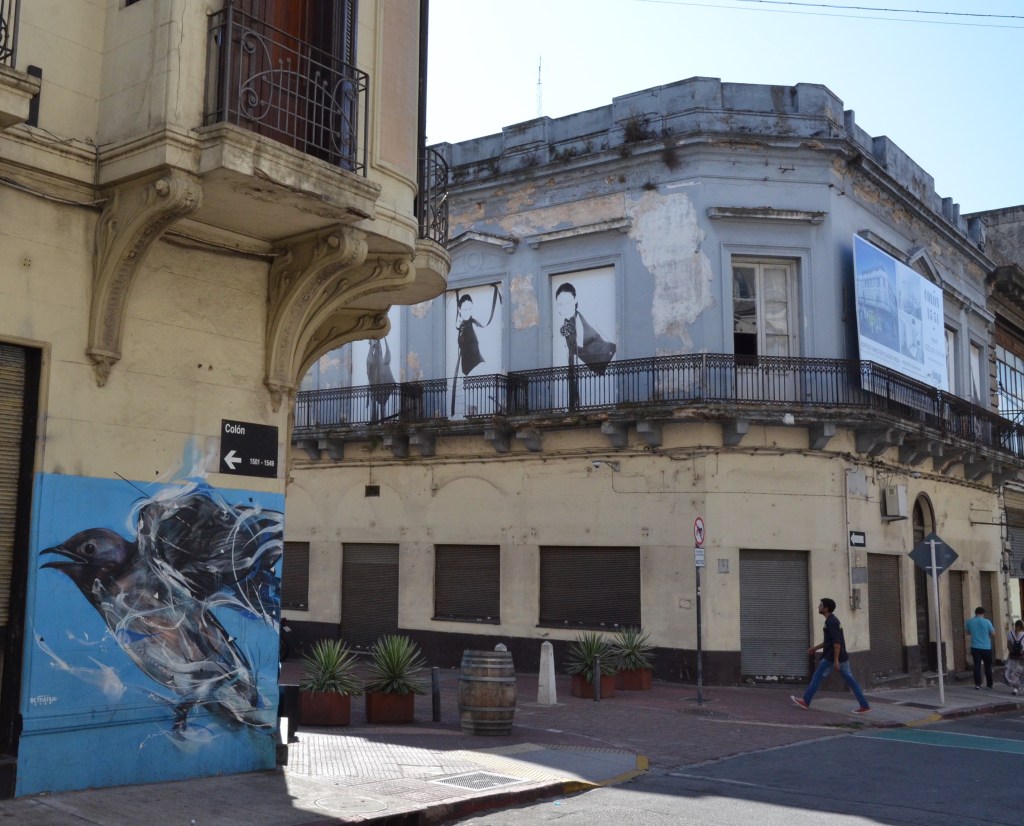
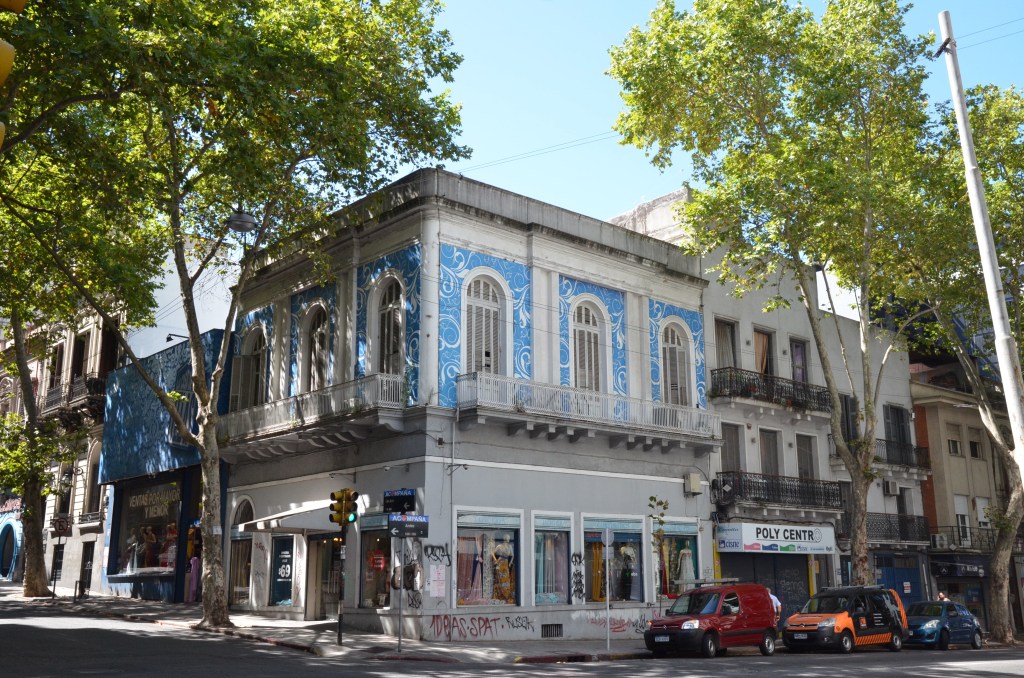
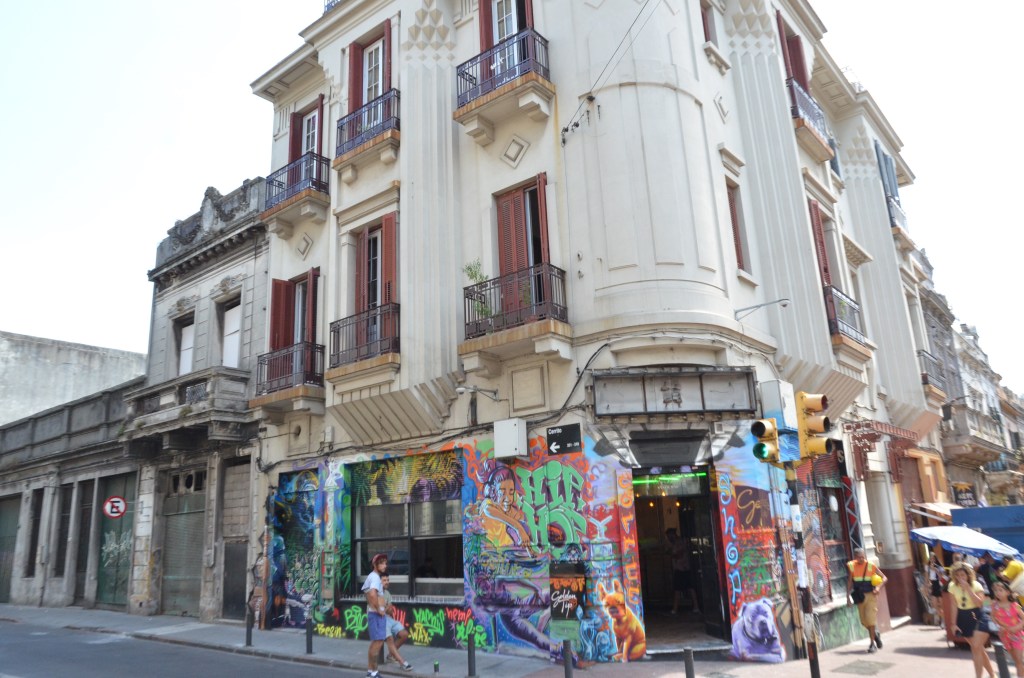
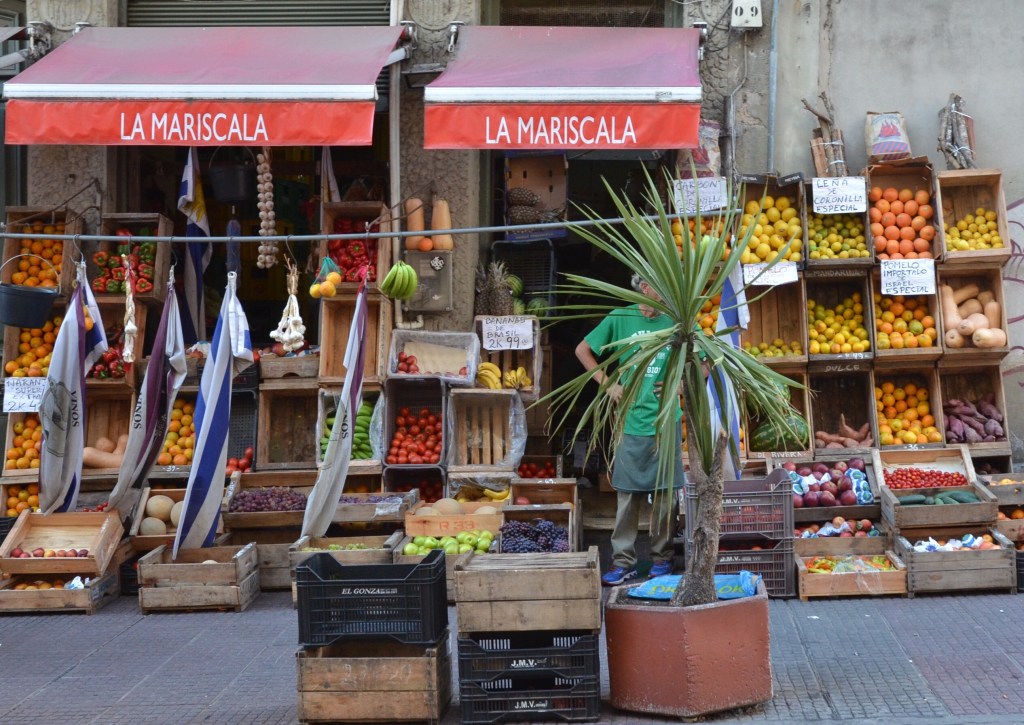
A street corner in Montevideo.

The nonstop flight from Miami to Montevideo landed around 0945 am. It was nearly a nine hour flight.

On the drive from the airport to the old town district, we followed the coastline south. Most of the waterfront appeared to be public green spaces. We saw many people walking dogs on leashes and jogging.

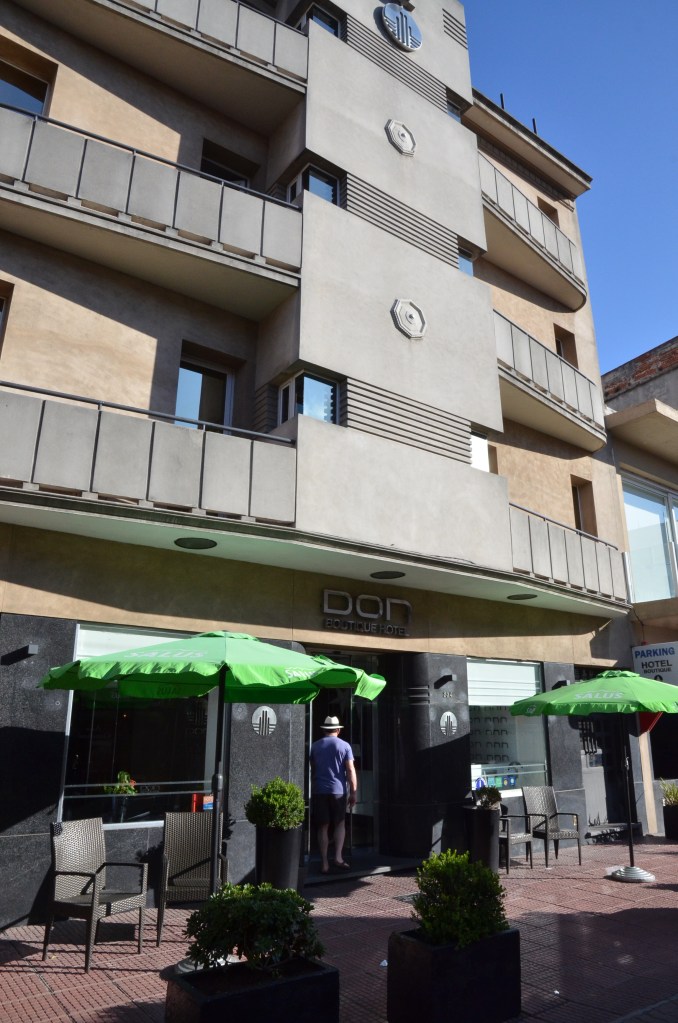
We are staying near the port, in The Don Hotel. It’s a good location for walking the old town district.

The city streets are clean, and the people friendly. Most restaurant and shop workers speak a little English. Sometimes just a little.

Upon arrival we crashed for a few hours, then walked around in the afternoon. Midday temperatures are mid 80s.

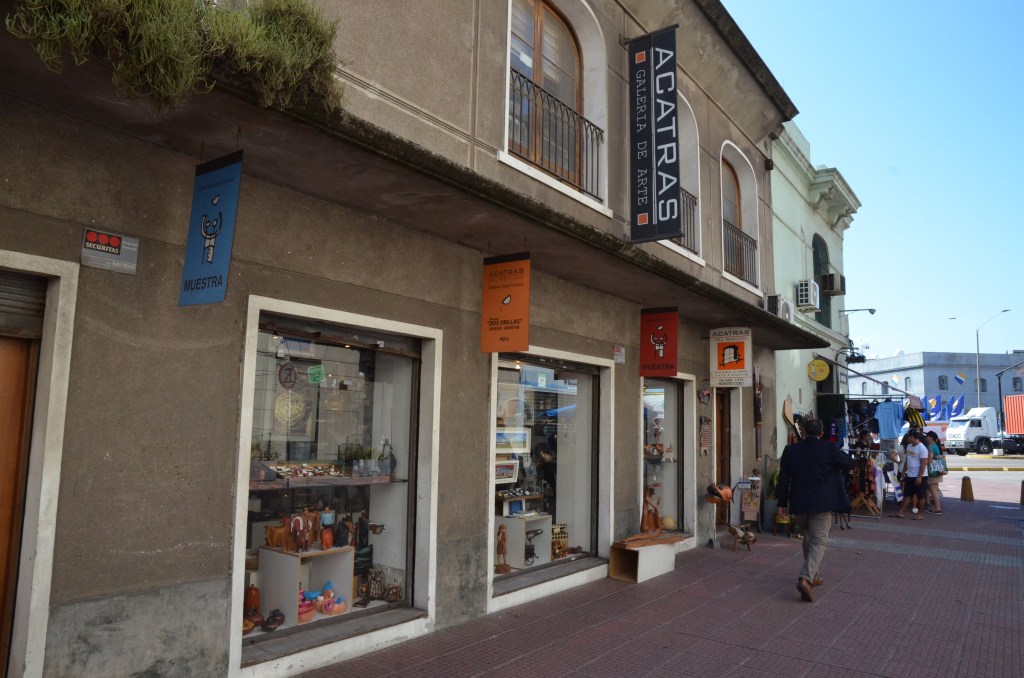
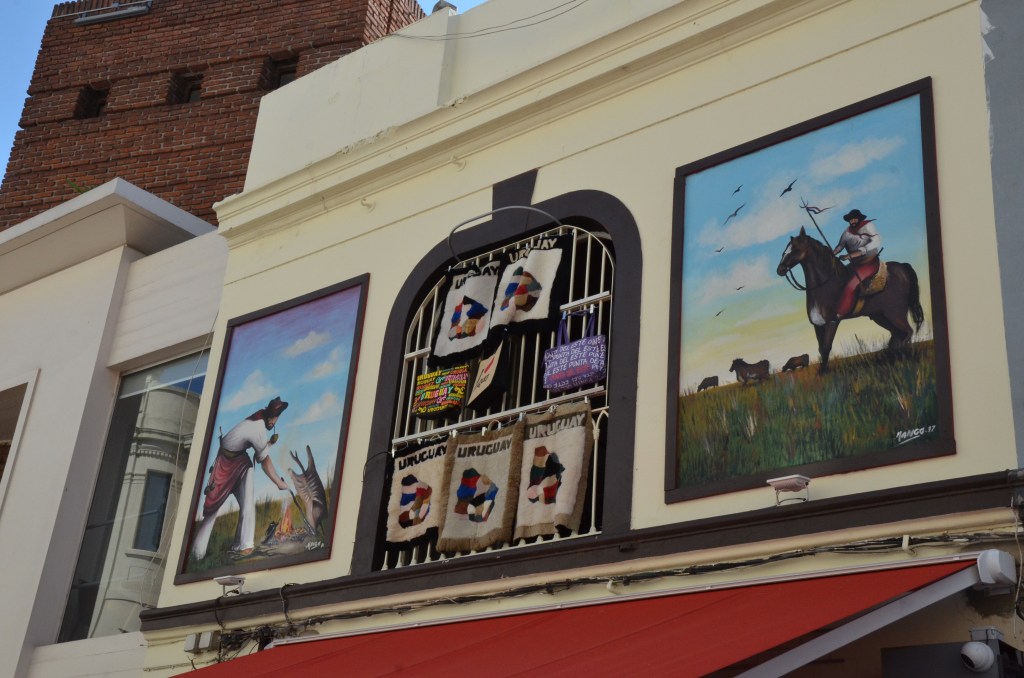
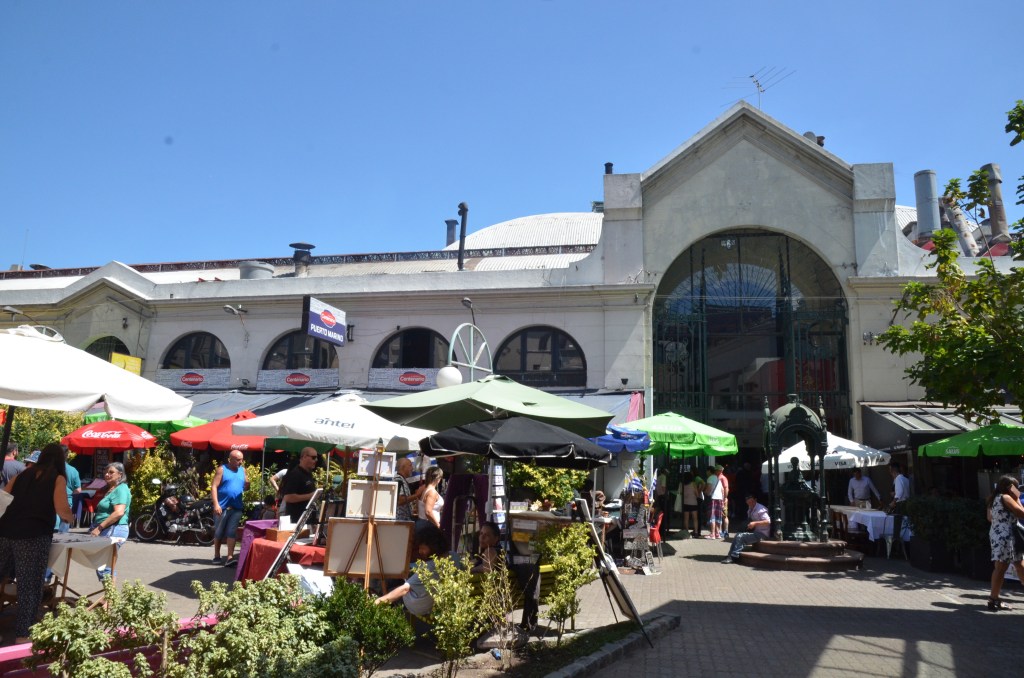
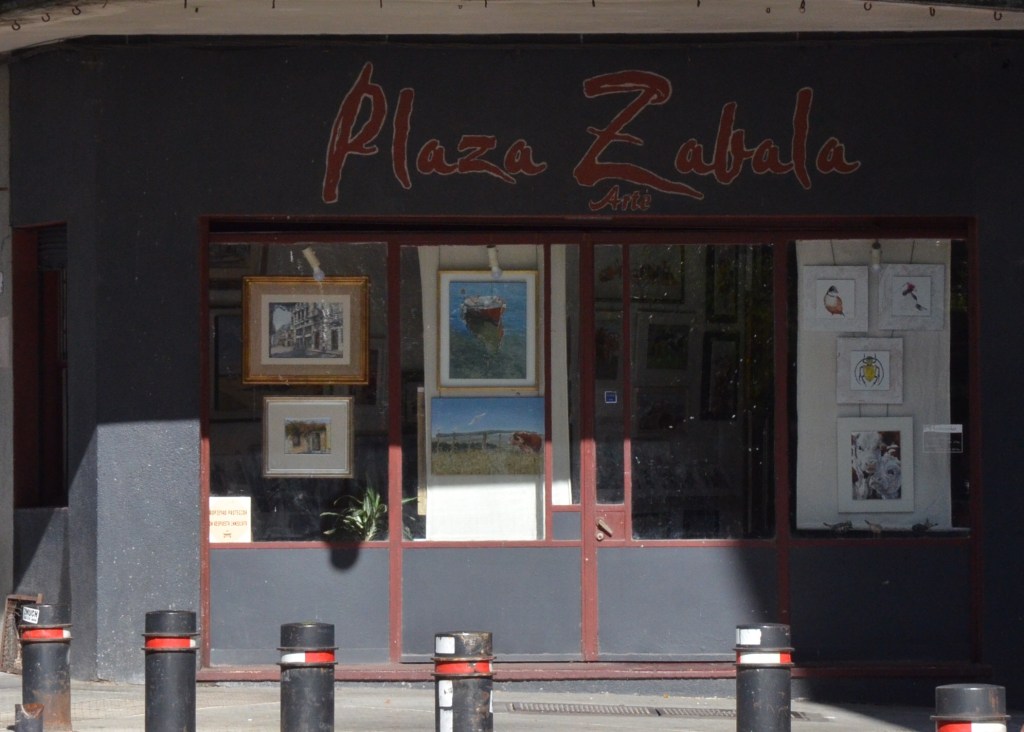
An art shop featuring local artists near the port.

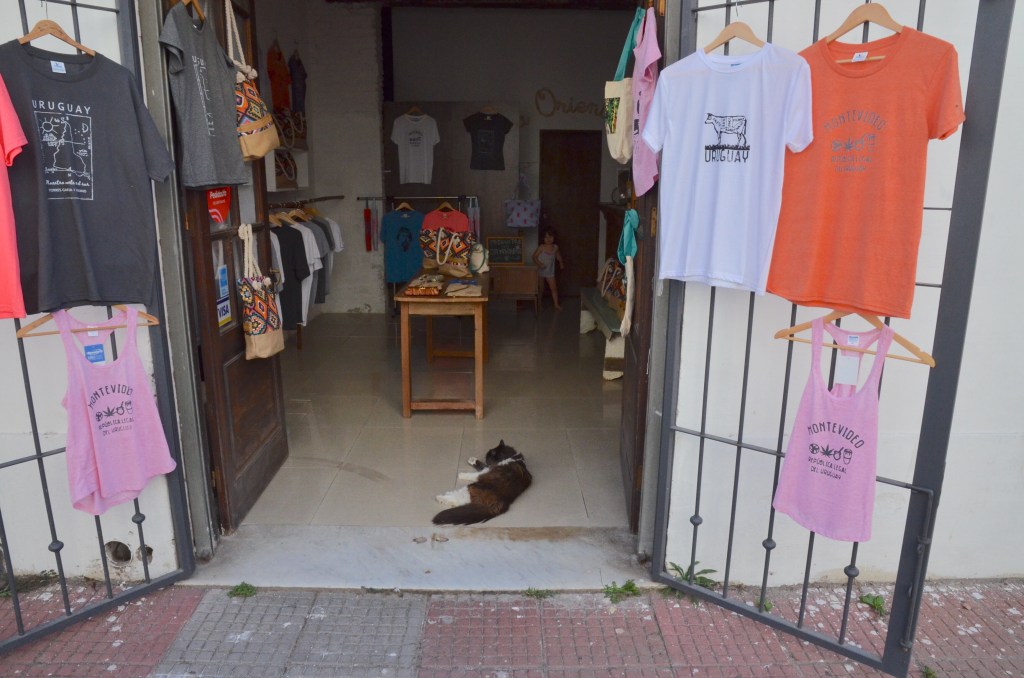
We saw many dogs and a few cats. They all seemed in good physical condition and none acted scared or aggressive. There were shop cats, and dogs hanging out near the restaurants.

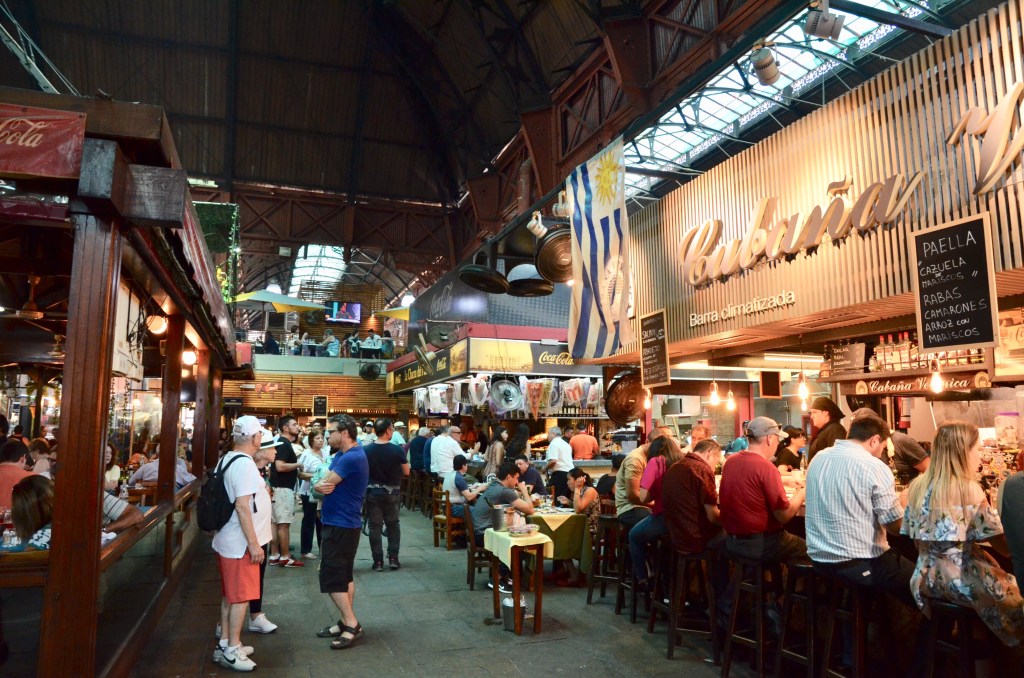
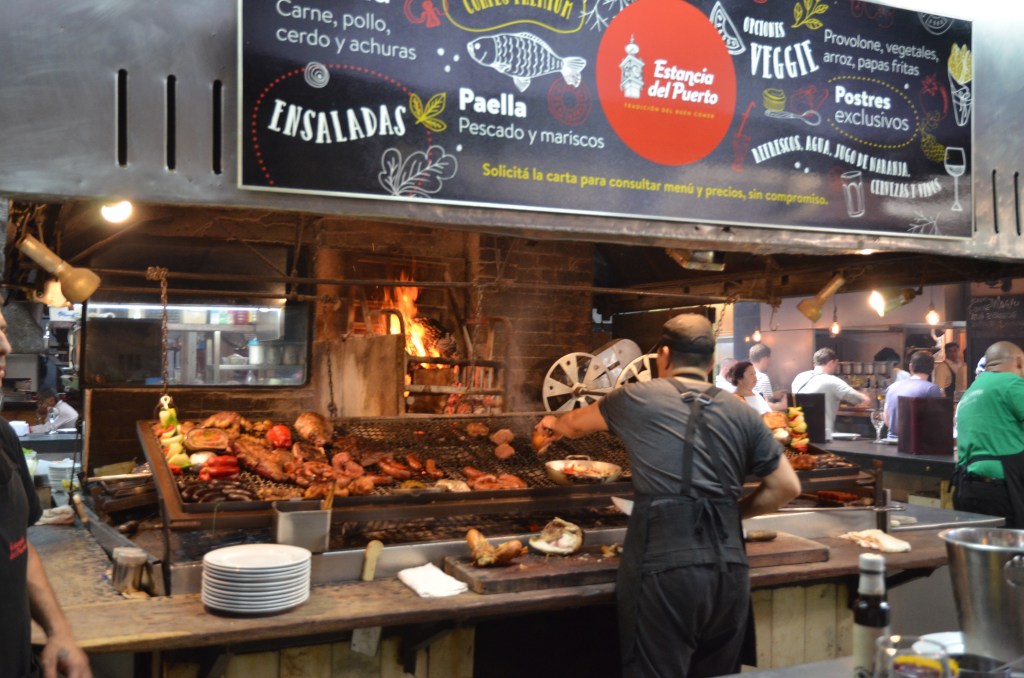
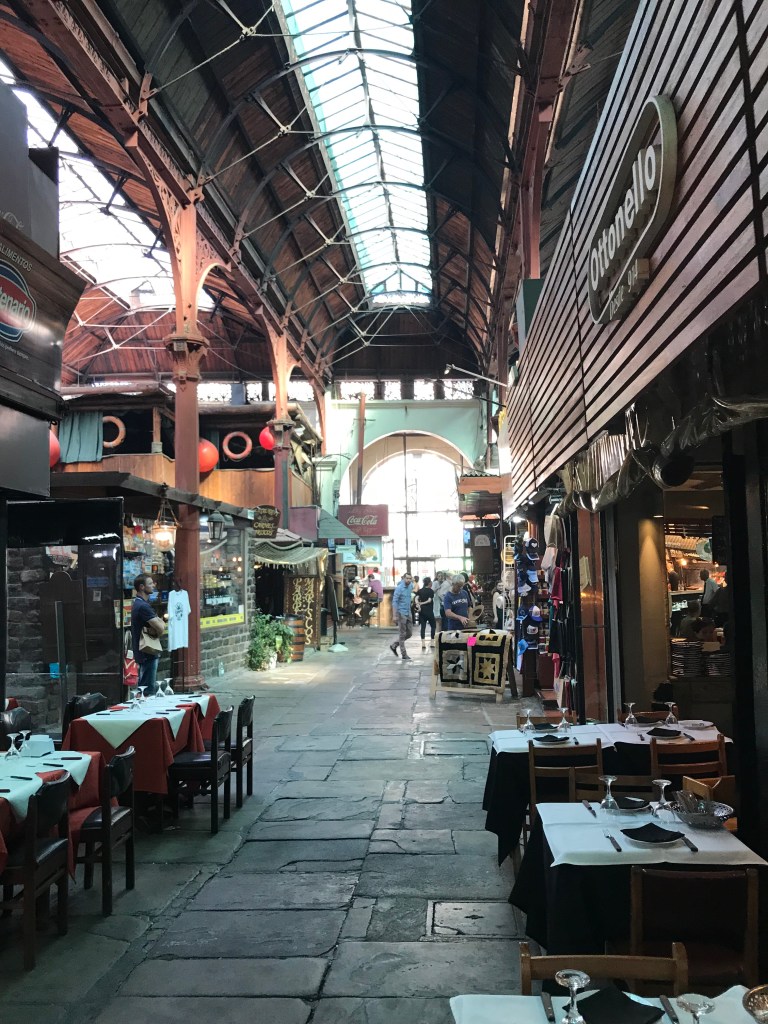
Our hotel is right across from the Mercado del Puerto. It is just like what I saw in Spain, a large open building with mostly restaurants and food shops inside.

The Mercado del Puerto
Inside the Mercado del Puerto

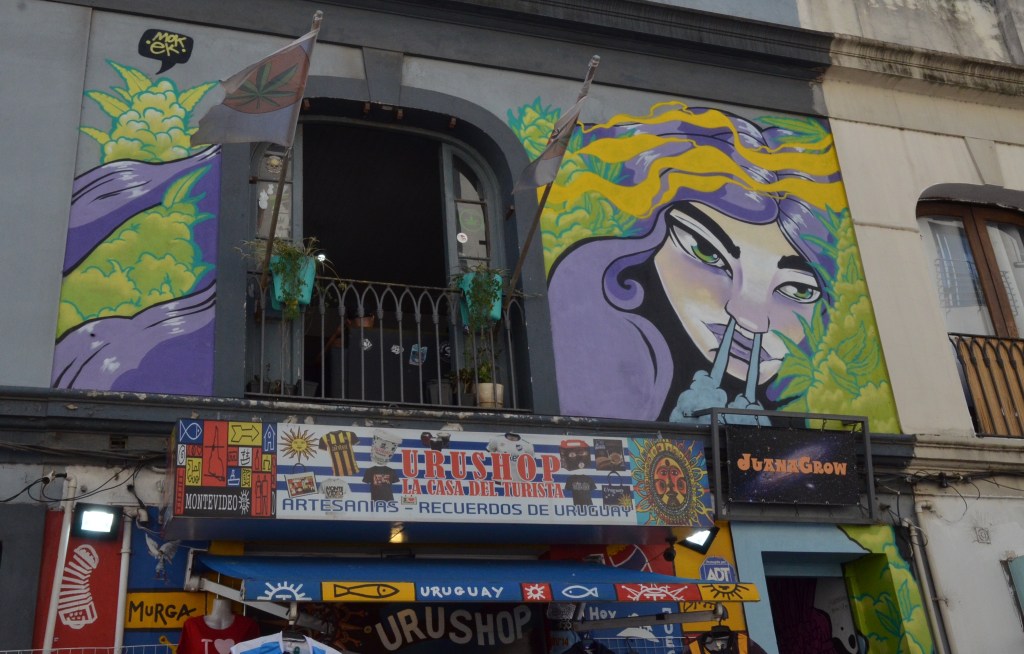
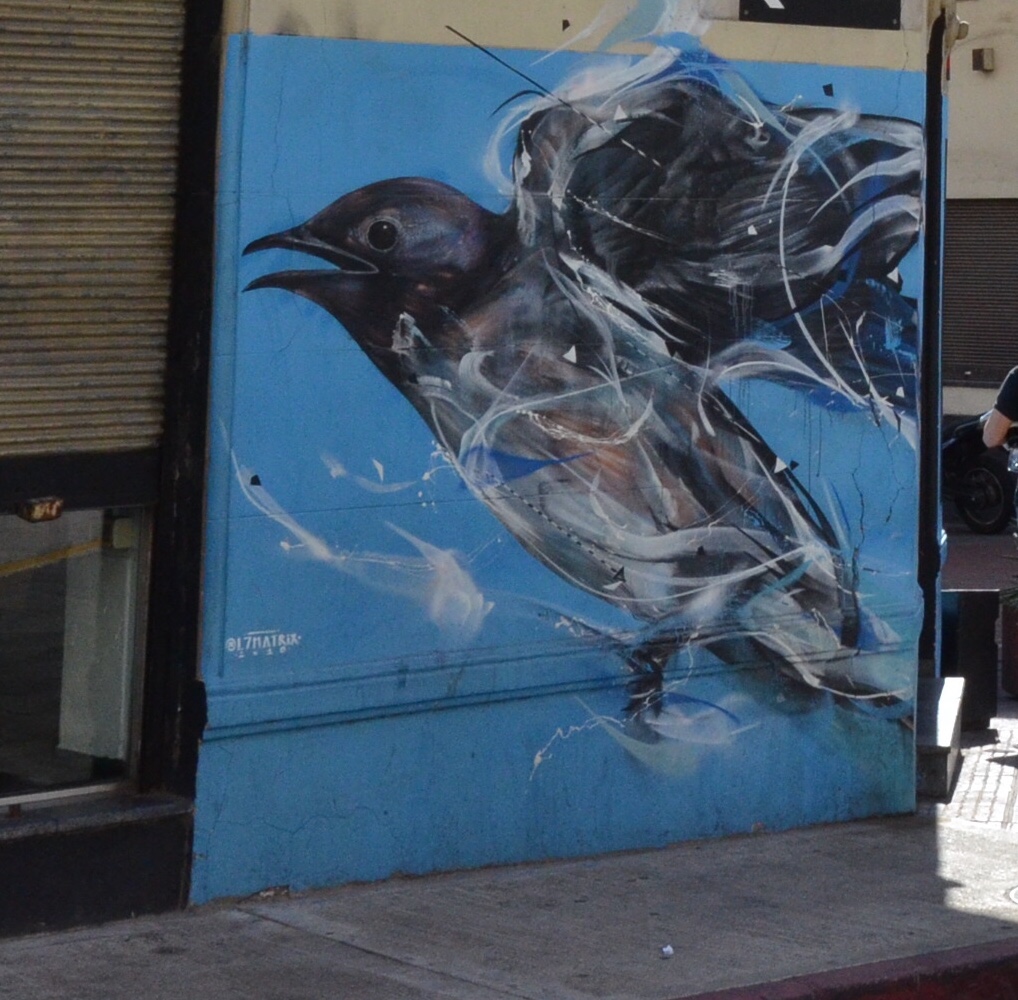
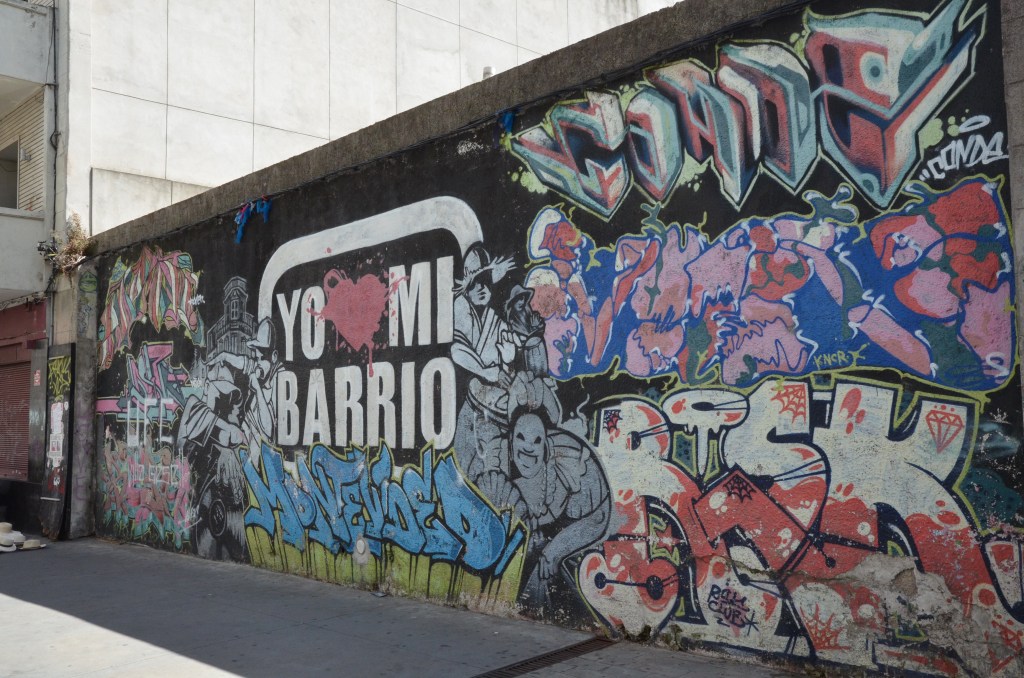
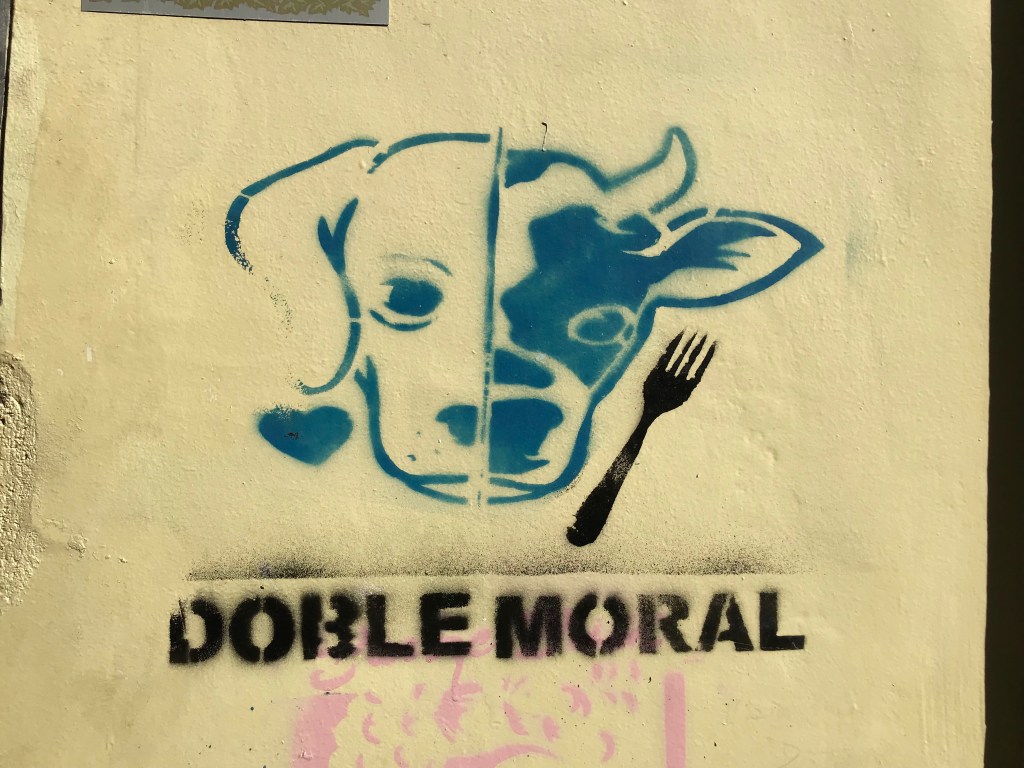
Walking the streets we saw some interesting street art and graffiti.

A few of the graffiti had a common theme. Someone here in Montevideo has a conscience.

If it’s love and peace…why do you eat me?
If it’s not your mother it’s not your milk.

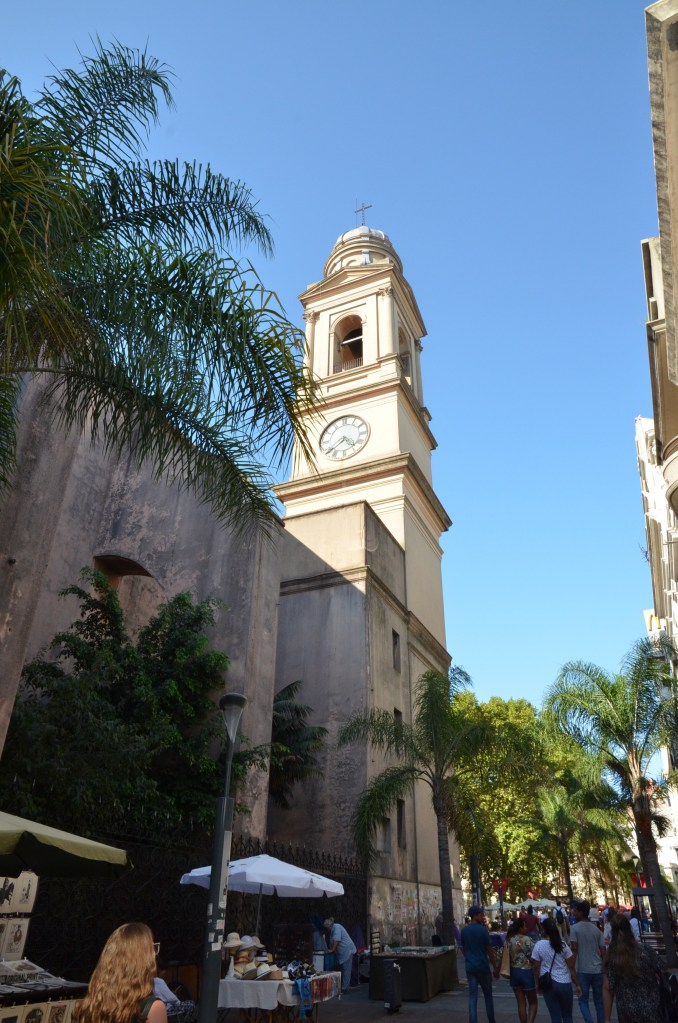
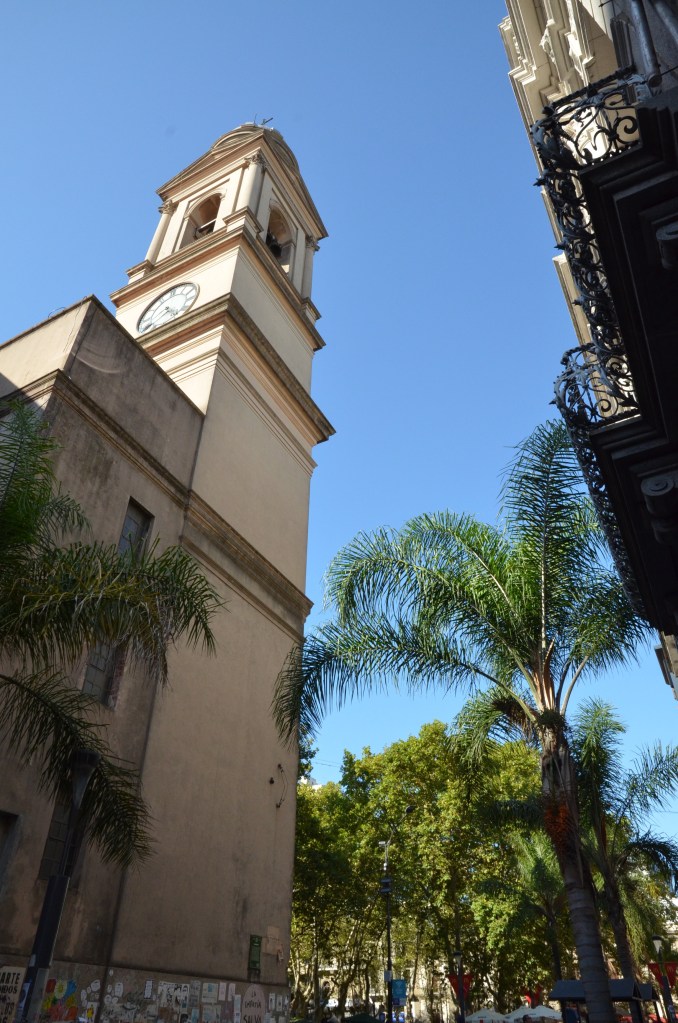
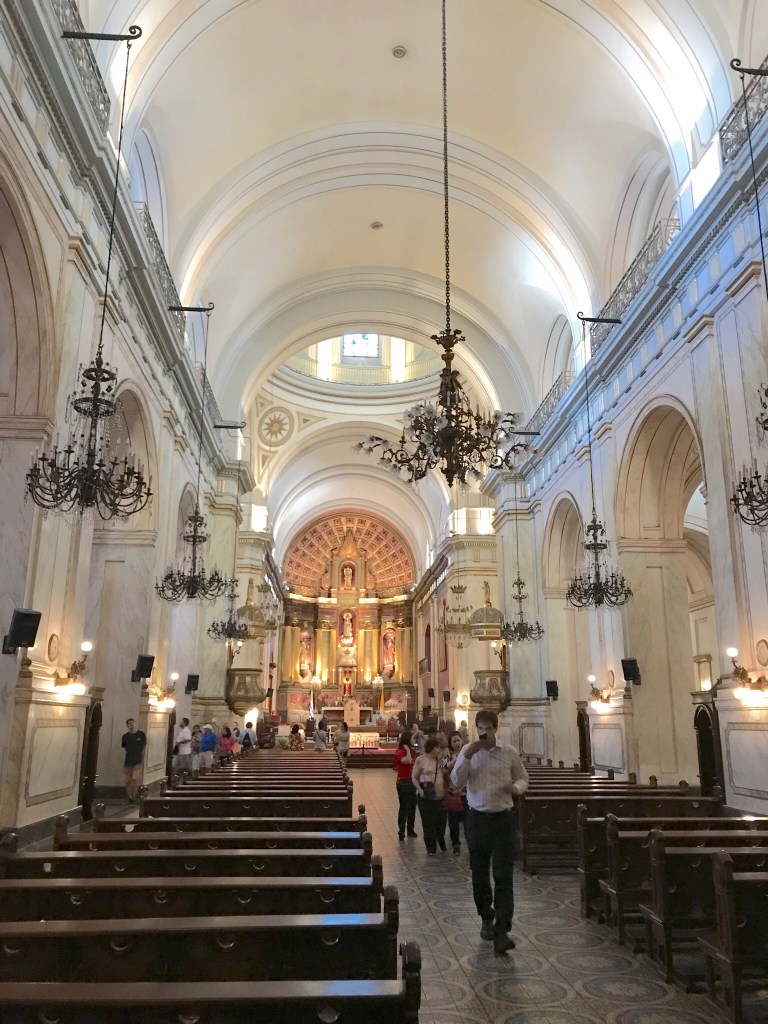
We toured the Cathedral Metropolitana.

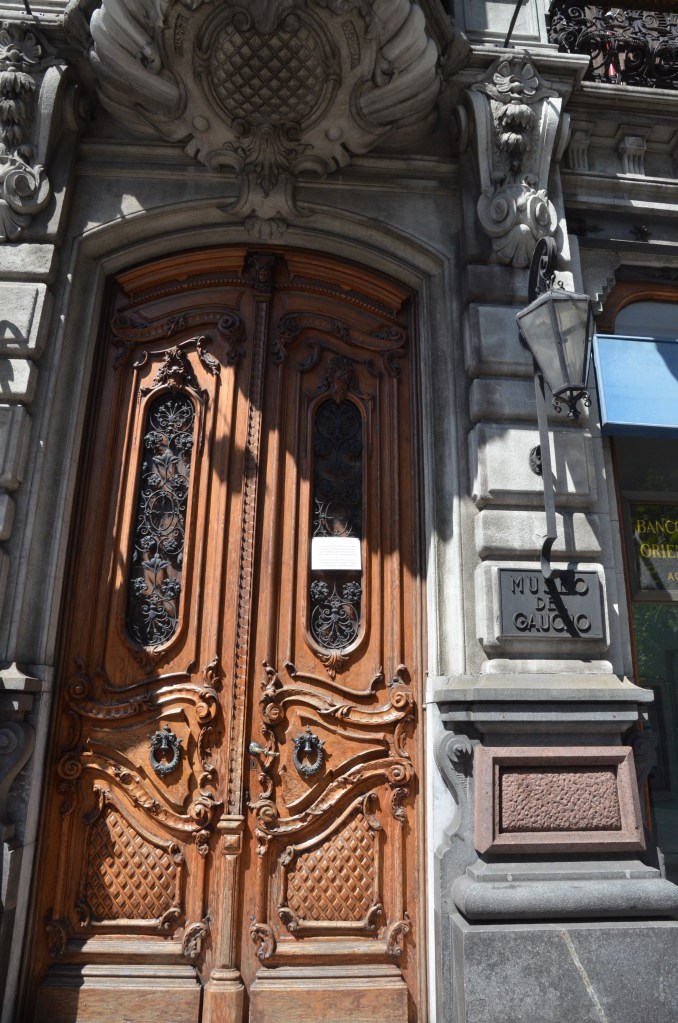
We walked what seemed to be about two miles to find the Museo del Gaucho, just to find it closed for renovation.

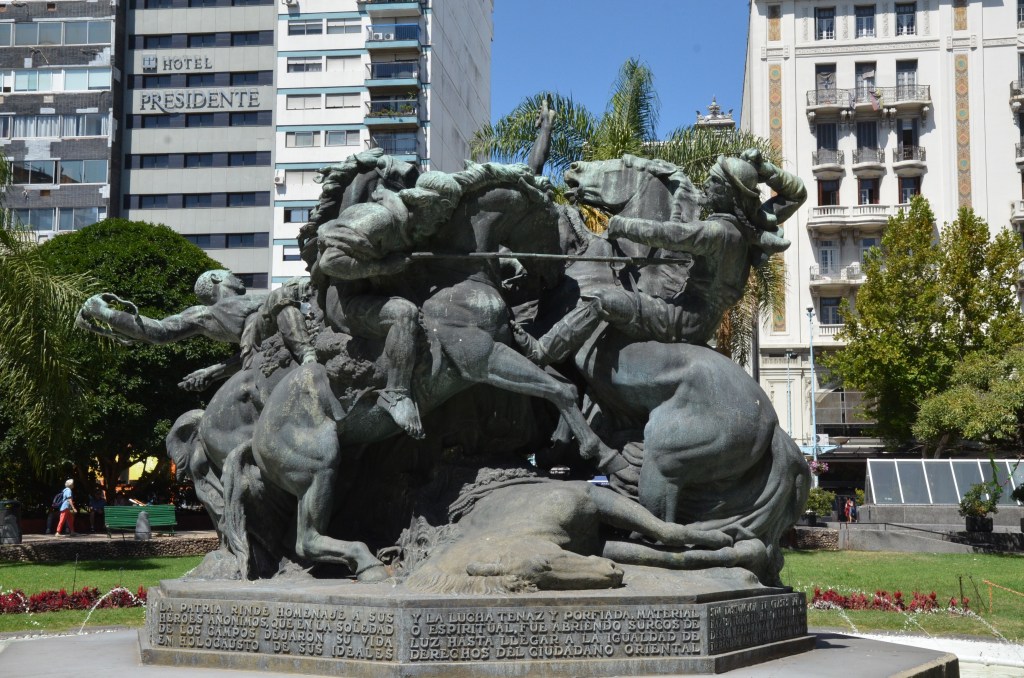
One block from the Gaucho Museum we found a spot to sit and relax with a lemonade. The fountain in the square celebrated the anonymous heroes who in the Soledad de los Campos lost their lives in the holocaust of their ideals.

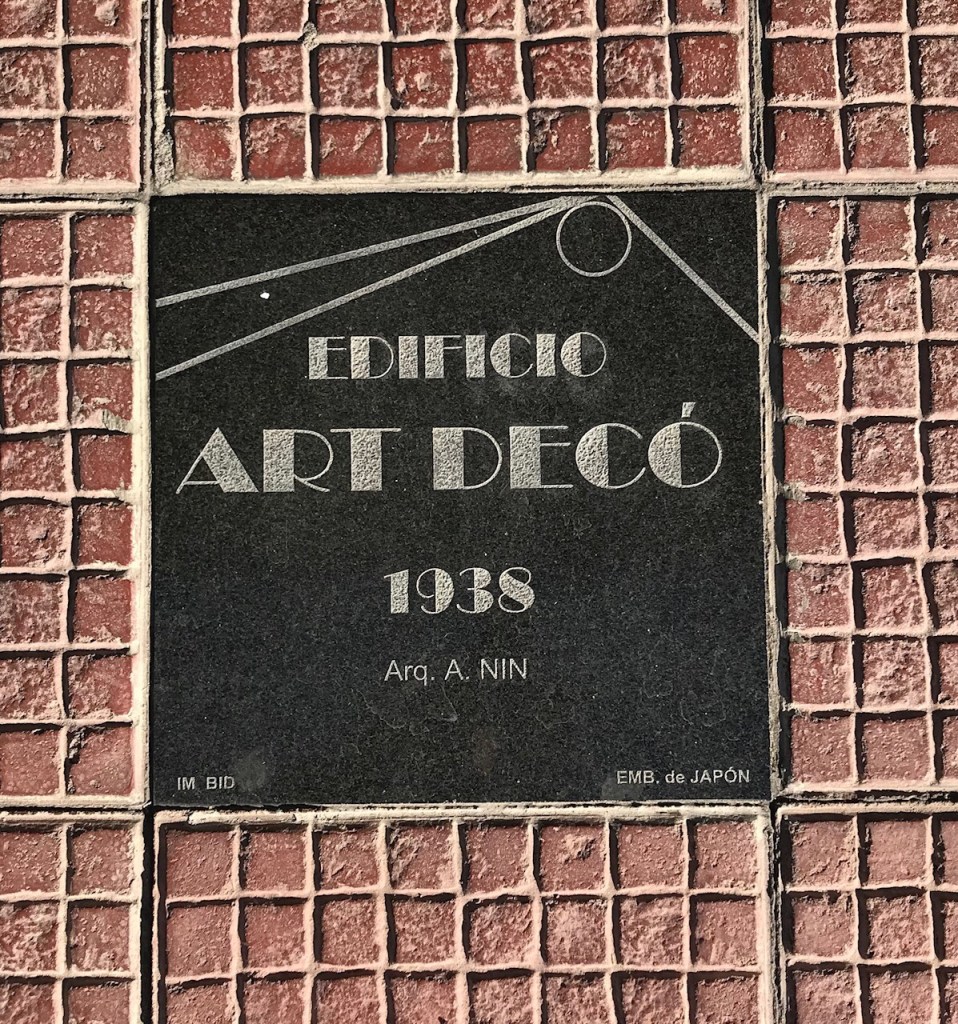
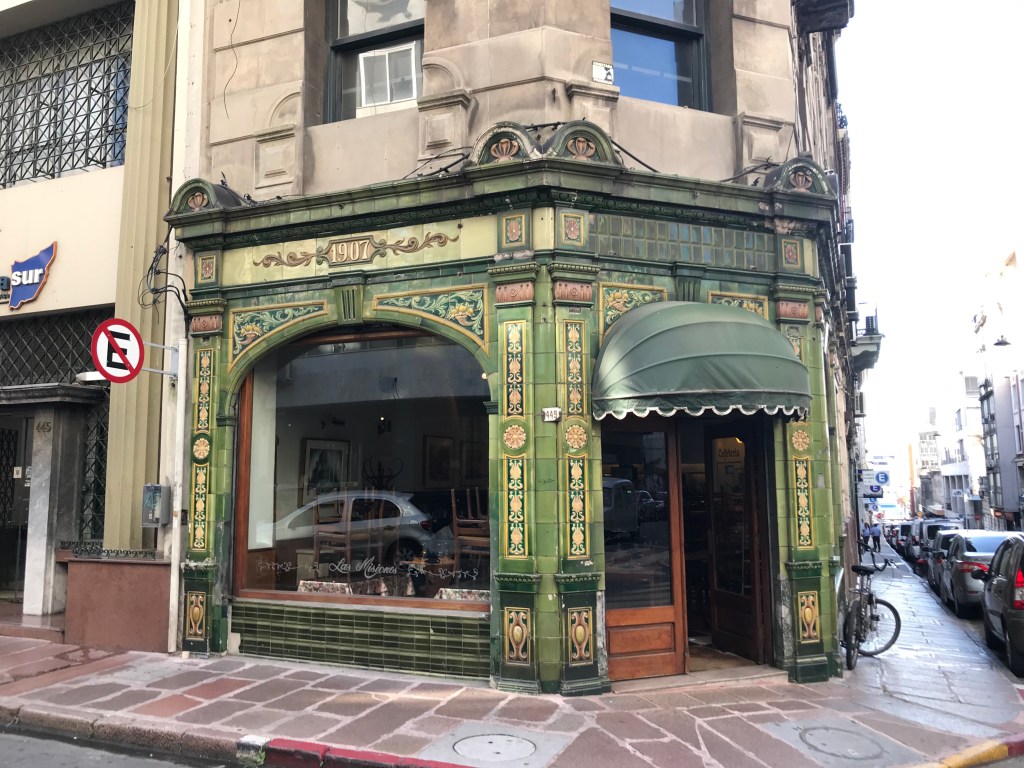
An interesting building in Montevideo.
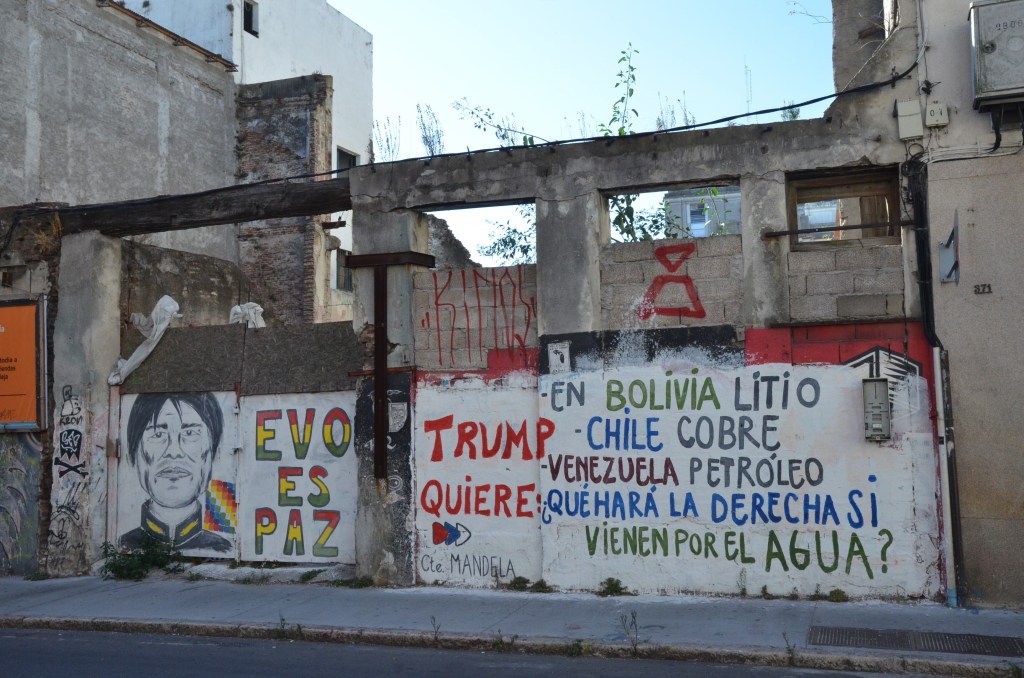
Anti Trump sentiment.

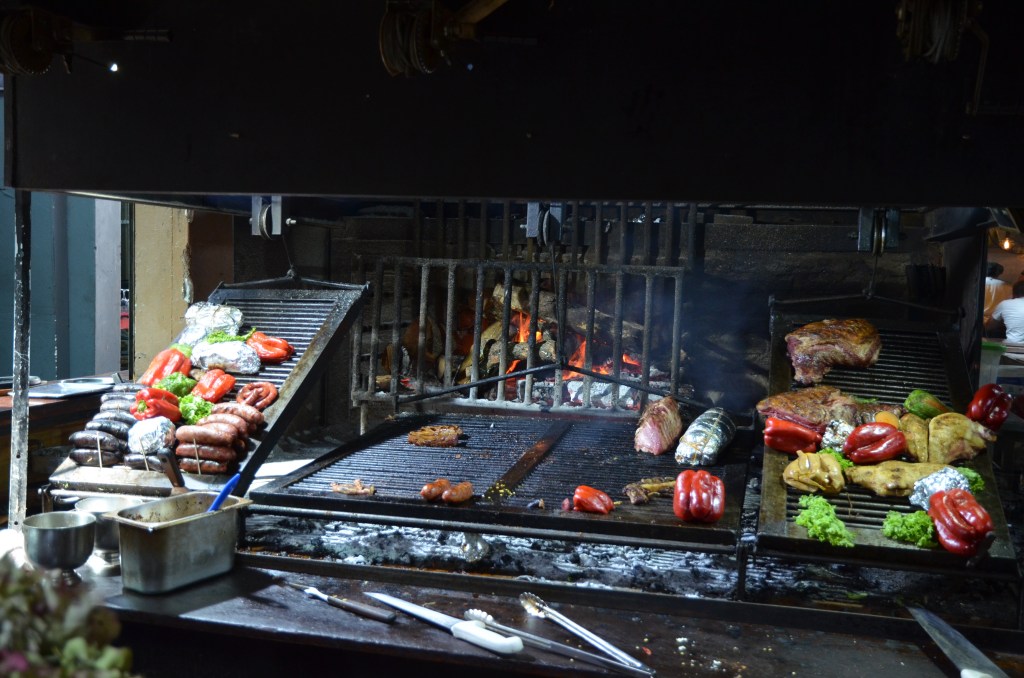
We had lunch in the Mercado del Puerto, at Roldos, famous since 1886 for its “Medio y Medio”, a drink made from white wine and champagne.

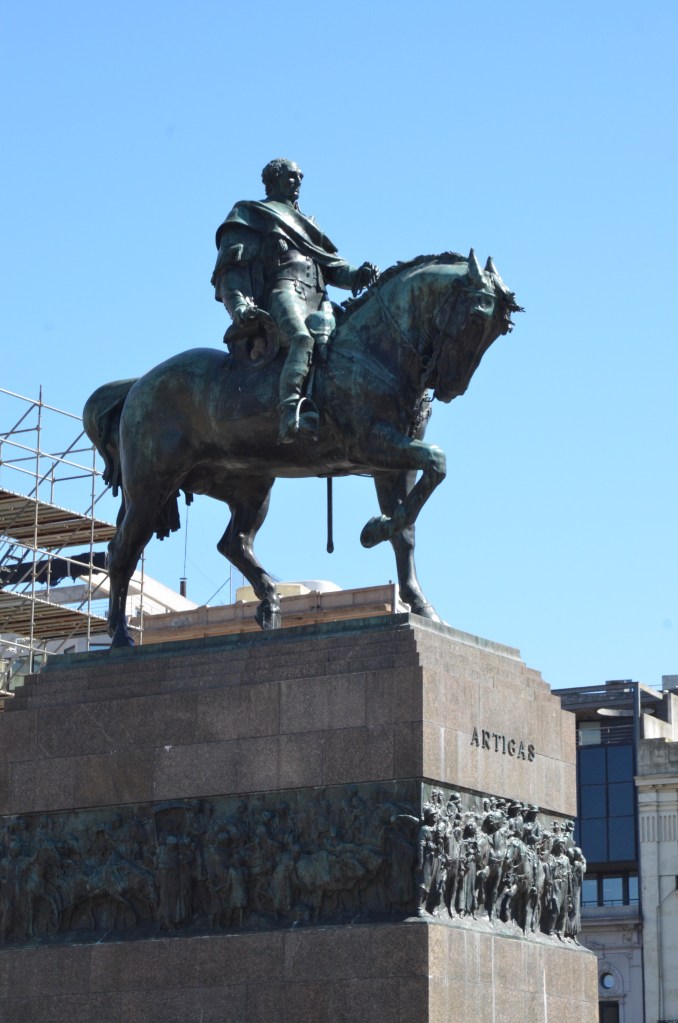
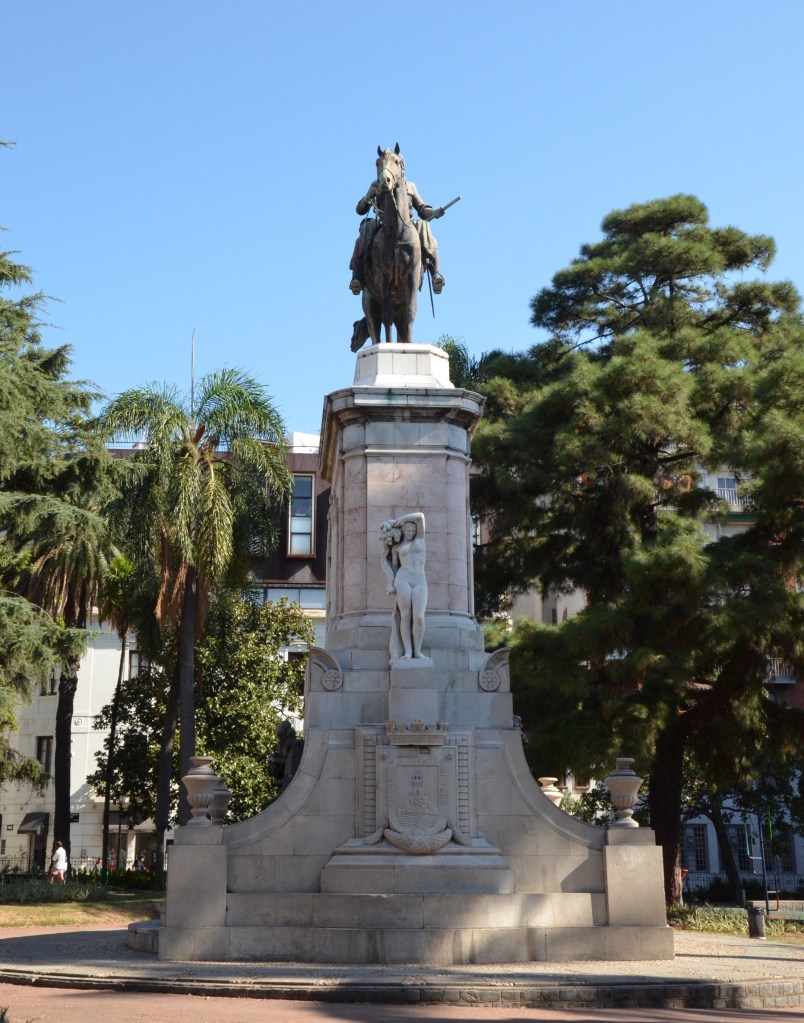
In Independence Square, a statue honors Jose Gervasio Artigas, who first liberated Montevideo from Spanish rule in 1811.

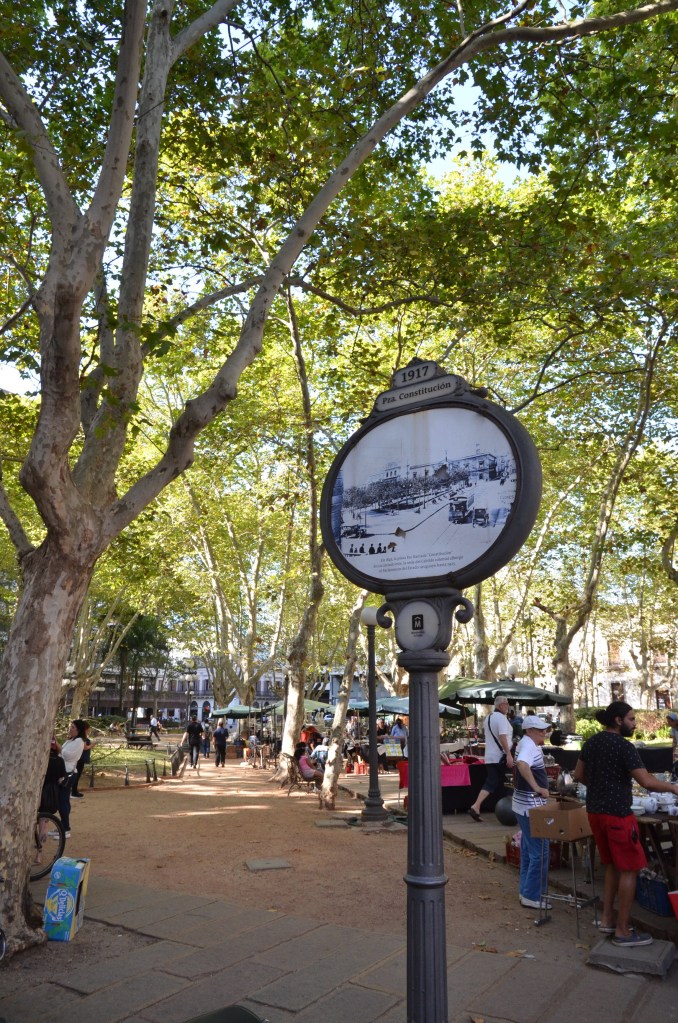
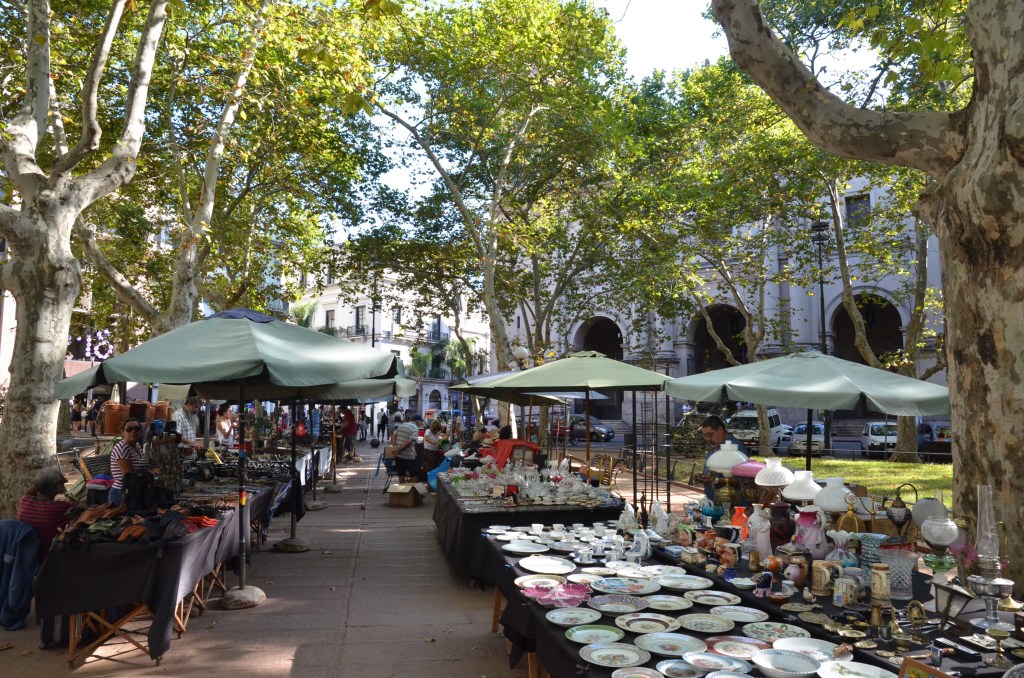
Constitution Square
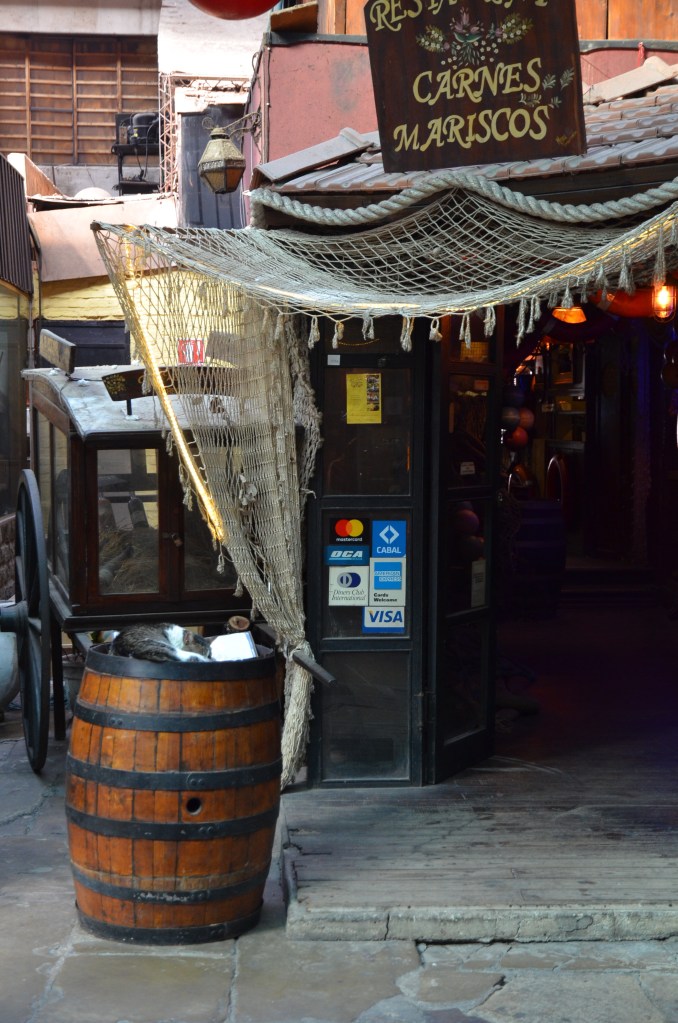
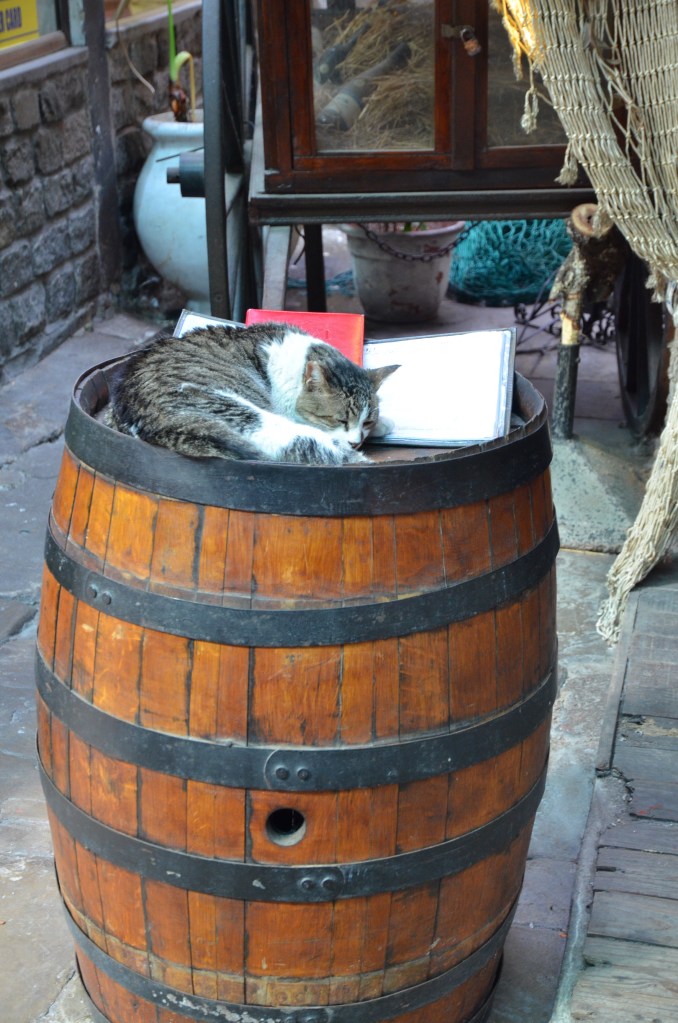
A shop cat.
In Zabala Square, a statue of Bruno Mauricio de Zabala. He founded Montevideo in 1726.
An art shop where I found a painting I liked. It was too expensive to bring home

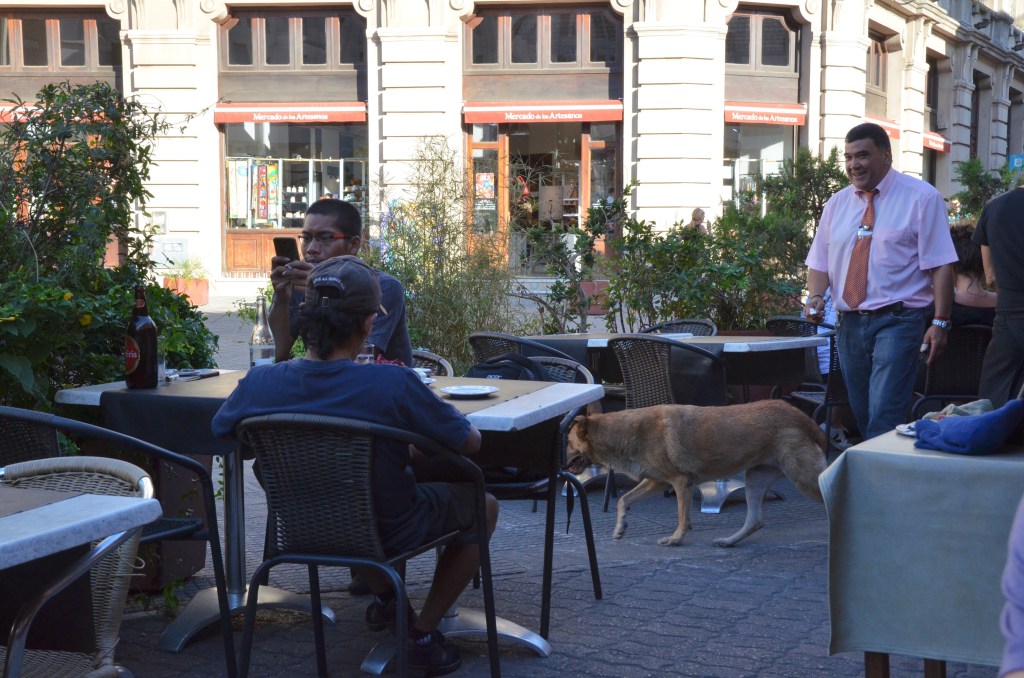
We had dinner near the port. We watched as the manager gently guided a dog out of the restaurant. He was smiling as he did it. The dog didn’t stay away. We saw several patrons feed the dogs, all of whom were friendly and looked in good shape.
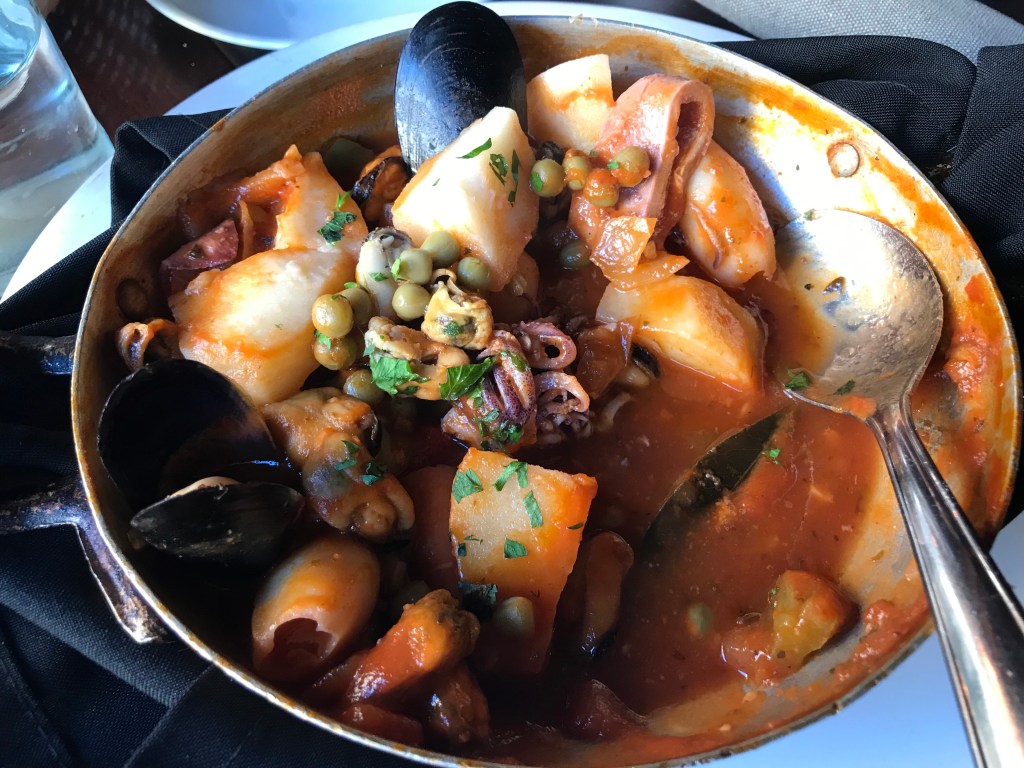
Seafood casserole.

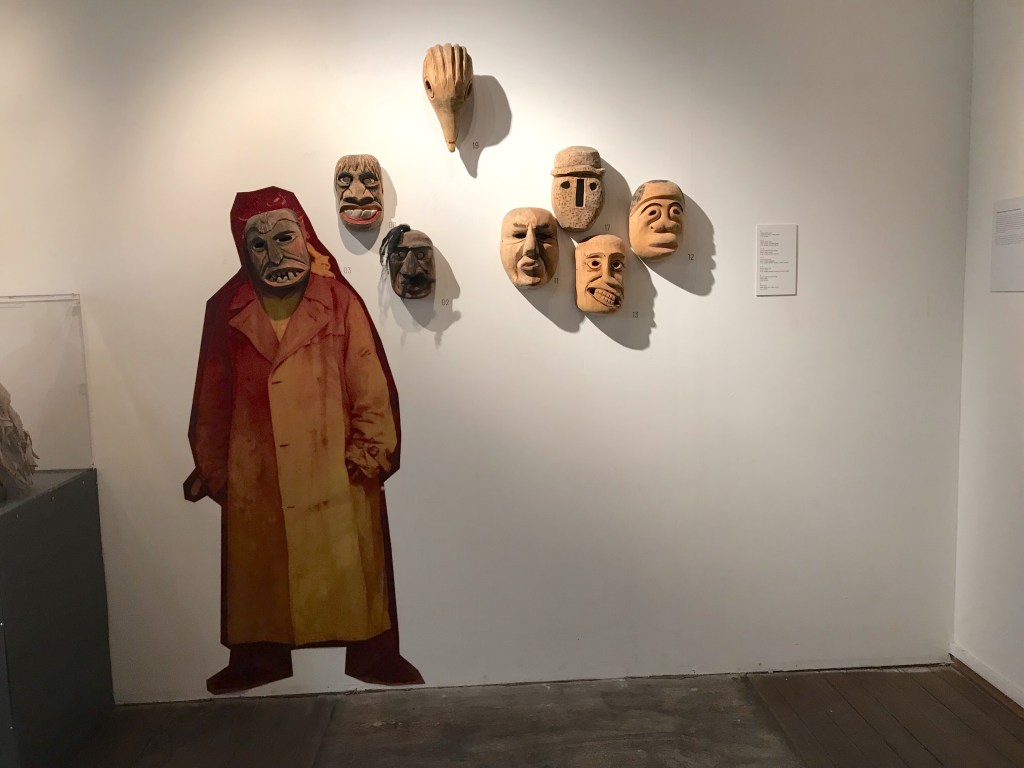
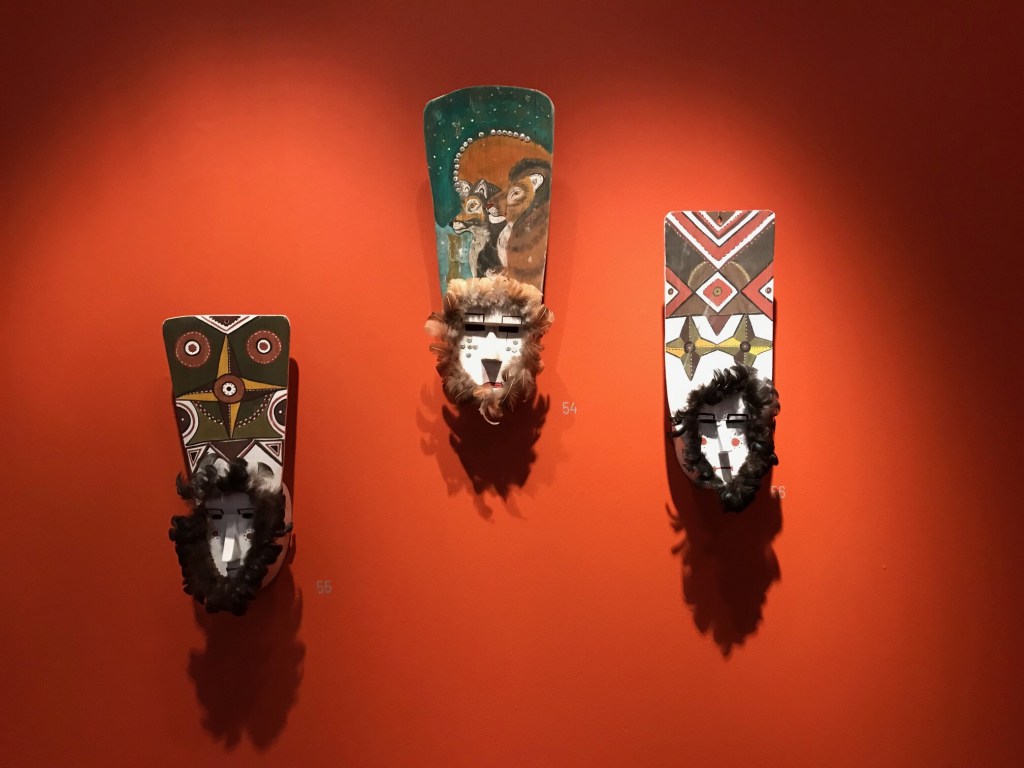
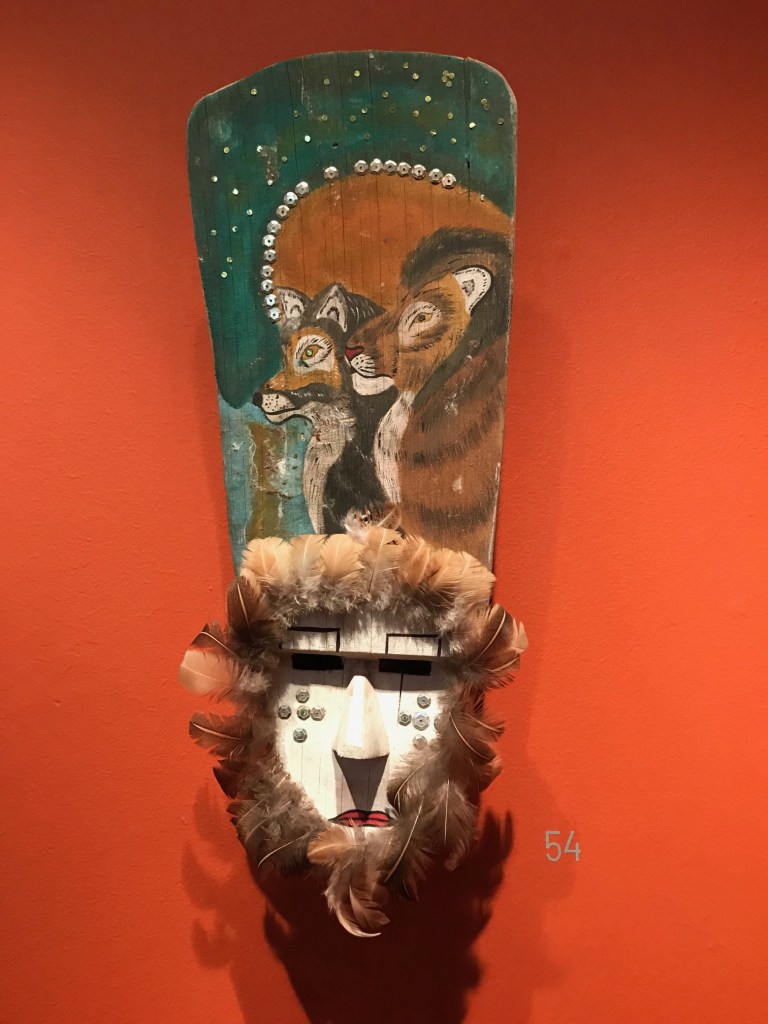
We also toured the Pre-Columbian and Indian Art Museum

The people here seem very pro cat and dog. The city is clean and mostly friendly. From Montevideo we will be traveling north into the center of the country.

Posted in Uruguay | 2 Comments

Oh What Fun It Is To Ride

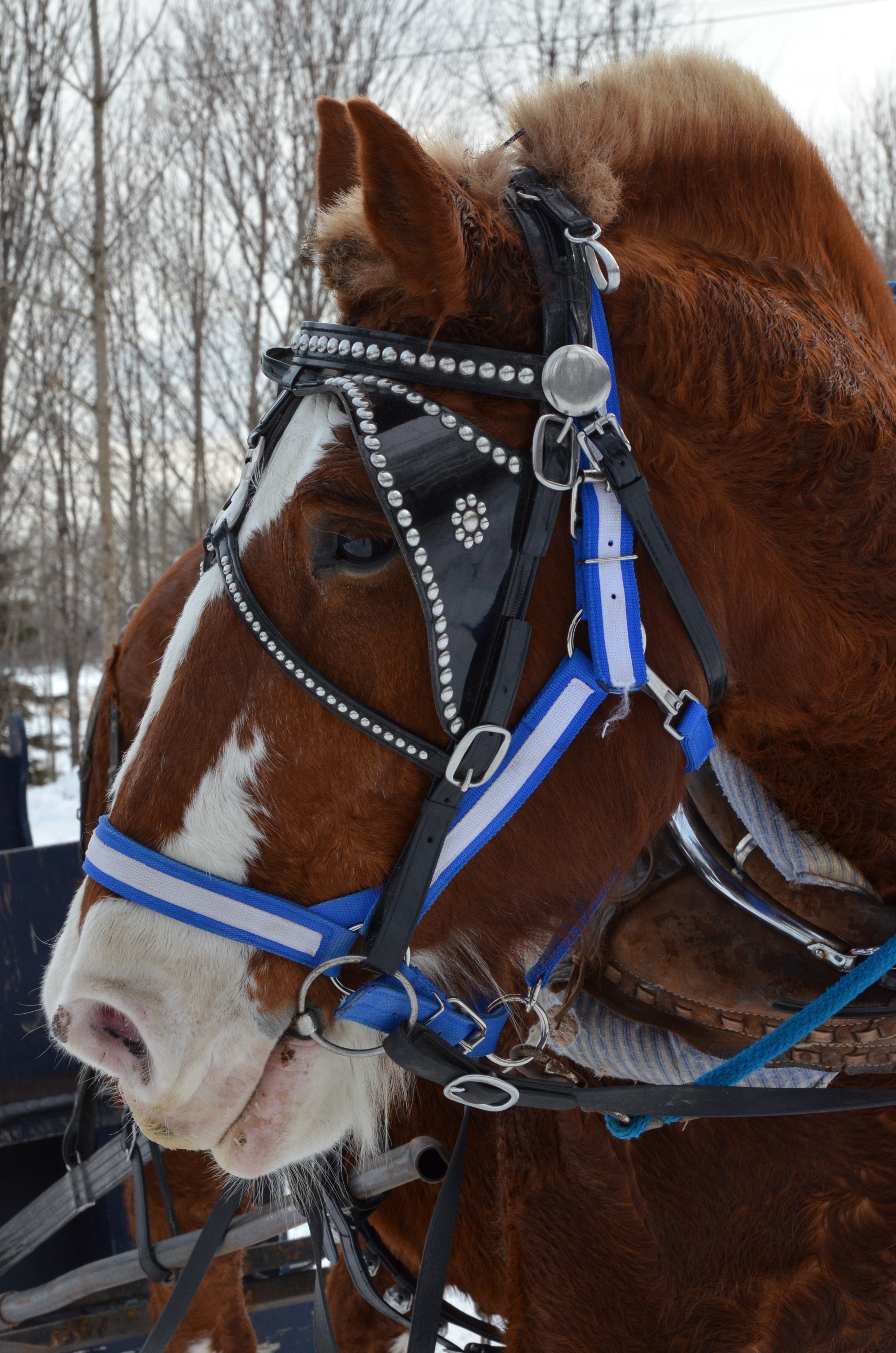
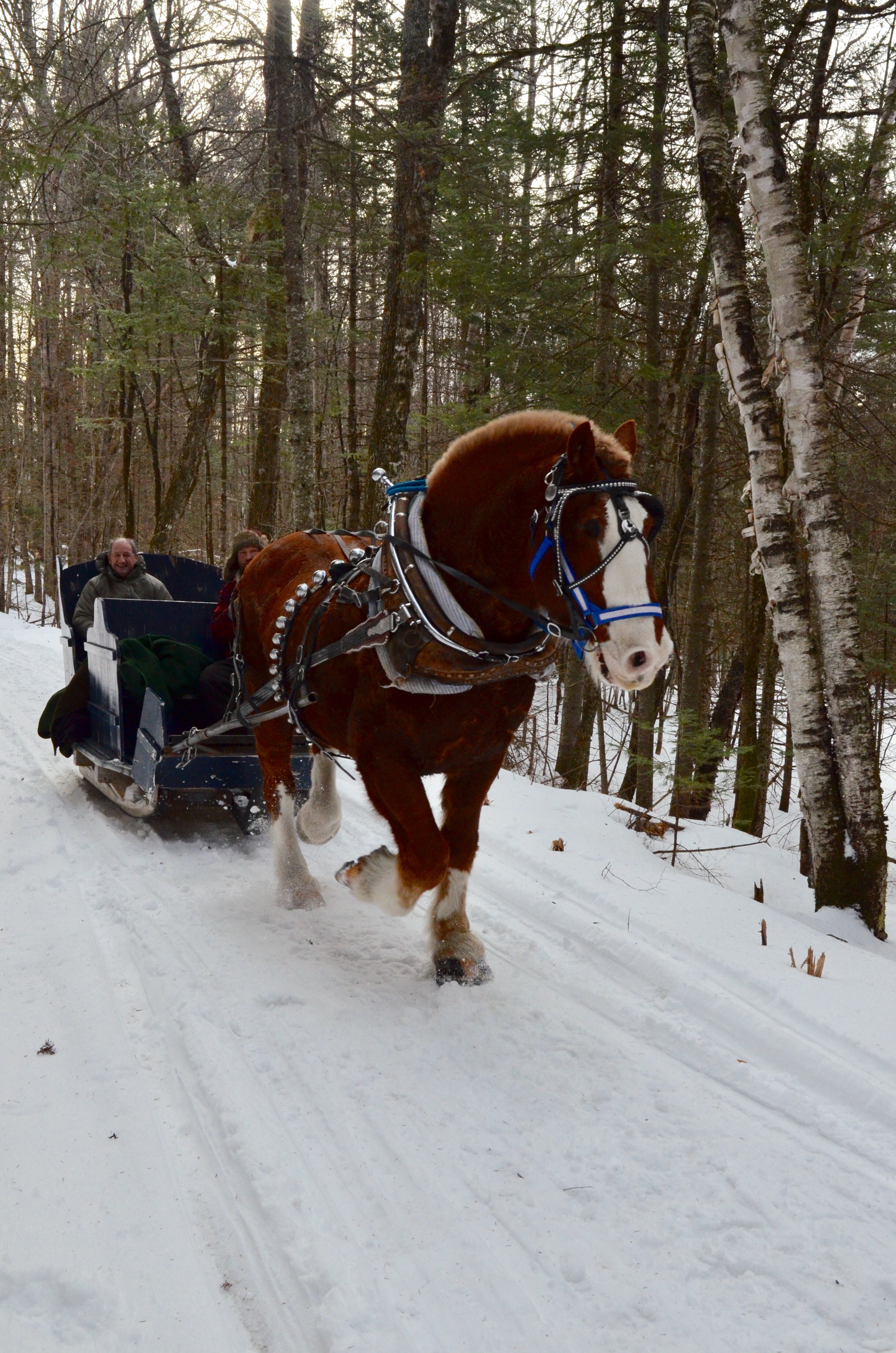
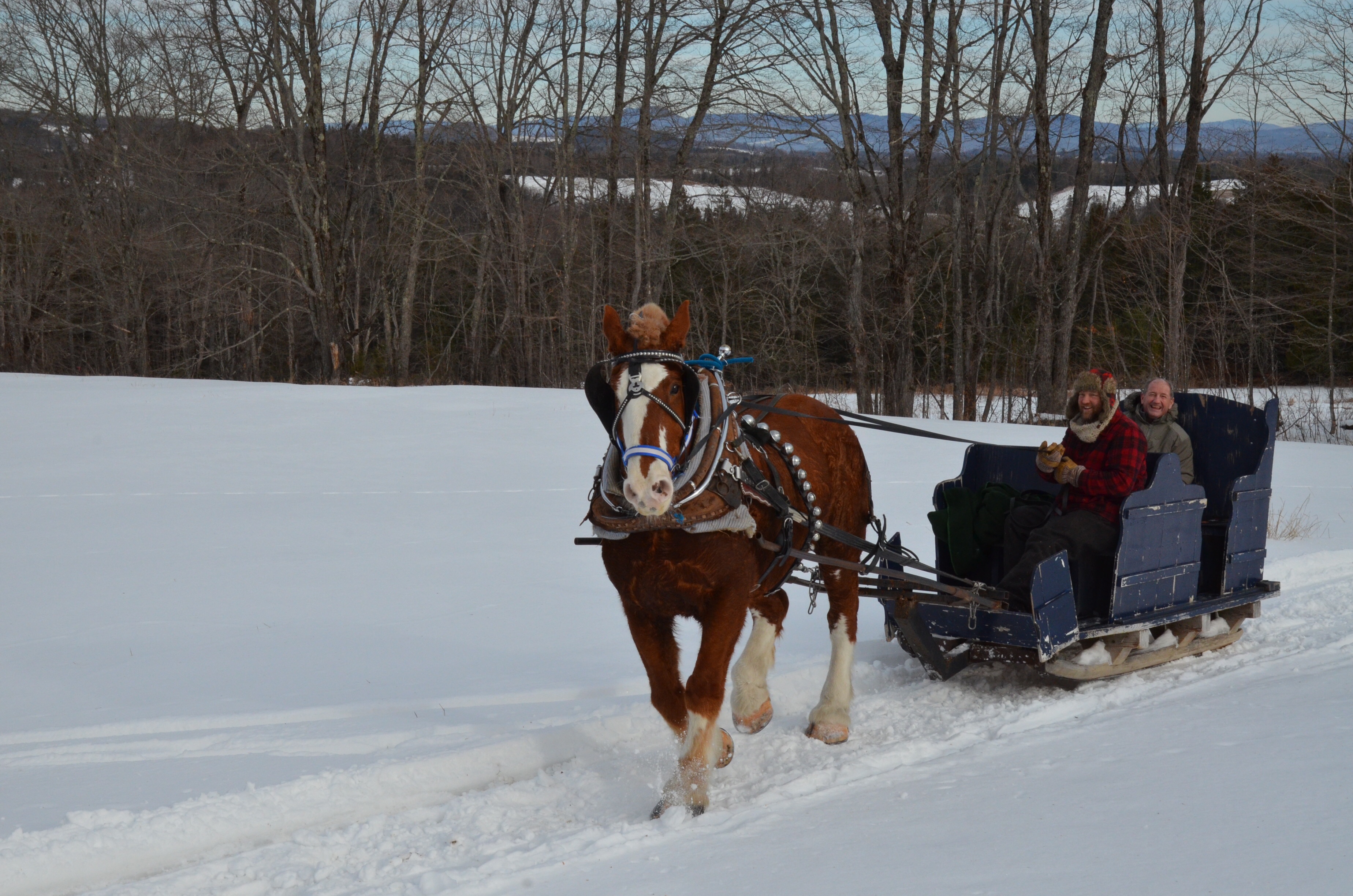
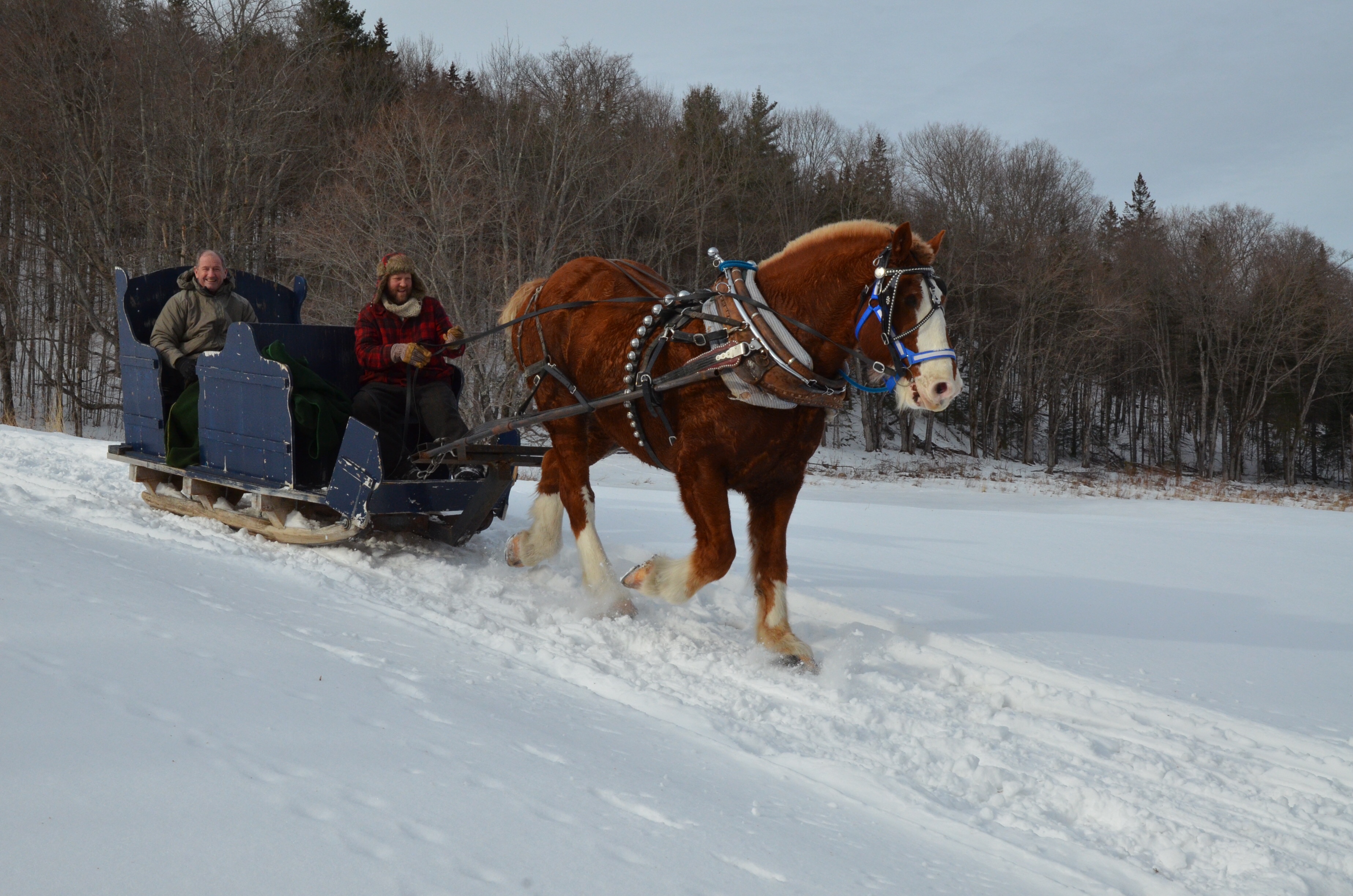
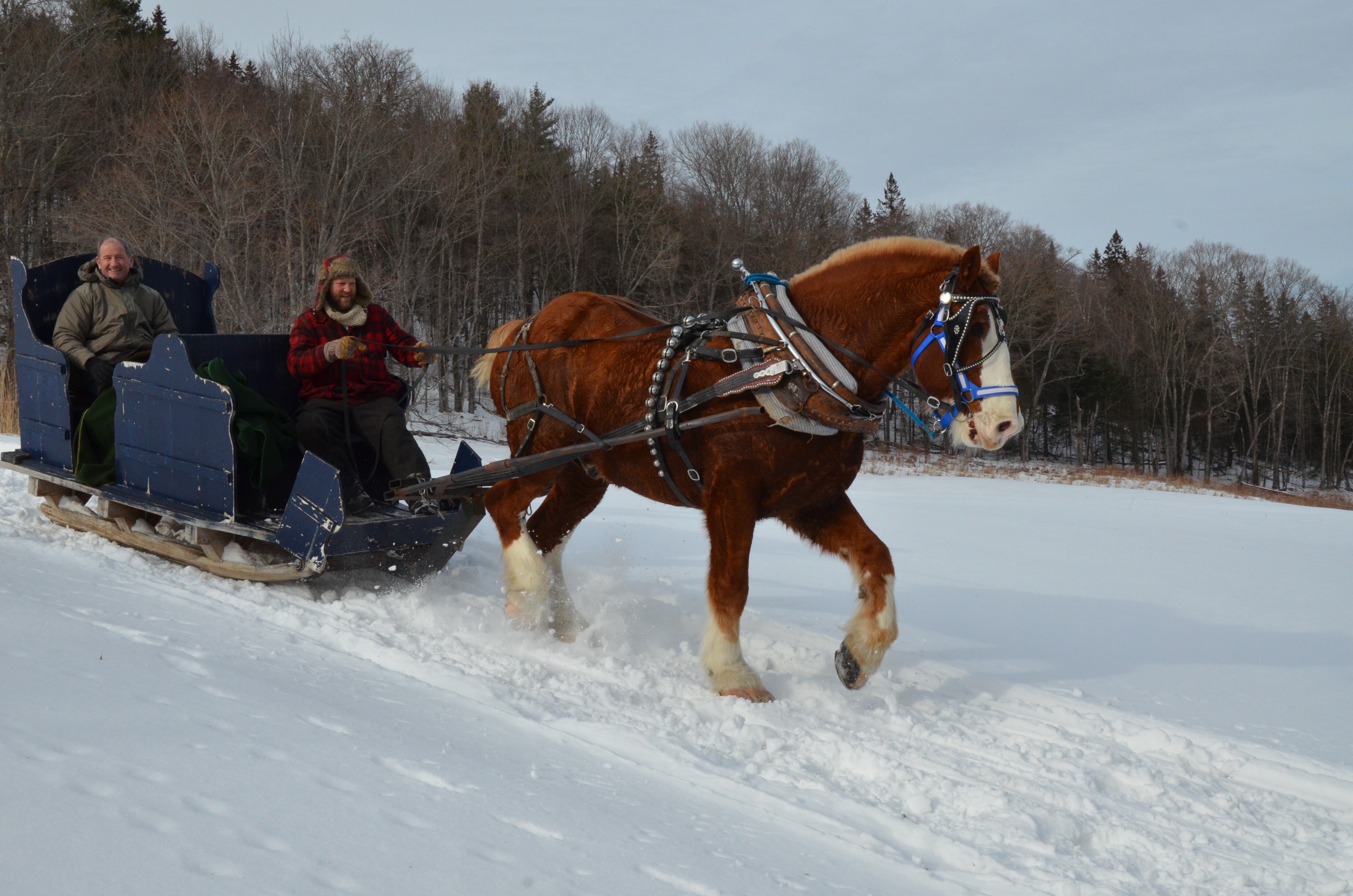
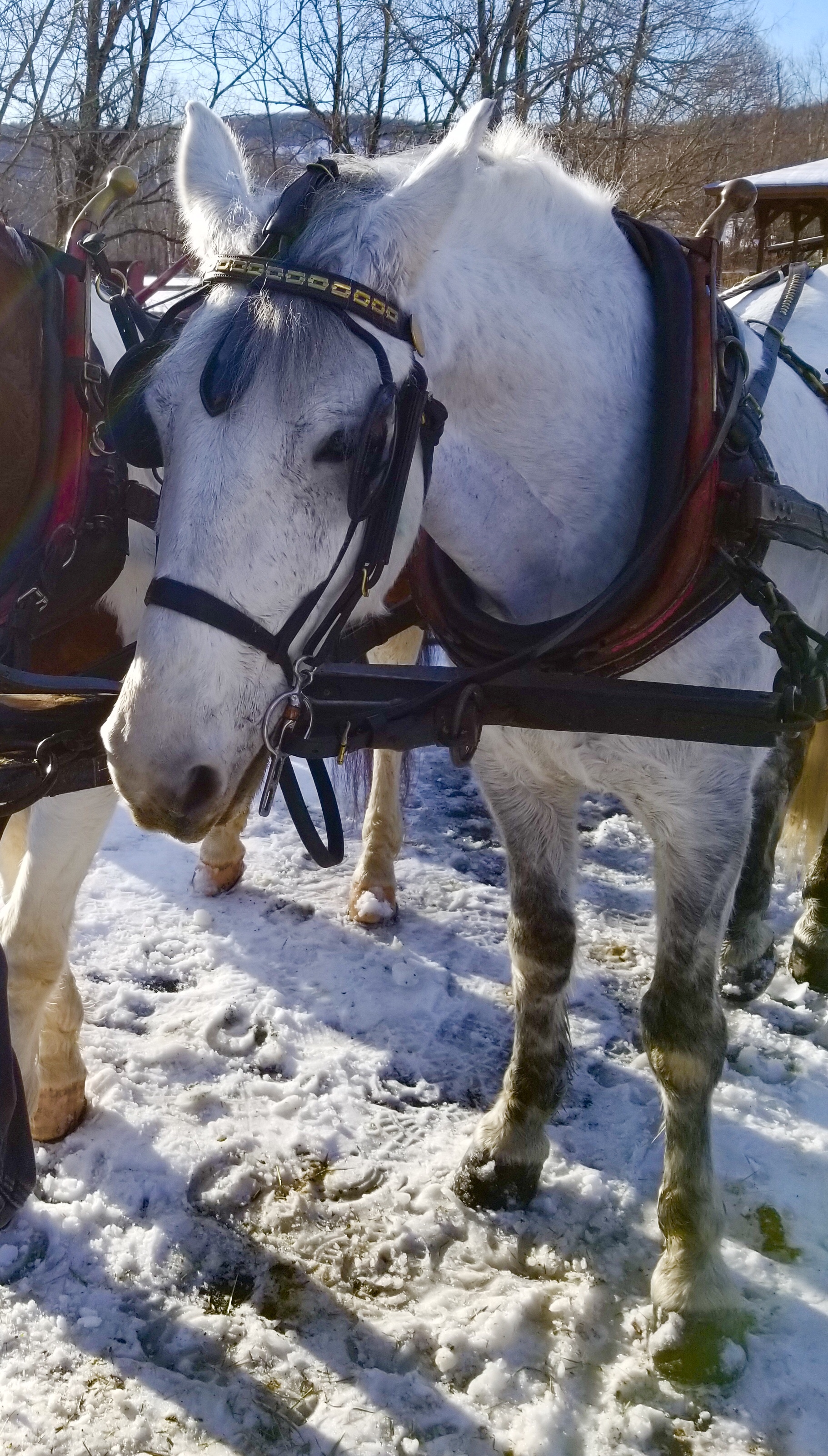
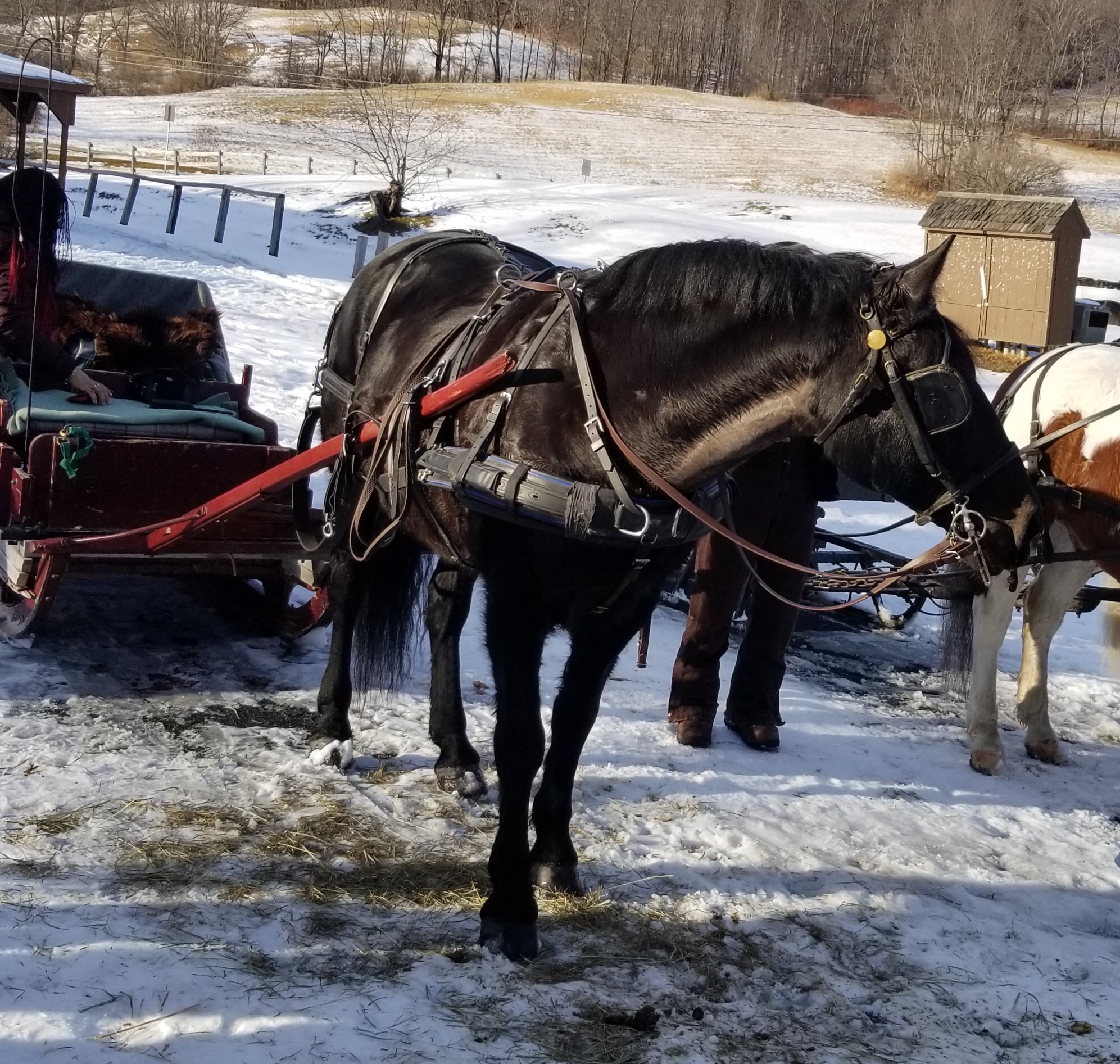
…in a one horse open sleigh. Especially if that sleigh is pulled by Pete, the Wonder Horse.

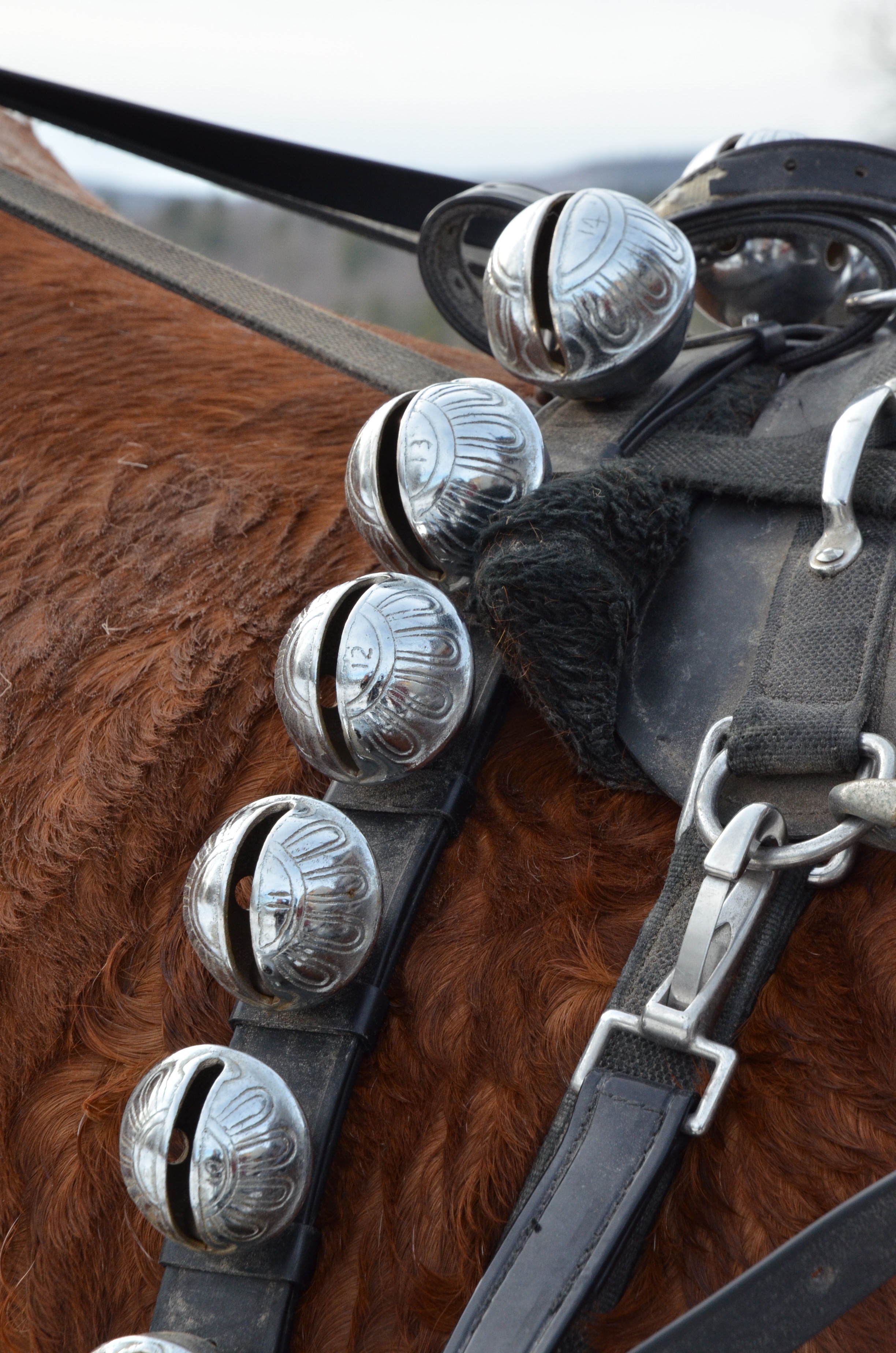
We got our sleigh ride, complete with jingle bells. Thomas at Foxfire Revival Farm is Pete’s caretaker and partner. They had enough snow for a sleigh ride, so we drove north for about 1 1/2 hours to Peacham. It was well worth the drive.

Foxfirerevivalfarm.com

Thomas’ family has owned this land for generations. Thomas has owned Pete for over seven years. Purchased at an auction, Pete had been an Amish farm worker and has only one eye. You could see by their interactions that Thomas and Pete were a team that enjoyed working together.

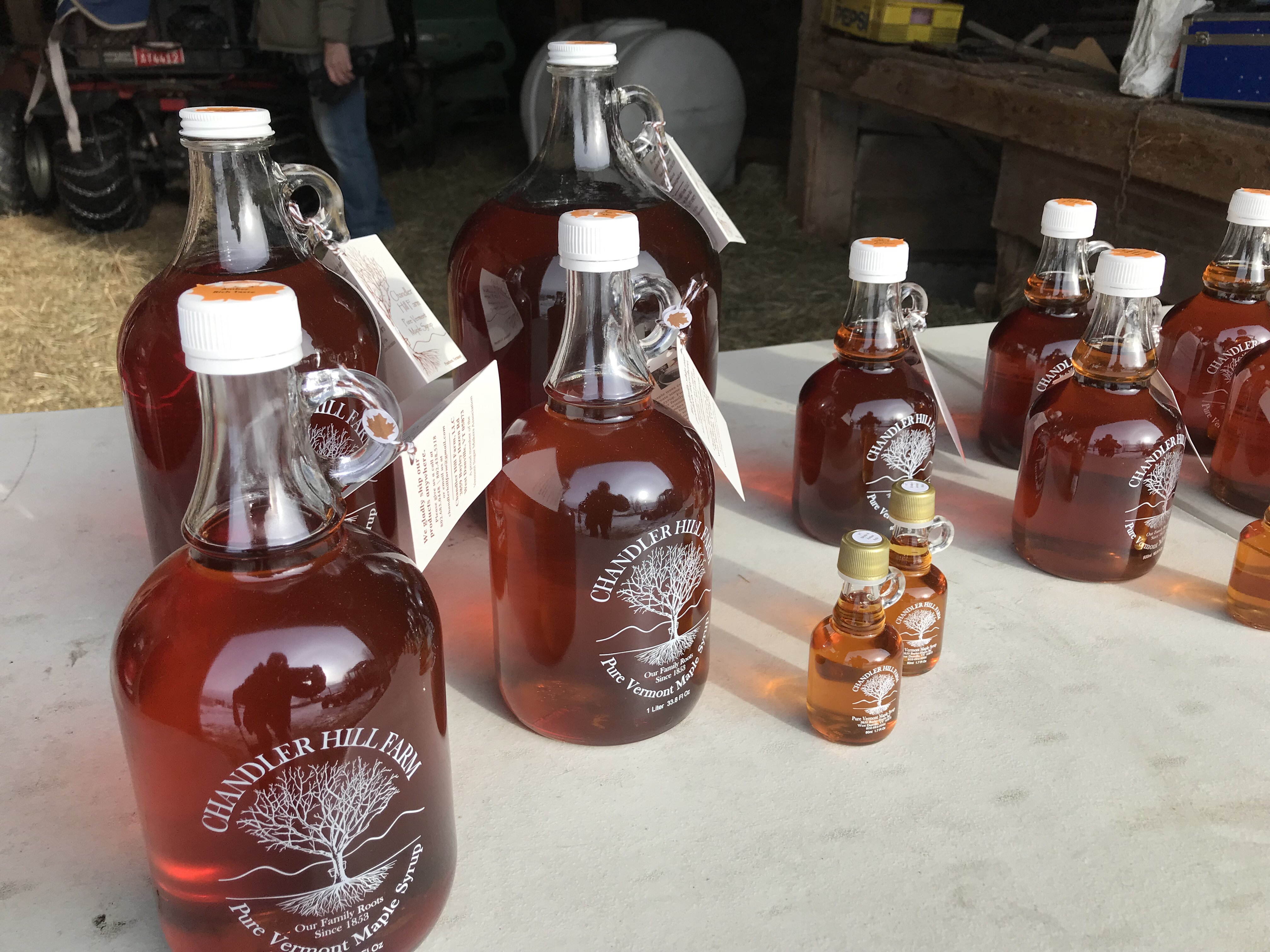
We spent a truly enjoyable hour with Pete and Thomas. We heard stories about the area and saw their maple syrup making operation.

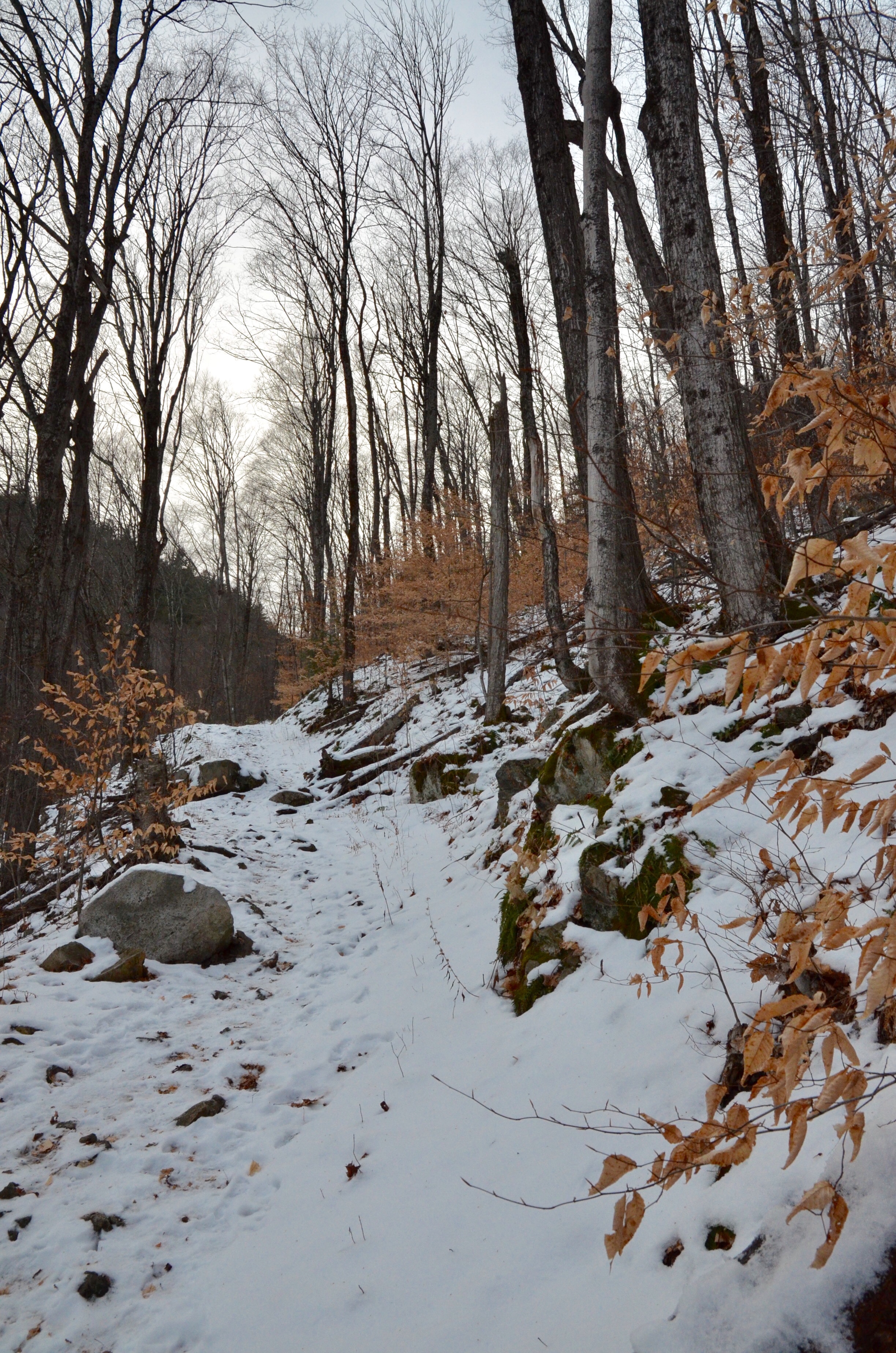
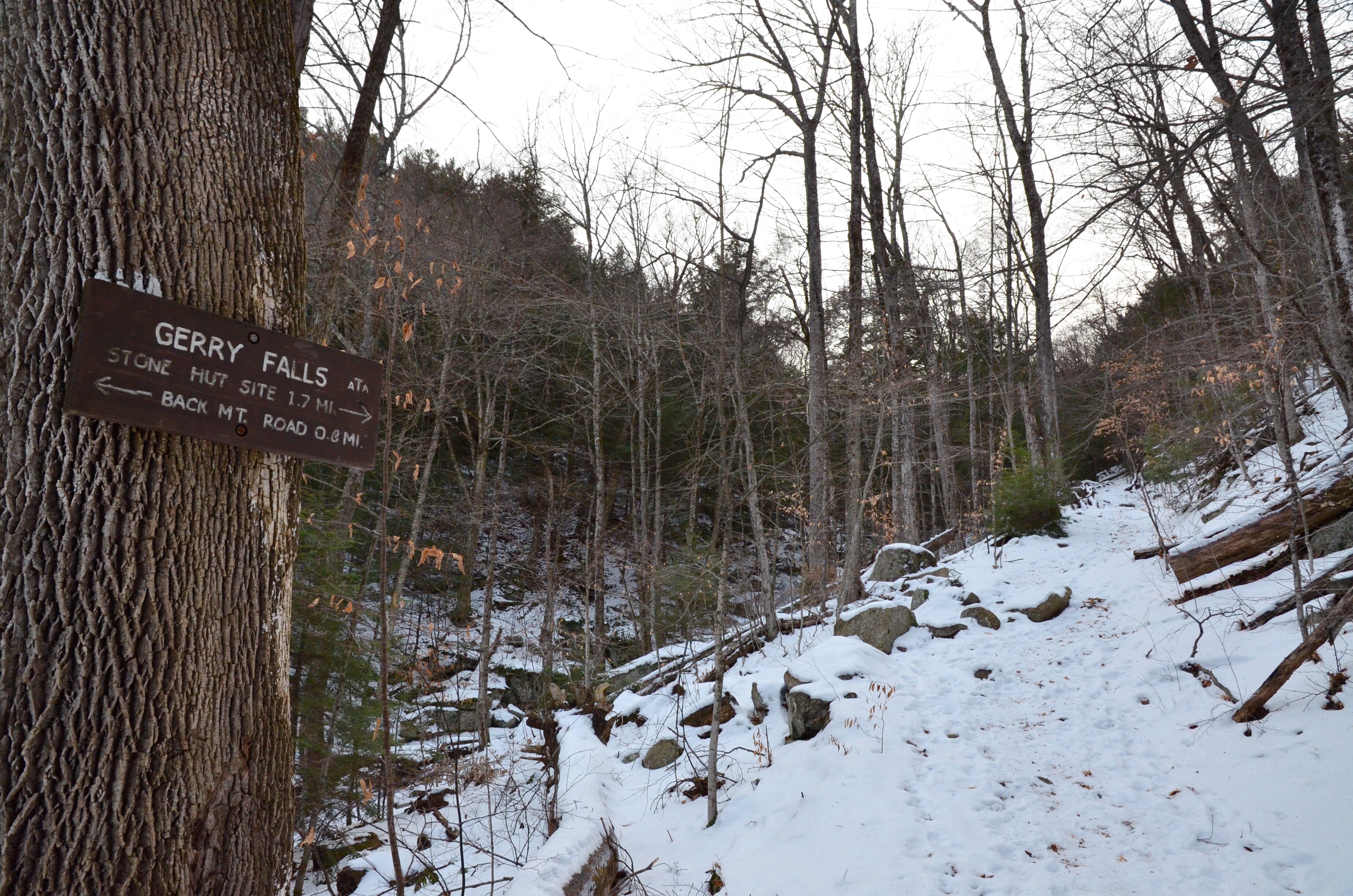
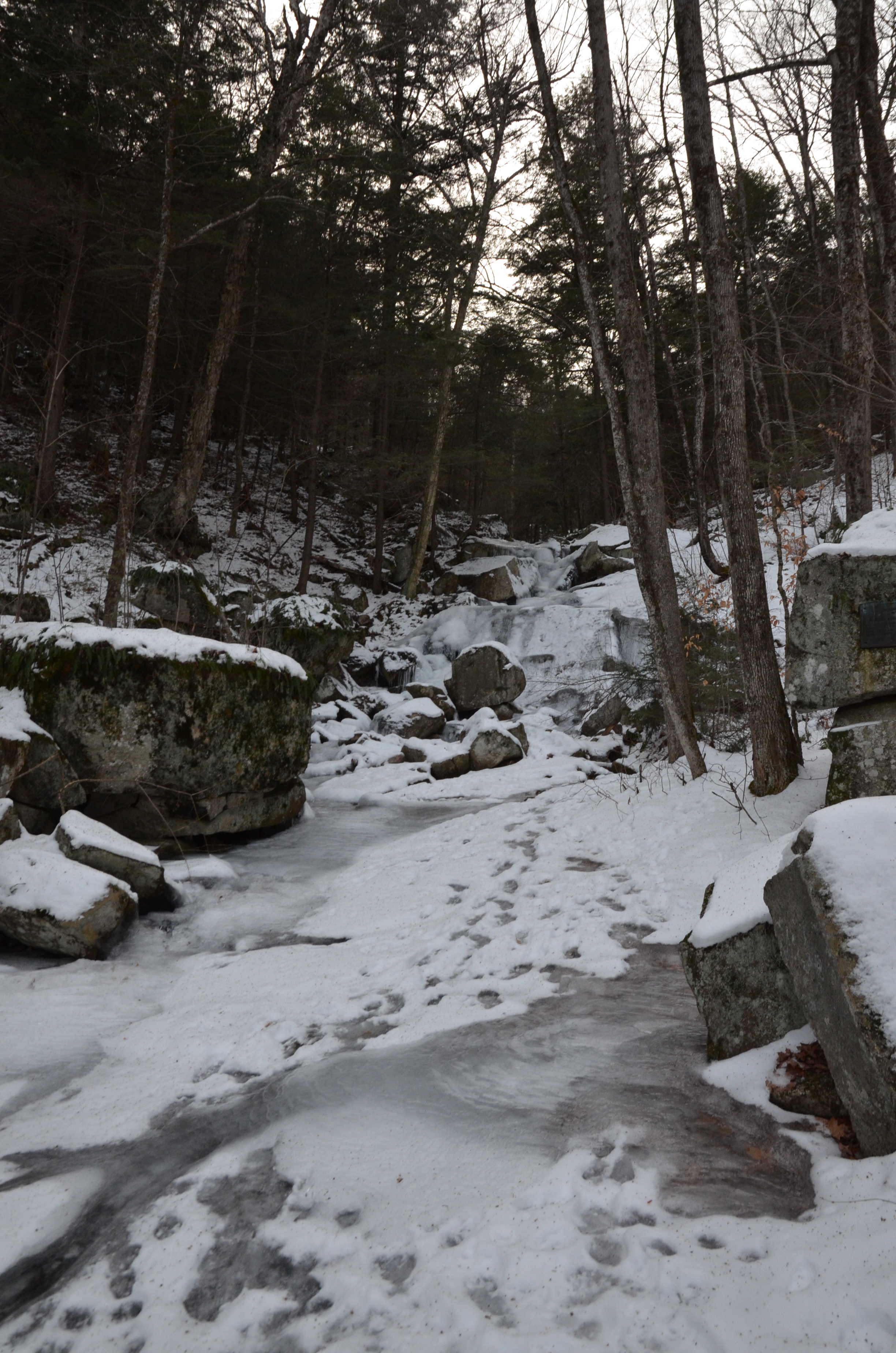
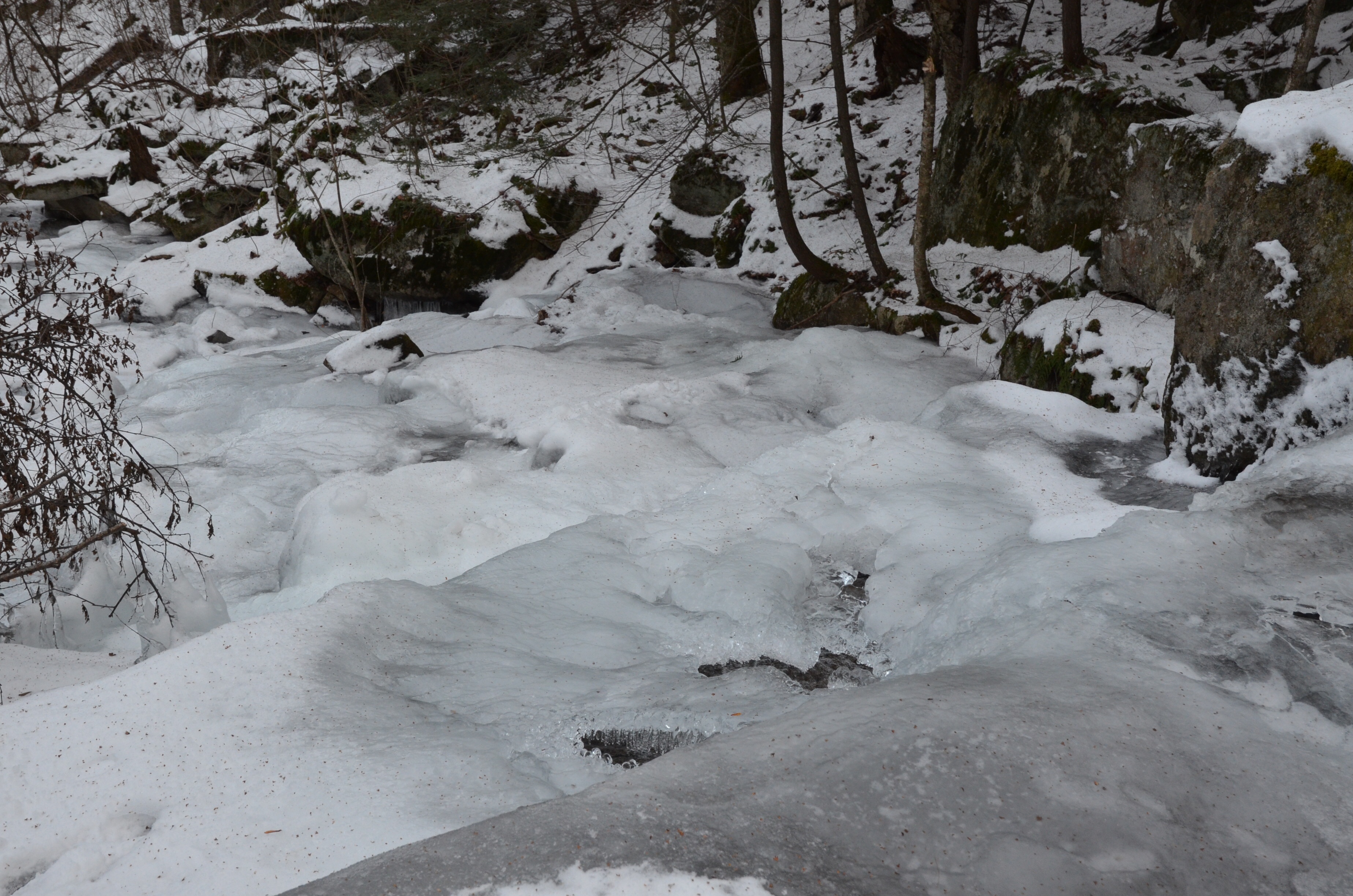
On Christmas Day we hiked the 8/10 of a mile up to Gerry’s Falls in the Mount Ascutney State Park.

The snow covered trail to Gerry’s Falls.

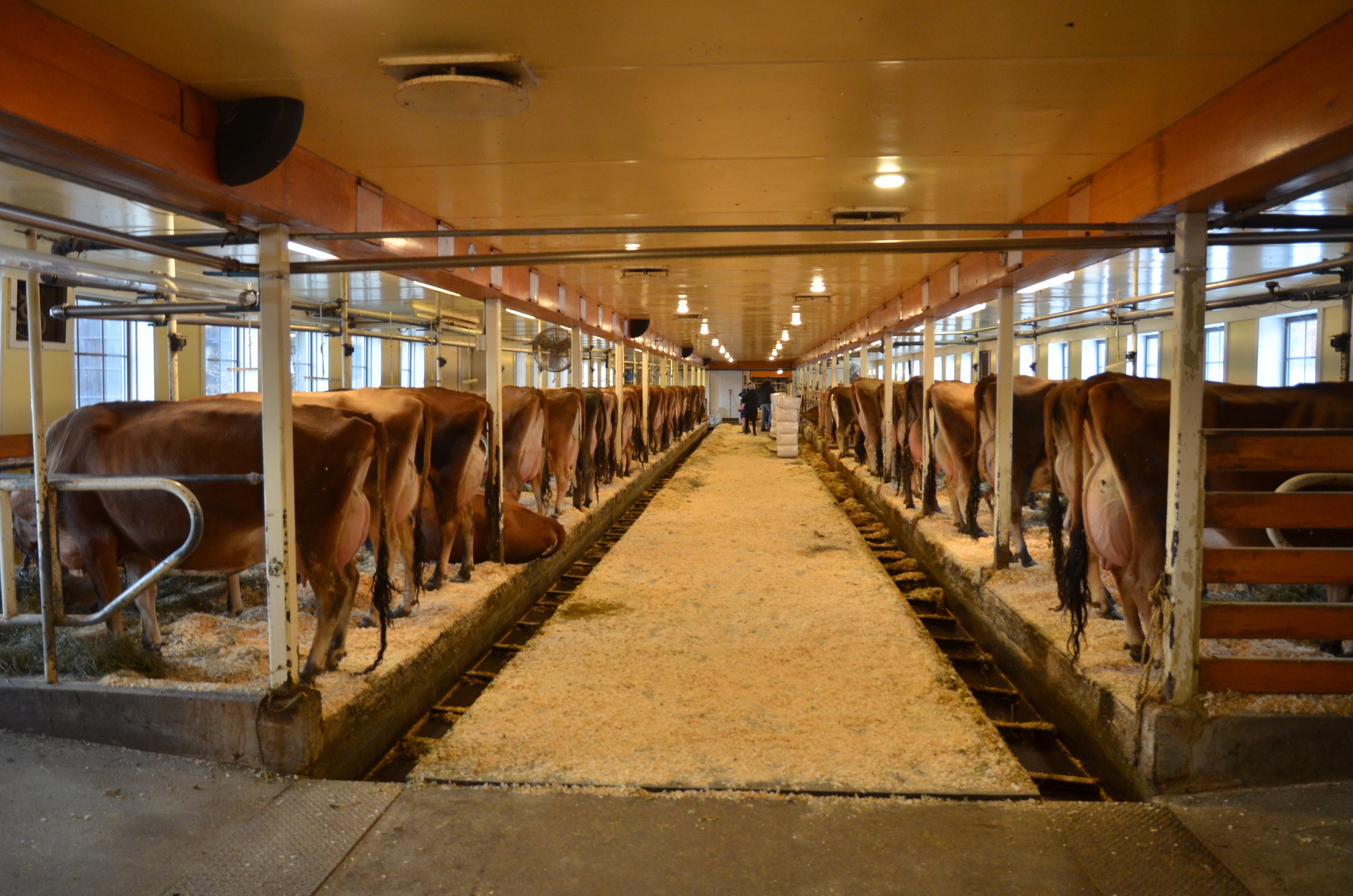
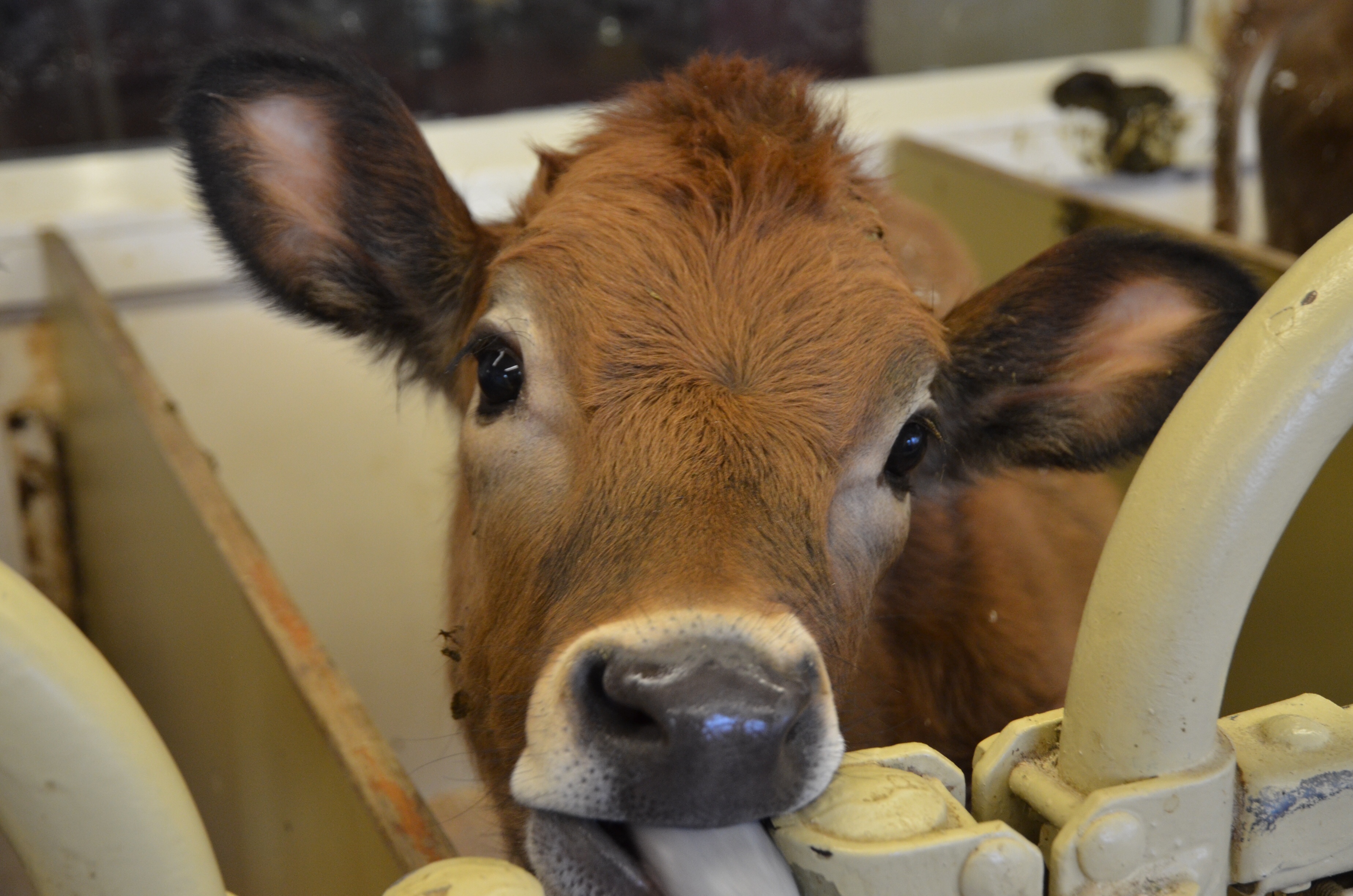
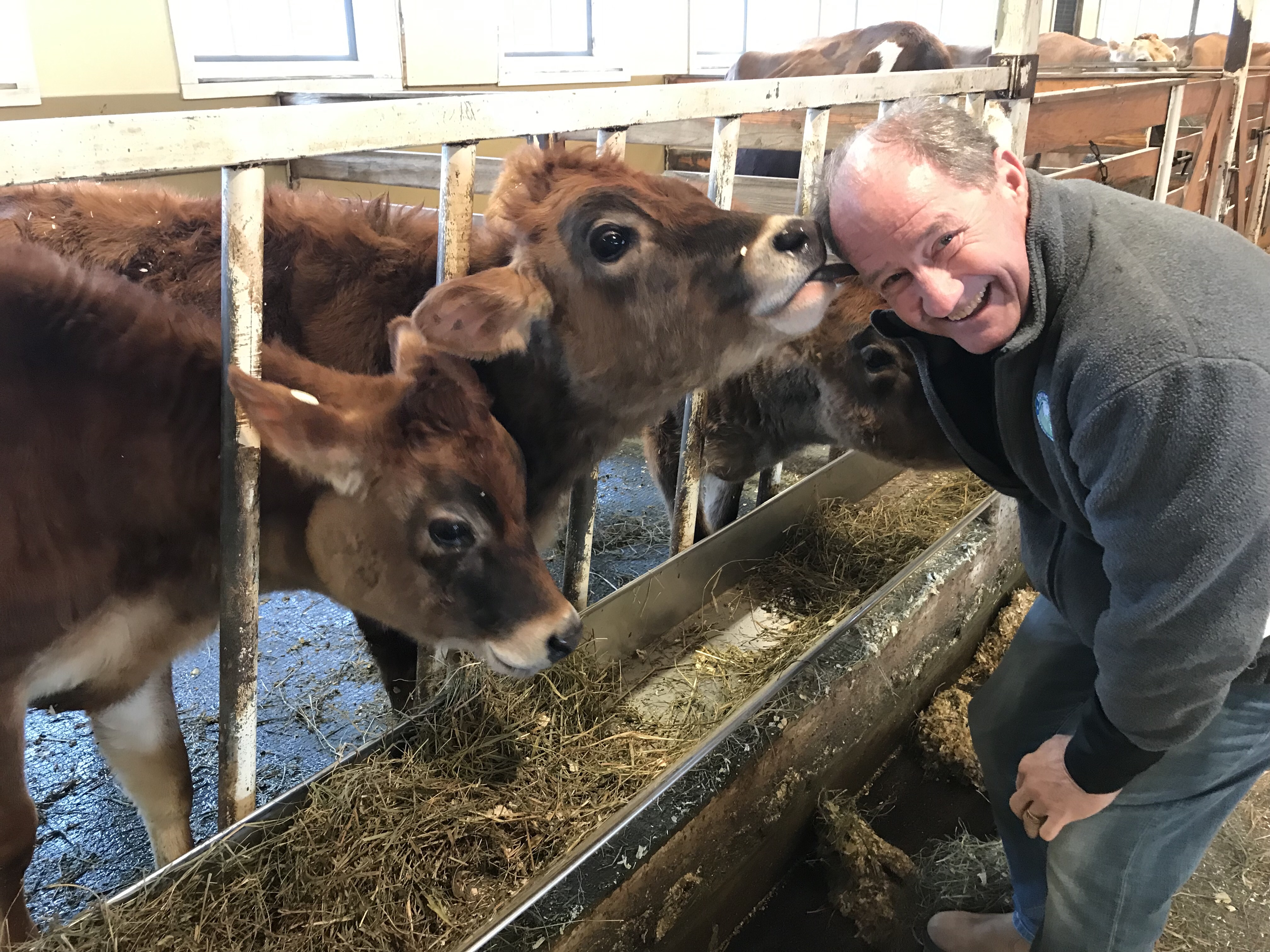
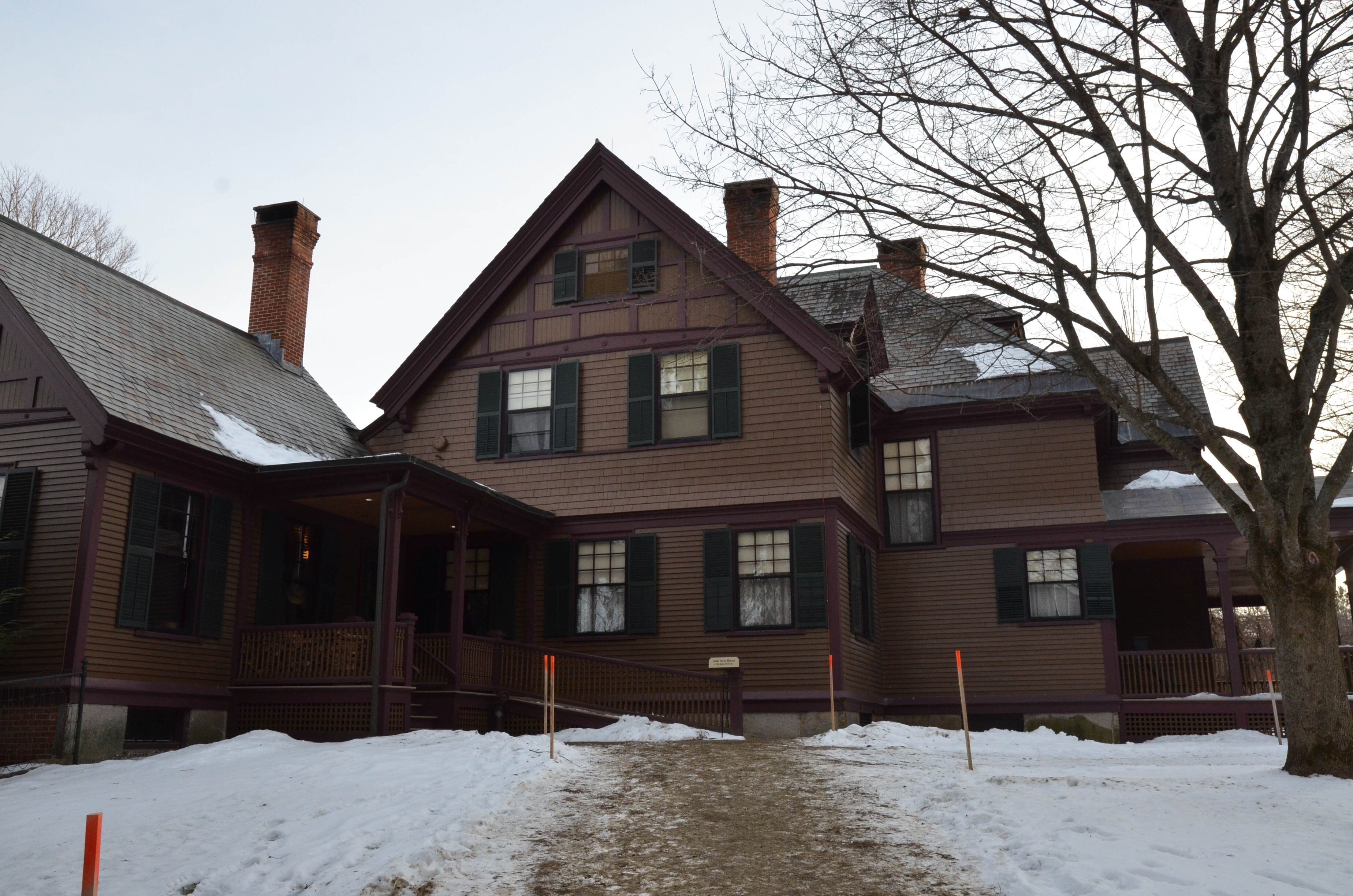
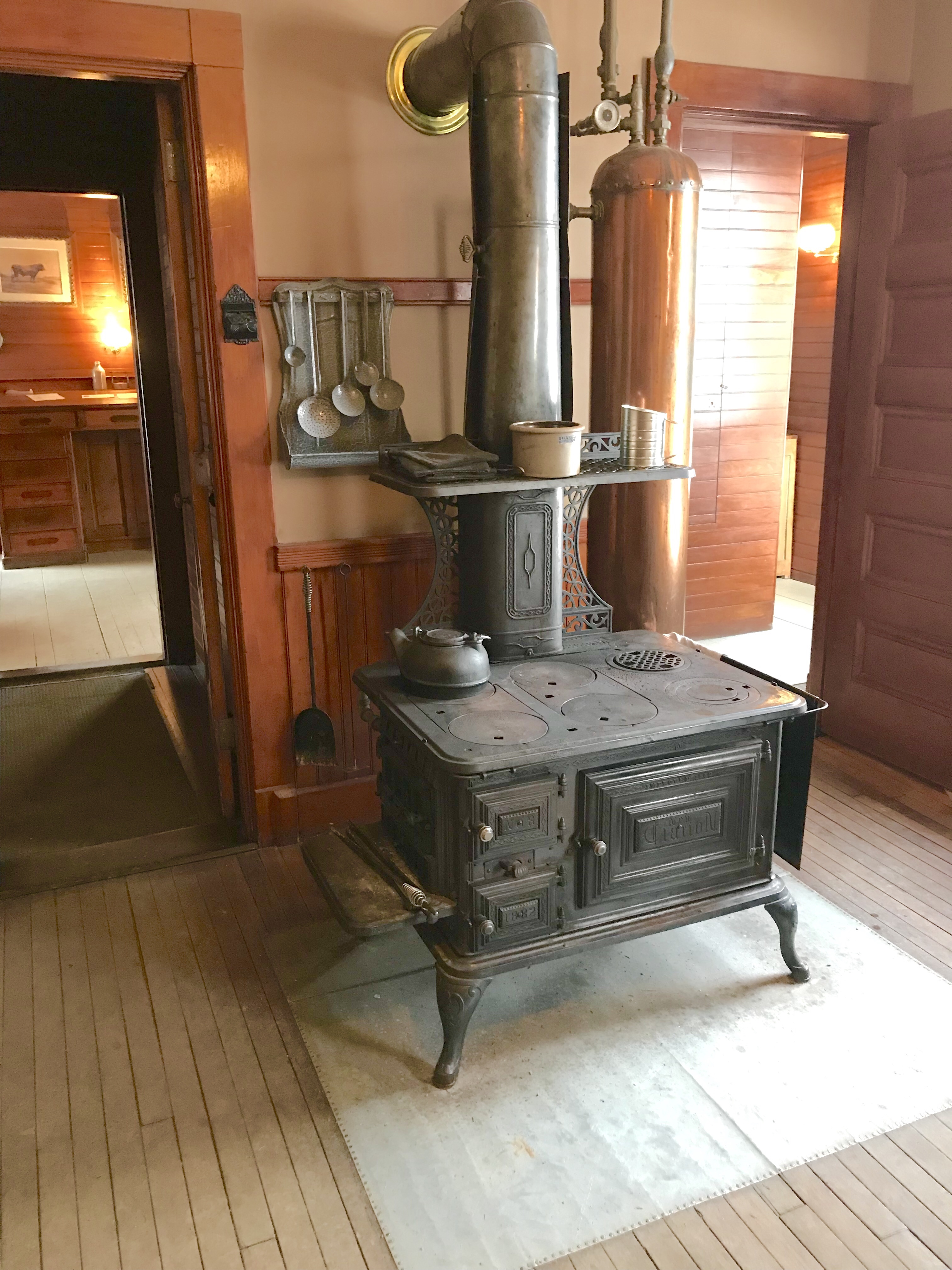
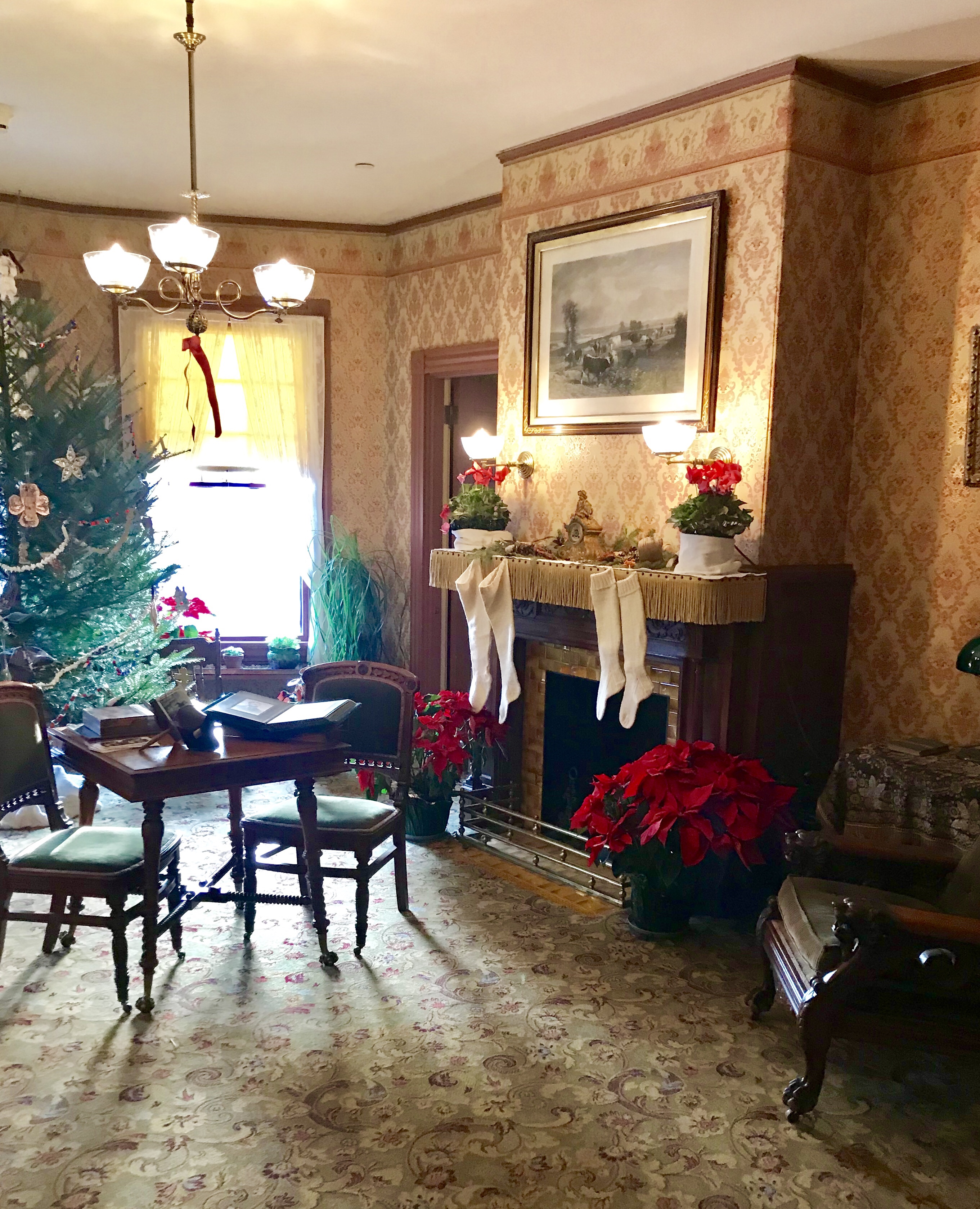
The day after Christmas we toured Billings Farm & Museum. Just outside of Woodstock Vermont, the farm is a working Jersey dairy cow farm and boasts an 1890 restored farm managers house.

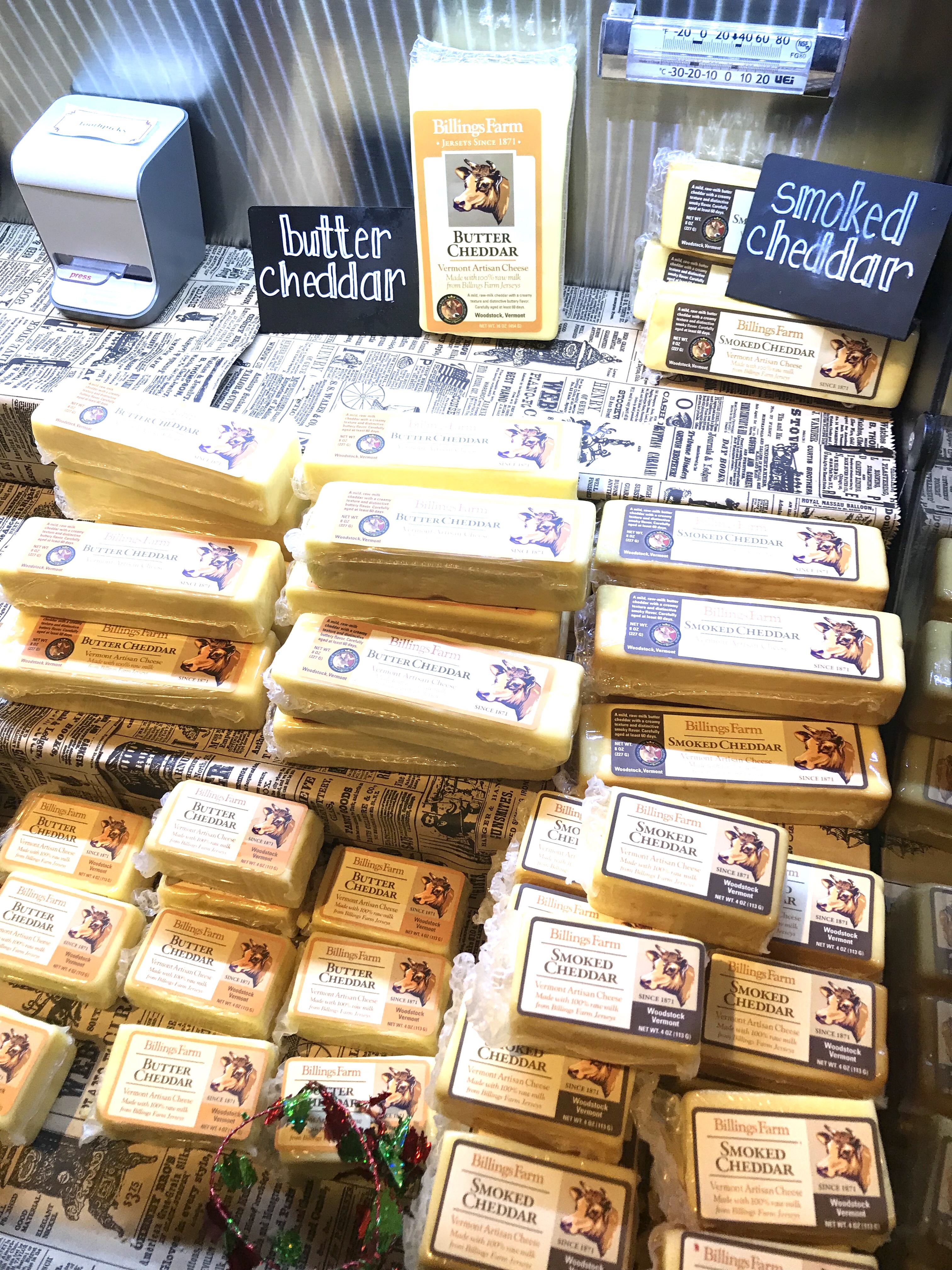
You can interact with the livestock, see the cheese making process, and tour the historically accurate home. We bought several bricks of the jersey cow milk cheese.

Billingsfarm.org

Woodstock Vermont is a very cute little town, voted one of The Most Beautiful Towns in America by Condé Nast Traveler. It also got the No. 2 spot on Country Living Magazine’s list of best Christmas towns in the US.

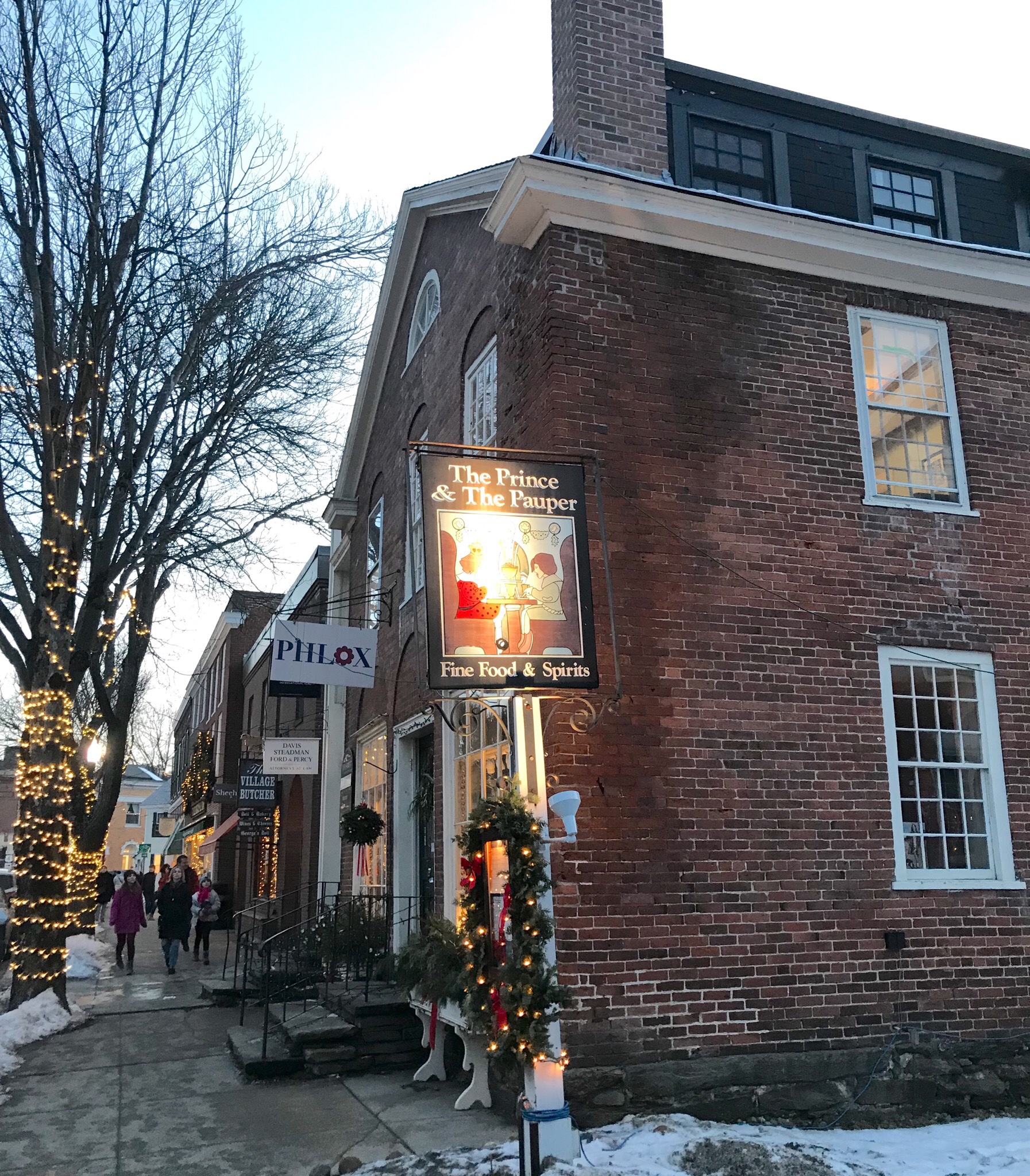
We had a wonderful dinner at The Prince And The Pauper restaurant on Elm Street.

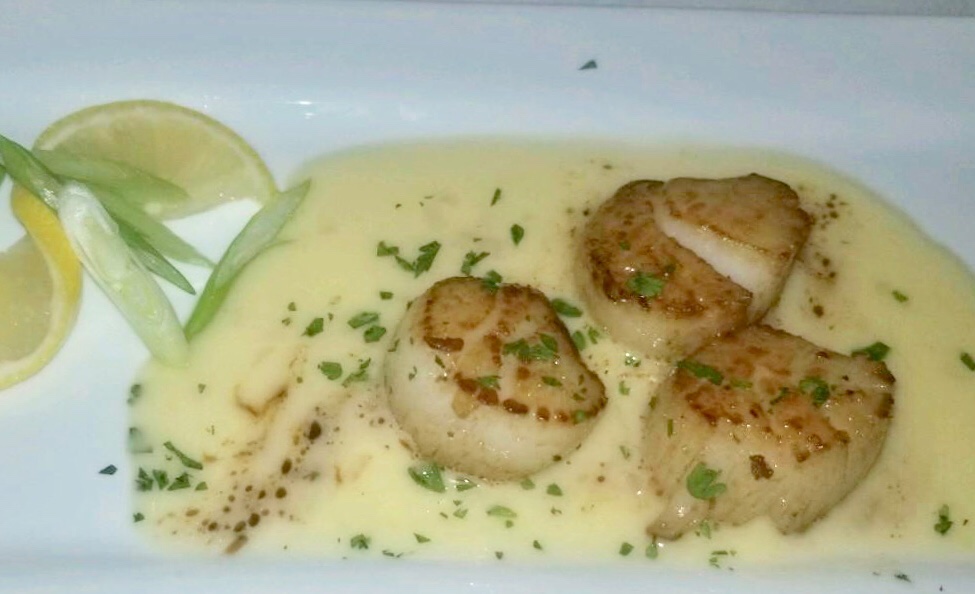
Scallops at The Prince And Pauper restaurant in Woodstock, Vermont.

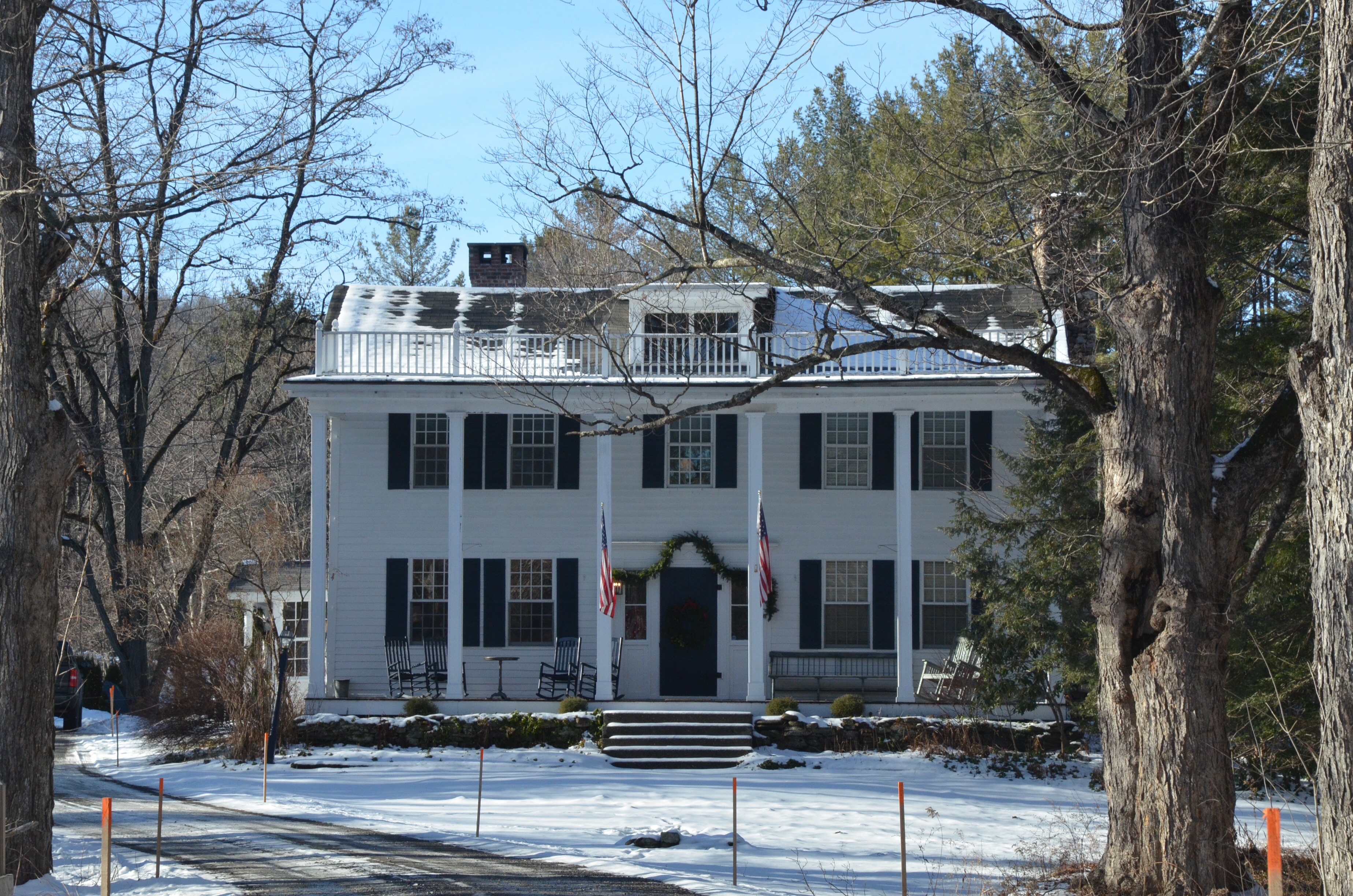
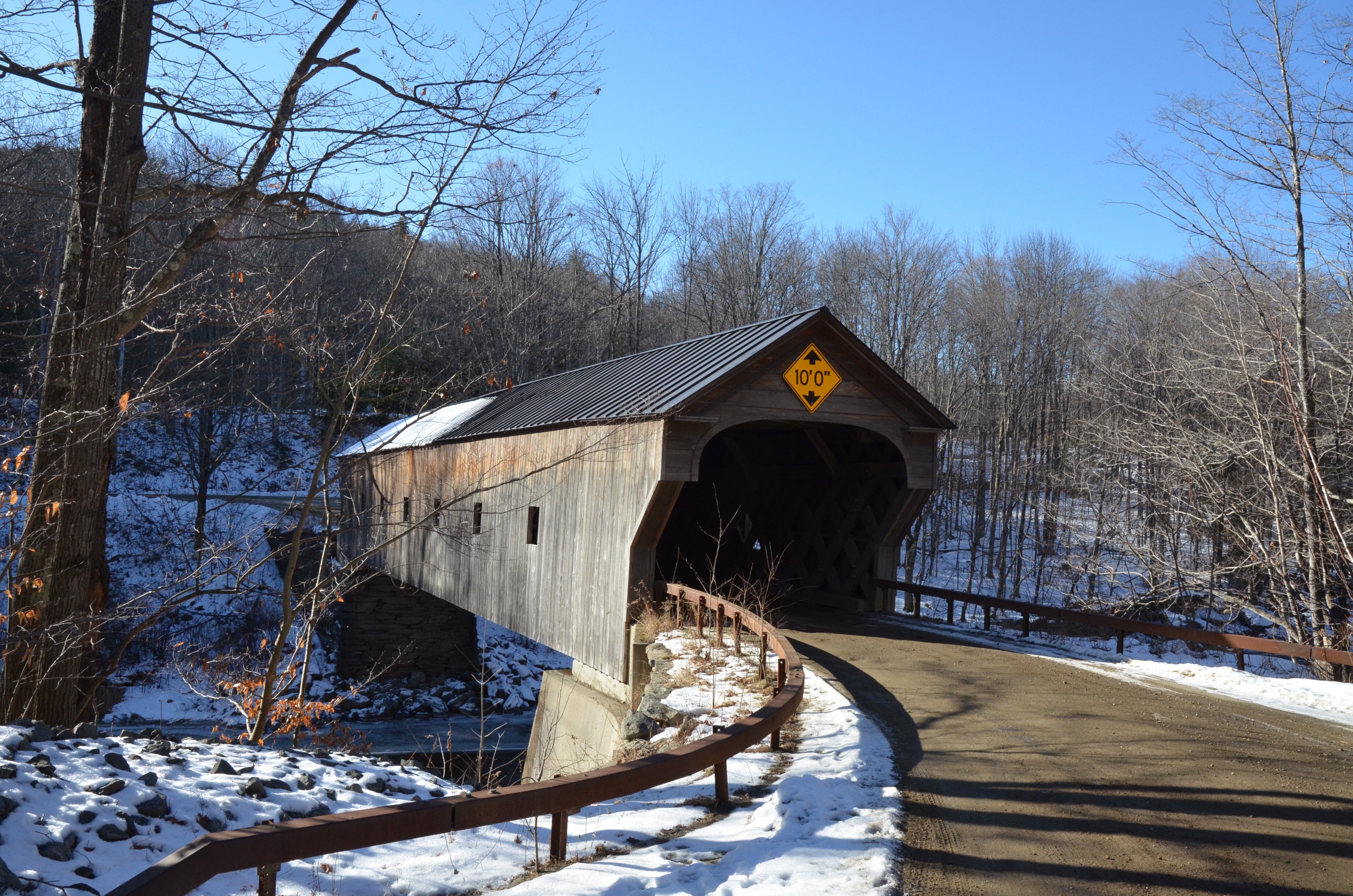
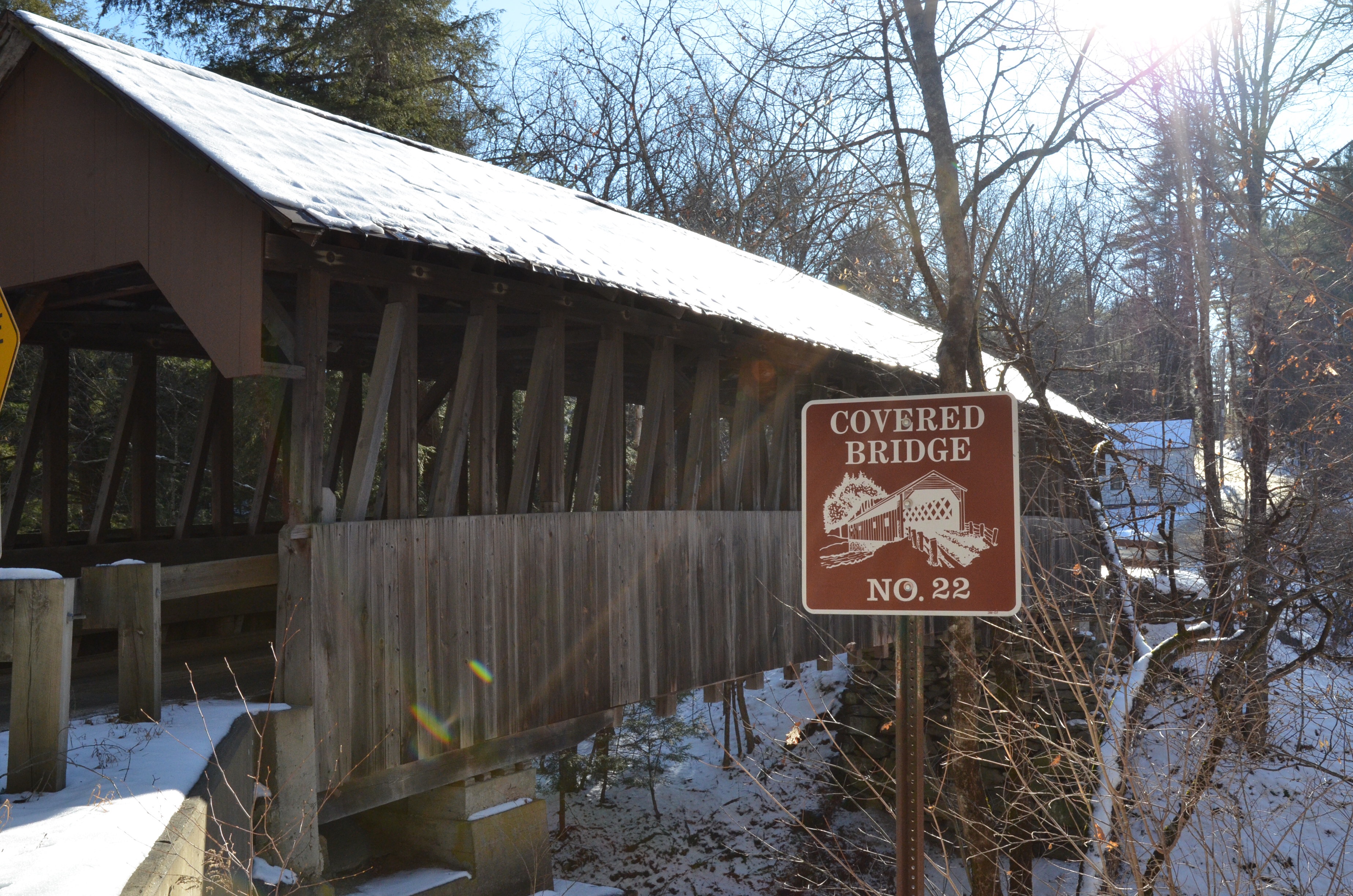
The area has a lot to offer. We loved searching for covered bridges and shopping the antique malls. The Inn At Weathersfield was a great spot for basing our explorations.

Weathersfieldinn.com

Posted in Seasons & Holidays, U.S.A. | Comments Off on Oh What Fun It Is To Ride

Merry Christmas From Vermont

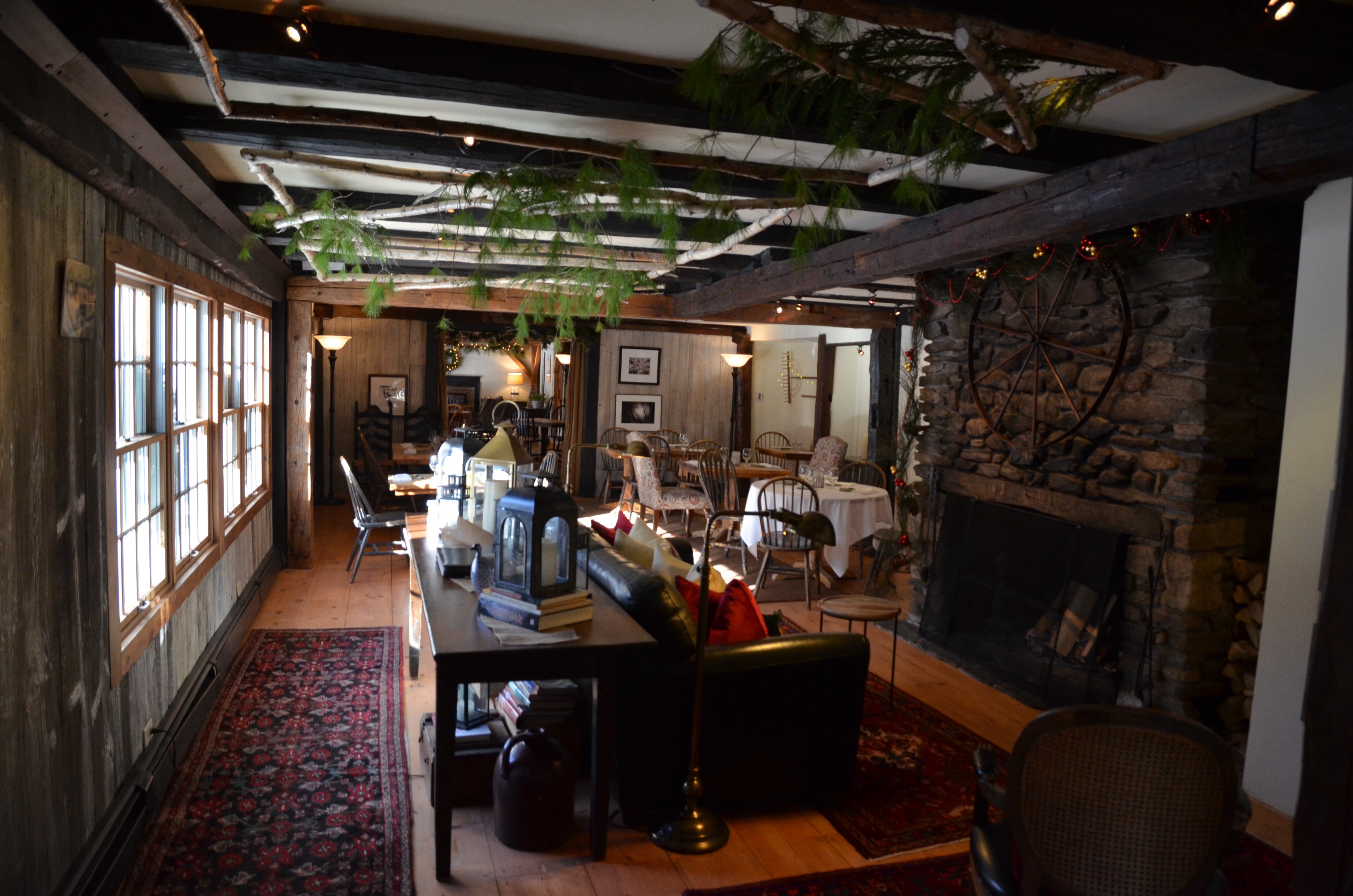
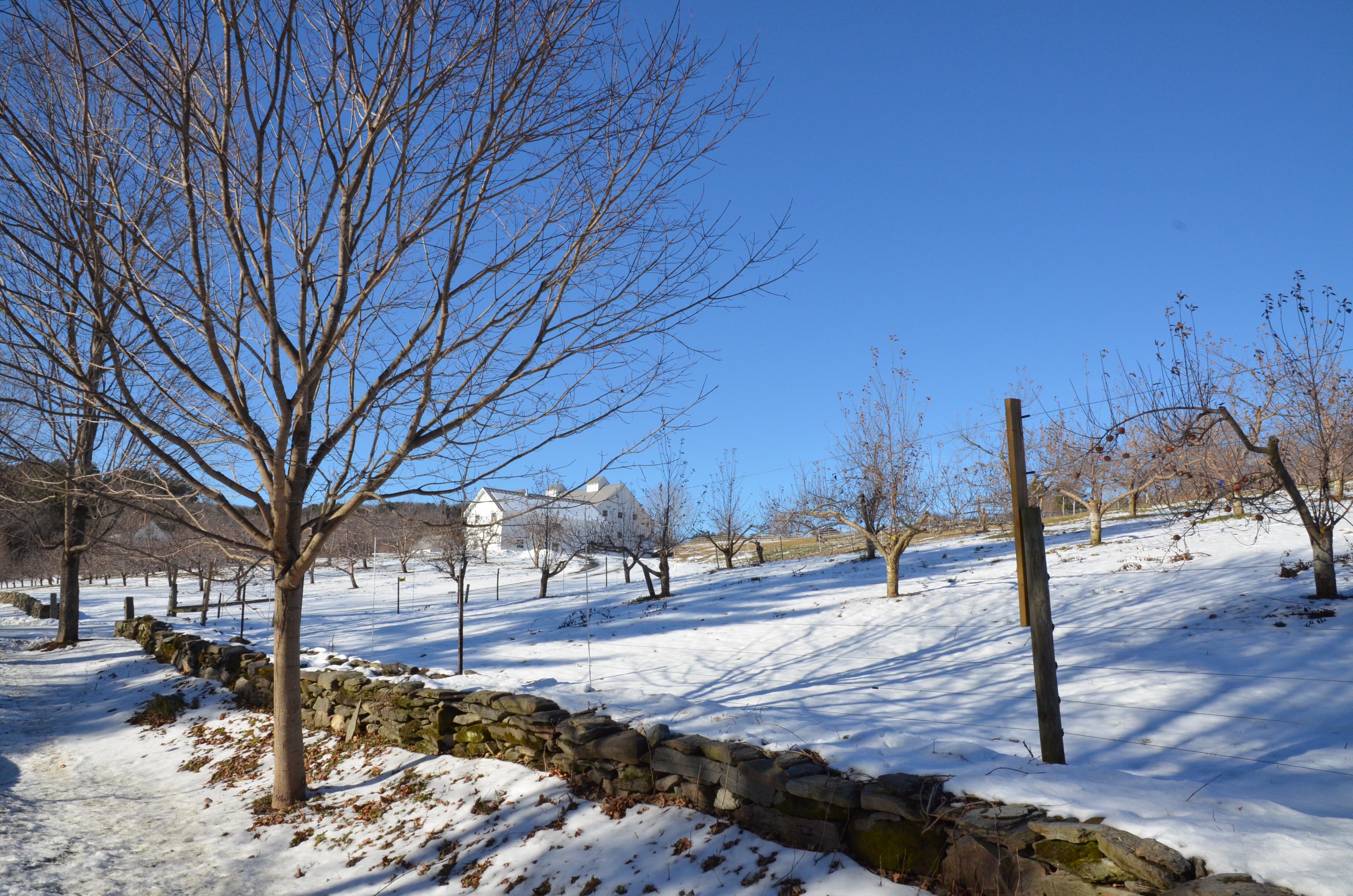
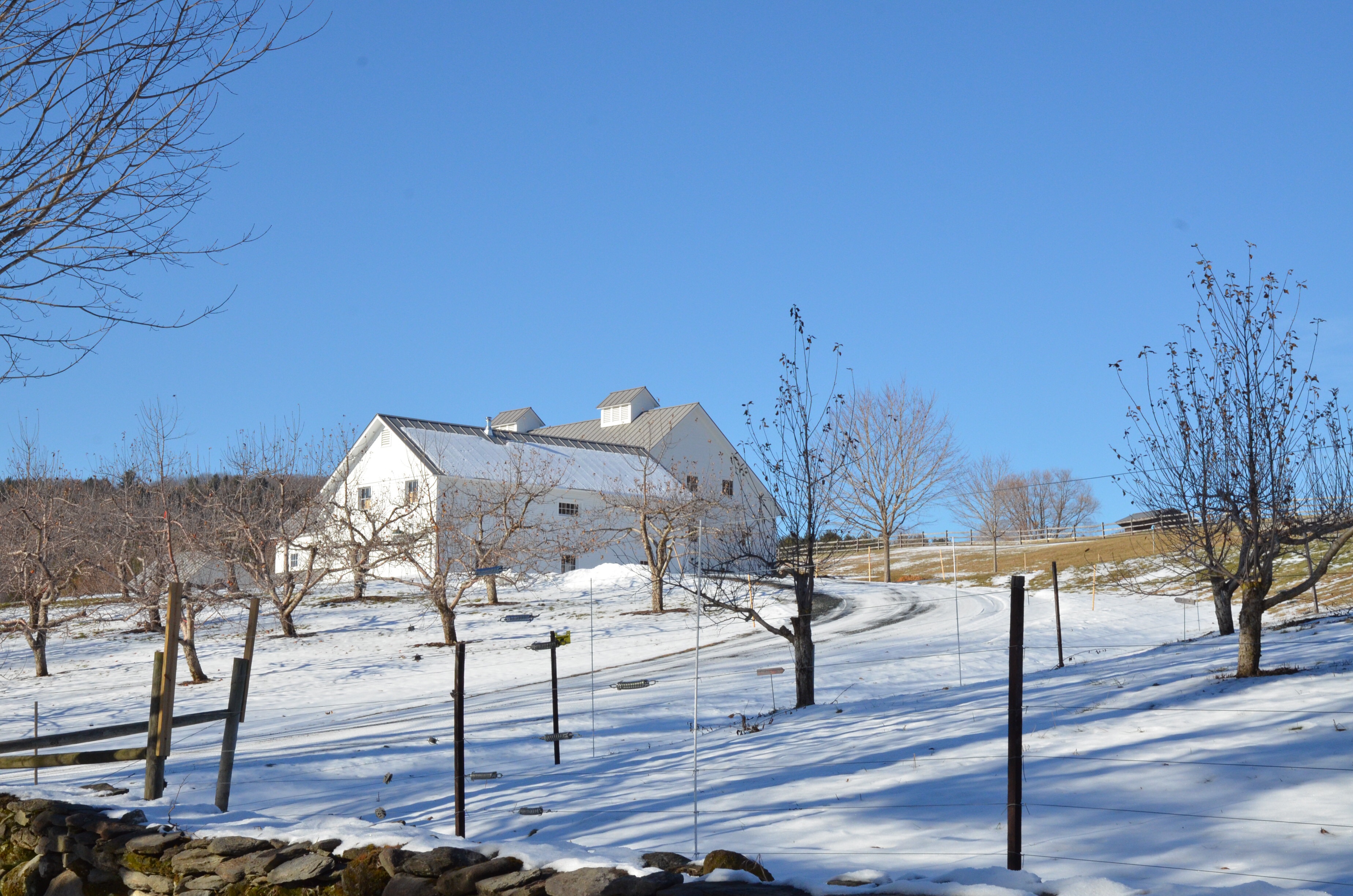
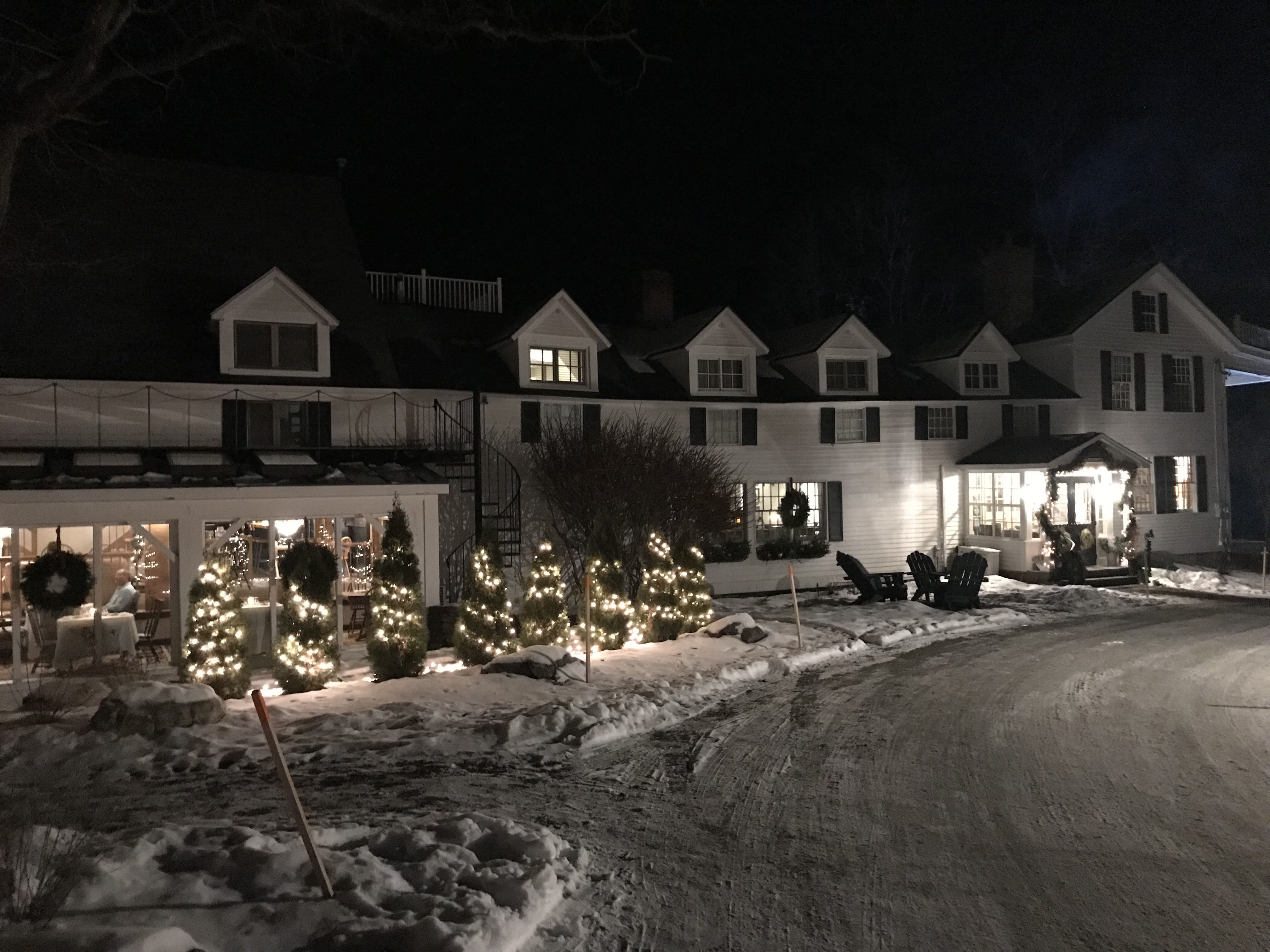
Searching for snow and a white Christmas, we headed to Vermont. The Inn at Weathersfield was a perfect setting for a Christmas getaway, but this year the snow was a little sparse.

The Inn was built in 1792 and is just outside the tiny hamlet of Perkinsville.

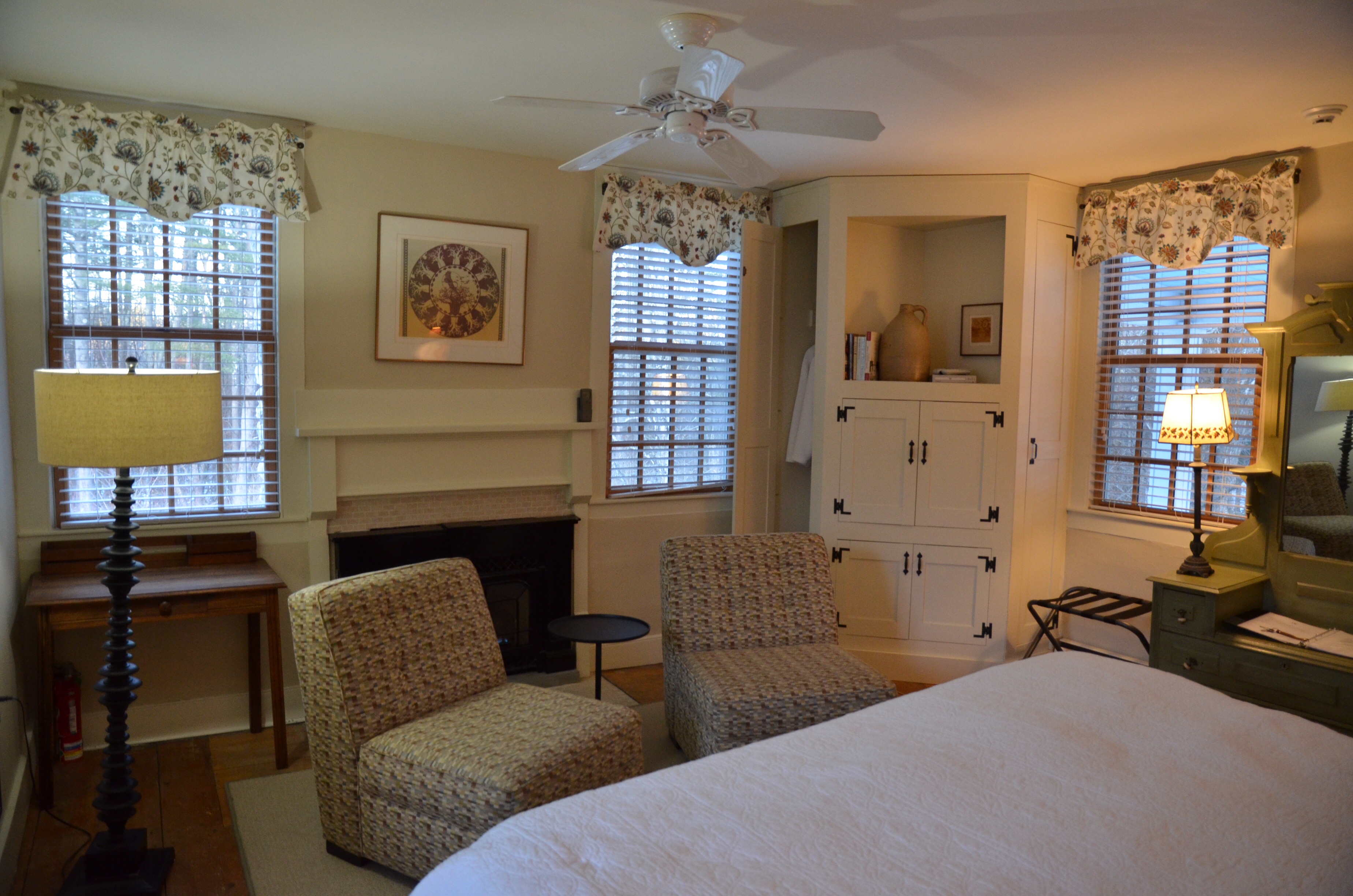
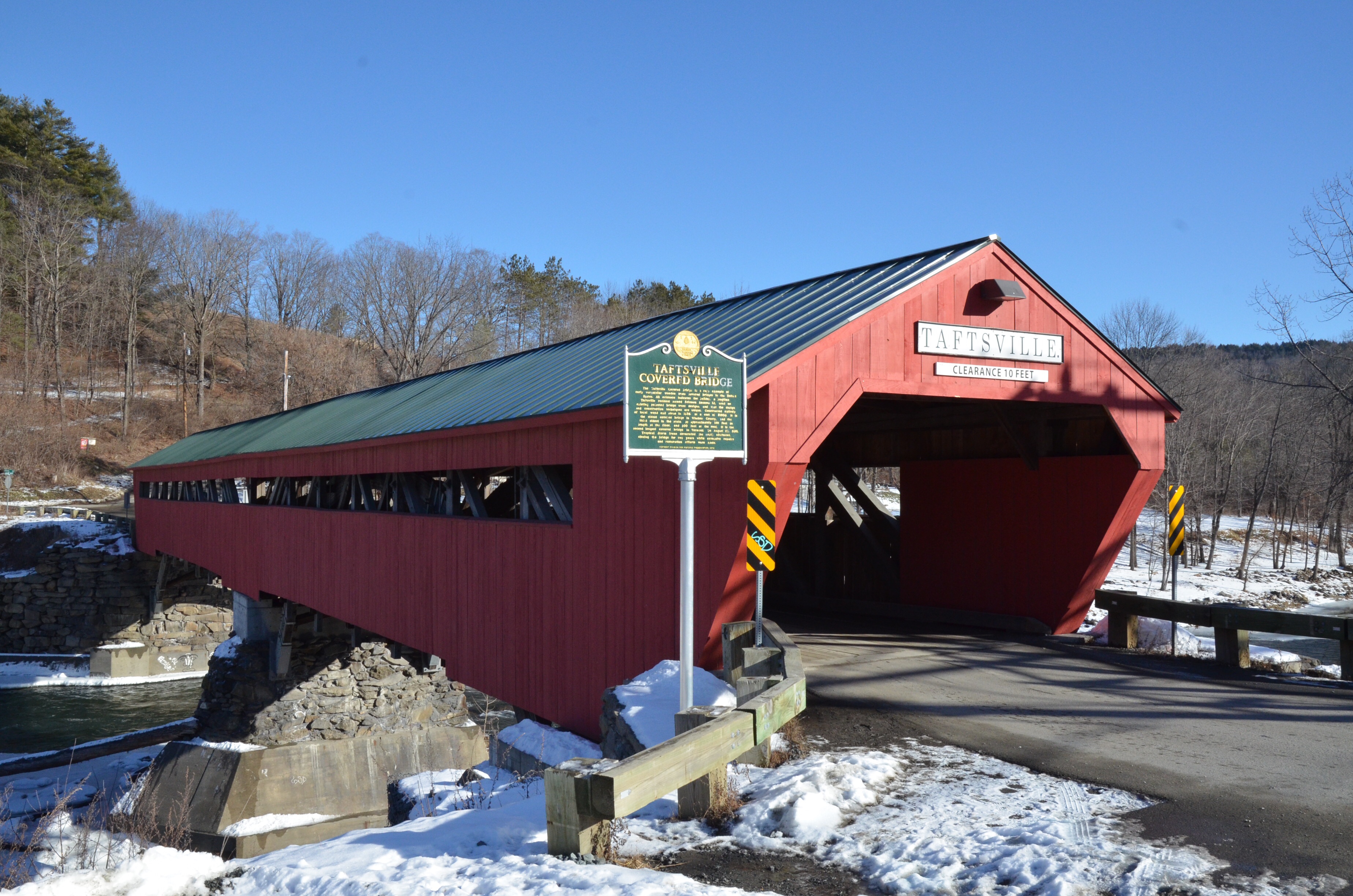
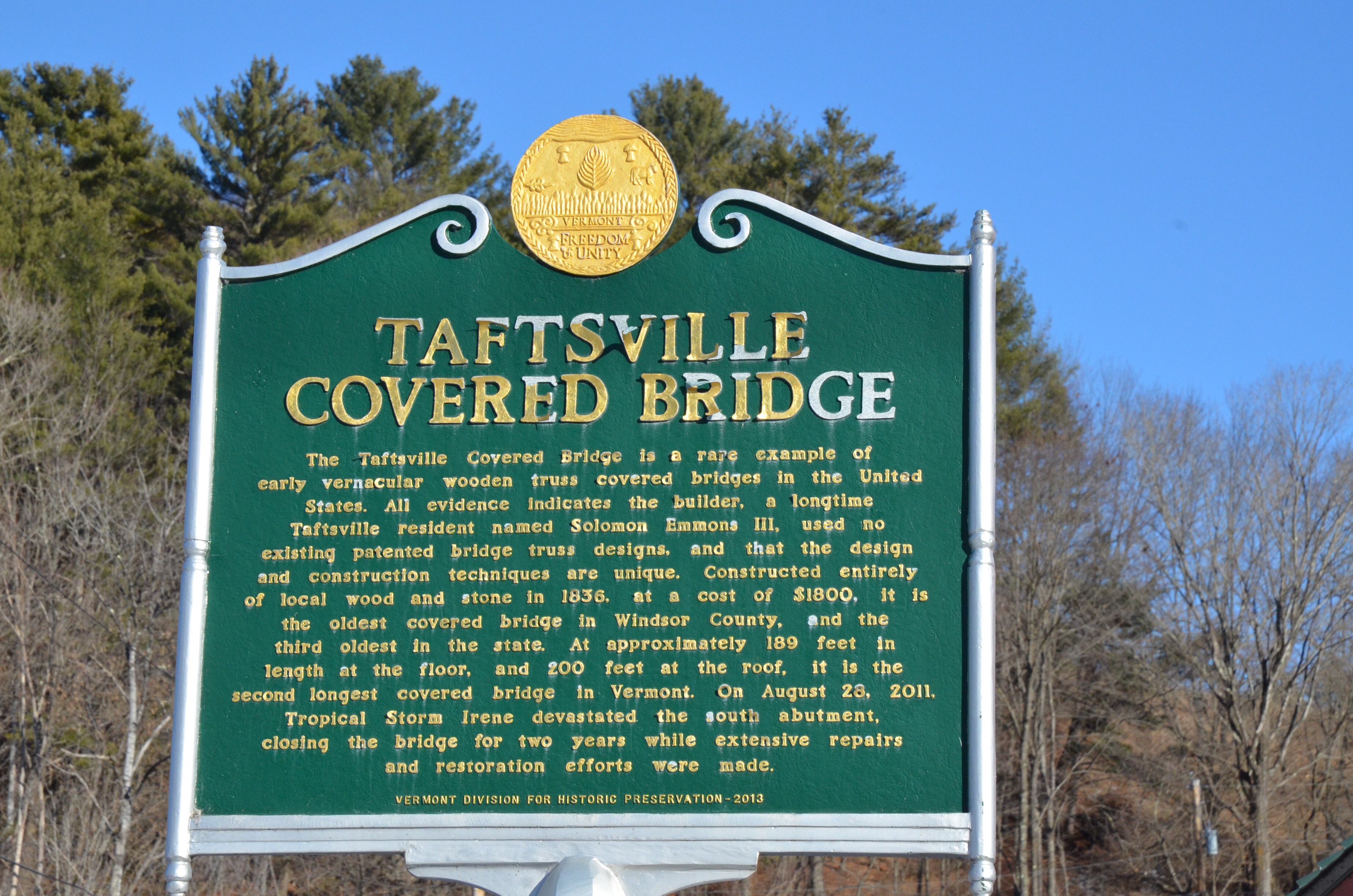
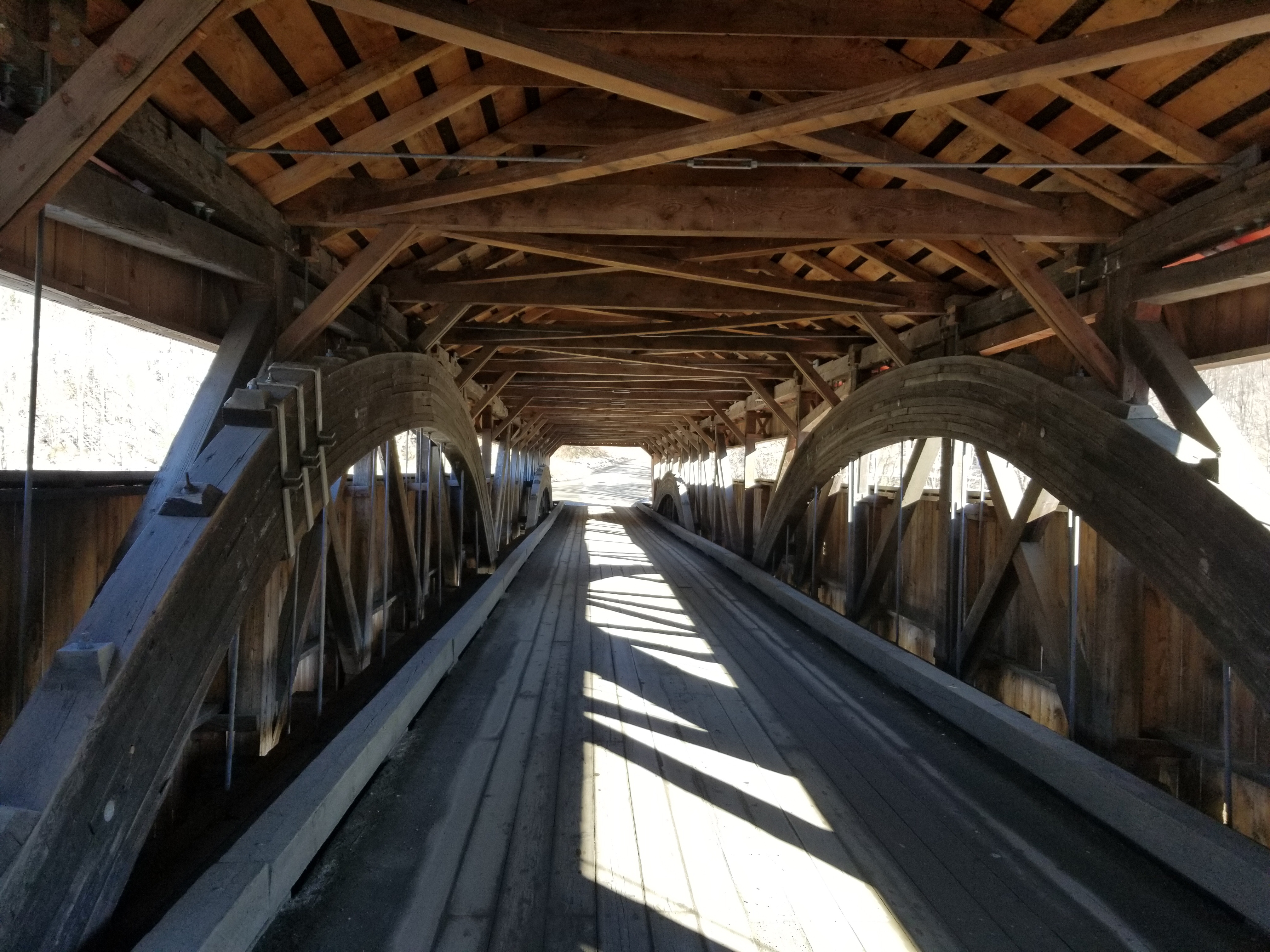
This area is known for its covered bridges. We went in search of the Taftsville bridge because our room at the inn is called Taftsville. Each room is named for a covered bridge.

The Inn is about a 30 minute drive from Woodstock, Vermont.

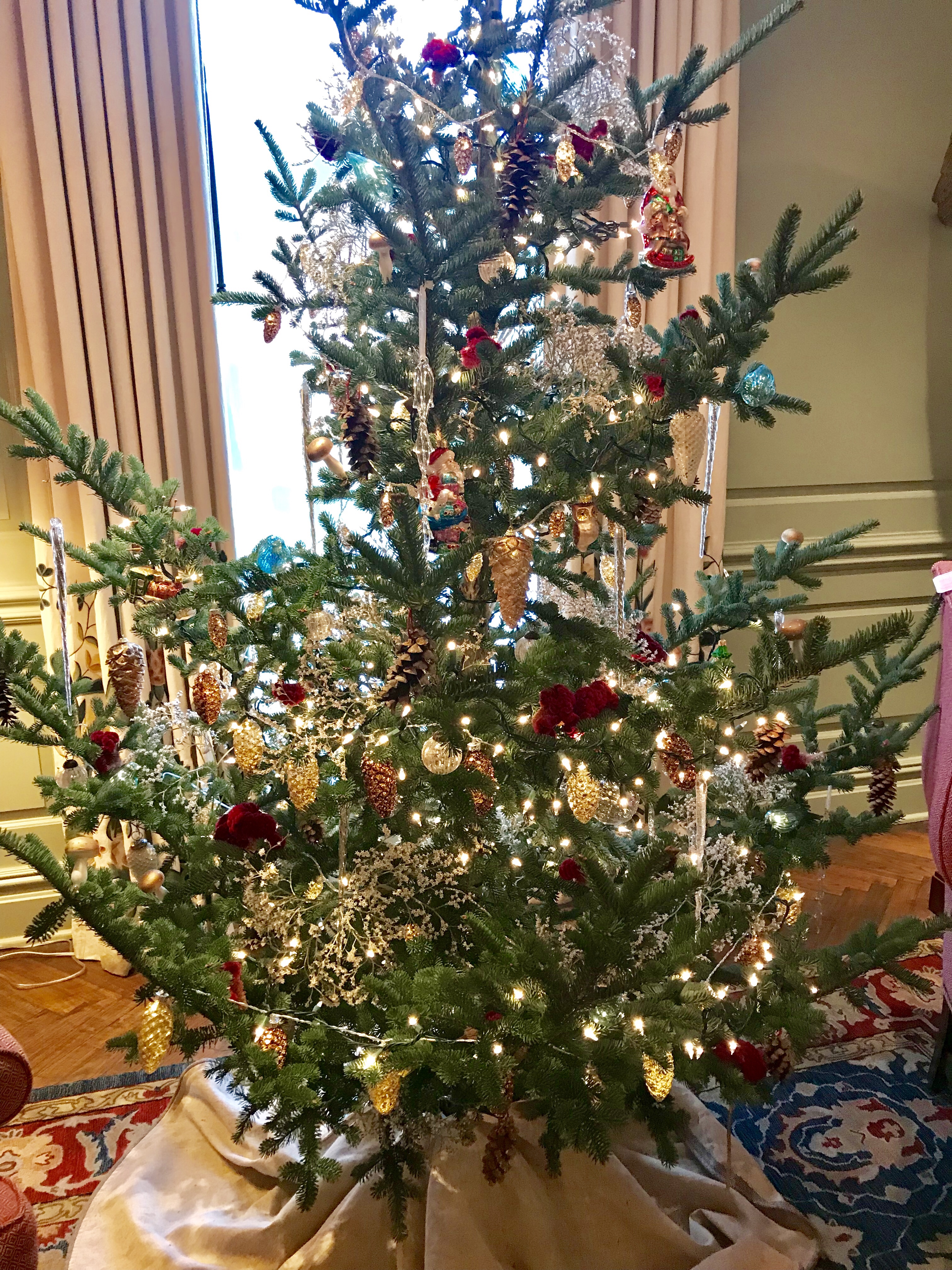
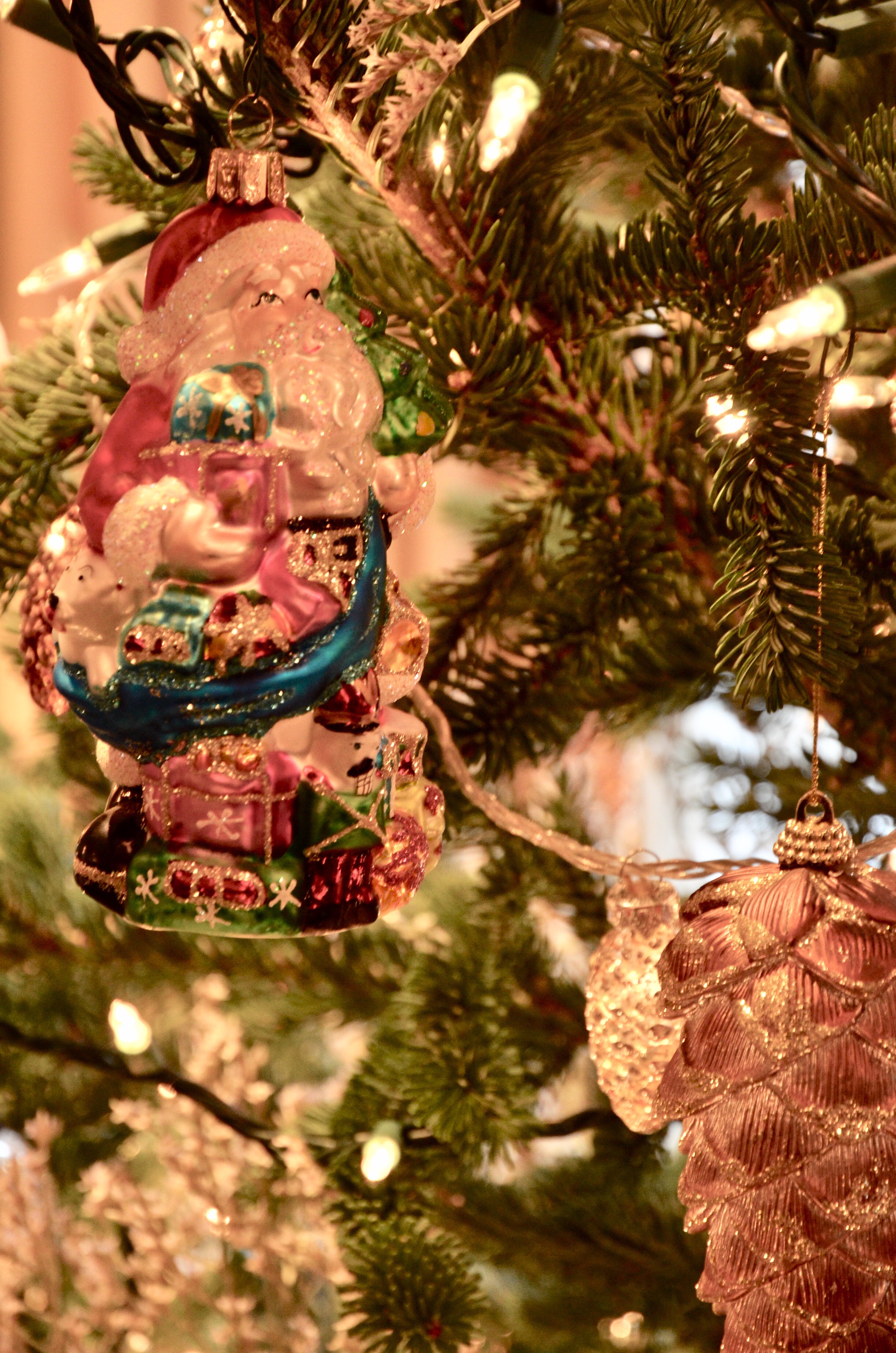
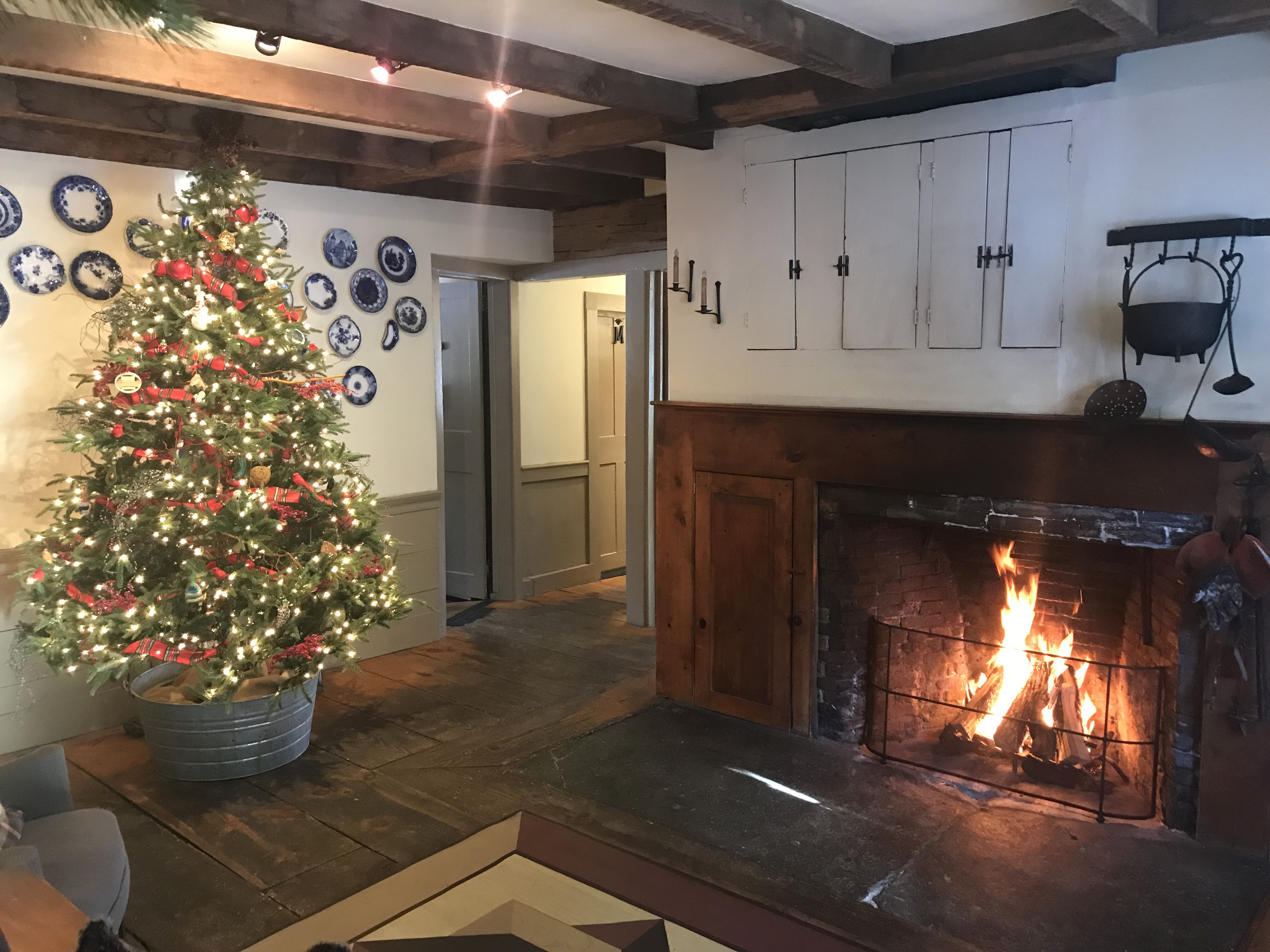
The Christmas tree in the lobby of the Woodstock Inn and Resort.

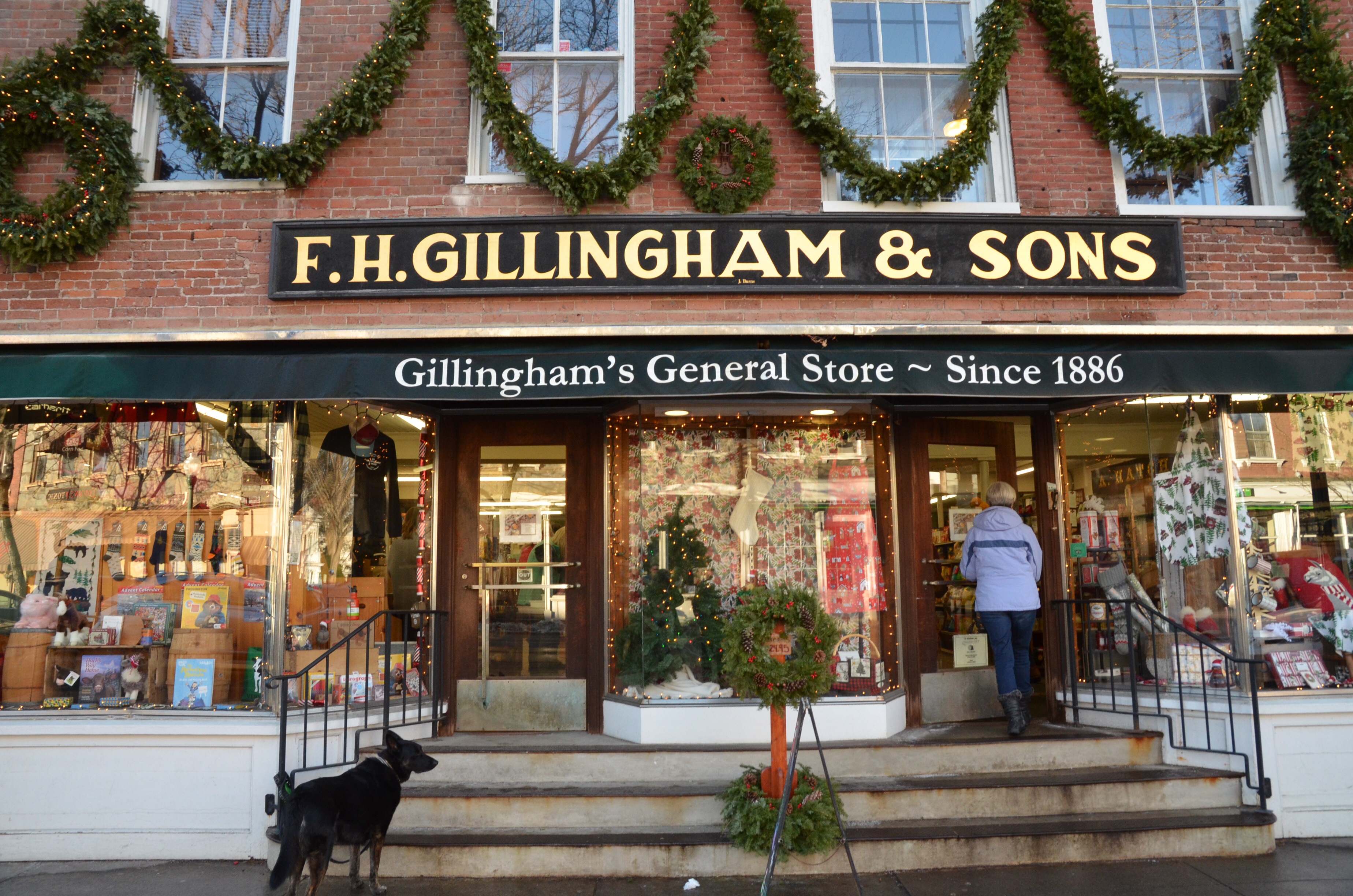
The general store in Woodstock.

A popular winter activity is a horse drawn sleigh ride. We called around to arrange one but the lack of snow is an issue. Some of the stables were switching to wagons. We found a farm 1 1/2 hours north that has enough snow. We scheduled a ride for the 26th.

Luckily for us the Inn at Weathersfield has won awards for their food. We had a stellar dinner our first night.

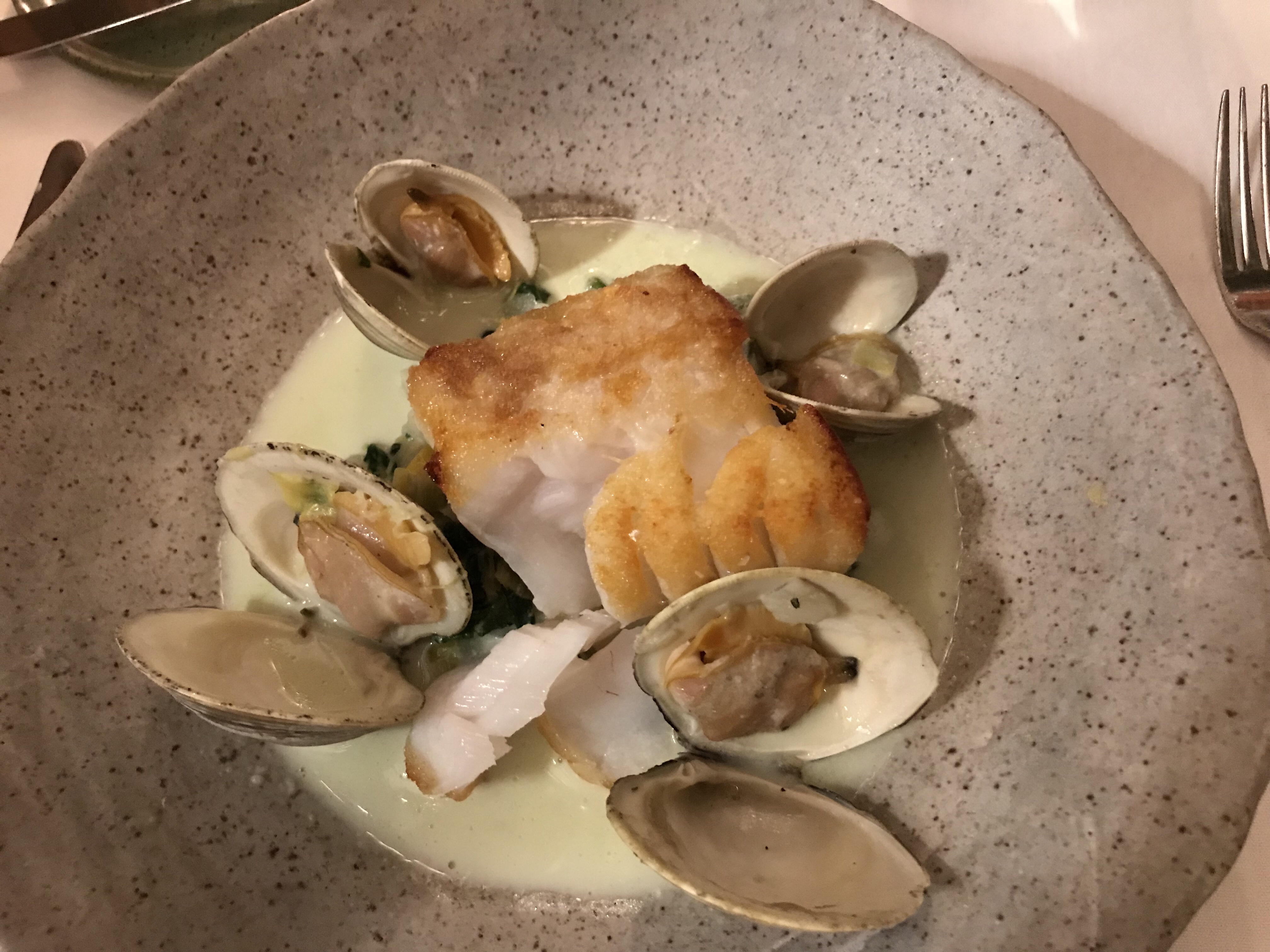
Cod with clams at the Inn at Weathersfield.

http://www.weathersfieldinn.com

Posted in Seasons & Holidays, U.S.A. | 2 Comments

Colorful Cartagena

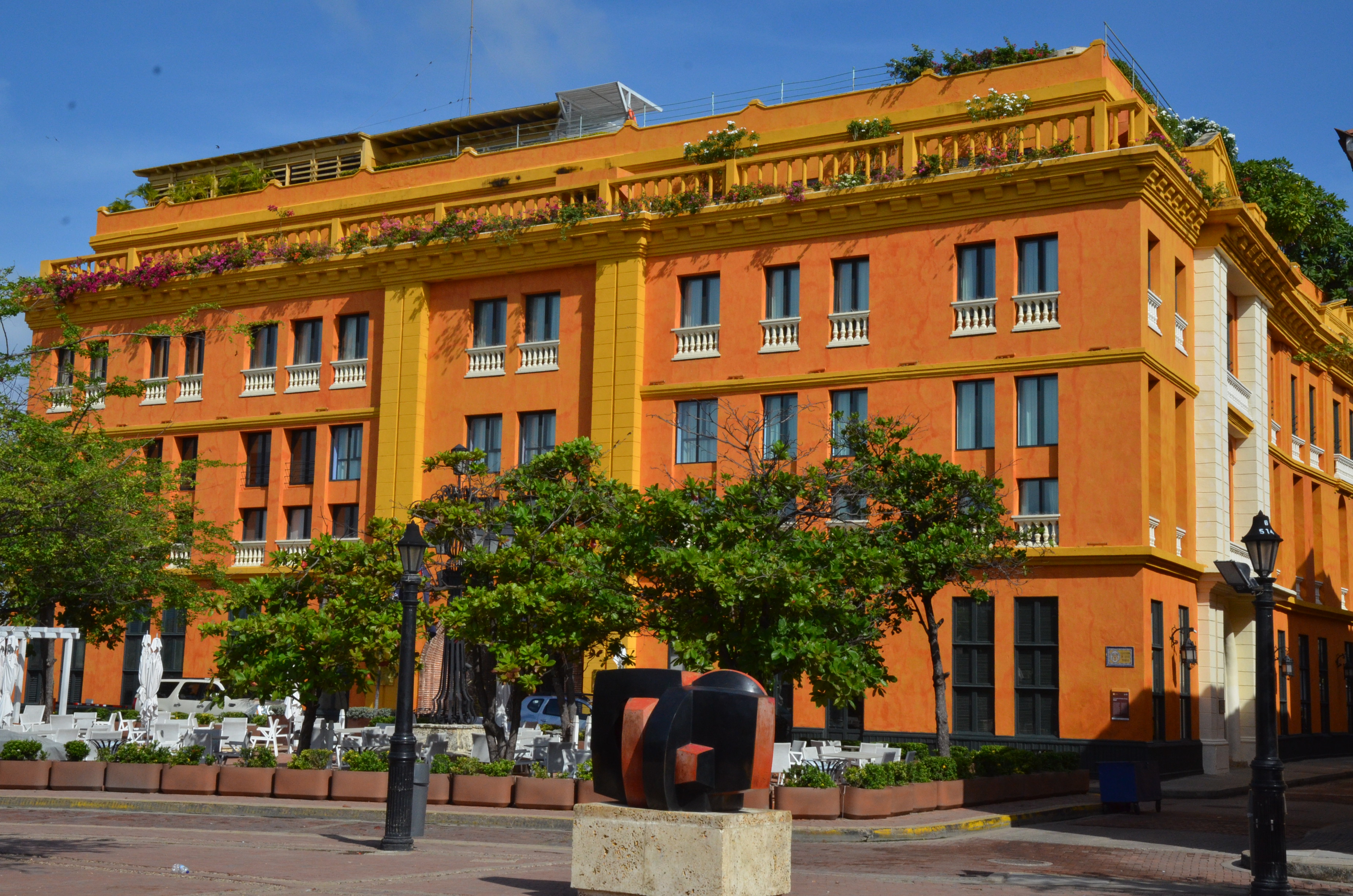
DSC_1504


DSC_1015


DSC_1300


DSC_1168


DSC_1152


DSC_1260


DSC_1146


DSC_1509


DSC_1519


DSC_1021


DSC_1431


DSC_1365


DSC_1348


DSC_1957


DSC_1526


DSC_1650


DSC_1663


DSC_1995


DSC_1675


DSC_1820

Posted in Colombia | 3 Comments

More Cartagena

As we’ve become more familiar with the streets and the neighborhoods, we decided to walk from the old town to the fort, Castillo San Felipe.

The main gate to the old walled city

Through the main gate, past Getsemani, and over a bridge to the fort. It was only a bit over a mile but it was 85 F and very humid, so it felt further.

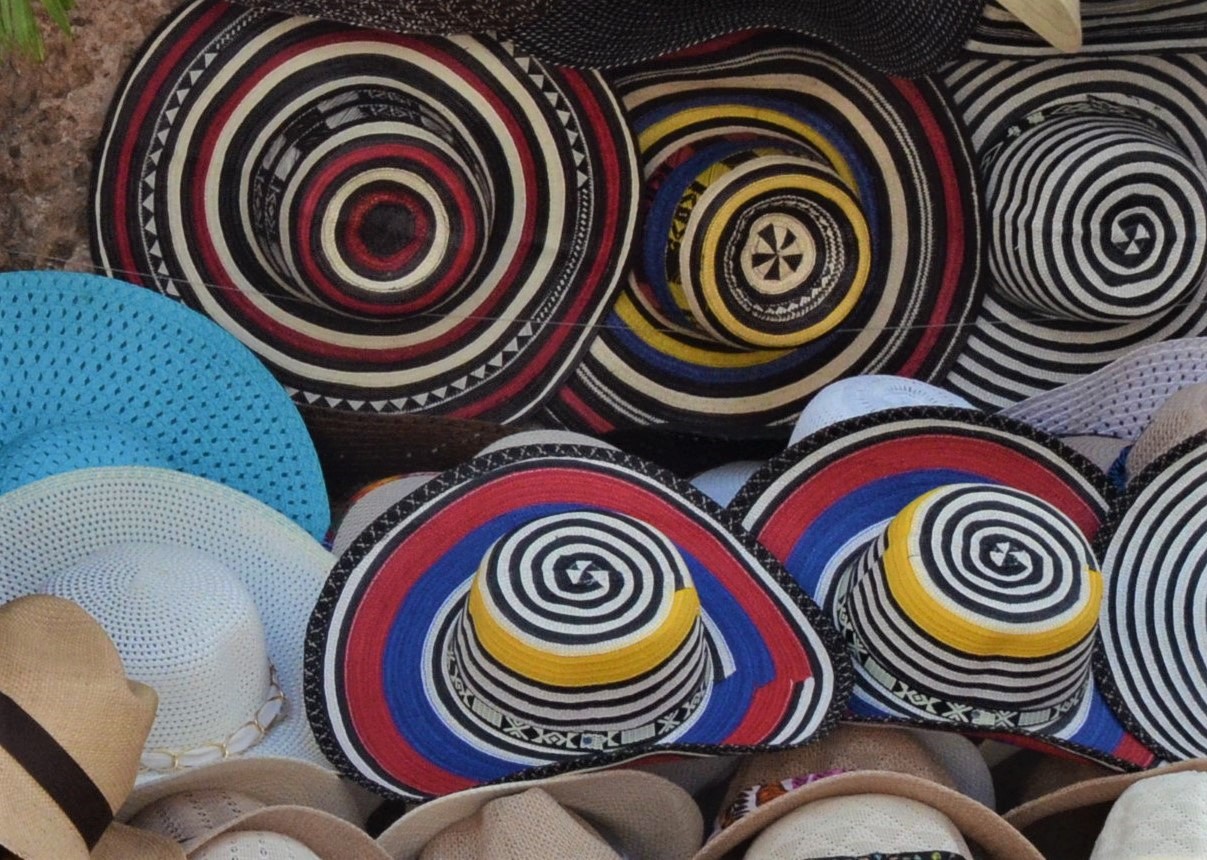
We finally succumbed to a street vender selling hats so intense was the sun.

We climbed the fort and admired a great view of the surrounding area. I’m thinking that’s why they put it here on top of San Lazaro Hill.

The first fortification in this area was built in 16th century by the Spanish Crown. The first stage of the stone fortress began in 1656. It was named San Felipe de Barajas to honor King Philip IV and the ancestors of the governor, the Counts of Barajas. It is the greatest fortress ever built by the Spanish in any of their colonies. After independence in 1811 the fortress fell into neglect. Restoration began in 1928. It is now part of the Cartagena Cultural Heritage Ensemble included by UNESCO in the World Heritage List in 1984.

The roofs of the old town area from the fort.

There was a gift shop and a handicrafts shop at the top of the fort. The hats and purses were all handmade locally and the nicest we’d seen yet.

The fort has tunnels running through it, but we didn’t venture very far into them. Here is what the Lonely Planet guide book says about the tunnels:

A complex system of tunnels connected strategic points of the fortress to distribute provisions and to facilitate evacuation. The tunnels were constructed in such a way that any noise reverberated all the way along them, making it possible to hear the slightest sound of the approaching enemy’s feet, and making it easy for internal communication.

The sun was brutal on the stone of the fort so we stayed only about an hour, and once again made the hot walk back to the old town.

We have found a wonderful little cafe in the old city that serves up great coffee and frozen lemonade. We’ve become regulars, beating the heat and enjoying the frozen coconut lemonade.

As in most hot humid climates, midday is best spent in the pool or resting in a shady spot. That has been our routine.

A shop window in the old town.

We had two really stellar meals. The first was at a restaurant called El Boliche Cebicheria. A small one room dining room in old town, it was open until 3 pm for lunch. We went at 2 and had it to ourselves. We spoke with the owner and chef and learned Condé Nast had also reviewed it.

The dishes were beautifully presented and thoughtfully prepared.

Appetizer.

Coconut ceviche, white fish, squid, shrimp, octopus, conch, coconut milk, red onion, cilantro, sweet pepper, yellow pepper, and natural coconut.

Quinoa Tabule Salad. Dried tomatoes, pickled carrots, grilled vegetables and coconut rice.

Grilled mussels with gaelico oil and bruschetta.

The meal was wonderful and would last us the rest of the day.

Around 5 or 6 pm the temperature becomes bearable again and we head back out.

A wicker basket becomes a beautiful light fixture.

Our second stellar meal was our final lunch at Candé, Cocina 100% Cartagenera. It was just two blocks from Casa Mejia.

Inicio

The front of Candé.

Ensalada de Coteros.

Ceviche with coconut.

Filete de Atun Aleta Amarillo. Seared yellowtail tuna with roasted local pepper sauce and plantain purée.

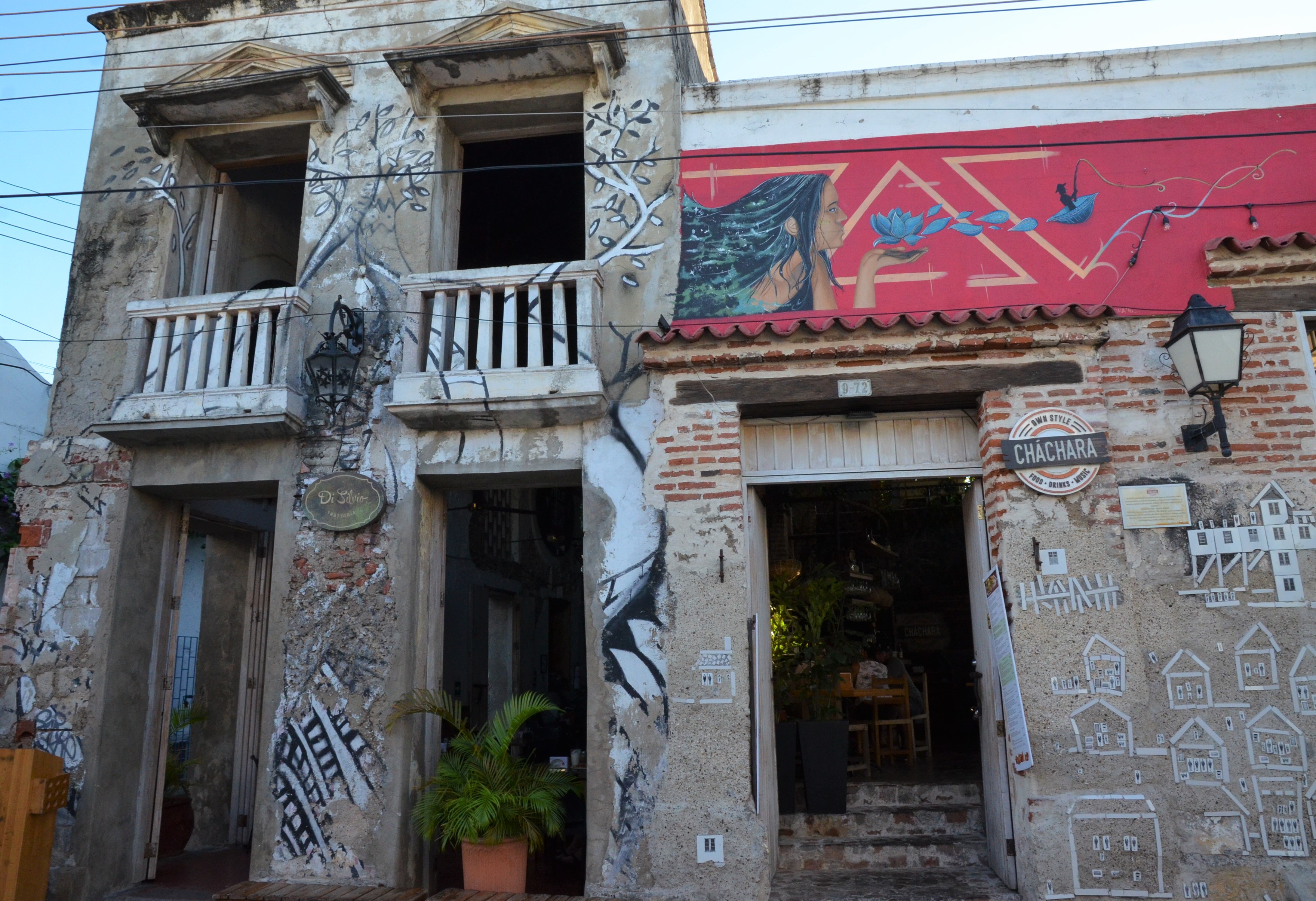
Wandering the streets we stumbled upon an art exhibition in a cultural center. It had just opened five days ago. It was a beautiful building.

This painting is by Boce Se.

A pretty street corner.

My favorite shop in the old town was AJA Company. The majority of the handmade products are made by women from all over Colombia.

Things to remember for future travel to Cartagena:

Comfortable stable shoes are a must. The streets were uneven and had open drop offs. Pay attention to where you are walking. Old town is full of peddlers but they were all polite. If we said no, they usually said ok and walked away. A hotel with a pool for midday heat relief is a good idea. We never felt unsafe walking the old town and Getsemani areas, even at night. Everyone was friendly. It is extremely hot and humid, so a hat and water were necessary, as pointed out by many hat selling street vendors “necesario”.

Posted in Colombia | Comments Off on More Cartagena

Getsemani. Cartagena Today.

If the old walled city is the Cartagena of history and the past, then Getsemani is the Cartagena of the here and now.

We left our hotel around 4 pm and walked out the main gate of the walled city and the short distance to the Getsemani neighborhood. I wanted to see the area in both the day and night.

I had read about the street art and had questioned Raphael about a tour. But you don’t really need a tour. Raphael suggested we just walk each and every street in the neighborhood. So we did just that. Raphael called this part of the city “the real Cartagena.”

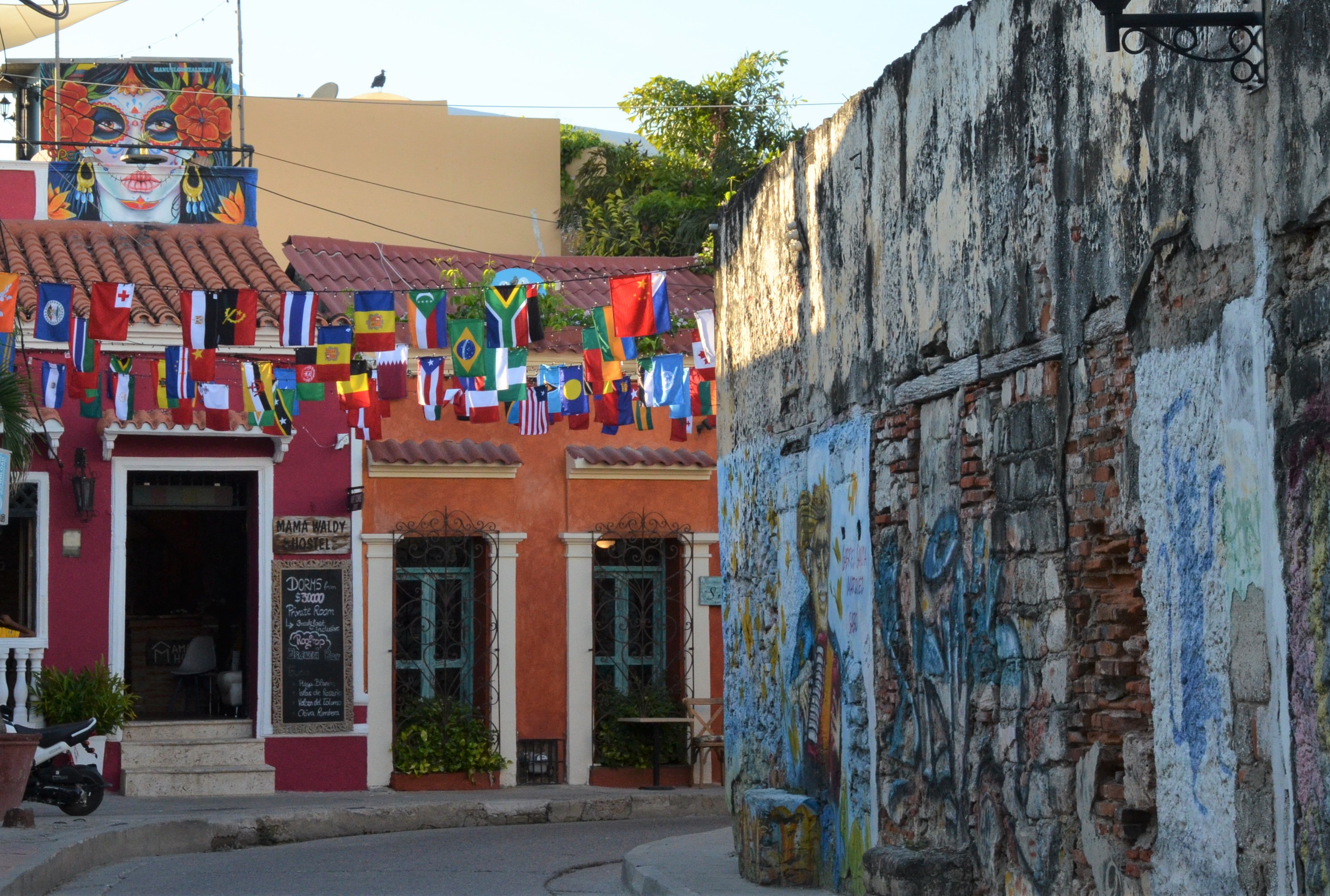
We found a neighborhood full of life, art (some signed), graffiti, families, groups of friends, music and good food. This neighborhood was lacking the hawkers looking for tourists and we were approached only twice. Peddlers are a constant presence in the old town. It’s also known as the home of backpackers with many hostels.

This painting is right in the Plaza de la Trinidad, a popular gathering place.

We wandered the streets without a map and marveled at some impressive artistic talent.

We found a street of both an innovative shade idea and beauty.

We stopped for a cool sangria break at a Spanish cafe, then continued our self guided street art walk.

As the sun went down the streets became more lively. I stopped for a photo of a parrot and a young man jumped up from his group of friends and claimed he was the artist. They were a friendly group, and I praised his talent and got a fist bump.

we stopped at a tapas restaurant on the main plaza, Demente, and had a wonderful dinner.

After dinner we continued our casual tour of the neighborhood.

It would have been a mistake to miss seeing this incredible part of Cartagena and I highly recommend it to all who come here. It was one of the highlights of our trip so far.

Posted in Colombia | 4 Comments

Cartagena. Things to do within the old walled city.

We are staying within the old city. There is a lot to see and it is very clean. It is a UNESCO World Heritage site after all. But Cartagena is no longer “undiscovered” and cruise ships now stop here. There are many tourists and you do get approached by peddlers while walking the streets. Like a lot of places, the best time to walk around is early in the morning.

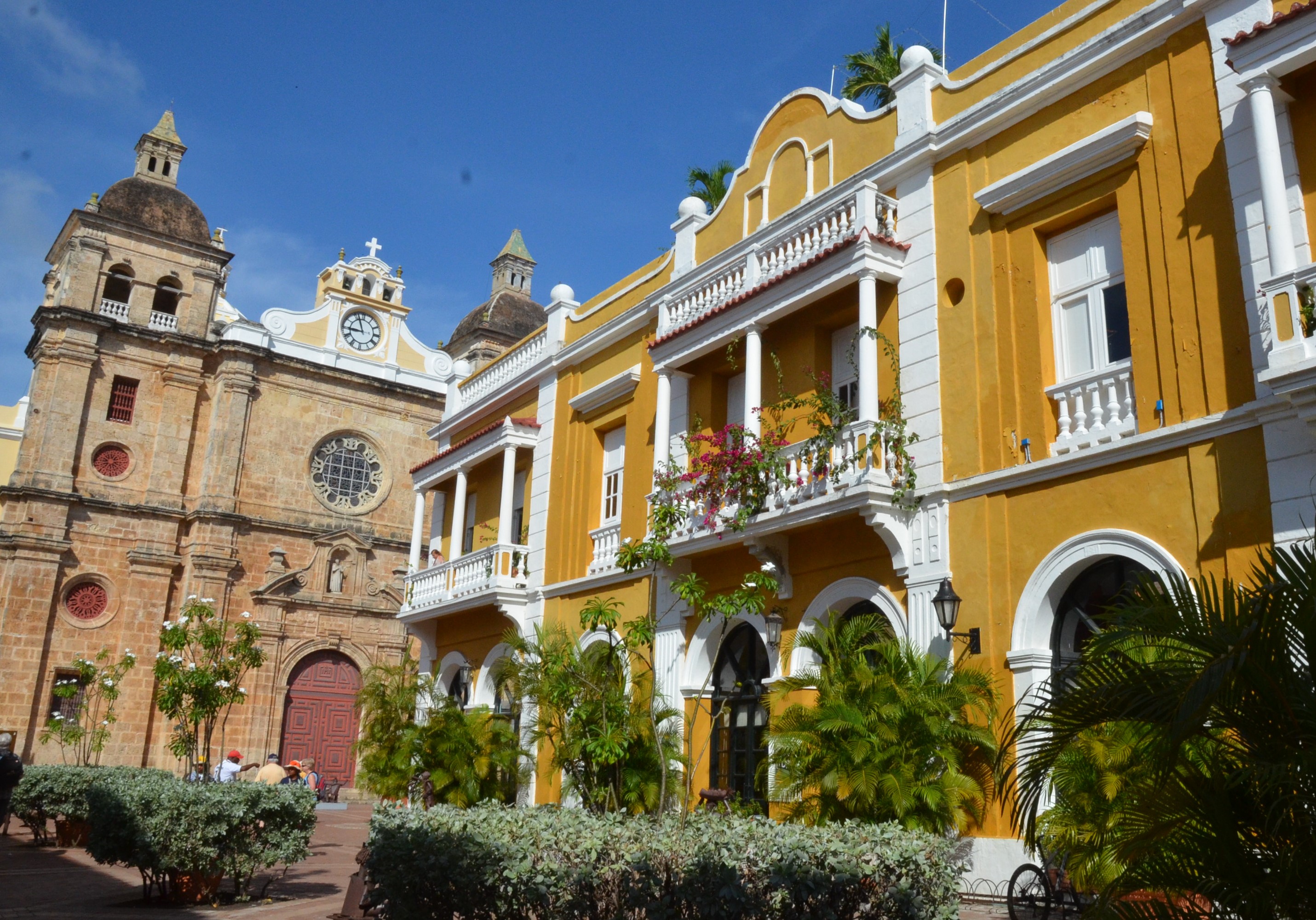
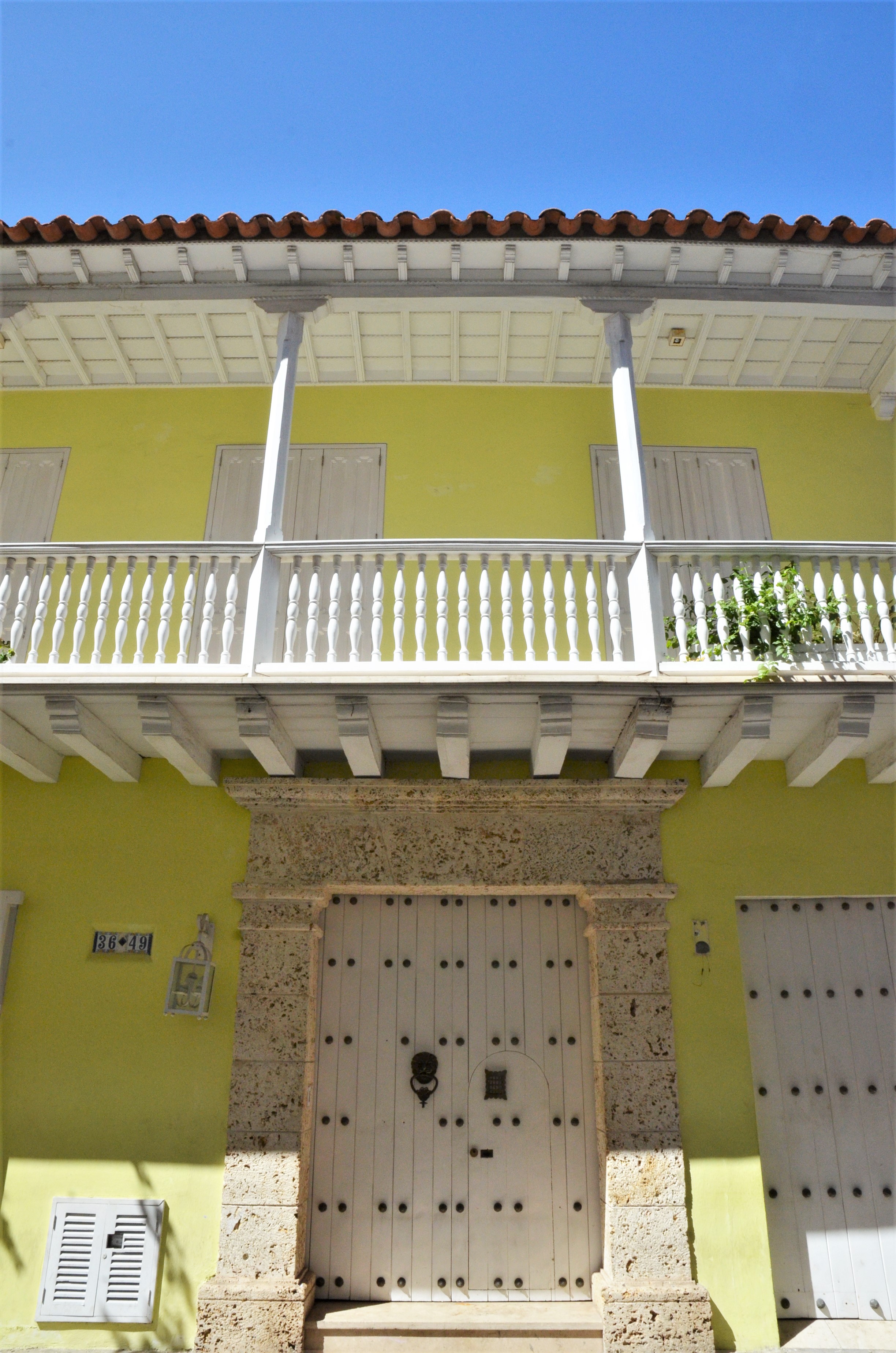
You could never tire of seeing the beautiful buildings and their balconies, and we love our small hotel, Casa Mejia, a quiet oasis when the temperature and humidity become nearly unbearable.

We toured the Palace of the Inquisition and then the Convento San Ignacio de San Pedro Claver.

The palace was the seat of the Punishment Tribunal of the Holy Office starting in 1610. All one had to do was accuse someone with a note dropped in a side window, and they would be tried. Eight hundred people were found guilty and executed. In an odd twist, a condemned persons belongings would pass to the accuser. We thought this a bad system open to abuse. We also learned that as Lutherans we would have been considered heretics.

On one plaque in the museum we read the following;

“Heretics” who practiced Judaism and Lutheranism were persecuted; just as those who distributed and read the so-called “forbidden books”.

The Spanish monk Pedro Claver spent his life ministering to the slaves brought from Africa. He was a man ahead of his time, saving hundreds of slaves. His story was the best and most uplifting story we heard. The Catholic Church was unbelievably cruel in their quest for total dominance and control. Independence in 1811 didn’t come soon enough for many people.

A statue of San Pedro and one of the slaves he saved.

A walk through San Pedro’s home is a must see.

The room where San Pedro lived and died.

We shopped some of the handicrafts stores and had a great lunch at La Cevicheria. One of the best parts about staying in the old town is just walking the streets to see the sights.

La Cevicheria.

Joseph, Mary, and baby Jesus.

For sunset we did the tourist thing and checked out Cafe Del Mar.

The old town is very pretty at night and we never felt unsafe walking the streets.

Posted in Colombia | Comments Off on Cartagena. Things to do within the old walled city.

Cartagena, Colombia. First Impression.

Three years ago my sister tried to get me to travel with her to Cartagena, and I declined. That was a mistake, but she finally got me here.

This is a colorful, vibrant city. We arrived on a direct flight from Ft Lauderdale at around 4 pm. We are staying in the old walled city, a UNESCO World Heritage site. It is clean and the people friendly.

Typical of Latin America, the evenings are busy, with live music and dancing in the streets. We spent our first evening walking the streets to get our bearings. Everything is easy to walk to in the old city.

The clock tower gate and main entrance to the old city.

Early Saturday morning I ventured out alone to take photos. Early morning is the time for photos as it is very hot and humid. I was approached by several potential tour guides, but waved them off. Standing in the nearly empty square I saw a tour guide who I liked the look of. We spoke and I agreed to meet him back at the square at 0900 with my sister for a walking historic tour of old town Cartagena.

Raphael explained that the balls lining the square, Plaza de los coaches, were used as anchors on which to chain slaves.

Raphael was a fantastic guide. What a wonderful discovery. He was voted best historic guide three times. He was full of historic information and suggestions for us. We thoroughly enjoyed his tour and would highly recommend him (Raphael with Chocolate Tours).

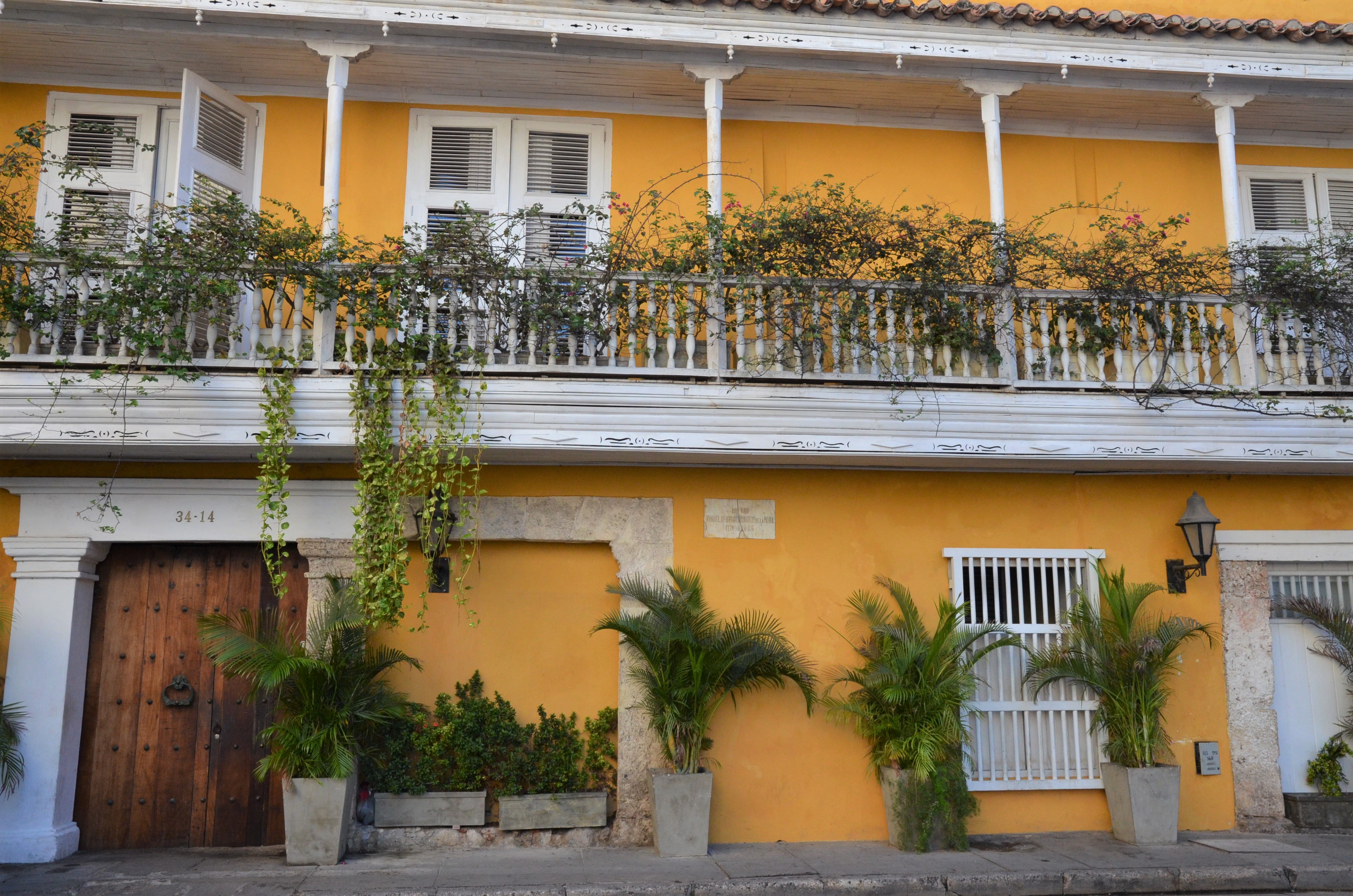
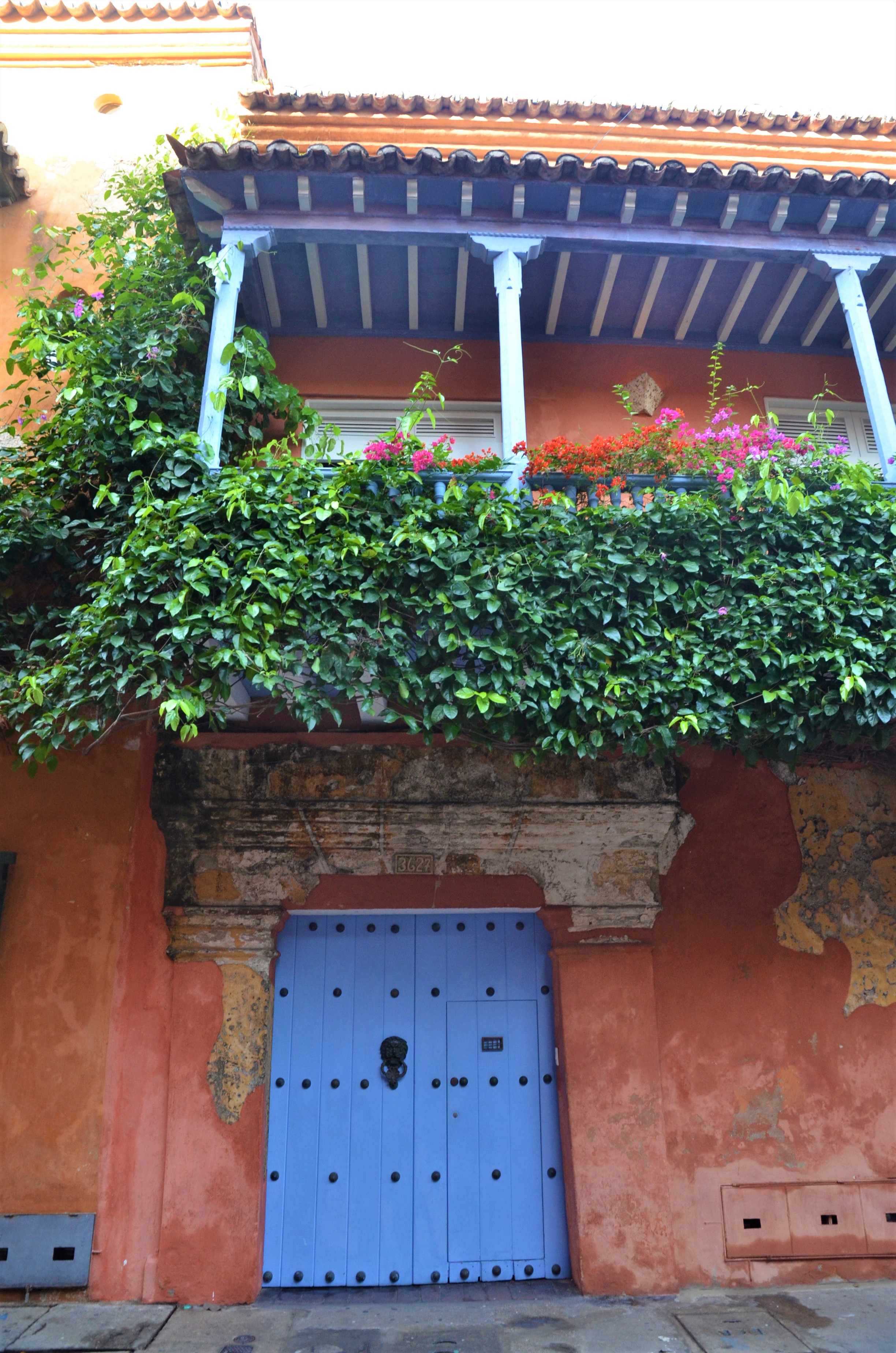
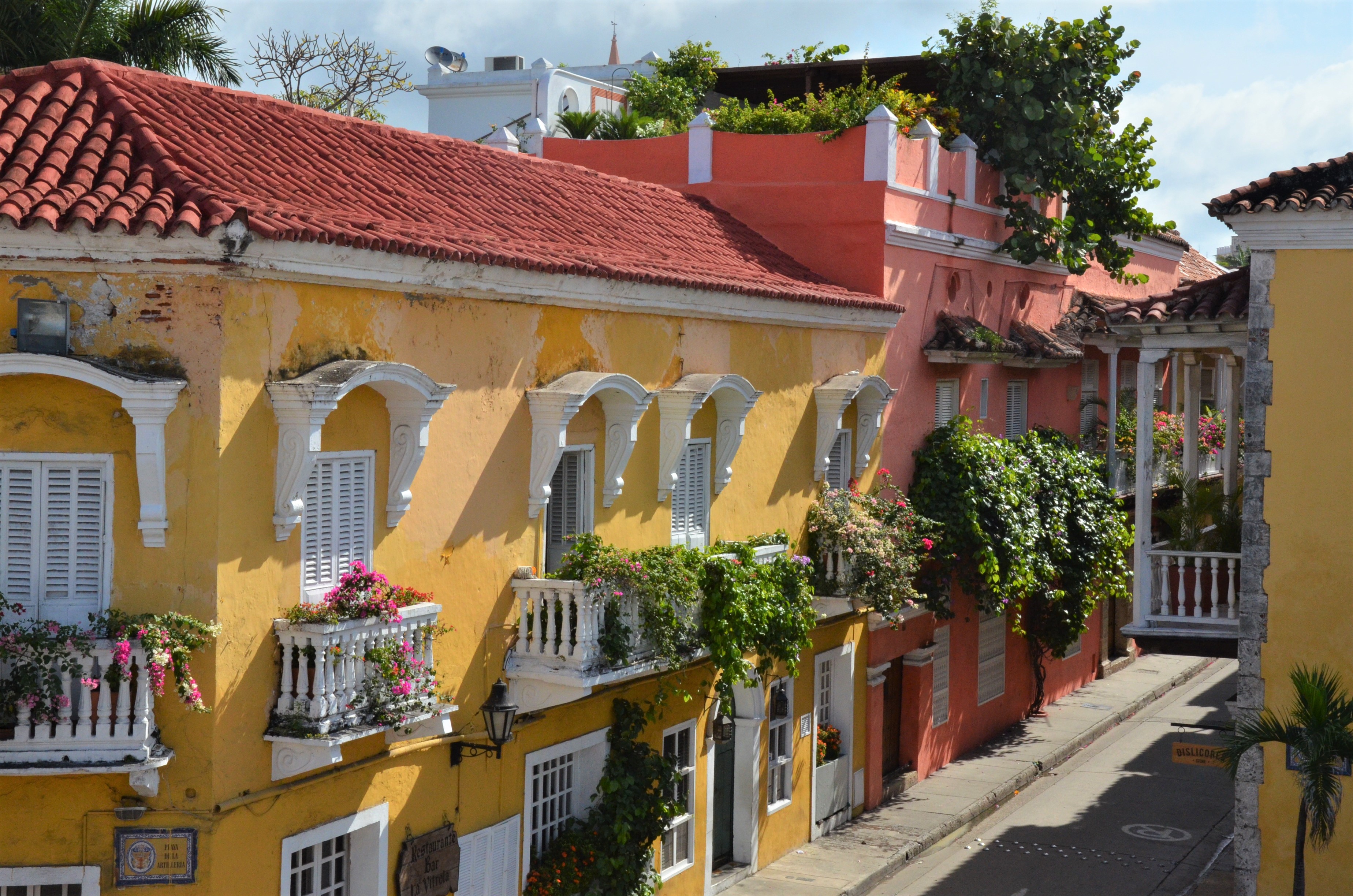
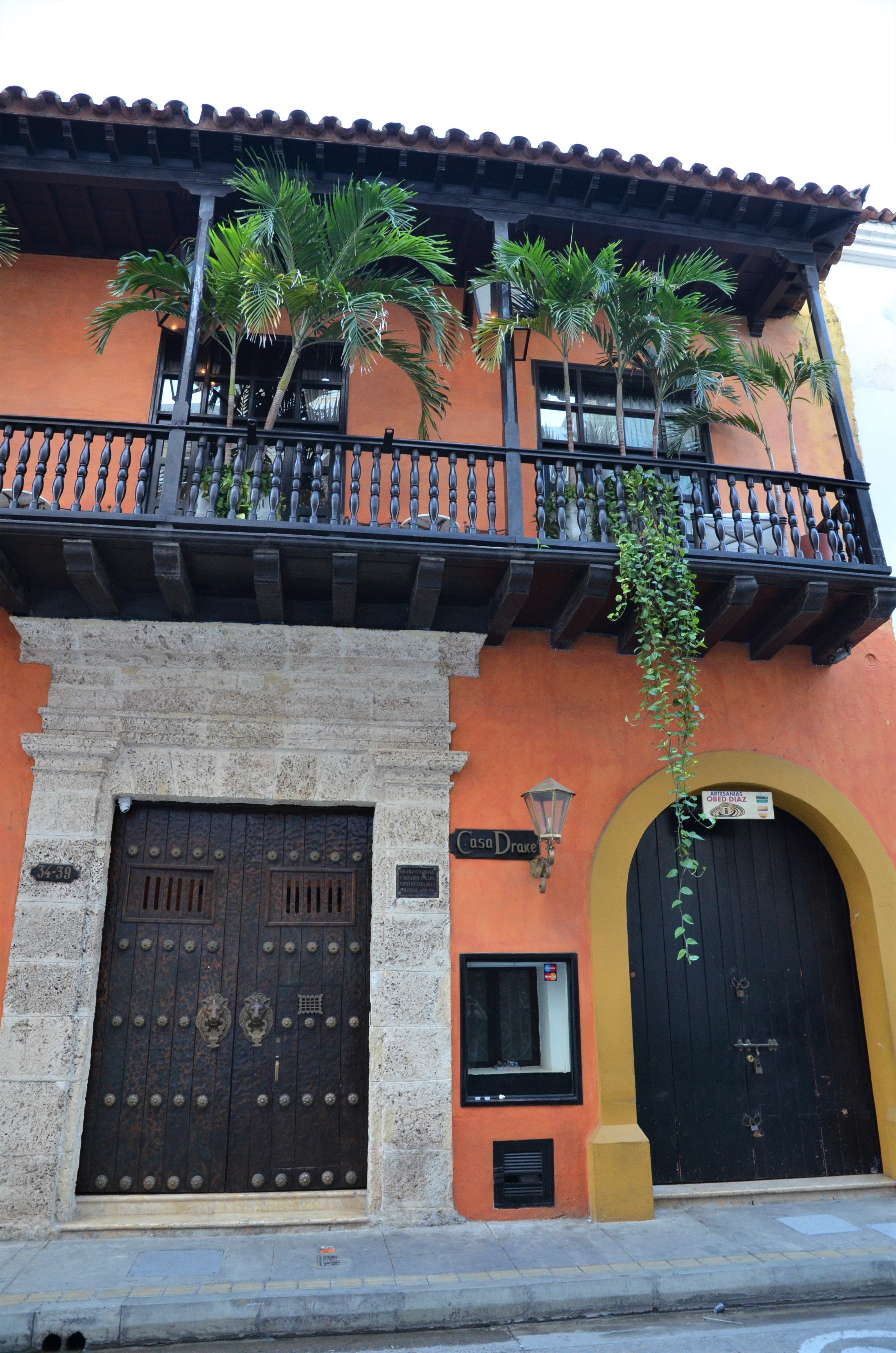
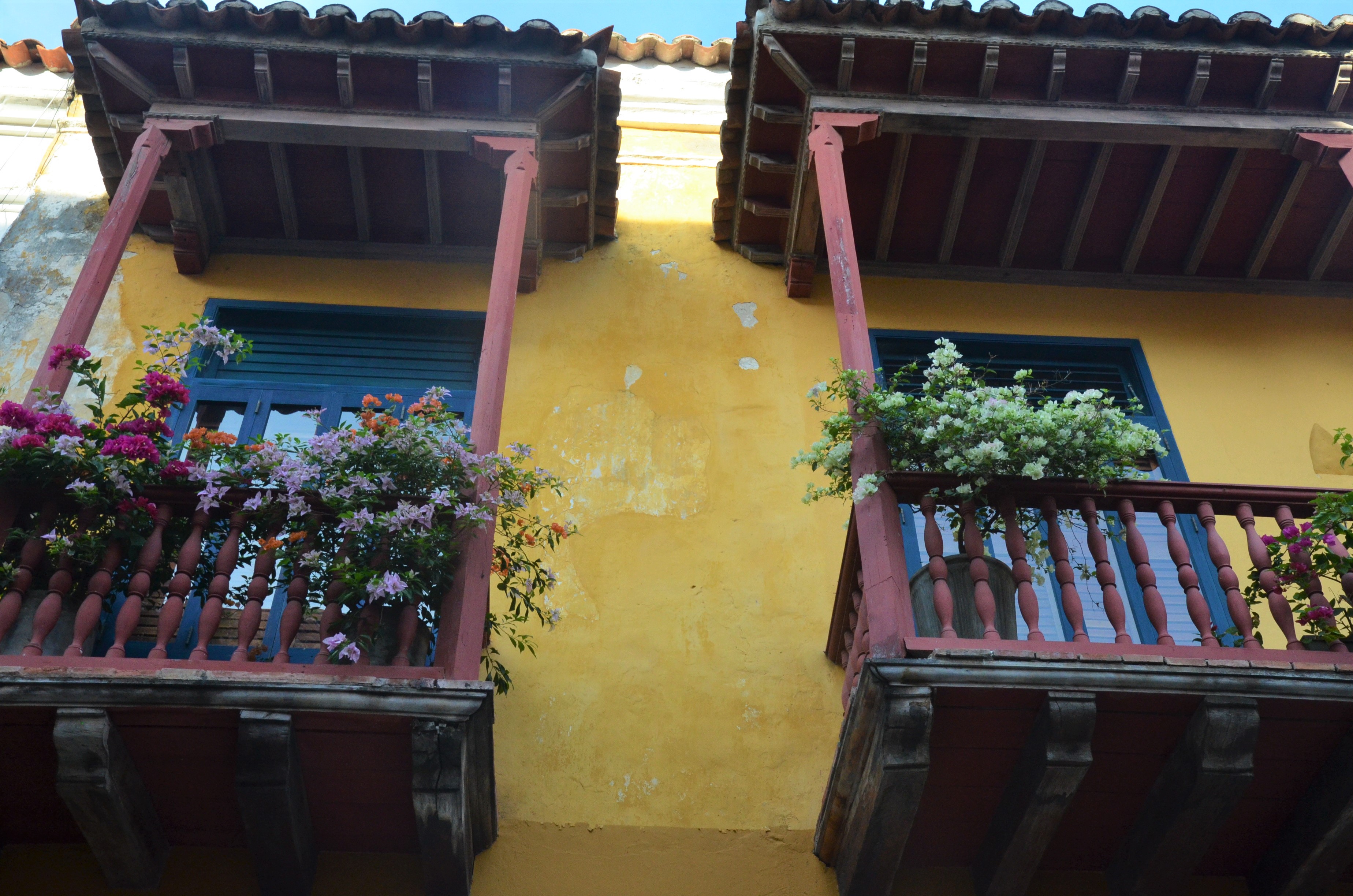
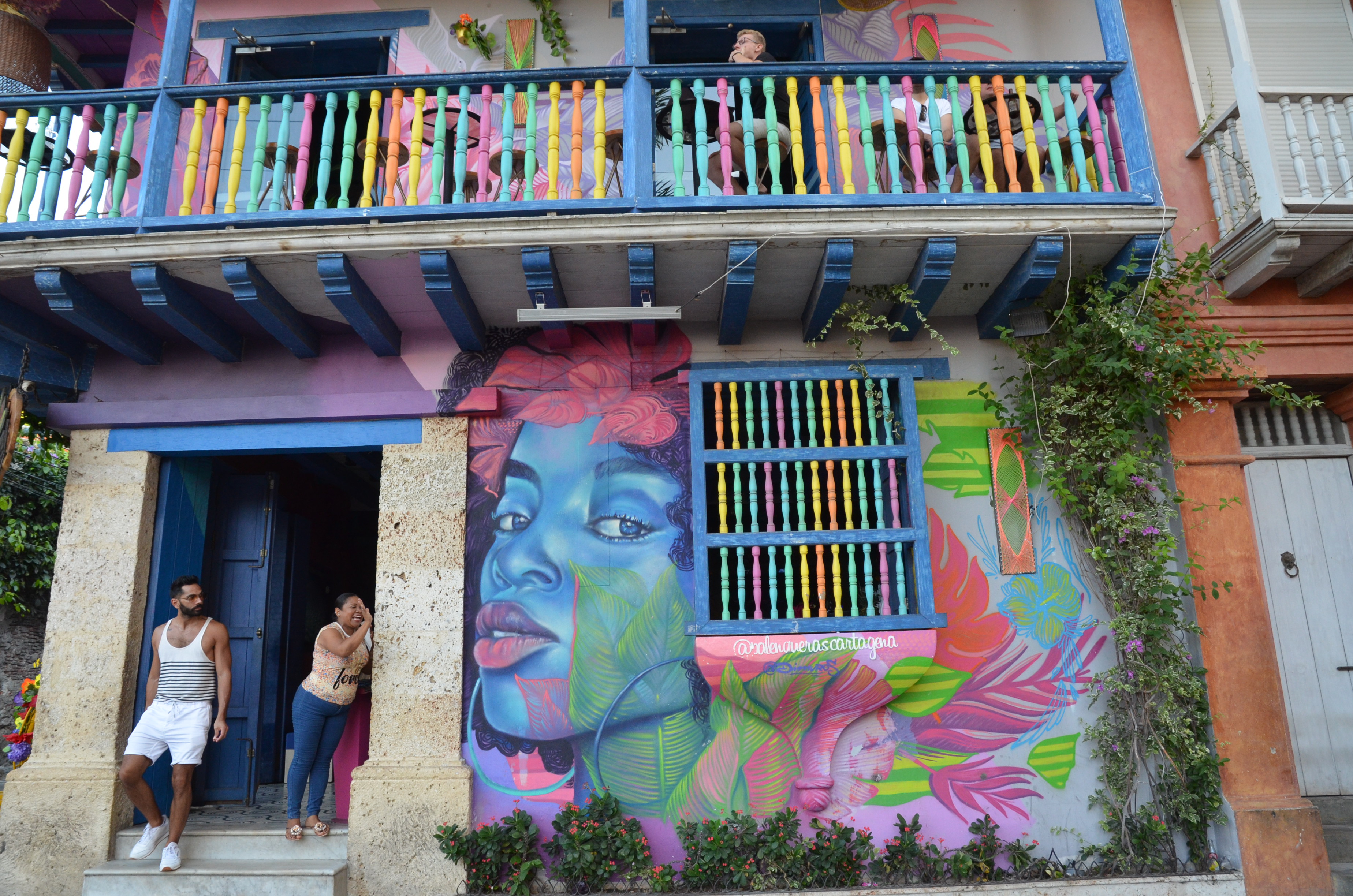
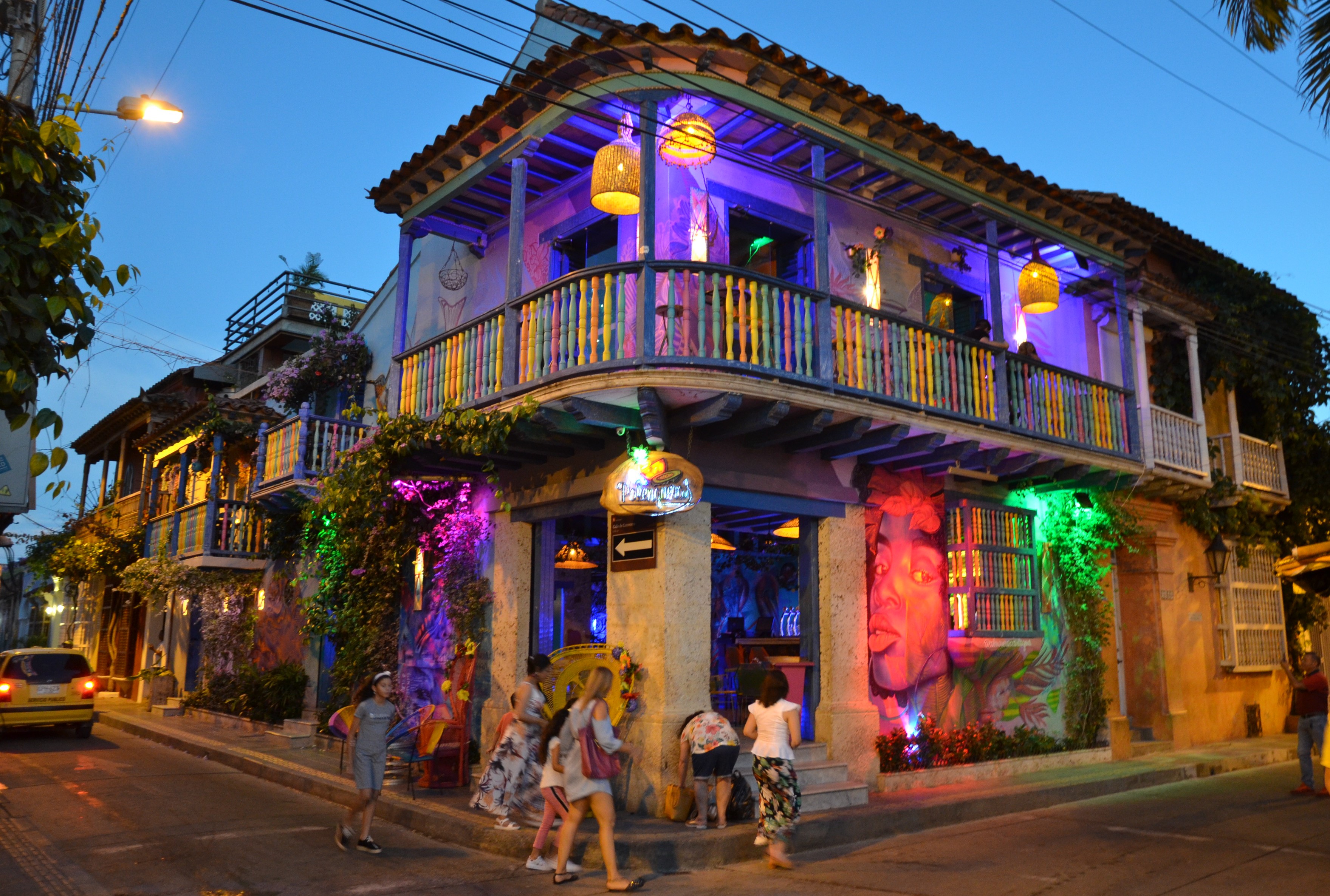
The most impressive visual impact of the city are the balconies. Raphael told us that every year there is a contest for the most beautiful balcony. The top three winners are tax exempt for the year. We saw the number two balcony for this year.

This balcony was voted as second best in the city this year.

Raphael gave us a historic run down on the many invaders, the slave trade, architecture, and their independence Nov. 11, 1811 (11-11-11). We just missed the big celebration.

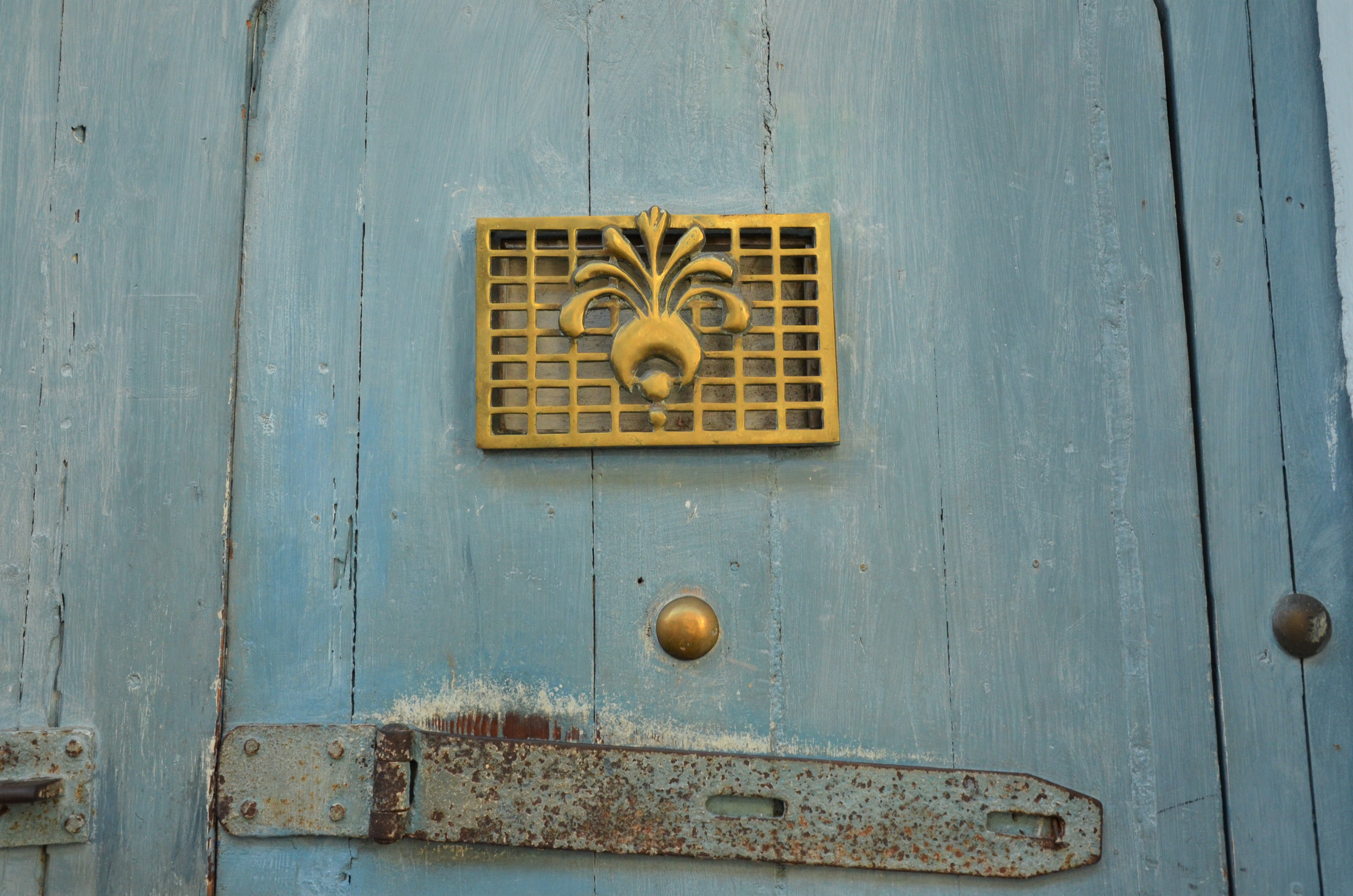
The door knockers are an indication of the occupant’s status or affiliations. The iguana means they are local from Cartagena. The fish means you are a fisherman or a boat owner.

The wall around the old town.

Me and Raphael in the street.

This gate into the city, puerta del reloj, was used for bringing slaves into the slave market. All the stone and wood is original from the 1500s.

A Fernando Botero sculpture donated to the city by the artist. We did the ritual that guarantees good luck and a return to the city.

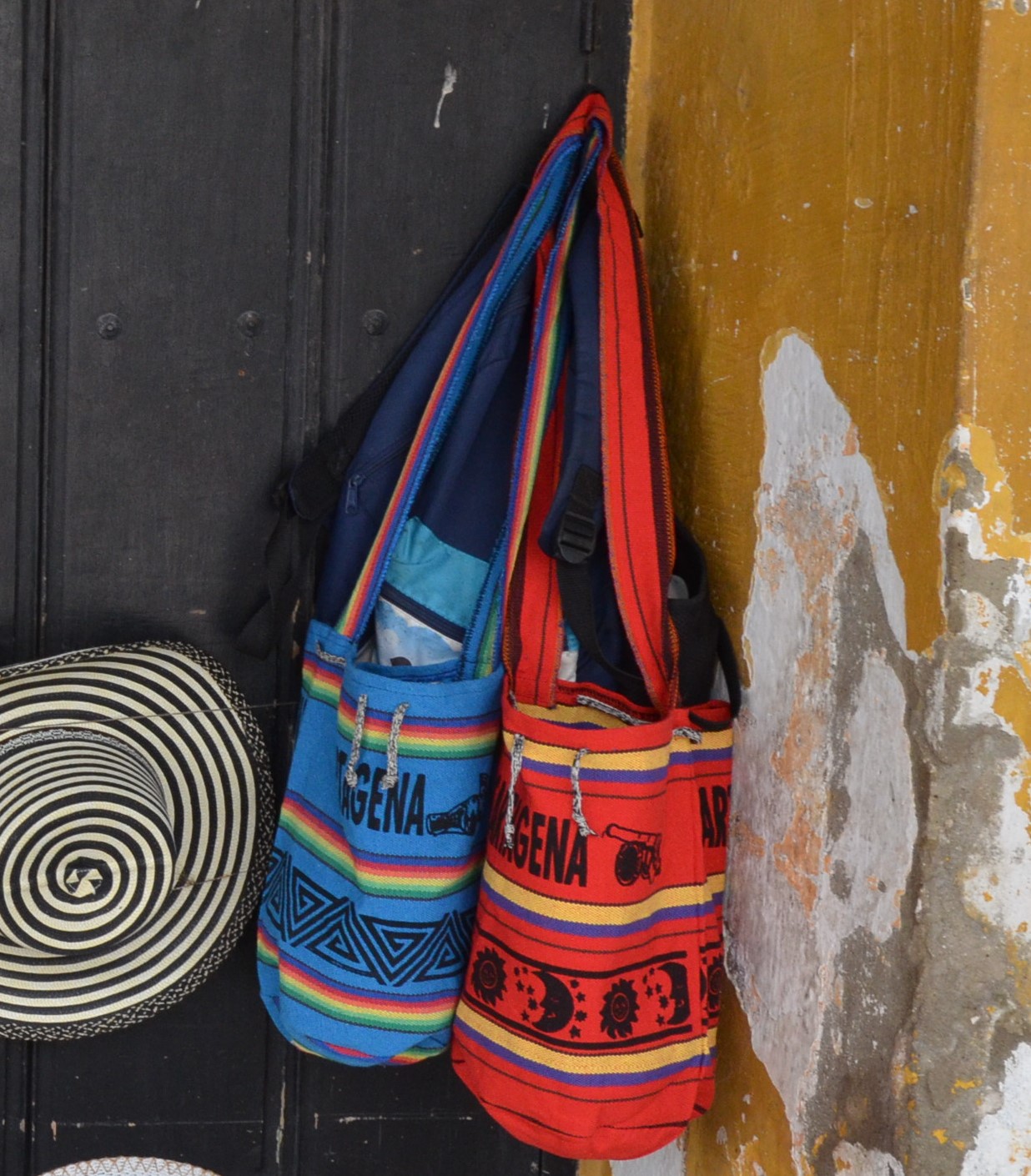
Street vendors sell hats and bags among other items.

Antiquities discovered during renovation.

My sister, a consumer of large quantities of coffee at all hours, and Raphael under a truly appropriate sentiment.

After our walking tour we headed back to Casa Mejia for a dip in the pool.

Posted in Colombia | 5 Comments

Another October In Oregon

DSC_0741

Last October the Oregon weather was sunny and warm.  Not so this year.  Just a few sunny days mixed with clouds and rain.   October weather is always a toss up, sometimes nice, sometimes not.

Geraniums 2

My mother’s geraniums.

But my one day of wine tasting in the Willamette Valley happened to be a good one.  We hit some favorite spots:  Arterberry Maresh, Domaine Serene, and Elizabeth Chambers.

red barn

The Red Barn tasting room at Arterberry Maresh.

IMG_8606

One of my favorite Oregon Pinots.

IMG_8607

View of the Dundee Hills from the Red Barn.

red barn view

The view looking the other way, Mt. Hood in the distance.

IMG_8611

Domaine Serene.

IMG_8609

Evidence of the harvest season.

IMG_8617 (1)

The tasting room patio at Elizabeth Chambers in McMinnville.

We also got lucky with a mostly sunny day at the beach.  For locals, the beach to go to is Manzanita.  It is much less crowded than the very popular Cannon Beach.  Oregon beaches are friendly places that welcome dogs, and nearly everyone at the beach will be accompanied by one, or two.  Oregon beaches also allow fires and alcohol.  Can’t beat that.  This time of year beach attire is jeans, sweaters and wind breakers, but it is still a great day at the beach.

Manzanita beach

Manzanita Beach.

sand and sky

girls and dogs

Girls and dogs on the beach.

action dogs

Happy beach dogs.

Posted in Oregon, Seasons & Holidays | 2 Comments